

How to Sell RL Items for Cash: Complete Marketplace Guide 2026

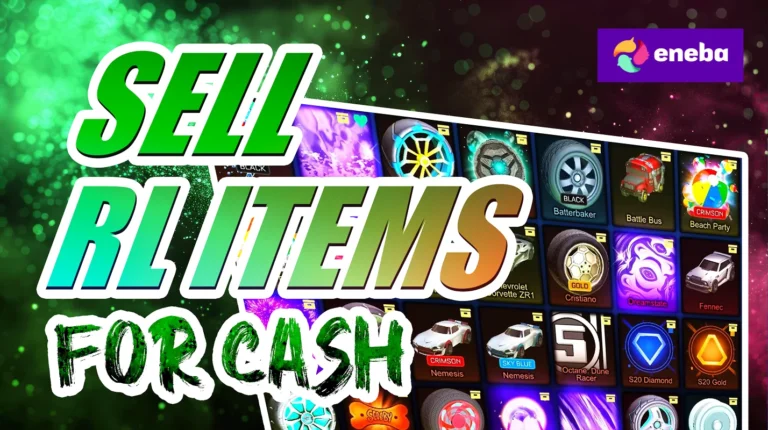
If you’re looking to sell RL items for cash, you’re navigating a marketplace that changed dramatically when Epic Games removed player-to-player trading in December 2023. Despite this shift, legitimate opportunities still exist to convert your Rocket League inventory into real money through trusted third-party platforms.
Rocket League items hold genuine value in the secondary market, with rare cosmetics like Alpha Boost or White Hat commanding thousands of dollars, while even common items can generate supplemental income. The key challenge involves finding safe marketplaces, understanding current item values, and avoiding the scams that plague gaming marketplaces.
This guide provides actionable steps for selling Rocket League items safely in 2026. We’ll explain what happened to in-game trading, identify legitimate marketplaces where you can sell items, teach you accurate valuation methods, and set realistic earning expectations. You’ll also learn critical scam prevention tactics and understand the risks associated with violating Epic Games’ Terms of Service.
The landscape has shifted significantly since trading removal, making knowledge of current best practices essential. Whether you’re liquidating a valuable inventory or exploring ways to earn money online through gaming, understanding this marketplace helps you make informed decisions while minimizing risks.
Jump to:
What Happened to Rocket League Trading?
Epic Games officially removed player-to-player trading on December 5, 2023, fundamentally altering how players exchange cosmetic items. This decision eliminated the in-game marketplace that had existed since Rocket League’s 2016 launch, preventing direct item transfers between players through the game client.
The removal aligned with Epic’s broader approach to in-game cosmetics across their gaming ecosystem. The company cited multiple reasons including reducing fraud, preventing unauthorized real-money trading outside their official systems, and standardizing cross-platform item policies. This change impacted the community significantly, with platforms like RL Garage losing their primary function as trading intermediaries.
Currently, items cannot be traded between players using any in-game systems. The traditional marketplace where players exchanged items directly through Rocket League’s interface no longer exists. This means methods for how to trade items in Rocket League through official channels are completely unavailable.
The only way to sell Rocket League items for cash now involves third-party external marketplaces operating independently from Epic Games. These platforms function as intermediaries facilitating transactions outside the game client, though they exist in a legal gray area regarding Terms of Service compliance.
While selling items through these platforms isn’t illegal from a criminal law perspective, it directly violates Epic Games’ Terms of Service. Players engaging in these transactions risk permanent account bans if detected. The company maintains strict policies against converting in-game items into real-world currency outside their official ecosystem.
Understanding this distinction proves crucial. When people ask how do you trade in Rocket League, the answer requires clarification that traditional in-game trading no longer exists. Current alternatives operate entirely through external websites accepting all associated risks including potential account suspension.
Understanding Rocket League Item Values
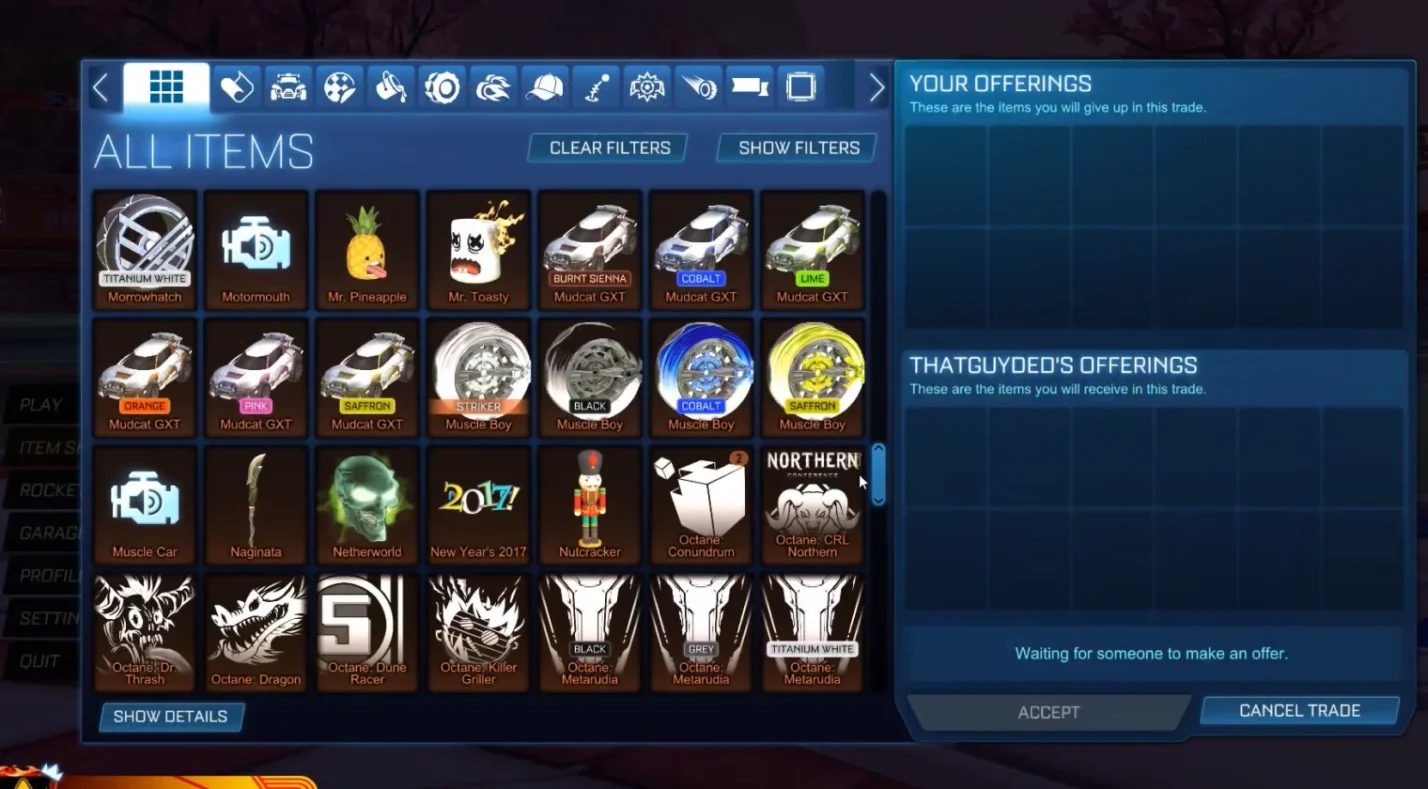
Item valuation in the Rocket League marketplace depends on multiple complex factors including rarity, exclusivity, demand, platform availability, and historical significance. Determining accurate values requires understanding how these elements combine to influence pricing.
Alpha and Beta items represent the most expensive category, worth thousands of dollars. Gold Rush Alpha Boost commands $3,000-$5,000+, White Hat toppers reach $5,000-$10,000+, and Goldstone wheels sell for $1,500-$3,000+. These items’ extreme rarity from early game versions creates unprecedented demand among collectors.
Exotic and Black Market items occupy the mid-to-high value range. Titanium White Apex wheels typically sell for $500-$1,500 depending on platform and condition. Black Reaper goal explosions fetch $100-$300. These items’ desirability stems from both visual appeal and relative scarcity compared to common drops.
Limited-time and seasonal items show moderate to high value depending on availability. Rocket Pass rewards, tournament items, and Twitch Drops range from $5-$100 based on exclusivity and demand. Items no longer obtainable through official channels command premium prices from players seeking complete collections.
Common cosmetics including standard drops and older items maintain low value, typically $1-$10 each. While individually inexpensive, large quantities can accumulate meaningful total value for sellers liquidating extensive inventories.
The general conversion rate approximates 100 Rocket League Credits ≈ $1 USD, though rare items significantly exceed this ratio due to scarcity and collector demand. Price tracking resources like RocketPrices.com provide real-time market data helping sellers establish competitive pricing.
If you’re wondering “Is Rocket League cross platform?”, our guide will help answer this question, along with give you an idea as to how prices fluctuate based on platform availability and market demand. Items restricted to specific platforms (PC, PlayStation, Xbox, Nintendo Switch) often command different prices due to varying player populations and regional preferences.
Understanding these nuances helps sellers on the Rocket League marketplace maximize returns. Anyone seeking broader strategies can explore guides on how to make money playing video games.
Best Places to Sell Rocket League Items
Third-party marketplaces now represent the only viable option for players wanting to sell Rocket League items following the removal of in-game trading. These platforms operate as escrow-based systems where marketplaces hold payments until both parties confirm successful transactions.
Choosing the right platform significantly impacts transaction security, payment reliability, and overall selling experience. Legitimate marketplaces provide seller verification, buyer protection mechanisms, and dispute resolution processes minimizing fraud risks. The following platforms represent the most established options for where to sell Rocket League items safely.
Eldorado.gg – Best for High Traffic and Security
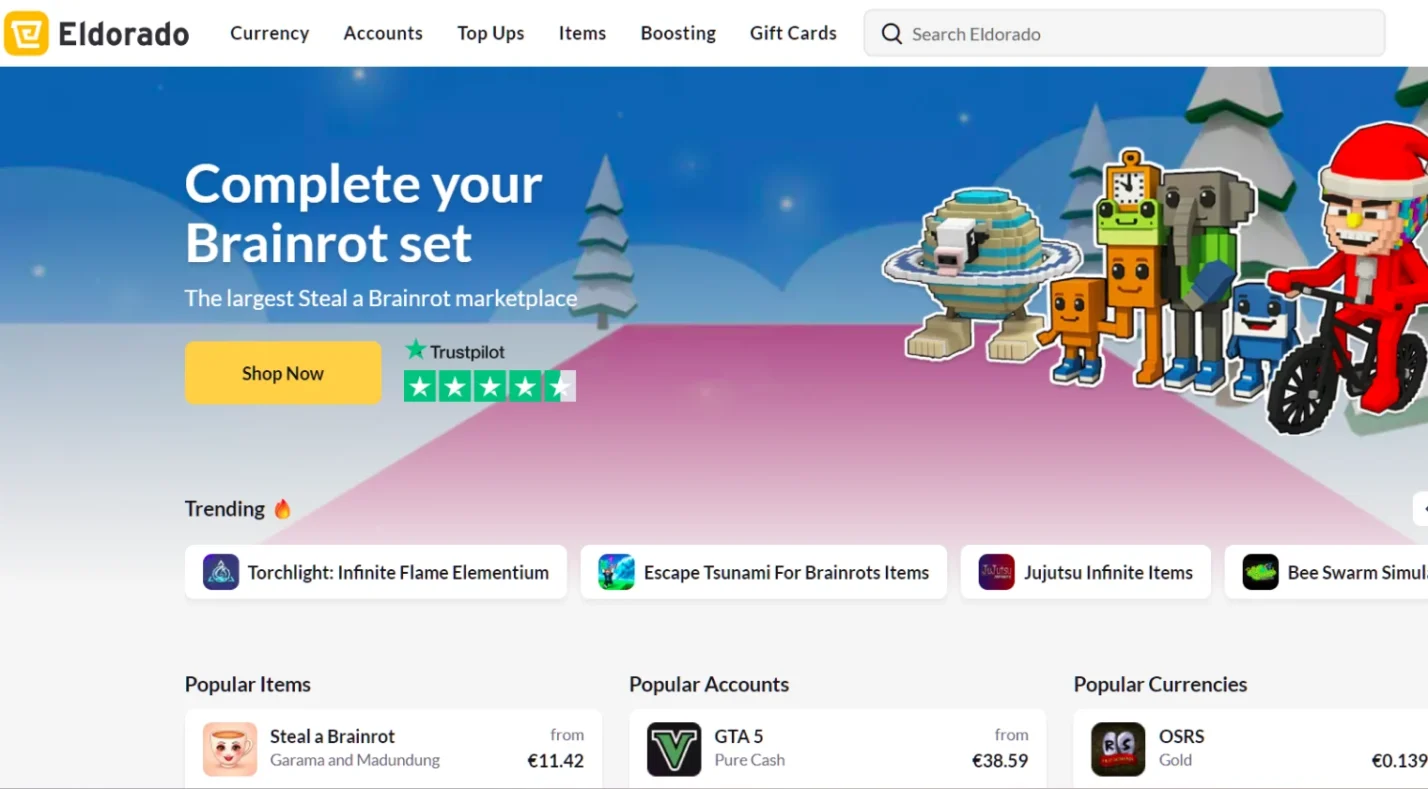
Eldorado.gg leads the gaming marketplace sector with 19.33 million monthly visits as of December 2025, demonstrating exceptional market reach and buyer availability. This high traffic volume increases item visibility and sale likelihood compared to smaller platforms with limited user bases.
The platform emphasizes strong security protocols through verified seller requirements, comprehensive buyer verification, and robust escrow payment systems. Multi-currency support accommodates international transactions while mandatory seller verification before listing activation protects both transaction parties from fraudulent accounts.
Payment processing includes multiple methods spanning traditional banking, digital wallets, and cryptocurrency options. Typical fees range from 8-12% of transaction value depending on payment method selection and seller status. Payout timelines vary from instant (cryptocurrency) to 3-5 business days (bank transfers).
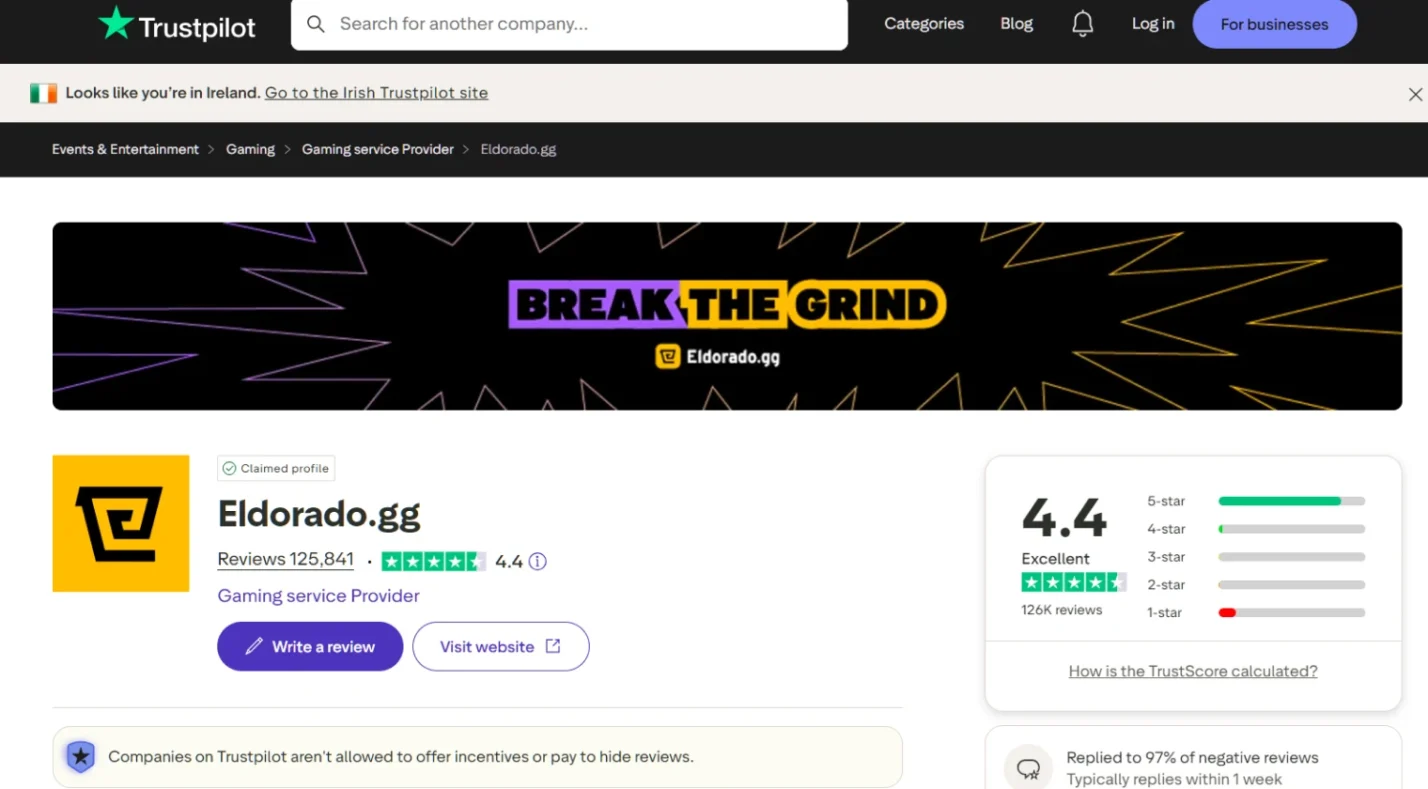
Eldorado.gg maintains strong reputation scores on Trustpilot and gaming community forums. The platform’s customer support responsiveness and fair dispute resolution contribute to positive seller experiences. Extensive buyer traffic means items typically sell faster than on lower-traffic alternatives.
Build seller reputation by completing smaller transactions before listing high-value items. Established ratings significantly increase buyer trust and enable premium pricing for rare cosmetics.

PlayerAuctions – Best for Established Reputation
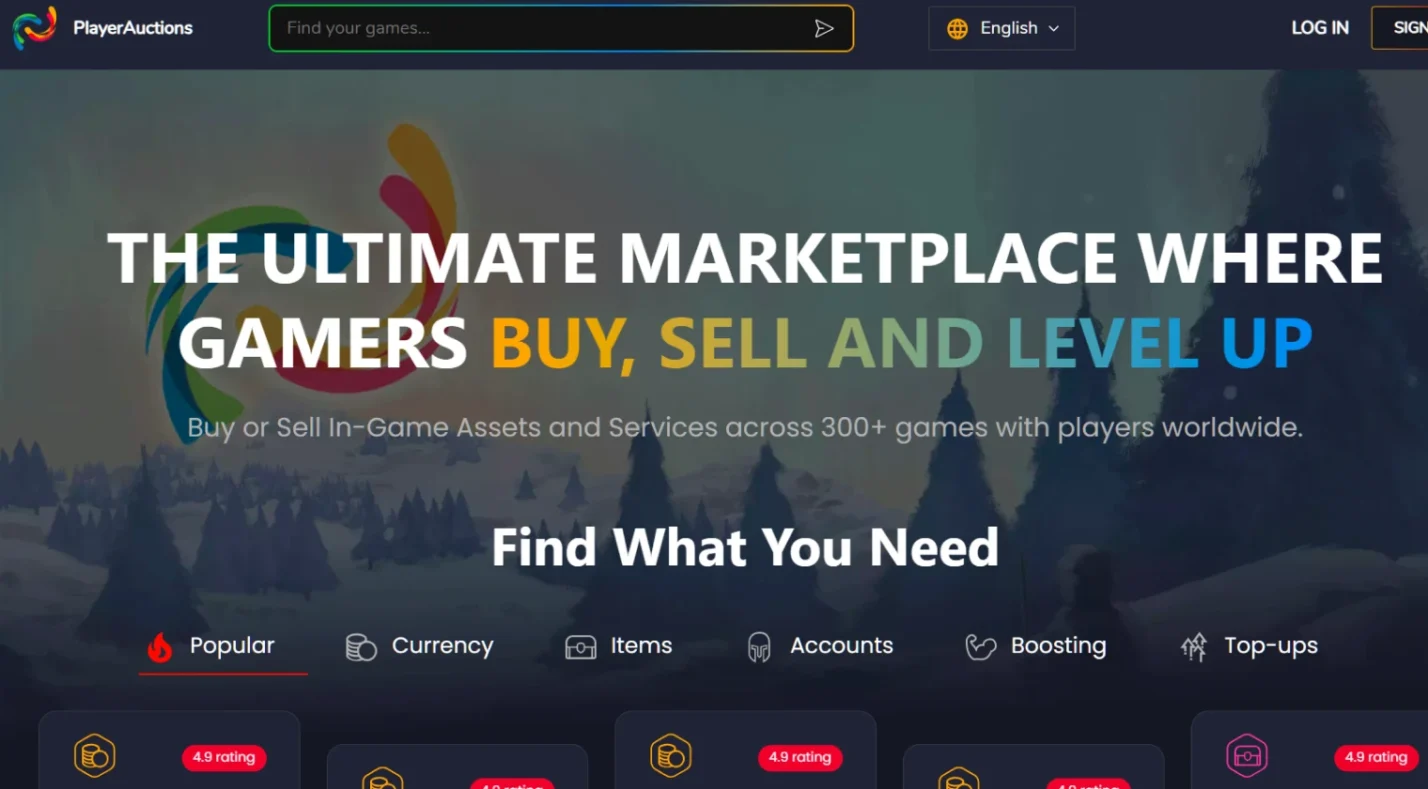
PlayerAuctions brings extensive marketplace experience with 5.41 million monthly visits and a domain authority score of 52, indicating strong search engine trust and established market presence. The platform has facilitated gaming item transactions for over two decades.
Comprehensive buyer protection systems include extended post-purchase verification periods, detailed seller screening processes, and transparent dispute resolution mechanisms. Multiple payment options accommodate diverse seller preferences while dedicated customer support addresses transaction complications promptly.
The platform handles disputes fairly, investigating both buyer and seller claims thoroughly before rendering decisions. This balanced approach builds trust among both transaction parties. Commission rates typically range 10-15% depending on transaction size and seller verification level.
PlayerAuctions provides detailed transaction histories and seller analytics helping experienced traders optimize pricing strategies. The platform’s longevity and established reputation make it particularly suitable for high-value transactions requiring additional security assurances.

Z2U – Best for Competitive Pricing
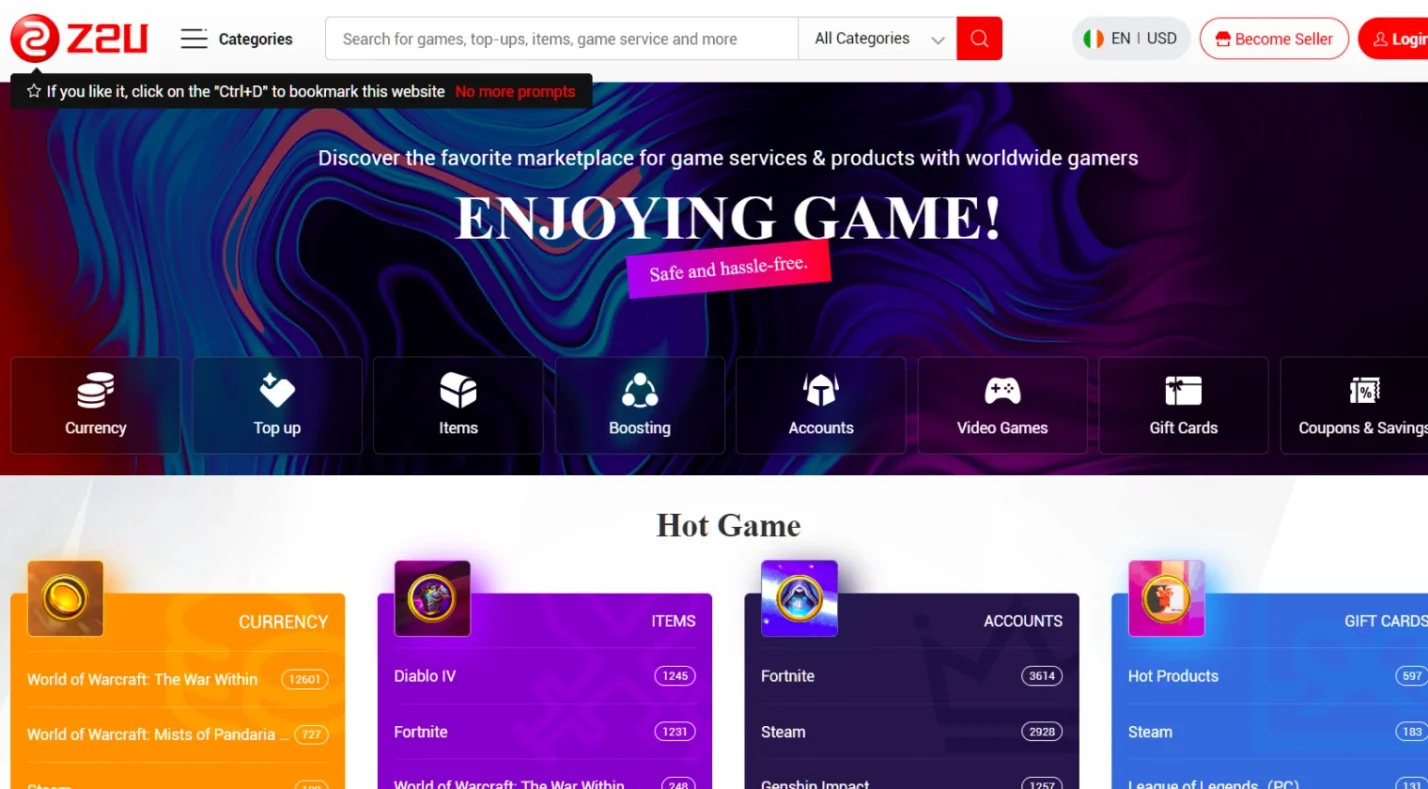
Z2U operates as a competitive marketplace emphasizing flexible pricing and real-time buyer communication. Strong security measures including escrow protection and seller verification prevent common fraud attempts while maintaining transaction speed.
Real-time chat functionality enables direct buyer-seller communication for negotiation and clarification. This feature proves particularly valuable for high-value items requiring detailed verification or custom transaction arrangements. Flexible pricing options allow sellers to adjust rates based on market conditions.
Verification processes screen both buyers and sellers, reducing fraud risk through identity confirmation and transaction history review. Multiple payment methods span traditional banking, cryptocurrency, and digital wallet options. Typical fees range 8-10% with withdrawal processing completing within two to four business days.
The platform’s competitive commission structure attracts price-conscious sellers seeking maximum returns. However, lower fees sometimes correlate with reduced customer support compared to premium-tier platforms, requiring sellers to handle more transaction management independently.

U7Buy – Best for Account Sales
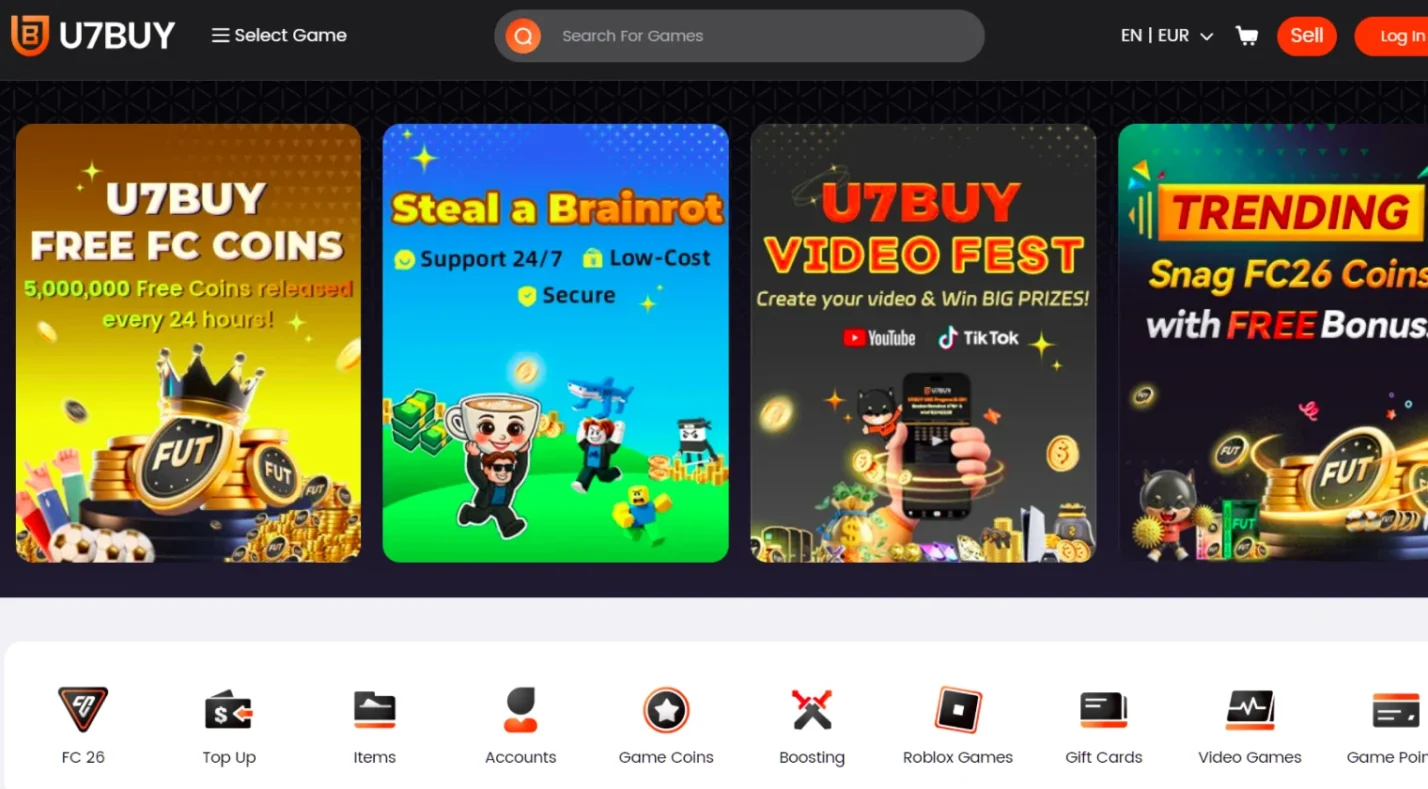
U7Buy specializes in complete gaming account sales rather than individual item transactions. The platform focuses on instant delivery systems and comprehensive account verification, making it ideal for sellers liquidating entire inventories through single transactions.
Verified seller badges indicate accounts meeting platform authenticity standards through multi-factor verification including email confirmation, identity documentation, and transaction history review. Buyer protection guarantees cover account access issues and content misrepresentation claims.
Account value assessments consider competitive rank (Grand Champion, Supersonic Legend), rare item collections, Rocket Pass completion progress, exclusive titles, and remaining credits. Comprehensive accounts with multiple value factors command premium prices significantly exceeding individual item sales.
Pricing ranges vary dramatically based on account contents. Basic accounts with minimal items sell for $15-$50, mid-tier accounts with decent ranks and some rare items fetch $50-150, while premium accounts featuring high ranks and extensive rare collections command $200-$500+.

ZeusX – Best for Extended Protection
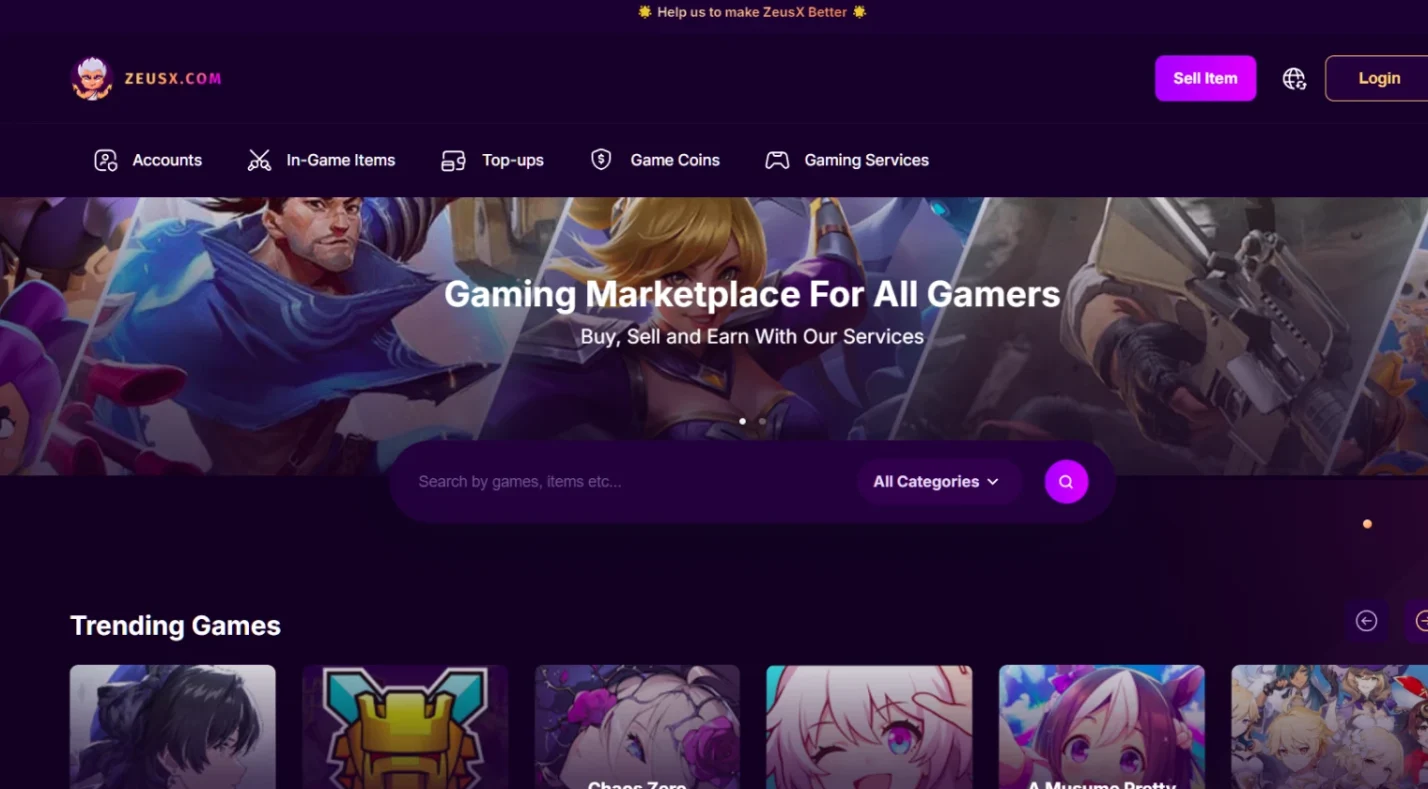
ZeusX differentiates itself through sophisticated security features and extended buyer protection periods exceeding standard 48-hour windows. This extended coverage reduces chargeback fraud while building buyer confidence in high-value purchases.
The platform employs hardware-level tracking and account verification preventing unauthorized access and credential theft. Multi-currency support accommodates international transactions while seller verification processes screen for fraudulent accounts before listing approval.
Escrow systems hold payments securely until both parties confirm successful transaction completion. Typical commission rates range 10-12% with payout timelines of three to seven business days depending on payment method selection and transaction size.
Some users report variable customer support quality requiring patience during dispute resolution. However, the platform’s robust security features and extended protection periods justify consideration for high-value transactions requiring maximum fraud protection.

Platform Comparison
| Platform | Commission Rate | Monthly Visitors | Protection Period | Payout Speed | Best For |
|---|---|---|---|---|---|
| Eldorado.gg | 8-12% | 19.33M | 48 hours | 1-5 days | High traffic |
| PlayerAuctions | 10-15% | 5.41M | Extended | 3-7 days | Reputation |
| Z2U | 8-10% | Medium | 48 hours | 2-4 days | Low fees |
| U7Buy | Variable | Medium | 48 hours | 2-5 days | Accounts |
| ZeusX | 10-12% | Medium | Extended | 3-7 days | Security |
How to Sell RL Items Safely: Step-by-Step Guide
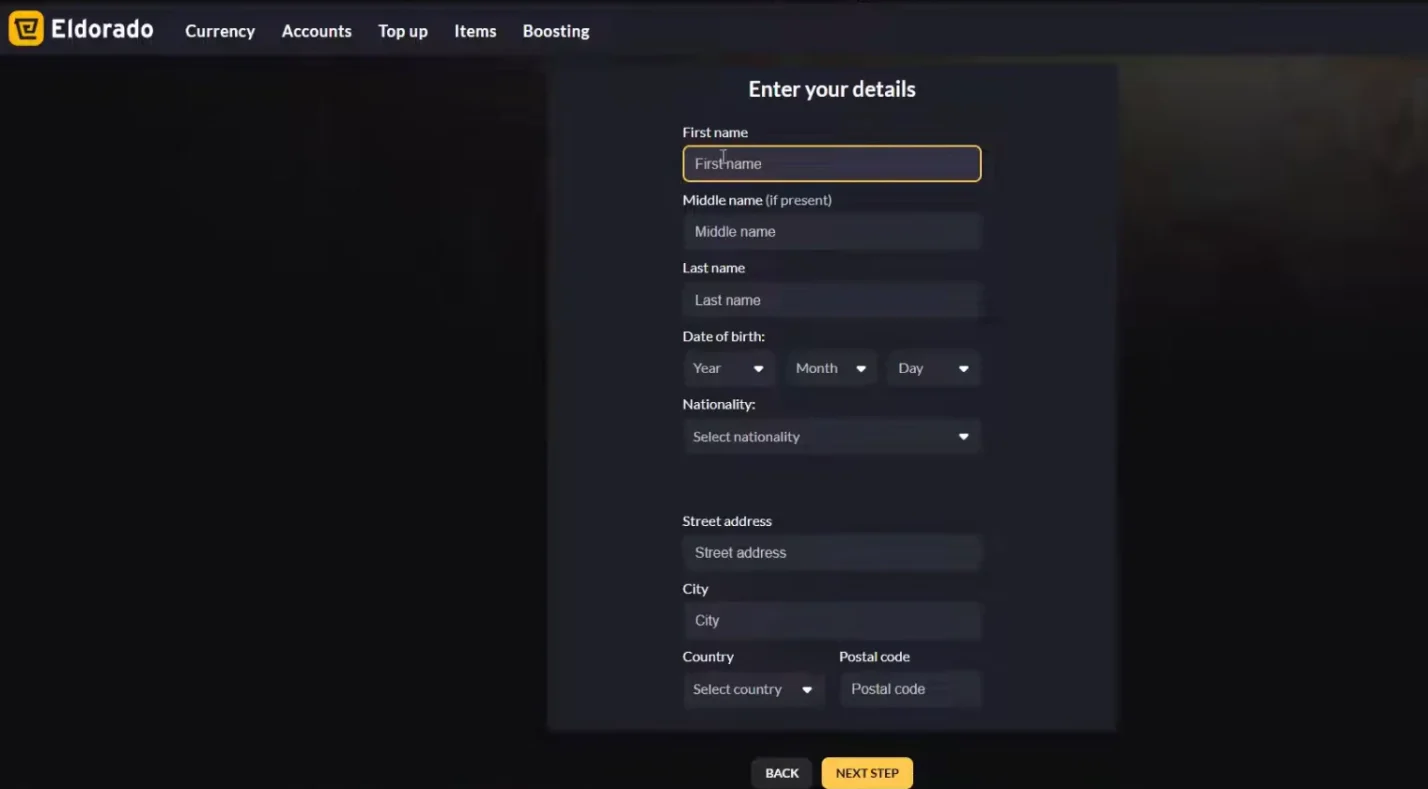
Following a systematic process minimizes risks while maximizing successful transaction likelihood. These steps cover marketplace selection through final payout, addressing common complications arising during sales.
Step 1: Choose a Reputable Marketplace
Research platform reviews on Trustpilot, Reddit, and gaming community forums. Verify marketplaces offer escrow protection, seller verification systems, and comprehensive buyer protection policies. Check for SSL encryption, two-factor authentication options, and responsive customer support before committing.
Compare commission rates, payout methods, and withdrawal timelines across platforms. Higher fees sometimes correlate with better security and faster customer support, while lower-cost options may require more seller self-management.
Step 2: Create and Verify Your Account
Set up accounts on chosen marketplaces using strong, unique passwords. Complete identity verification if required, understanding this protects both sellers and buyers from fraudulent transactions. Enable two-factor authentication for enhanced account security.
Identity verification typically requires government-issued ID, address confirmation, and sometimes payment method verification. While adding steps to the process, verification significantly reduces fraud risk and enables access to premium seller features.
Step 3: Research Item Values
Use price-tracking websites like RocketPrices.com to determine current fair market values for your items. Consider platform-specific pricing as PC, PlayStation, Xbox, and Switch markets show different values due to varying player populations and regional preferences.
Price competitively within market ranges without undervaluing items. Setting prices slightly below market leaders attracts buyers while maintaining reasonable profit margins. Extremely low pricing raises buyer suspicion about item authenticity or account security.
Step 4: List Your Items
Create detailed listings including clear descriptions, rarity classifications, and item conditions. Include screenshots or video proof demonstrating item ownership and authenticity. Specify accepted payment methods and transaction terms clearly to prevent misunderstandings.
Set realistic asking prices based on market research rather than personal attachment or original purchase costs. Competitive pricing significantly impacts sale speed, with properly priced items moving within days versus overpriced listings sitting for weeks.
Step 5: Communicate with Buyers
Respond promptly to inquiries maintaining professional, transparent communication about all item details. Verify buyer credibility through marketplace reputation scores and transaction histories. Never share account credentials before payments clear in escrow systems.
Negotiate fairly when buyers request price adjustments. Reasonable counteroffers demonstrate flexibility while maintaining profitable margins. Document all communications through platform messaging systems for dispute resolution evidence if complications arise.
Step 6: Complete the Transaction
Wait for payment confirmation in the marketplace’s escrow system before transferring any items. Verify funds show as secured rather than pending before proceeding. Transfer items only after confirming escrow activation protects both parties.
Document the transaction with screenshots showing payment confirmation, item transfer, and buyer acknowledgment. This evidence proves invaluable during dispute resolution if buyers claim non-receipt or sellers face chargeback attempts.
Step 7: Withdraw Your Earnings
Request payouts through chosen payment methods accounting for marketplace fees and withdrawal charges. Processing timelines vary: cryptocurrency completes within hours, PayPal takes 1-3 business days, and bank transfers require three to seven business days typically.
Monitor transactions until funds appear in your accounts. Report any delays or discrepancies to marketplace support immediately. Maintain transaction records for at least 90 days post-sale for potential dispute resolution or tax documentation purposes.
Common Scams and How to Avoid Them
The Rocket League item trading ecosystem has developed sophisticated scam tactics targeting both buyers and sellers. Understanding common fraud methods and prevention strategies protects against financial loss and account compromise.
Fake Payment Confirmations
Scammers send forged screenshots showing completed payments that were never actually processed. These manipulated images appear legitimate to inexperienced sellers who transfer items before verifying actual payment receipt in escrow systems.
Prevention requires confirming payments directly through marketplace dashboards rather than trusting buyer-provided screenshots. Only transfer items after independently verifying escrow confirmation and fund security.
Chargeback Fraud
Buyers claim unauthorized transactions after receiving items, requesting payment reversals through credit card companies or PayPal. This fraud type exploits buyer-favorable dispute policies, leaving sellers without items or payment.
Prevention involves using platforms with strong buyer verification and extended hold periods before fund release. Cryptocurrency transactions prove largely immune to chargebacks due to irreversible blockchain confirmations, making them safer for high-value sales.
Account Recovery Manipulation
Scammers gain account access through password reset exploits or two-factor authentication bypass techniques. After recovering accounts, they change credentials locking out legitimate owners while stealing valuable items or entire inventories.
Prevention requires using unique, strong passwords across all accounts, enabling two-factor authentication, and never sharing account credentials before payments fully clear escrow periods. Document all account security settings before sales for recovery evidence.
Credential Theft Through Phishing
Sophisticated phishing attempts create fake marketplace login pages stealing account credentials from unsuspecting sellers. These counterfeit sites mimic legitimate platforms convincingly, capturing usernames and passwords entered by victims.
Prevention demands accessing marketplaces exclusively through official URLs, verifying SSL certificates before entering credentials, and never clicking suspicious links in messages or emails. Bookmark legitimate marketplace addresses preventing accidental access to phishing sites.
Junk Filler Scams
During item transfers, scammers substitute valuable items with worthless duplicates or common cosmetics. Distracted sellers fail noticing the swap until transactions complete, discovering they transferred premium items for junk.
Prevention requires carefully verifying all items during transfer screens, recording video evidence of entire transaction processes, and never rushing through confirmation steps despite buyer pressure tactics.
Prevention Best Practices
Only use escrow-based marketplaces refusing direct payment outside platform systems. Verify seller and buyer reputations through transaction histories, ratings, and community feedback. Record comprehensive video evidence of all transactions and item transfers.
Enable strong authentication across all accounts including unique passwords and two-factor authentication. Check official scammer lists maintained by gaming communities before engaging unknown traders. Report suspicious activity to marketplaces immediately when communications or behavior raise concerns.
For competitive players, exploring Rocket League esports provides legitimate earning alternatives. Understanding equipment used in competitive play through guides like the best controller for Rocket League can also be helpful.
Understanding the Risks: Account Bans and Terms of Service
Selling Rocket League items or accounts directly violates Epic Games’ Terms of Service, even though these activities aren’t illegal from criminal law perspectives. Understanding this distinction and associated risks proves essential before engaging in secondary market transactions.
Epic Games explicitly prohibits converting in-game items into real-world currency outside their official ecosystem. The Terms of Service clearly state that players cannot sell, transfer, or trade accounts or items for real money through unauthorized channels.
Players face permanent account bans if Epic Games detects item or account sales. These suspensions occur without warning, refunds, or appeal options. Once banned, accounts lose all items, progress, and competitive ranks permanently with no recovery possibility.
Detection systems employ sophisticated methods including automated flags for unusual account activity patterns, rapid IP address changes suggesting account sharing, monitoring of login patterns and device fingerprinting, and analysis of payment and transaction patterns indicating commercial activity.
Enforcement remains inconsistent across the player base. Some sellers complete numerous transactions without consequences while others face immediate bans after single sales. This unpredictability creates additional risk as no reliable method exists for avoiding detection entirely.
Detection likelihood depends on transaction patterns and volumes. Large, obvious sales involving multiple accounts or frequent transactions trigger systems more readily than small, sporadic sales. High-value transactions draw more scrutiny than casual low-value exchanges.
Using cryptocurrency or avoiding traditional payment methods doesn’t eliminate detection risk. While reducing immediate payment traceability, these methods don’t prevent Epic Games from identifying suspicious account behavior patterns or login anomalies indicating account sales.
Account linking systems mean penalties may extend beyond individual accounts. Epic’s ecosystem can apply bans across multiple linked accounts when detecting Terms of Service violations, affecting users’ entire gaming libraries on the platform.
Hardware-level bans represent the most severe penalty tier. These bans prevent new account creation on affected devices, essentially blocking players from Rocket League entirely unless they change hardware. While relatively rare, hardware bans demonstrate Epic’s enforcement capabilities.
The decision to sell items ultimately rests with individual players who must weigh potential earnings against permanent account loss risks. This guide educates on marketplace realities without encouraging rule violations, respecting reader autonomy in making informed personal decisions.
How Much Can You Realistically Earn?
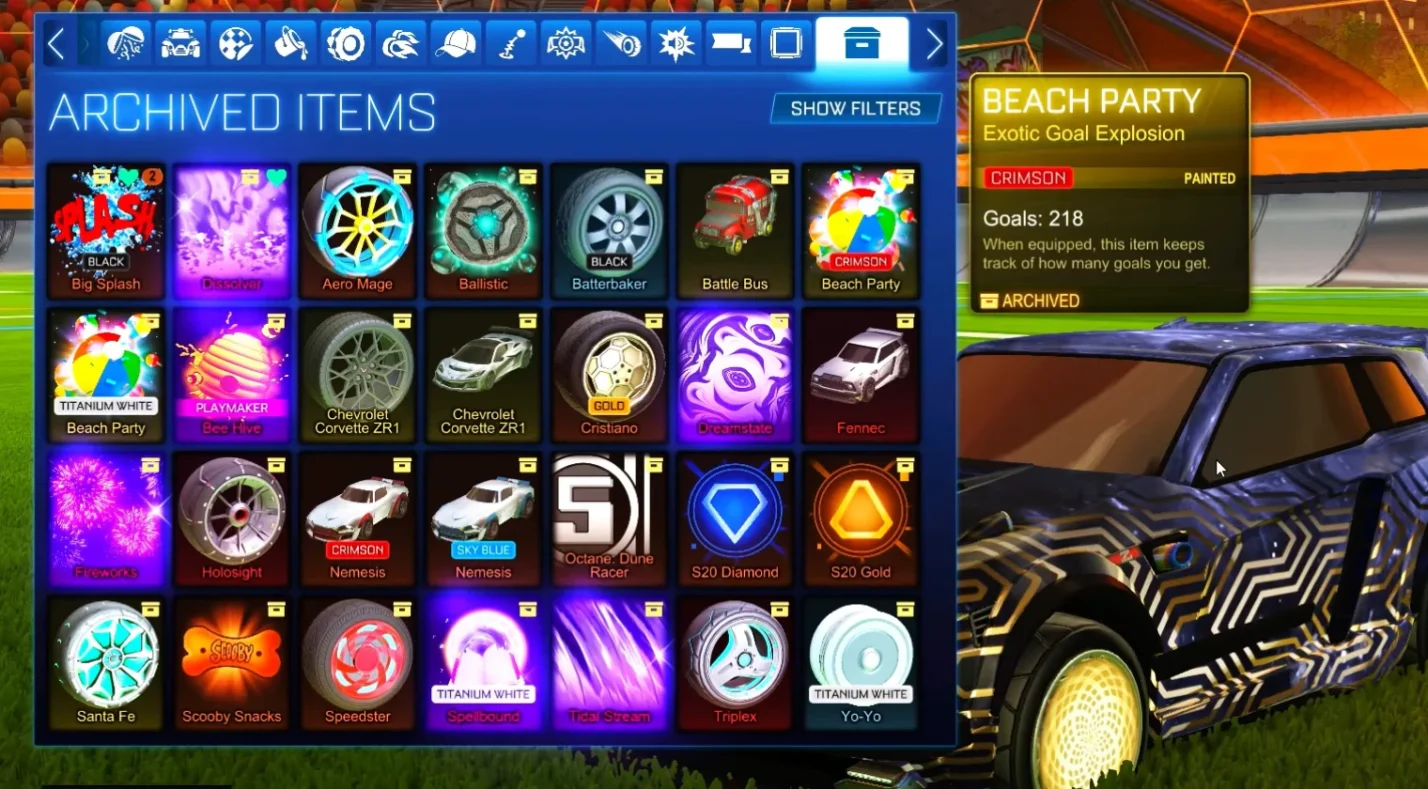
Realistic earning expectations counter inflated claims often circulating in gaming communities. Understanding actual income potential helps sellers make informed decisions about whether item selling justifies the time investment and account risk.
Individual Item Sales
Earnings per item range from $5-$500+ depending on rarity and demand. Common cosmetics generate minimal returns ($5-20 each), while rare items like painted Apex wheels or Black Market goal explosions command $100-500+. Alpha items represent exceptional cases worth thousands but remain extremely rare.
Most players selling individual items from standard inventories earn $50-$200 total when liquidating accumulated cosmetics. This represents supplemental rather than substantial income given the hours invested acquiring items through gameplay.
Complete Account Sales
High-ranked accounts achieve significantly higher values than individual items. Grand Champion and Supersonic Legend accounts with rare item collections sell for $100-$500+ depending on specific contents. Casual accounts with minimal ranks and common items fetch just $15-50.
Account value factors include competitive rank achievement, rare item quantities and types, Rocket Pass completion levels, exclusive titles and certifications, and remaining credit balances. Comprehensive accounts maximizing these factors command premium pricing.
Time Investment Considerations
Building valuable inventories requires months or years of consistent gameplay. Competitive rank achievement demands hundreds of hours practicing and improving skills. The time investment often doesn’t justify earnings unless selling exceptionally rare items or high-tier accounts.
Market Demand Variability
Earnings remain inconsistent and unpredictable due to fluctuating buyer demand. Seasonal items sell better during specific periods, while evergreen rare items maintain steadier demand. Market saturation with common items depresses pricing, limiting profit potential.
Large-Scale Operations
Players managing multiple accounts or running boosting services potentially earn $500-$2,000+ monthly. However, these operations face significantly higher ban risks due to obvious commercial patterns triggering detection systems. The increased revenue potential comes with proportionally elevated account suspension likelihood.
Realistic Expectations
Most individual sellers generate supplemental cash rather than replacement income. Expectations should align with earning $50-$300 from casual selling activities. High-value transactions involving rare items or premium accounts represent exceptions rather than typical outcomes.
The effort required to build, maintain, and sell valuable inventories often exceeds the financial returns when calculated on hourly value basis. Players should approach item selling as opportunistic monetization of existing assets rather than dedicated income strategies.
For comprehensive earning approaches, explore the best game apps to win real money. You can also check out top ways to make money from home sales for additional earning opportunities.
Selling Rocket League Accounts vs. Individual Items
Understanding the differences between selling complete accounts versus individual items helps sellers choose appropriate strategies based on inventory values, risk tolerance, and earning goals.
Selling Individual Items
Individual item sales present lower detection risk compared to account transfers. Selling several cosmetics appears less suspicious to automated systems than complete account ownership changes. However, frequent commercial-scale item selling still triggers scrutiny.
Earnings per transaction remain lower, typically $5-$100 per item unless selling exceptionally rare cosmetics. Building significant income requires multiple transactions across numerous items, increasing time investment and transaction fees.
Transaction processes prove simpler without account credential sharing. Items transfer through marketplace systems without exposing account passwords or two-factor authentication codes. This maintains better account security throughout selling processes.
The cumulative approach requires more effort managing multiple listings, communications, and transactions. Sellers must maintain several active listings simultaneously, respond to numerous buyer inquiries, and complete many individual transfers rather than single comprehensive sales.
Selling Complete Accounts
Account sales generate higher total earnings through single transactions. Complete accounts with rare items and high competitive ranks sell for $100-$500+, significantly exceeding individual item sales totals. This consolidation proves more efficient for valuable inventories.
However, account sales face heightened detection risk. Ownership transfers create obvious patterns including IP address changes, device fingerprint modifications, and behavioral shifts that trigger Epic Games’ automated detection systems more readily than item sales.
Credential sharing requirements create security vulnerabilities for both parties. Sellers must provide account access information including emails, passwords, and two-factor authentication details. Buyers risk sellers recovering accounts after transactions through password resets.
Account value depends on multiple factors including competitive rank (Grand Champion, Supersonic Legend preferred), rare item collections (Alpha items, Titanium White variants, limited exclusives), Rocket Pass progression completion, exclusive titles and certifications, and remaining credit balances.
Strategic Considerations
Account sales suit players liquidating entire inventories in single transactions willing to accept higher ban risks for increased earnings. Individual item sales better serve sellers maintaining active accounts while monetizing excess inventory through lower-risk methods.
Buyers scrutinize account sales more carefully due to higher values and credential sharing requirements. Establishing seller credibility through verification badges and positive transaction histories proves essential for premium account pricing.
Players must weigh convenience and earnings against detection likelihood when choosing approaches. While accounts generate more revenue efficiently, the substantially elevated ban risk may not justify marginal earning increases for moderate-value inventories.
Payment Methods and Withdrawal Options
Third-party marketplaces support diverse payment methods accommodating different seller preferences, geographic restrictions, and risk tolerances. Understanding available options and their tradeoffs helps sellers optimize for speed, security, or cost efficiency.
PayPal Transfers
PayPal provides fast, widely accepted payment processing with one to three business day transfer timelines. However, PayPal doesn’t offer Buyer Protection for digital goods or gaming items, creating vulnerability to fraudulent disputes claiming unauthorized transactions.
Sellers receive payment notifications quickly but should wait for marketplace escrow periods before considering transactions complete. PayPal fees typically add 2-3% to withdrawal costs reducing net earnings slightly.
Bank Transfers
Direct bank deposits eliminate middleman fees but require longer processing timelines of three to seven business days. International transfers face additional delays and potential currency conversion charges reducing final proceeds.
Bank transfers provide secure, traceable transactions with permanent records for tax documentation or dispute resolution. The slower speed tradeoff proves acceptable for sellers prioritizing security over immediate fund access.
Cryptocurrency Options
Bitcoin, Ethereum, and USDT represent the fastest payment methods with processing completing within minutes to hours. Cryptocurrency transactions prove largely irreversible, protecting sellers from chargeback fraud attempts that plague traditional payment methods.
Cryptocurrency values fluctuate significantly, creating potential gains or losses between transaction completion and conversion to fiat currency. This volatility requires immediate conversion for sellers wanting stable values or long-term holding for those comfortable with price swings.
Regulatory environments for cryptocurrency remain less developed than traditional banking, though major platforms increasingly accept digital currencies. Transaction fees vary based on network congestion and selected cryptocurrencies.
Gift Cards and Store Credit
Amazon, Steam, and platform-specific gift cards provide instant value transfer but reduce liquidity compared to cash. These options suit sellers planning purchases through specific retailers but limit general spending flexibility.
Gift card values typically discount below face value when resold for cash, reducing effective earnings. Store credit locks value within marketplace ecosystems, useful for future transactions but preventing general fund access.
Marketplace Fees and Timelines
Commission rates typically range 5-15% of transaction values depending on platform, payment method, and seller verification status. These fees reduce gross earnings when calculating net proceeds from sales.
Withdrawal timelines vary significantly: cryptocurrency completes fastest (minutes to hours), PayPal processes within one to three days, and bank transfers require three to seven business days. Factor these delays when planning fund access for time-sensitive needs.
PayPal’s lack of Buyer Protection for digital goods makes cryptocurrency objectively safer for sellers against chargebacks. While requiring additional setup and cryptocurrency familiarity, the protection against fraudulent disputes justifies the learning curve for high-value transactions.
Is Selling Rocket League Items Worth It?
Weighing whether to sell RL items for cash requires balancing potential earnings against significant risks including permanent account bans, time investment requirements, and ethical considerations around Terms of Service violations.
Third-party marketplaces remain the only viable option following trading removal, operating in legal gray areas that violate Epic Games’ policies. While platforms provide escrow protection and buyer verification reducing fraud risks, fundamental account suspension threats persist regardless of transaction security.
Realistic earnings typically range $50-$300 for casual sellers liquidating standard inventories. Exceptional cases involving rare Alpha items or premium high-rank accounts generate $500-$2,000+, but these represent outliers rather than typical outcomes. The time investment building valuable inventories often exceeds financial returns when calculated hourly.
The tradeoff between supplemental income and permanent account loss requires personal risk assessment. Some players accept potential bans for immediate cash while others prioritize long-term account preservation over short-term earnings. Neither approach is objectively correct, depending entirely on individual circumstances and values.
Safer alternatives exist for gaming monetization including streaming, content creation, and competitive tournament participation. These approaches don’t violate Terms of Service while potentially generating comparable or superior earnings without account loss risks. Players serious about gaming income should explore these legitimate channels.
For casual sellers with accumulated rare items in dormant accounts, limited selling may prove worthwhile accepting calculated risks. Active players maintaining competitive ranks and ongoing engagement face less favorable risk-reward ratios where account value exceeds potential sale proceeds.
Prioritizing account security and long-term gaming enjoyment over short-term cash often proves wiser for dedicated players. The permanent nature of account bans means single detection events eliminate years of progress, achievements, and item collections irreversibly.
Ultimately, selling Rocket League items can generate supplemental income but rarely provides meaningful earnings relative to time invested and risks accepted. Informed decision-making requires understanding marketplace realities, earning potentials, and enforcement risks before committing to secondary market transactions.
FAQs
Eldorado.gg, PlayerAuctions, Z2U, U7Buy, and ZeusX represent the most established third-party marketplaces for selling Rocket League items. These platforms provide escrow protection and seller verification.
Since in-game trading was removed in December 2023, you must use third-party marketplaces. Create verified accounts, list items with clear descriptions, wait for buyer payment in escrow, then transfer items after confirmation.
Yes, rare items command significant value. Alpha items like Gold Rush sell for $3,000-$5,000+, Titanium White Apex wheels fetch $500-$1,500+, and Black Market items range $100-$300+.
Eldorado.gg leads with 19.33 million monthly visits, providing highest buyer traffic and robust security. PlayerAuctions offers an established reputation with 5.41 million visits for premium transactions.
Platforms with escrow protection reduce transaction risks, but selling items violates Epic Games’ Terms of Service and risks permanent account bans. Use verified marketplaces, enable two-factor authentication, and understand suspension risks before proceeding.