



7 Best Freelancing Platforms to Make Money in 2026

Eneba Hub contains affiliate links, which means we may earn a small commission if you make a purchase through them—at no extra cost to you. Learn more



KEY TAKEAWAYS
Best overall is Braintrust. Freelancers pay a 0% platform fee, while clients pay 15%.
Best beginner option is Freelancer.com. It has a large bid-based project pool, though fixed-price and hourly work carries a 10% fee or $5 minimum.
Best for broad client work is Upwork. Joining is free, freelancer fees range from 0% to 15% per contract, and available work spans entry-level tasks through specialist professional services.
Freelancing platforms can turn an existing skill into real income, with $500 to $2,000 a month becoming realistic after the first 60 to 90 days for freelancers who already know how to deliver paid work. Braintrust stands out because freelancers keep 100% of their invoiced rate while clients pay the platform’s 15% fee, according to Braintrust’s own talent FAQ.
A true beginner should expect a slower start. Writing, design, coding, and admin can all become freelance work online, but clients still want proof that you can do the job. A portfolio and a few strong samples matter more than simply opening an account.
The best freelancing platforms are not always the ones with the largest client pool. This guide compares seven freelance marketplaces and freelancing platforms by fees, payout speed, and earning potential so you can find the best freelance platforms for your skill and schedule. If you are learning how to make money freelancing, those practical differences matter more than brand recognition.
Jump to:
Are Freelancing Platforms Actually Realistic?
Yes. Freelancing platforms are realistic if you already have a marketable skill, but the first month is usually modest. Early-stage freelancers often gross around $200 to $800 in month one, rising toward $500 to $2,000 a month once they have a few client reviews. What you actually keep depends on the platform fee.
If you are learning how to make money freelancing, these are the expectations that matter most:
- The first client can take time. On bid-based freelance marketplaces, landing a first job can realistically take around 10 to 20 proposals.
- The first few weeks may pay nothing. Beginners often spend two to four weeks building a profile, portfolio, and proposal history before income starts.
- You need time to apply. Around 5 to 10 spare hours a week is a more realistic starting commitment than expecting full-time income immediately.
- Fees change your real take-home. Guru charges a 5% to 9% job fee depending on membership tier, while PeoplePerHour starts new client relationships at 20%, according to each platform’s own pricing pages.
That fee difference adds up quickly. A $2,000 gross month on PeoplePerHour leaves about $1,600 while the 20% new-client fee applies. Once the same client relationship reaches the 7.5% tier, that rises to roughly $1,850.
Finding freelance work online becomes easier once you have proof that clients can trust. The bigger lesson is to judge income by what reaches your account after fees, not by the highest earnings figure on a platform’s marketing page.
Play to earn cash today.

7 Real Freelancing Platforms That Actually Pay
The seven options below work in very different ways. Some freelance marketplaces focus on bidding for client projects, while others are better for bringing your own clients or selling work you create upfront.
When comparing the best freelance platforms, look at the freelancer fee, entry requirements, and payout timing first. That gives you a much clearer idea of how to make money freelancing with the skill and experience you already have.
1. Zero-Fee Freelancing on Braintrust
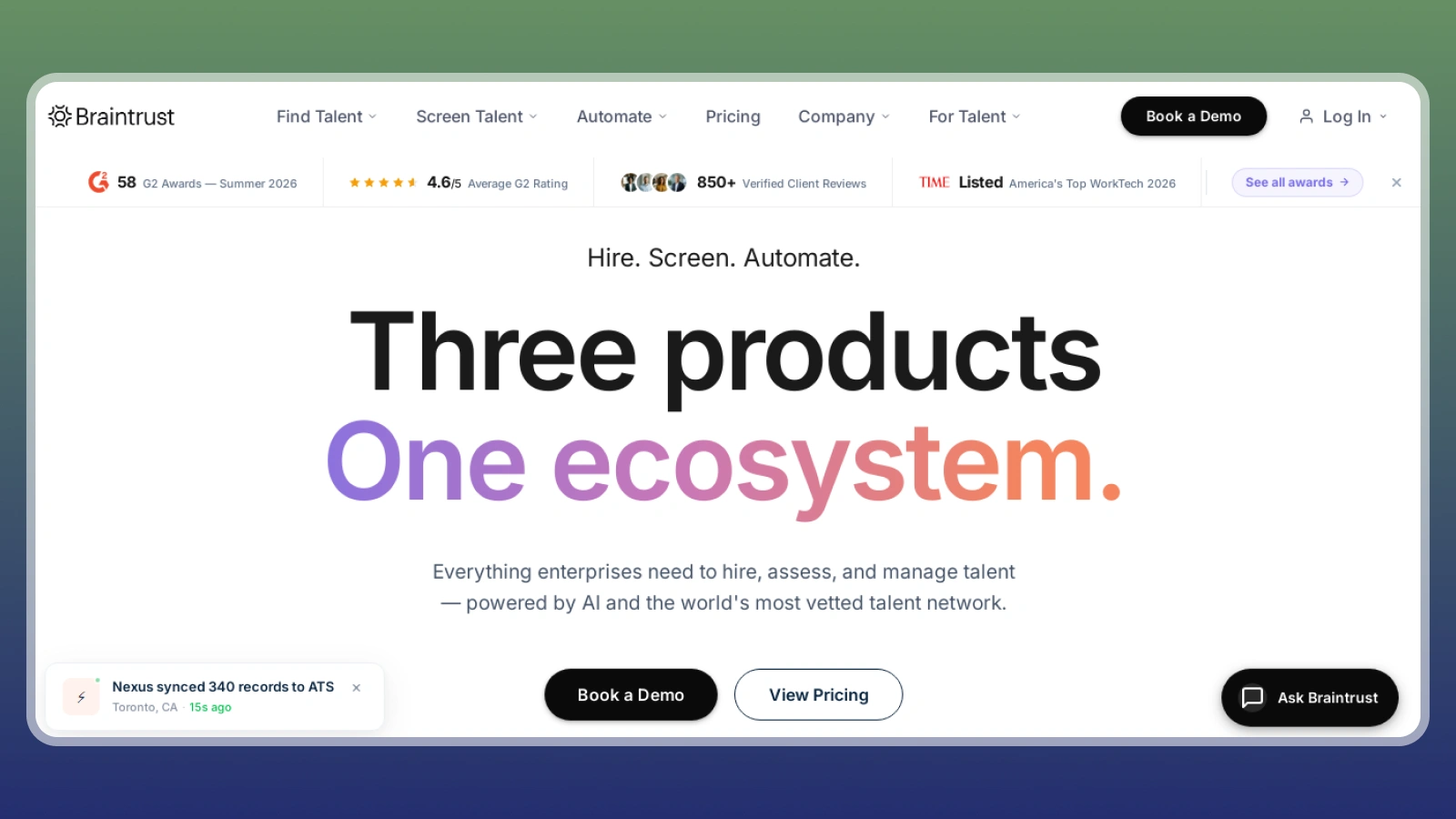
Braintrust stands out among freelance marketplaces because freelancers keep 100% of their invoiced rate. The platform charges clients a 15% fee instead. A 2026 analysis of live Braintrust listings by aigigjobs.com put AI-related gigs at an average of $53 an hour, though that figure reflects vetted Approved Talent profiles and should not be treated as a beginner rate.
For experienced workers comparing the best freelance platforms, that 0% freelancer fee is a major advantage. Getting access to freelance work online still takes some preparation.
- Joining is free.
- Approval requires a completed profile, resume, and roughly 10-minute one-way video screening.
- Approval plus a first contract typically takes 2 to 4 weeks.
- Invoices settle on net-30 terms once the work is complete.
Braintrust raised an $80 million Series B in February 2026, and its site reported more than 2 million vetted professionals in its Talent Marketplace in early 2026. The network had previously cited more than 600,000 professionals.
If you are learning how to make money freelancing through Braintrust, finish the Approved Talent process before applying heavily. Once your profile is ready, our freelancing tips guide covers practical ways to improve your proposals, positioning, and client outreach.
The common mistake is sending applications too early, since profiles without the badge are shown to clients less often.

2. Commission-Free Client Work on Contra
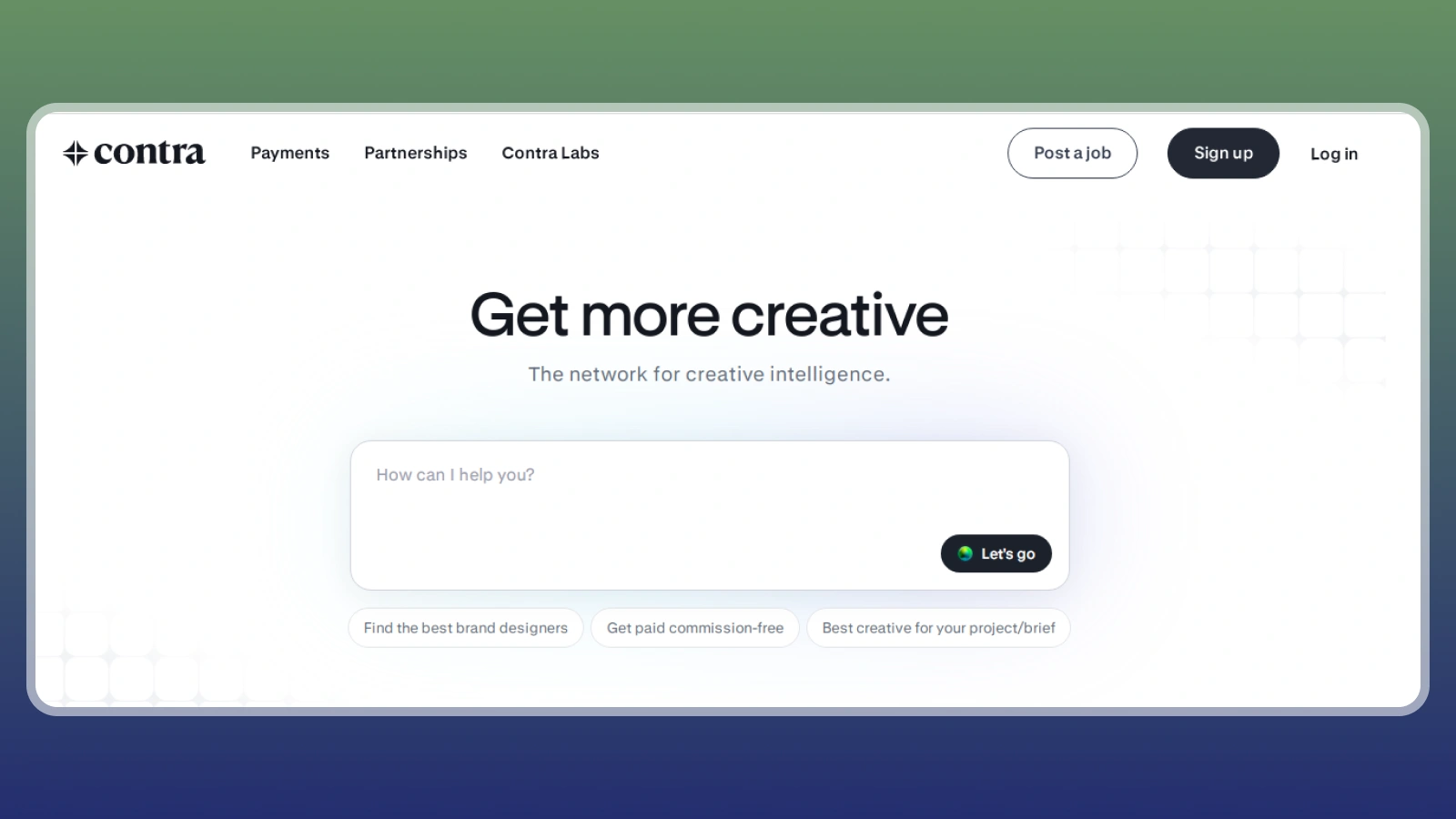
Contra also lets freelancers keep 100% of what they earn. Clients pay a tiered $2 to $29 project fee based on project value, with the same structure applying to one-time and ongoing contracts.
That makes Contra different from freelance marketplaces built mainly around cold bidding. It works best for independent creatives who already have a strong portfolio or clients and want a cleaner way to manage projects and invoices.
For that kind of freelancer, Contra can sit among the best freelance platforms because the freelancer-side commission stays at 0%.
- The Independent account is free.
- Contra Pro costs $29 a month and adds branding and analytics features.
- A portfolio-style profile with real project samples is the main requirement.
- Payment can arrive as soon as the client pays the invoice because there is no additional platform approval queue.
Contra had raised $45 million from investors including New Enterprise Associates since its 2019 launch.
For anyone building freelance work online, the common mistake is treating Contra like a job board that will automatically supply leads. If you are learning how to make money freelancing on Contra, a thin profile with no strong case studies gives prospective clients little reason to choose you.

3. Bidding for Projects on Freelancer.com
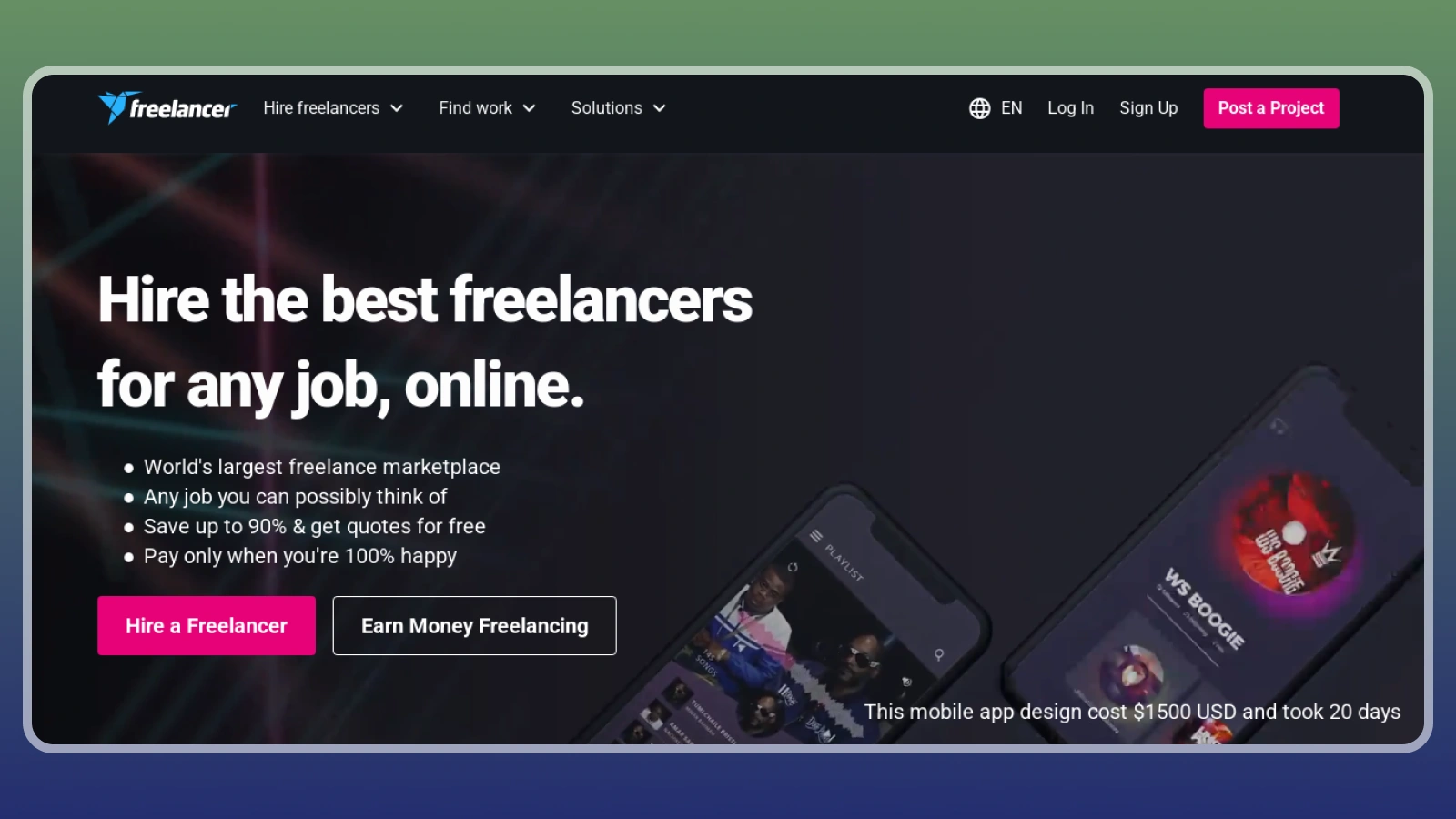
Freelancer.com is one of the most conventional freelance marketplaces in this list. It charges 10% or $5, whichever is greater, on fixed-price and hourly payments according to its fees-and-charges page. At $60,000 in annual gross income, a 10% rate works out to roughly $6,000 in platform fees before withdrawal costs.
For beginners comparing the best freelance platforms, the appeal is access to a large pool of projects you can bid on. The trade-off is that every application competes with other freelancers looking for the same freelance work online.
Joining is free, but there are a few costs and payment rules to know.
- Bidding uses a limited monthly allowance.
- Client funds can sit in Milestone Payments until the client releases them.
- PayPal and Payoneer withdrawals carry a $1 fee.
- Wire withdrawals cost $25.
- Freelancers who bring their own client can pay 0% commission on that specific relationship.
If you are figuring out how to make money freelancing here, selective bidding matters more than sending as many proposals as possible. The common mistake is using the monthly allowance on generic or poorly matched projects instead of a smaller set that closely fits your skill.

4. Lower-Fee Freelancing on Guru
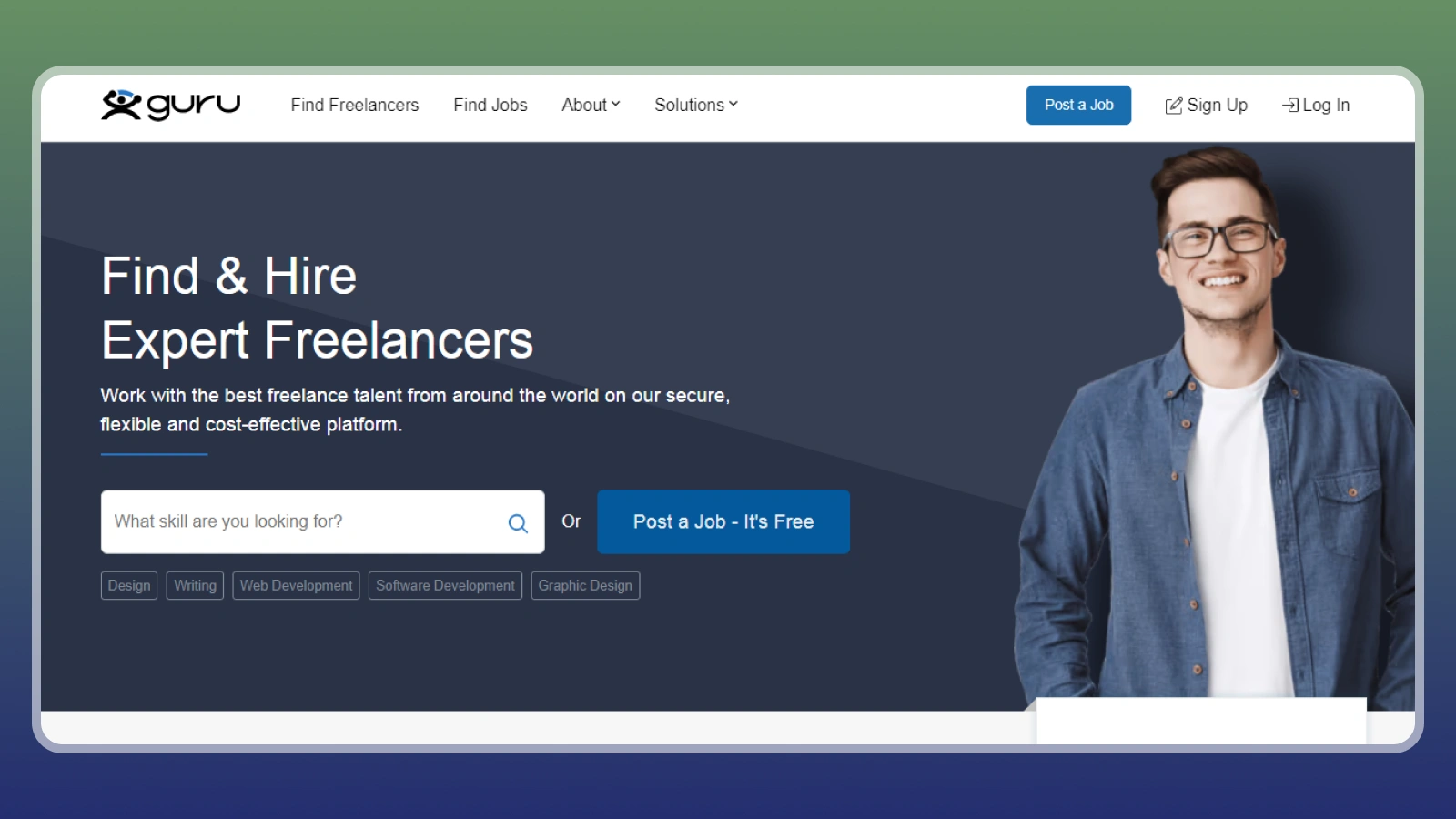
Guru’s job fee starts at 9% on the free Basic membership and can fall to 5% on its paid Executive tier. On a $1,000 invoice, that leaves $910 on Basic or $950 on Executive.
The difference becomes more important as freelance work online grows into steady monthly income. Staying on the free tier can cost more over a year if the lower transaction fee would save more than the paid membership costs.
Signing up is free, with paid memberships optional.
- Each client uses Guru’s Workroom invoicing system.
- Funds release after the client approves the invoice.
- The employer pays a separate 2.9% handling fee on card payments.
- That employer fee can fall to 0% for eCheck or wire payments.
If you are learning how to make money freelancing at higher volume, check the numbers before automatically staying on the free membership. The common mistake is assuming the 9% rate is always cheaper because it does not require a subscription.
If you are fitting freelance work around a regular job, how to earn extra income while working full time covers other ways to make limited spare hours more productive.

5. Repeat Client Work on PeoplePerHour
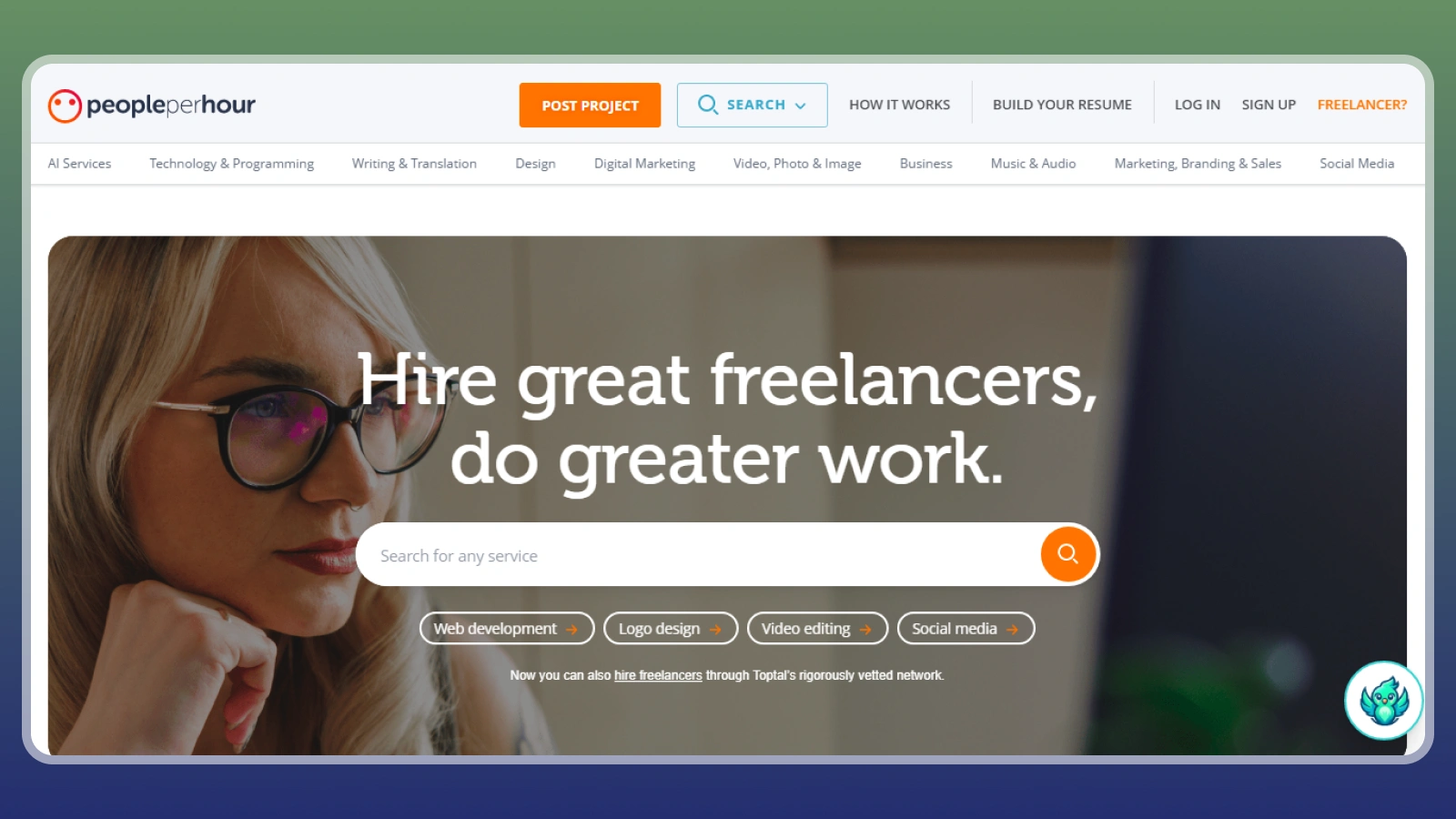
PeoplePerHour rewards repeat client relationships through a declining service fee. The platform charges 20% on the first £250 billed to a new client, 7.5% between £250 and £5,000, then 3.5% after lifetime billing with that client passes £5,000.
The fee resets with every new client. That makes repeat work much more valuable than constantly starting fresh relationships through freelance marketplaces.
For freelancers comparing the best freelance platforms for long-term client work, that declining fee is the main attraction. A freelancer earning through the same client keeps more of each pound as the relationship grows.
Joining costs nothing. You can sell fixed-price Hourlies or bid on posted Projects.
- New earnings have a standard 14-day holding period.
- Payout must be requested manually after the hold clears.
- Web developers and designers commonly list £30 to £100 an hour.
- Writers and virtual assistants commonly list around £15 to £50 an hour.
That makes it a viable place to find freelance work online, but the common mistake is forgetting to request a payout once the holding period ends. The money can sit in the account even though it is ready to withdraw.

6. Packaged Freelance Services on Fiverr
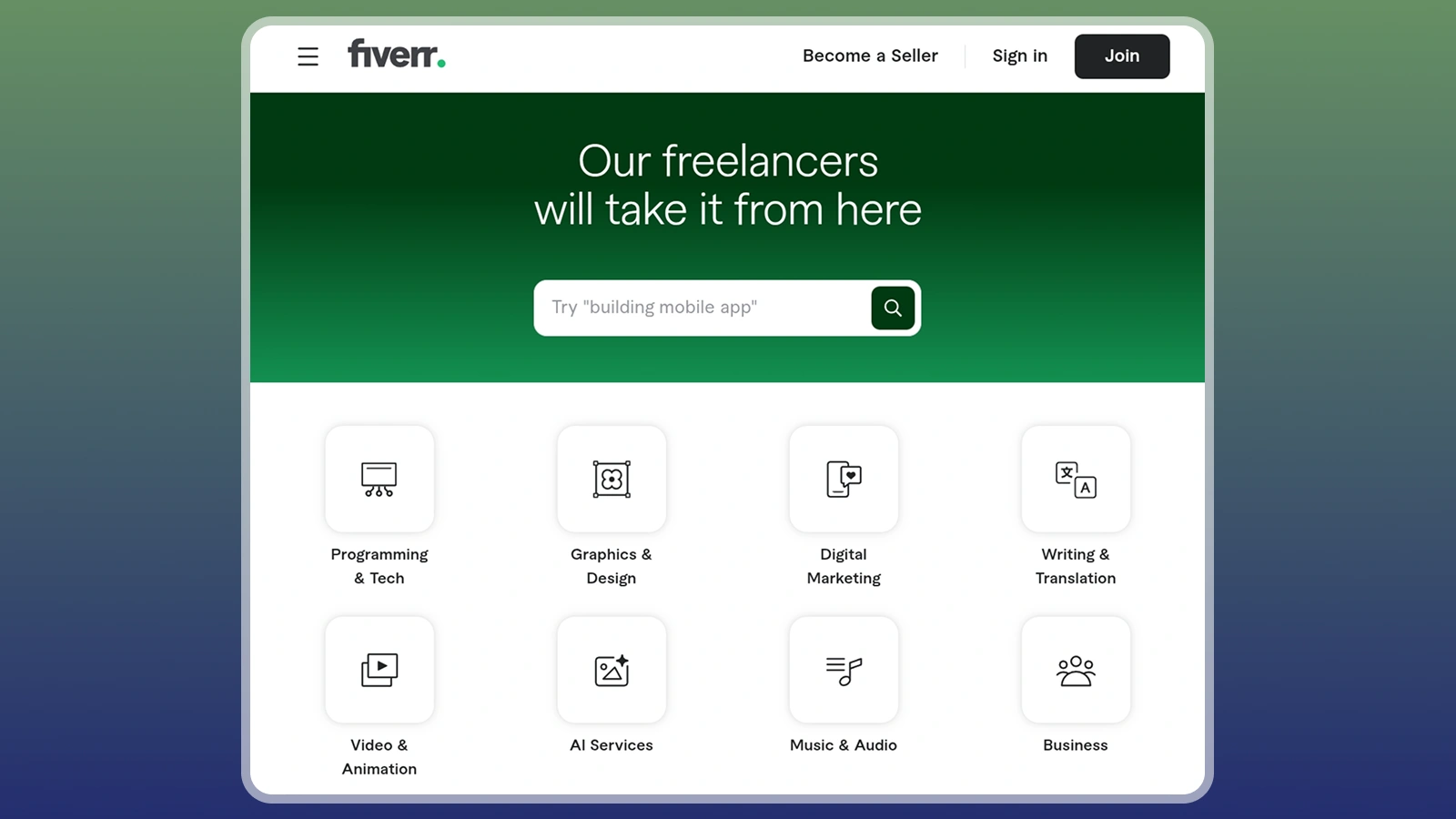
Fiverr works well when you can turn a service into a clearly defined Gig with a set price, scope, delivery time, and revision limit. Joining is free, and there is no fee to list a service. Freelancers keep 80% of each completed order, with Fiverr taking the remaining 20%.
That structure suits work you can package before a client orders, such as logo design or WordPress fixes. You can offer up to three pricing tiers for a Gig, which makes it easier to separate a basic service from more involved work.
A few payout details matter.
- Standard earnings clear after 14 days once an order is completed.
- Seller Plus, Top Rated, and Pro Talent freelancers can qualify for a 7-day clearance period.
- Clients can order directly from a Gig, so you do not always need to win a proposal before work starts.
- Your package price needs to account for the 20% cut before you decide whether the job is worth taking.
The common mistake is pricing the first Gig too aggressively. A low headline price gets thinner after Fiverr’s cut, especially when the project includes several revisions.
7. Finding Client Projects on Upwork
Upwork gives freelancers access to client-posted projects across a wide range of skills. Its 2026 rate guide puts entry-level and administrative work around $10 to $25 an hour, intermediate professional work around $25 to $75, and specialized development, AI, or consulting work around $75 to $150 or more. These are directional profile-rate benchmarks, not guaranteed earnings.
Joining Upwork is free. The freelancer service fee ranges from 0% to 15% per contract, and you can see the applicable rate before accepting the work. Once the contract starts, that percentage stays fixed for that contract.
Payment timing depends on the contract.
- Fixed-price work clears five days after the client approves a milestone.
- Standard hourly earnings become available 10 days after the weekly billing period.
- Top Rated freelancers can qualify for faster hourly payouts.
- The fee needs to be included when setting your rate, since the amount shown to the client is not always the amount you keep.
The common mistake is applying too broadly. A profile built around one clear service and proposals aimed at closely matched projects gives clients a stronger reason to choose you than a generic pitch.

How the 7 Platforms Compare
Here’s how the fee and startup cost compare across these freelancing platforms before you pick one.
| Platform | Freelancer Fee | Startup Cost | Payout Timing |
|---|---|---|---|
| Braintrust | 0% (client pays 15%) | Free | Net-30 after invoice |
| Contra | 0% | Free ($29/month Pro optional) | After client payment, depending on payout method |
| Freelancer.com | 10% or $5 minimum | Free | After milestone release, typically days |
| Guru | 5% to 9% by tier | Free (paid tiers optional) | After Workroom invoice approval |
| PeoplePerHour | 20% down to 3.5% per client | Free | 14-day hold, manual request |
| Fiverr | 20% | Free | 14-day standard clearance after completion, 7 days for eligible freelancers |
| Upwork | 0% to 15% per contract | Free | 5 days after fixed-price approval, 10 days for standard hourly earnings |
The best freelance platforms depend on the kind of income you want. Braintrust and Contra protect more of your take-home pay, while Freelancer.com, Guru, and PeoplePerHour give you access to more traditional freelance marketplaces where clients post work.
For freelance work online, check how much a platform takes before focusing on its advertised rates. Anyone learning how to make money freelancing should also account for screening requirements and payout holds before deciding which option looks most profitable.
If freelancing platforms feel like too much bidding during a slow week, a smaller side-income source can help cover the gap while you wait for invoices or client approvals.
Can Play-to-Earn Apps Add Extra Income Alongside Freelancing Platforms?
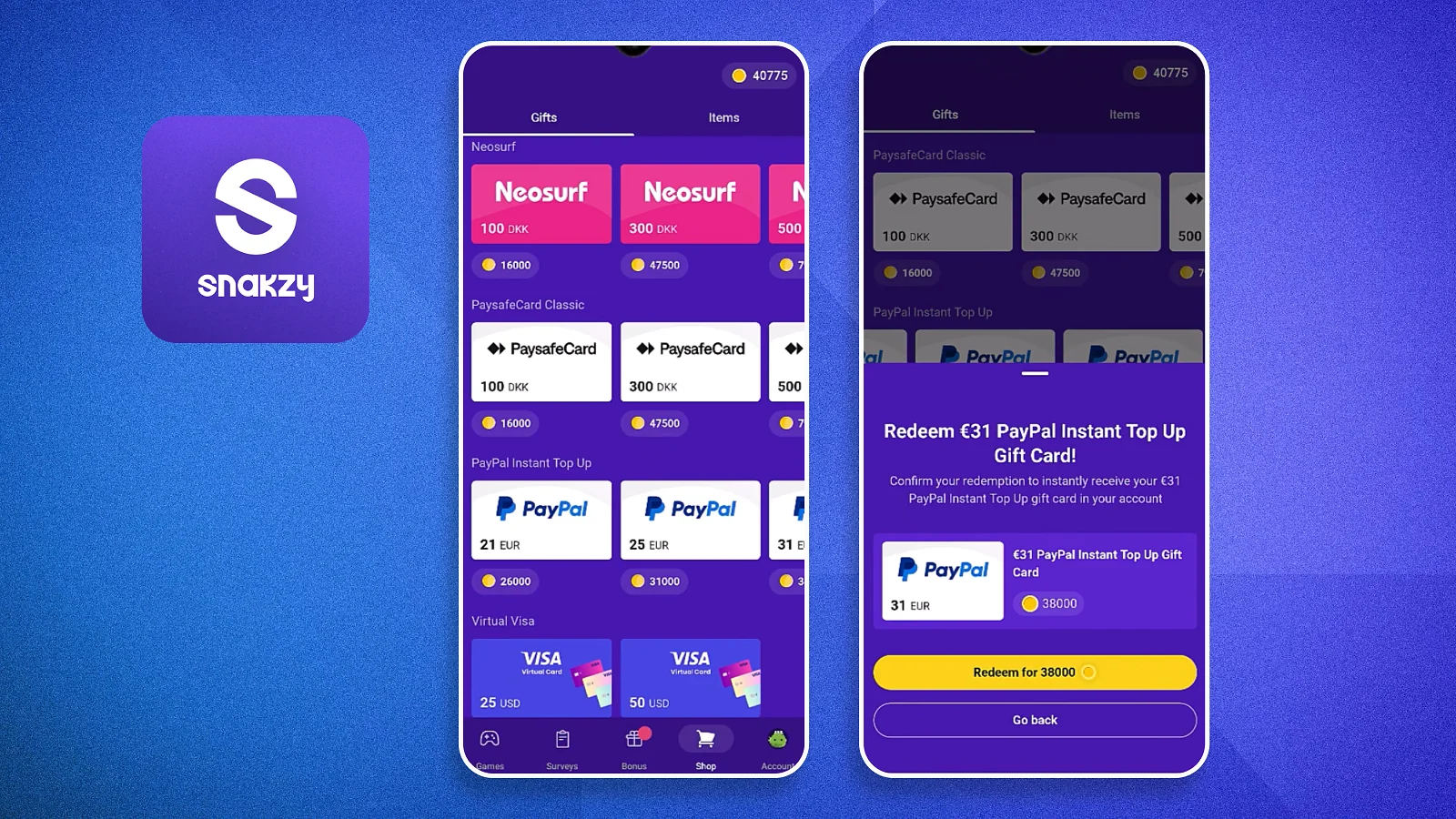
Yes. Reward apps can add around $10 to $50 a month in low-effort supplemental income while a freelancer waits for client payments. None of them replace freelancing platforms as a primary income source.
They work best during the slow first weeks when freelancing platforms are still producing inconsistent client income. Reward apps usually pay for tasks, surveys, or app testing, so there is no portfolio or client relationship required.
For a wider range of income ideas beyond reward apps and client work, our best side hustles guide compares other ways to earn alongside your main job or freelance work.
Free to join, with no application wait and a $35 minimum payout.
What Doesn’t Work
Freelancing platforms become much harder to use profitably when you expect instant income or ignore the fee rules. Most costly mistakes are avoidable once you know what to look for.
- Paying for guaranteed client leads: The FTC warns about job scams that demand money upfront for supposed opportunities. Legitimate freelancing platforms never require payment just to be shown work.
- Ignoring the real fee tier: Staying on Guru’s free membership at high volume can cost more over a year than moving to a paid tier with a lower job fee.
- Pricing a Fiverr Gig too thin. Freelancers keep 80% of each completed order, so a cheap package gets even thinner once the platform cut and revision time are accounted for.
- Expecting full-time income in week one: Bid-based freelancing platforms realistically take around two to four weeks of proposal work before a first paid client for many beginners.
For options with a shorter ramp-up, make money today covers ways to bring in extra cash while freelance work is still building.
Final Verdict on Freelancing Platforms
The best freelancing platforms for most readers are Braintrust if you already have a strong professional track record and Freelancer.com if you need a wider pool of projects while building one. Braintrust’s 0% freelancer fee protects more of an established rate, while Freelancer.com has a lower barrier to getting started.
In a broader comparison of the best freelance platforms, your experience matters more than brand recognition. Contra works better when you already bring clients, while PeoplePerHour rewards longer client relationships. Upwork suits broader project hunting, while Fiverr makes more sense when you can package a service upfront.
A few hundred dollars in the first month is more realistic than immediate full-time income, with $500 to $2,000 a month becoming more plausible once reviews build. The fastest path is choosing freelancing platforms that match your existing skill and your patience for the first slow month.
Free to join, with no application wait and a $35 minimum payout.
FAQs
No. Most freelancing platforms are free to join. Paid memberships on services like Guru can lower fees or add features, but you do not need a paid tier to start.
Of the freelancing platforms in this list, Freelancer.com is the easiest entry point because you can create a free profile and bid on projects before building a long freelance track record.
It depends on the platform. Contra can pay once a client settles an invoice, while PeoplePerHour applies a 14-day holding period to new earnings before withdrawal.
No, but a portfolio makes winning work much easier. Contra and Braintrust rely heavily on profile quality and evidence of past work when clients evaluate freelancers.
Yes, established freelancing platforms use payment systems designed to protect transactions. Keep communication and payments on-platform, and avoid anyone promising guaranteed work for an upfront fee.
Early earnings can sit around $200 to $800 in month one and rise toward $500 to $2,000 once reviews build. Your take-home also depends on which of the freelancing platforms you use because fees vary.