

15 Income Ideas for 2026: Real Passive and Extra Income Methods That Pay

Eneba Hub contains affiliate links, which means we may earn a small commission if you make a purchase through them—at no extra cost to you. Learn more


QUICK LOOK
There are plenty of income ideas worth exploring, even if you’re starting with a limited budget. You could earn rental income from unused space or turn a useful skill into a digital product that keeps selling after launch. The opportunities depend on what you already have and how much time you’re willing to commit.
This guide explores 15 income ideas, covering savings interest, investing, asset rentals, digital sales, and paid services. They have different startup costs and payout patterns, so there’s no single best option for everyone.
I’ll explain how each method generates money, what you need to get started, how fees affect the amount you keep, and when the first payment might realistically arrive. The goal is to help you choose an option that fits your available time and resources.
Jump to:
What Does It Really Take to Earn Passive Income?
Passive income ideas can work, but most require something upfront, whether that’s money to invest, an asset to rent, or time to create something people want. I’d consider both the initial commitment and the ongoing responsibilities before choosing an approach.
Here’s what you can expect from the different income models:
- Savings and investments: You can earn interest from savings accounts with little ongoing effort, while dividend stocks and real estate investments offer potential returns with financial risks. Meaningful earnings generally require substantial capital.
- Renting out assets: Spare storage space and swimming pools can generate rental income, provided there’s local demand. You’ll still need to consider maintenance, insurance, and managing bookings.
- Creating digital products: Courses, audiobooks, and digital downloads can generate sales long after they’re published. However, creating them takes time, and you may need ongoing promotion to attract buyers.
- Running a business or providing services: Vending machines and property co-hosting can provide additional income, but you’ll need to account for regular management and operating expenses.
If you’re comparing income ideas on a limited budget, reward apps offer a way to earn smaller amounts in your spare time. They require active participation, but they can complement a longer-term earning strategy. If you’re weighing the effort involved in different earning methods, our guide to active income vs passive income explains the distinction in more detail.
Free to join for games and offer rewards, with a $35 minimum payout.

15 Income Ideas to Consider in 2026
These 15 income ideas offer different ways to put your money, skills, or existing assets to work. Each entry covers the startup requirements, potential earnings, payout expectations, and limitations worth considering before you get started.
1. Offer Freelance Services on Upwork (Best for Selling Your Skills)
|
Upwork at a Glance |
|
|---|---|
|
Best for |
Turning professional skills into freelance income |
|
Startup cost |
Free profile. Paid Connects cost $0.15 each |
|
Earnings |
Negotiated rates minus 0%–15% service fees |
|
Payout |
Fixed-price: 5 days after approval. Hourly: 10 days after the billing week |
|
Main catch |
Client competition and proposal costs |
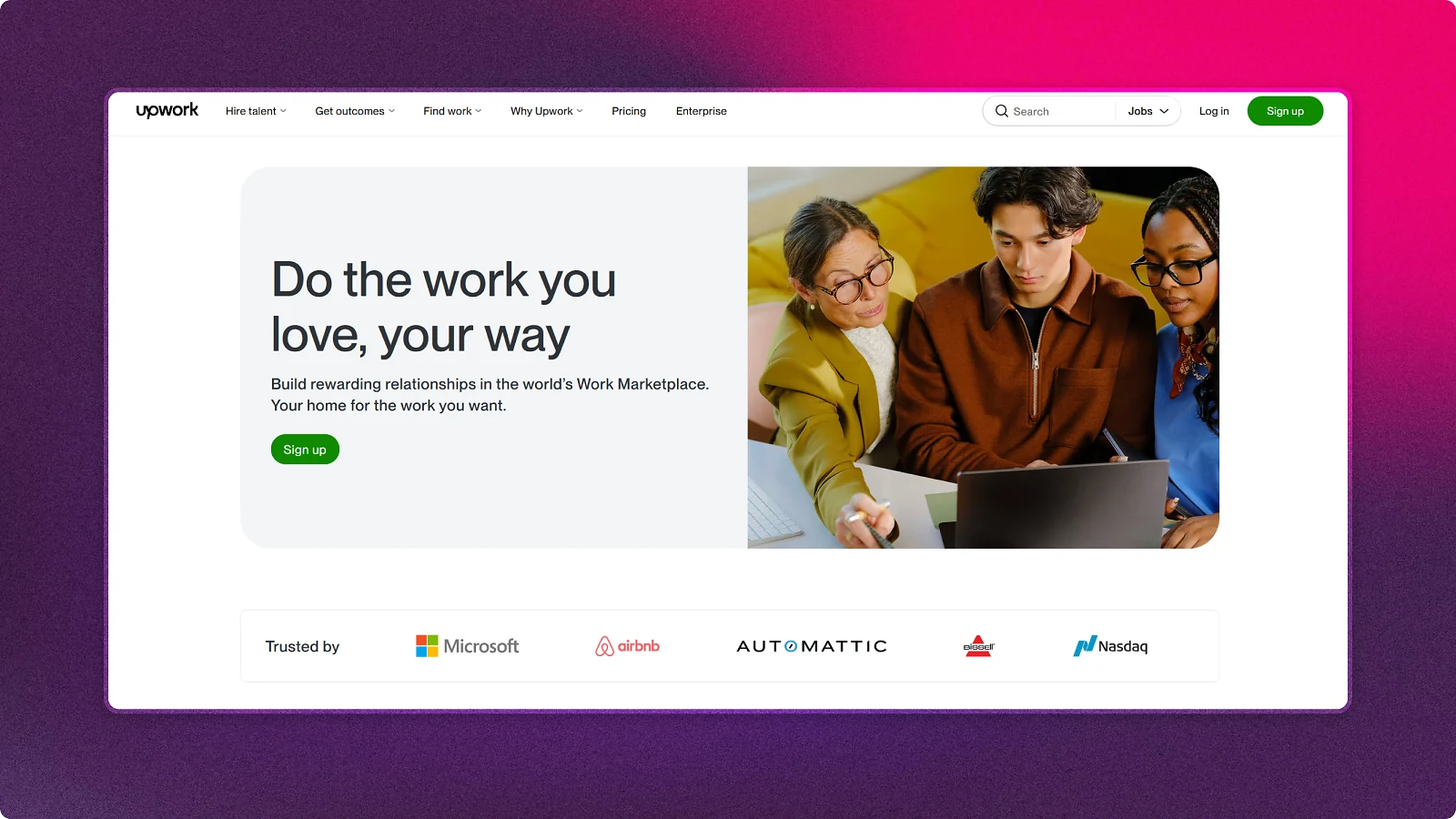
If you have a marketable skill, freelancing is among the income ideas you can pursue with little upfront spending. Upwork connects you with clients looking for freelance services. You can find writing assignments, design projects, website development work, or virtual assistant jobs. You set your rates, choose which projects to pursue, and get paid for completed work.
Creating a freelancer profile is free, but applying for jobs usually requires Connects. The number needed varies by project, and free Connects aren’t guaranteed. Upwork also deducts a service fee from your contract earnings. For example, a $200 project with a 10% fee leaves you $180 before proposal costs, withdrawal charges, and taxes.
I’d recommend starting with one service you can confidently deliver and adding relevant work samples to your profile. Check each client’s hiring history and project requirements before spending Connects on a proposal. A targeted application that demonstrates your experience is a better use of your budget than applying to every available job.
The biggest hurdle is securing your first client. You could spend time and money submitting proposals before landing paid work. For fixed-price jobs, make sure the milestone is funded before starting, and submit your work through Upwork to trigger the client’s review period. Among skill-based income ideas, freelancing can become steadier when you build repeat client relationships, though work is never guaranteed.

2. Teach Online With Preply (Best for One-on-One Tutoring)
|
Preply at a Glance |
|
|---|---|
|
Best for |
Teaching languages or academic subjects online |
|
Startup cost |
Free profile. Computer, webcam, and microphone required |
|
Earnings |
Tutor-set rates minus 18%–33% commission after trial lessons |
|
Payout |
After confirmed paid lessons. Withdrawal minimum varies by method |
|
Main catch |
Trial lessons pay $0, and regular students aren’t guaranteed |
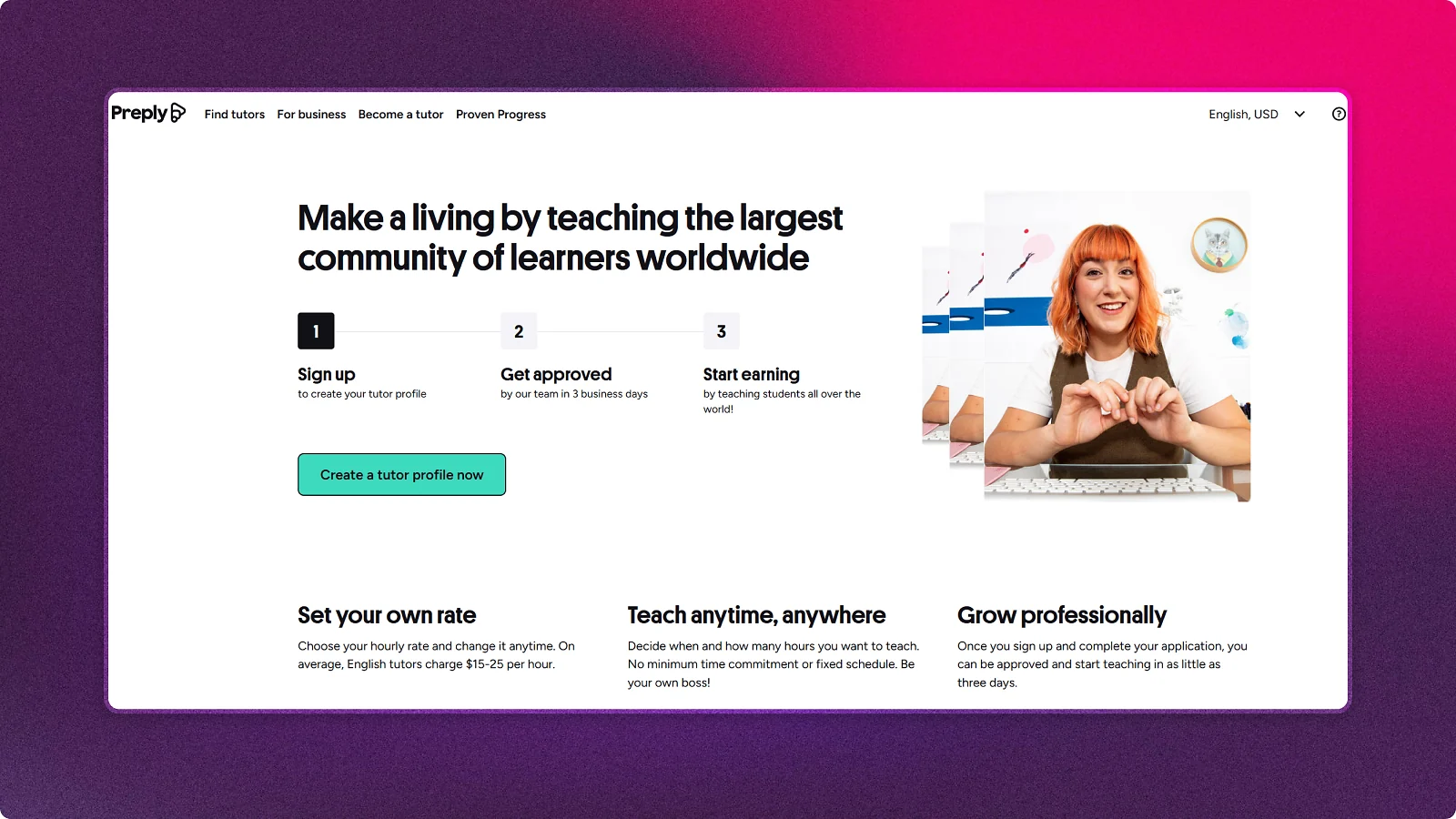
If you’re exploring income ideas that rely on subject knowledge, Preply lets you earn by teaching a language or school subject online. The platform connects you with students seeking one-on-one online lessons, and you can teach from home at times that suit your schedule. You set your hourly rate, and no formal teaching certificate is required to apply, although relevant qualifications can help your profile stand out.
The main drawback is Preply’s commission structure. Your first trial lesson with each new student earns you nothing, since the platform takes a 100% commission. Regular lessons start with a 33% fee, which gradually decreases to 18% as you accumulate teaching hours. At the initial rate, a $20 lesson leaves you $13.40 before withdrawal fees and taxes.
To attract students, focus your profile on a subject you’re confident teaching and explain what learners can achieve through your lessons. Your introduction video should demonstrate how you communicate, while your availability should reflect hours you can consistently commit to. I’d prioritize building relationships with returning students, since that’s where paid lessons become more predictable.
After a regular lesson is confirmed, your earnings enter your Preply balance. You can withdraw through supported methods such as PayPal or bank transfer, although minimums and fees differ. PayPal has no minimum withdrawal but charges 2%, while bank transfers start at $10. With lesson-based income ideas like tutoring, your earnings depend on how many sessions students actually book and whether they return.

3. Offer Pet Sitting and Dog Walking on Rover (Best for Local Pet Care)
|
Rover at a Glance |
|
|---|---|
|
Best for |
Pet lovers seeking flexible local work |
|
Startup cost |
$49–79 profile review fee in the US |
|
Earnings |
Set your rates. Usually keep 80% of booking earnings |
|
Payout |
Processing starts 2 days after a completed service |
|
Main catch |
Upfront fee, variable demand, and pet-care responsibilities |
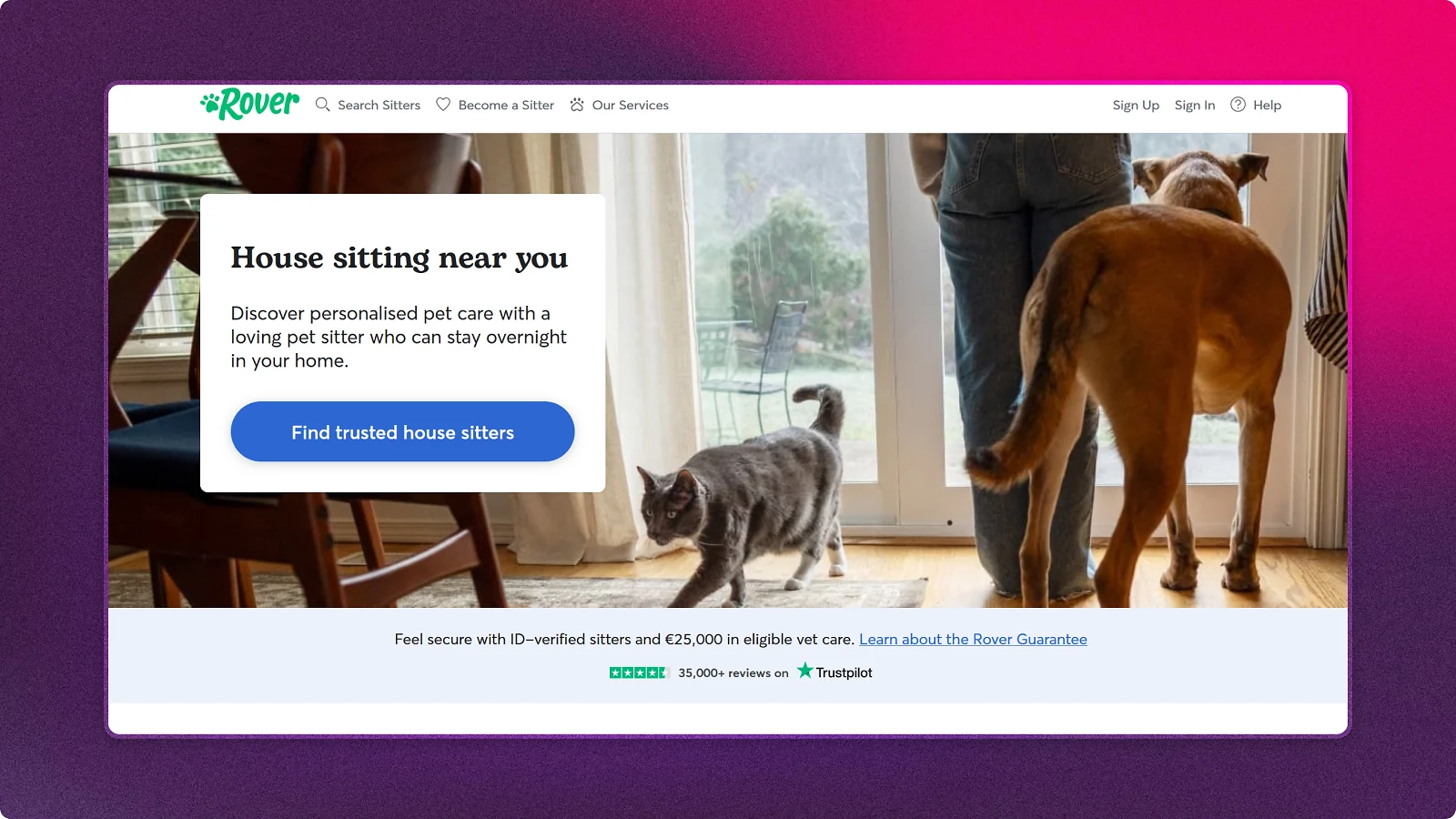
Pet owners often need someone reliable to care for their animals while they’re working or traveling. Dog walking and pet sitting are local income ideas that serve that demand. With Rover, you can offer dog walking, drop-in visits, house sitting, or pet boarding in your area. You choose your services, set your rates, and control your availability, making it a practical side hustle if you enjoy caring for animals.
Getting started involves an upfront expense. In the US, Rover charges a $49 to $79 profile review fee, depending on your location. You’ll also need to complete the required screening and approval process before accepting bookings. Under its standard service-fee model, Rover takes 20% of your booking earnings. A $30 service would therefore leave you $24 before expenses and taxes, although fee arrangements differ in California and certain other markets.
Your chances of securing bookings depend heavily on the trust you build with local pet owners. Use genuine photos, describe your pet-care experience, and request testimonials from people whose animals you’ve previously cared for. I’d also recommend arranging a meet-and-greet before accepting a new pet, especially if you’re unfamiliar with its temperament or care requirements.
Rover begins processing your payment two days after a completed service, with bank deposits potentially taking up to five additional business days. Remember to account for travel expenses and the time spent communicating with owners. The first few bookings may be difficult to secure. For service-based income ideas like pet care, positive reviews and repeat clients can make work more consistent.

4. Earn Interest With a High-Yield Savings Account (Best for Low-Maintenance Earnings)
|
High-Yield Savings at a Glance |
|
|---|---|
|
Best for |
Earning interest on existing savings |
|
Startup cost |
Many accounts have no fees. Opening deposits vary |
|
Earnings |
Around 4% APY on competitive US accounts (October 2026) |
|
Payout |
Interest typically credited monthly |
|
Main catch |
Variable interest rates and balance requirements |
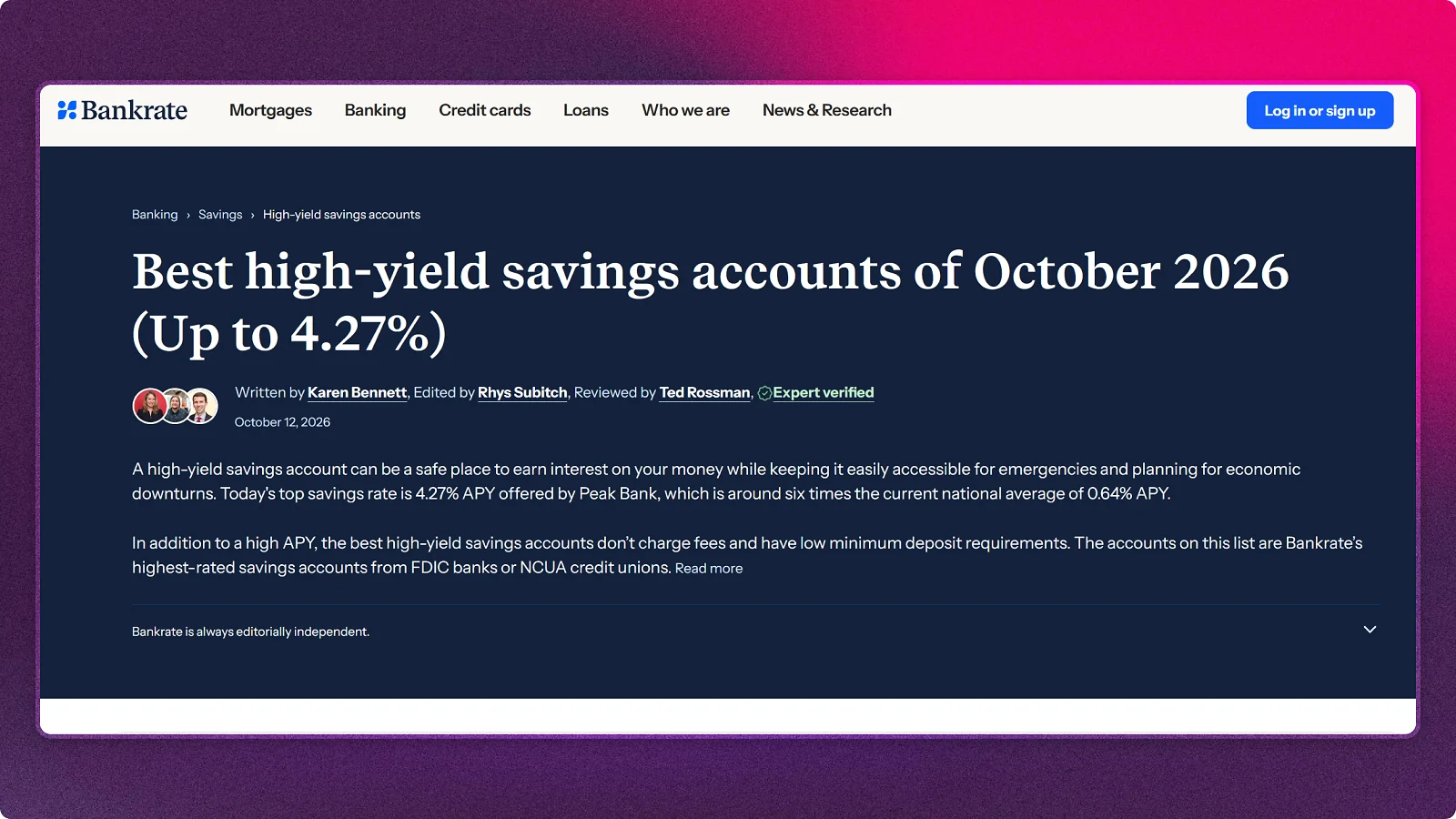
Money sitting in a traditional savings account could earn considerably more interest in a high-yield savings account (HYSA). These accounts work much like regular savings accounts, but generally offer higher annual percentage yields (APYs). You can earn interest on your balance with little ongoing effort, making this one of the more accessible passive income ideas if you already have savings.
Savings-based income ideas depend heavily on how much you have deposited. As of October 2026, several competitive US accounts offer around 4% APY. At that rate, a $1,000 balance could earn approximately $40 annually, while $10,000 could generate around $400 before taxes. These examples assume your balance and APY remain unchanged throughout the year. Savings rates are variable, so your actual earnings may differ.
Before choosing an account, pay attention to these details:
- APY requirements: Check minimum balances and promotional conditions.
- Account fees: Look for monthly charges that reduce your interest.
- Withdrawals: Check transfer times and transaction limits.
- Deposit insurance: Confirm FDIC or NCUA coverage.
Most high-yield savings accounts credit interest monthly, and you can generally withdraw your money when needed. At FDIC-insured banks, eligible deposits receive protection up to $250,000 per depositor, per bank, per ownership category. I’d prioritize an account with clear rate conditions and no monthly maintenance fees, especially if you’re building your savings gradually.

5. Sell Digital Products on Gumroad (Best for Digital Downloads)
|
Gumroad at a Glance |
|
|---|---|
|
Best for |
Creators selling templates, ebooks, and other downloads |
|
Startup cost |
Free to list, with fees on each sale |
|
Earnings |
Direct sales: 10% + $0.50 plus processing fees. Discover: 30% |
|
Payout |
$100 standard minimum, with weekly payouts available |
|
Main catch |
Finding buyers and reaching the payout minimum |
A useful spreadsheet, design template, or digital planner can generate extra income each time someone purchases a copy. Gumroad gives you a storefront to sell these digital products, handle payments, and deliver files automatically. Among digital income ideas, products you create once can generate repeat sales, but those sales still depend on finding customers.
There are no monthly subscription fees, but Gumroad takes 10% plus $0.50 on standard direct sales, with payment processing charged separately. If someone buys your $20 template through your own link, the platform fee is $2.50 before processing charges. Sales generated through Gumroad Discover carry a 30% fee, which includes processing costs.
The product itself is only part of the work. Before investing hours into creating something, I’d recommend checking whether people actually need it. A few ways to improve your chances include:
- Solve a specific problem: Create something with a clear use.
- Show a preview: Let buyers see what they’re purchasing.
- Price carefully: Account for platform fees and production time.
- Promote consistently: Share your product with relevant audiences.
The $100 minimum for standard payouts matters if you’re evaluating income ideas for occasional, low-priced sales. You can schedule weekly payments, but eligible sales generally have a seven-day holding period. Some established US sellers qualify for instant payouts under different rules. Sales also depend on your ability to attract buyers, and updating products or answering customer questions can require ongoing work.

6. Rent Out Spare Space With Neighbor (Best for Unused Storage Space)
|
Neighbor at a Glance |
|
|---|---|
|
Best for |
People with available storage or parking space |
|
Startup cost |
Free to list. Preparation costs may apply |
|
Earnings |
Rental rate minus 4.9% + $0.30 per monthly payout |
|
Payout |
End of each rental period, plus bank processing time |
|
Main catch |
Requires suitable space and consistent renter demand |
An unused garage, driveway, or shed could become a source of monthly rental income through Neighbor. The platform connects you with people who need somewhere to store belongings or park vehicles. Space rental is among the income ideas where you set the price, choose what renters can store, and establish their access hours.
Neighbor advertises potential monthly rental rates of $50 to $150 for driveways and $100 to $600 for garages, although these are promotional estimates, not typical or guaranteed earnings. The amount you can charge depends on your location, available space, and local demand. Listing is free, but Neighbor deducts a 4.9% + $0.30 processing fee from each monthly payout. A $100 rental would therefore leave you $94.80 before other expenses and taxes.
Before accepting a booking, make sure your space is suitable for storage. I’d pay particular attention to:
- Local restrictions: Check property, lease, and HOA rules.
- Accessibility: Set clear entry hours for renters.
- Space conditions: Keep the area clean, secure, and usable.
- Liability: Review your insurance and Neighbor’s host protection terms.
Neighbor collects rental payments automatically and sends your earnings to Stripe at the end of each rental period. Bank deposits can take another two to three business days. Once you have a reliable renter, the work may be relatively limited, but you’ll still need to manage access and address any issues with the space. Finding a renter is the biggest uncertainty with space-rental income ideas, particularly if local storage demand is low.

7. Rent Out Your Pool on Swimply (Best for Pool Owners)
|
Swimply at a Glance |
|
|---|---|
|
Best for |
Homeowners with a private swimming pool |
|
Startup cost |
Free listing. Cleaning and insurance costs may apply |
|
Earnings |
Hourly rental rates minus 15%–25% platform fees |
|
Payout |
Released after 48 hours, usually deposited within 3–7 business days |
|
Main catch |
Seasonal demand, maintenance, and liability risks |
Your swimming pool could generate extra income during the hours you’re not using it. For homeowners considering rental income ideas, Swimply lets you host private swimming sessions by the hour. You control your availability, set your prices, and establish rules for how guests can use your property.
Listing your pool is free, although Swimply deducts 15%–25% from each booking, depending on the applicable fee. For example, a $60 booking would leave you $45–51 before cleaning, utilities, and taxes. You can also adjust your hourly rates based on the number of guests, which helps account for the extra work that larger groups may require.
I’d recommend checking nearby pool listings before setting your rates. Look at their prices, amenities, and guest capacities to understand what renters expect in your area. Make sure your pool is properly maintained and that you can accommodate guests safely. You’ll also need to check local hosting restrictions and speak with your insurer about paid rentals.
Swimply offers a protection guarantee of up to $1 million for qualifying liability claims, but you must maintain valid homeowners insurance for that protection to apply. Payments are released 48 hours after completed bookings, with bank deposits generally taking three to seven business days from the booking’s completion. Pool hosting is among the more seasonal income ideas, so I’d treat bookings as occasional earnings until local demand proves consistent.
8. Co-Host Airbnb Properties (Best for Short-Term Rental Management)
|
Airbnb Co-Hosting at a Glance |
|
|---|---|
|
Best for |
Managing vacation rentals for property owners |
|
Startup cost |
No property purchase. Operating or licensing costs may apply |
|
Earnings |
Negotiated percentage or fixed amount per booking |
|
Payout |
Usually released after guest check-in. Bank timing varies |
|
Main catch |
Finding clients and handling ongoing guest responsibilities |
Managing a vacation rental for someone else can earn you a share of its booking revenue. Among property-related income ideas, Airbnb co-hosting lets you help owners communicate with guests, coordinate cleaning, adjust availability, and oversee reservations. The work suits you if you’re organized and comfortable handling hospitality-related responsibilities.
Your earnings depend on the agreement you negotiate with the listing owner. Airbnb allows hosts to share a percentage of their booking payout, a fixed amount, or cleaning fees where supported. For example, if a property generates $2,500 in eligible host earnings after Airbnb’s fees, a negotiated 20% share would pay you $500 before your own expenses and taxes. There’s no universal co-host commission rate, and the responsibilities you accept should influence your fee.
Before taking on a property, clarify the division of work:
- Guest communication: Agree on response times and emergency coverage.
- Cleaning: Determine who arranges turnovers and covers supplies.
- Listing management: Define who controls pricing and availability.
- Payment terms: Specify your share, expenses, and cancellation rules.
You can start by approaching property owners who need help and getting invited to their listings. Joining Airbnb’s official Co-Host Network is more restrictive. It requires recent hosting experience, a strong guest rating, and a qualifying cancellation record.
For most reservations, co-host payouts are released by the end of the business day after check-in, although newer hosts and certain bookings may face delays. Co-hosting is one of the more hands-on income ideas here, so the number of properties you can manage depends on the support and time you have available.
9. Create and Sell Online Courses on Teachable (Best for Monetizing Expertise)
|
Teachable at a Glance |
|
|---|---|
|
Best for |
Turning specialized knowledge into paid courses |
|
Startup cost |
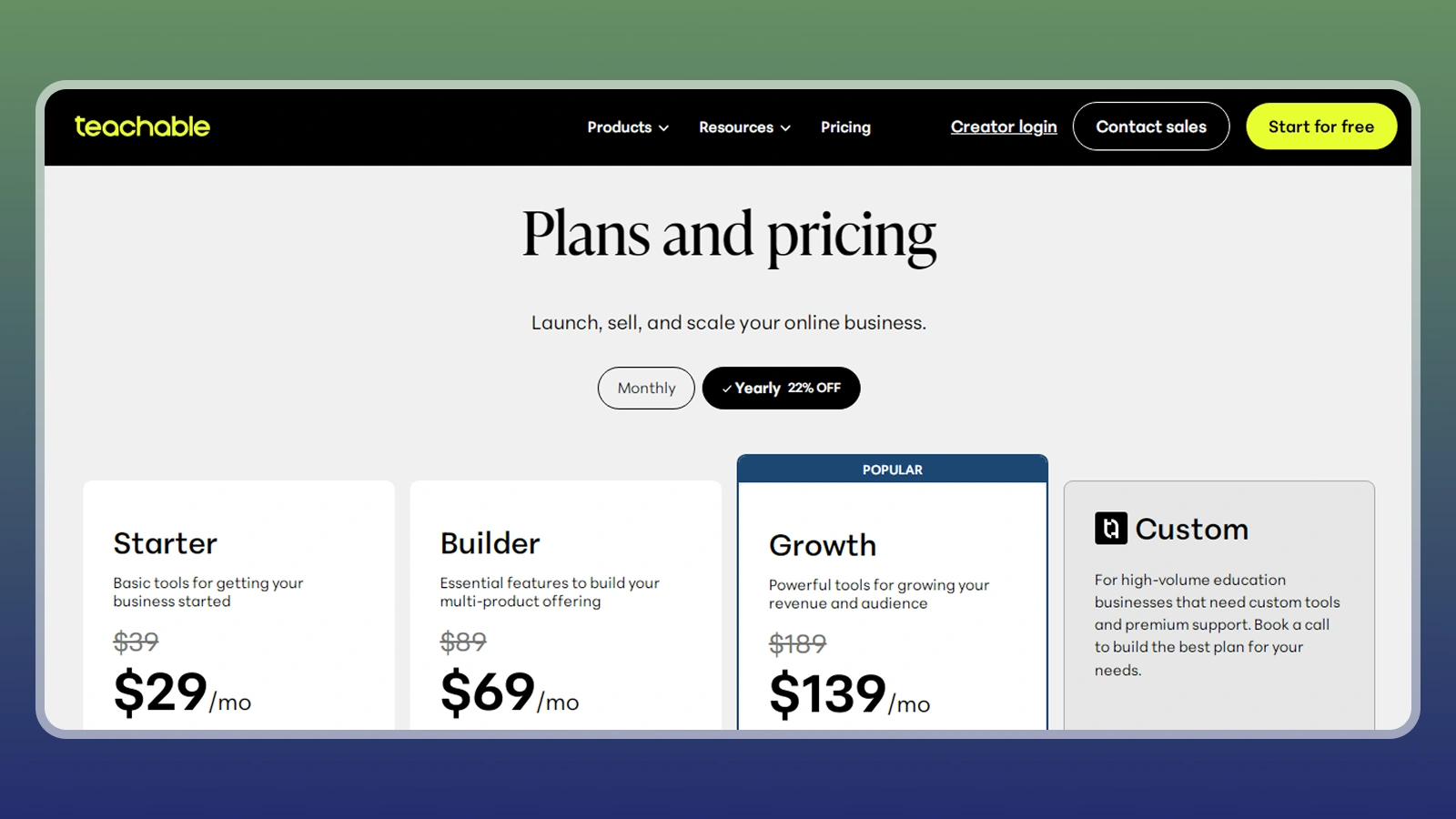
Starter: $39/month, or $29/month billed annually |
|
Earnings |
Course sales minus platform and processing fees |
|
Payout |
Typically 2 business days with Teachable Payments |
|
Main catch |
Recurring costs and uncertain student demand |
An online course lets you package your expertise into lessons students can purchase whenever they’re ready. Among knowledge-based income ideas, Teachable lets you create courses around subjects you know well, organize lessons, set prices, and manage student enrollment. Once your course is published, it can generate sales repeatedly, although attracting students may still require regular promotion.
Unlike platforms that charge only when you make a sale, Teachable has a recurring subscription cost. Its Starter plan costs $39 per month, or $29 per month with annual billing, and charges a 7.5% transaction fee. The Builder plan starts at $69 per month with annual billing and removes that platform fee. Payment processing charges still apply on both plans.
For perspective, selling a $100 course on Starter through US card processing would cost approximately $10.70 in transaction and processing fees, leaving $89.30 before subscription expenses and taxes. I’d recommend validating your course topic before committing to an expensive production process. Look for questions your target audience regularly asks, then build a focused course that addresses a specific learning goal. Early feedback from potential students can help you decide whether the topic is worth developing further.
With Teachable Payments, eligible creators generally receive payouts around two business days after a sale, although initial payments can take longer. Availability and schedules differ by payment gateway and country. That recurring fee matters when comparing digital income ideas. I’d prioritize finding an interested audience before adding more lessons or upgrading plans because a course with no paying students still costs money to host.

10. Self-Publish an Audiobook Through ACX (Best for Authors With Publishing Rights)
|
ACX at a Glance |
|
|---|---|
|
Best for |
Authors who own audiobook publishing rights |
|
Startup cost |
DIY production costs or negotiated narrator fees |
|
Earnings |
50% exclusive or 30% non-exclusive royalty rate |
|
Payout |
Monthly. Balances below $50 may roll over |
|
Main catch |
Publishing eligibility, production costs, and uncertain sales |
Publishing an audiobook is one of the more specialized income ideas on this list, especially if you’ve already written a book. ACX helps you turn an eligible title into an audiobook distributed through Audible, Amazon, and Apple Books. Once published, your audiobook can continue generating royalties from qualifying sales and listening activity.
Under ACX’s royalty model introduced in May 2026, exclusive distribution pays a 50% royalty rate, while non-exclusive distribution pays 30%. These percentages apply to eligible royalty revenue, which can depend on membership listening value. They aren’t necessarily percentages of the audiobook’s retail price.
Production costs depend on how you arrange the narration:
- Pay for production: Pay a narrator upfront and retain your applicable royalties.
- Royalty share: Split future royalties with a narrator for seven years.
- Royalty Share Plus: Combine an upfront payment with ongoing royalty sharing.
You can also produce the audiobook yourself if you have suitable recording equipment and meet ACX’s technical requirements. However, you’ll need audiobook rights and an eligible book listed on Amazon’s Kindle Store. ACX currently accepts rights holders from the US, UK, Canada, and Ireland.
Among passive income ideas, audiobook publishing makes the most sense when you already have a book and a potential readership. Royalties depend on listener demand, and a royalty-share arrangement reduces the amount you retain. Payments generally follow a monthly cycle, although ACX may carry balances below $50 into a later period.
11. Build a Faceless YouTube Channel (Best for Video Content Without Appearing on Camera)
|
YouTube at a Glance |
|
|---|---|
|
Best for |
Creators who prefer staying off camera |
|
Startup cost |
Free channel. Production tools may cost extra |
|
Earnings |
Variable ad revenue, sponsorships, and affiliate commissions |
|
Payout |
Monthly after reaching the applicable threshold ($100 in the US) |
|
Main catch |
Audience growth, monetization requirements, and content policies |
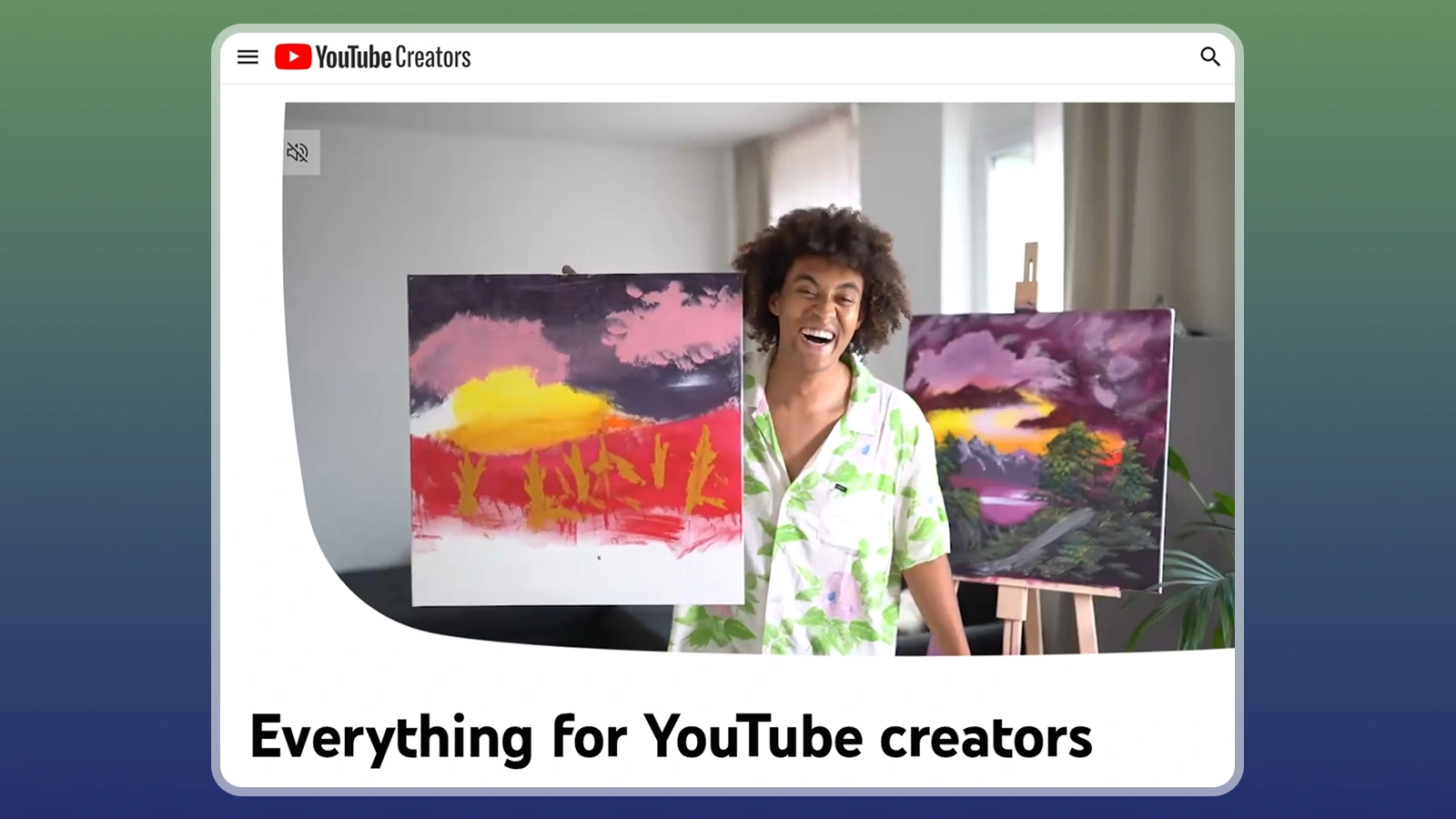
You don’t need to appear on camera to earn money through YouTube. A faceless channel can feature tutorials, narrated explainers, or screen recordings, provided you create content that offers genuine value. For creators comfortable with research and video editing, it’s one of the more flexible online income ideas, although building a successful channel takes consistent work.
To earn advertising revenue through the YouTube Partner Program, you generally need 1,000 subscribers and 4,000 valid public watch hours over 12 months, or 10 million valid Shorts views within 90 days. Meeting these thresholds allows you to apply for ad monetization, but approval still depends on YouTube’s review. A lower eligibility tier unlocks certain fan-funding features, not standard advertising revenue.
You can produce videos using licensed footage, original graphics, or screen recordings. However, faceless doesn’t mean automatically monetizable. YouTube restricts repetitive, mass-produced content and reused material that adds little original value. I’d focus on topics you understand well and develop your own scripts, commentary, and editing style.
Your earnings depend on your audience, video topics, advertising demand, and monetized views. Payments through AdSense for YouTube generally follow a monthly cycle once you’ve reached the applicable threshold. Compared with income ideas that pay for completed jobs, building a channel can take months before you qualify to earn advertising revenue, and even then, consistent views aren’t guaranteed.

12. Start a Blog and Monetize With Mediavine (Best for Established Blog Traffic)
|
Mediavine at a Glance |
|
|---|---|
|
Best for |
Bloggers with established traffic or advertising revenue |
|
Startup cost |
Domain, hosting, and content production expenses |
|
Earnings |
75% ad revenue share for eligible new-site Official publishers |
|
Payout |
Net 65 days. Usually $100 minimum |
|
Main catch |
Strict approval requirements and traffic dependency |
A blog can turn your knowledge of a particular subject into a publishing business that earns through advertising. Unlike income ideas built around immediate client work, blogging depends on attracting readers who find your content useful. Once your site has consistent traffic, advertising networks such as Mediavine can help monetize that audience.
Mediavine’s full advertising program requires at least $5,000 in annual ad revenue, along with original content and acceptable traffic quality. Smaller sites can apply through Journey by Mediavine, which requires at least 1,000 sessions from Tier 1 countries within 30 days. Meeting these requirements doesn’t guarantee acceptance, since both programs review content and traffic quality.
If you’re building a blog with monetization in mind, I’d prioritize these steps:
- Choose a focused topic: Write about subjects you understand.
- Publish useful content: Address specific reader questions.
- Build genuine traffic: Focus on attracting relevant visitors.
- Maintain your site: Update articles and resolve technical issues.
For sites launched after January 1, 2026, Mediavine Official generally gives qualifying publishers a 75% advertising revenue share, while higher program tiers offer larger shares. Payments follow net-65 terms, usually with a $100 minimum. If you’re considering online income ideas with long-term potential, blogging is worth exploring, but you’ll need to cover hosting costs and build substantial readership before expecting meaningful advertising income.
13. Invest in Dividend Stocks With Fidelity (Best for Long-Term Dividend Income)
|
Fidelity at a Glance |
|
|---|---|
|
Best for |
Investors seeking potential dividend income |
|
Startup cost |
No account minimum. Fractional investments start at $1 |
|
Earnings |
Variable dividends and potential share-price gains or losses |
|
Payout |
Depends on the investment, often quarterly |
|
Main catch |
Dividend cuts and potential investment losses |
Dividend-paying stocks let you earn a share of a company’s profits while holding its shares. Among income ideas that rely on invested capital, this approach requires relatively little ongoing management once you’ve built a portfolio. Through Fidelity, you can purchase individual dividend stocks or exchange-traded funds (ETFs) that hold several companies.
Fidelity has no minimum deposit for its standard brokerage account and offers fractional stock and ETF investments starting at $1. Online US stock and most ETF trades carry $0 commissions, although ETFs may charge annual expense ratios. Your actual dividend income depends on the investments you choose. For example, a $10,000 portfolio yielding 3% annually would generate approximately $300 in dividends before taxes, assuming distributions remain unchanged.
Dividend yield measures annual dividend payments relative to a stock’s current price. However, a higher yield doesn’t guarantee a better investment, since companies can reduce or suspend their dividends. I’d consider the company’s financial stability and dividend history before investing, or explore diversified dividend ETFs to spread exposure across multiple businesses.
You can receive dividends as cash in your Fidelity account or reinvest them to purchase additional shares. Payment schedules vary, with many companies paying quarterly. If you’re comparing income ideas based on predictable returns, remember that dividends aren’t guaranteed, and falling share prices can outweigh the income you receive. This approach is better suited to money you can keep invested for the long term.

14. Invest in Real Estate Through Fundrise (Best for Hands-Off Property Investing)
|
Fundrise at a Glance |
|
|---|---|
|
Best for |
Long-term investors seeking real estate exposure |
|
Startup cost |
$10 minimum for taxable accounts |
|
Earnings |
Variable dividends and property-value appreciation |
|
Payout |
Quarterly distributions when declared |
|
Main catch |
Limited liquidity and potential investment losses |
Real estate income ideas don’t always require buying a property or managing tenants. Fundrise lets you invest in professionally managed real estate funds with as little as $10 in a taxable account. Your potential returns come from dividends generated by the investments and changes in their underlying property values.
The platform charges a 0.15% annual advisory fee, while its real estate funds generally carry a 0.85% annual management fee. Together, that’s approximately 1% per year, or $10 on a $1,000 investment with an unchanged balance. Before investing, you can choose a plan based on your financial goals:
- Supplemental Income: Prioritizes potential quarterly dividends.
- Long-Term Growth: Focuses primarily on property appreciation.
- Balanced Investing: Combines income and growth objectives.
If your priority is receiving distributions, the Supplemental Income plan may be worth exploring. Fundrise aims to distribute eligible dividends after each quarter, either to your linked bank account or through automatic reinvestment. Neither dividends nor capital appreciation are guaranteed, and your investment can lose value if the underlying assets perform poorly.
I’d pay particular attention to how long you can leave your money invested. Most Fundrise funds review withdrawal requests quarterly, and redemptions may be limited or delayed. Certain eREIT investments also carry an approximate 1% penalty when redeemed within five years.
Compared with other income ideas in this guide, Fundrise is better suited to capital you won’t need for everyday expenses or short-term financial goals. You’ll also need to be at least 18 and meet its US residency and tax eligibility requirements.
15. Run a Vending Machine Business (Best for Building a Small Retail Business)
|
Vending Machines at a Glance |
|
|---|---|
|
Best for |
Owners with capital and time for regular operations |
|
Startup cost |
Used: $1,200–3,000. New: $3,000–6,000, plus setup costs |
|
Earnings |
Estimated $40–120 monthly profit per machine |
|
Payout |
Cash from sales, with card deposits subject to processing |
|
Main catch |
Location demand, restocking, and maintenance costs |
A well-placed vending machine can generate sales throughout the day, even when you’re busy elsewhere. Among income ideas that involve owning physical equipment, vending offers a relatively straightforward business model. You purchase a machine, secure a location, and earn money whenever customers buy your products.
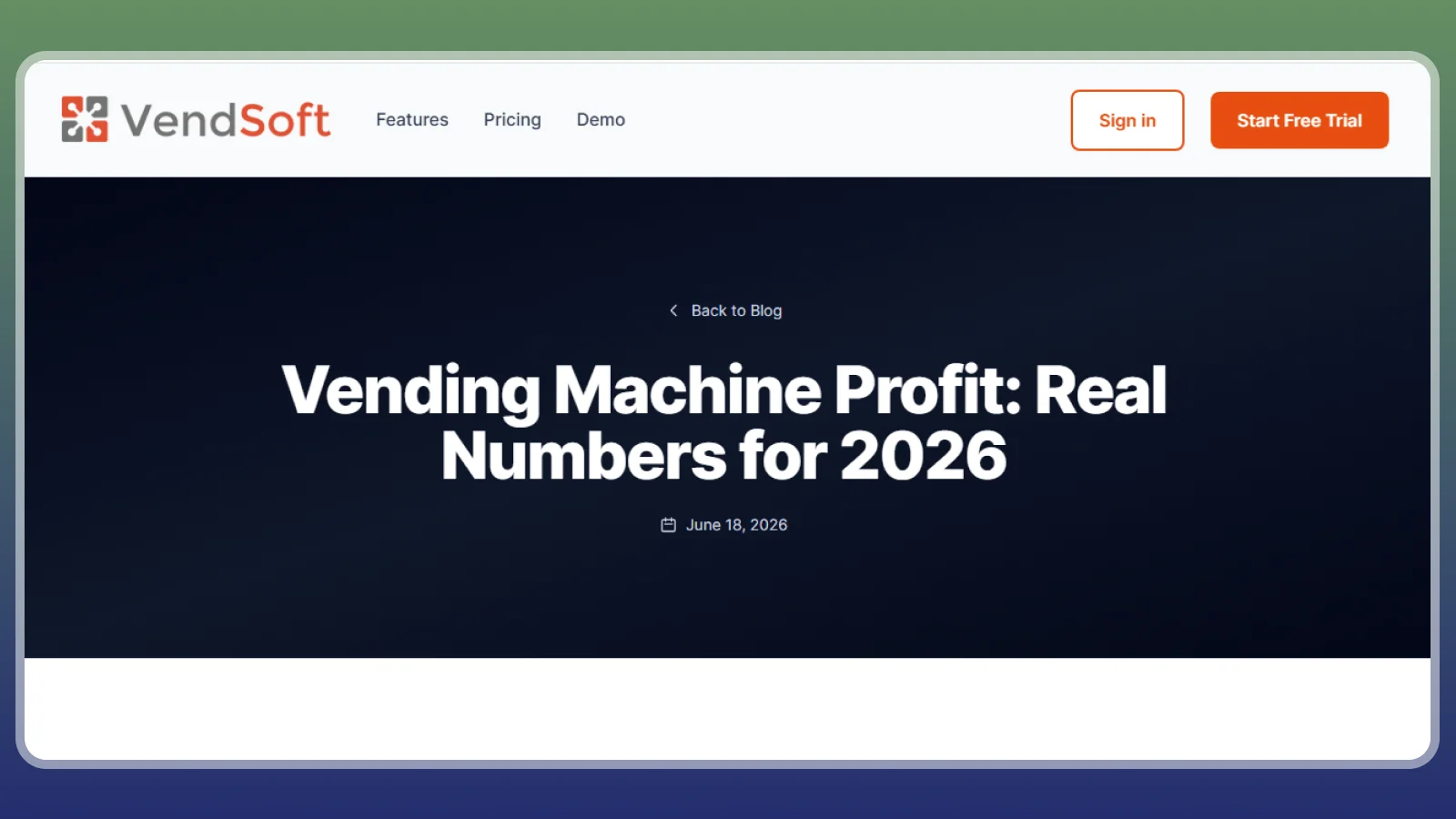
Startup costs depend heavily on the equipment. VendSoft’s 2026 pricing guide estimates $1,200–3,000 for used machines and $3,000–6,000 for new ones. You’ll also need to budget for initial inventory, delivery, and any required permits. Its profit guide estimates around $40–120 in monthly net earnings per typical machine after basic operating costs. These are industry estimates, not guaranteed results, and may not fully account for your labor or equipment purchase.
The order of your first decisions matters. I’d approach it this way:
- Find a location: Check foot traffic and negotiate placement terms.
- Choose equipment: Match the machine to the location’s needs.
- Prepare operations: Arrange permits, insurance, and initial inventory.
- Monitor sales: Track product demand and operating expenses.
The biggest factor in profitability is how many customers actually use your machine. A location may charge a commission, while product costs, payment processing, and repairs reduce what you keep. Cash sales give you immediate receipts, while card payments follow your processor’s deposit schedule. Neither should be confused with profit.
If you’re comparing income ideas with substantial startup costs, calculate how long it could take to recover your initial investment before buying equipment. Vending machines also require regular restocking and occasional repairs. I’d start with one promising location and verify its performance before considering additional machines.
How the 15 Income Ideas Compare
Startup cost alone can make income ideas look more affordable than they are. A free freelancer profile may still require paid proposals, while a low-minimum investment puts your capital at risk. The table separates initial spending, the way each method generates money, and when earnings become available.
|
Comparison |
|||
|---|---|---|---|
|
Income Idea |
Startup Cost |
Earnings |
Payout |
|
Upwork freelancing |
Free profile, paid proposals |
Client rates minus 0%–15% fees |
5 days after fixed-price approval, or 10 days after hourly billing week |
|
Preply tutoring |
Free profile |
Tutor rates minus 18%–33% commission, unpaid trials |
After confirmed regular lessons |
|
Rover pet care |
79 review fee |
Usually 80% of booking earnings |
Processing starts 2 days after service |
|
High-yield savings |
Varies, many with no minimum |
Variable APY, around 4% |
Interest usually credited monthly |
|
Gumroad digital products |
Free to list |
Sales minus platform and processing fees |
$100 standard minimum |
|
Neighbor storage rental |
Free to list |
Rent minus 4.9% + $0.30 |
End of rental period |
|
Swimply pool rental |
Free to list, other costs possible |
Hourly rates minus 15%–25% fees |
Released 48 hours after booking |
|
Airbnb co-hosting |
No property purchase required |
Negotiated share of host earnings |
Usually after guest check-in |
|
Teachable courses |
From $29/month annually |
Course sales minus fees |
Typically 2 business days for eligible payouts |
|
ACX audiobooks |
Production costs vary |
50% exclusive or 30% non-exclusive royalty rate |
Monthly, subject to balance requirements |
|
YouTube channel |
Free channel, optional production costs |
Variable ads and other monetization |
Monthly after applicable threshold |
|
Mediavine blogging |
Hosting and content costs |
Eligible publishers receive ad revenue share |
Net 65 days, usually $100 minimum |
|
Fidelity dividends |
Fractional shares from $1 |
Variable dividends and share-price changes |
Dividends often quarterly |
|
Fundrise real estate |
$10 taxable minimum |
Variable distributions and investment value |
Quarterly distributions when declared |
|
Vending machines |
6,000 per machine, plus expenses |
Estimated 120 monthly net profit per machine |
Cash sales or card processing cycle |
If you need cash soon, look first at services for which you can realistically find customers. Savings interest requires a deposit balance, while videos, blogs, and digital products need an audience or buyers. Investment distributions may arrive on a schedule, but selling the underlying investment can follow different rules. Use this comparison to narrow income ideas by available money, weekly effort, and how long you can wait.
Earn Extra Rewards With Play-to-Earn Apps
Reward apps offer a smaller addition to these income ideas if you enjoy games, surveys, or sponsored offers. They are free to join, but a displayed reward isn’t yours until you satisfy its requirements and the platform confirms completion. Cash-out minimums also differ, especially for first withdrawals.
|
App |
Minimum Payout |
Payout methods |
Platform Availability |
|---|---|---|---|
|
$35 |
PayPal + gift cards |
Web, Android, iOS |
|
|
$1 |
PayPal, Venmo, Bitcoin + gift cards |
Web, Android, iOS |
|
|
Typically $5 |
PayPal, bank, crypto + gift cards |
Web, Android, iOS |
|
|
$10 |
PayPal, gift cards + prepaid cards |
Web, Android, iOS |
|
|
$2.50 |
PayPal, Bitcoin, Ethereum + gift cards |
Web, Android |
Snakzy has the highest first-redemption hurdle in this comparison, while Bigcash lets eligible users redeem from $1. A low minimum doesn’t necessarily mean fast earnings: offer availability, eligibility, tracking, and approval determine what you can actually collect.
Check whether an activity requires a purchase and save its terms before starting. I’d use these apps for occasional rewards, particularly when the activities already appeal to you. For steadier earnings, return to the service-based or asset-based income ideas above.
Free to join for games and offer rewards, with a $35 minimum payout.
The Real Cost-to-First-Payout Test
Two income ideas can advertise similar returns yet deliver spendable money on very different schedules. Before committing, check four milestones:
- Money committed: Separate fees and equipment costs from savings or invested capital.
- First earnings: Estimate when a customer books, a product sells, or interest accrues.
- Spendable cash: Allow for approvals, cash-out minimums, and bank processing.
- Break-even: Work out when net earnings cover unrecoverable startup and operating expenses.
For example, one $100 course sale on Teachable Starter leaves about $89.30 after its transaction fee and standard US card processing. On the $39 monthly plan, that leaves $50.30 before creating the course, marketing, and taxes.
Investments need different treatment: your principal remains at risk, and paper gains aren’t withdrawable income until realized. When weighing income ideas, also count unpaid hours and the possibility of earning nothing.
What Doesn’t Work
Some income ideas sound effortless until you examine their costs and the work required to earn anything. Watch out for these common problems:
- Guaranteed earnings claims: Be wary of systems promising fixed monthly income. In 2026, the FTC finalized a $1.5 million settlement with Publishing.com over allegations of misleading self-publishing earnings claims.
- Buying before testing demand: Equipment and subscriptions can drain your budget before you’ve found customers. Validate interest before making a substantial investment.
- Ignoring net earnings: A booking rate or sale price isn’t take-home pay. Deduct platform fees and operating expenses, then account for your time.
- Treating investments as guaranteed: Dividend stocks and real estate funds can lose value. FDIC deposit insurance doesn’t protect these investments.
Before committing money, check how an opportunity generates earnings and when you can withdraw them. I’d skip vague promises, even when the advertised returns sound attractive.
Final Verdict on Income Ideas
Choosing among these income ideas starts with what you can realistically commit. If you have a marketable skill, Upwork or Preply can connect you with paying clients, although winning work takes time. Rover suits you if you prefer local pet care and can cover its upfront fee.
For minimal upkeep, a high-yield savings account pays interest on your existing balance. Neighbor can provide rental income if you have space people want. Digital products and content channels can generate repeat earnings, but attracting buyers or viewers requires ongoing effort.
I’d reserve dividend investing and Fundrise for money you can keep invested despite possible losses. A vending machine needs more capital and regular servicing. Choose one method you can sustain, then evaluate actual earnings after expenses. Reward apps can supplement these income ideas with smaller, variable rewards.
Free to join for games and offer rewards, with a $35 minimum payout.
FAQs
Yes. In the US, income ideas involving freelance work, rentals, or sales generally generate reportable income, even when you don’t receive a tax form. Whether you owe tax depends on your circumstances.
Platform fees, supplies, subscriptions, maintenance, payment processing, and travel can reduce profit. Keep records of expenses and taxes, and account for unpaid hours when comparing your return.
Yes, some operate internationally, but eligibility and payout methods vary by country. Investing platforms and ACX have geographic restrictions. Check each provider’s rules before opening an account.
No. Many require you to be at least 18, especially investing and property-related platforms. Other services may have different rules. Check age and identity requirements before registering.
No, not always. Licensing depends on your location and activity. Vending machines, pet boarding, and short-term rental services may require permits even if the platform itself is free to join.
Yes. Refunds, cancellations, and disputes can lead to deductions or reversals under platform rules. Keep booking and payment records, and check when your earnings are considered final.
The first step is to check the offer terms and tracking status. Save proof of completion and contact support before the dispute window closes. Completing an activity doesn’t always guarantee credit.
Start with income ideas that match your existing skills, assets, or savings. Compare net earnings, upfront costs, eligibility, time commitment, and access to payouts. Test one option before investing more.