

The 10 Best Ways to Make Money on the Internet in 2026

Eneba Hub contains affiliate links, which means we may earn a small commission if you make a purchase through them—at no extra cost to you. Learn more


Best ways to make money online requires matching your skills, time, and budget to the right method. Popular and realistic paths include freelance work, selling digital or physical products, creating content, or doing quick microtasks. Avoid scams by steering clear of schemes promising fast wealth for zero effort.
Best ways to make money on the internet can be divided into categories. Have a quick look and pick the ones that match your skill set. More detailed description you’ll find below.
Services
- Freelancing. Sell professional skills such as writing, design, programming, etc.
- Virtual Assistant Work. Provide remote administrative, organizational, or technical support to businesses or private clients.
- Online Tutoring. Teach subjects, languages, test preparation, coding, music, or other skills online.
Content and Audience
- YouTube Channel Monetization. Create videos and earn through ads, sponsorships, memberships, and merchandise.
- Blogging. Publish articles and monetize traffic through ads, affiliates, sponsorships, and products.
- Affiliate Marketing. Promote products through tracked links and earn commissions on sales.
E-commerce
- Dropshipping. Sell physical products online while a supplier handles inventory and shipping.
- Print-on-Demand. Create designs that are produced and shipped only after a customer orders.
Digital Products
- Selling Online Courses. Turn your expertise into lessons and sell access to them.
- Selling Digital Products. Sell downloadable items such as eBooks, templates, spreadsheets, other printables.
Jump to:
Start Earning Today While Your Chosen Method Gets Off the Ground
★ $15+ First Day, Instant Payouts, Zero Startup Cost
Every method in this article takes weeks or months before the first payment arrives. Freelancing takes one to four weeks at best. Affiliate marketing takes six to 12 months. Blogging takes a year or more. That gap between starting and earning is where most people quit.
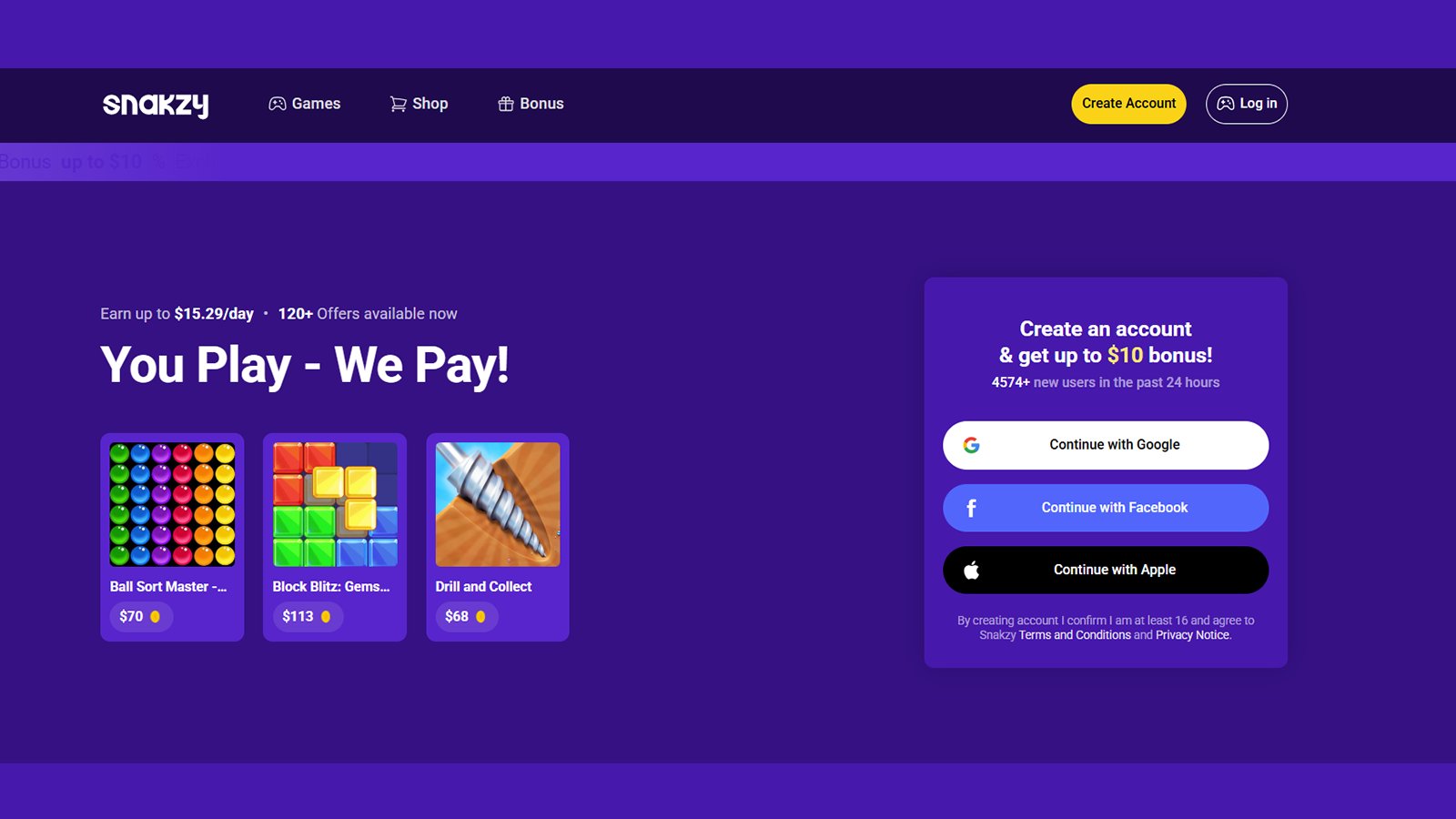
Some users choose reward-based gaming apps such as Snakzy to earn small amounts while waiting for longer-term income streams like freelancing or blogging to generate revenue. These apps should be viewed as supplemental income rather than a replacement for employment. It’s a play-to-earn gaming platform where you complete skill-based gaming challenges, earn coins, and redeem them for PayPal cash or Eneba gift cards. $15 or more is achievable in the first session, with zero startup cost and no prior skills required.
The platform reports that users who cash out in their first two weeks average $27.70 on their first cashout, reached in around 6.5 days of installing. That’s not life-changing income, but it’s real money in your account while your freelancing profile is still collecting its first reviews or your blog is still waiting for Google to index it.
Snakzy runs 100 or more games, blocks forced ads, operates in 100 or more countries, and offers a $10 welcome bonus on signup. Payouts go via PayPal instant transfer or Eneba wallet and gift cards. Over $1.2 million in total cashouts from users globally shows the payouts are real.
Use Snakzy as bridge income. It is not a replacement for the methods above. It is what covers a week of coffee while your affiliate links wait for their first click and your first Upwork proposal sits in someone’s inbox. You can check the best game apps that pay real money for more options in this category.
Play games and get paid with Snakzy.

The Best Ways to Make Money on the Internet: A Complete Overview
The best ways to make money on the internet fall into two camps. The first generates cash within weeks: freelancing, virtual assistant work, and online tutoring all pay within one to four weeks of starting. The second builds slowly but compounds: blogging, affiliate marketing, and digital products can take six to 24 months before real income appears, but they eventually earn while you sleep.
How We Evaluated These Online Income Methods
Each method was evaluated using the following criteria:
- Median beginner earnings
- Time to first payment
- Startup costs
- Skill requirements
- Long-term income potential
- Risk level
- Data from platform reports and independent industry surveys
The rankings prioritize realistic outcomes for beginners rather than exceptional success stories.
One honest context note: average side hustle income is frequently cited, but that average is pulled up by high earners. Median income for most methods sits closer to $200 to $300 per month in year one. Know which tier you are aiming at before you start. The best ways to earn money from the internet are covered below.
1. Freelancing

Best for: People who already have a marketable skill (writing, graphic design, programming, marketing, bookkeeping, or administrative work) and want to earn online within 1 to 4 weeks with little or no upfront investment.
Freelancing means selling professional services, like writing, graphic design, web development, marketing, or data entry, to clients on a project or retainer basis through platforms or direct outreach. The following stats can vary, depending on profession.
Earning range:
- Beginner: $200 to $1,000/month in the first one to three months; entry-level hourly rates average around $35 globally according to Upwork data
- Experienced: $3,000 to $8,000/month; established talent on Upwork typically bills $30 to $50/hour
- Top earner ceiling: US freelancers average around $99,000/year; top specialists in legal, technical, or finance writing reach significantly higher
Startup cost: $0. Upwork and Fiverr are both free to join. Upwork gives 10 free Connects per month.
Time to first income: One to four weeks on Fiverr with an optimized gig; two to eight weeks on Upwork for a first contract.
Skill level: Beginner for admin and data entry; advanced for development and specialized consulting.
Platforms: Upwork, Fiverr, Toptal, Freelancer.com, PeoplePerHour, 99designs.
Key limitations: Fiverr usually takes a flat 20% cut from seller earnings, while Upwork’s freelancer fee is no longer a simple flat 10% as it now varies by contract and can range from 0% to 15%. Older Priceonomics/Earnest data found that 96.3% of Fiverr workers made under $500/month, but that should be treated as historical context, not a fresh stat. In crowded categories, generic gigs can easily get lost among similar offers, so having a clear niche and a specific buyer problem is often what helps sellers stand out.
Advantages:
- One of the fastest ways to earn money online.
- No startup cost on most freelance platforms.
- High long-term earning potential through specialization.
- Flexible working hours and location.
- Can lead to recurring monthly clients.
Disadvantages:
- Income depends on continuously finding clients.
- Competition is high for beginner-level services.
- Platform fees reduce earnings.
- Building reviews and credibility takes time.
Day 1 steps:
- List three to five marketable skills you already have
- Create a Fiverr gig or Upwork profile with portfolio samples
- Set below-market entry pricing to win first reviews
- Send 10 to 20 tailored proposals daily on Upwork
- Message 30 people in your personal network about your services
The best ways to earn money on the side start with what you already know how to do. Freelancing can monetize that fastest.
2. Affiliate Marketing

Best for: Content creators, bloggers, YouTubers, and social media users who are willing to wait several months before earning consistent income.
Affiliate marketing means earning commissions by promoting other companies’ products through unique tracking links, typically via a blog, YouTube channel, email list, or social media account.
Earning range:
- Beginner: Up to $1,000/month; over half of affiliate marketers generate under $10,000/year; average beginner earns around $600/month
- Experienced: $1,000 to $10,000/month
- Top earner ceiling: High-traffic finance sites have earned nine-figure annual affiliate revenue; most beginners are nowhere near that
Startup cost: Up to $100. Free with existing social media accounts; $10 to $50/year for a domain when building a dedicated site.
Time to first income: Six to 12 months for consistent income; 24 months to reach job-replacement income for most beginners.
Skill level: Beginner-friendly for setup; intermediate required for consistent results. SEO or paid ads knowledge is needed to scale.
Platforms: Amazon Associates (1-10% commissions), ShareASale, CJ Affiliate, ClickBank, Impact, Awin.
Key limitations: The global affiliate marketing industry hit $32.3 billion in 2024, which means competition is fierce. Around 81% of brands run affiliate programs, which sounds like opportunity, but 57% of affiliates earn under $10,000/year. The timeline before meaningful income is the biggest barrier.
Advantages:
- Low startup costs.
- Can generate passive income over time.
- No customer support or inventory management.
- Income can scale with traffic.
Disadvantages:
- Usually takes 6–12 months before generating meaningful income.
- Requires consistent content creation.
- Commission rates vary by program.
- Heavy competition in popular niches.
Day 1 steps:
- Pick one niche and one traffic channel
- Sign up for Amazon Associates (same-day approval for most accounts)
- Create three to five buyer-intent content pieces
- Add affiliate links contextually, not at the end of every sentence
- Track clicks from day one using the platform dashboard
The best ways to make residual income start with affiliate marketing or digital products. Neither pays fast, but both can earn while you’re away from your desk.
3. YouTube Channel Monetization

Best for: People who enjoy creating videos consistently and want to build a long-term online business through advertising, sponsorships, and affiliate marketing.
YouTube monetization means earning ad revenue, sponsorships, channel memberships, merchandise sales, and affiliate commissions by publishing videos and qualifying for the YouTube Partner Program.
Earning range:
- Beginner: $20 to $1,000/month with 1,000 to 10,000 subscribers; a 70,000-subscriber channel reported approximately $28/month from ads alone in the early stages
- Experienced: $1,000 to $50,000/month; a 9,000-subscriber channel in a high-CPM niche reported $3,500 to $4,500/month from ads
- Top earner ceiling: The platform’s highest earners generate $85M+ annually, but that figure describes one person, not an outcome to model for beginners
Startup cost: $250 to $600 for basic camera, microphone, and lighting. Uploading is free.
Time to first income: Average 15.5 months to reach the 1,000-subscriber and 4,000-watch-hour threshold required to join the Partner Program.
Skill level: Beginner for recording; intermediate for SEO and thumbnail optimization. Consistency is the primary barrier.
Key limitations: YouTube pays creators 55% of ad revenue on long-form content and 45% on Shorts. Shorts pay only $0.01 to $0.06 per 1,000 views vs. $1 to $30 RPM for long-form content. Finance and investing channels earn $15,000 to $40,000 per million views; gaming channels earn $2,000 to $8,000 per million views. Build long-form for meaningful income.
Advantages:
- Multiple income streams from one channel.
- Unlimited audience potential.
- Evergreen videos can continue earning for years.
- Strong long-term scalability.
Disadvantages:
- Slowest method on this list.
- Requires regular video production.
- Success depends on audience growth.
- Equipment costs are higher than many other methods.
Day 1 steps:
- Choose one niche and one video format
- Set up a channel with an optimized banner and about section
- Research keywords using TubeBuddy free tier
- Publish the first three videos with strong thumbnails
- Post one to two videos per week minimum
The best ways to make good money on YouTube come from long-form content in high-CPM niches: finance, personal development, and software reviews all outperform gaming on a per-view basis.
4. Blogging

Best for: Writers who enjoy creating helpful content and are comfortable waiting 12 months or longer for significant organic traffic.
Blogging means publishing articles on a self-hosted website and monetizing through display ads, affiliate links, sponsored posts, and digital product sales.
Earning range:
- Beginner: Under $5/month average in year one; under $75/month average at one to three years
- Experienced: $1,935/month average at three to five years; $5,450/month average at five to 10 years
- Top earner ceiling: Blogs with 500,000 or more monthly pageviews average over $20,000/month; blogs with 1,000 or more posts average around $11,500/month
Startup cost: $50 to $100/year: domain around $10 to $15/year, hosting around $3 to $10/month.
Time to first income: Median 12 months to first dollar; average 21 months. Median 36 months to full-time income.
Skill level: Beginner for writing; intermediate for SEO and content strategy.
Key limitations: Display ad networks pay very differently. Mediavine pays around $27 RPM vs. Google AdSense at roughly $2 RPM. Digital products generate the highest revenue per pageview of any stream. Two-thirds of bloggers earn under $20/month. Differentiation requires 100 or more quality posts before meaningful organic traffic builds.
Advantages:
- Strong passive income potential.
- Multiple monetization options.
- Content continues attracting visitors over time.
- You own your website and audience.
Disadvantages:
- Long wait before seeing results.
- Requires SEO knowledge.
- Consistent publishing is essential.
- High competition in many niches.
Day 1 steps:
- Pick a niche with commercial intent using Google Keyword Planner (free)
- Register domain on Namecheap
- Install WordPress with a free theme and Yoast SEO
- Publish the first 10 posts targeting long-tail keywords under 1,000 monthly searches
- Apply to Amazon Associates immediately
Blogging is one of the best ways to make profit long-term, but it requires patience most beginners underestimate. The gap between “first post” and “first dollar” is longer here than any other method on this list.
5. Dropshipping
Best for: Entrepreneurs who have a marketing budget and want to build an ecommerce business without holding inventory.
Dropshipping means running an online store that sells physical products without holding inventory. Suppliers ship directly to customers, and the seller keeps the margin between retail and wholesale price.
Earning range:
- Beginner: Up to $2,000/month in the first month, often net zero or negative due to ad testing costs before finding a winning product
- Experienced: $2,000 to $10,000/month net profit after three to six months of product and ad optimization
- Top earner ceiling: Advanced dropshippers report $120,000 to $600,000+/year in revenue; net margins average 5-20% after ad costs
Startup cost: $500 to $2,000 recommended minimum: Shopify at $29/month, domain at $14/year, apps at $50 to $100/month, and an initial paid advertising budget of $300 to $800 for product testing.
Time to first income: First sale within seven to 14 days with paid ads; consistent profit typically three to six months in.
Skill level: Intermediate. Requires product research, Meta or TikTok ad management, store design, and customer service.
Key limitations: Gross margins average 20 to 30% of revenue; net margins after ad spend, platform fees, and returns drop to 5 to 20%. Around 90% of dropshipping businesses fail within the first year. Success depends on product selection and ad ROI, not the store design.
Advantages:
- No inventory required.
- Highly scalable.
- Large product selection.
- Can be managed remotely.
Disadvantages:
- Requires advertising budget.
- High failure rate for beginners.
- Low profit margins after ad costs.
- Customer service remains your responsibility.
Day 1 steps:
- Research winning products on TikTok Creative Center (free)
- Start a Shopify 3-day free trial
- Connect Zendrop or AliExpress as supplier
- Write original product page copy with photos
- Launch a $20 to $50/day test campaign on TikTok or Meta
The best ways to make good money with dropshipping require treating it like a business from day one, including a real ad budget and a willingness to lose money on the first few product tests.
6. Selling Online Courses

Best for: Professionals with expertise they can teach through structured lessons and video content.
Selling online courses means creating and selling pre-recorded video instruction on a topic you have expertise in, through marketplaces like Udemy or a hosted platform like Teachable.
Earning range:
- Beginner: The average Udemy instructor earns around $275/month; 75% of Udemy instructors earn under $1,000/year
- Experienced: $1,000 to $5,000/month on own platform; Thinkific instructors average around $1,000/month vs. $250/month on Udemy
- Top earner ceiling: Only 1% of Udemy instructors reach full-time income ($50,000+/year)
Startup cost: Up to $500. Udemy is free to publish; Teachable and Thinkific cost $29 to $199/month; recording equipment runs $100 to $500.
Time to first income: Immediate on Udemy after first enrollment; one to three months on your own platform to build an audience.
Skill level: Intermediate. Requires subject expertise, video recording, and marketing knowledge for own-platform sales.
Key limitations: Udemy pays instructors only 37% on marketplace sales. Own-platform courses retain 97% of revenue but require an existing audience. Half of Udemy courses created since 2020 have fewer than 100 lifetime enrollments. The top 1% of instructors capture over 50% of all platform earnings.
Advantages:
- Courses can be sold repeatedly.
- High profit margins.
- Positions you as an expert.
- Works well alongside consulting.
Disadvantages:
- Requires subject expertise.
- Creating quality courses takes time.
- Marketing is often harder than course creation.
- Competition is increasing.
Day 1 steps:
- Validate topic demand by checking enrollment counts on Udemy
- Outline a one to two hour course with 10 to 15 lessons
- Record with free Loom or OBS Studio plus a $50 USB microphone
- Upload to Udemy free
- Price at $19.99 to $29.99 and promote via personal social channels
One of the best ways to make residual income, online courses pay repeatedly for work you do once, but only after you build the audience to buy them.
7. Virtual Assistant (VA) Work

Best for: Beginners with good organizational and communication skills who want one of the quickest ways to earn online.
Virtual assistant work means providing remote administrative, marketing, technical, or executive support services to businesses and entrepreneurs on a part-time or full-time contract basis.
Earning range:
- Beginner: $8 to $15/hour for basic admin tasks; $500 to $2,500/month part-time at 15 to 20 hours/week
- Experienced: $25 to $60/hour at US/Canada market rates; $3,000 to $7,000/month full-time
- Top earner ceiling: Specialized executive VAs or CRM/automation specialists reach $40 to $75+/hour; average US VA salary around $52,877/year
Startup cost: Zero. Requires only a computer, internet connection, and a free account on freelancing platforms.
Time to first income: One to four weeks; faster when using a personal network rather than cold platforms.
Skill level: Beginner for basic admin (email management, scheduling, data entry); intermediate for marketing VAs and bookkeeping VAs.
Platforms: Upwork, Fiverr, Belay, Time Etc, Zirtual, LinkedIn, and direct client outreach.
Key limitations: Philippines-based VAs charge $5 to $15/hour. US-based VAs need to specialize in high-value skills to justify higher rates. Retainer clients provide stable monthly income, but building a retainer roster takes time.
Advantages:
- No startup investment.
- Fast path to first income.
- High demand among businesses.
- Easy to specialize over time.
Disadvantages:
- Income depends on hours worked.
- Administrative tasks can become repetitive.
- Time zone differences with clients.
- Competition from global freelancers.
Day 1 steps:
- List services you can offer today (email, calendar, social posting, research, data entry)
- Create a Fiverr gig or Upwork profile with clear packages
- Set beginner rate at $12 to $18/hour to build reviews
- Reach out to five to 10 small business owners in your network
- Offer a free two-hour trial task to secure the first paid client
8. Print-on-Demand (POD)

Best for: Designers and creative people who enjoy making artwork for niche audiences.
Print-on-demand means designing graphics that are printed on merchandise (t-shirts, mugs, phone cases, hoodies) and sold through POD platforms or your own store, with no inventory held and products fulfilled per order.
Earning range:
- Beginner: Up to $50 in the first three months without external traffic; $0 to $100/month typical for new Redbubble sellers
- Experienced: $200 to $800/month with 200 or more designs on Redbubble; $100 to $5,000+/month combining Printful with Etsy
- Top earner ceiling: $2,000 to $5,000+/month for established sellers driving consistent external social traffic
Startup cost: Up to $500. Redbubble and Merch by Amazon are free to join; Printful combined with Etsy costs $0.20/listing; Printful combined with Shopify runs around $29/month.
Time to first income: 30 to 90 days for first sale on marketplace platforms; sooner when building your own social traffic.
Skill level: Beginner for design using Canva; intermediate for niche research and external traffic generation.
Key limitations: Profit margins run 20-40% on product costs. Only 15-25% of designs ever generate any sales. AI-generated generic designs have flooded all POD platforms as of 2024 and 2025; micro-niche targeting with original illustrations is now required to stand out.
Advantages:
- No inventory required.
- Easy to start.
- Designs can generate recurring sales.
- Low financial risk.
Disadvantages:
- Highly competitive marketplaces.
- Most designs never sell.
- Profit margins are relatively small.
- External traffic often becomes necessary.
Day 1 steps:
- Pick a specific micro-niche (examples: nurse humor, corgi owners, rock climbers)
- Create five to 10 designs in Canva
- Upload to Redbubble for free and apply for Merch by Amazon
- Research bestselling tags using Merch Informer free trial
- Create a TikTok or Pinterest account to drive external traffic to listings
One of the best ways to make cash on the side, POD works best for designers who can identify underserved niches and produce volume consistently.
9. Online Tutoring

Best for: Teachers, graduates, professionals, and native speakers with knowledge that students are willing to pay for.
Online tutoring means teaching students one-on-one or in small groups via video call, covering academic subjects, test prep, language learning, music, coding, or professional skills.
Earning range:
- Beginner: $15 to $25/hour on platforms; $500 to $2,000/month part-time at five to 15 hours/week
- Experienced: $30 to $60/hour; $3,000 to $8,000/month full-time at 30 to 40 hours/week
- Top earner ceiling: $60 to $100+/hour for PhD or certified tutors in specialized subjects
Startup cost: $50 to $100 for webcam and microphone if not already owned. Most platforms are free to join.
Time to first income: One to two weeks after profile approval on most platforms.
Skill level: Intermediate. Requires demonstrated subject expertise; teaching certification increases rates significantly on platforms like Preply.
Platforms: Preply, Wyzant, Tutor.com, Chegg Tutors, VIPKid (English to China), iTalki (language learning), Cambly, Superprof.
Key limitations: Platform fees typically run 20-33%. Direct clients found via Facebook groups or Nextdoor pay zero platform commission. Competing tutors from India and the Philippines charge $5 to $15/hour; US-based tutors should specialize in test prep (SAT, IELTS, AP) or niche subjects to command premium rates.
Advantages:
- Fast first income.
- High hourly rates in specialized subjects.
- Flexible scheduling.
- Repeat students create recurring income.
Disadvantages:
- Income stops when you stop teaching.
- Platform commissions reduce earnings.
- Requires subject expertise.
- Evening and weekend hours are common.
Day 1 steps:
- Create profiles on Preply and Wyzant with subject expertise highlighted
- Set introductory rate 20 to 30% below market average to win first five reviews
- Record a short intro video for Preply (profiles with intro videos rank higher in platform search)
- Post in Facebook groups and local Nextdoor for direct zero-fee clients
- Raise rate by $5/hour after every 10 positive reviews
What is the best way to make money for someone with deep subject expertise? Online tutoring. The path from profile creation to first paid session is the shortest on this list after VA work.
10. Selling Digital Products

Best for: Creators who can solve specific problems using templates, ebooks, printables, spreadsheets, or other downloadable products.
Selling digital products means creating and selling downloadable or digital-access items: e-books, templates, spreadsheets, printables, Notion dashboards, Canva presets, or stock photography.
Earning range:
- Beginner: Up to $500/month; templates and printables earn $10 to $100/month initially without active promotion
- Experienced: $1,000 to $10,000/month; platform data suggests 1,300 or more creators earn over $2,000/month from digital products
- Top earner ceiling: Platform reports show individual sellers generating $90,000+ in revenue from digital downloads alone; digital creators average $102,000 to $136,000/year vs. $47,000 to $84,000 for traditional content creators
Startup cost: Up to $50. Gumroad is free with a 10% transaction fee; Etsy charges $0.20/listing; Canva Pro is optional at $10/month.
Time to first income: Immediate after listing, but meaningful income typically takes one to three months of active promotion.
Skill level: Beginner for templates and printables; intermediate for e-books and mini-courses; advanced for software tools.
Platforms: Gumroad, Etsy (digital downloads), Creative Market, Payhip, Whop, Lemon Squeezy.
Key limitations: 100% margin on digital goods makes them appealing, but the Etsy digital downloads market is saturated with AI-generated products. Original, problem-solving templates consistently outperform generic designs.
Advantages:
- Very high profit margins.
- Unlimited sales without additional production.
- Low startup costs.
- Multiple marketplaces available.
Disadvantages:
- Saturated marketplaces.
- Requires marketing to generate sales.
- Easy for competitors to copy ideas.
- Initial product creation takes time.
Day 1 steps:
- Identify one problem your target audience has that a template or checklist solves
- Build it in Canva or Google Sheets
- List on Gumroad for free or Etsy for $0.20
- Write keyword-optimized listing title and description for Etsy SEO
- Share on Pinterest for free organic reach to buyers
Selling digital products is one of the best ways to make residual income from internet activity, because the same file sells indefinitely with zero additional work per sale.
How To Choose the Right Method for Making Money on the Internet
Choosing the best way to make money on the internet comes down to three variables: available hours per week, upfront budget in dollars, and months you can sustain zero income before you need a return.
$0 available: Choose freelancing, VA work, or online tutoring. All three have zero startup cost and generate income within one to four weeks.
$50 to $100 available: Add blogging, digital products, or print-on-demand. All three have low entry costs and some passive income potential after the initial content or product creation phase.
$500 to $2,000 available: Dropshipping becomes viable; online courses become more feasible with proper equipment for video production.
Time commitment comparison: Freelancing and VA work require active hours, no work means no income. Blogging, affiliate marketing, and digital products are build-once, earn-repeatedly, if you can sustain six to 24 months without a major payoff.
The decision matrix below covers every method with the three numbers that matter most.
| Method | Startup Cost | Skill Level | Time to First Dollar | 12-Month Income (Average) |
|---|---|---|---|---|
| Freelancing | $0 | Beginner | 2 to 8 weeks | $3,000 to $12,000/year |
| Affiliate marketing | Up to $100 | Beginner to intermediate | 6 to 12 months | $500 to $5,000/year |
| YouTube | $250 to $600 | Beginner | 15.5 months avg. | $200 to $5,000/year |
| Blogging | $50 to $100/year | Beginner to intermediate | 12 months | $200 to $3,000/year |
| Dropshipping | $500 to $2,000 | Intermediate | 1 to 4 weeks (first sale) | Up to $15,000/year |
| Online courses | Up to to $500 | Intermediate | Immediate on Udemy | Up to $5,000/year |
| VA work | $0 | Beginner | 1 to 4 weeks | $6,000 to $30,000/year |
| Print-on-demand | Up to $500 | Beginner | 30 to 90 days | Up to $5,000/year |
| Online tutoring | $50 to $100 | Intermediate | 1 to 2 weeks | $8,000 to $40,000/year |
| Digital products | Up to $50 | Beginner | Immediate after listing | Up to $8,000/year |
Industry surveys consistently show that around a third of workers already have a side hustle, but only around 15% earn over $1,000/month. The gap is method selection and consistency, not talent.
Three common mistakes to avoid:
Choosing a method that requires 12 or more months to pay off when you need income in 30 days. The result is quitting before the method has time to generate a return.
Starting dropshipping with under $500. Running out of ad budget before finding a profitable product means losing the initial investment with nothing to show for it.
Picking a method based on income ceiling (what top earners make) rather than median outcome (what average beginners make in year one). Unrealistic expectations lead to frustration and abandonment at the three-month mark.
The best ways to earn money start with matching the method to your actual situation, not the one with the highest headline number.
Realistic Earning Expectations and Timeline

The best ways to earn extra income are the ones you can sustain. The honest data on timelines is less exciting than most “make money online” content admits, but it’s the information that saves beginners from quitting too early.
Median side income context: Industry survey data puts average side hustle income between $500 and $800/month, but medians run closer to $200 to $300/month in year one for most methods.
Timeline for a typical beginner choosing freelancing (fastest-paying method):
| Time Period | Income & Milestones |
|---|---|
| Weeks 1 to 2 | Up to $100. Profile setup, first proposals sent, possibly a first small project ($20 to $50) |
| Month 1 | $100 to $500. Two to five small projects completed, first reviews earned |
| Month 3 | $500 to $2,000. Repeat clients starting, hourly rate increasing from reviews and proof of work |
| Month 6 | $1,500 to $5,000. Established profile with 10 or more reviews; first retainer client possible |
| Month 12 | $3,000 to $8,000. Full client roster, specialized niche, consistent monthly income |
Timeline for a typical beginner choosing affiliate marketing or blogging (slowest-paying but scalable):
| Time Period | Income & Milestones |
|---|---|
| Months 1 to 6 | $0 to $50/month. Building content; no significant search traffic yet |
| Months 6 to 12 | $50 to $300/month. First affiliate sales; early search rankings for low-competition keywords |
| Months 12 to 18 | $300 to $2,000/month. Compound growth from content library; median blogger earns first dollar around month 12 |
| Month 24+ | $2,000 to $10,000+/month if still active; around a third of bloggers achieve full-time income within two years |
Income tier breakdown:
- Around 15% of side hustlers earn $1,000+/month
- Around 4% of affiliate marketers earn over $150,000/year
- Only 1% of Udemy instructors earn full-time income ($50,000+/year)
Factors that accelerate income: Specializing in a high-paying niche (finance, legal, tech). Starting with an existing audience. Investing in skill development. Treating it as a business from day one with set work hours.
Factors that slow income: Generic positioning competing with thousands of identical sellers. Inconsistent output with irregular publishing or proposal schedules. No promotion or marketing plan. Underpricing to win clients and never raising rates after positive reviews.
Net vs. gross warning: Fiverr takes 20% per payment; Upwork takes 10%; Etsy takes 6.5% plus $0.20 per listing plus 3% payment processing; US self-employment tax is 15.3% on net earnings. Budget for these before spending any platform income.
If you are looking to combine gaming time with income, check options like how to earn money playing Call of Duty Mobile as a complement to the methods above.
Overcoming Common Challenges When Making Money Online

The best ways to make money on the side come with predictable obstacles. Here are the six most common ones and what to do about each.
Getting the first client or first sale. No reviews, no social proof. Offer a free or deeply discounted project to one person in your network in exchange for a written testimonial. Fiverr sellers with zero reviews get significantly fewer impressions than those with five or more. One real review changes everything.
Inconsistent income month to month. Relying entirely on one-time transactions with no recurring revenue. Convert one-time clients into monthly contracts by pitching an ongoing service package after the first project completes.
Platform algorithm changes cutting organic traffic overnight. Relying on a single traffic source like Google, TikTok, or YouTube. Build an email list from day one. Email marketing generates around $36 ROI per $1 spent, making it more resilient than organic search.
Earning in gross but spending in net. Not budgeting for platform fees (10-20%), self-employment tax (15.3%), and software subscriptions before counting income. Set aside 30% of all gross online earnings before spending.
Staying consistent without immediate results. Blogging and affiliate marketing take six to 24 months before real income appears. Track non-revenue metrics weekly: traffic, subscribers, follower count. Those numbers tell you whether the method is working even when the bank account does not yet agree.
Saturated niches on freelance and POD platforms. Tens of thousands of sellers offer identical services and generic designs. Specialize by industry: legal copywriting instead of copywriting; custom illustration instead of stock clip art. Specialists on Upwork command 40-60% higher rates than generalists in the same category.
The best ways to earn money on the side require getting through these challenges rather than avoiding them.
Tax Considerations for Online Income

Every dollar you earn online is taxable. Understanding the basics before your first payment saves you from a painful surprise in April.
US self-employment tax: 15.3% on net earnings, composed of 12.4% Social Security and 2.9% Medicare. This applies to all freelance, gig, and online business income on top of regular federal income tax.
Quarterly estimated tax payments: Required when you expect to owe $1,000 or more in annual federal tax. Due dates: April 15, June 15, September 15, and January 15 each year.
Form 1099-K reporting: Triggered by payments exceeding $20,000 across 200 or more transactions in a calendar year. Applies to PayPal, Venmo, Stripe, and all major platform payments.
Deductible expenses for online income earners:
- Home office: up to $5/sq ft (max 300 sq ft = $1,500/year)
- Business-use percentage of internet bill
- Laptop and equipment
- Software subscriptions (Canva Pro, TubeBuddy, keyword research tools)
- Courses purchased for professional development
Free record-keeping tools: Wave Accounting (free invoicing and bookkeeping), Google Sheets (manual expense tracking), IRS Free File (free tax prep for AGI under $89,000).
State tax rates vary: 0% in Texas, Florida, and Nevada; up to 13.3% in California. Factor your state rate into take-home pay calculations.
Non-US earners: A W-8BEN form is required to claim reduced US withholding rates on Amazon Associates, Merch by Amazon, and other US platforms. Without it, these platforms withhold 30% from foreign nationals by default.
The best way to make money online long-term is to keep the money you earn. Tax awareness from month one is what separates people who build real income from those who spend it all before the IRS asks for its share.
How To Scale to Four-Figure Monthly Income Online
Reaching the best ways to make good money online requires hitting four income milestones in sequence. Most people try to skip the early ones and get stuck.
Milestone 1: $100 to $500/month (months 1 to 3). Validate the chosen method with a first paying client, first affiliate sale, or first digital product sale. Focus on volume: more proposals, more content pieces, or more designs uploaded.
Milestone 2: $500 to $2,000/month (months 3 to 6). Convert one-time transactions into recurring revenue. For freelancers, pitch retainer packages after every completed project. For content creators, build an email list to reduce dependency on platform algorithms.
Milestone 3: $2,000 to $5,000/month (months 6 to 12). Raise prices by 25 to 40% after building reputation and reviews. Platform data from Upwork suggests freelancers who raise rates after 10 positive reviews see meaningful earnings growth.
Milestone 4: $5,000 to $10,000+/month (year one to two). Productize services or add a passive income stream. A freelance writer earning $3,000/month can add an e-book ($500/month), a blogging course ($1,000/month), and affiliate links ($500/month) to reach $5,000/month total without working more hours.
Diversification rule: Avoid dependence on a single platform. Top earners across all 10 methods on this list use two to three income streams simultaneously.
Gaming audience angle: Streaming gaming income on Twitch or YouTube can be combined with affiliate marketing for gaming gear and gift cards, plus play-to-earn game earnings, for three simultaneous income streams reaching the same gaming audience. If rewards-based gaming interests you, see the top Swagbucks games for rewards as a low-effort add-on to the methods above.
The best ways to make profit long-term come from stacking income streams, not from maxing out a single one. So what is the best way to earn money? It’s whichever method you start, sustain, and then build on.
The Best Way to Make Money on the Internet: Putting It All Together
The best way to make money on the internet is the one that matches your current skills, budget, and timeline, not the one with the highest theoretical ceiling. After covering 10 methods with real data, the three most accessible starting points are clear.
Freelancing: Zero cost startup, income in one to four weeks, scalable to $8,000 or more per month with a specialized niche.
VA work: Zero cost startup, income in one to four weeks, US average salary around $52,877/year with no degree required.
Online tutoring: $50 to $100 startup, income in one to two weeks, $60 to $100/hour for certified tutors in specialized subjects.
If you need to earn something now while building toward one of the above, Snakzy covers the gap..
The best way to make money starts with one concrete action this week: create a profile, publish a listing, or send a proposal. First income follows the first step, not the tenth research session. For more options at the lower-barrier end, see our list of the best online side hustles for a curated list filtered for the digital beginner.
Play games and get paid with Snakzy.
FAQs
Start with VA work or freelancing. Both have zero startup cost and pay within one to four weeks. List skills you already have, create a free Upwork or Fiverr profile, and send your first proposals today.
Online tutoring and VA work pay fastest, typically within one to two weeks of profile approval. Freelancing on Fiverr with an optimized gig can also produce a first sale within days.
Yes. Freelancing, VA work, online tutoring, affiliate marketing via social media, and Gumroad digital product listings all start at zero cost. The best way to earn money with no investment is to monetize skills you already have.
Affiliate marketing, blogging, and digital products generate passive income once built. Realistic timelines are six to 24 months before meaningful passive earnings appear. The payoff is income that continues without additional hours worked.
Timelines range from one to two weeks (VA work, tutoring) to 12 to 24 months (blogging, affiliate marketing). The best way to make money from internet activity quickly is to start with an active method first and add passive streams once you have cash flow.