


4 Best Link Building Strategies and 8 Tactics To Try in 2026



QUICK LOOK
Use Semrush to find sites linking to competitors before building an outreach list. Existing brand mentions or partner relationships offer a more direct starting point when you already have them.
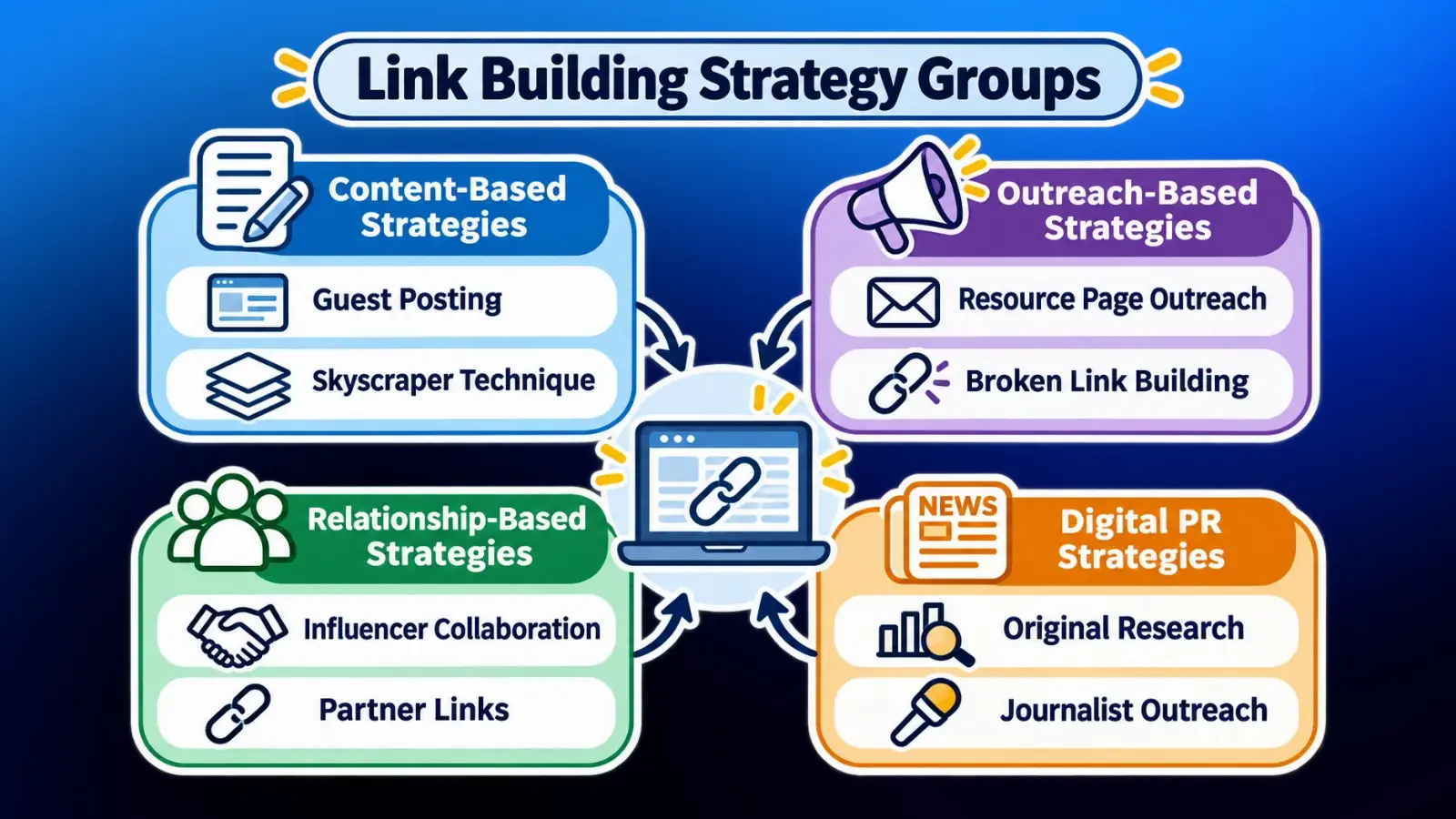
The link building strategies covered here fall into four groups: competitor and gap-based, content-led, digital PR, and partnership and mention-based. This guide turns those four strategies into eight practical tactics, each with a named tool, execution steps, and a sourced benchmark where available. Start with the assets you already have: a useful guide or an existing relationship can be more valuable than another software subscription.

These link building strategies work for small business owners, in-house marketers, and solo SEOs who need to choose between outreach and content production. Some build on publisher mentions and business relationships you already have. Others need an asset worth citing, like a guide or a report. Effort and time-to-results ratings are editorial estimates, and each benchmark links to its source.
A tactic is the specific action inside a strategy. Compare link building strategies by the work they require, the costs you can support, and the evidence you can measure. Each tactic lists a main KPI, or key performance indicator, which is the number that shows whether the tactic is working.
Jump to:
What Is a Link Building Strategy?
A link building strategy is a repeatable approach to earning relevant backlinks from a defined group of publishers, partners, or resource owners. It identifies who might link, why a link would help their readers, and how your team will pursue it over time.
Useful link building strategies connect a business asset to a publisher’s need. One link building example is a repair guide that could replace an unavailable reference on a hardware community’s resource page.
The right link building strategies depend on your budget, available content, and relationships. The strategy sets the approach, while the tactic specifies the action, like finding a broken reference and pitching a replacement.
Competitor and Gap-Based Link Building Strategies
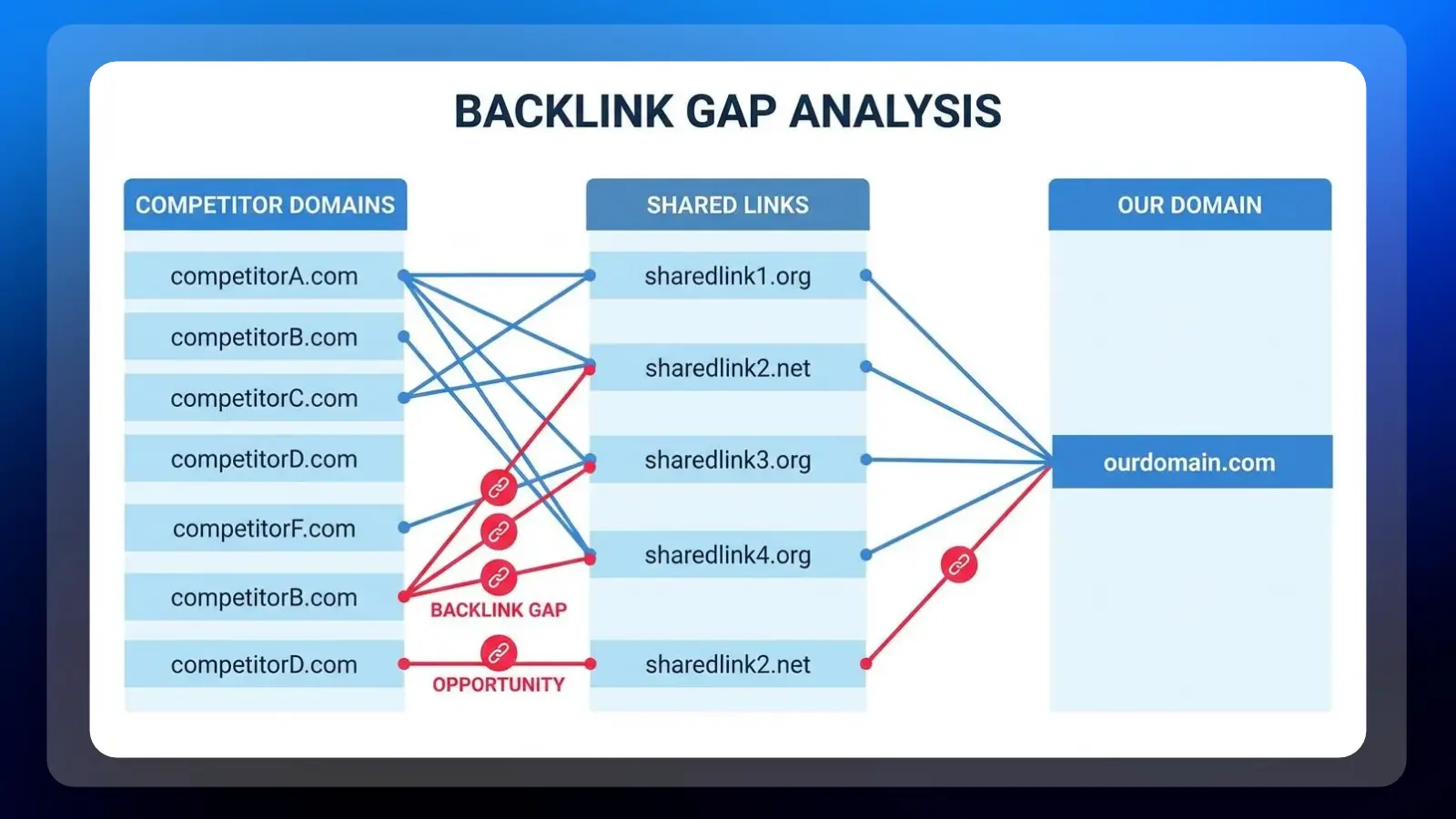
Competitor and gap-based link building strategies use existing linking behavior to find prospects. They suit sites with recognizable competitors and useful pages to pitch, with more emphasis on backlink research than a large publishing budget.
These link building strategies give you a reason to contact a site, but a competitor’s backlink does not establish your eligibility. Review the actual page before adding its publisher to your list of prospective link building websites. A relevant editorial reference is more useful than a copied directory entry.
Use these two tactics to turn that research into a focused campaign:
1. Replicate Competitors’ Backlinks With Semrush
|
Best for |
Effort |
Price |
Time to results |
Main KPI |
|---|---|---|---|---|
|
Established competitors to study |
Medium |
From $117.33/month billed annually (SEO) |
Weeks |
New referring domains from identified gaps |
To replicate competitors’ backlinks, pitch sites that already reference businesses or resources similar to yours. Aim for a matching editorial opportunity. Copying every link in a rival’s profile wastes outreach time. A referring domain is a distinct website that links to yours.
What you need: a backlink analysis tool, a shortlist of direct competitors, a useful destination page, and a flexible email template.
To run it, compare your domain with competitors in Semrush‘s Backlink Gap tool. Identify domains linking to competitors but not to you, open the relevant pages, and record the reason each reference appears. Pitch only when your page serves that same need or adds something useful.
Here is a link building example: several gaming publications cite a controller compatibility guide. If your guide includes compatibility information their existing reference lacks, explain that difference in the pitch. Asking for inclusion without a distinct contribution gives the editor little reason to act.
According to Semrush, replicating competitors’ backlinks is a medium-effort tactic with results in weeks. Treat that as planning guidance. No source can promise a deadline for earning links.
Research pays off when it trims irrelevant outreach. Prioritize link building websites whose publishers have a clear topical connection, and record qualified replies alongside new links so you can see where the pitch loses momentum.
2. Broken Link Building With Screaming Frog
|
Best for |
Effort |
Price |
Time to results |
Main KPI |
|---|---|---|---|---|
|
Existing replacement resources |
Medium |
Free for up to 500 URLs; $279/license per year |
Days |
Dead references replaced with your page |
Broken link building means offering a useful replacement for an unavailable resource another site still references. A broken destination becomes an opportunity only when your page satisfies the reason the original reference was included.
What you need: a crawler, a relevant replacement page, access to contact details, and a short explanation of the problem.
To run it, use Screaming Frog to inspect relevant resource pages for broken outbound destinations. Open each result manually, establish what the missing resource covered, and compare it with your replacement. Contact the page owner with the broken URL, its location, and a concise explanation of your alternative.
For example, an esports organizer’s page references an unavailable tournament preparation checklist. A replacement checklist should cover that preparation task and give readers the full checklist.
Semrush rates broken link building as medium effort, with results in days. That describes the tactic’s potential speed. A reported error will not always produce a replacement link.
Among link building strategies, broken link building gives you a specific reason to reach out, because you can point the editor to a dead link on their page. Write the message so it helps the editor even if they pick a different replacement. Before you add a page to your outreach list, confirm the link is broken for good, since some links only fail to load for a moment.

Content-Led Link Building Strategies
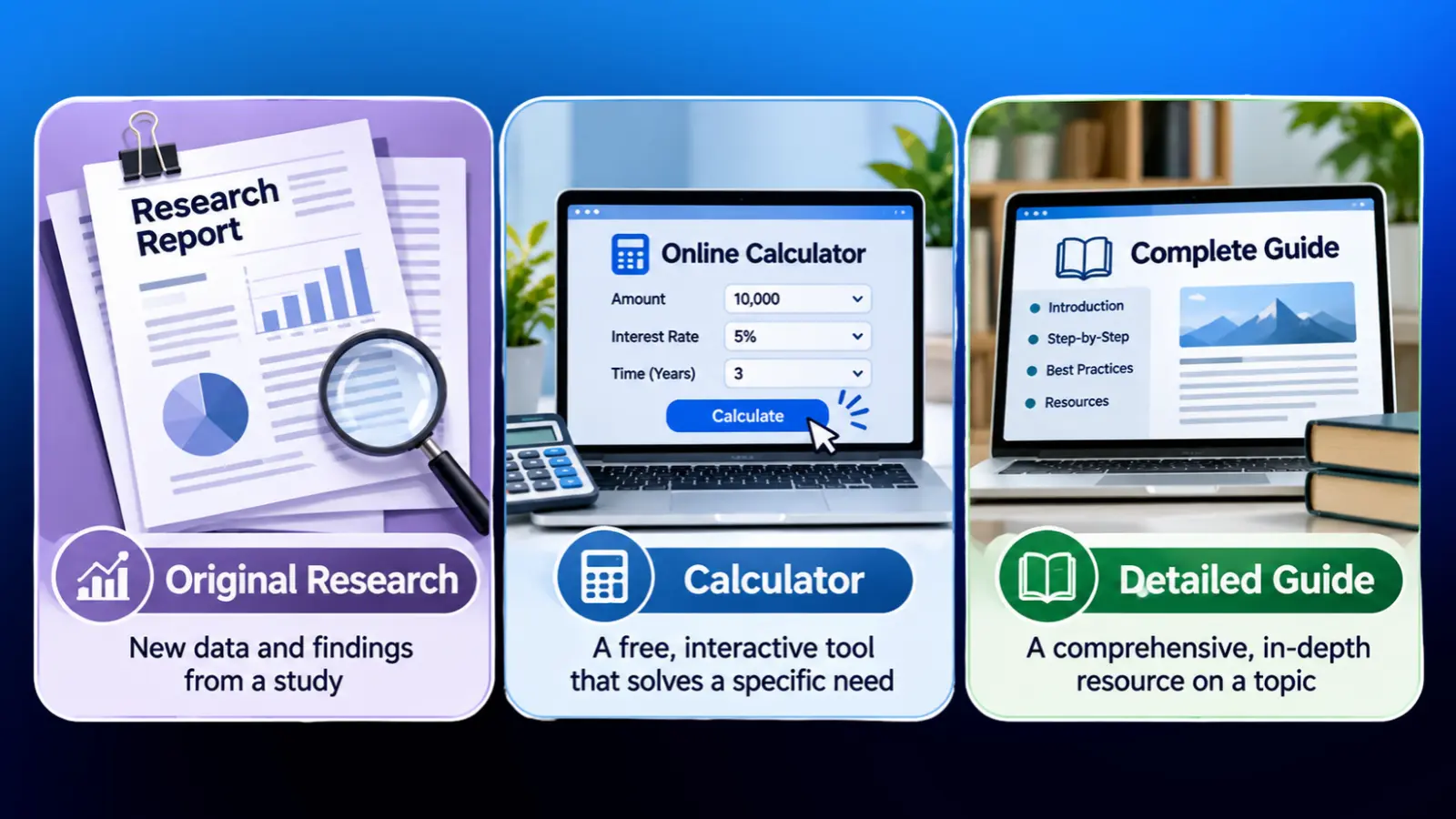
Content-led link building strategies earn attention through assets other publishers need to reference. Original research, calculators, and detailed guides require production and maintenance, so their cost includes staff time as well as software.
These link building strategies suit teams with expertise or information they can make publicly useful. Publishing an asset gives you a chance to earn citations. Writers cite it only after they find it and see a use for it. The assets that earn citations solve a recurring reference problem, like helping a writer explain an unfamiliar technical standard.
Here are two ways to build that reference value:
3. Create Link Bait With BuzzSumo
|
Best for |
Effort |
Price |
Time to results |
Main KPI |
|---|---|---|---|---|
|
Teams with original research or useful data |
High |
From $159/month, billed yearly |
Months |
Referring domains citing the asset |
Link bait is an asset designed to attract citations because it offers useful information or functionality. The term can sound sensational, but a credible research report or practical calculator fits the tactic better than an exaggerated headline.
What you need: a recurring audience question, a defensible method for answering it, a suitable publishing format, and a way to identify reference-worthy topics.
To run it, explore relevant topics and competitor content in BuzzSumo, which costs $159 a month on its Content Creation plan, billed yearly. Look for assets that attract attention, then inspect why publishers reference them. Build an asset with a distinct contribution, publish its methodology, and make individual findings easy to locate and cite.
Original research makes a strong link building example when it documents something readers cannot find elsewhere, like accessibility settings across a clearly defined selection of games. Explain how the information was collected and what the dataset excludes. A transparent scope makes a publisher’s citation easier to justify.
Semrush reports that McKinsey’s AI report earned more than 77K backlinks from 17K referring domains. A large brand produced that result, and few small business campaigns will match it. It shows how many citations original research can attract.
Content-led link building strategies need an upkeep plan. Before you produce the asset, list the link building websites likely to cite it so you know who your audience is. After you publish, set aside time to fix errors and keep the asset current.

4. Publish Complete Guides and Lists With Majestic
|
Best for |
Effort |
Price |
Time to results |
Main KPI |
|---|---|---|---|---|
|
Teams with deep subject expertise |
High |
From $49.99/mo (Lite) |
Months |
Referring domains citing the guide |
Complete guides and lists give other writers a dependable reference for a clearly bounded topic. Completeness means resolving the reader’s task without padding the page or repeating explanations available elsewhere.
What you need: a topic with an identifiable coverage gap, first-hand subject expertise or reliable source material, a clear structure, and someone responsible for maintenance.
To run it, inspect competing resources and identify the questions they leave unresolved. Publish a guide that addresses those gaps, make its supporting evidence accessible, and use Majestic to monitor new referring pages. Read those pages to learn which parts of the guide attracted citations.
Picture a link building example in the gaming niche. A troubleshooting guide explains how to diagnose common controller connection problems across wired, Bluetooth, and wireless setups. A publisher may link to the troubleshooting section even if the rest of the guide gets little attention.
Backlinko reports that its list of SEO tools has gathered about 1,700 backlinks, and its guide to Google RankBrain has passed 1,000 after an estimated 30 hours of writing. Both sit on an established SEO site, so expect smaller numbers on a newer one.
Specificity wins in content-led link building strategies. Study the link building websites that cite your resource, then improve the sections they use. A guide that stays accurate and easy to reference serves readers better than one expanded to look comprehensive.

Digital PR Link Building Strategies
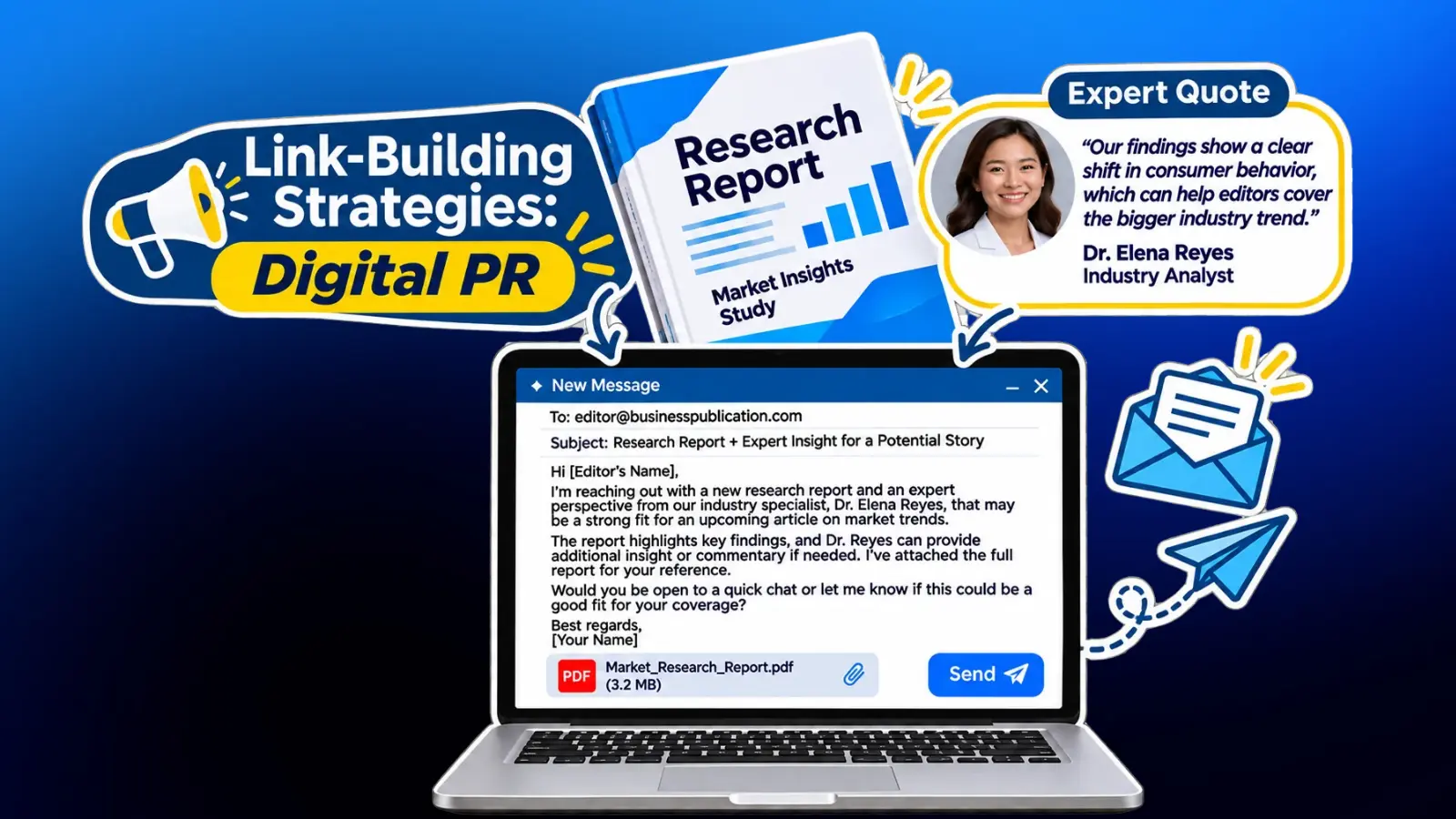
Digital PR link building strategies seek editorial coverage through expertise or a publishable story. They suit businesses with a qualified spokesperson, original findings, or a useful contribution to an article already in progress.
These link building strategies require strong topic fit and respect for editorial independence. Coverage may omit a link, and paid placement is a different arrangement from an editor independently choosing a source. Relevant publications belong on your shortlist of link building websites. Unrelated high-profile outlets rarely justify a generic pitch.
Use these two tactics to approach publications:
5. Respond to Media Requests With Respona
|
Best for |
Effort |
Price |
Time to results |
Main KPI |
|---|---|---|---|---|
|
Experts available for timely responses |
High |
From $100 per placement |
Weeks |
Relevant editorial placements with links |
To respond to media requests, provide a journalist or editor with a concise answer supported by genuine expertise. A link is a possible outcome of useful sourcing. An independent journalist owes you nothing.
What you need: a qualified spokesperson, a clear area of expertise, supporting evidence, and a reliable process for approving responses before the publication’s deadline.
To run it, watch media-request platforms like Featured and Qwoted for queries that match your expertise. Assess each opportunity against the spokesperson’s experience, answer the actual question, and add a short attribution statement. Use Respona only if you want managed placements, and keep those separate from independent media requests.
Digital PR link building strategies reward precise answers. In one link building example, a game accessibility specialist explains the practical limits of a particular input setting. An answer with a useful caveat gives the journalist more material than a promotional statement about the business.
Semrush reports that the average lowest price quoted by media-request link building agencies was just over $300 per link. That figure reflects agency pricing and does not predict how often your pitches succeed.
Expert time is the main cost of digital PR link building strategies, and you spend it even when no coverage follows. Judge the coverage you earn by its relevance and by the quality of the link building websites that publish it. Before you pay for a service, find out whether it sells outreach work, a paid placement, or an editorial result that depends on publisher discretion.

6. Pitch Content to Publications With Pitchbox
|
Best for |
Effort |
Price |
Time to results |
Main KPI |
|---|---|---|---|---|
|
Existing reports or case studies |
Medium |
From $210/mo billed annually (Pro) |
Weeks |
Editorial placements linking to the asset |
To pitch content to publications, offer an existing asset that helps an editor develop or improve relevant coverage. The pitch should hand the editor a usable finding, so nobody has to read an entire report to discover the angle.
What you need: a credible report or case study, accessible supporting evidence, a publication-specific angle, and a contact list organized by editorial relevance.
To run it, find publications already covering the subject and inspect their recent articles. Organize contacts and outreach in Pitchbox, write a personalized explanation of the asset’s contribution, and use restrained follow-up. Remove contacts who decline or ask not to receive further messages.
Take this link building example from retail. A gaming retailer publishes a case study explaining how it diagnosed a recurring checkout problem. The findings become useful to a publication when you publish the evidence and limitations openly.
Backlinko reports that one of its case studies was linked to 3,470 times. This shows citation potential. It does not tell you how many of those links came from outreach or what your campaign will produce.
Each recipient needs an editorial reason to hear from you. Segment your link building websites by topic and audience so the message explains why that publication’s readers would benefit. Let automation handle the organization, and keep the judgment yourself.
Partnership and Mention-Based Link Building Strategies
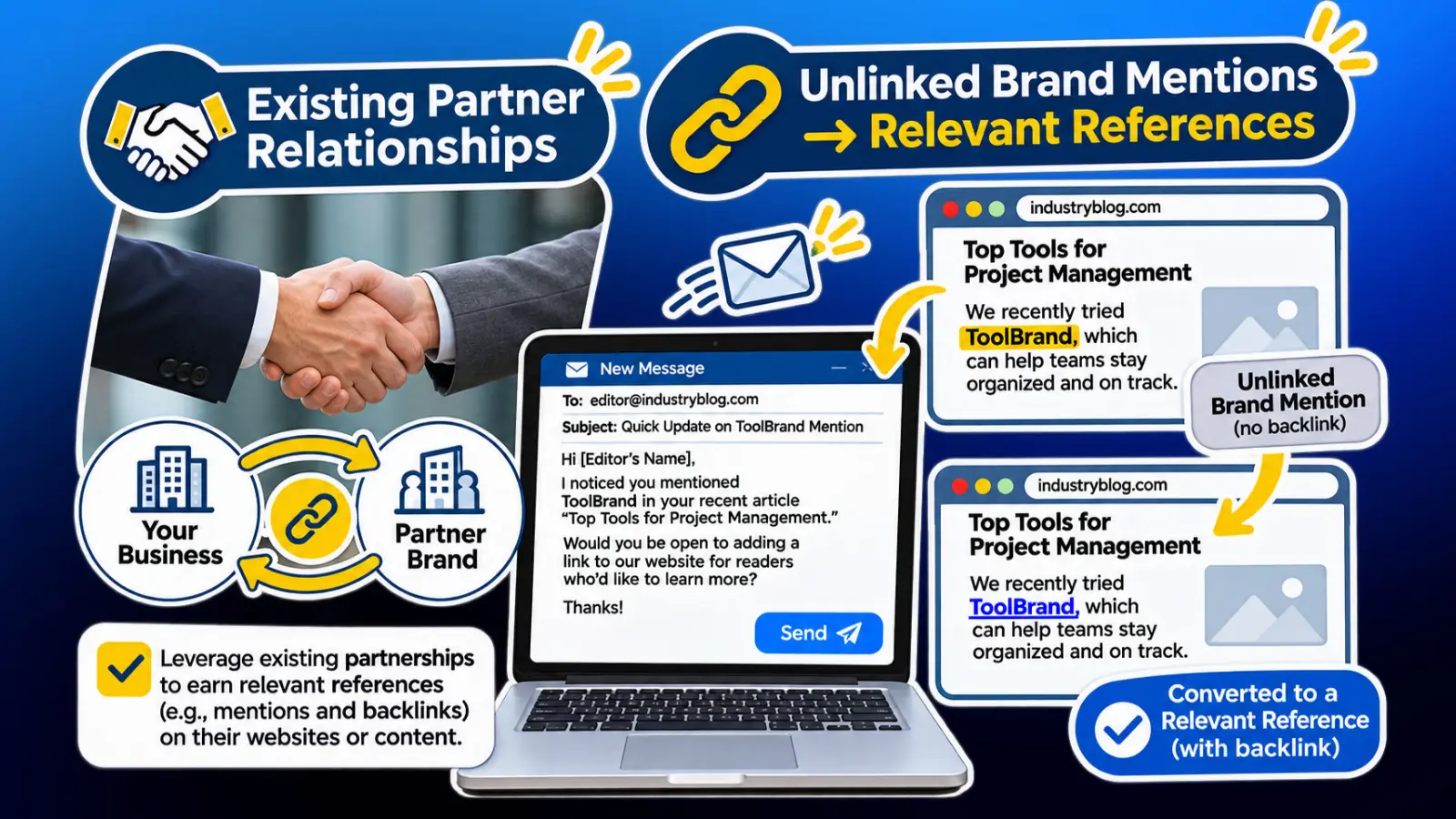
Partnership and mention-based link building strategies start with an existing connection to your business. They suit brands with suppliers, associations, active communities, or published mentions. Businesses starting without any relationships or recognition have fewer options here.
These link building strategies can avoid the need to create a new research asset, but the available opportunities are finite. Adding a link to an existing reference helps readers find the business or resource it names.
Use these two tactics to assess the connections you already have:
7. Get Partner and Community Links With BuzzStream
|
Best for |
Effort |
Price |
Time to results |
Main KPI |
|---|---|---|---|---|
|
Active partners and relevant memberships |
Medium |
From $49/mo (Starter) |
Weeks |
Confirmed contextual partner links |
To get partner and community links, identify places where an existing business relationship reasonably belongs on the partner’s website. Relevant opportunities can include a supplier profile, association membership listing, or event contribution page.
What you need: a genuine relationship, a relevant destination page, a contact who understands that relationship, and an explanation of how the reference helps visitors.
To run it, map your relationships in BuzzStream‘s outreach contact system. Inspect each organization’s site for an appropriate listing or resource page, then ask your existing contact about its inclusion process. Supply accurate descriptive text and the most useful destination URL.
For example, a local gaming venue links to the tournament organizer it regularly hosts. The reference explains the relationship and helps visitors find the organizer. It needs no unrelated article or reciprocal link arrangement.
Semrush rates partner and community link acquisition as medium effort, with results in weeks. Use that for planning. It does not commit any publisher to a timeline.
These link building strategies depend on the relationship’s substance. Prioritize link building websites where inclusion makes sense without an SEO explanation, and avoid purchasing memberships solely for a link. Keep a record of who owns each relationship so outreach stays consistent with existing business conversations.

8. Turn Unlinked Brand Mentions Into Links With Hunter.io
|
Best for |
Effort |
Price |
Time to results |
Main KPI |
|---|---|---|---|---|
|
Brands already mentioned by publishers |
Low |
Free plan; paid from $34/mo billed yearly (Starter) |
Days |
Existing mentions converted to links |
To turn unlinked brand mentions into links, ask a publisher to add a useful destination to a reference it has already made. The author already knows your brand, so the request can focus on helping readers locate the referenced business or resource.
What you need: an existing published mention, an appropriate destination page, a suitable contact, and a concise explanation of the requested change.
To run it, find mentions with Semrush‘s Brand Monitoring tool, then open each page to confirm the context and the absence of a link. Use Hunter.io to find and verify an appropriate business contact, then send a short request identifying the mention and proposed URL. Respect a refusal or a publication policy against adding links.
Consider a review roundup that names your gaming accessories store without linking to it. Readers who want to buy have no way to reach you. A request for a link beside the existing mention fits better than a pitch for an unrelated product page. That makes it a strong link building example.
Semrush rates converting unlinked brand mentions as low effort, with results in days. A publisher’s response and revision process can still delay the change.
This tactic has one prerequisite: mentions must already exist. Build your list of link building websites from actual references instead of a generic prospect database.

Link Building Strategies Compared by Cost and Speed
These link building strategies differ most in what you must already have and what you must produce. Cost levels below describe the work involved and do not reflect a standardized price per link. Timing remains an editorial planning estimate.
Use the strategy comparison to identify a suitable starting point:
|
Strategy |
Cost basis |
Time to results |
Best for |
|---|---|---|---|
|
Competitor and gap-based link building strategies |
Research tools and outreach labor |
Days–weeks |
Useful pages and established rivals |
|
Content-led link building strategies |
Asset production and maintenance |
Months |
Research or writing expertise |
|
Digital PR link building strategies |
Expert time, outreach, and optional agency fees |
Weeks |
Credible spokespeople or publishable findings |
|
Partnership and mention-based link building strategies |
Relationship management and contact research |
Days–weeks |
Existing connections or brand coverage |
The tactic comparison separates effort from the outcome to measure. Use each tactic’s main KPI to track your campaign. The benchmarks in this table give context for your own targets, and they are not goals.
|
Tactic |
Strategy |
Effort |
Skill level |
Benchmark |
|---|---|---|---|---|
|
Replicate competitors’ backlinks |
Competitor and gap-based |
Medium |
Intermediate |
Medium effort, results in weeks (Semrush) |
|
Broken link building |
Competitor and gap-based |
Medium |
Intermediate |
Medium effort, results in days (Semrush) |
|
Create link bait |
Content-led |
High |
Advanced |
77K backlinks from 17K referring domains (McKinsey AI report) |
|
Publish complete guides and lists |
Content-led |
High |
Intermediate |
About 1,700 backlinks to one SEO tools list (Backlinko) |
|
Respond to media requests |
Digital PR |
High |
Advanced |
Just over $300 average lowest agency quote per link (Semrush) |
|
Pitch content to publications |
Digital PR |
Medium |
Intermediate |
3,470 links to one case study (Backlinko) |
|
Get partner and community links |
Partnership and mention-based |
Medium |
Beginner–intermediate |
Medium effort, results in weeks (Semrush). No numeric benchmark |
|
Turn unlinked brand mentions into links |
Partnership and mention-based |
Low |
Beginner |
Low effort, results in days (Semrush) |
Budget-limited teams should inspect existing relationships and mentions first, then research relevant link building websites. The strongest link building strategies reduce unnecessary production or outreach before adding paid tools.
How To Pick the Right Link Building Strategy for Your Budget
Choose according to the gap between your current assets and your desired result. Budget and urgency influence the decision, but neither creates a publishable story or an existing brand mention.
Evaluate link building strategies against these practical constraints:
- Budget: Include software, content production, and staff time. A subscription is only one part of the campaign’s cost.
- Existing content assets: A useful report or replacement guide can make outreach possible without a new publishing project.
- Available time: Match the workflow to the attention your team can sustain. Prospect review and personalized replies need ongoing ownership.
- Outreach skills: Choose a tactic your team can explain clearly. An editor should understand the proposed reference without decoding an SEO pitch.
- Partner relationships: Existing suppliers, associations, and communities create relevant opportunities that a cold prospect list cannot reproduce.
- Mention volume: Brand mention conversion is suitable only when publishers already reference your business.
- Execution model: Compare in-house capacity with the service an agency actually provides, including its placement terms and reporting.
- Patience for content work: Original assets require production and upkeep before their citation value becomes clear.
A pitch explaining how a reference helps readers is more persuasive than a generic promise of scale. Each link building example above shares one trait: the publisher gains something useful. Ask what the publisher gains, then choose the link building strategies that support that exchange.
Quality also changes the decision. A short list of well-matched link building websites gives you a more manageable test than a large list assembled around a domain score alone. Evaluate the actual page, audience, and proposed placement before spending time on contact discovery.
How To Launch Your First Link Building Strategy
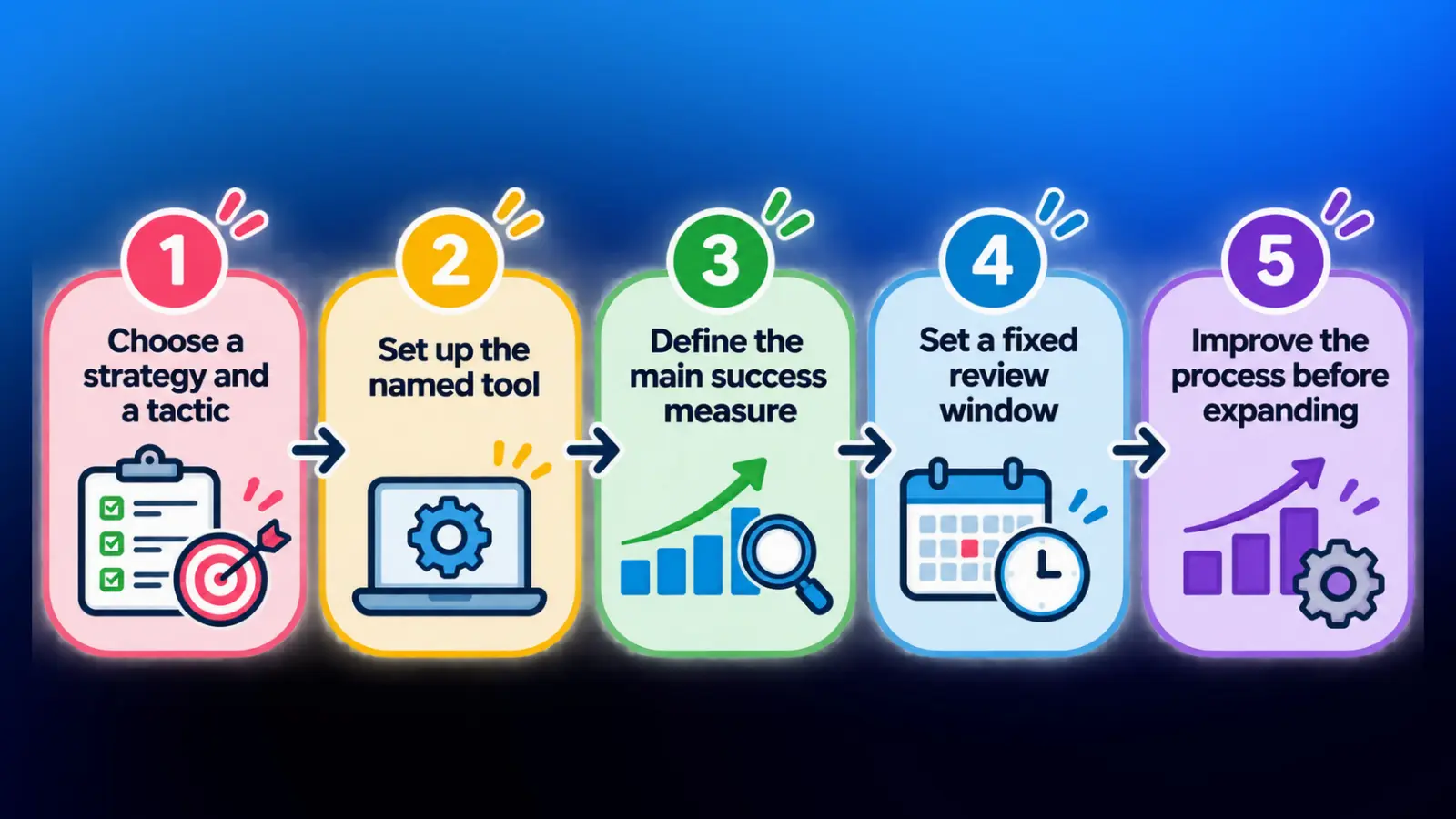
Launch a bounded test of a single tactic, with a clear owner and success measure. Testing link building strategies becomes useful when you can connect the work performed to the opportunities it created.
Follow this sequence before expanding the campaign:
- Choose a strategy and a tactic: Use your existing assets to select the approach. Record why the tactic fits and what would make it unsuitable.
- Set up the named tool: Configure only the workflow you need. Assemble a small, relevant prospect list of link building websites or an asset plan before adding automation.
- Define the main success measure: Use the tactic’s main KPI from its summary table. Record qualified replies and rejected opportunities as diagnostic information.
- Set a fixed review window: Run the tactic for a four- to six-week test window. Give content-led tactics longer. Separate early activity, like replies, from confirmed links and longer-term search performance.
- Reinvest in what works: Put the budget and time you save into the tactic that produced the most links, then add a second tactic from the same strategy. Examine which prospects responded and why before you expand.
Use the final step to build a repeatable process. A larger contact list alone adds little.
Keep a campaign record containing the prospect page, contact history, proposed destination, and outcome. File a successful pitch as a link building example next to the unsuccessful ones, so the next review weighs the quality of the work and the count.
Link building strategies improve through that feedback. If relevant link building websites consistently reject the asset, revisit its usefulness before increasing outreach volume.
Link Building Strategies – Final Verdict
Brands with existing relationships or published mentions should start by auditing those connections for relevant link opportunities. This route does not require a new research report. Hunter.io is useful after you identify an unlinked mention and need the appropriate contact.
Use this table to match your situation to a starting point:
|
Your situation |
Where to start |
|---|---|
|
Tight budget with existing mentions or partners |
Turn unlinked brand mentions into links or get partner and community links |
|
Strong existing competitors to study |
Replicate competitors’ backlinks |
|
Time for a big content project |
Create link bait or publish complete guides and lists |
|
Newsworthy angle or placement budget |
Respond to media requests or pitch content to publications |
This route is unsuitable for a business with no coverage or partner relationships. A site with established competitors and a useful resource should begin with competitor gap research instead. Choose content production when the missing ingredient is an asset worth citing. Choose digital PR when qualified expertise or original findings create a publication angle.
The best link building strategies fit the evidence you already have. Partnership and mention-based tactics offer a practical starting point for established brands, while competitor research is the stronger alternative when existing mentions are scarce.
FAQs
The best link building strategies for beginners are partnership and mention-based tactics, which cost little and can show results in days to weeks. They work when you already have partners or brand mentions. Without those, start with competitor research and a useful page to pitch.
Tools range from free plans to $300 a month on Pitchbox, and managed placements on Respona start at $100 each. Outreach to existing partners and mentions costs only your time. Agency services add separate fees, so compare their scope before you pay.
Turning unlinked brand mentions into links and replicating competitors’ backlinks need only one tool subscription. Partner requests cost staff time alone. None of these tactics requires a paid placement.
Broken link building and mention conversion can show results in days. Partner and PR tactics take weeks, and link bait and complete guides take months. Those timelines are editorial estimates, and publisher schedules can change them.
No. You can research prospects, contact partners, and pitch resources in-house. An agency becomes useful mainly for digital PR placements, so check its methods, placement terms, and reporting before you commit.
Start with sites that already link to two or more of your competitors, then sites that mention your brand without linking. Check each page and its audience before outreach. Relevance should guide your link building strategies.