


How to Learn Investing: A Beginner’s Roadmap for 2026

Eneba Hub contains affiliate links, which means we may earn a small commission if you make a purchase through them—at no extra cost to you. Learn more


START WITH THE BASICS
Explore Coursera for structured beginner investing study. Its Financial Analysis & Investment Strategy Mastery Specialization offers a longer learning path than a short introductory course.
The answer to how to learn investing starts with understanding assets, compound growth, and risk before choosing anything to buy. This guide gives you a practical route from basic investing concepts to researching and planning a diversified first investment. Learning before buying is the stronger starting point: an account alone doesn’t give you a strategy.
This path suits someone with some savings and no brokerage experience. Free educational resources let you begin without a course purchase, while structured programs provide a syllabus and exercises. Course completion certificates recognize study; they aren’t investment licenses or guarantees of competence. Your readiness to risk money depends on your finances and understanding.
The sections below cover investing concepts, tools, an investing website comparison, a learning path, courses, practice projects, and mistakes to avoid.
Jump to:
Investing at a Glance

A useful answer to how to learn investing separates learning costs from investment capital. This overview shows what you need before buying an asset.
|
Cost to start |
Free educational resources; optional paid courses |
|---|---|
|
Time to learn the basics |
Self-paced study followed by practical exercises |
|
What you need |
Internet access, a budget, learning materials, and a way to record decisions |
|
Main hurdles |
Market fluctuations, possible losses, fees, and emotional decisions |
|
Beginner suitability |
High for studying the fundamentals; readiness to invest depends on your finances |
You can learn investing concepts without opening or funding a brokerage account.
What Investing Actually Does for Your Money
Investing means putting money into assets, like stocks or bonds, in pursuit of a return over time. That return can come from rising asset values or payments to investors, but asset values can fall, and payments can change.
People use investing for several different purposes:
- Long-term wealth: Investments can grow over a long holding period, although their value can fall along the way.
- Retirement: A portfolio can support a future goal that sits beyond your working years. The appropriate account depends on your country’s rules and your circumstances.
- A child’s future: Investing can help prepare for a distant education or other family goal, provided the time horizon and risk fit.
- Investment income: Some assets pay interest or dividends. A dividend is a payment a company makes to shareholders, and payments can change.
Investor.gov says some experts consider 7–10% a useful annual return estimate for long-term diversified US stock investments, based on historical averages. That is context, not a promised return or a suitable assumption for every asset.
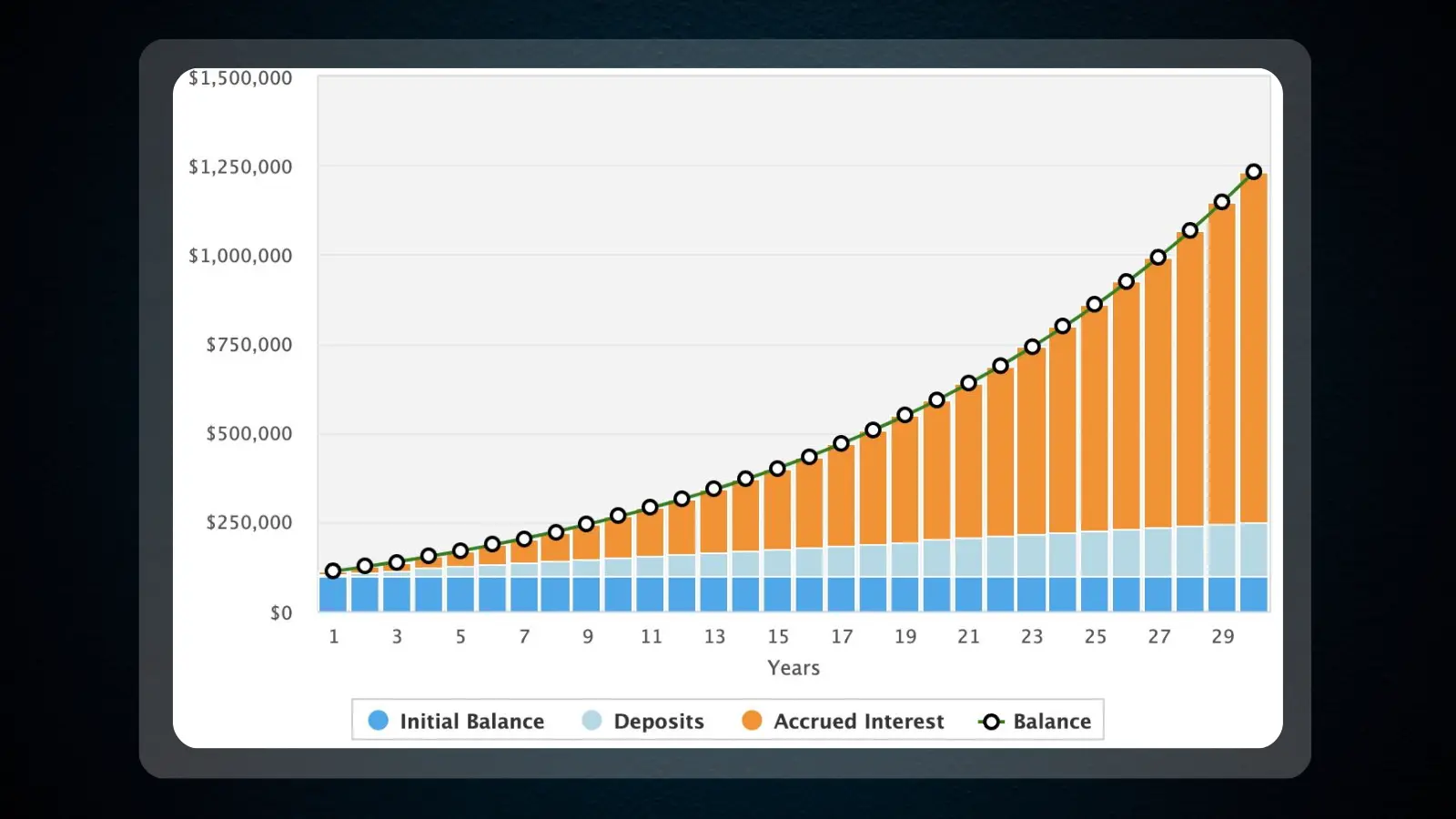
Learning investing also means understanding compound growth: returns that remain invested can themselves generate returns. Losses and fees affect that process, so a projection is a planning exercise, not a forecast.
The Tools and Accounts You Need Before You Invest
You need education, a financial plan, and research tools before you need a trading interface. A useful investing website supports your decisions rather than replacing them.
Start with these categories:
- Structured education: Coursera offers a beginner-level investing specialization for readers who prefer an organized syllabus.
- Focused lessons: Udemy offers individual courses, including Introduction to Investments.
- Financial accounts: A savings account holds accessible cash, while a brokerage account lets you buy investments. Fidelity is one brokerage option discussed below.
- Market research: Investing.com provides quotes, financial news, and screening tools. A stock screener filters investments using criteria you select.
These learning platforms offer different routes into the subject.
The Introduction to Investments page advertises Udemy‘s new-learner offer from $14.99. This is a promotional starting price, not a fixed price for every course.
Keep your investing website separate from your learning plan: reading market headlines isn’t a substitute for studying risk.
Investing Websites and Apps Compared
A brokerage app lets you transact; a research-focused investing website helps you investigate. Research access and account suitability are different decisions, so choose each for its purpose.
The following options serve different needs rather than forming a single ranking.
|
Platform |
Best for |
|---|---|
 |
Long-term investing |
 |
Quotes, news, and screening |
 |
Automated investing |
 |
Buying and holding investments |
Compare eligibility, available investments, account charges, and withdrawal rules before opening an account. Features and restrictions depend on your location and account type.
An investing website can also display high-risk trading products alongside ordinary market information. Investing.com discloses that 81% of retail CFD accounts lose money for its listed CFD brokers. A contract for difference, or CFD, is a speculative contract tied to price movements rather than direct ownership of the underlying asset.
What Investing Education Can and Cannot Do
The main benefit of learning investing is making decisions with a framework. Education can help you recognize risks, but it cannot remove market losses or make an unsuitable investment appropriate.
These trade-offs are worth considering before you commit money.
| Pros | Cons |
|---|---|
| ✅ Compound-growth knowledge – understand how reinvestment can affect long-term results ✅ Accessible starting point – study basic concepts before funding an account ✅ Free resources – begin with educational material from Investor.gov ✅ Flexible study – use self-paced lessons on Coursera or Udemy ✅ More deliberate choices – connect investments to goals and time horizons | ❌ Losses remain possible – education doesn’t prevent falling asset values ❌ Behavior and costs count – emotional trades and fees can undermine a plan |
The strongest reason to learn investing is greater control over your reasoning, not confidence that a particular purchase will rise. A course should help you explain your choices and recognize when you don’t understand a product.
Keep learning expenses proportionate to that purpose. Buying more courses can become another form of delay if you never complete an exercise or write down an investment plan. Start with a clear syllabus, practice what it teaches, and identify the specific gap before purchasing another resource.
How To Learn Investing: A Step-by-Step Path
Learn investing through goals, asset knowledge, account research, and controlled practice. Readiness depends on what you can explain and afford, not a universal study deadline.
Follow these steps in order, and pause before committing money if a decision remains unclear.
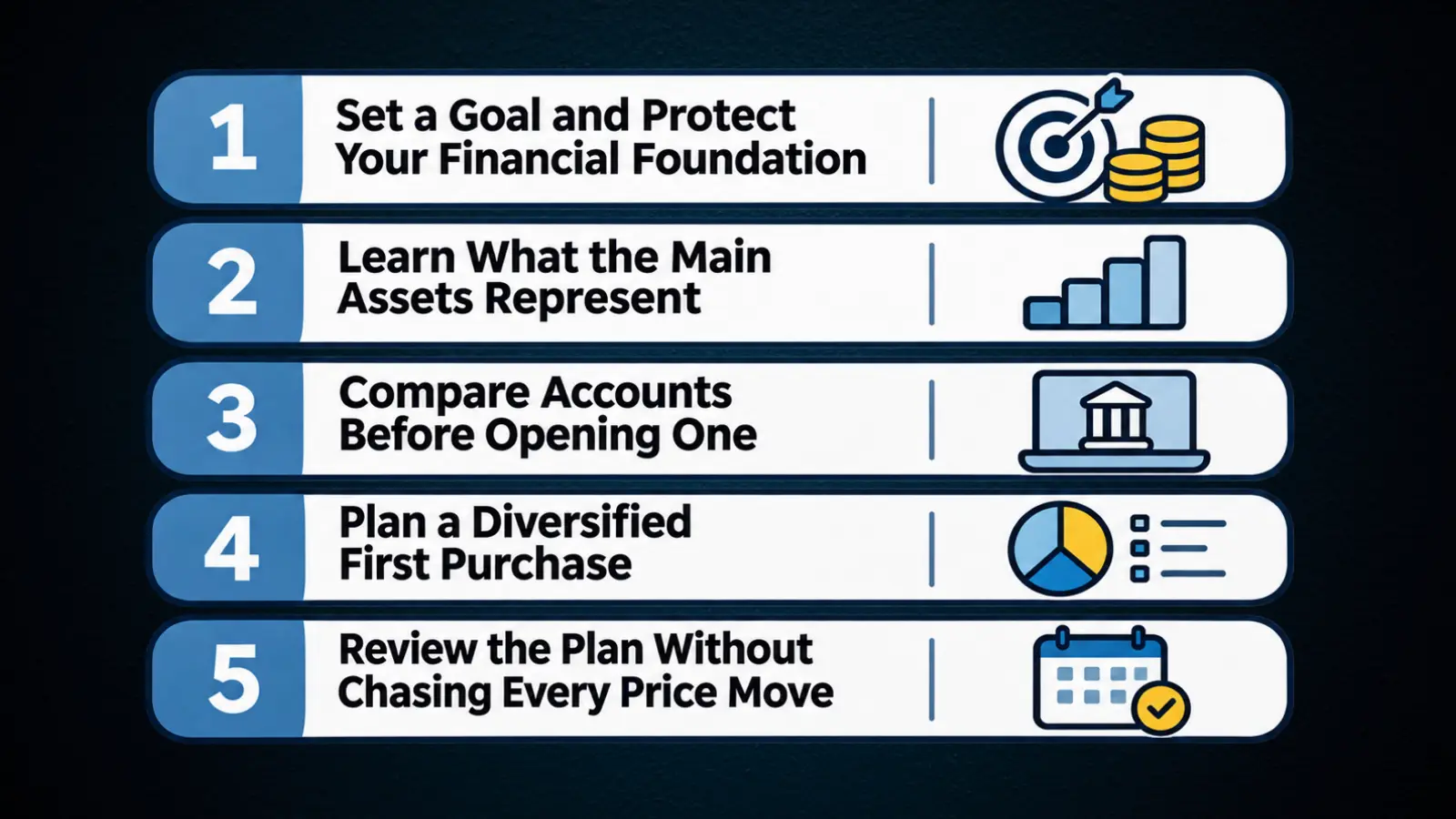
Step 1: Set a Goal and Protect Your Financial Foundation
Choose a goal and identify when you will need the money. Your time horizon is the period between investing and using those funds. Money needed for near-term essentials deserves different treatment from money intended for a distant goal.
List your income, expenses, savings, and proposed investment contributions. Keep emergency needs in view, and address high-interest debt before prioritizing market investments. Learning investing is more useful when your plan begins with money you can afford to leave invested.
Step 2: Learn What the Main Assets Represent
Study stocks, bonds, mutual funds, and cash before comparing individual products. A stock represents company ownership; a bond represents a lending arrangement. A mutual fund pools investors’ money into a portfolio managed according to a stated strategy.
Add exchange-traded funds, or ETFs, to your vocabulary: these funds trade on an exchange. A good course on how to learn investing explains both an asset’s potential return and how it can lose value. Write those explanations in your own words before moving on.
Step 3: Compare Accounts Before Opening One
Choose an account based on its purpose, available investments, costs, and local rules. A brokerage account is a container for investments, not an investment itself. Tax treatment and withdrawal restrictions can differ across account types and jurisdictions.
Read the fee schedule and account terms rather than choosing solely by app design. When you learn investing through a brokerage’s educational material, distinguish education from product promotion. Fund the account only after your budget and account choice fit the goal you already set.
Step 4: Plan a Diversified First Purchase
Choose an investment approach you understand and can explain. Diversification means spreading exposure across investments to reduce concentration risk. Asset allocation means deciding how your portfolio is divided among asset categories.
Research what a fund actually holds, its objective, and its expenses. Owning several funds doesn’t automatically create diversification if they hold similar assets. Use an investing website as a starting point, then read the investment provider’s documents. If the product remains confusing, continue practicing without a purchase.
Step 5: Review the Plan Without Chasing Every Price Move
Set a review schedule that suits your goal and the account you chose. Compare your holdings with your intended allocation, and revisit the plan when your circumstances change. Rebalancing means adjusting holdings to restore the allocation you intended.
Consider transaction costs and possible tax consequences before selling. Learning investing includes recognizing that activity isn’t the same as progress: a price alert doesn’t automatically require action. Keep a decision journal so future reviews examine your reasoning as well as your account balance.
Your first finished project is a written plan you understand, not a rushed trade.
Courses That Deepen Your Investing Knowledge
A structured syllabus can help you learn investing without jumping between unrelated topics. Choose coverage that matches your knowledge gap, rather than treating popularity as evidence of investment results.
Introduction to Investments on Udemy is the focused starting pick for readers deciding how to learn investing through an introductory course.
For a longer path, Coursera lists its specialization as 3 months to complete at 10 hours a week. That is a course workload, not a deadline for becoming a capable investor.
The Introduction to Investments page also lists the alternative Udemy courses and durations below.
|
Course |
Provider |
What It Covers |
Duration |
|---|---|---|---|
|
Financial Analysis & Investment Strategy Mastery Specialization |
 |
Financial analysis and investment strategy |
3 months at 10 hours a week |
|
Investing In Stocks The Complete Course! |
 |
Stock-investing fundamentals |
17.5 hours |
|
Stock Market Investing for Beginners |
|
Beginner stock-market concepts |
9 hours |
|
Financial Literacy & Investing 101 |
|
Financial literacy and investing basics |
1.5 hours |
|
Complete Investing Course (Stocks, ETFs, Index/Mutual Funds) |
|
Stocks and pooled investment funds |
11.5 hours |
Practice Projects To Build Investing Confidence
Learning investing becomes more useful through written decisions and repeatable exercises. Start without money at risk, then connect the exercises to your financial plan.
Work through these projects in order:
- Build a starter watchlist: Follow a small selection of stocks and funds on an investing website. Record what each asset represents and distinguish price changes from changes in the underlying business or fund.
- Compare savings and investing goals: Assign each goal a time horizon and explain why accessible cash or market exposure fits. This teaches you to choose a tool for a purpose.
- Model compound growth: Explore how contributions, time, and assumed returns affect a projection. Change the assumptions to see how sensitive the result is, and label every result hypothetical.
- Draft a sample portfolio: Describe its intended asset allocation and identify overlapping holdings. For a gaming-related exercise, compare a portfolio concentrated in game publishers with a broader diversified approach.
- Write a purchase and review plan: State what you would buy, why it fits, which costs apply, and what would prompt a review. Make an actual purchase only if your finances and understanding support it.
These exercises help you learn investing through evidence you can revisit. A decision journal is more informative than a memory of feeling confident.
Investing Mistakes To Avoid While You Learn
An unclear plan makes investing decisions harder to evaluate. Write the rules before emotions take over, then use those rules to assess potential purchases and market changes.
These common problems have practical fixes:
- An undefined goal: Name the purpose of the money and when you’ll need it. A vague desire to grow savings gives you little guidance about suitable risk or account choice.
- Concentrated holdings: Look through funds to their underlying investments. Several holdings can still leave you exposed to the same industry, country, or company.
- Overlooked fees: Compare account charges, fund expenses, and advisory fees before committing. Citizens Bank notes that an advisor may cost under 1% of a portfolio, but that isn’t a universal ceiling or quote for your circumstances.
- Emotional decisions: Keep your goal and review rules visible during market swings. An investing website supplies information, not a requirement to trade whenever a price moves.
- Endless preparation: Finish a defined learning exercise before adding another course. You can learn investing steadily without collecting subscriptions or rushing into a product you don’t understand.
If you want personal guidance, ask an advisor about services, fees, conflicts of interest, and applicable credentials. The value of advice depends on your needs, not simply on its price.
Keep records of transactions and fees, and learn the tax rules that apply to your country and account. Investment income and sales can have tax consequences. This is general information, not financial, legal, or tax advice.
Final Verdict on How To Learn Investing
This path suits someone prepared to study, practice, and invest only after their budget supports it. A clear plan is more useful than a busy trading account. Start with free fundamentals, then choose a focused course or longer specialization according to the structure you need.
Someone without accessible emergency savings or with high-interest debt should prioritize that foundation before putting essential money at market risk. Learning can continue while you do so. If you want personal recommendations rather than self-directed study, consider a qualified advisor and compare the full cost of that service.
The practical answer to how to learn investing is to connect every lesson to a decision you can explain. Coursera suits readers who want a structured learning path, while a shorter introductory course may suit those who want a narrower starting point.
FAQs
Your pace depends on your starting knowledge and practice. A useful approach for how to learn investing is to study assets, risk, and diversification, then test your understanding with a written plan before committing money.
Start by defining your goals, building an emergency savings buffer, and learning asset basics. Next, choose a low-cost brokerage account and begin with diversified index funds or ETFs rather than individual stock picking.
Yes. Investing $100 weekly equals $5,200 a year. Thanks to compound growth over long horizons, consistent small contributions can build substantial long-term wealth, even if short-term market returns fluctuate.
It is a guideline for risk and time horizons: keep money needed within 3 years in cash, invest money for 5 years in conservative income assets, and reserve equity or growth investments for goals 7+ years away.
To generate $1,000 monthly ($12,000 annually), you need around $300,000 assuming a 4% annual withdrawal rate or yield. With lower yields (e.g., 2–3%), required capital ranges from $400,000 to $600,000.
Investing.com is an option for quotes, news, and screening; a brokerage serves a different purpose. Choose resources that explain risks clearly as you work out how to learn investing.