


What is Connive in MTG? Rules, Strategy & Cards Explained



What is connive in MTG? If you have ever watched a creature draw cards, filter your hand, and grow stronger all in one smooth motion, you have seen connive in action. This mechanic feels like having a secret informant working for your team. It rewards smart decisions and punishes sloppy play. Understanding connive MTG basics can give you a serious edge, especially in formats like Commander and Limited.
Connive first appeared in Streets of New Capenna, representing the Obscura crime family’s talent for manipulation and scheming. The mechanic combines card selection with creature growth, making it one of the most skill-testing abilities introduced in recent years.
The MTG connive mechanic combines card selection with creature growth, making it valuable in both aggressive and controlling strategies. I have used connive in countless games, and it never fails to create interesting decisions at the table. Before diving into complex strategies, let’s establish what connive in MTG is at its core level.
Jump to:
What is Connive in MTG and Why Does It Matter?
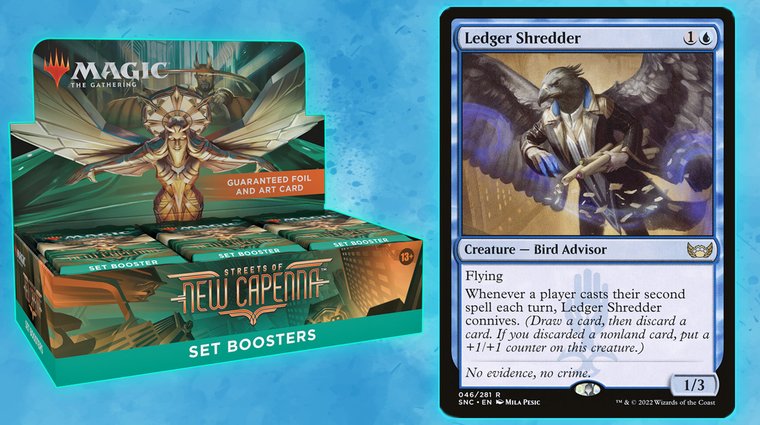
So, what does connive mean in MTG exactly? When a creature connives, you draw a card, then discard a card. If you discard a nonland card, you put a +1/+1 counter on the creature that connived. Simple on the surface, but packed with depth. What does connive mean in MTG compared to other draw mechanics? It’s essentially an upgraded version of looting that can make creatures bigger.
This mechanic pulls double duty. First, it improves your hand quality. Need a specific answer? Connive helps you dig for it. Stuck with too many lands late in the game? Pitch one and keep rolling. Second, it makes your creatures bigger. Discarding spells means your conniving creature grows, creating threats that demand removal.
The Obscura family in Streets of New Capenna operates through information and deception. Connive captures that flavor perfectly. You secretly evaluate your options, make a calculated choice, and emerge stronger. What does connive mean in MTG thematically? It represents gathering information and using it strategically. Players familiar with how to play Magic: The Gathering will recognize this as a classic blue ability. Now that we’ve covered what connive in MTG is conceptually, let’s examine the mechanical process.
How Does Connive Work?
Let me break down the step-by-step process when a creature connives:
- Draw a card from your library
- Choose one card from your hand to discard
- If the discarded card was a nonland card, put a +1/+1 counter on the creature that connived
The order matters here. The MTG connive rules state that you must always draw before discarding, giving you maximum information before making your choice. You might draw exactly what you needed and happily discard something else. Or you might draw a land, realize you are mana-flooded, and pitch that land instead. What does connive mean in MTG strategically? It means you get maximum information before making your discard choice, letting you adapt to what you draw.
What happens when you connive but discard a land? Your creature stays the same size, but you still filtered your hand. Sometimes that trade is worth it. Late in a game, swapping a useless land for literally any other card can swing the match in your favor.
Some cards feature “connive X” where X equals a specific number. With connive X, you draw X cards, discard X cards, then put a +1/+1 counter on the creature for each nonland card you discarded. Raffine, Scheming Seer is the poster child for this variation, often letting you connive 3, 4, or even more cards at once.
Rules of Connive in MTG
The MTG connive rules have several important rules interactions that can catch players off guard. If you’re learning what connive is in MTG beyond the basic “draw then discard,” these details will prevent mistakes and help you capitalize on tricky situations.
The connive ability still resolves even if the creature leaves the battlefield. If an opponent destroys your creature in response to the connive trigger, you still draw and discard a card. You just cannot place a +1/+1 counter on something that no longer exists. This matters because the card filtering portion still happens.
When multiple creatures connive simultaneously, you choose the order. Each creature connives one at a time, meaning you can adjust your decisions based on what you draw. This sequencing creates opportunities for skilled players to maximize value.
Connive is not optional once triggered. You must draw and discard. This rarely matters, but be aware if you are low on cards in your library. MTG connive rules require the draw to happen even if you’re low on cards, so aggressive connive strategies can accidentally deck you.
For Commander players, connive interactions multiply with certain cards. Effects that double card draw or prevent discarding can break the mechanic wide open. Teferi’s Ageless Insight lets you draw twice as many cards while only discarding the normal amount. Building around these synergies creates powerful engines that outpace opponents.
If you enjoy the best MTG Commander decks, consider exploring Esper builds that leverage connive. The white-blue-black color combination offers plenty of support for this strategy.
Examples of Connive Cards Worth Playing
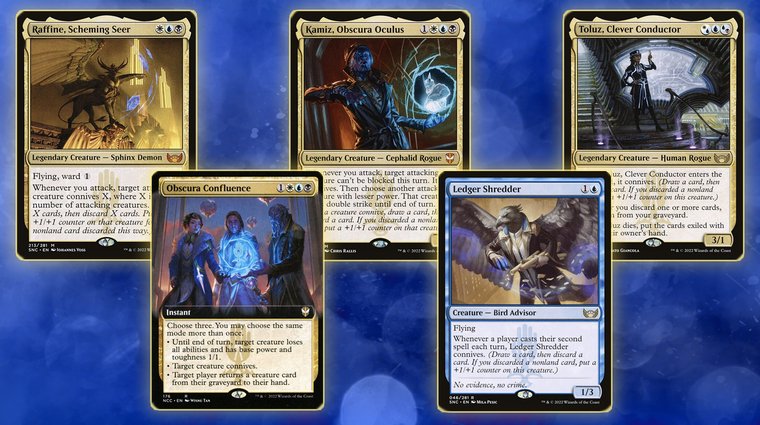
Several connive cards have proven themselves across multiple formats. Here are standouts that I recommend adding to your collection.
- Raffine, Scheming Seer leads the pack as the most powerful connive creature printed. This three-mana Sphinx Demon has flying, ward 1, and triggers connive X whenever you attack, where X equals your number of attacking creatures. Even attacking with just Raffine means conniving one card, and the ability scales dramatically with more attackers. Raffine dominated Standard during its time in the format and remains a Commander staple.
- Kamiz, Obscura Oculus offers a different approach. When you attack, one creature becomes unblockable and connives, while another creature with lesser power gains double strike. This creates split threats that opponents struggle to handle. The combination of evasion, card selection, and combat tricks makes Kamiz a strong Commander option.
- Toluz, Clever Conductor does something unique with discarded cards. Instead of going to the graveyard, cards you discard get exiled. When Toluz dies, all those exiled cards return to your hand. This turns connive into pure card advantage rather than card filtering. Build your deck around sacrifice effects, and Toluz generates incredible value.
- Obscura Confluence provides instant-speed flexibility. For four mana, you choose three effects: shrinking a creature, making a creature connive, or returning a creature card from a graveyard to hand. You can pick the same mode multiple times, meaning one creature can connive three times in a single spell. The versatility makes this card excellent for responding to different board states.
- Ledger Shredder deserves mention for its Constructed success. This two-mana creature connives whenever any player casts their second spell each turn. In formats like Modern and Pioneer, games feature multiple spells per turn cycle, so Ledger Shredder triggers frequently. It quickly grows out of removal range while improving your hand.
These cards represent the best of what connive offers across different strategies and formats. You can find all of these powerful connive cards on TCGPlayer to start building your own connive-focused decks.
The History of Connive in MTG
To fully understand what connive is in MTG, it helps to know where it came from. The MTG connive mechanic debuted in Streets of New Capenna, released in April 2022. The set transported players to a noir-inspired city run by five demon crime families. Each family received a signature mechanic reflecting their personality. The Obscura, masters of secrets and manipulation, got connive. The MTG connive mechanic has proven itself across multiple formats, with cards like Ledger Shredder seeing play in Modern and Pioneer.
Wizards of the Coast designed connive to bridge two Limited archetypes. The set wanted graveyard synergies and +1/+1 counter themes to coexist, and connive naturally fed both. Draft and Sealed players quickly learned that connive creatures over-performed because they provided card selection and combat presence simultaneously.
The mechanic appeared on 19 cards in the main set and Commander products combined. Most were blue, with smaller numbers in white and black. All connive cards fit within the Esper color identity, matching the Obscura family’s colors.
After Streets of New Capenna, Connive returned in several products. The Transformers crossover cards featured connive on select creatures. Modern Horizons 3 included three connive cards, showing Wizards believes the mechanic has legs. Most recently, Marvel’s Spider-Man used connive for villain characters, demonstrating how well it fits scheming antagonists.
Looking at MTG sets in order, connive sits alongside other skill-testing mechanics like surveil and scry. It occupies a healthy design space that rewards player decisions without being overly complex. Mark Rosewater has indicated the mechanic scores well on his Storm Scale, suggesting we will see it again.
Maximizing Connive in Your Decks
Building around connive requires understanding what you want from the mechanic. Are you using it primarily for card selection, creature growth, or graveyard filling? Your answer shapes the deck. MTG connive rules allow you to choose the order when multiple creatures connive at the same time, letting skilled players maximize their card selection.
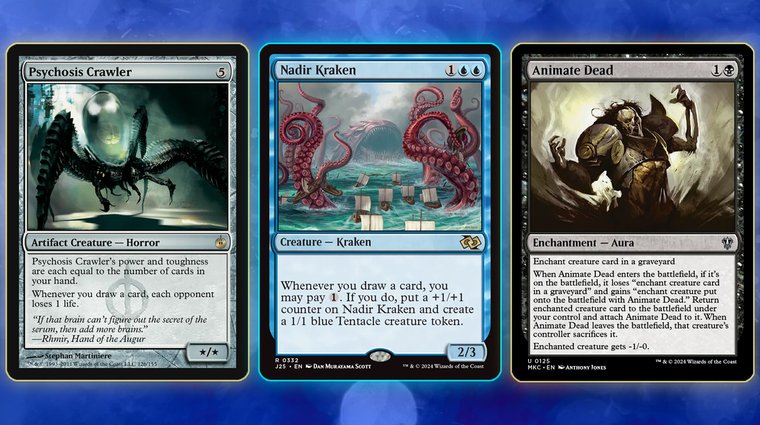
- For card selection, pair connive with effects that reward drawing cards. Psychosis Crawler damages opponents whenever you draw. Nadir Kraken creates tokens with each draw trigger. These cards turn your connive creatures into engines that generate board presence.
- For creature growth strategies, focus on attacking frequently to trigger connive. Cheap evasive creatures work well because they attack safely and trigger combat-based connive abilities. Equipment that grants evasion helps your connive creatures connect.
- Graveyard strategies love connive because you choose what enters your graveyard. Discard reanimation targets, then bring them back with spells like Animate Dead or Reanimate. Madness cards also shine here, letting you cast discarded spells immediately.
Mastering what connive is in MTG means recognizing which mode matters most in any given game state and building your deck to capitalize on all three.
My Verdict on Connive in MTG
To answer the question “What is connive in MTG?” simply, the MTG connive mechanic rewards smart decision-making every time it triggers. By combining card filtering with optional creature growth, connive gives players consistent value while keeping each choice meaningful. It adapts well to different game states and never feels wasted, whether you need better cards, a larger threat, or a graveyard setup.
That flexibility is why connive helped shape competitive formats and continues to see play in Commander. Cards like Raffine, Scheming Seer, and Ledger Shredder show how powerful the mechanic becomes when built around properly, making connive one of the most skill-driven and engaging abilities Magic has introduced in recent years.
FAQs
Connive is a mechanic that lets you draw a card, discard a card, and place a +1/+1 counter on the creature if a nonland card is discarded. It combines card selection with optional creature growth, making it valuable in multiple formats.
Yes, connive is good because it provides both card selection and potential creature growth in a single ability. The flexibility to filter your hand while building a stronger board presence makes connive consistently valuable across different game states and formats.
Yes, connive is a strong MTG mechanic that has seen competitive play in Standard, Pioneer, and Modern. Cards like Ledger Shredder and Raffine, Scheming Seer proved the mechanic can compete at the highest levels while remaining skill-testing and interactive.
To decide what to discard with connive, evaluate your current game state and future needs. Discard lands if you have enough mana, discard spells to grow your creature, or discard reanimation targets and madness cards for additional value.
If a creature dies before it would connive, you still draw and discard a card because the ability is already triggered. However, you cannot place a +1/+1 counter on the creature since it no longer exists on the battlefield to receive it.
Yes, you can connive with no cards in hand. You draw a card first, then discard it from your hand. Since drawing happens before discarding, you will have at least one card to discard after the draw portion of connive resolves.
Yes, MTG connive rules remain consistent whether you’re playing Standard, Commander, or Limited. The comprehensive rules for connive are identical across all Magic formats, though the strategic value of the MTG connive rules can vary between formats due to different card pools and game pacing.