

Pragmata Review in 2026: The Risky Idea That Turns Into Something Special



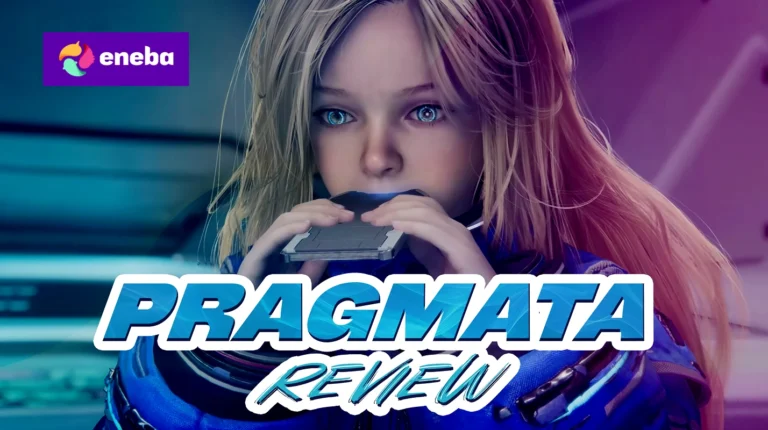
After years of trial and error and lots of waiting, Capcom’s new sci-fi third-person shooter IP is finally here, and with that, this Pragmata review aims to answer the biggest question. Has the 6-year wait been worth it?
At the core of my Pragmata review, I’ll examine a game that might seem a bit generic at first, especially for action-adventure single-player gamers. It comes off like something most of us have played before, but once we get past the obvious sci-fi shooting and the bulky, astronaut-looking protagonist, I can assure you this game is not a Dead Space ripoff.
I’ll try to cover everything Pragmata offers to its players. Gameplay mechanics, how the hacking and shooting work together (and yes, it does take a bit to get used to), and how each version holds up. And of course, the Hugh and Diana dynamic, which is the emotional core of the whole experience.
So if you’ve been wondering whether to pick it up, this Pragmata review will walk you through exactly what works, what doesn’t, and ultimately, is Pragmata worth it?

Jump to:
TL;DR – Pragmata Review Overview
| Genre | Sci-fi third-person action-adventure |
| Core loop | Real-time hacking + shooting hybrid combat |
| Biggest strength | Unique hack-and-shoot system |
| Biggest weakness | Mid-game repetition + safe story |
| Clear verdict | Strong new IP, worth playing |
| Release date | April 17, 2026 |
| Platforms | PS5, PS5 Pro, Xbox Series X|S, PC, Switch 2 |
| Price | $59.99 |
| Best for | Players wanting fresh single-player gameplay |
Pragmata Review: Weird, Clever, Surprisingly Heartfelt
Before jumping into the premise, let’s take a moment in this Pragmata review to talk about what the game is. A single-player shooter sci-fi game with elements that make it strikingly similar to some of the best third-person shooters in the industry, like Dead Space and Vanquish.
The main character, in all his space suit glory and edgy sci-fi space helmet, just takes the similarity up a notch. Even with the shooting mechanics and the setting – a highly futuristic space station overrun by aggressive enemies that need to be annihilated – it’s right up there with the sci-fi third-person big dogs.
However, what Pragmata does not try to be is another dark, souls-like experience or something in the vein of Death Stranding. It is not a multiplayer or a co-op game and only offers a fairly linear campaign under the umbrella of a single-player third-person shooter. Nothing more, nothing less.
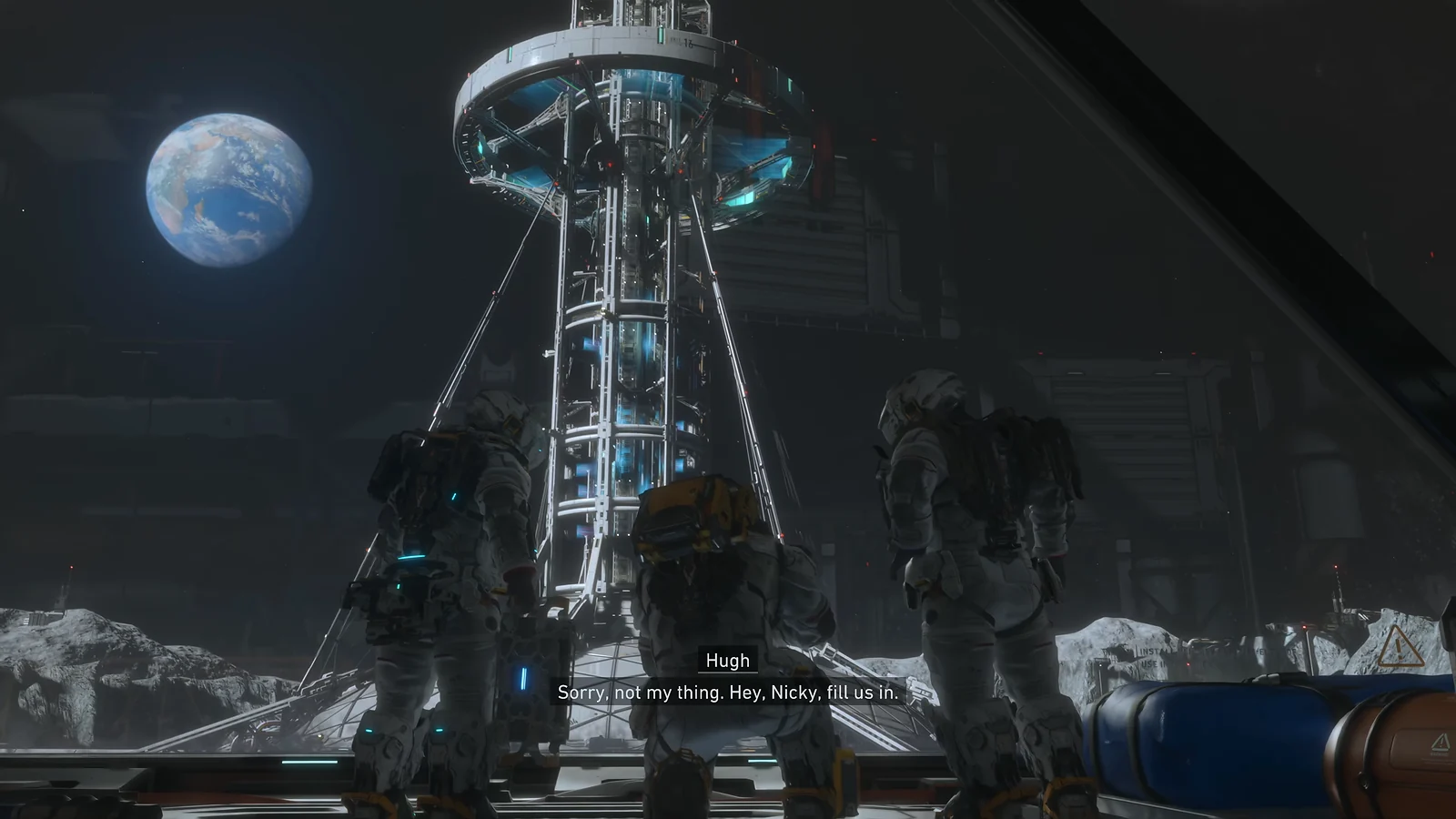
Now, let’s get onto the premise. The game follows Hugh Williams, a systems auditor sent to investigate a lunar research facility known as the Cradle. However, when he and his team step into the facility itself… It’s unnaturally quiet and empty.
Before any real investigation can begin, an unforeseen quake rocks the entire moon, and all the crew members are wiped out. Leaving Hugh completely alone.
Not long after, Hugh runs into an android girl who introduces herself as D-I-0336-7. Since that’s a bit much, he calls her Diana, and the two end up becoming an unlikely tag team from that point.
As they make their way through the Cradle, they discover what has gone down in the research colony and the most advanced piece of technology in the form of a lunafilament, a raw material used to 3D print almost anything needed for humans to live on the moon. This explains why the entire moon base has an impressively large set of 3D printed environments that make it almost identical to Earth, i.e., research labs, indoor forests, and even Times Square.
Now that I’ve covered the gist of the story in my Pragmata review, let me also give you some good news. Capcom offers a free demo for players across all platforms. You get to play the first chapter to get a feel of what it really offers, and gauge whether you can handle the hack-and-shoot mechanics.
Gameplay & Combat System (Hack, Shoot, Panic, Rinse, and Repeat)
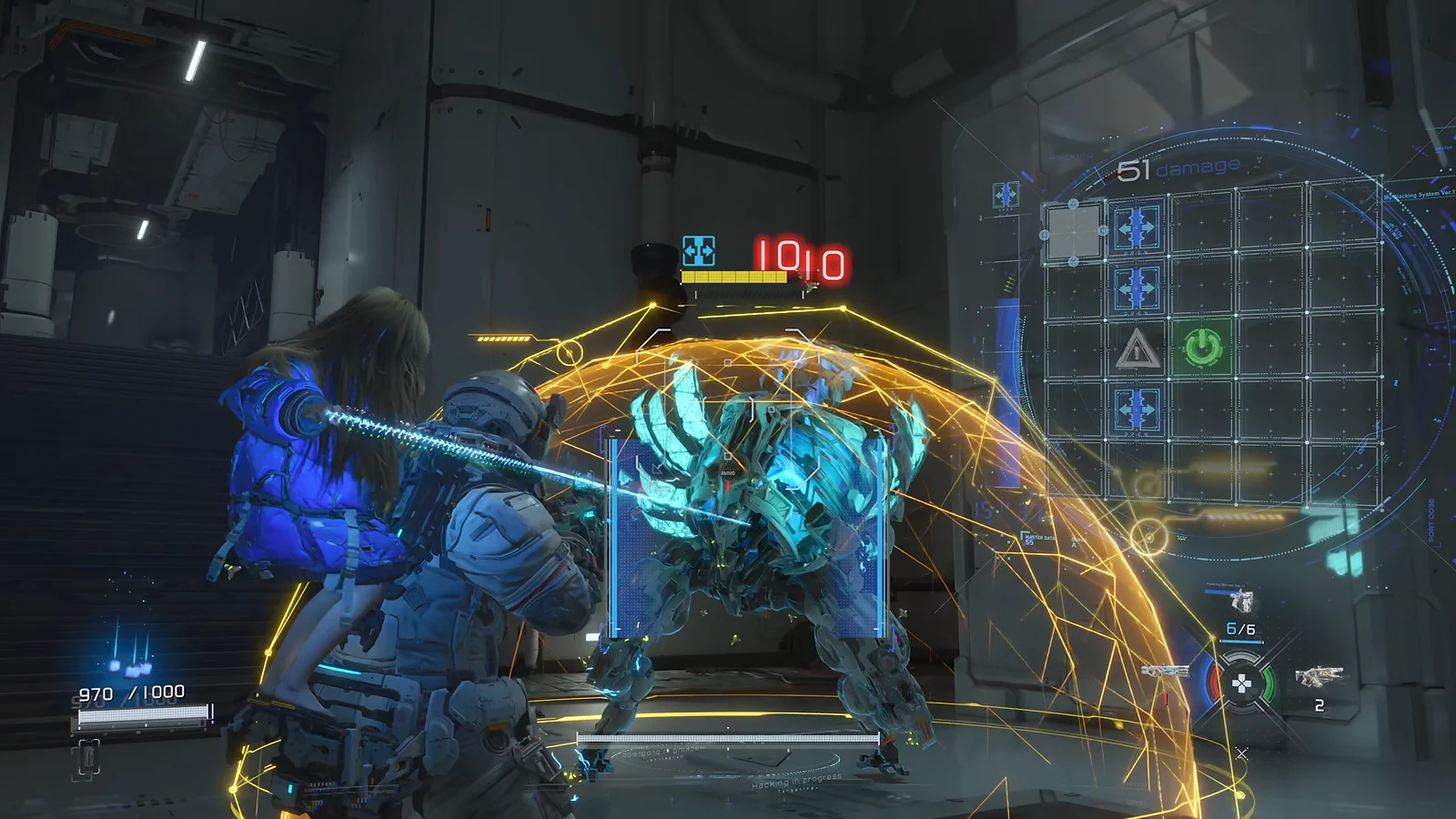
This is where my Pragmata review really starts to get interesting – the game revolves around two main characters as one unit. The combat mechanics are far more complex than your average shooting game.
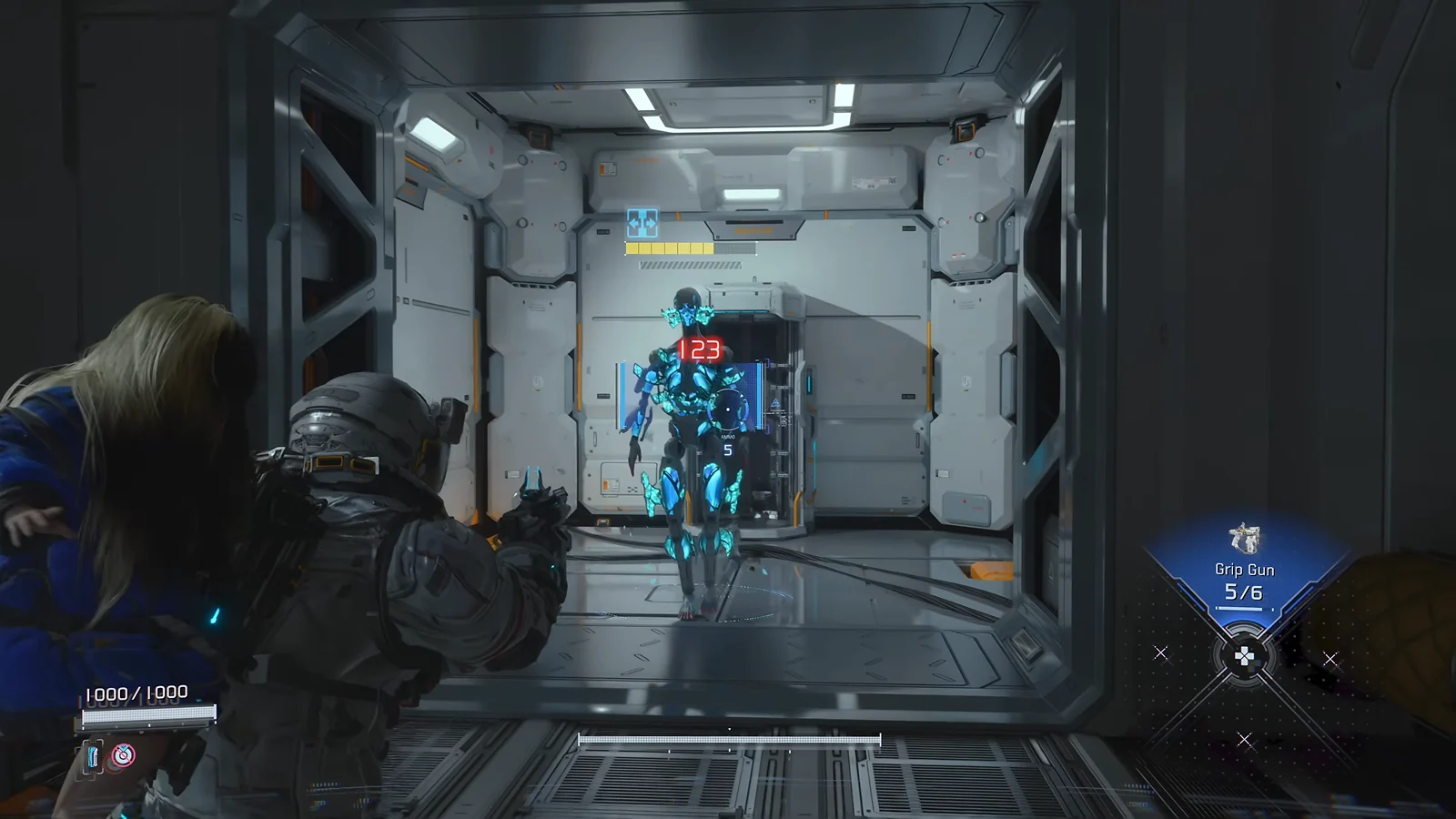
Hugh gains access to a range of weapons as you progress, most of which can be upgraded over time. Alongside the usual pistols, shotguns, and heavier weapons, there are a few more unique tools, like a rope-like snare that can trap and slow enemies. He also has a jetpack for mobility, which helps keep movement fluid. Up to this point, it all feels fairly standard.
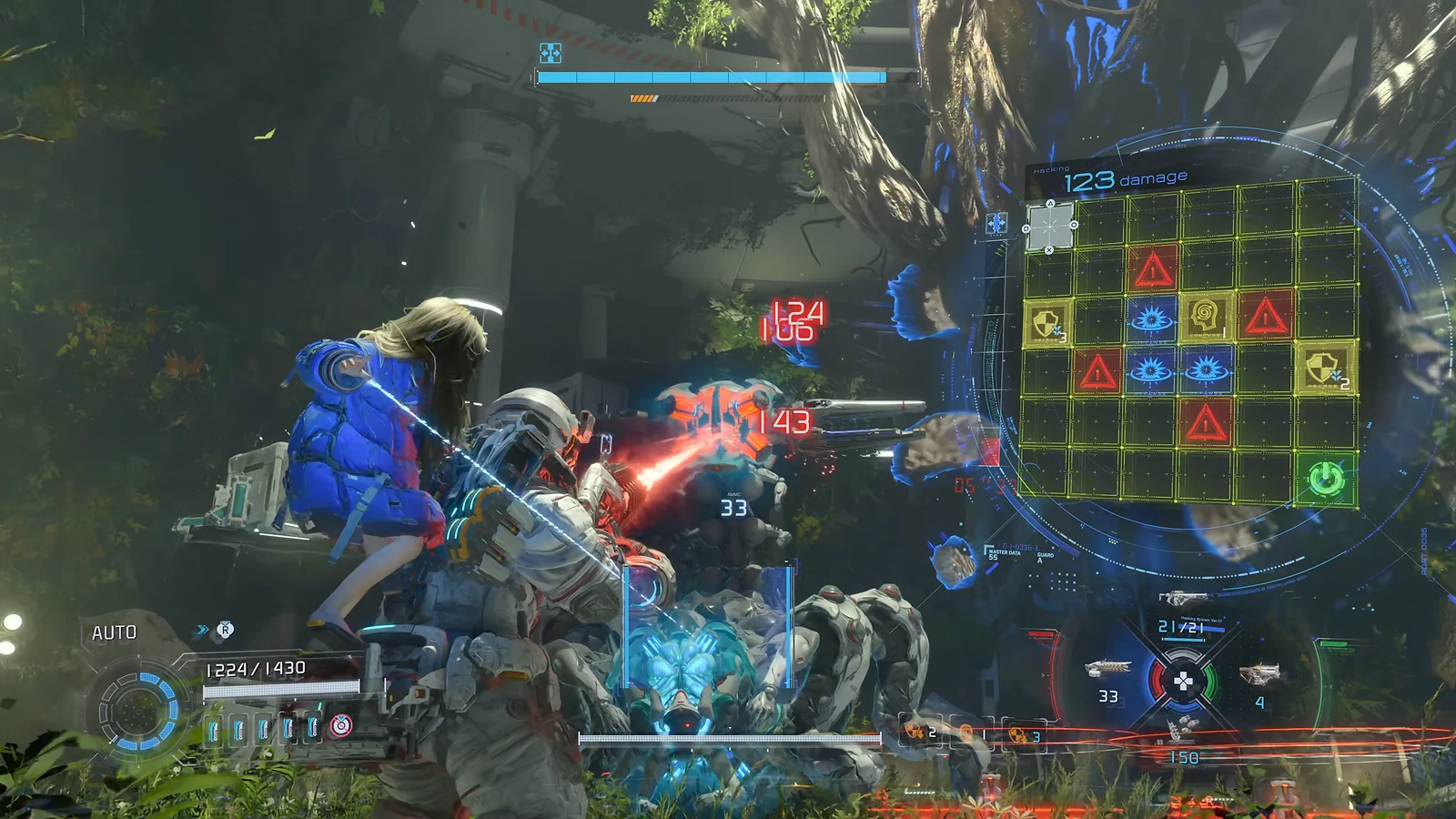
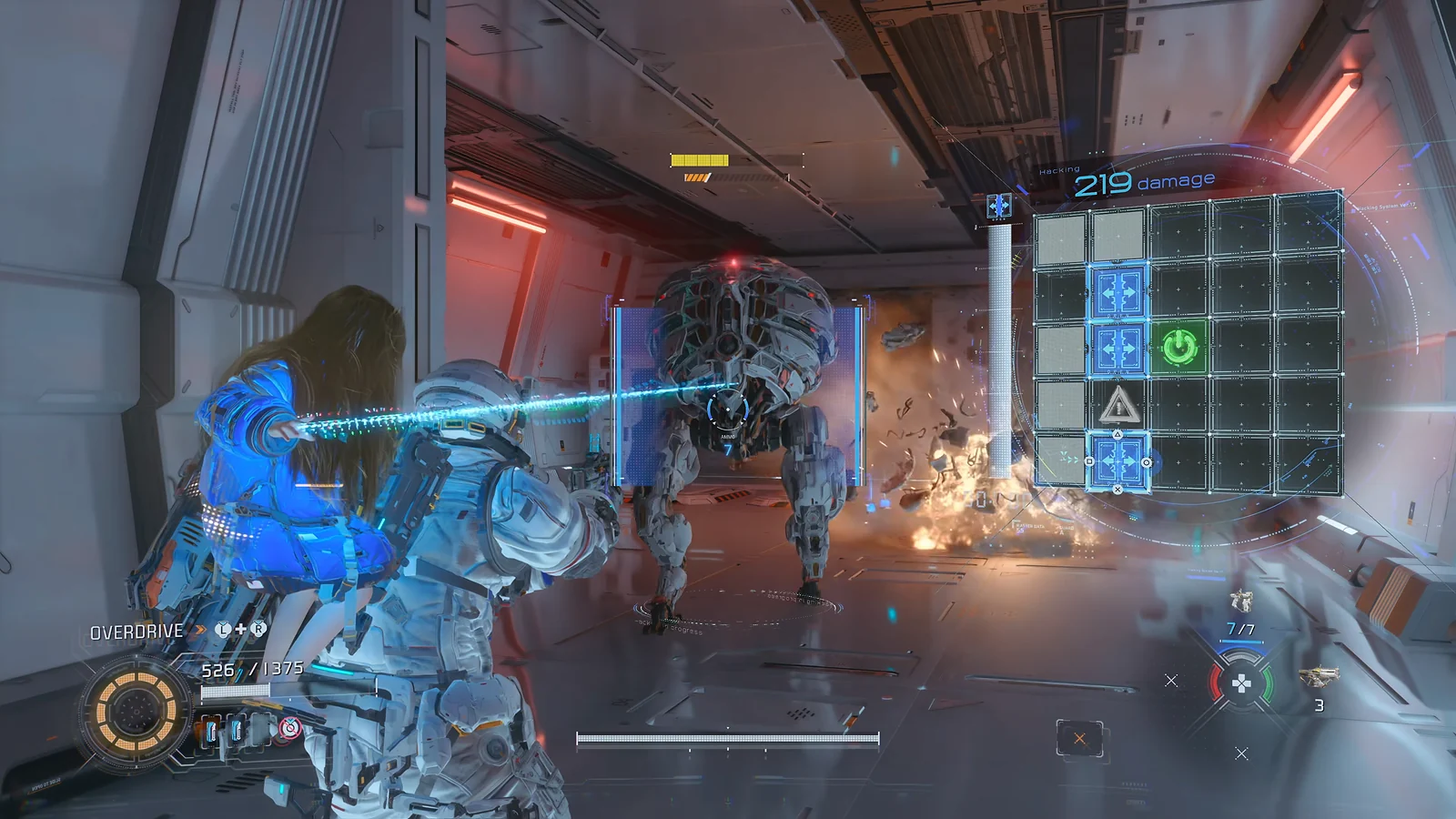
Then the hacking system kicks in. During combat, as you aim at an enemy, a hacking grid appears on the side of the screen, tied to Diana. While you’re still being attacked, you have to navigate this grid in real time. The goal is to reach the green node, which exposes a weakness in the enemy and lets Hugh deal significantly more damage. That back-and-forth between shooting and solving a moving puzzle is what defines the game.
These hacking grids operate on nodes that come in different types, each affecting combat. You have to reach the green node, but you can touch on other nodes along the way to increase (or, consequently, decrease) your effectiveness in battle.
| Node Color | Node Type | Effect / Purpose |
|---|---|---|
| Green | Goal Node | The target node you must reach to complete the hacking grid. |
| Blue | Damage Boost Node | Increases your damage output in combat when passed through. |
| Yellow | Battle-Specific Node | Provides effects unique to the current battle; details are shown on the loading screen. |
| Purple | Special Ability Node | Grants special abilities unlocked using in-game currency. |
| Red | Failure Node | Causes the hack to fail and forces you to restart the hacking sequence. |
| Gray | Obstacle Node | Adds difficulty to the hacking path without providing bonuses. |
There’s also some flexibility here. Optional nodes can give buffs like increased damage or quicker stuns, and later on, you’ll unlock an auto-hack feature to reduce the pressure during longer fights. But you will need to sacrifice your ultimate attack meter for that.
Hacking isn’t limited to combat either. Environmental puzzles rely on it heavily, whether you’re unlocking doors, activating elevators, or disabling traps. These sections are simpler, but timed, which keeps them from feeling like filler.
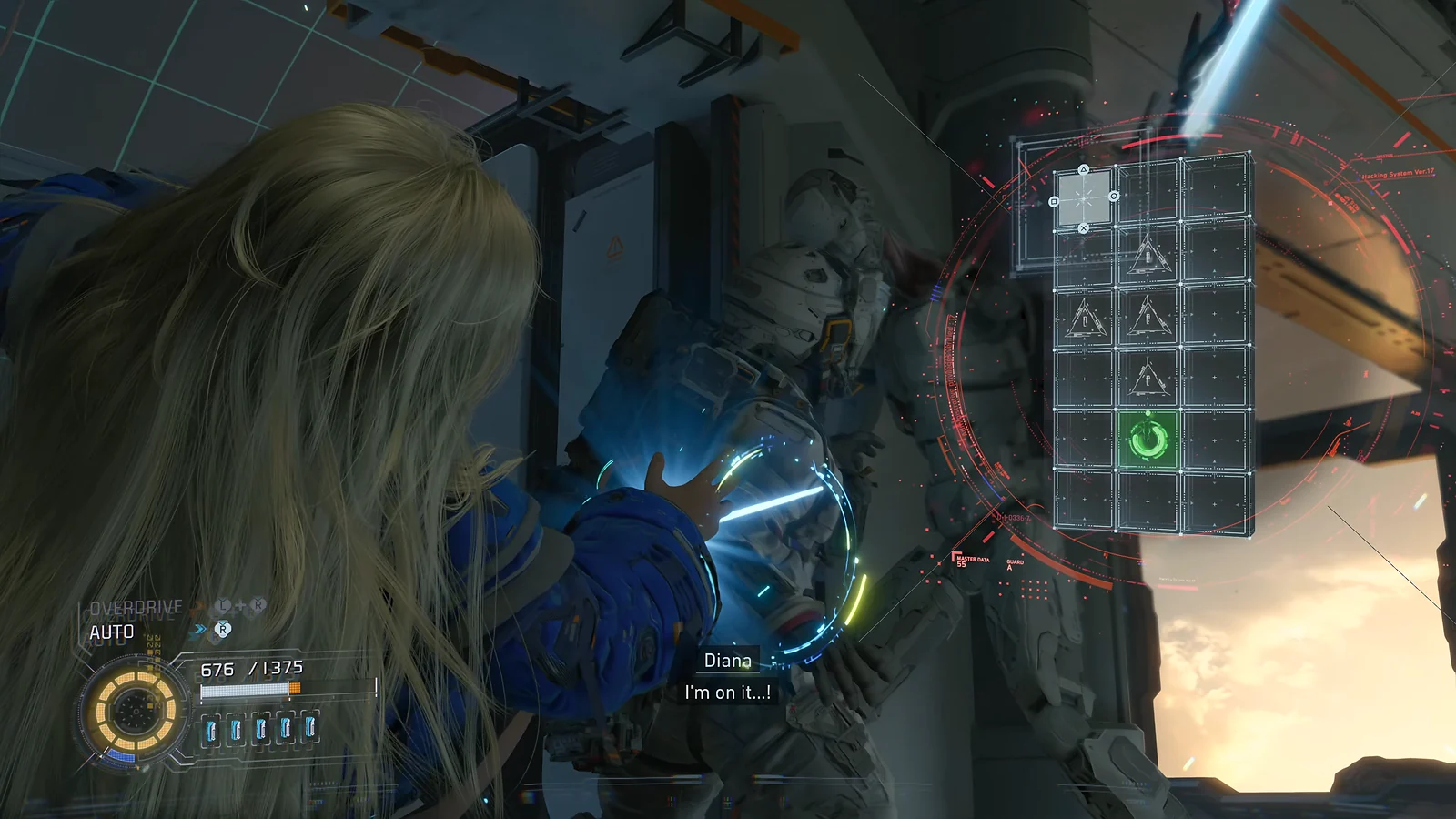
The enemies also progress over time. In fact, early combat might even come off as a bit boring to some veteran players. But the more your main characters move forward, the stronger the enemy mobs get. The game starts throwing in jammers, timed locks, multi-layer grids, and even attacks that you have to hack and redirect.
It gets chaotic, but in a controlled, strategic way. Hugh doesn’t get all his items and abilities at once. You can build this type of combat over time and decide whether you want Diana’s hacking ability to do all the heavy lifting or just focus on shooting. And I appreciated this flexibility during my Pragmata review; it keeps the loop from going stale.
Your save station, or the shelter hub, is just as customizable. It starts as a normal base and eventually can be upgraded by adding more stations that turn it into a home base.
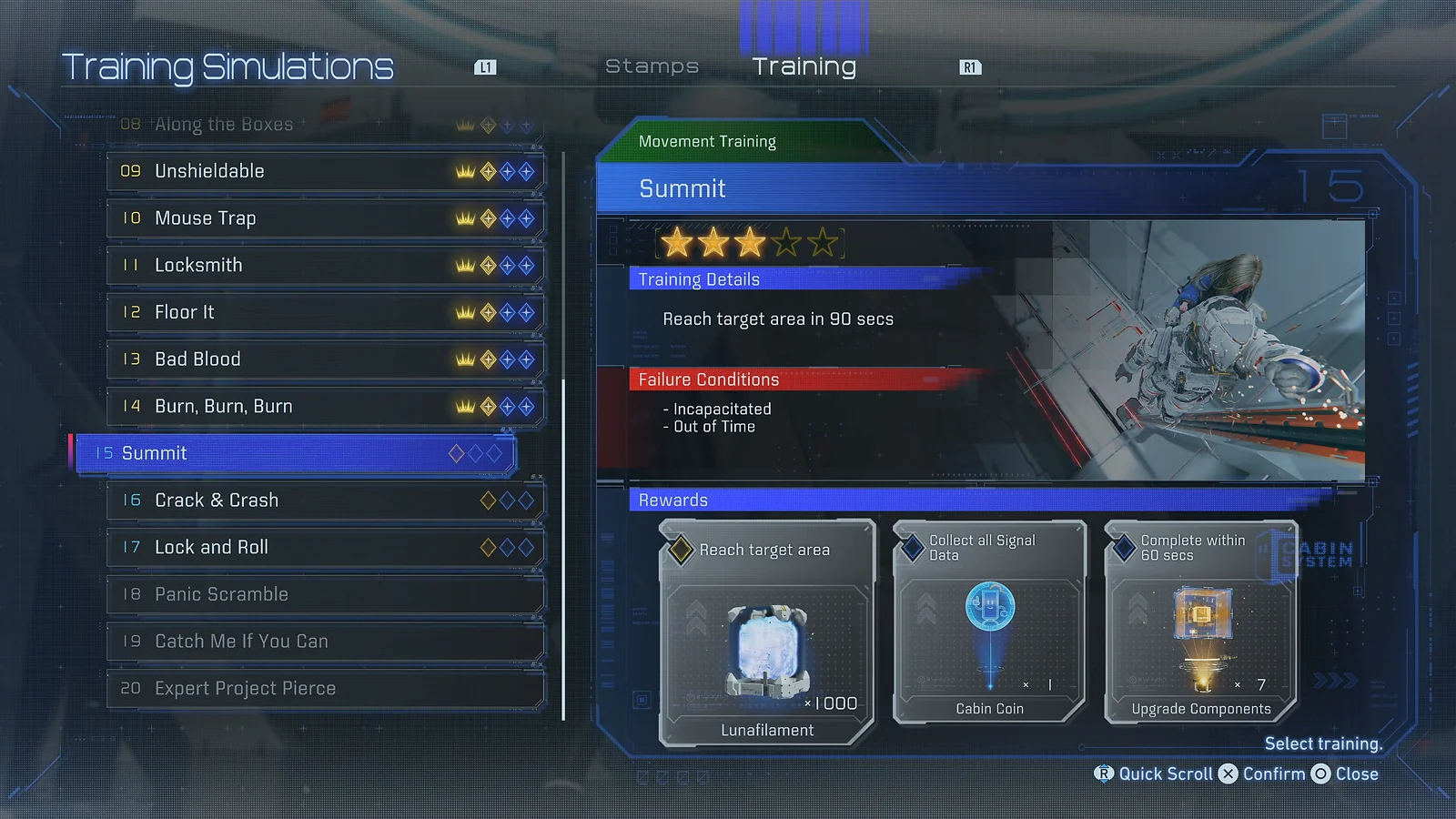
The levels progress fairly decently, too. You can find hidden challenges and side quests to unlock more abilities and currency, which can then be used to evolve Hugh’s damage and armor, and Diana’s hacking. There are also about 30 training room simulations you can play through for rewards that are just as refreshing and charming as the rest of the game.
One issue that stands out is how the game handles death. Instead of respawning nearby, you’re sent back to the Shelter, which can make certain sections feel more repetitive than they need to be. It reinforces the loop, but it doesn’t always feel great in practice. However, because the combat is fairly dynamic and the mods and upgrades keep it fresh, most players hopefully won’t bounce off.
If anything, this Pragmata review comes away thinking the biggest surprise is how quickly the system starts to feel natural, especially if you try the demo first.
Characters & the Heart of the Game (The Duo That Carries Everything)
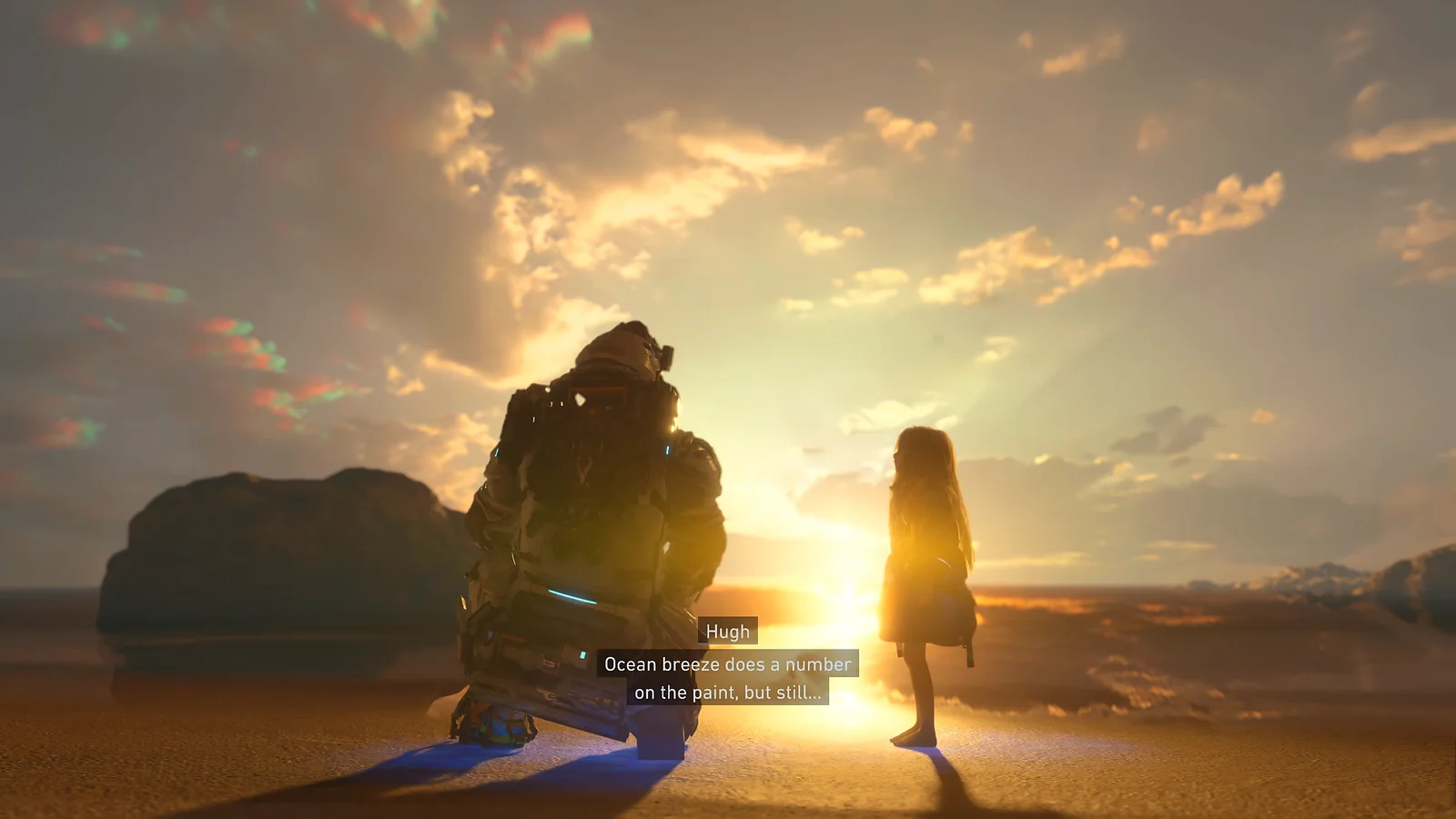
My Pragmata review makes it very clear that the game’s premise and story are as simple as they come. The story revolves around familiar concepts like corporate negligence, rogue AI taking over, and humans dealing with the fallout of their own decisions. It’s very much in that Dead Space lane, and nothing we haven’t seen before. What makes it work is the relationship between Hugh and Diana.
I love a dark, conflicted, anti-hero type main character just as much as the next person, but Hugh is a surprisingly gentle protagonist. He’s calm, patient, and never leans into that overly gruff, emotionally closed-off archetype. He feels grounded, and more importantly, believable. There’s a steady, almost protective energy to him that makes the quieter moments land so much harder.
Diana, on the other hand, is genuinely one of the most endearing young video game characters. She’s expressive, curious, and fairly child-like despite being an android. And, like all human children, she absolutely loves to draw and is interested in everything new. The best part is, she’s never annoying.
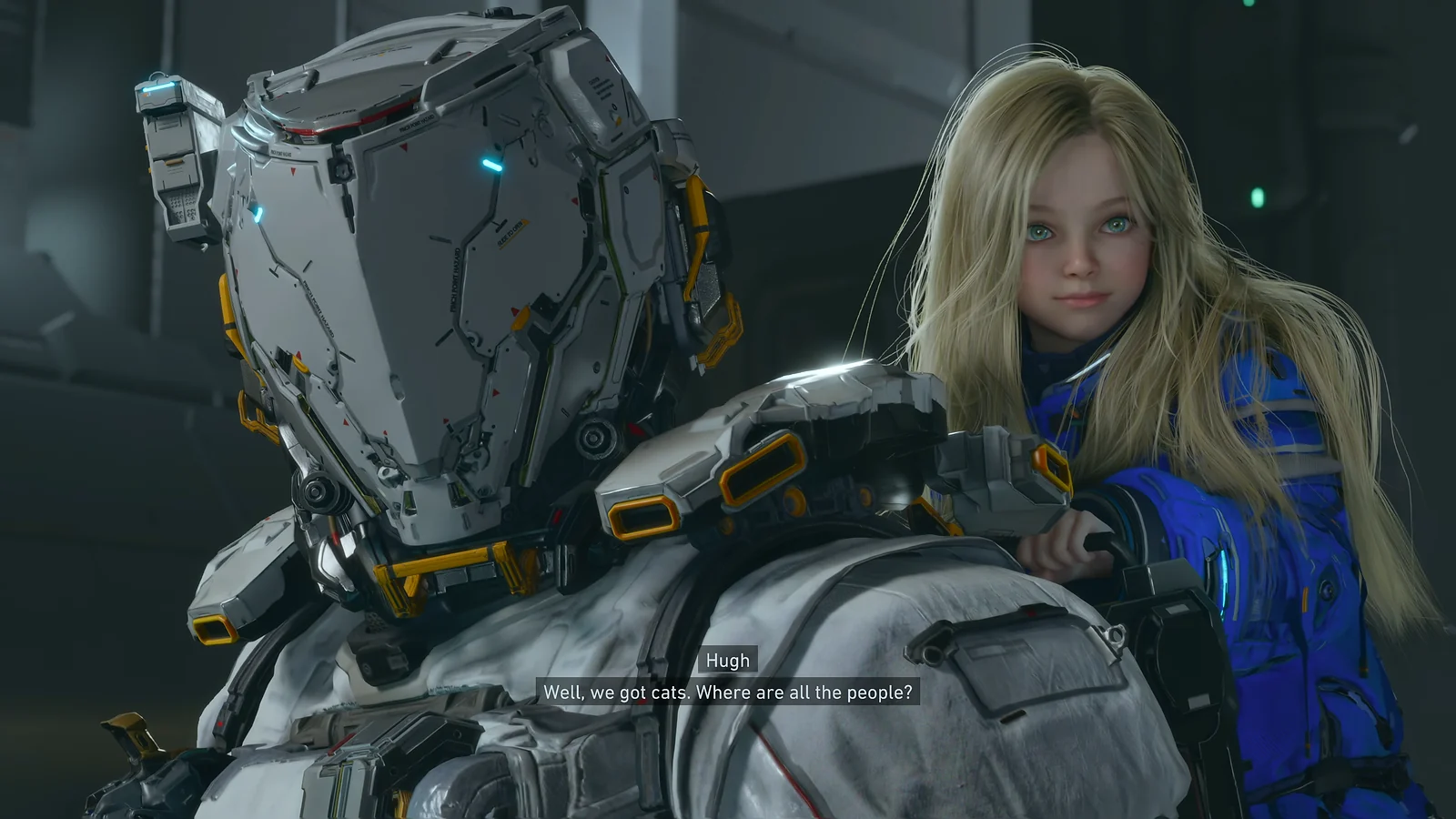
It’s the father-daughter dynamic that truly resonates with players. Hugh carries Diana on his back throughout the gameplay, and the two work together to defeat rogue AI bots. She also recurrently draws Hugh, which shows how close they really are. They form a sort of dynamic, some might even compare to Joel and Ellie from The Last of Us.
That said, this Pragmata review won’t ignore the narrative flaws either. The simple story writing proves to be a bit too simple at times. It’s paced decently well, but it’s also a bit predictable at times. Even the few twists they try to put in are nothing to write home about. Additionally, the main villain shows up late and doesn’t leave much of an impression. In other words, the game’s emotional beats feel rushed, and the worldbuilding never goes as deep as it could have.
While I’m trying to stay spoiler-free in this Pragmata review, there is a post-credit scene that does promise us something for the future. It sets up something much bigger and has already sparked discussion online. On top of that, a true ending is locked behind full completion of the game, which definitely adds a meaningful closure for players willing to go all in.
And to be honest, Capcom has been killing it in terms of character-driven storytelling. First Resident Evil Requiem with Grace and our very own Leon Kennedy. And now Pragmata with its charging father-daughter duo?
Is Pragmata Worth It? Value & Replayability (Worth it? Or Worth the Wait)
Is Pragmata worth it? That’s the big question this Pragmata review is trying to answer, especially when you’re looking at a 10-15 hour game priced at $59.99.
If you’re rushing through and not focusing on the extra bits, you’re looking at around only 9–10 hours of main story gameplay. Going at a slower pace with somewhat deep exploration takes you to 10 to 14 hours on a standard playthrough. But going through all the sectors, clearing all Training Simulations, and finding collectibles, can easily push the playtime to 16+ hours for completionists.
And if you really want everything, it’s easy to extend gameplay to a 20-25+ hour experience by trying for the game’s True ending, New Game Plus, Lunatic difficulty, and post-game Unknown Signal mode.
The key point I’d like to emphasize in my Pragmata review is that the game isn’t trying to be a massive 40-hour RPG. It’s a focused, linear experience with a simple story that is more in line with the Dead Space Remake or a classic Resident Evil campaign.
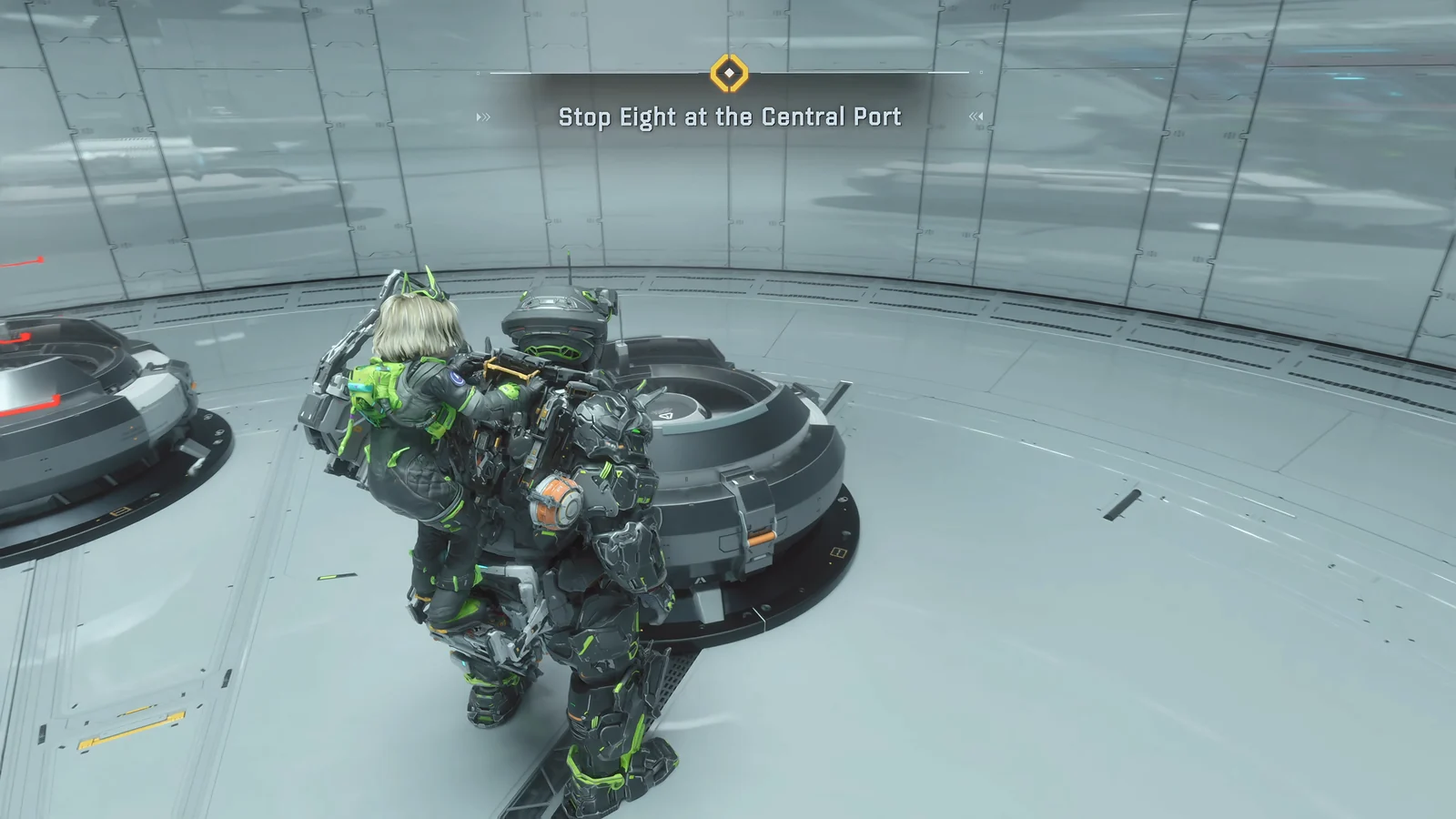
But what truly justifies the game’s price is its replayability. In addition to 30 Training Simulations you can clear to get reward currency, materials, and even new skins for both Diana and Hugh, you can retain character progression and still play the game from scratch via New Game+.
What does New Game+ do? It modifies enemy placement and offers new gear, but the rest is you just being very overpowered with all your abilities unlocked and still playing a new game. If you want a bit more of a challenge, go for Lunatic difficulty (though you can’t combine it with New Game+).
There’s also Unknown Signal mode and a true ending for completionists, which gives players even more incentive to master the combat system and fully explore everything the game has to offer.
Something to note is that Pragmata is not on Game Pass or PS Plus at launch. It’s a full purchase and has no subscription shortcuts.
It may not be the longest experience on the market, but I do want to make it absolutely clear in my Pragmata review that the game earns its price through originality, replayability, and one of the most creative combat systems Capcom has introduced in years.
For budget-conscious folks, that could be a bit of a problem. But the good news is that Capcom games usually drop in price fairly quickly. Based on patterns, it might drop 30% within a few months and have even bigger discounts later. So, if you’re not that eager and can protect yourself from spoilers, maybe waiting is the way to go.
But I know that my Pragmata review also makes the case for playing now. The game launch was massively successful and immediately built a very active community. So, avoiding those pesky spoilers may not be as easy as it looks.
If you are set to buy it, know that when comparing value, Pragmata would easily go side-by-side with some of the best Resident Evil game entries. It’s shorter, but tightly designed and worth experiencing.
Platform Performance & Which Version to Buy (Pick Your Platform Wisely)
Before I get into how the game plays on different platforms, let me make one thing clear. All versions of Pragmata are solid, but there are a few differences worth knowing before you commit to one. That’s usually the deciding factor between console and PC, and my Pragmata review should help clear things up.
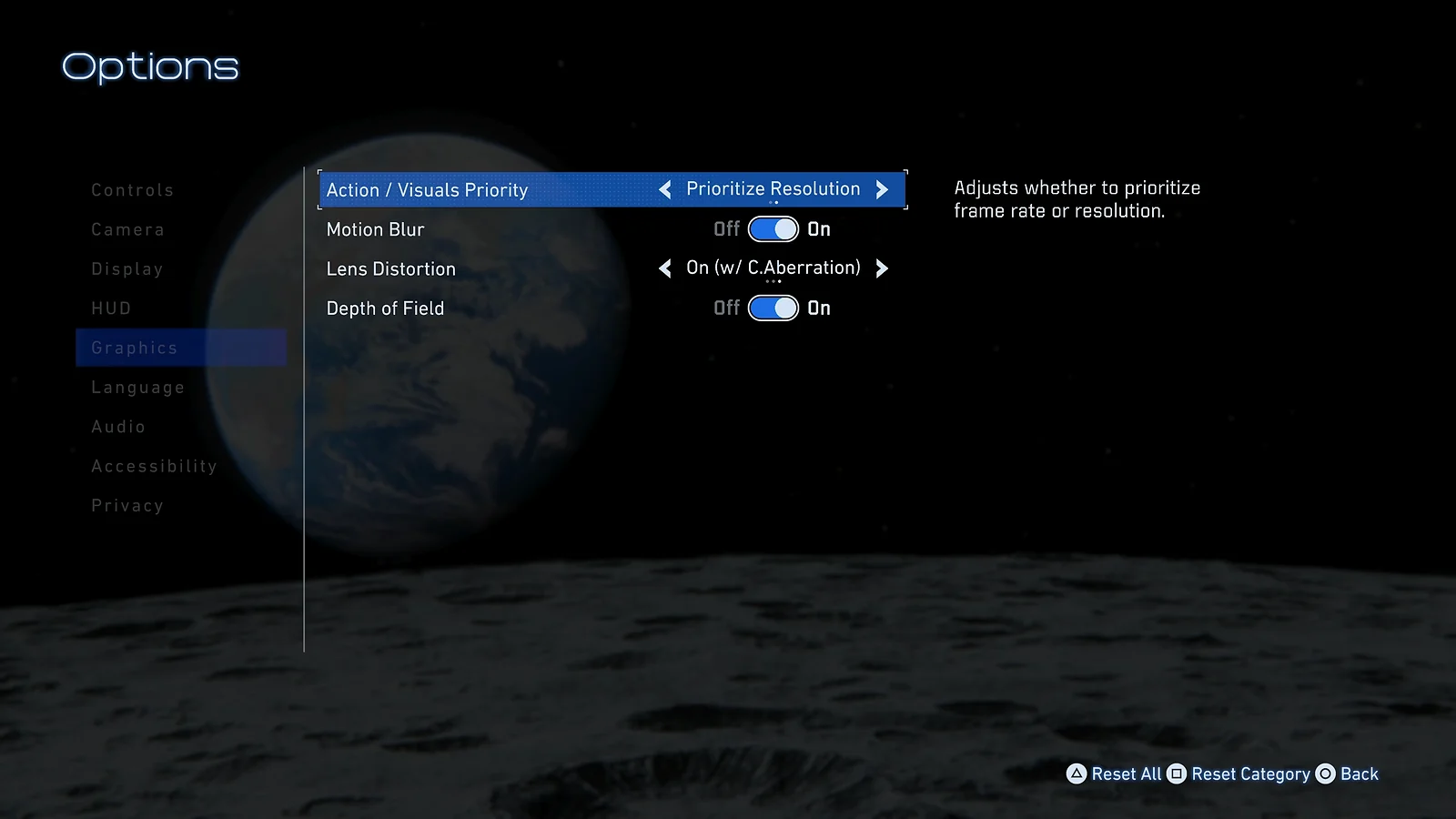
On PS5, Pragmata offers its players two different graphics modes. Performance mode runs the game at a smooth 60fps with an upscaled 4K image. Of course, there are certain (very minimal) visual cutbacks with this mode, but the stability of the graphics is worth it. Resolution mode adds ray tracing to the visuals, but comes with noticeable frame drops and occasional stutters, which makes it harder to recommend. It’s not unplayable, but you’ll feel the difference.
The game also offers full DualSense support, which is solid but not groundbreaking. There is haptic feedback and even some light adaptive trigger implementation, but it’s not very impressive (as some users have complained). If you’re coming here looking for a Pragmata PS5 review, the short answer is simple. It’s smooth, reliable, and the safest pick for most players, but there are better options out there.
That said, if you have access to PS5 Pro, that’s easily the best console experience for this. Unlike PS5, where you get to choose between performance and fidelity mode, the Pro version only offers ‘one’ mode with two different framerates. You get a clean 4K image at 60fps with ray tracing enabled, and it holds that performance far more reliably. And if your setup allows it, you can easily boost those fps to 120. But most users wouldn’t really feel the need to do that, because you’re already getting a considerably superior experience at 60fps.
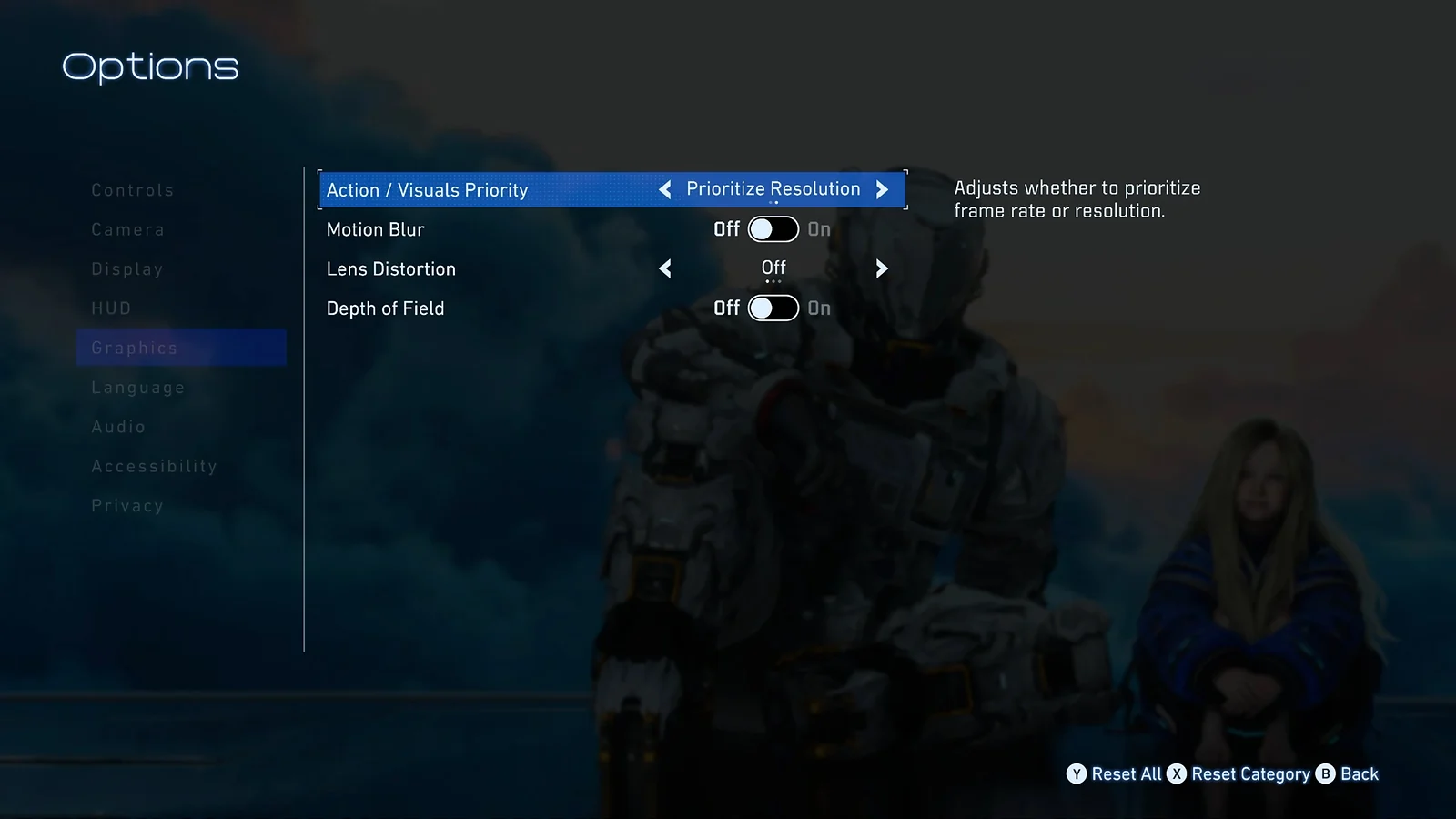
On Xbox Series X, the experience is very similar to PS5. You get upscaled 4K, stable 60fps in Performance mode, and an optional resolution mode with the usual trade-offs. Quick Resume is supported, which is a nice bonus. One thing to keep in mind, though – the game doesn’t currently offer Play Anywhere support, so buying it on Xbox won’t carry over to PC.
Other than that, overall, from a Pragmata Xbox Series X review perspective, this version of the game is reasonably polished and not a bad choice at all.
Xbox Series S, however, is where the compromises become way more noticeable. It runs at a native 720p, upscaled to 1440p, which keeps it playable. But the drop in clarity is so hard to miss that it makes the Series S the weakest console version visually.
PC is where the game finally begins to open up to its full potential. The PC version of the game is easily the strongest one if you’ve got the hardware to support it. And if you’re reading this as a Pragmata PC review, I’ll tell you exactly why.
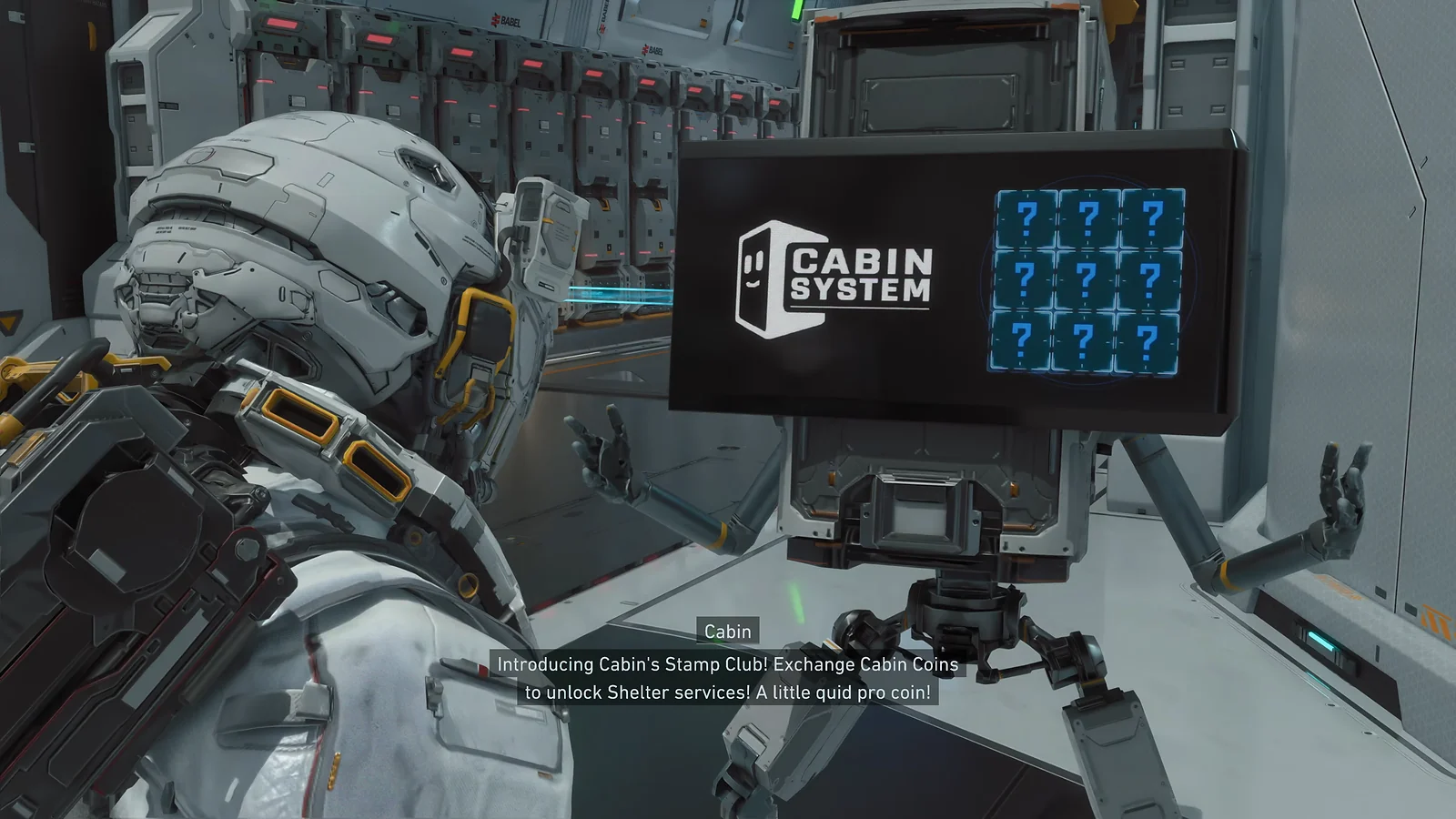
For Nvidia GPUs, pathway tracing is available that can make all the right scenes look very impressive. Though it’s more of a showcase than something that needs to stay on all the time, and, unfortunately, it comes at a serious cost. Even on high-end GPUs, it can tank performance by nearly two-thirds while only offering modest visual improvements.
On the other hand, standard ray tracing is far more practical and efficient here. It is optimized enough to make it comparable with Resident Evil: Requiem… so, again, possibly the best option for PC users. Mid to high-end users can even push the framerates past 120 comfortably. Which is bound to make a noticeable difference, of course. There’s a one-time shader compilation step when you launch the game, but after that, you’re all good to go.
If you are on an 8GB VRAM setup, things may be a bit more demanding for you, but definitely not unmanageable. Tweaking settings like texture quality and shadow cache goes a long way in keeping things stable.
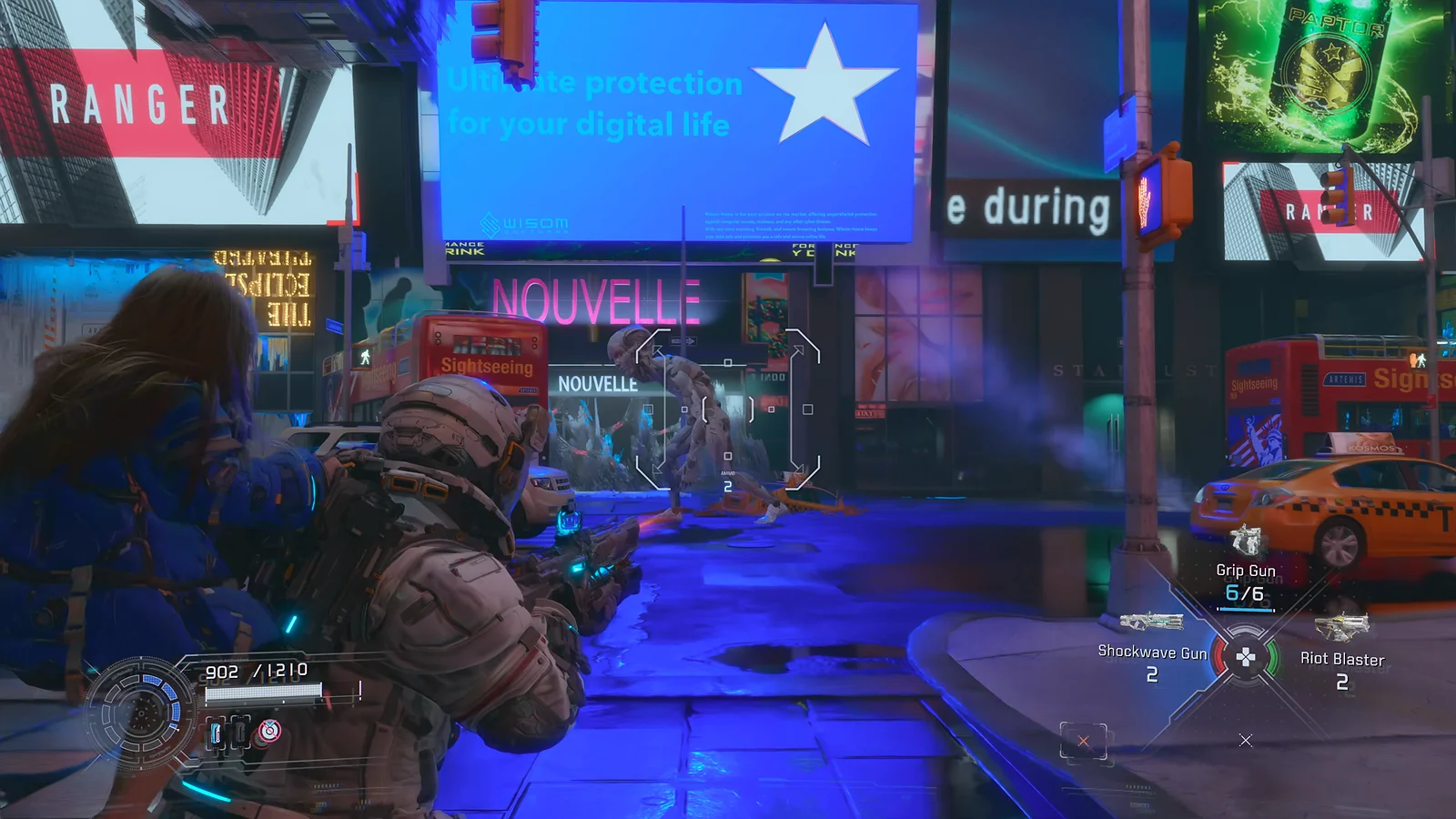
Steam Deck performance sits around 30–40fps on low settings. It’s playable, but not the ideal way to experience the game.
As for Switch 2, it’s clearly the most compromised version in terms of visuals, with lower resolution and softer textures. That said, performance holds up surprisingly well, and gyro aiming adds a nice touch for players who prefer that style.
When it comes to the keyboard vs. controller debate, I personally always go for the keyboard, no matter how much time it takes me to get a hold of the keybinds. However, with Pragmata, I have to say, the game feels better with a controller. The hacking grid is just not something you can master on a keyboard easily. With a controller, it’s much smoother to navigate, particularly in high-intensity plays.
Overall, PC users probably have the most flexibility with this game, and you can grab a Pragmata Steam key at a competitive price on Eneba, often with discounts available at launch.
Critical Reception & Community Voice (Critics Loved It, Mostly)
Pragmata has landed in a pretty comfortable spot critically, and my Pragmata review mirrors that sentiment.
Metacritic scores sit at 86 for PS5, 88 for PC, 87 for Xbox Series X, and 88 for Switch 2, while OpenCritic averages 87 with 95% of critics recommending it. On Steam, it’s even stronger than that and holds a 94%+ Overwhelmingly Positive rating from over 10,000 players.
Individual outlets apparently also share the same opinion. IGN rates it 8/10. The Guardian – 4/5, Nintendo Life – 9/10, and GamingBolt gave the game a 9/10.
What critics consistently highlight is the dynamic combat and the immensely well-thought-out character work. The hack-and-shoot system feels fresh, the Hugh-Diana dynamic lands emotionally, and the overall presentation is polished. At the same time, most reviews, including my own, point out the same drawbacks. It is a game that plays it safe with its story, has tighter late-game pacing, a very limited weapon variety, and lacks a minimap for collectibles.
Most people who tried the demo and bought in are happy despite the occasional debate about its price-to-play ratio. Other than that, it is just a strong game and one of 2026’s strongest new IPs. Just behind Resident Evil Requiem and ahead of Monster Hunter Stories 3.
Visual Style & Presentation (Looks Great, Minor Annoyances)
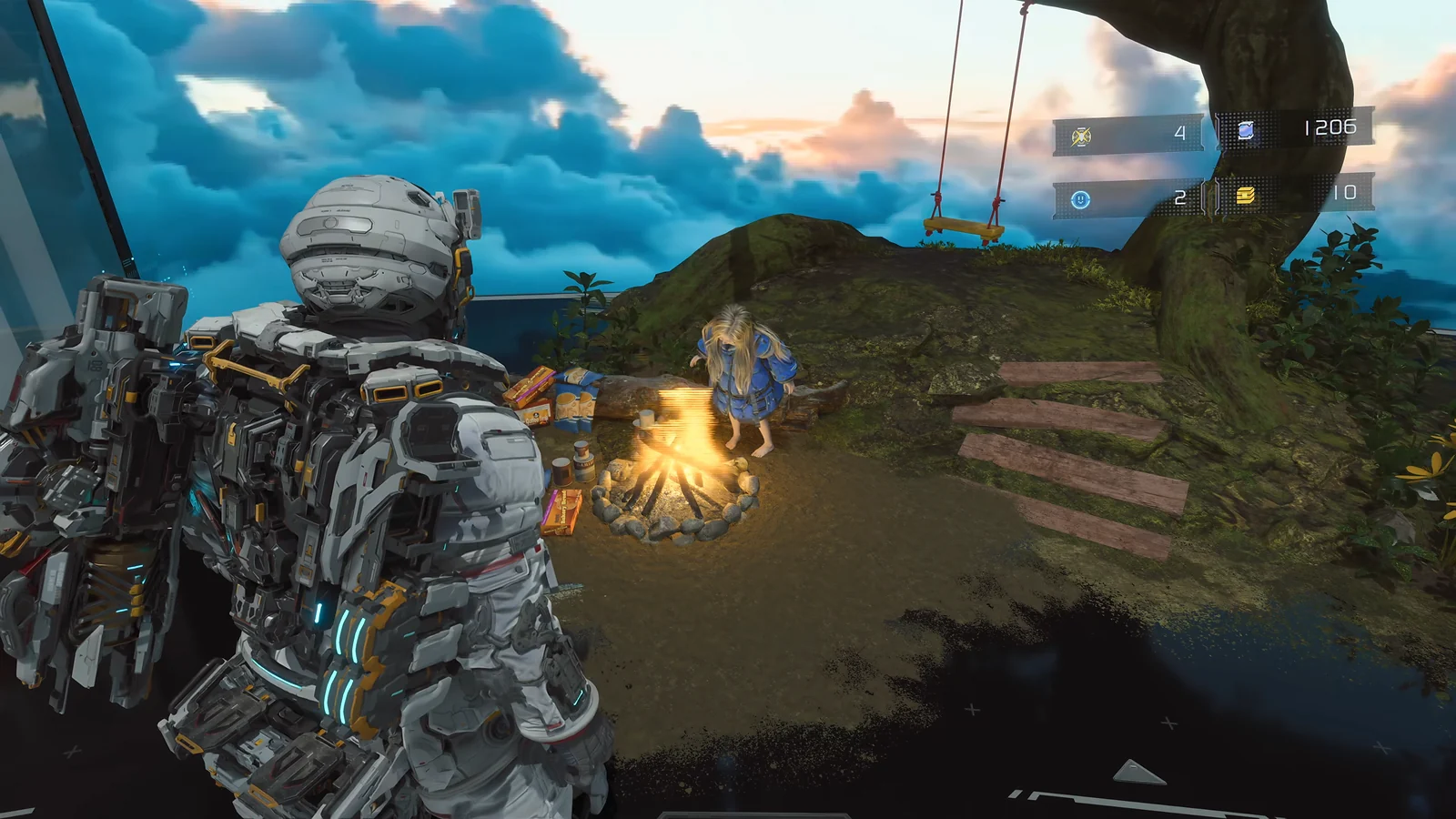
Visually, this Pragmata Review has to give where credit’s due… it looks absolutely divine. Capcom’s RE Engine is doing a lot of heavy lifting here, and for the most part, it pays off.
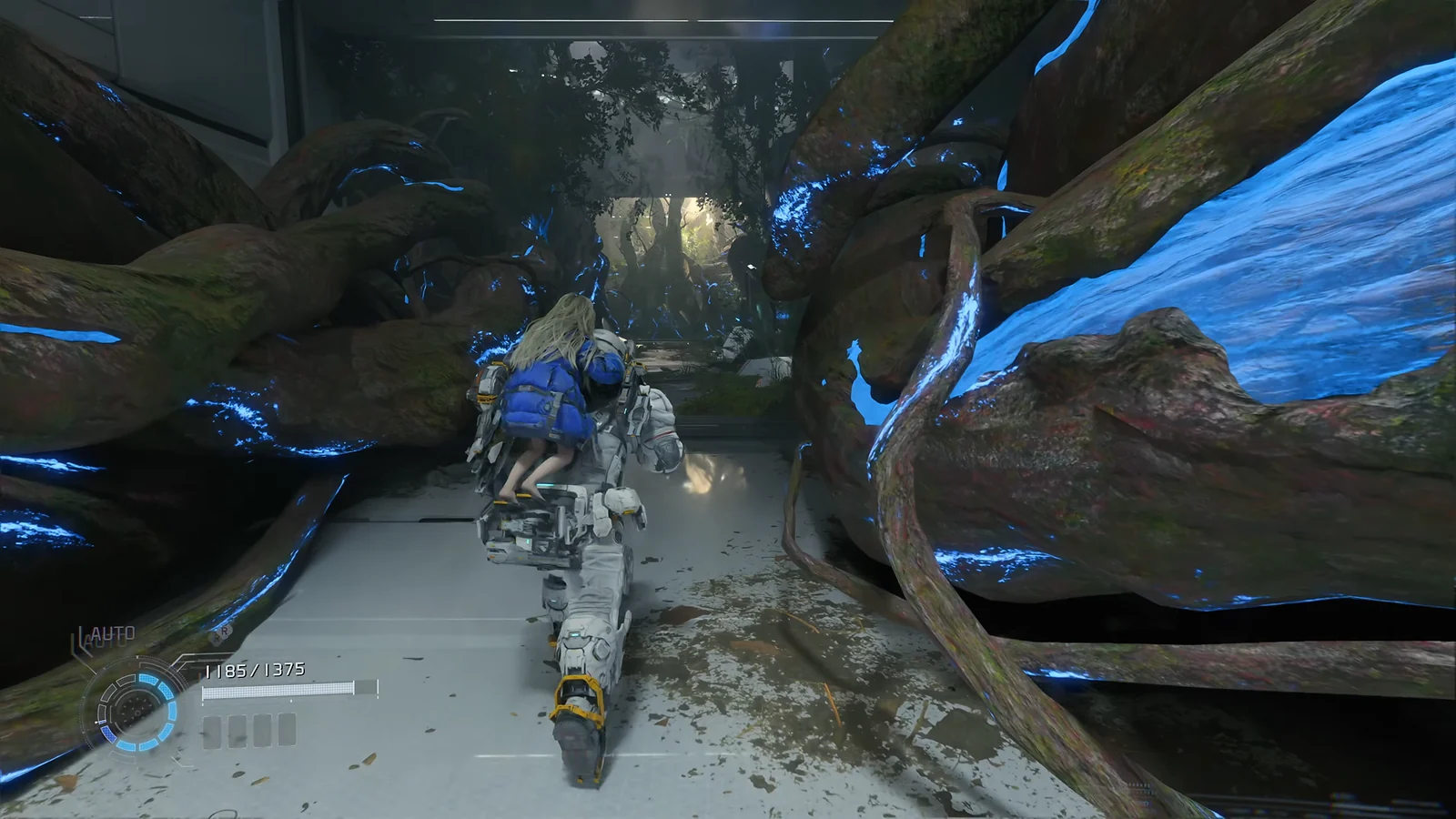
The Lunafilament environments look gorgeous (and very blue) and surprisingly varied. Additionally, character facial animations hold up really, really well, even in quieter, more dialogue-heavy moments. To the point where some people have even described the details on the characters as “uncanny valley”. It also helps that the UI stays clean and readable, which becomes especially important once the hacking grid starts overlapping the action.
Enemies look different enough to keep things from feeling repetitive, and the sound design does a good job setting the mood when things slow down.
The main issue is navigation. There’s no minimap for collectibles, so finding everything ends up being more tedious than it should be. And that is something the community has been very vocal about, too.
My Overall Verdict on Pragmata: A Bold Idea That Lands Hard!
This Pragmata review lands in a very comfortable spot, and exactly where you would expect a new IP to land. Scores sit in the high 80s consistently, all across the board.
We’ve already had some great releases this year, from Capcom alone. But in this current framework, the more “different ” a game is, the better it’ll be received by the general public. And that is why Pragmata works. Sure, the story is a straightforward, fairly linear one, but the hack-and-shoot combat is unlike anything else in 2026.
And once it clicks, it carries the entire experience through the length of the game. On top of that, the Hugh and Diana dynamic adds more weight than you’d expect, which helps the story land even when it plays things a bit safe. It also benefits from being focused, instead of trying to stretch itself into something it’s not.
That said, Pragmata is not perfect. I’m still a bit torn over the villain showing up late and not having much impact. Additionally, the middle section can feel a bit repetitive, and small things like no minimap or the Shelter respawn system can get annoying.
Another thing I noticed when trying to 100% all maps in preparation for the True Ending is that either Hugh or Diana (mostly Diana) initiates new lines of dialogue upon entering certain locations – even the ones I’ve already visited several times. The same goes whenever they discover new REMs (optional collectibles).
Alas, this is when I found out that a significant amount of dialogue in this game is context-dependent and missable if you rush through the main objectives. This can affect Hugh’s character depth quite a bit, considering we barely know about him outside of these potentially missable retellings of his past and what Earth was like to the ever-curious Diana.
Still, I genuinely believe this game is worth your time, especially if you value fresh, never-before-seen mechanics over safe design. From a technical side, while all the versions of the game are good, the sweet spots are PS5 Pro and a high-end PC. The rest, of course, is up to you.
| PROS | CONS |
|---|---|
| ✅ Unique combat system ✅ Strong character writing ✅ Great RE Engine visuals ✅ Polished launch state ✅ Flexible builds | ❌ Weak late-game villain ❌ No minimap for collectibles ❌ Hugh can feel a tad underwritten if you rush the game |
Your critics aside, if you’re curious to try it yourself, you can grab a Pragmata Steam key on Eneba and form your own opinion.
Pragmata feels like the start of something very unique. There’s a solid foundation here, and it feels like Capcom has something worth building on.
Great for: Focused single-player fans, Dead Space and Resident Evil veterans, players who enjoy new mechanics, and anyone on PS5 Pro or a strong PC setup.
Less ideal for: Players who want 30+ hours for the price, those waiting for Game Pass or PS Plus, anyone not into real-time hacking during combat, or people who prefer more open-ended games.