


13 Games Like Overwatch: Best Hero-Shooters in 2026



Recent update
This list is regularly updated to match what’s trending and in-demand among gamers.
Hero shooter games like Overwatch are a ton of fun. I played the original Overwatch ever since the open beta in 2016 and instantly fell in love with its diverse cast of heroes and immense freedom of skill expression through their abilities.
The hero shooter genre exploded after Overwatch’s success, bringing us loads of action-packed titles to choose from. All the games in this article offer a different twist of the iconic Overwatch formula. I can guarantee you’ll find something to reignite your competitive rush.
Jump to:
Our Top Picks for Games Like Overwatch
Before heading into my in-depth analysis, here’s a quick glance at the absolute best games like Overwatch that definitely deserve your attention:
-
Buy nowMarvel Rivals 2024Superhero team shooter with iconic Marvel characters and abilities
-
Buy nowValorant 2020Tactical hero shooter with precise gunplay and unique agent abilities
-
Buy nowRainbow Six Siege 2015A tense 5v5 tactical shooter where unique Operators, destructible maps, and coordinated utility turn every round into a team puzzle.
These titles hit the sweet spot of squad gameplay, fun hero abilities, and competitive thrill that we all loved in Overwatch. Keep scrolling for more information on these and other great titles that match the thrill of Overwatch.
13 Best Games Like Overwatch for Team-Based Action
What makes a great Overwatch alternative? It’s that perfect mix of team coordination, unique character synergies, and objective-based game modes that’s easy to pick up, but hard to master.
While it’s difficult to top its special optimistic charm, these 13 great games offer an amazing space for character-driven action and strategic teamplay only found in the best hero shooters.
1. Marvel Rivals [Overall Best Game Like Overwatch]
- Platforms
- PC, PS5, Xbox Series X/S
- Release Date
- 2024
- Genre
- Team-based hero shooter, action, multiplayer
- Best For
- Players who want Overwatch’s team chaos with Marvel flair
- Length
- 10-15 minutes per match
- Developer
- NetEase Games
- Publisher
- NetEase Games
- Why It’s Similar
- Hero roles ability combos team fights and objective modes
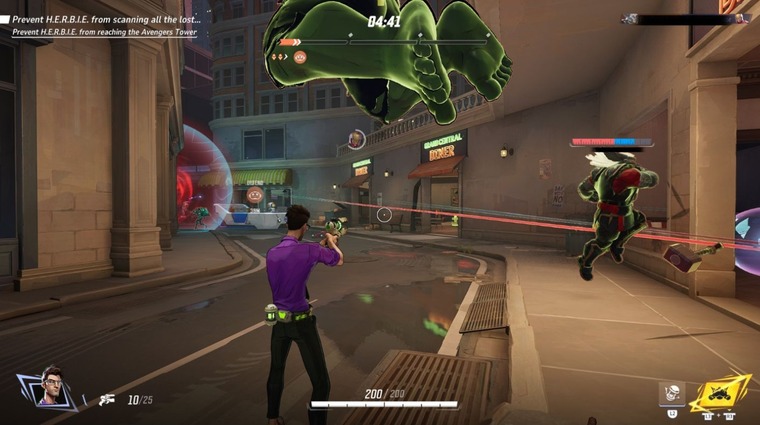
Marvel Rivals doesn’t waste time reinventing the hero shooter formula. It throws a ton of Marvel’s biggest names into a chaotic playground and lets the mayhem unfold. The 6v6 format feels instantly familiar if you’ve spent hours in Overwatch, but the hero interactions set it apart. Pairing Iron Man’s aerial support with Hulk’s ground-smashing brawls feels incredibly satisfying, and the destructible environments add that extra layer of mid-match chaos Overwatch never quite delivered.
Learn two heroes that synergize well. Marvel Rivals rewards those mid-match switches way more than Overwatch ever did. A Doctor Strange teleport into a Black Panther dive? That’s game-changing.
The roster is stacked, and frequent balance updates keep the meta moving without making every match feel completely different overnight. There’s real weight to each hero’s kit, and the pace is fast without being mindless. It’s less about precision shooting and more about clutch combos and positioning, which makes it a great pick-up for team-focused players.
It was surprisingly easy to pick up. After going through a bunch of tutorials and watching some tournaments with Cozy’s commentary, I wasn’t immediately terrible at it. If you want a bit of a head start, our guide on how to play Marvel Rivals can show you the ropes.
My Verdict: If Overwatch collided with the Marvel Universe, Marvel Rivals would be the result. It delivers the same team-based rush, but Team-Up abilities, destructible environments, and a huge superhero roster give it its own identity. For Overwatch fans, it’s easily one of the smoothest transitions – just with Spider-Man swinging over the objective.
Marvel Rivals Lattices
2. Valorant [Tactical Precision Meets Hero Flair]

- Platforms
- PC, PS5, Xbox Series X/S
- Release Date
- 2020
- Genre
- Tactical hero shooter, competitive FPS
- Best For
- Overwatch fans who want tighter aim and clutch-heavy rounds
- Length
- 30-45 minutes per match
- Developer
- Riot Games
- Publisher
- Riot Games
- Why It’s Similar
- Distinct agents ability-based teamplay and coordinated pushes
Valorant doesn’t have Overwatch’s cartoony chaos, but it nails something Blizzard never truly mastered: razor-sharp gunplay. This is a tactical shooter first, hero shooter second. The agents bring flair (smokes, flashes, teleport tricks), but you’ll still win or lose on your aim and team coordination. That’s what makes a great FPS game.
Don’t pick an agent you like – pick one your team needs. A well-timed Sage wall or Skye flash can change a match far more than getting flashy frags with Jett.
The learning curve is steep, but rewarding. One clean headshot can swing a round, and the economy system keeps every buy phase tense. Riot’s constant updates and agent reworks show they’re serious about keeping the meta fresh, and the map pool now actually feels varied instead of samey corridors. If you’re experiencing lag or inconsistent performance, using one of the best VPNs for Valorant can help smooth out your connection and give you a more stable gameplay experience.
My Verdict: If Overwatch feels too floaty or ability-driven for you, Valorant is the grounded, clutch-focused alternative. It delivers the hero vibes but demands way more precision. For Overwatch fans looking for a sweatier, aim-first playground, this one’s the upgrade.
Valorant Points
3. Rainbow Six Siege X [Best for Tactical Teamplay]
- Platforms
- PC, PS4, PS5, Xbox One, Xbox Series X/S
- Release Date
- 2015; Siege X update launched in 2025
- Genre
- Tactical shooter, competitive FPS
- Best For
- Methodical squads who want slower, gadget-driven team play
- Length
- Around 15–25 minutes per match
- Developer
- Ubisoft Montreal
- Publisher
- Ubisoft
- Why It’s Similar
- Specialized Operators team roles counters and coordinated objectives
 BUY NOW
TIP: Use code
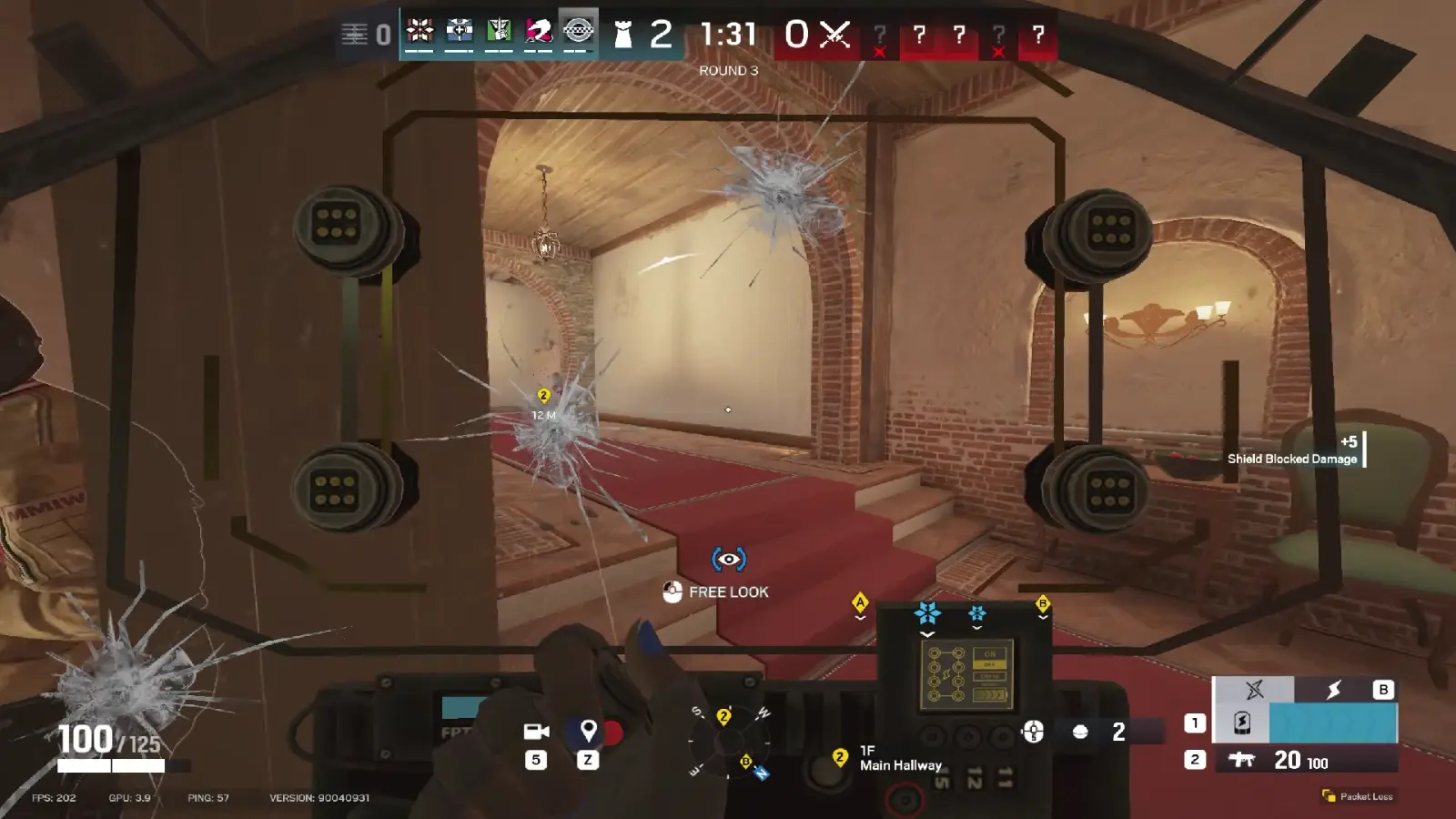
Rainbow Six Siege X takes the role-based teamwork of Overwatch and turns it into something much more tactical. Instead of charging into a team fight, you’re droning rooms, reinforcing walls, opening sightlines, and using each Operator’s gadget to create an advantage.
The destructible maps are a huge part of what makes Siege stand out. Walls and floors can be breached, defensive setups can fall apart in seconds, and one smart angle can decide a round.
Build your round around your Operator’s gadget. A well-timed Thermite breach, Mira window, or Dokkaebi call can create an opening your whole team can use.
The classic 5v5 Attack vs. Defense format is still the core experience, so it’s much less forgiving than Overwatch. Positioning, information, and coordinated utility matter more than flashy ability combos. It’s also one of the best cross-platform games if your squad is split between different systems.
My Verdict: If you like Overwatch most when everyone actually plays their role, Rainbow Six Siege X takes that teamwork to another level. It’s slower and more punishing, but a perfectly executed push or defense feels incredibly satisfying.
4. Apex Legends [Hero Shooter Meets Battle Royale]

- Platforms
- PC, PS4, PS5, Xbox One, Xbox Series X/S, Switch
- Release Date
- 2019
- Genre
- Battle royale, hero shooter, tactical FPS
- Best For
- Hero fans craving high-mobility gunfights with bigger stakes
- Length
- 15-25 minutes per match
- Developer
- Respawn Entertainment
- Publisher
- Electronic Arts
- Why It’s Similar
- Unique hero kits squad roles and ability synergy
Apex Legends took the battle royale formula and injected hero-shooter DNA straight into its veins. Each Legend brings unique abilities (think Overwatch ultimates but designed for survival), and the movement system is absurdly slick. Sliding down hills, wall climbing, ziplining into a last-minute revive – it’s the most mobile top-tier battle royale game out there.
Master the movement tech. Bunny hops, wall jumps, and slide cancels can win fights without you ever firing the first shot.
The gunplay is crisp, and the ping system deserves an award for making random matchmaking tolerable. Squads of three force tight coordination, and the respawn mechanic means one bad fight doesn’t always spell game over. Sure, it’s more punishing than Overwatch (when you’re out, you’re out), but the highs are way higher too.
My Verdict: If Overwatch’s 6v6 feels a bit samey, Apex Legends offers a fresh kind of intensity. It’s got the hero depth you’re used to but wrapped in a battle royale with some of the best pacing in the genre. For Overwatch fans who thrive on team synergy but want bigger stakes, this one’s a no-brainer.
Apex Legends Coins
5. Star Wars Battlefront II [Hero Shooter in a Galaxy Far, Far Away]

- Platforms
- PC, PS4, PS5, , Xbox One, Xbox Series X/S
- Release Date
- 2017
- Genre
- Team-based shooter, hero shooter, action
- Best For
- Star Wars fans who want chaotic, over-the-top hero brawls
- Length
- 15-20 minutes per match
- Developer
- DICE, Motive Studio, Criterion Games
- Publisher
- Electronic Arts
- Why It’s Similar
- Ability-driven heroes team objectives and large-scale multiplayer battles
BUY NOW
TIP: Use code
Battlefront II drops you into Star Wars battles at full tilt. During testing, I caught myself hopping into Naboo as Luke Skywalker, dodging blaster fire, slamming through stormtroopers, and thinking, “Yeah… this is ridiculous – and I love it.” Every match feels like a mini set piece. Heroes vs. Villains mode is where it clicks: Darth Vader tearing through the front line, Rey zipping past, and your team scrambling to keep up.
Don’t just go for kills with heroes. Focus on objectives and squad play. Pushing the point with Leia or dropping a speeder at the right time swings the game way harder than a solo streak.
This isn’t just about flashy kills. Maps are huge, vehicles change the flow, and objectives actually matter. It’s like Overwatch on steroids – less choke points, more chaos, and every round feels alive. You feel the impact of every push, and if your team gels, those moments are electric.
My Verdict: If Overwatch brawls had a Star Wars mod, this is it. It’s cinematic, chaotic, and deeply satisfying when your team executes a perfect push. For fans of team-based shooters who like a bit of movie magic in every match, this one’s a blast.
6. Destiny 2: The Final Shape [Best for PvE Teamplay]

- Platforms
- PC, PS4, PS5, Xbox One, Xbox Series X/S
- Release Date
- 2024 (expansion)
- Genre
- MMO looter shooter, action FPS, co-op
- Best For
- Fireteams who want deep progression and MMO-style co-op
- Length
- 10+ hours for the campaign, unlimited for the endgame
- Developer
- Bungie
- Publisher
- Bungie
- Why It’s Similar
- Class abilities team synergy and coordinated multiplayer combat
BUY NOW
TIP: Use code
Destiny 2: The Final Shape is a much looser Overwatch alternative, but the connection starts to make sense once you get into its ability-heavy combat. Each Guardian class fills a different role, and the Prismatic subclass lets you combine powers from multiple subclasses into highly customizable builds.
The biggest draw is cooperative PvE. Strikes, dungeons, and especially raids reward coordinated abilities, positioning, and knowing exactly what your teammates are doing. That makes Destiny 2 one of the great multiplayer games to try if you enjoy Overwatch for teamwork but want something built around longer co-op sessions.
Don’t try to master every subclass immediately. Start with one build that fits your preferred role, then experiment with Prismatic once you understand how your abilities and gear work together.
One thing to know in 2026: Destiny 2 is no longer receiving planned live-service content updates. The game is still playable with its existing campaigns, raids, Crucible, and other activities, but you shouldn’t go in expecting the same ongoing expansion cycle it had before.
My Verdict: If you like Overwatch for ability combos and coordinated teamplay but want a much bigger PvE-focused game, Destiny 2 is still worth exploring. It’s less of a direct replacement and more of a long-form co-op alternative with excellent shooting and deeper buildcrafting.
More Games Like Destiny
7. Splatoon 3 [Color Wars with a Competitive Twist]

- Platforms
- Switch
- Release Date
- 2022
- Genre
- Team-based shooter, multiplayer, action
- Best For
- Anyone after a lighthearted, fast-paced team shooter
- Length
- 3-5 minutes per match
- Developer
- Nintendo EPD
- Publisher
- Nintendo
- Why It’s Similar
- Fast team battles objective modes and strong role-based weapon choices
BUY NOW
TIP: Use code
Splatoon 3 might look like a Saturday morning cartoon, but don’t underestimate it. Beneath the neon paint and squid antics is one of the tightest TPS games on the Switch. Turf War (the main mode) flips the usual shooting mindset: it’s not about frags, but painting the map. That alone makes it refreshing if you’re coming from Overwatch’s payload grind.
Don’t tunnel vision on kills. Painting the map in the last 30 seconds can swing a match harder than any mid-game duel.
The movement feels slick, literally. Swimming through your own ink for speed boosts, popping out for ambushes – it’s addictive. Weapons range from paint rollers to sniper-style chargers, each with their own quirks. Nintendo still struggles with matchmaking balance sometimes, but when a team clicks, those three-minute matches feel like pure, concentrated chaos.
My Verdict: Splatoon 3 is the perfect palate cleanser for Overwatch fans: it’s lighter, faster, and all about territory mind games instead of endless team wipes. If you want a shooter that’s as much about movement and map control as raw aim, this is the one to pick up between competitive grinds.
GAMES LIKE SPLATOON
8. THE FINALS [Best Destructible Team Shooter]
- Platforms
- PC, PS5, Xbox Series X/S
- Release Date
- 2023
- Genre
- Team-based FPS / Arena shooter
- Best For
- Objective players who like flexible roles and crumbling maps
- Length
- Varies by mode, usually around 10–20 minutes
- Developer
- Embark Studios
- Publisher
- Embark Studios
- Why It’s Similar
- Team roles objective-focused matches and coordinated pushes
BUY NOW
TIP: Use code
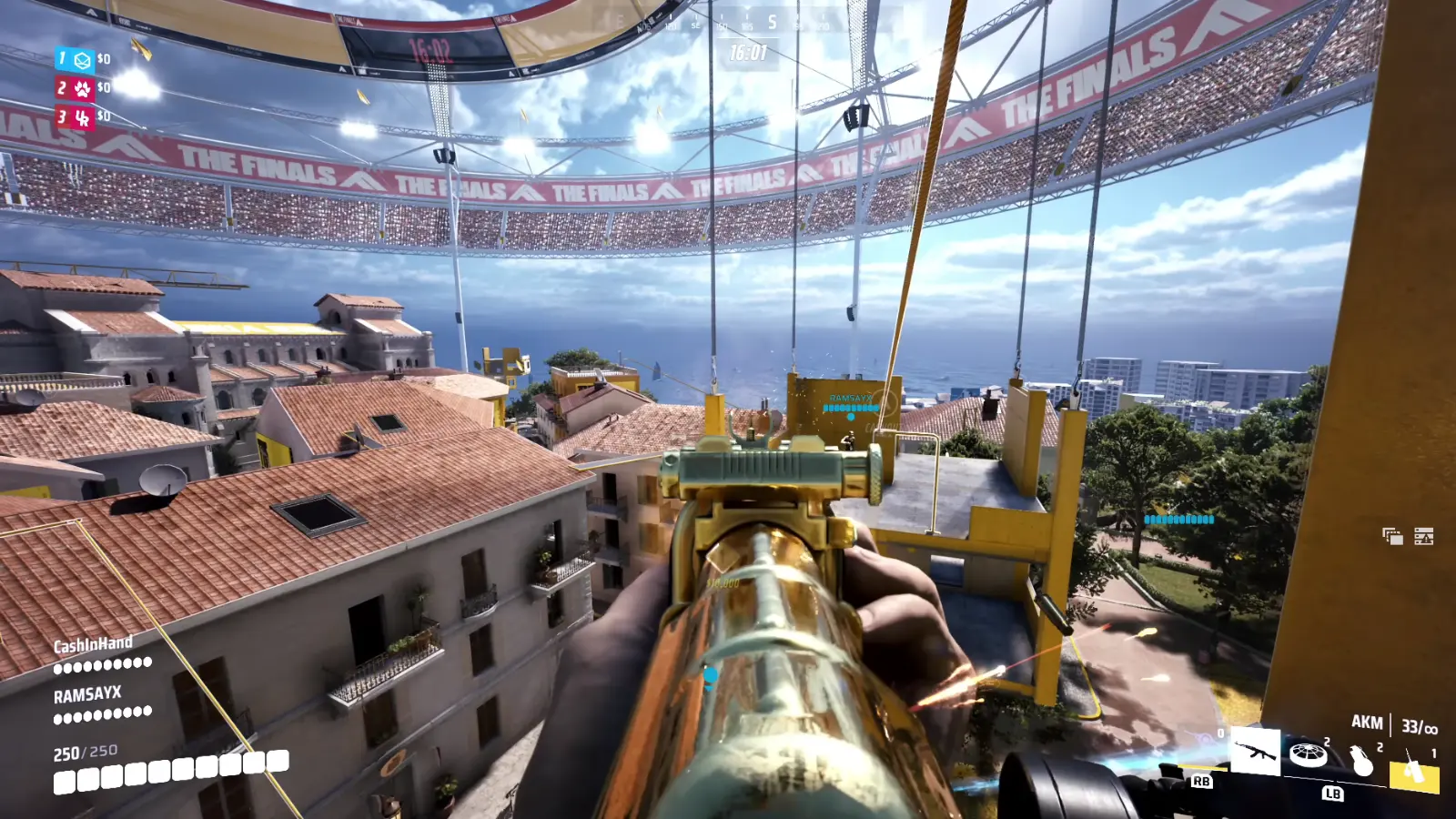
THE FINALS feels like an objective shooter where the map itself has joined the fight. Walls disappear, floors collapse, and an apparently safe defensive position can become useless after one well-placed explosive. That destruction makes every push far less predictable.
Its Overwatch connection comes through team function. The current Playstyles system offers pre-built roles such as Scout, Medic, Engineer, and Guardian, with each setup combining a specialization, weapon, and gadgets. A coordinated squad can build around support, defense, mobility, or aggressive disruption.
Do not save destruction for random firefights. Break floors beneath defended objectives, open side routes through walls, or collapse cover before your team pushes. Changing the arena on purpose can be more valuable than taking another head-on duel.
Objective modes strengthen the comparison. Power Shift has two teams fighting over a moving platform, while Point Break splits players into attackers and defenders battling over vaults. Cashout adds its own twist by forcing teams to secure stations while rivals look for an opening to steal control.
The big difference is character identity. You create a Contestant and shape the loadout yourself, so there is less attachment to named heroes and fixed ability kits. I still think it works extremely well for players who care more about team roles and clutch objective fights than hero personalities.
My Verdict: If your favorite Overwatch moments happen around contested objectives, THE FINALS is one of the strongest alternatives here. The gunplay is sharper, the roles are more flexible, and blowing the floor out beneath an enemy defense never gets old.
GAMES LIKE THE FINALS
9. Team Fortress 2 [The Blueprint Hero Shooter]

- Platforms
- PC, PS3, Xbox 360
- Release Date
- 2007 (still actively played)
- Genre
- Class-based multiplayer shooter
- Best For
- Overwatch fans who want to see where it all began
- Length
- 10-20 minutes per match
- Developer
- Valve
- Publisher
- Valve
- Why It’s Similar
- Distinct classes payload objectives and role-based teamwork
BUY NOW
TIP: Use code
Team Fortress 2 is the skeleton key for understanding modern hero shooters. Before payload pushes and ultimate spam became the norm, this was the standard. I still remember booting it up on a creaky laptop in 2008, fumbling between Soldier and Pyro, and realizing how every class forced you to think about your team differently.
Learn to play Medic. Not just because teams always need one, but because it teaches you the rhythm of the game faster than any other class.
The beauty of TF2 is in its simplicity: nine classes, each with its own unique abilities, and a map pool built for momentum. There’s no bloated ability economy to track, just raw, role-driven gameplay.
That means you can jump in today and immediately understand your purpose, whether you’re laying down sentries as Engineer or surfing rocket jumps as Soldier. For anyone sifting through games like Overwatch trying to find that pure, stripped-back thrill, this is a history lesson worth attending.
My Verdict: TF2 is like a time capsule: it shows you where hero shooters came from, but it still holds up on its own. If Overwatch feels bloated or overdesigned lately, TF2 is the leaner, punchier alternative. And with its massive community servers, it’s basically infinite free-to-play content.
10. SMITE 2 [Best MOBA Alternative]
- Platforms
- PC, PS5, Xbox Series X/S
- Release Date
- 2024
- Genre
- Third-person MOBA
- Best For
- Overwatch players who want deeper team strategy and builds
- Length
- Varies by mode
- Developer
- Titan Forge Games
- Publisher
- Hi-Rez Studios
- Why It’s Similar
- Unique character kits defined roles and coordinated ability combos
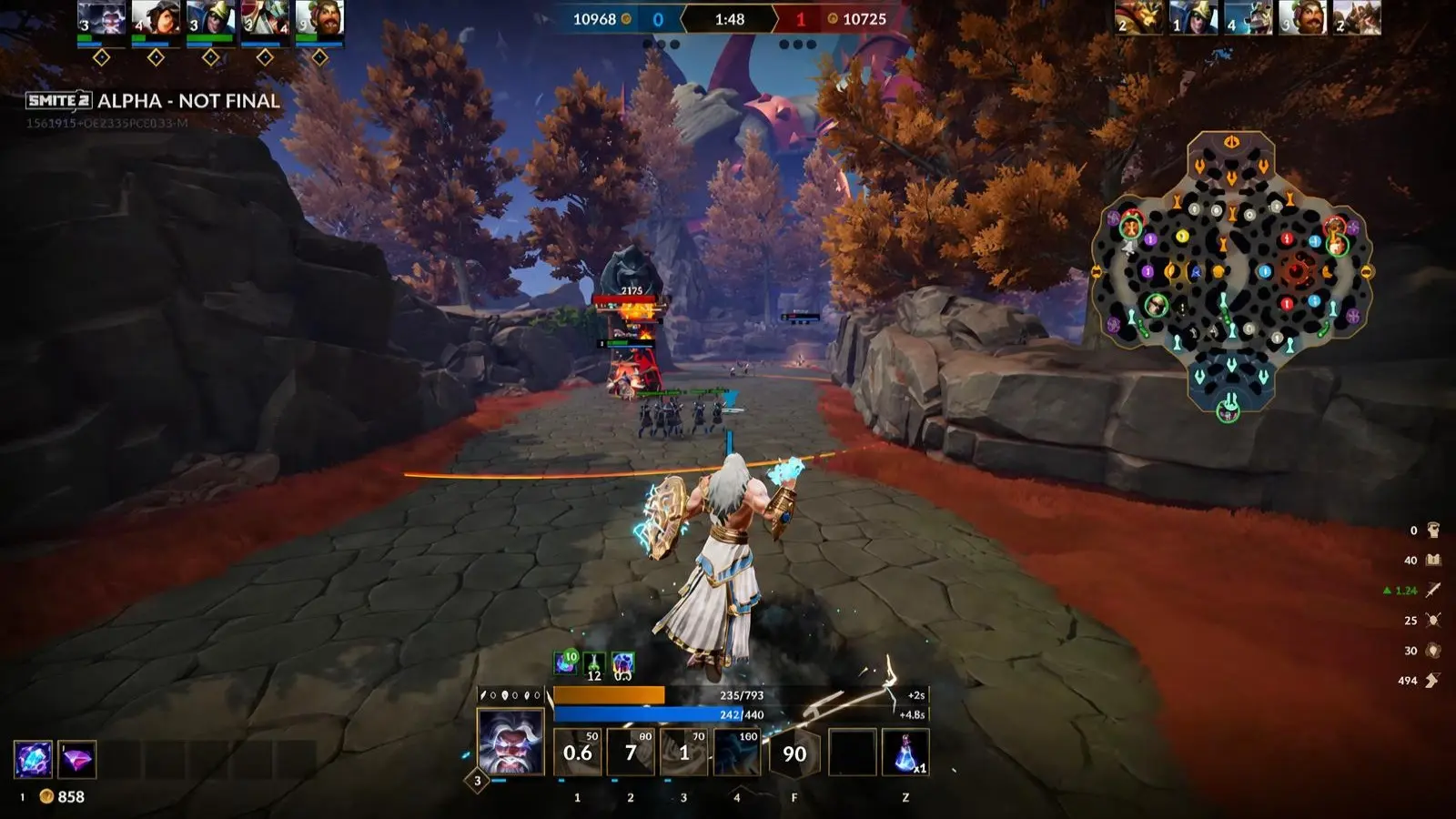
SMITE 2 is the odd one out here, but there is a good reason it made the list. Combat happens from a close third-person camera, every god brings a distinct ability kit, and coordinated teams can chain abilities together in ways that should feel immediately familiar to an Overwatch player.
The bigger difference is everything wrapped around those fights. Conquest has lanes, jungle objectives, item builds, and five established roles including Carry, Support, and Jungle. There is much more strategy happening between team fights than you get in a traditional hero shooter.
Start with Arena and leave auto-build and auto-level switched on while learning your first few gods. That keeps your attention on aiming abilities, positioning, and team fights before item builds become another problem to solve.
Arena is the easier bridge if you mainly want the action. Two teams fight across an open battlefield while pushing minions toward the enemy portal, so positioning and ability combinations stay important while much of the slower MOBA structure disappears.
I like SMITE 2 here because it explores the same idea of heroes doing specific jobs through a completely different genre. If character synergies are your favorite part of Overwatch, there is plenty to dig into once the MOBA systems start clicking.
My Verdict: SMITE 2 is a strong detour for Overwatch players who want ability-driven teamwork with more strategic depth. The learning curve is steeper, but every successful combo feels better once you understand what your role is supposed to accomplish.
SMITE DLC for Xbox
11. Wildgate [Best for Crew-Based Teamplay]

- Platforms
- PC, PS5, Xbox Series X/S
- Release Date
- 2025
- Genre
- PvPvE Crew-Based Space Shooter
- Best For
- Tactical crews who want team shooting with a sci-fi twist
- Length
- 30–60 minutes per match
- Developer
- Moonshot Games
- Publisher
- Dreamhaven
- Why It’s Similar
- Specialized characters crew roles and constant team coordination
BUY NOW
TIP: Use code
Wildgate takes ability-based team roles in a very different direction from Overwatch. You join a small crew, pilot a shared spaceship through the procedurally generated Reach, loot upgrades, fight rival teams, and either escape with the Artifact or become the last ship standing.
The strongest Overwatch connection comes from the Prospectors. Each has distinct abilities and a natural role – Venture excels at exploration, Sal repairs the ship, Charlie supports teammates, while characters like Ion and Mophs are built for boarding enemy vessels. A good crew needs people doing different jobs rather than four players chasing kills.
Pick your Prospector around what your crew is missing. A strong boarder won’t help much if nobody is repairing the ship or supporting the team when things go wrong.
Matches constantly shift between first-person firefights and ship-to-ship battles. One minute you’re repairing damaged systems or firing turrets, and the next you’re boarding another crew’s vessel or racing for the Artifact. That makes Wildgate much less conventional than Overwatch, but the reliance on specialized roles and coordinated teamplay feels surprisingly familiar.
My Verdict: If the team coordination is what keeps you playing Overwatch, Wildgate offers a much wilder spin on it. The hero-style roles are still there, but now your squad also has an entire spaceship to keep alive.
12. Warframe [Parkour Shooter with Endless Grind]

- Platforms
- PC, PS4, PS5, Xbox One, Xbox Series X/S, Switch
- Release Date
- 2013 (constantly updated)
- Genre
- Co-op looter shooter, action RPG, sci-fi
- Best For
- Ability lovers who want more mobility and a deep loot grind
- Length
- 50+ hours (and that’s just scratching the surface)
- Developer
- Digital Extremes
- Publisher
- Digital Extremes
- Why It’s Similar
- Distinct Warframe abilities squad synergy and fast ability-driven combat
Warframe drops you into a bizarre, ever-expanding sci-fi universe where you play as a Tenno – basically a space ninja woken up from cryosleep to clean up a galaxy that’s gone to hell. The story starts small, then spirals into wild twists involving ancient factions, mysterious operators, and some surprisingly heartfelt lore moments. I remember hitting “The Second Dream” quest and realizing this wasn’t just a loot treadmill, but one of the best multiplayer games out there.
Gameplay-wise, it doesn’t care about tight 6v6 choke points. It’s all about speed, style, and carving your own path through endless missions. You pick a suit called Warframe (each with a unique kit), and go wild across procedurally generated maps. Think Overwatch heroes, but with double jumps, wall runs, and bullet jumps cranked up to eleven.
Don’t spread your resources thin. Pick one Warframe and one weapon set early on and push them. Progression snowballs way faster that way.
The power fantasy is real: one moment you’re gliding through corridors with a bow, the next you’re nuking entire rooms with a single ability. There’s a lot of systems, currencies, and crafting to wrap your head around, so the early game can feel overwhelming. But once it clicks, it’s the ultimate co-op playground that feels like Overwatch.
My Verdict: For Overwatch fans who wish their favorite hero could do wall flips and wield a plasma scythe, Warframe is pure chaos in the best way. It’s less about competitive sweat and more about stylish, explosive co-op fun that never really ends.
MORE GAMES LIKE WARFRAME
13. Quake Champions [Best Arena Shooter]

- Platforms
- PC (Steam)
- Release Date
- 2017 Early Access / 2022 full release
- Genre
- Arena shooter, hero shooter, multiplayer FPS
- Best For
- Speed demons who want raw skill and no-holds-barred duels
- Length
- 10-15 minutes per match
- Developer
- id Software, Saber Interactive
- Publisher
- Bethesda Softworks
- Why It’s Similar
- Unique Champions character abilities and fast arena combat
Quake Champions isn’t here to coddle you. It’s punishing, relentless, and way too fast to ever feel fair. But that’s exactly what I love about it. Champions add flavor, sure, but movement is the real star. Rocket jumping, strafing, chaining pickups – it’s like Overwatch on rocket fuel. It’s all about raw skill, split-second decisions, and the occasional “how did I even survive that?” moment.
Don’t even think about abilities first. Master movement. If you can control the map, you control the game. Abilities just amplify what you already do with rockets and rails.
Maps are vertical playgrounds built for chaos. Every corner, ledge, and rail can kill you or give you the edge. I love how it punishes sloppy play but rewards anyone willing to master its speed. It’s messy, it’s aggressive, and it doesn’t care about handholding. That makes it perfect if Overwatch’s cooldown-heavy pace ever starts to feel slow.
My Verdict: If you want hero shooter thrills without the babysitting, Quake Champions delivers. It’s brutal, chaotic, and insanely fast, but when you’re in the flow, nothing feels as satisfying. If you want skill, speed, and pure adrenaline, you should take a hard look here.
GAMES LIKE QUAKE
Upcoming Games Like Overwatch
The next batch of hero shooters looks more interesting than another wave of straight Overwatch imitators. These upcoming games keep character abilities or team roles at the center, but each takes the formula somewhere different.
- Deadlock (TBA) → Valve is mixing third-person shooting with MOBA systems, hero abilities, lanes, and character builds. It is still in early development with limited playtest access, so plenty can change before release.
- WTF: Waifu Tactical Force (2027) → This anime movement shooter leans hard into wall-running, sliding, double jumps, character abilities, and vertical PvP. Mechs and deeper loadout progression give it another layer beyond arena gunfights.
- Ratchet & Clank: Ranger Rumble (TBA) → PlayStation’s mobile hero shooter brings 12 heroes at launch, unique abilities, real-time PvP, and PvE elements into the Ratchet & Clank universe.
Deadlock is the one I’m most curious to watch. Valve is pushing the hero-shooter concept much deeper into MOBA territory, which could make it feel familiar to Overwatch players while still giving them something genuinely different to learn.
My Overall Verdict on Games Like Overwatch
The right alternative depends on what keeps pulling you back into Overwatch. Hero combos, mechanical aim, tactical teamwork, and objective chaos all lead to very different games once you move outside Blizzard’s shooter.
- For the closest overall transition → Marvel Rivals. Distinct heroes, team compositions, ability combos, and objective fights make it the easiest game here to jump into after Overwatch.
- For aim-heavy competition → Valorant. Character abilities still matter, but precise gunplay, round economy, and clutch decisions carry much more weight.
- For tactical teamwork → Rainbow Six Siege. Slower rounds put positioning, information, and operator utility at the center of every push and defense.
- For chaotic objectives → THE FINALS. Flexible team roles meet destructible arenas where walls, floors, and defensive positions can disappear halfway through a fight.
- For deeper ability synergy → SMITE 2. Hero-style kits move into a MOBA structure where team roles and coordinated abilities shape every major engagement.
If I wanted the smoothest move away from Overwatch, I’d start with Marvel Rivals. THE FINALS would be my next stop when familiar objective pressure starts feeling a little too familiar and I want the battlefield itself to become part of the problem.
FAQs
Marvel Rivals is the closest match here. Its team fights revolve around distinct heroes, ability combos, role-based squads, and objective modes, so the transition from Overwatch feels natural.
Yes. Both use characters with unique abilities and reward team coordination, but Valorant puts much more weight on precise aim, round economy, and surviving each life.
A hero shooter is a multiplayer shooter built around characters or classes with distinct abilities and team functions. The genre usually rewards composition, counters, and coordinated ability use.
Apex Legends is the strongest fit if you want hero abilities inside a battle royale. Legends still bring defined kits and team synergy, but matches add looting, rotations, and one-life pressure.
SMITE 2 is worth a look if hero synergy matters more to you than first-person gunplay. Its gods have defined ability kits and team roles, but the surrounding structure comes from a MOBA.
THE FINALS is a strong choice for objective-focused players. Its modes reward coordinated pushes and defensive setups, while destructible arenas let teams create new routes during a fight.