


Unity and Epic Join Forces: Good News For Fortnite and Commerce



- Unity and Epic set to partner, allowing Unity devs to publish to Fortnite and Unreal devs to use Unity’s new commerce tools.
- The collaboration ties into a push for more open, interoperable platforms.
- New tools and legal wins give developers more control over payments and distribution, with added opportunities in Fortnite’s upcoming Creator Economy.
Jump to:
An Unreal Partnership
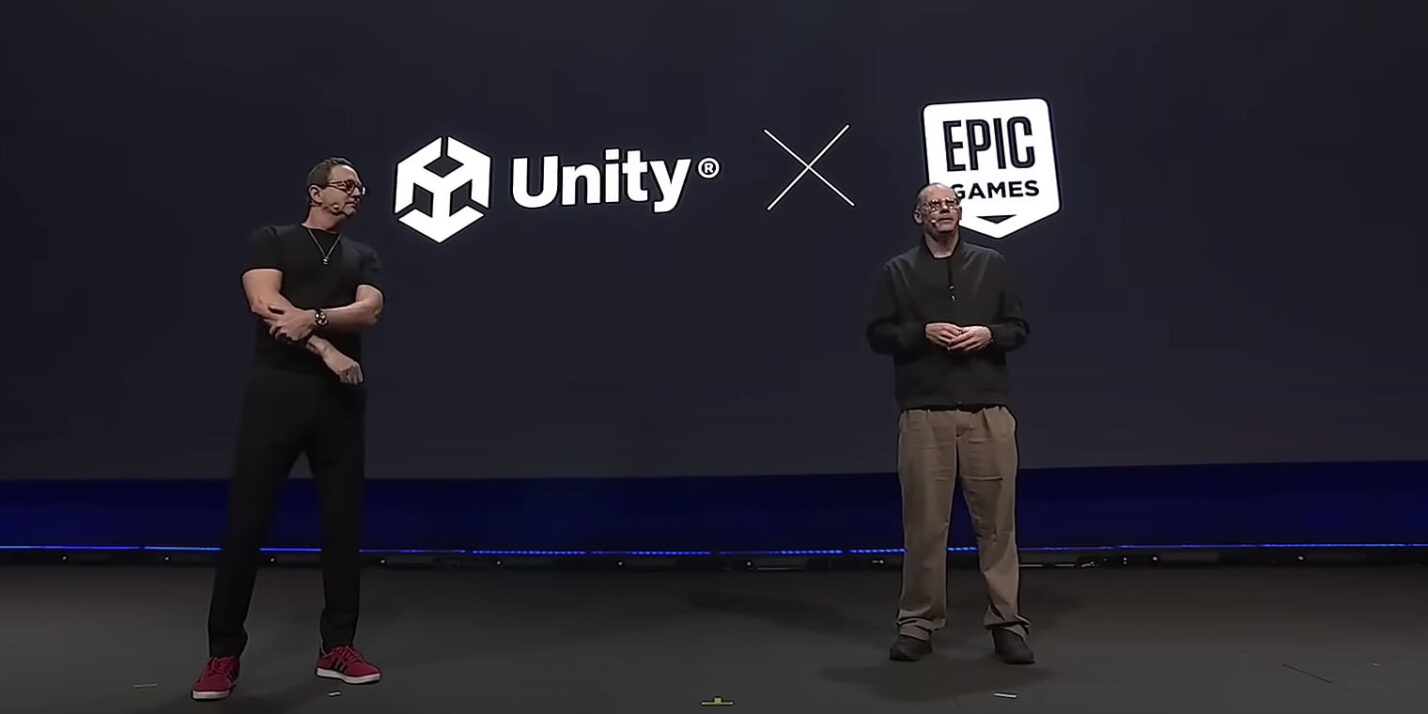
Unite is Unity’s annual conference that focuses on game development-related talks, sessions and keynote speeches. The 2025 version started on Nov. 19 and finishes today (Nov. 20), in Barcelona, and it’s already hosted an unlikely alliance: Tim Sweeney, the CEO of Epic, appeared on stage with Unity CEO Matthew Bromberg to announce that the two companies are partnering.
The link between the two will allow Unity devs to create content for Fortnite (owned by Epic) and for devs using Unreal Engine (also owned by Epic) to manage their created games through Unity’s new commerce platform. This news is also unusual because Unreal Engine and Unity are technically competing game engines, but this is something Sweeney referenced on stage yesterday.
“We got together with Unity and we realized that we all share a common view of the need to support fair and open digital platforms,” he said. “One of the biggest challenges for developers now is the fragmentation of tools and publishing pathways, and just like the early days of the web, we believe that companies need to work together to build open and interoperable systems. We’re doing this now.”

Game From Scratch
This was kicked off, in part, thanks to a tweet by game dev YouTuber Michael Fleischauer, aka Game From Scratch. When Unity revealed the news on X about its commerce platform on Oct. 22, Fleischauer replied and tagged in Sweeney, who replied that “Unity should bring the payments SDK to Unreal and Godot too!”
Bromberg said: “We’d love to bring payments to Unreal Engine,” with a thanks to Game From Scratch for the shout out. Of course, it’s entirely possible Bromberg and Sweeney were already in talks, but neither CEO has said otherwise. Some game devs have also expressed annoyance at the seeming snub by Bromberg of Godot, which is already open source and technically interoperable, as tools exist to import projects from Unity and Unreal Engine into it.
As for Fleischauer, who has been covering game development related news for years, he was asked on X yesterday about what this actually means overall, to which he replied: “At the least, less animosity and division between developers. That enough could be a big win. Breaking the shackles of Google and Apple though, that’s a huge win.” He also noted that Unity devs getting to join in the Unreal Engine and Fortnite ecosystem is also worth celebrating.
Unity Commerce And Epic Wins
Unity’s cross-platform commerce management product is currently in limited early access, and its aim is to eliminate the need, and nuisance, of managing multiple systems. Unity, and soon Unreal Engine devs, can also choose their preferred payment providers, without any platform-specific tools or restrictions. In short, it lets game devs manage their global commerce and digital stores across mobile, web, and PC directly inside the Unity Engine.
While some gamers have expressed concern about the start of a possible monopoly, Unity’s commerce platform isn’t too different from aggregators in the book publishing world, like Draft2Digital, that give authors a centralized site to manage their work. These include setting prices for different storefronts and having a unified payment system for any copies sold. The music industry, too, has analogous aggregators in the likes of Distro Kid and Ditto.
The monopoly concerns are also somewhat undermined by Tim Sweeney’s history of campaigning for fair competition and cross-platform support; an opening night speech he gave at the D.I.C.E. Summit in 2020, for example, touched on these topics, when he said “I think it’s critically important to competition that we all be free to mix and match platforms and engines and online services however we want, free of lock-in and free of tying of different services to different platforms in a way which forces us to accept inefficient solutions.”
“The goal of all this is to establish a level playing field where everybody can compete on equal terms and the best solutions can win, and the economic competition between us all keeps us honest and keeps the entire supply chain fair for everybody.”
Epic has been in the news a lot the last few years due to its legal battles with Google and Apple, as Sweeney dubbed them “gangster-style businesses that will do anything they think they can get away with.”
As an overview of the results of Epic’s campaigns against these companies: Apple can no longer collect as high a percentage from people who sell their apps through its store as a judge ruled its initial up-to-30% cut as “anticompetitive.” Google, meanwhile, must allow third-party app stores on Android (so-called “registered app stores”) and give access to Play Store’s app catalog to those competitors.

An upshot of the above cases (for Epic and gamers into MMO battle royales) is that, in May this year, Fortnite appeared on the US App Store for the first time in five years. And to bring it back to the forthcoming partnership with Unity (it’ll all go into effect next year):
“Developers will have the ability to publish Unity games into Fortnite, one of the world’s largest gaming ecosystems with more than 500 million registered accounts worldwide, and participate in the Fortnite Creator Economy,” according to a recent post on the Unity site.
The Fortnite Creator Economy is set to launch in December 2025 and will enable Fortnite developers to make 100% on in-game content sales until the end of December 2026.
 or
or