

“We’re Fighting to Assign Critical and Historical Value to Games” – an Interview With Lost In Cult



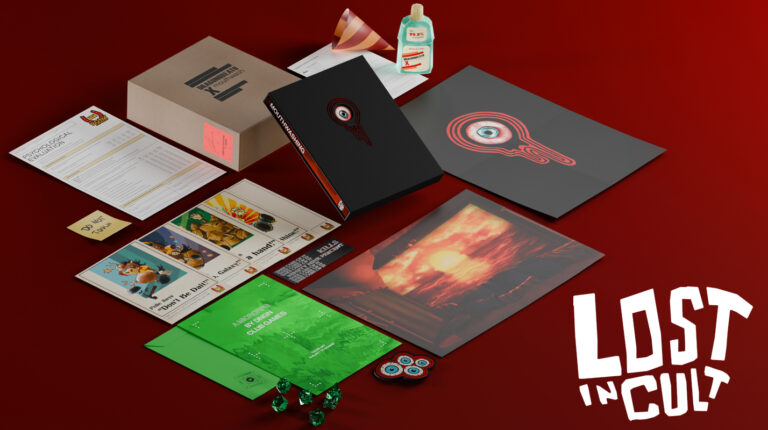
Lost In Cult has steadily been making a name for itself by producing high-end products based on different aspects of video game culture, from deep dive essays on game design to physical releases, soundtracks, and even board games.
I fired a bunch of questions at the company and the CEO, Benjamin Hayhoe, and Founder, Jon Doyle, were kind enough to fill me in on what makes Lost In Cult tick.
Given that Lost In Cult is a collective, could you please introduce the members and their roles/expertise? Do any of you know each other from previous companies (whether in the video game industry or elsewhere)?
Ben: We’ve grown a lot at Lost In Cult over the last five years, and there are too many of us now to introduce everyone! But Jon is our Founder and Creative Director, and I’m the CEO here at Lost In Cult. Jon and I met working together on a little independent magazine called Switch Player back in the day and really hit it off with our shared passion for the medium.
As for the rest of our fantastic team; some have worked together on other projects in the past. Others have worked in the games industry in completely different roles and have found us further down the road. Monika, our Marketing Director, spent time in the esports industry, for example. Chris Schilling, our Editorial Director, used to be the Deputy Editor of EDGE Magazine. Ryan, our Head of Physical Games, used to work for Super Rare.
Then there are others that are completely fresh to the games industry but bring with them a passion for print and creating beautiful physical things, such as Rachel Dalton, our Chief Design Officer, who forever ensures our work continues to meet (and exceed) our standards.
Together, we all share this passion – the successes and challenges – and it only works because everyone remains a stalwart in their area, championing the values of what we do.
In the recent devblog about The Breach, you mention that you’ve “been into modding and UGC content for years” – could you elaborate on this? What’s your background, and when did you join Techland?
Jon: Really it all stemmed from a desire to create things that I wish existed. That’s ultimately still one of the core facets of everything we do here; to fill the void of a curation of beautiful physical things that should exist, celebrating video game culture.
What’s the key reason for choosing a particular game, whether it’s as the subject of a book, an audio release, or part of Editions? How much of a decision is based on business, and how much is down to personal preference?
Ben: This is a great question and one we get a lot! Fortunately, the answer is that it’s typically both. One thing that is great about this industry is that there are so many amazing games out there that experiment with new and exciting artistic ideas but also find their audience, and we’re fortunate enough to be able to work with those developers, publishers, composers, and artists on a regular basis to continue to celebrate their work.
However, we will also work with more niche titles simply because we believe in them, and that’s something we’ve always done. Passion is important within the Lost In Cult team, and every suggestion from anyone is considered carefully from many angles.
But we will always put a lot of stock into the practical considerations, and we always factor in respecting the time of our partners. We won’t ever start something we don’t believe will be successful, and we find that even smaller titles can be a hit when the audience is passionate enough. Identifying those titles and developing the right project to celebrate them is something we put a lot of time into.
Following on from this, how have Lost In Cult’s various partnerships come about? For example, with the recent World of Horror board game, did Panstasz/Ysbryd Games come to you or did you approach them?
Ben: Well we’re really all massive nerds here and we love meeting new people and talking about games, so business development is a really fun part of the job for us and a really big part of what we do. We’re always reaching out to potential partners about projects we’re excited about. It was much harder in the beginning, but that has shifted over the last few years, and we find ourselves contacted more and more often by people that want to work with us – that’s really nice!
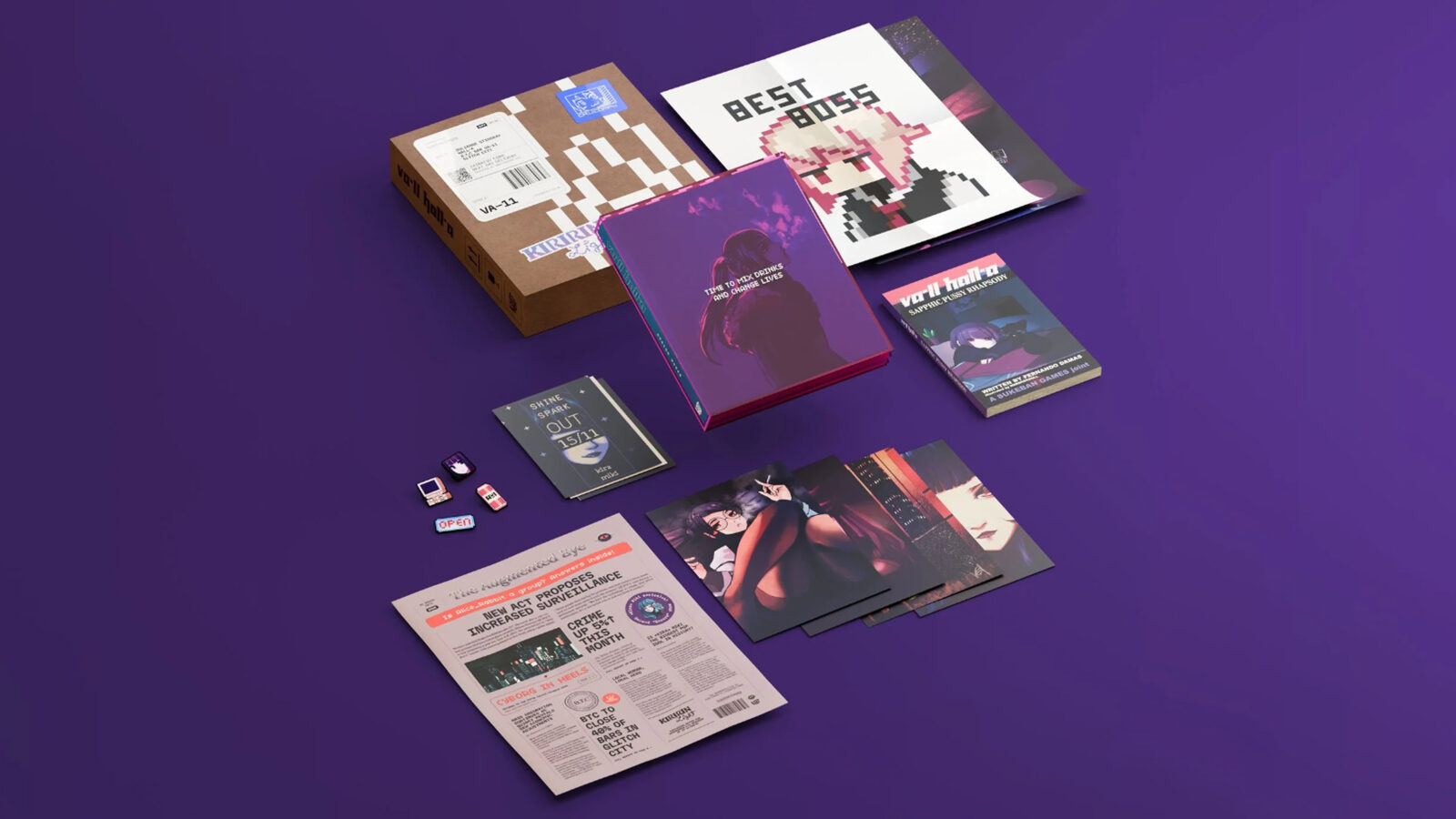
Another big part of our business is relationship management and working with partners consistently. You mention World of Horror, for example…We’d already worked with Ysbryd to develop the VA-11 Hall-A: Design Works, so we had that relationship in place. We have such great working partnerships that it’s never long before we’re working together again on some cool new idea, and the World of Horror board game was the next natural step for us.
It’s just fantastic to have these great relationships built on trust, and we really do our best to ensure that every partner knows how much we respect their games and what’s important to them. That seems to be working! Of course, we’re still prone to ambushing developers at conventions and waving our arms around until they agree to work with us – that will never change.
Lost In Cult has a strong undercurrent of game preservation in some of its work, most notably Editions. I’ve spoken to a lot of people involved in this over the last year and I like the fact I never get the same answer twice when I ask about this, so here’s the same question to you:
How do you explain the idea of game preservation to someone who doesn’t really understand its importance? What can they do to help?
Jon: I feel game preservation is difficult to quantify. In a world of digital rights, the best we can hope for is to preserve what we can. Lost In Cult attempts to preserve not only media but, more importantly, the stories and creative process, how games are made, why they sound the way they do, and what mechanics went into their foundations. This, I feel, is the thing that’s easiest to lose as time passes and knowledge fades. So our job is to preserve its wisdom as best we can for generations to come.
In terms of what people can do to help, it’s really all about ensuring the concept, art and ideas are held so they can be passed on. We’ve seen real issues now with past productions losing source code, artwork, scripts and, indeed, the knowledge of their inception. Time warps memory, so it’s important to grasp it whilst it’s present.
Do you, or would you like to, work with any other individuals or organizations that also deal with game preservation? If so, who?
Jon: We’d love to work with GOG. Preserving digital media is an important task, but what is preserving history without access to that history? We believe the work they do is incredibly important and accessibility to digital games shouldn’t be locked behind any means that could make it inaccessible. We believe they are doing great work that will allow enthusiasts to share in this task.
Lost In Cult has already covered a wide range of game genres, industry history, and creators through its various books, from handheld gaming to residential horror, and beyond. Which genre, game, or facet of the video game industry would you still most like to see covered?
Ben: I think by telling you that, we’d be giving you a little too much insight into our plans for upcoming book launches, as everything we think should be made we intend to make! Needless to say, we’ve barely scratched the surface and we have so much more in store for video game fans.
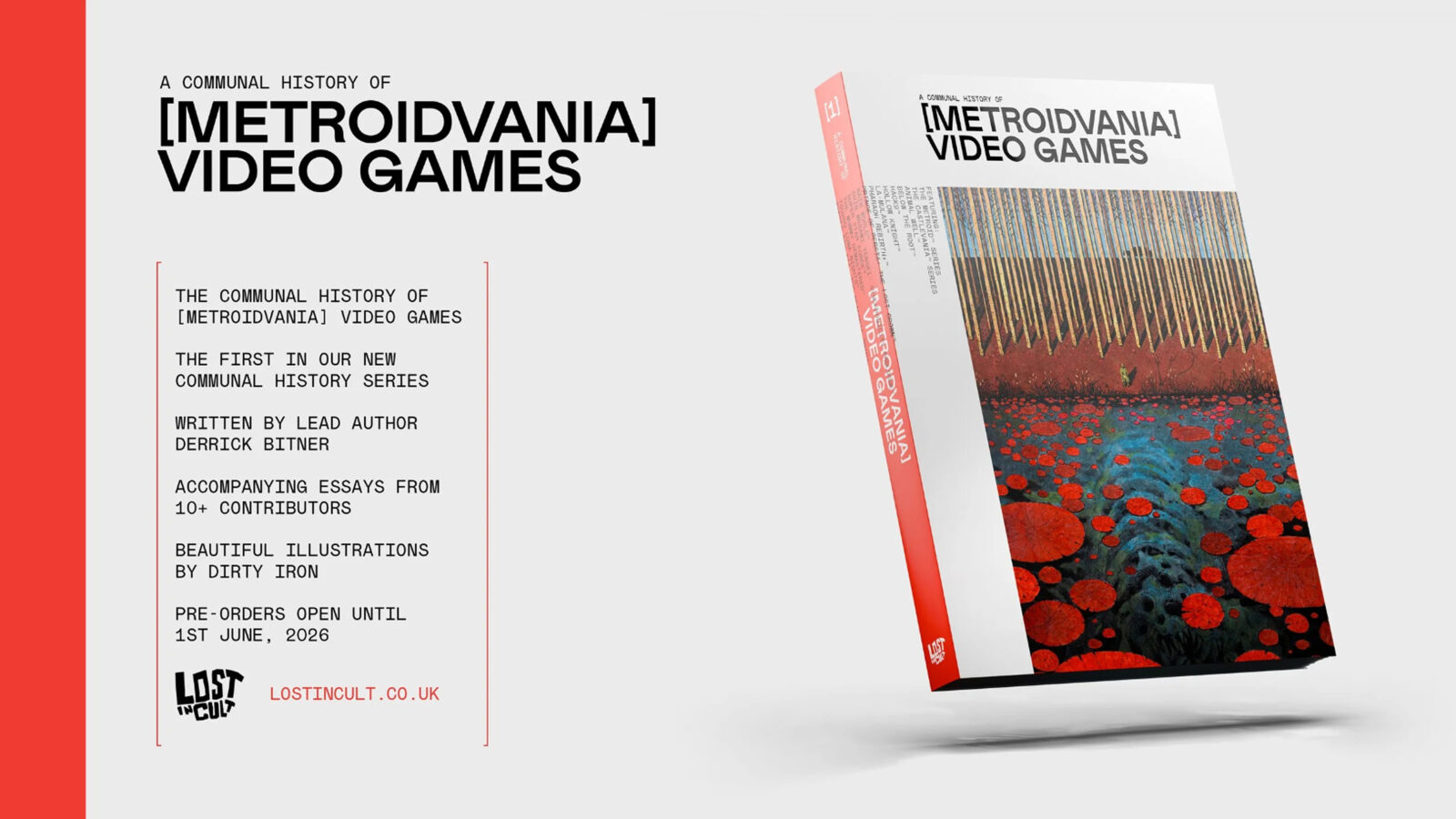
One example I can share is our recently launched A Communal History of Metroidvania Video Games, which retraces the genre’s steps back to the 1970s in fantastic detail. This is the start of a brand-new lineup of deep dive genre books that we’re really excited about. Beyond that, stay tuned! There’s some incredibly exciting stuff in the works.
I’d like to pivot to the music side of things now: personally, I’m involved with a genre related to plunderphonics called barber beats, that has labels who put a lot of emphasis on older physical media (such as CDs and tapes).
This is linked to the genre typically using songs from older time periods as source material, but I’m seeing more and more labels and companies putting contemporary music on vinyl and tape; what’s Lost In Cult’s reasoning for offering vinyl and tape? Would something like CDs be on the cards for future releases?
Ben: Boy oh boy, we have so much fun developing physical music releases! We got a taste for it a couple of years ago working in collaboration with another label, but we loved it so much that we decided to go our own way with it and apply all of the Lost In Cult principles and design ethos to those releases.
Vinyl is incredible because there’s such a beautiful simplicity to the analog format, and yet there is so much nuance and care that has to be taken to ensure everything is of the highest standard, from the specialist vinyl mastering to the artwork development and the pressing process.
Sleeve artwork is a huge focus for us, unsurprisingly, and we love commissioning beautiful new original pieces of artwork, as well as working with the developers and composers to come up with exciting colour variant ideas, and finding other innovative ways to bring the outstanding soundtracks from these games into the real world, to be held and enjoyed in their own right and outside the context of the game.
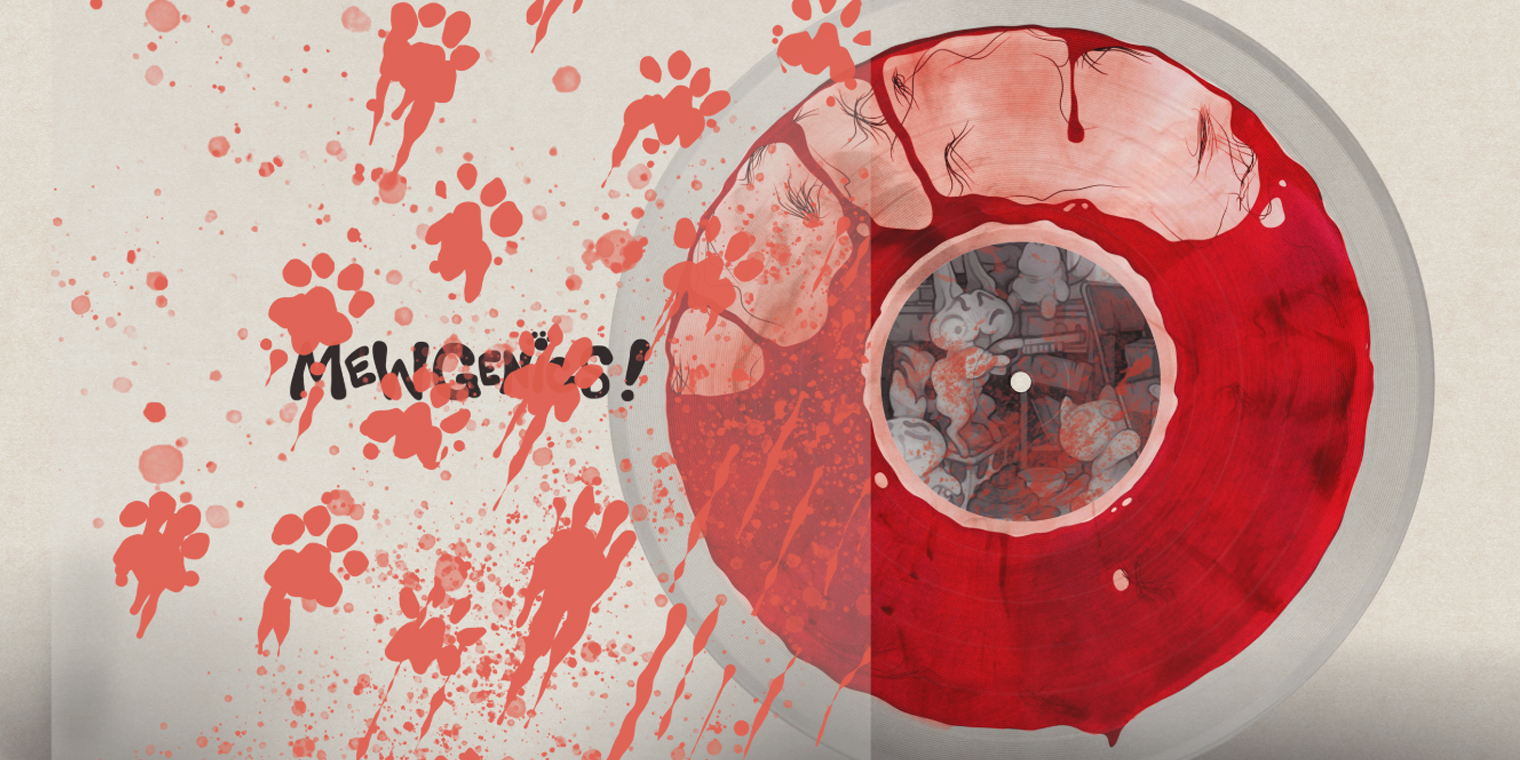
Our recent Mewgenics vinyl release had nine variants, two of which were filled records. Nobody else is crazy enough to do these things, but er…Yeah, we are, apparently.
It’s interesting you mention CDs. CDs are being requested more and more often now – they’re clearly making a comeback and we’re always taking note of changing trends, so we’ll absolutely look to accommodate that. What next, though? MiniDiscs? 8-Track? Probably…
Are there any current games (including board games) and game soundtracks Lost In Cult isn’t involved with that you all (collectively or individually) really like and would recommend people play/listen to?
Ben: So many! But considering it’s consumed by every spare waking moment since it launched, I’ve got to give the gentleman’s nod to Marathon this year. Another stunning multiplayer affair from Bungie, matched in its fluidity only by its exceptional visuals and sound design. It’s a knockout!
Jon: It’s got to be Ball x Pit! What a fantastic game. And another cracking OST from Amos Roddy!
I’d like to end by circling back to the company’s overarching ethos with a two-part question. Firstly, given that Lost In Cult is “dedicated to celebrating video games as a culturally significant art form” what kind of pushback have you encountered to this idea, either from within the industry or elsewhere?
And last of all: how do you think the general public can be made better aware of how important video games are as an art form, and what would you say is the biggest obstacle to making them aware of this?
Ben: That is a great final question, as it gets right to the heart of what we do. Internally, within the industry, I think the pushback is actually quite minimal. Most developers and publishers understand implicitly that what they create is an art form; the passion that goes into the design, the composition, and the writing is immense.
The skepticism we see there usually boils down to business realities: a question of whether celebrating that art through high-end physical products and deep-dive editorial can be a sustainable business model. Our growth over the last five years is our answer to that, and we want to ensure developers and publishers continue to understand that their audiences extend well beyond the scope of rolling the credits on their game, and that their fans really want more, and to continue that journey of artistic understanding.
The only true pushback, or perhaps I should call it cultural inertia, comes from the general public and mainstream media. The narrative that video games are just a frivolous pastime, only for kids, or worse, a source of societal issues, is deeply ingrained. We are fighting a decades-long cultural lag that struggles to assign the same critical and historical value to games as it does to, say, cinema or literature, despite them being the biggest revenue driver in the entertainment industry today and with plenty of awards ceremonies and industry recognition.
Still, we’re not here to change people’s minds. The audience that appreciates our work and the work of the developers we collaborate with…well, they found their own way here. And that’s important.
To answer your final question, I’m certainly not going to suggest what people at home could or should do in order to appreciate games in any other way than they naturally feel to do so, but I would say the biggest obstacle I see is the sheer pace of the industry. The market is saturated with new releases, and games are often seen as software to be consumed or consistently updated, not artifacts to be collected and studied.
We’ll just keep doing our thing, sharing the artistry, the stories, and creative processes behind games long after launch, and I’m certain there will always be an audience there ready to raise an eyebrow and dive in. And we appreciate every one of them.