




RPCS3 Devs Draw a Line Against “AI Slop” as PS3 Emulator Faces Flood of Low-Quality Code



- RPCS3 developers are pushing back against a wave of undisclosed AI-generated pull requests on GitHub
- The emulator team says AI-assisted code must be clearly disclosed and properly understood before submission
- Growing reliance on AI coding tools is creating new moderation and quality-control problems for open-source projects
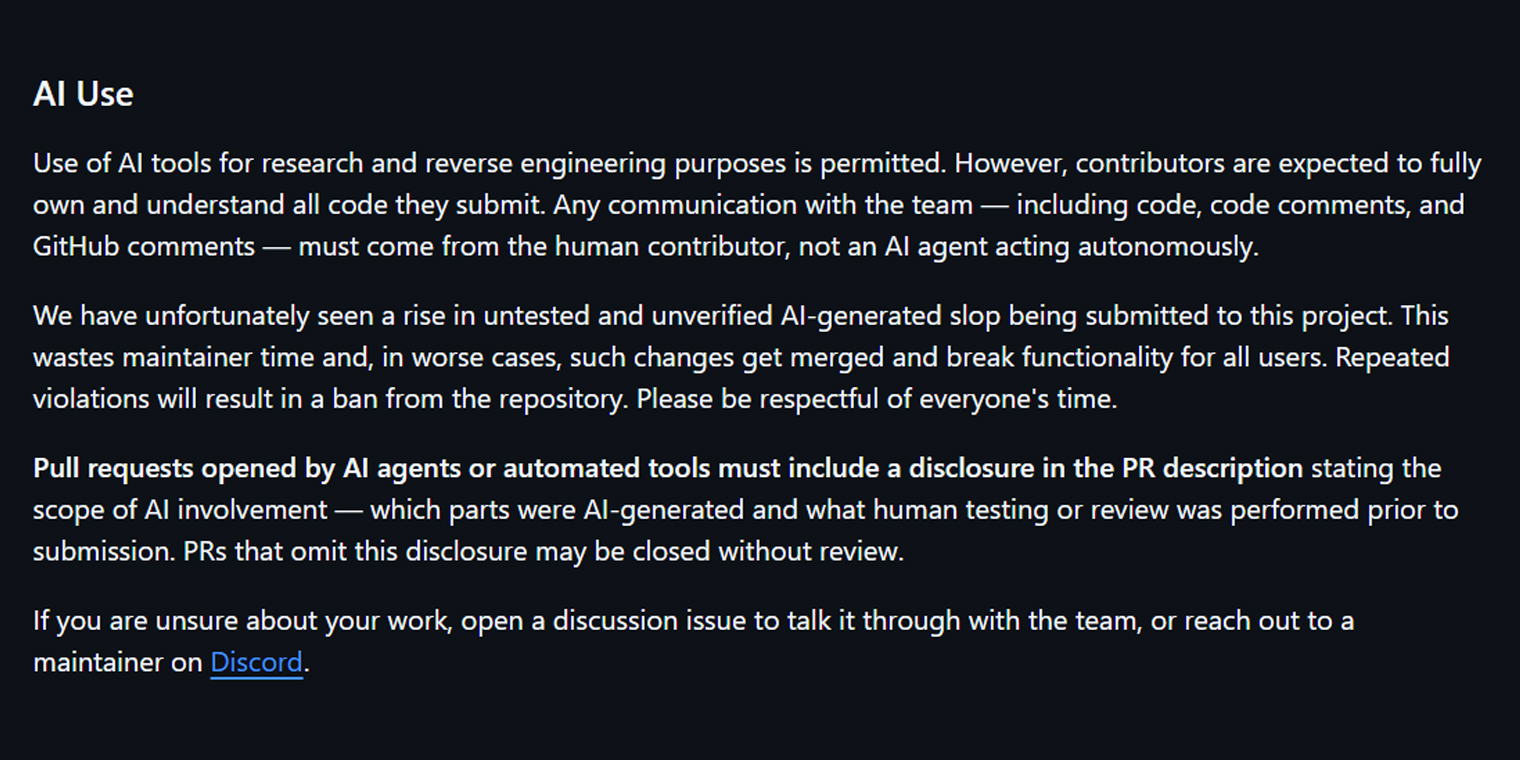
The developers behind PS3 emulator RPCS3 have publicly pushed back against what they describe as a growing flood of “AI slop” code submissions targeting the emulator’s GitHub repository. The team says contributors have increasingly been submitting poorly understood AI-generated pull requests (merging their code with the main code) that introduce regressions, bugs, and unstable behavior into one of the most technically demanding emulation projects in gaming.
The backlash has sparked wider discussion across the emulation and open-source communities, with many users defending the emulator’s strict stance on quality control. Others pointed to the increasing burden placed on maintainers who must review and clean up AI-generated submissions that appear functional on the surface but fail under real-world testing.
In a blunt series of social media posts, the RPCS3 team warned that contributors who submit AI-generated code without disclosure could now face bans. “There are plenty of resources online to learn how to debug and code instead of generating slop that you don’t understand and that doesn’t work,” the devs posted on X.
“As for all the AI bros seething on our socials, we’re simply blocking you. Learn how to debug, code, and leave behind something useful to humanity when you’re gone, instead of peddling slop.”
Jump to:
RPCS3 in a Nutshell
RPCS3 is a multi-platform open-source PlayStation 3 emulator and debugger developed in C++. Available on Windows, Linux, macOS, and FreeBSD, the project aims to accurately preserve Sony’s seventh-generation console hardware and bring its extensive library of games to modern PC platforms.
Originally founded in 2011 by developers DH and Hykem, RPCS3 has grown from a small reverse-engineering effort into the most advanced PS3 emulator currently available. Over the past decade, the emulator has steadily improved compatibility and performance, with recent builds capable of running (in some way, if not fully) the overwhelming majority of the PlayStation 3 library.
The project’s progress has been particularly notable because of the PlayStation 3’s notoriously difficult Cell architecture, which developers have spent years decoding and optimizing. Recent breakthroughs have improved performance across both high-end gaming PCs and handheld devices like the Steam Deck, helping RPCS3 become one of the flagship preservation projects in the emulation scene.
Reliance on AI Coding Is Becoming a Growing Problem
The RPCS3 AI code issues highlight a wider problem facing open-source software development as AI coding tools become increasingly mainstream. While tools powered by large language models can accelerate repetitive tasks and help inexperienced coders learn and iterate upon existing code, maintainers across GitHub are reporting a rise in low-quality pull requests generated with little understanding of the underlying codebase.
For highly technical projects like emulators, the risks are especially severe. Emulation software often relies on years of reverse engineering, hardware-specific optimizations, and fragile compatibility fixes that can easily break when poorly generated code is introduced. RPCS3 developers argued that experienced programmers already know where AI tools can be useful (such as refactoring or boilerplate cleanup) but said many vibe coders are submitting code they cannot debug or explain.
RPCS3 is not alone in facing the problem. Rémi Verschelde, a core developer behind the open-source game engine Godot, recently warned that AI-generated pull requests are becoming “draining and demoralizing” for maintainers. As with RPCS3, many submissions contain broken or nonsensical code written by contributors who don’t fully understand the changes they’re proposing.
Similar complaints have also emerged from maintainers of Blender, LLVM, Firefox, Fedora, and other major open-source projects, suggesting that AI-assisted “vibe coding” is rapidly becoming a wider issue across software development communities.
RPCS3 Continues to Make Major Compatibility Breakthroughs
RPCS3’s momentum has only accelerated in recent months thanks to a string of major updates that have dramatically improved compatibility and usability. Earlier this year, the emulator team revealed that roughly 73% of the entire PlayStation 3 library is now classified as fully “Playable,” while another 25% can boot and run in-game. Only a tiny fraction of titles remain completely unsupported, with many of the remaining problem cases tied to niche PlayStation Move releases.

Recent updates have also improved performance across notoriously demanding PS3 titles including Metal Gear Solid 4, Killzone 3, Gran Turismo 6, Red Dead Redemption, Twisted Metal, and God of War III. RPCS3 developers recently achieved a major breakthrough in Cell CPU emulation that reportedly boosts frame rates across multiple games while improving stability on lower-end hardware and handheld devices like the Steam Deck.
The emulator has additionally introduced automatic game configuration, handheld-friendly UI improvements, Steam integration, and direct ISO mounting support; changes that have made PS3 emulation substantially easier for newcomers. For many players, titles that once required extensive manual tweaking are now approaching plug-and-play functionality.