

Call of the Elder Gods Review: The Illusion of Choice



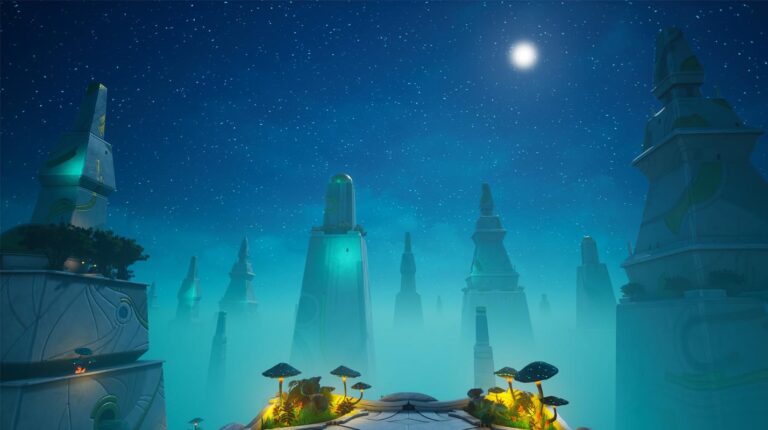
Call of the Elder Gods is out from May 12 on all major platforms (I played it on PS5). Developed by Out of the Blue Games and published by Kwalee, it’s a Lovecraftian adventure light on horror and heavy on fantastic puzzles. I really enjoyed it…with a few caveats.

Jump to:
Great (Old Ones) Expectations
Is there any greater curse than that of expectation? It’s a question I kept coming back to during my eight hour playthrough of Call of the Elder Gods. This is the sequel to Call of the Sea, which received a BAFTA Games Award nomination for Best Debut Game in 2021, as well as winning a Tiga Game Award and Nyx Game Award. It also made multiple ‘Best of’ lists by various gaming sites, thanks to its mix of immersive storytelling and imaginative puzzles.
There’ll be a good chunk of gamers (and critics) out there wondering if Call of the Elder Gods can repeat this success. Given that the story dovetails with the first game, and there are multiple callouts to it, it’s safe to say that Out of the Blue has hedged its bets by making sure there’s something here for fans of the first game, even if it threatens to tip over into fan service at points.
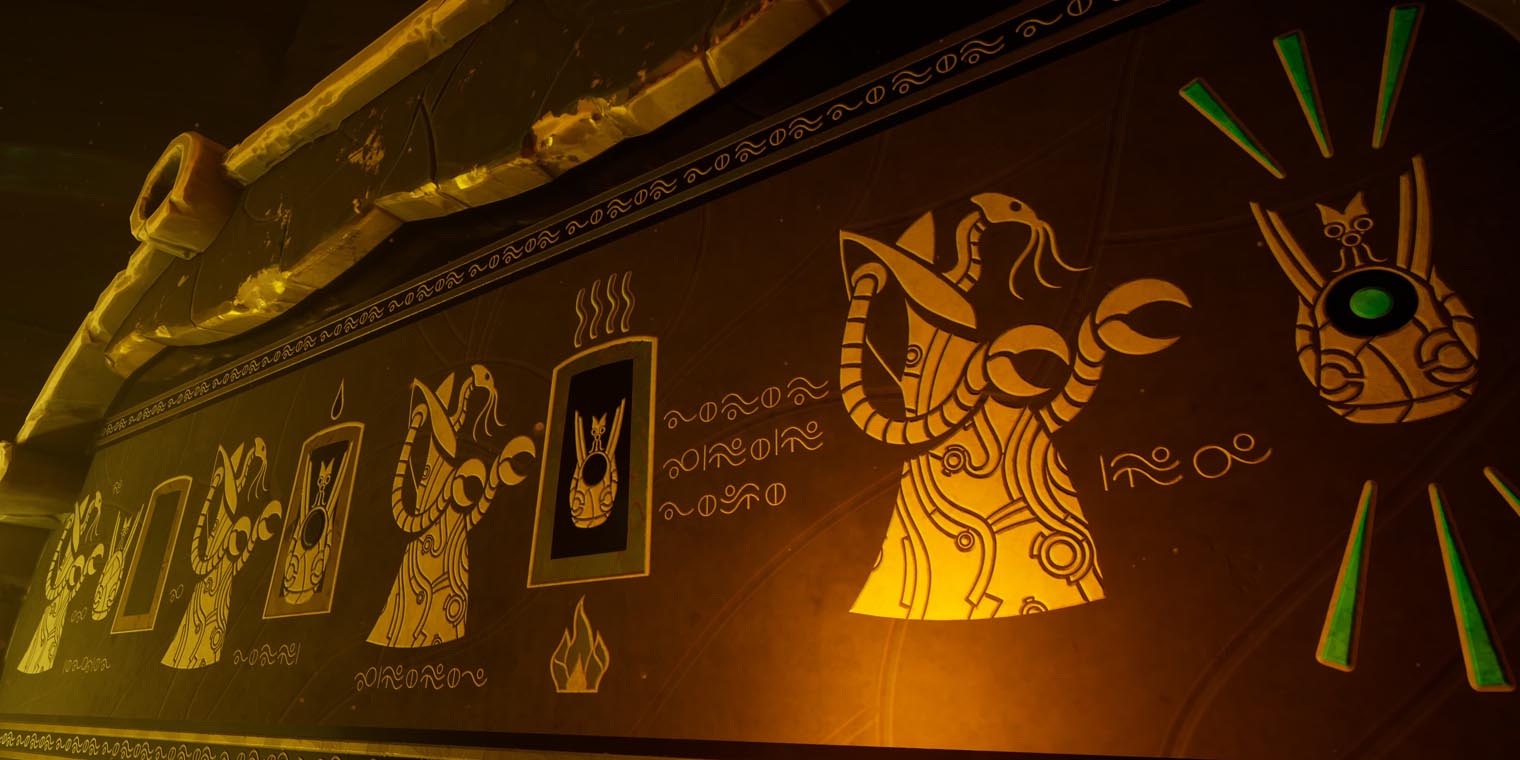
Expectation is also something that haunts Call of the Elder Gods’ dual protagonists, Harry Everhart and Evangeline (Evie) Drayton. For Evie, it’s how she’s expected to help “close the loop” of a cosmic event that threatens the space-time continuum itself. For Harry, it’s how he’s expected to step up to the plate and help Evie, despite still being affected by the death of his beloved wife, Nora, years before (if this sounds like a spoiler, it’s not – this info is revealed very early on).
She was the protagonist of Call of the Sea and she has a pivotal role in the sequel as the narrator. In Call of the Sea, which was set in 1934, Nora traveled to a tropical island looking for Harry. Call of the Elder Gods takes place in 1956, with Harry working as a professor at Miskatonic University but otherwise a recluse.
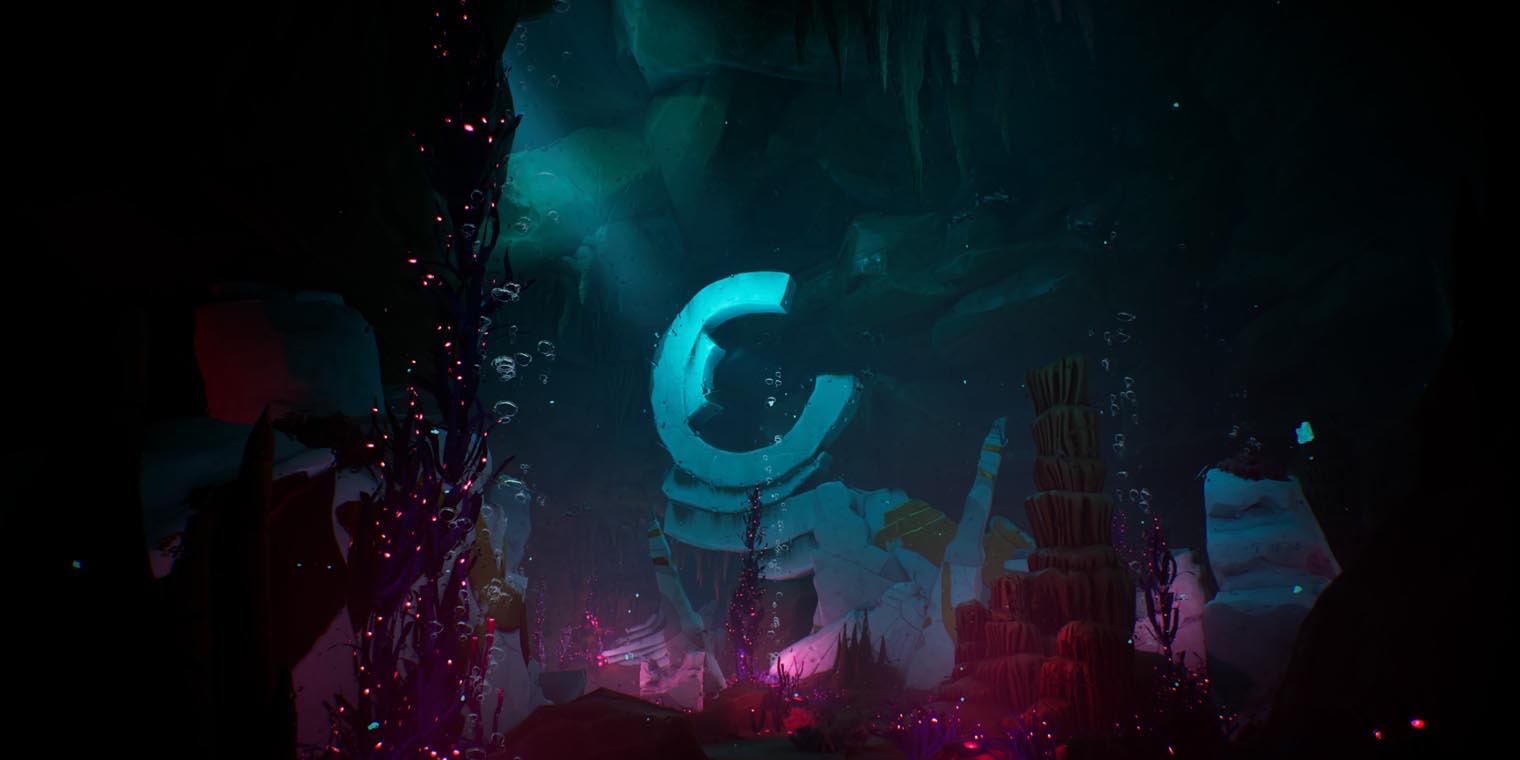
However, the game focuses on Evie first as she wakes from a weird dream set in a monolithic city. Soon enough, she heads to the Everhart mansion to speak with Harry about this dream and the mysterious expedition he headed in 1934, as they seem to be linked somehow. This then spirals out into a globetrotting pulp adventure involving ancient civilizations, a secret cult, and Nazis.
Puzzle Your Way Through
Call of the Elder Gods asks you at the start if you’ve played Call of the Sea, so if you haven’t you can feel comfortable jumping straight into this one without spoiling the first one. I mean, there are spoilers as the story goes on, but I can’t say they ruin the first game. If anything, the sequel feels, overall, a bit too similar to the first one in many ways; some good, like the vibrant cartoonish art style; some less-good, like the clunky cutscenes that look like placeholders. Budget limitations aside, what Call of the Elder Gods offers above and beyond the first game is better puzzles.
Or rather, more variety. I’ll tell you now that the main reason I enjoyed playing Call of the Elder Gods so much is that I was genuinely excited to see what the next puzzle would be. Although there is some thematic overlap, nothing repeats. Every puzzle is unique and deeply satisfying to solve.
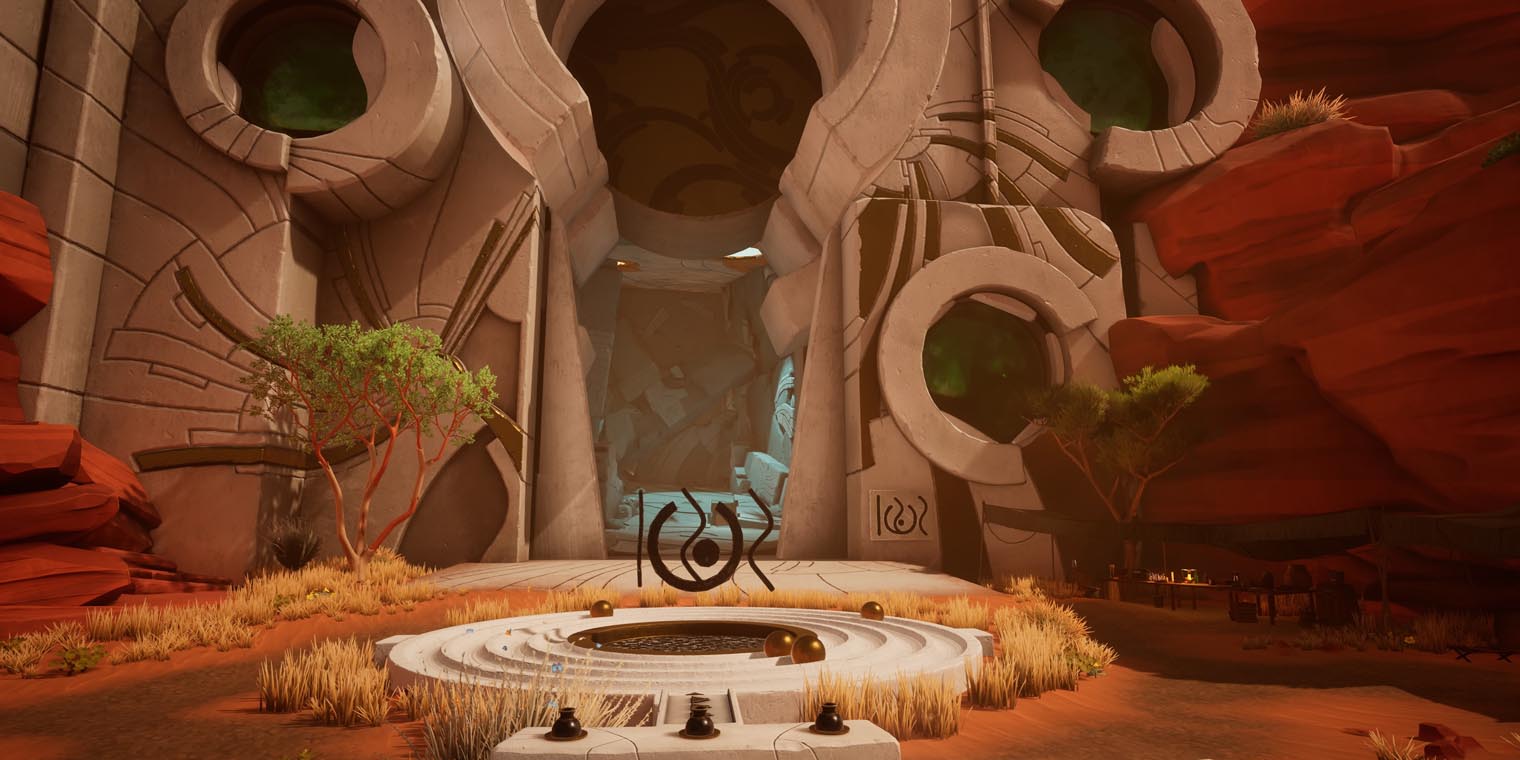
To give you an idea of how varied these are, you’ll need to do anything from playing musical notes in a specific order through to lining up sunbeams across multiple devices. One of my favorite puzzles involved using an Enigma machine to decode secret Nazi messages, to then figure out the combination for a vault door. There are also a few occasions when you have to switch between Evie and Harry to solve a puzzle, such as using the point of view of one character to see info the other one can’t see.
A lot of the puzzles are multi-level, not just in terms of the info you need, but also in terms of what you need to do to solve it. For example, at one point I found myself in a secret underground cult lair, where I had to solve a mini pyramid puzzle, which then led to a mini model puzzle. After this, I got details I needed to solve a separate conundrum that itself required inputting multiple personal details for different people – I’m being vague here, partly because I don’t want to spoil the surprise, but also because the amount of information needed for this particular puzzle was dense.
Luckily, Out of the Blue Games gives players two things to help. The first is an in-game journal, that Evie (and Harry) will make notes in for important clues and hints. They don’t write down everything, though, so there’s still some emphasis on you as the player keeping track of extra details.
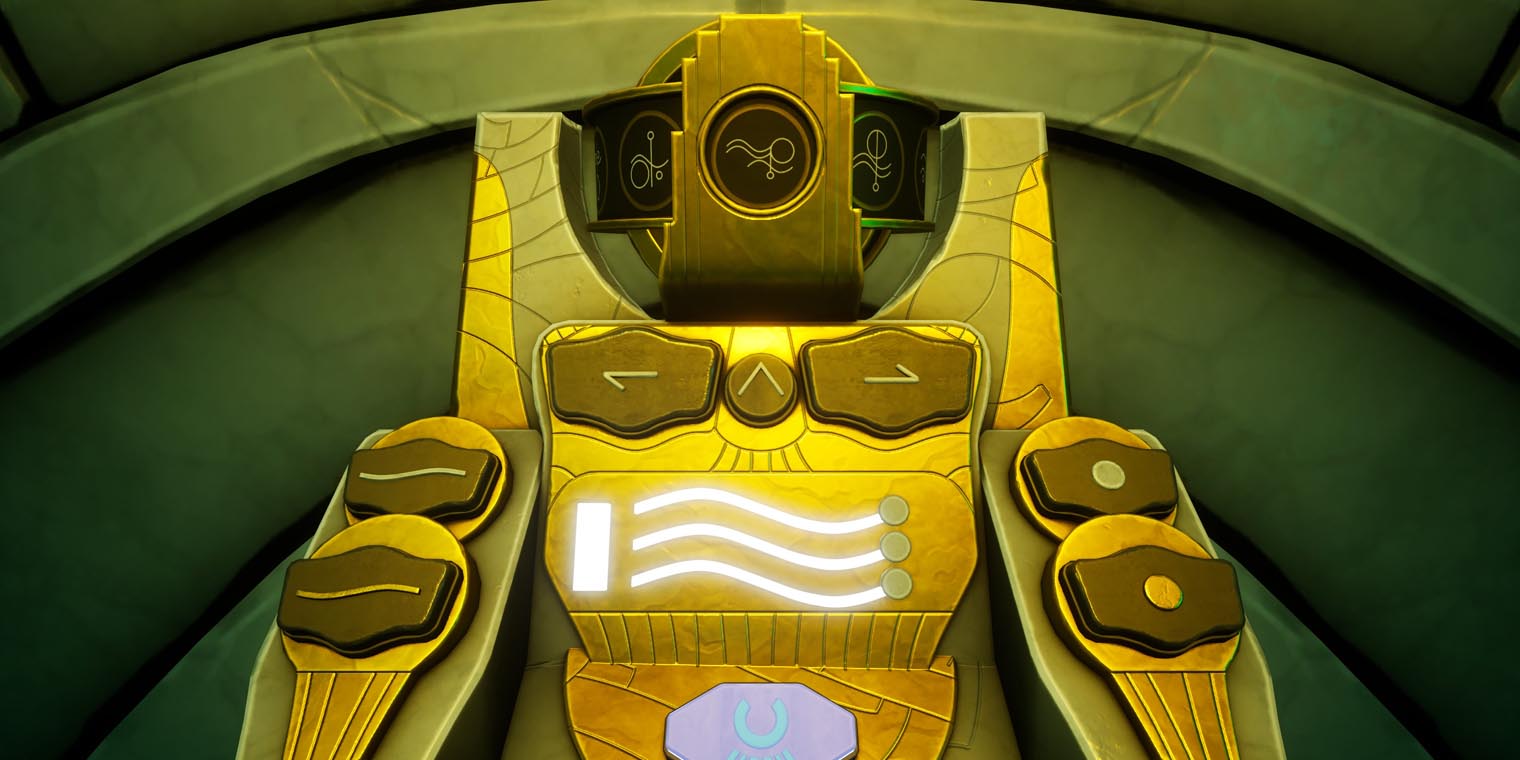
And then there’s a Hints system. Unlike other puzzle games that give you either limited hints or rely on some kind of unlock criteria, Call of the Elder Gods lets you check the answer to any puzzle whenever you want – Out of the Blue Games even suggest players take advantage of this and note that using it doesn’t affect trophies/achievements. I’ll admit I used it four times; two of those were for when I was certain I was doing the right thing but realised I’d misread or outright missed a clue.
I like that it’s possible to miss clues, just as much as I like that puzzles can still be solved without all the information. Not all the time, true, but I rarely reached a level of frustration that caused me to curse the developers for daring to put a fiendishly clever, or potentially obtuse, puzzle in front of me.
Arkham and Beyond
Anyone coming to Call of the Elder Gods from Call of the Sea will feel right at home, as the sequel features the same focus on Lovecraftian references that feel lived in. There’s very little explicit horror here. Instead, I enjoyed taking my time roaming around self-contained areas looking for clues, knowing I never had to worry about monsters or combat interrupting the flow.
That’s not to say there aren’t any monsters, it’s just that they’re delightfully low-key. There’s some creepiness in how Harry is plagued by visions of oily shadows, and that this same black ooze seems to cause madness and death to any who come into contact with it.
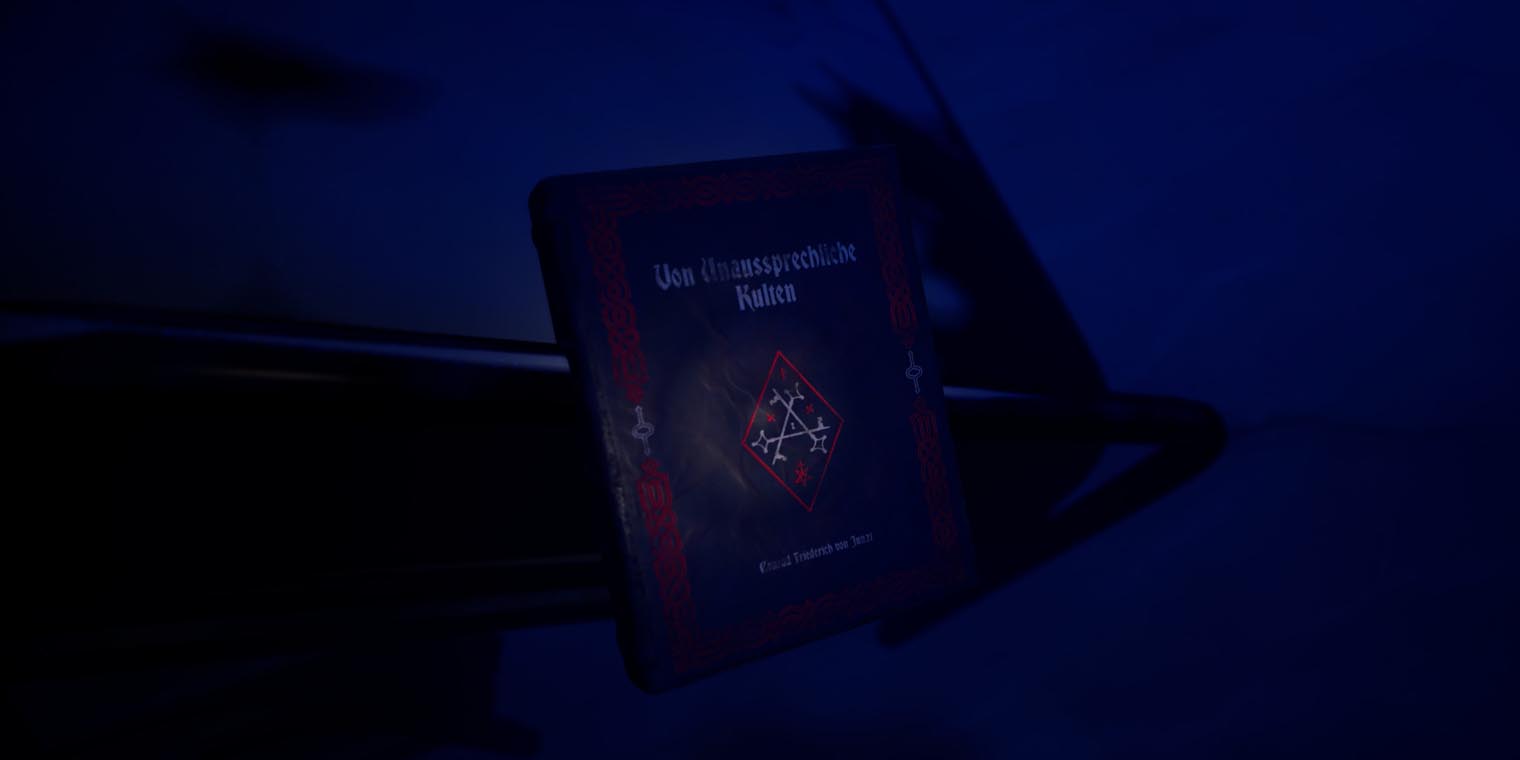
Harry’s a scholar and Evie’s a scientist, so even though they both have a personal interest in the substance, they ultimately want to learn about it. Unfortunately for them, outside forces believe it holds tremendous power they can use for their own nefarious ends. This side of the story also has a nice aspect of Lovecraftian fiction, in that it deals with people meddling with forces they don’t understand. It’s all wonderfully pulpy (there’s even a bit where a red line shows a plane journey) with a few surprises thrown in.
The Plot Thickens
They’re not all welcome surprises, though. The story is fun and fast-moving, but as it goes on it starts to rob the player of agency at pivotal moments. Or, you’ll get a choice but the end result is the same no matter what you do. There are also a few plot points that don’t hold up to scrutiny; one involves those who touch the black ooze, and the other is a late-game paradox.
I can’t go into details without major spoilers, but I’ll just say that not everyone who touches the ooze goes nuts, although the reason why is nebulous. And the paradox is hand-waved away by a voiceover during the end credits that really felt like Out of the Blue knew they’d written themselves into a corner.
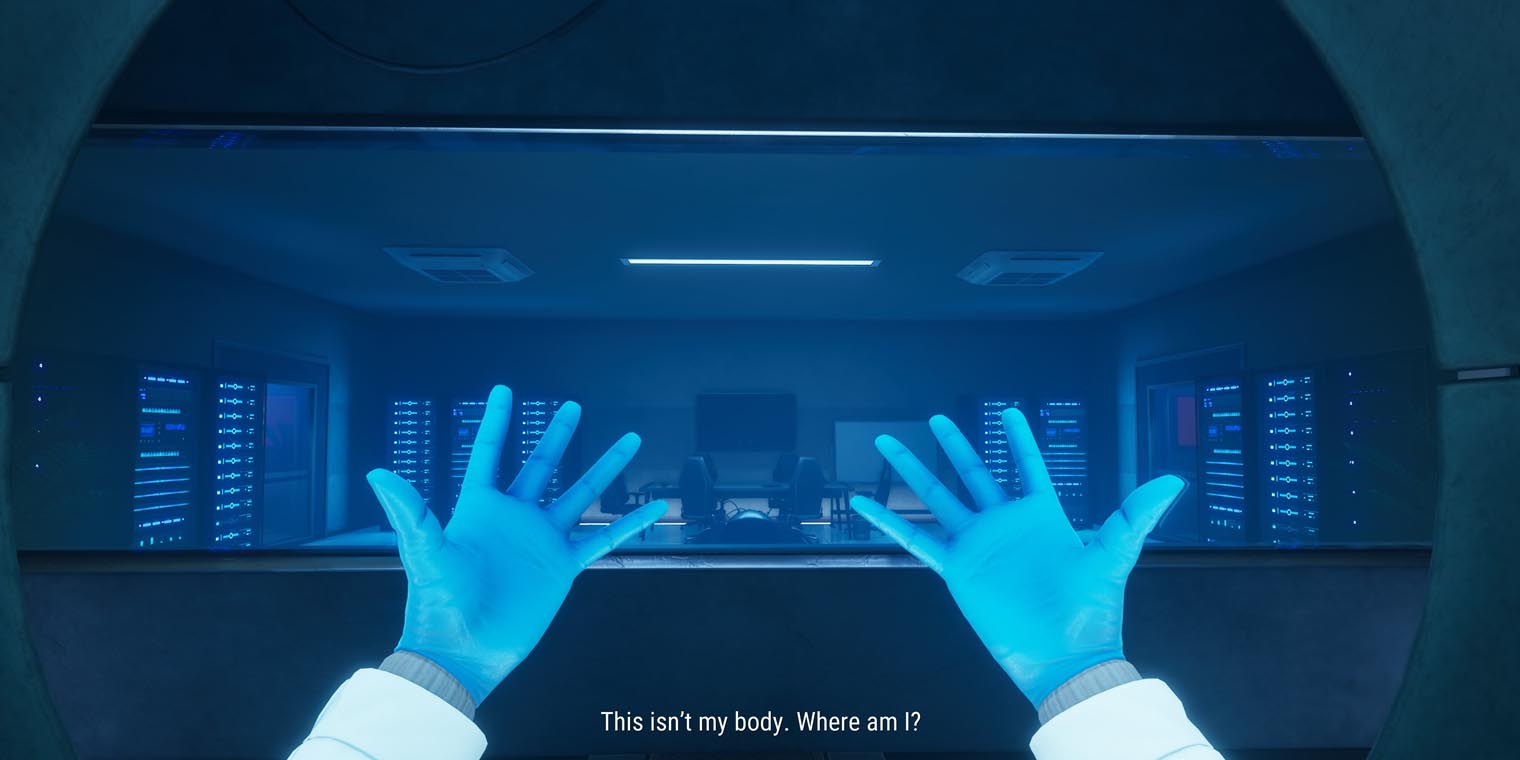
Luckily, voice acting is stellar throughout, with Cissy Jones (Firewatch) reprising her role as Nora. Harry’s voiced by Yuri Lowenthal (Peter Parker in the Insomniac Spider-Man games), here doing a nice line in 1940s-style “You got real guts, kid” accent work. Disappointingly, despite Evie being a woman of color there’s barely anything story-wise that relates to this, robbing the plot of a deeper thematic heft it could have used to really soar above the first game. Also, I don’t like that the game’s press material doesn’t acknowledge that she’s voiced, wonderfully, by Mara Junot (who has an extensive video game resume).
Puzzle-wise, some do feel like they’re missing crucial info, and I say that after ensuring I found all the clues and followed hints. There’s also at least one late-game puzzle with decent clues that, nevertheless, I’m certain is almost impossible to solve on your own without guesswork. The upside to all this is that when I did manage to solve an especially taxing puzzle (without hints) the sense of achievement I felt was second-to-none, and I’d argue that’s the true measure of a successful puzzle game.
Callbacks to the Sea
Rather than going all-in on tentacled horrors, Call of the Elder Gods prefers to showcase the cosmic wonder of Lovecraft’s work as humans find themselves faced with beings of inscrutable knowledge. Together with the lack of rush to solve puzzles, and only intermittent timers on conversation choices, it all adds up to a weirdly relaxing game even though the stakes become suitably epic.
References to Call of the Sea are largely charming; I think these work without having played the first game as Call of the Elder Gods really sells the love and connection between Harry and Nora. They do start to pile up towards the end though, leading to the feeling that Out of the Blue are over-egging the pudding.
It’s also towards the end where the game fumbles; player choice starts taking a backseat to the story Out of the Blue clearly wants to tell. There’s at least one pivotal moment that uses almost exactly the same dialogue no matter the path the player takes, undermining the journeys both Evie and Harry are taking by rendering them interchangeable. Maybe Out of the Blue Games are trying to tell a story about free will and choice being insignificant in the grand scheme of things, especially when ancient godlike beings are involved, but I don’t quite buy this.
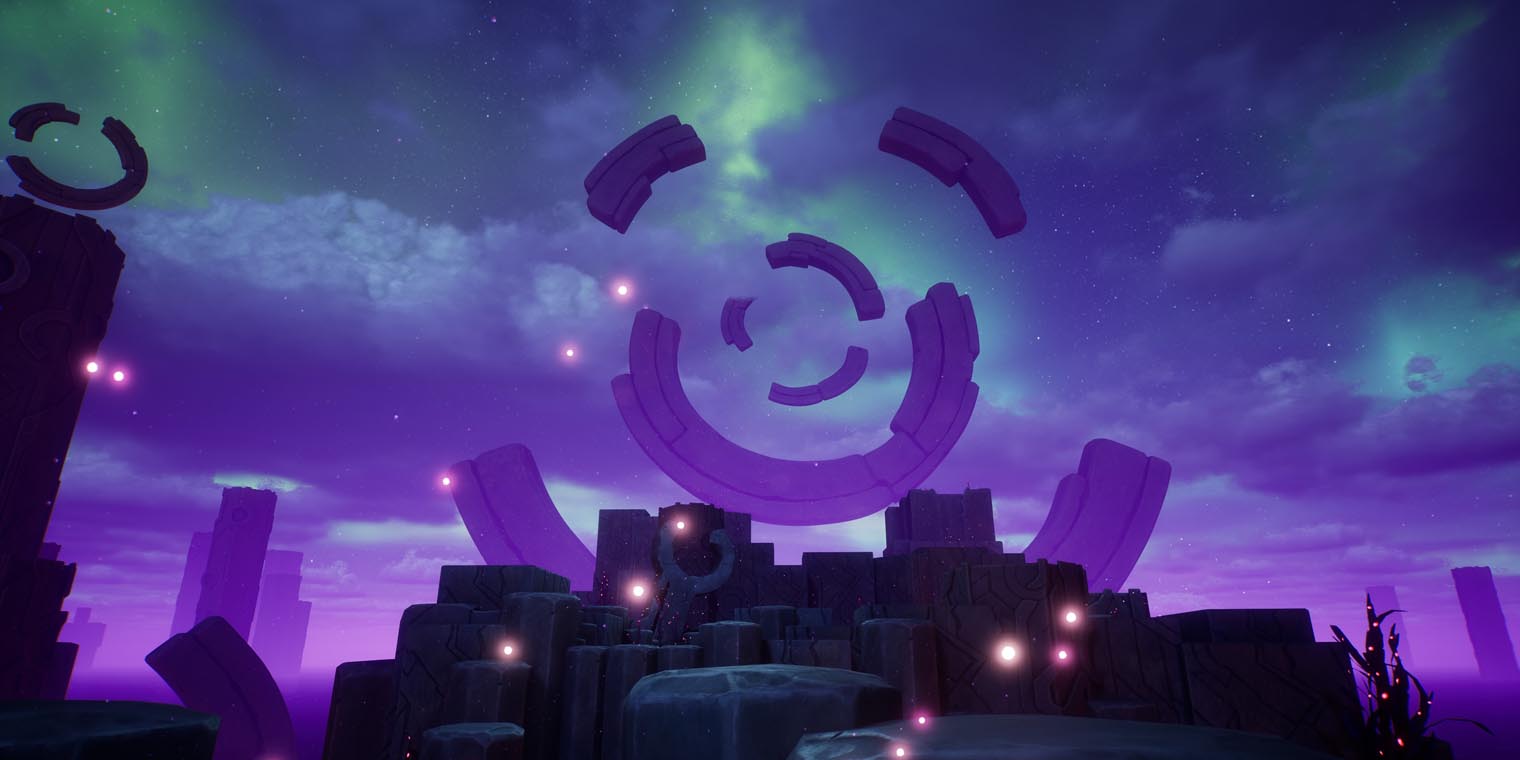
What do you expect from a sequel? If you want more of the same, then you’ll find what you want in Call of the Elder Gods. The vast majority of it is entertaining and perfectly-paced. The puzzles keep at a consistent level of challenge throughout, and I appreciate that the story hits predictable beats but not always in predictable ways. If you expect something that takes a break from typical Cthulhu horror, or something that favors a weird fiction narrative reliant on exciting puzzles, then Call of the Elder Gods is a Lovecraftian story worth your time.