

How to Play Yu-Gi-Oh! in 2026: All You Need to Know

Eneba Hub contains affiliate links, which means we may earn a small commission if you make a purchase through them—at no extra cost to you. Learn more

Learning how to play Yu-Gi-Oh! today is quite a challenge. This TCG has a reputation for being pretty convoluted, thanks to its massive library, deep mechanics, huge amount of strategy, and sometimes unintuitive rulings. However, all that doesn’t detract from how fun it is, and if you want in, you gotta start from the basics.
In this beginner’s guide, we’ll run through a pared-down version of the rules, as well as a step-by-step approach to starting and hopefully winning your first Duel. By the end, you’ll have a much better grasp of how to play Yu-Gi-Oh! and feel confident sitting down at the table. The Yu-Gi-Oh! basic rules covered here are everything you need to get started.
Jump to:
How to Play Yu-Gi-Oh! TCG
How to play Yu-Gi-Oh! in a nutshell: summon monsters, activate Spells, and spring Traps to mess with your opponent, all in a turn-based sprint to drop their Life Points to zero. It’s chaotic, frantic, and very, very fun.
As I mentioned earlier, this will be a step-by-step guide for complete beginners, so no need to worry about the top Yu-Gi-Oh! decks or the strongest Yu-Gi-Oh! Cards just yet. Instead, we’ll get down to the basics of how to play Yu-Gi-Oh!.
Getting Started
To learn how to play Yu-Gi-Oh! and jump into your first Duel, you’ll need a Main Deck, optionally a Side and Extra Deck, and a couple of essentials like a coin, tokens, and sometimes dice (based on what you and your opponent are running). One of the first questions new players ask is how many cards do you start with in Yu-Gi-Oh! – the answer is 5, drawn at the beginning of each Duel.
Main Deck
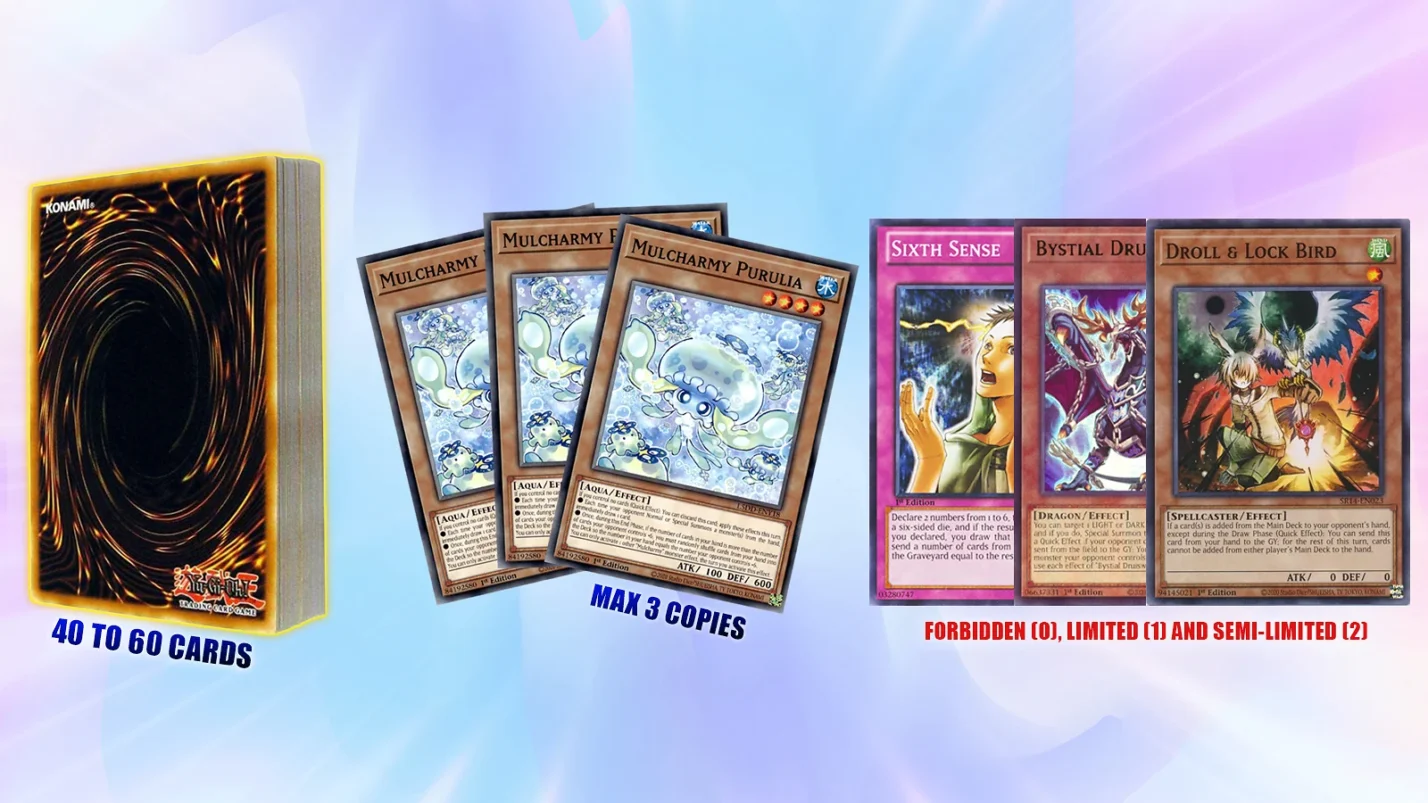
As with any great trading card game, you must have a deck. Your Main Deck is where the bulk of your cards lie. A Main Deck must obey the following Yu-Gi-Oh! card game rules:
- It must have anywhere from 40 to 60 cards, including Monsters, Spells, and Traps.
- You may have up to 3 copies of a card in any Deck.
- It must obey the current banlist:
- Forbidden Cards cannot be used at all.
- Limited Cards are restricted to 1 copy.
- Semi-Limited Cards are restricted to 2 copies.
Deck building isn’t always easy, so if your Main Deck isn’t pulling its weight, adjust and refine it until it clicks – figuring out how to play Yu-Gi-Oh! often comes down to smart upgrades. Understanding the Yu-Gi-Oh! rules for beginners around deck limits and banlists is essential before your first game.
Side Deck
You may also bring along a Side Deck. A Side Deck is used in Match formats or competitive play, and players can swap cards from here into their Main Deck.
A Side Deck must obey the following rules:
- It must contain anywhere from 0 to 15 cards, including cards that would go in the Extra Deck. No cards means you opt not to run a Side Deck.
- You may have 3 copies of a card, but these also count against cards in your Main and Extra Decks. For example, if you have 3 Dark Magicians in your Main Deck, you can’t put any more Dark Magicians in your Side Deck.
- If you put a card from your Side Deck into one of your Decks, you need to swap one card out. You must end with the same number of cards in your Main and Extra Decks.
Again, a Side Deck is completely optional and is only really seen in high-level play. Still, knowing how to play Yu-Gi-Oh! at a competitive level means understanding when and how the Side Deck changes a match. The Yu-Gi-Oh! basic rules for the Side Deck are simple – equal swaps only.
Extra Deck
Your Extra Deck contains monsters that can’t be put in the Main Deck. The Yu-Gi-Oh! card game rules for the Extra Deck are strict:
- It must contain 0 to 15 cards, but may only contain Fusion, Synchro, Xyz, and Link Monsters.
- The 3-card limit and banlist rules apply here, too.
Getting to grips with the Extra Deck is one of the Yu-Gi-Oh! rules for beginners that often trips people up – but it becomes clear once you understand each summoning type.
Additional Items
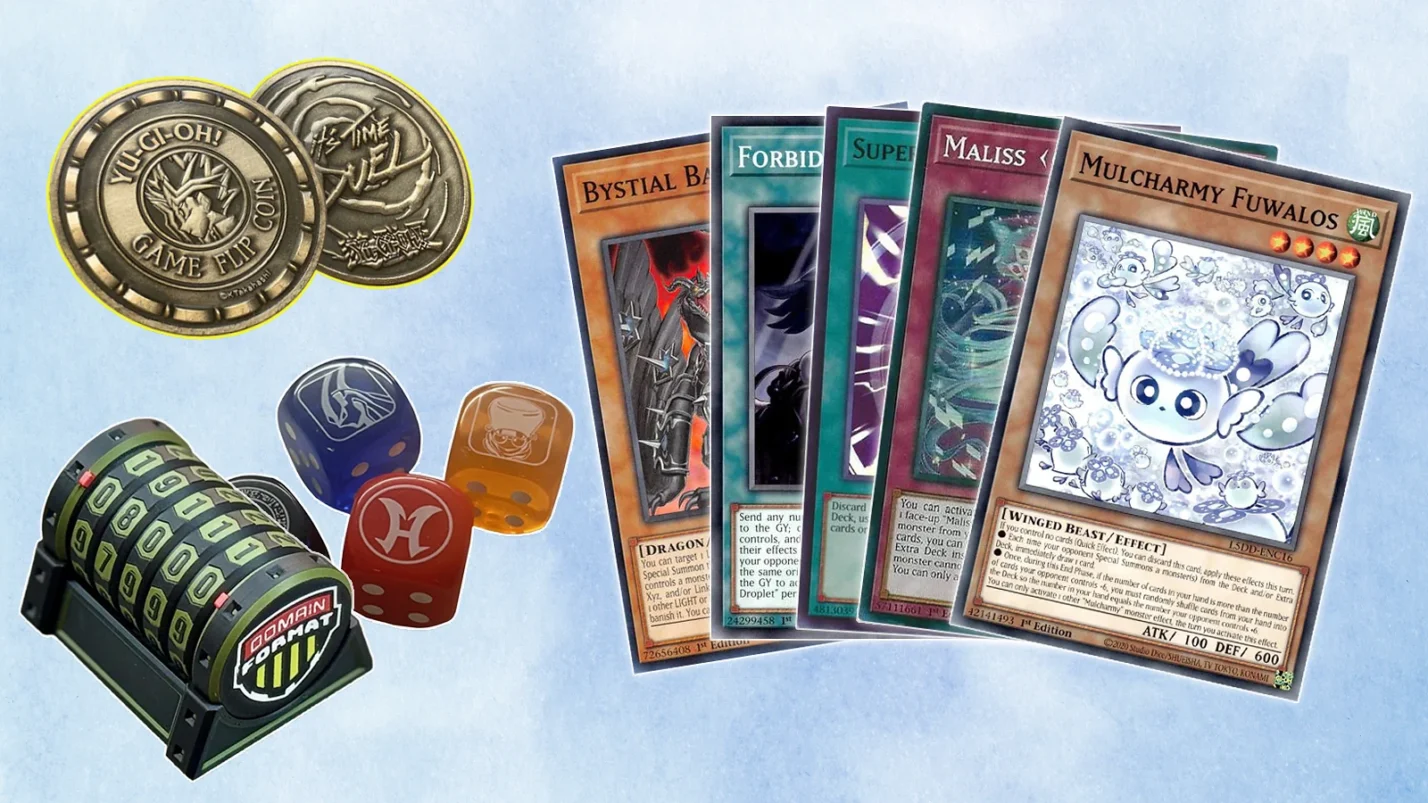
As you explore how to play Yu-Gi-Oh!, consider preparing a few helpful extras:
- A coin and dice for effects that require them.
- Tokens. Tokens can be anything so long as they have two distinct faces (to show Attack or Defense Position). A coin itself can be a token as it has both heads and tails.
- Any other accessories your deck may need, such as counters.
- Finally, a way to keep track of your Life Points: calculators or a piece of paper and a pen will do.
You don’t need these to learn how to play Yu-Gi-Oh!, but they’ll make your Duels a whole lot smoother. Knowing how to play Yu-Gi-Oh! cards becomes much easier when you have the right accessories to hand.
Where to Place Cards on the Game Mat
Lastly, let’s talk about the Yu-Gi-Oh! field layout – an important piece of the Yu-Gi-Oh! basic rules. Each set of cards must be placed in a distinct zone, so that both players have a clear understanding of the game state at all times. Mastering the Yu-Gi-Oh! field layout before your first game will save a lot of confusion mid-Duel.
- In front of both players are 10 slots. The upper 5 are your Monster Zones, where monsters go, while the bottom 5 are your Spell/Trap Zones, where you play and set Spells and Traps.
- To the left of your Monster Zones is the Field Zone, where you place Field Spells.
- Below the Field Zone is your Extra Deck Zone, where your Extra Deck goes.
- To the right of your Spell/Trap Zones is the Deck Zone, where you put your Main Deck.
- Above the Deck Zone is the Graveyard, or GY, where spent cards go.
- To the right of the GY is your Banished Zone, where Banished cards go. Note that this is an unofficial term.
- Lastly, there are 2 Monster Zones in the middle of the field between both players. These are the 2 Extra Monster Zones, which are shared and are important for any player running Link Monsters.
Refer back to the Yu-Gi-Oh! field layout any time you’re unsure where a card belongs – getting zone placement right is one of the most practical habits to build early.
Types of Game Cards
Before we can get to how to play Yu-Gi-Oh! cards, we first need to jump into the three types of cards in the game: Monsters, Spells, and Traps, and understand how each of them functions. It doesn’t matter if you have the best Yu-Gi-Oh! cards in your Deck if you don’t know how they work, after all.
This section covers the Yu-Gi-Oh! rules for beginners that explain what each card type does and when to use it. Understanding all three card categories is also a key part of how to play Yu-Gi-Oh! consistently across different matchups.
Monster Cards
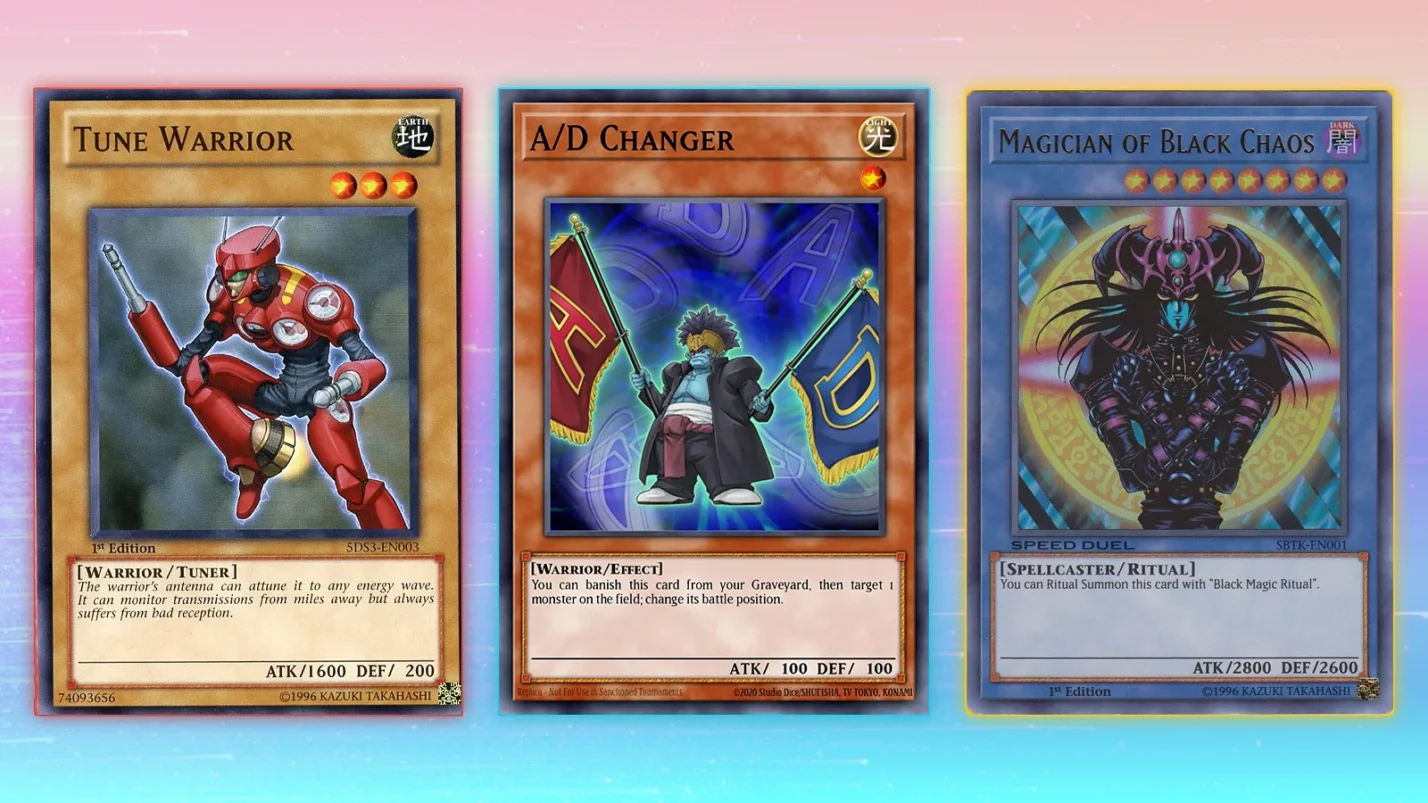
Monster Cards are the heart of every Duel – sure, stats matter, but effects win games. If you’re learning how to play Yu-Gi-Oh! cards, start with Monsters. They’re your main weapon, and several types live right in your Main Deck.
- Normal Monsters don’t have any effects, but often have high stats for their level.
- They have a yellow background.
- Effect Monsters make up the bulk of Monster Cards. These monsters come with effects that range from disrupting your opponent to adding cards to your hand.
- These cards can be distinguished by their orange background.
- Ritual Monsters must be summoned via an effect, usually a Ritual Spell Card.
- These cards have a solid blue background.
It’s worth noting that monsters can have a subtype, which includes Tuner, Union, Gemini, Toon, Spirit, Flip, and so on. Grasping these details is one of the Yu-Gi-Oh! card game rules that quietly decides more plays than most beginners expect.
Now, let’s get to the Extra Deck, where monsters are differentiated by summoning method. Bear with me here, as understanding each of these is core to getting the Yu-Gi-Oh! basic rules down pat:
- Fusion Monsters are made by combining other cards via an effect. If you’re coming from the anime, you’ll be familiar with Polymerization, but there are many different ways to Fusion Summon.
- Fusion Monsters come with a rich violet background.
- Synchro Monsters are called forth via Synchro Summon, where you send a Tuner and other monsters to your GY, whose added levels equal the level of the Synchro Monster you’re trying to summon.
- Synchro Monsters have a white background.
- Xyz Monsters require you to stack the required monsters in a Monster Zone, then put the Xyz Monster over the stacked cards. The stacked cards serve as Xyz Material; think of them as ammo.
- Xyz Monsters have a Rank instead of a Level.
- Xyz Monsters have a black background with stars and speed streaks.
- Pendulum Monsters are a handful:
- They’re both Monsters and Spells. To use them as Spells, put them in one of your Pendulum Zones (left and rightmost Spell/Trap Zones).
- If you have 2 Pendulum Monsters as Spells, you can use them to conduct a Pendulum Summon.
- Unlike the other types here, Pendulum Monsters start in the Main Deck. If they would be sent to the GY from the field, put them face-up in the Extra Deck instead.
- A Pendulum Monster has an orange and green background, split diagonally in the middle.
- Link Monsters are like Synchro Monsters, except this time, you only need to sacrifice monsters equal to the Link Rating.
- Link Monsters can count for as many materials as their own Link Rating, which is also used in place of Level or Rank.
- If summoned from the Extra Deck, Link Monsters must be summoned to the Extra Monster Zone or to any Zone where a Link Arrow (arrows on Link Monsters) points. Understanding the Yu-Gi-Oh! field layout is essential here, as these zone placements are strictly enforced.
- Link Monsters have no DEF value, meaning they cannot ever be placed in Defense Position (including face-down).
- Link Monsters have a dark blue background with a hexagonal design.
As a new player, I’d suggest sticking to Fusion, Synchro, and Xyz Monsters as they’re much simpler than Pendulum and Link Monsters.
The Yu-Gi-Oh! basic rules around Extra Deck summoning might look intimidating at first, but trust me, they click fast. One of the core Yu-Gi-Oh! rules for beginners: every Extra Deck monster has its own summoning conditions, and there’s no “close enough” in this game. Follow the recipe or no summon.
Spell Cards
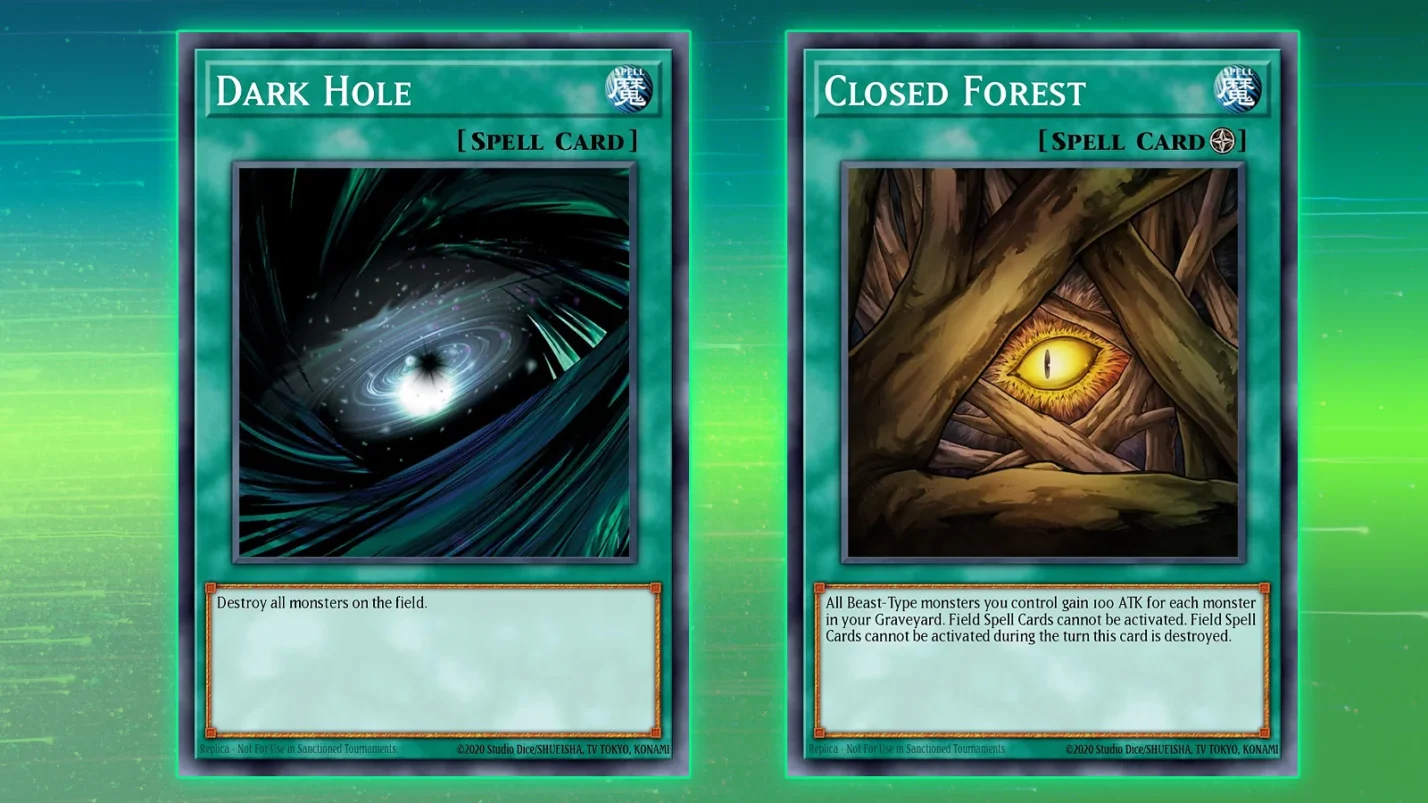
Knowing how to play Yu-Gi-Oh! cards means knowing how and when to use Spells – they’re often the difference between a good turn and a great one.
Spell Cards trigger powerful effects that can range from destroying or banishing monsters to adding specific cards to your hand and even just drawing more cards.
The different types of Spell Cards are:
- Normal Spells have no icon beside their name. These are fire-and-forget cards that you can activate from your hand during your turn.
- Quick-Play Spells have a lightning bolt beside their name. These can be activated just like Normal Spells, but they can also:
- Be Set and activated during your opponent’s turn.
- Be activated from your hand as a response to your opponent’s actions during your turn.
- Continuous Spells have an infinity symbol. These cards remain on the field and typically have on-demand abilities or exert a lasting effect as long as they’re present.
- Equip Spells have a cross symbol. When played, Equip Spells target a specific monster and apply their effects to said monster.
- Equip Spells remain on the field as long as their equipper is alive; if the equipped monster is removed from the field, the Equip Spells are destroyed.
- Field Spells have a compass rose symbol. These cards go into the Field Zone and stick around, just like Continuous Spells.
- Ritual Spells have a fire symbol. These are used almost exclusively to Ritual Summon Ritual Monsters.
One of the Yu-Gi-Oh! card game rules that catches beginners off guard is the distinction between Spells you can activate on your opponent’s turn and those you can’t – Quick-Play Spells are the key exception.
Spell Card timing is also one of the Yu-Gi-Oh! rules for beginners worth memorizing early, as mistiming an activation can cost you a game.
Trap Cards
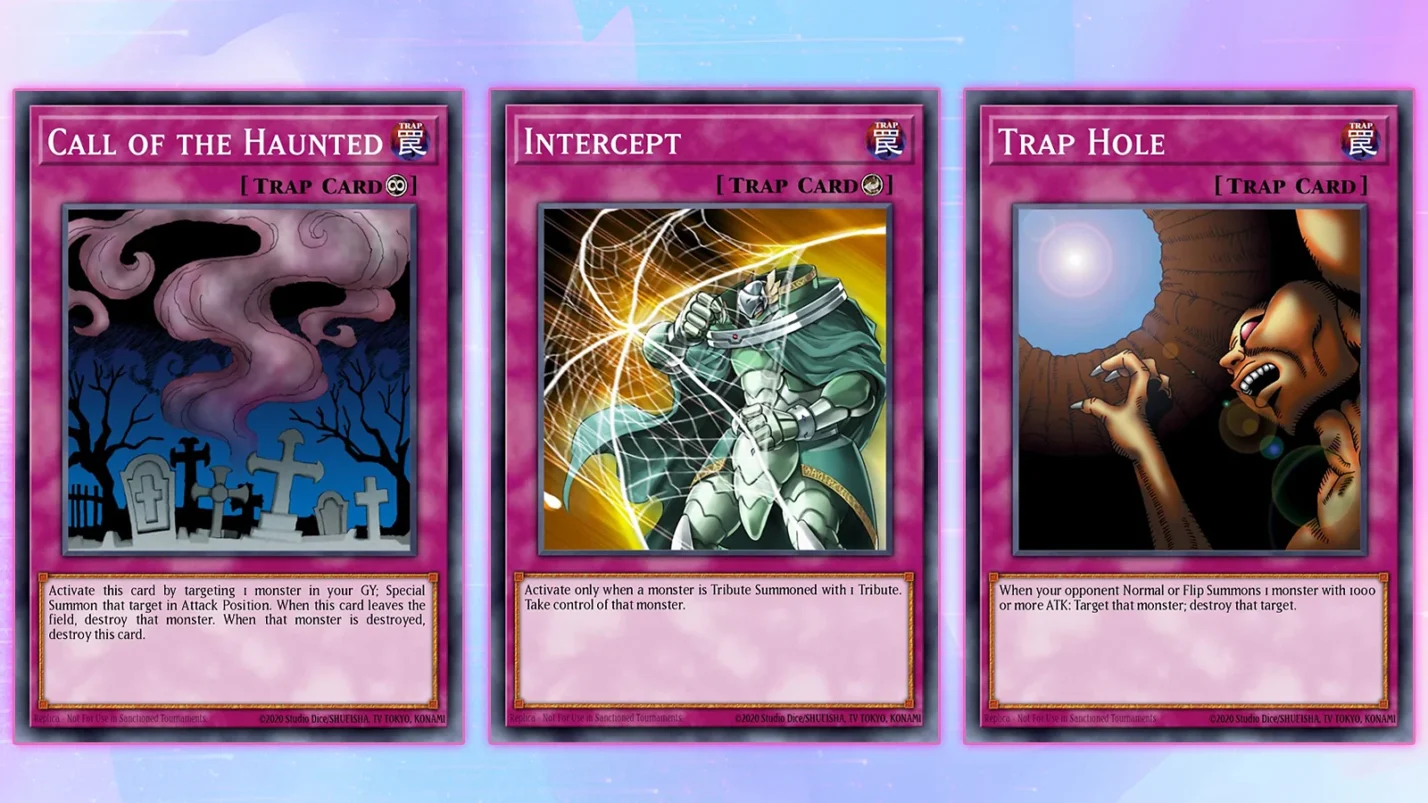
Last, but definitely not least, are Trap Cards. These come with a purple, almost pinkish background, and are typically used in response to an opponent’s actions.
The types of Trap Cards are:
- Normal Traps have no symbol. They apply a wide variety of effects.
- Continuous Traps have an infinity (lemniscate) symbol. Just like Continuous Spells, they apply a constant effect while face-up.
- Counter Traps have an arrow symbol. These cards are, uniquely, the only Spell Speed 3 effects in the game. In beginner’s terms, this means that Counter Traps are the be-all, end-all of Chains.
Trap timing – specifically that Traps must be Set before they can be used – is one of the Yu-Gi-Oh! basic rules that trips up a lot of new players. Grasping this is key to how to play Yu-Gi-Oh! strategically, since strong defensive plays often win games just as reliably as flashy offensive turns.
How to Read a Card
Learning how to play Yu-Gi-Oh! cards the right way starts with reading them the right way. One of the easiest Yu-Gi-Oh! card game rules to overlook is punctuation: a colon usually points to an activation condition, while a semicolon typically signals a cost you pay to activate an effect.
With that in mind, let’s go over the card layout – one of the most useful Yu-Gi-Oh! rules for beginners.
Cards have the following elements:
- A name, which is at the top of the card.
- Level/Rank (Xyz only), both of which are denoted by the number of stars below the name.
- An elemental Attribute, located to the upper right.
- Monster Type, which is located in the upper part of its text box.
- Effect or Flavor Text, which are found in the text box.
- For Effect Text, note the use of colons and semicolons, which indicate activation conditions and costs/requirements, respectively.
- ATK/DEF values, which are found in the lower right of the card.
Notably, Spells/Traps lack most of these, but they also come with:
- An optional symbol beside their type, which shows what kind of Spell/Trap they are.
Being able to fully parse a card is one of the Yu-Gi-Oh! rules for beginners that directly impacts your ability to make good in-game decisions.
How to Play Yu-Gi-Oh! TCG: Step-by-Step
Despite how wordy my explanations were (and I apologize, but they were out of necessity), playing Yu-Gi-Oh! can be a surprisingly straightforward affair, especially for beginners. In this section, let’s go through the step-by-step process of how a game goes.
This is where the Yu-Gi-Oh! basic rules stop being theory and start being practice. Putting the Yu-Gi-Oh! card game rules into action is the fastest way to make them stick.
But before diving in, make sure your zones are correctly arranged – the Yu-Gi-Oh! field layout should be set up and familiar before either player draws.
Start A Duel
Once you and your opponent have your decks and laid out the cards, it’s time to start a Duel. Put your Main and Extra Decks in the right spots, then choose who goes first via a coin flip or whatever other method you choose.
Once that’s decided, it’s time to answer the question, “How many cards do you start with in Yu-Gi-Oh!?” Both players draw 5 cards, and the Duel begins.
Draw Phase
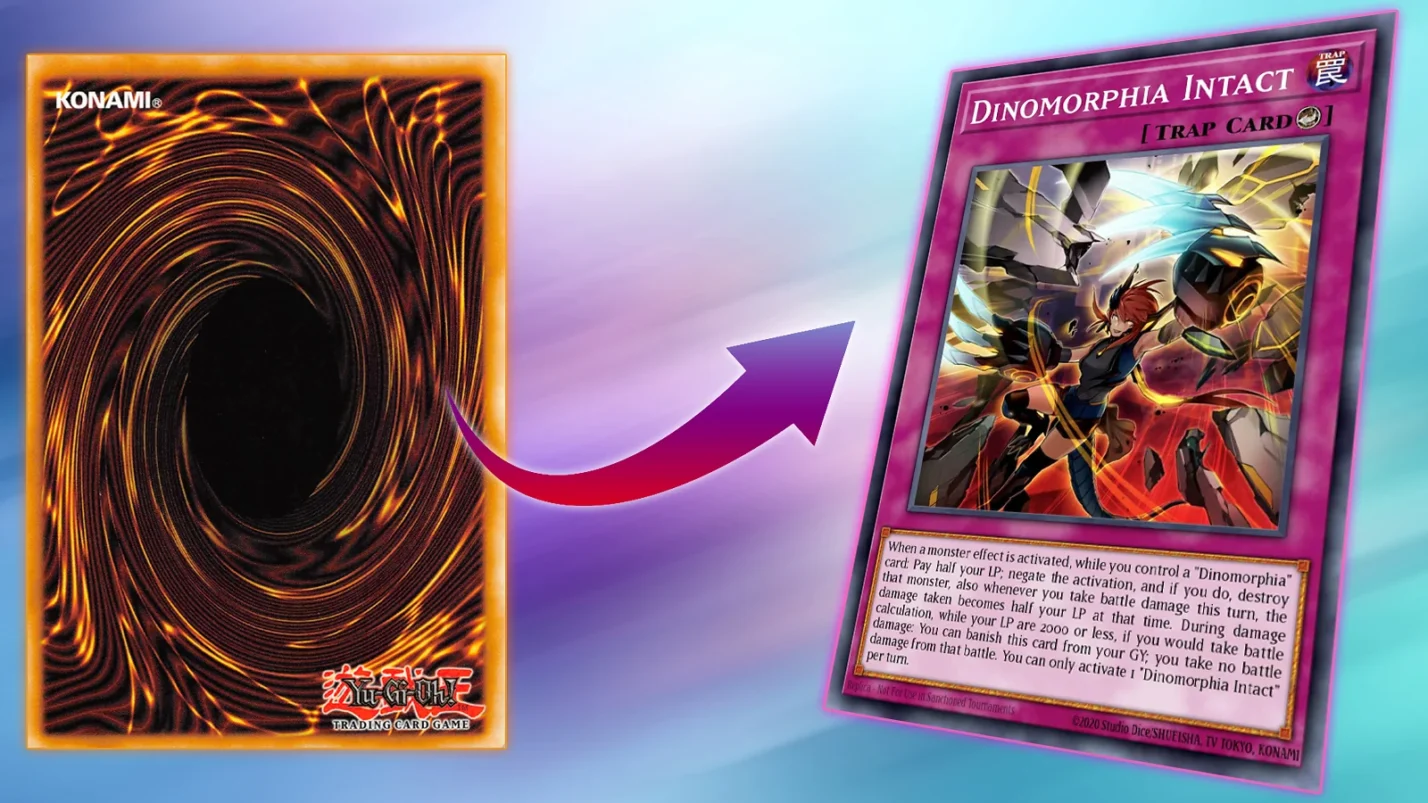
The Draw Phase is the first step of any turn, and is pretty self-explanatory: during the Draw Phase, the turn player draws a card from the top of their deck.
The player who goes first does not draw a card on their first Draw Phase.
This exception is one of the Yu-Gi-Oh! rules for beginners that often gets forgotten in early games – it’s easy to instinctively reach for the deck out of habit. Remembering it is part of how to play Yu-Gi-Oh! without giving your opponent a free advantage.
Standby Phase
The Standby Phase follows the Draw Phase. Neither player needs to do anything during this phase, though you need to resolve any effects or costs that occur during this time, such as the effect of Treeborn Frog or the LP cost of Messenger of Peace.
The Standby Phase is usually pretty quiet, but under the Yu-Gi-Oh! card game rules, certain cards trigger effects here – and missing a mandatory one is a real mistake.
Main Phase 1
Main Phase 1 is when the action happens. During Main Phase 1, the turn player can:
- Summon monsters. More on that in just a little bit.
- Switch monster positions, from Attack to Defense or vice-versa. You may only switch each monster’s position once per turn. Monsters can’t switch positions this way on the turn they’re summoned.
- Play or Set Spells and Traps from their hand.
- To play a Spell, put it face-up in one of your Spell/Trap Zones, then do what it says.
- Traps cannot be played directly. They must be Set face-down in one of your Spell/Trap Zones. When a Trap or Quick-Play Spell is set, it can’t be activated until the next turn (which is typically your opponent’s).
- Activate the Effects of cards already on the field.
- Anything before a colon or semicolon ( : or ; ) indicates the conditions when an effect can be used. You need to fulfill everything before the semicolon before the effect can go off, and doing so starts a Chain.
- Some effects target; these effects explicitly say that they target.
Getting to grips with how to play Yu-Gi-Oh! cards during Main Phase 1 is arguably the most important skill to develop. The number of options available here is what makes the Yu-Gi-Oh! basic rules for this phase feel overwhelming at first – but each element clicks into place with practice.
Summoning Monsters
Before your monsters can do anything, they need to hit the field, and that happens through summoning. It’s one of the most important fundamentals of how to play Yu-Gi-Oh! and it’s not complicated at all:
- Once during your turn, you can Normal Summon (played in face-up Attack Position) or Set (face-down Defense Position) a monster from your hand.
- If a Monster is level 5 or higher, you need to Tribute other monsters on your field by sending them to the GY. Level 5-6 monsters require 1 Tribute, while Level 7+ monsters require 2 Tributes.
- You can Flip Summon a monster on your field by flipping it from face-down Defense Position to face-up Attack Position. There’s no limit on how many times you can do this, but you can’t do this on the same turn that the monster was put on the field.
- There are also Special Summons. These are effects that let you bring out more monsters without expending your Normal Summon.
- There is no limit on the number of Special Summons you can perform per turn.
Let’s talk about Special Summons a bit more:
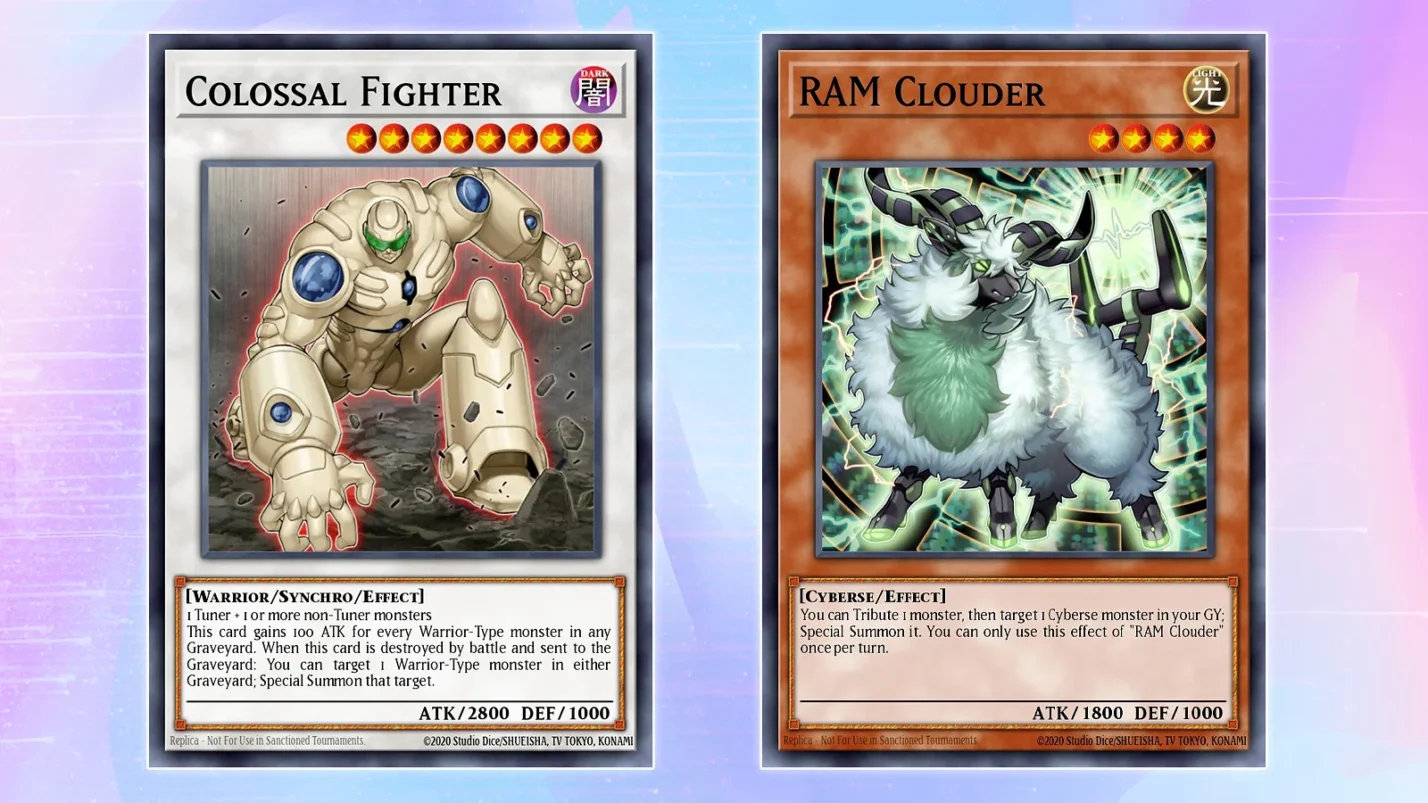
- Special Summons usually happen as a result of a Monster, Spell, or Trap effect. A card that says it Fusion Summons a Fusion Monster brings it out as a Special Summon.
- Synchro, Xyz, and Link Monsters can be Special Summoned during your Main Phases at any time, so long as you have the material requirements listed on the card.
- Pendulum Summons are, unsurprisingly, the most complex:
- You can Pendulum Summon if you have 2 Monsters in your Pendulum Zones (one each).
- The number on the side of the Pendulum Effect box shows a Pendulum Monster’s Scale.
- When you Pendulum Summon, you can Special Summon as many monsters from your Hand to the field, so long as their levels are between the Scales. Scales of 1 and 9 mean you can Pendulum Summon level 2-8 monsters.
- Finally, you can Special Summon face-up Pendulum Monsters in your Extra Deck. These must be put in the Extra Monster Zone or to any Zone that a Link Monster points to.
If you’re new, Tribute and Special Summon mechanics are classic Yu-Gi-Oh! rules for beginners that can feel a bit slow to absorb. Getting comfortable with how to play Yu-Gi-Oh! cards in the Summon phase is often the moment the game starts to “make sense.”
Battle Phase
When you’re done with Main Phase 1, you can choose to enter the Battle Phase. Here, you’ll select attack targets for each of your Attack Position monsters, and hopefully, you’ll be able to destroy some of your opponent’s creatures. If you want to skip attacking with a specific monster, you can.
We’ll talk about combat resolution in a bit, but keep in mind that the first player does not get a Battle Phase on turn 1 – one of those Yu-Gi-Oh! card game rules beginners always forget.
Main Phase 2
Once the dust from the Battle Phase has cleared, you may choose to enter Main Phase 2. Main Phase 2 is exactly the same as Main Phase 1 in that you can take any action available to you. Usually, this involves setting Spells and Traps for the next turn, or bolstering your defenses if your opponent surprised you with an effect during the Battle Phase.
Keep in mind that your Normal Summon is not refreshed in Main Phase 2; you only get 1 Normal Summon per turn. This is one of those Yu-Gi-Oh! rules for beginners that quietly throws matches, especially if you save it too long. Resource tracking is a core part of the Yu-Gi-Oh! basic rules.
End Phase
The End Phase heralds the end of a player’s turn. As with the Standby Phase, neither player has to do anything here, though there are effects that trigger during the End Phase.
Once the End Phase ends, the next player takes their turn, starting from the Draw Phase.
At this point, you’ve completed one full loop of how to play Yu-Gi-Oh! – one complete turn, from Draw Phase to End Phase. The Yu-Gi-Oh! card game rules for turn structure repeat this same cycle throughout the Duel.
Victory Conditions
As with any TCG, the point of Yu-Gi-Oh! is to defeat your opponent. This can be done in three distinct ways:
- The most common way to win is by reducing your opponent’s Life Points to 0. This can be done mostly through battle, but there are also Spells, Traps, and Effect Monsters that inflict damage.
- The second way to win is via deck out. If your opponent must draw a card during their Draw Phase or via effect (such as from Pot of Greed), they lose the Duel.
- The last way to win is via an alternate win condition. Cards such as Exodia the Forbidden One have effects that allow you to instantly win the Duel.
A big part of learning the Yu-Gi-Oh! basic rules is understanding the different ways to win, since they guide your strategy in every Duel. They’re also key for understanding how to play Yu-Gi-Oh! cards that can end a Duel without battling, like Exodia.
How to Attack in Yu-Gi-Oh! TCG?
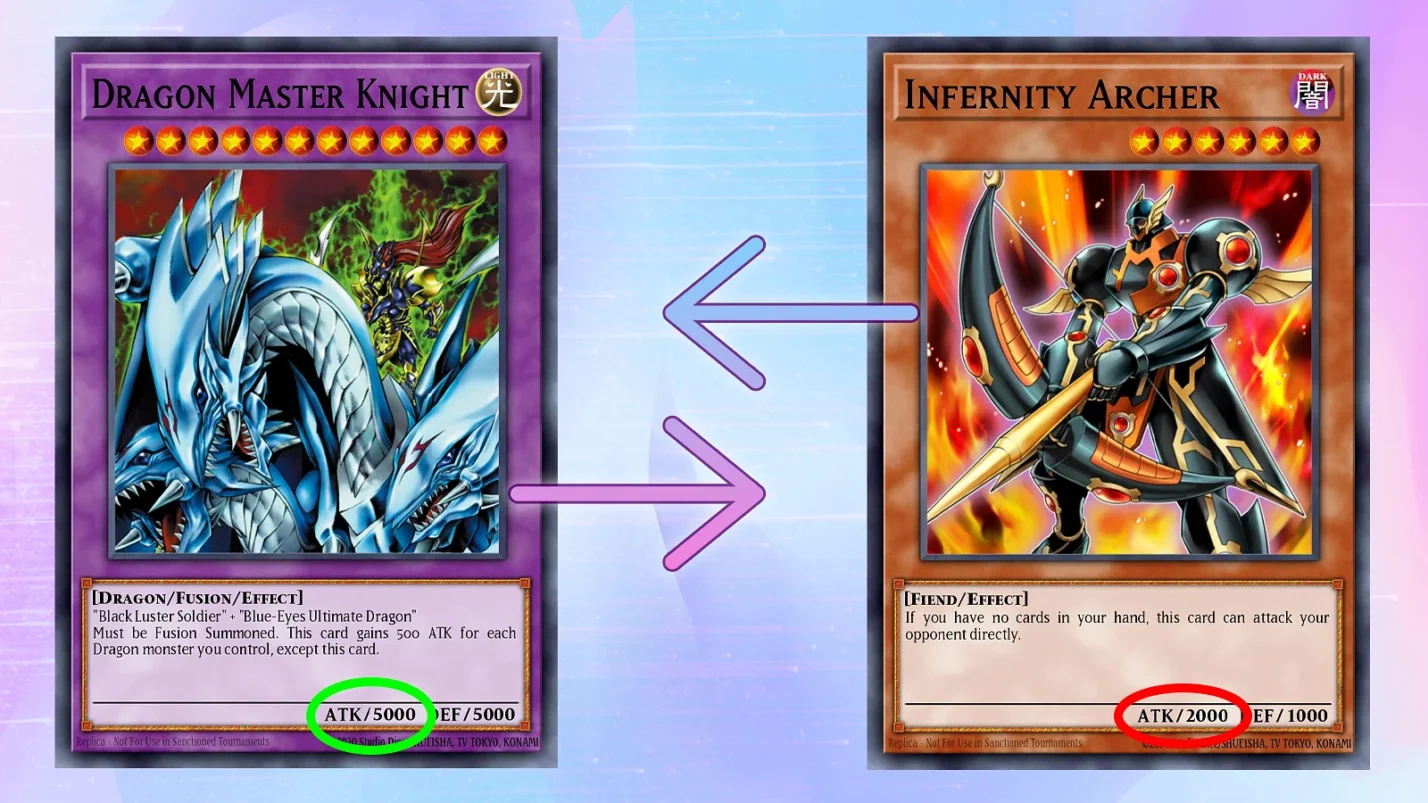
The last of the beginner Yu-Gi-Oh! card game rules you should know is how to resolve battles. It doesn’t matter if you have the strongest or most expensive Yu-Gi-Oh! cards: they all follow the same rules of combat, so it’s best to learn them ASAP. Nail this, and you’ll understand how to play Yu-Gi-Oh! like someone who didn’t just discover the rulebook mid-Duel.
Attacking a Monster in Attack Position
When a monster attacks another in Attack Position, compare their ATK values, then do the following:
- Destroy the monster whose ATK was lower.
- Their controller takes Life Point damage equal to the difference in ATK.
- In the case that monsters have equal ATK, destroy them both. Neither player takes damage.
- Monsters with 0 ATK are exempt from this rule: they both stay on the field after damage.
Attacking a Monster in Defense Position
When a monster attacks another in Defense Position, you compare the attacker’s ATK against the Defender’s DEF, then do the following:
- If the attacker’s ATK > the defender’s DEF, destroy the defending monster. Note that ATK must be greater; if it’s a tie, the defender lives.
- If the defender is destroyed, their controller does not take damage.
- If defender’s DEF > attacker’s ATK, the controller of the attacker takes damage equal to the difference in DEF and ATK.
If Your Opponent Has No Monsters
In the happy case that your opponent has no monsters on the field, you can conduct a Direct Attack, which reduces their Life Points equal to the ATK of the attacker.
One of the easiest Yu-Gi-Oh! basic rules to remember is “no blockers, go direct,” and that’s a big clue for how to play Yu-Gi-Oh! offensively.
Other Rules to Know
We’re almost done with this tutorial on how to play Yu-Gi-Oh! cards. By now, you have a solid grasp of the Yu-Gi-Oh! basic rules, so after a couple of games, you might want to look closer into some advanced mechanics.
The sections below cover the Yu-Gi-Oh! card game rules that elevate your game once you’re comfortable with the fundamentals.
Chains
Chains are what happen when multiple effects try to resolve at once. For example, player A plays a card, and so player B has the chance to activate their own effect. I won’t mince words: this is a very complex mechanic, but it is core to understanding how to play Yu-Gi-Oh!.
In a nutshell:
- Chains are created when players activate effects together or in response to each other. Each effect is given a Chain Link number, with 1 as the first effect, 2 as the second, and so on.
- Players take “turns” in Chains; if player 1 activates an effect, player 2 can respond with another effect before player 1 adds another effect to the chain, and so on. The turn player usually has the right to start a Chain.
- Chains resolve backwards. With 3 Chain Links, you resolve their effects in the order of 3-2-1.
- Spell Speeds dictate what cards can Chain to what. More on that in a bit.
- Mandatory effects are always added first to a Chain; if there are multiple effects, the owner can arrange the Chain Link however they like. Mandatory effects can be distinguished by “if (condition)” without a “you can” clause.
While Chains are very complex, you’ll get the hang of them after a couple of rounds. For more information, you can also look up “Fast Effect Timing”.
Spell Speeds
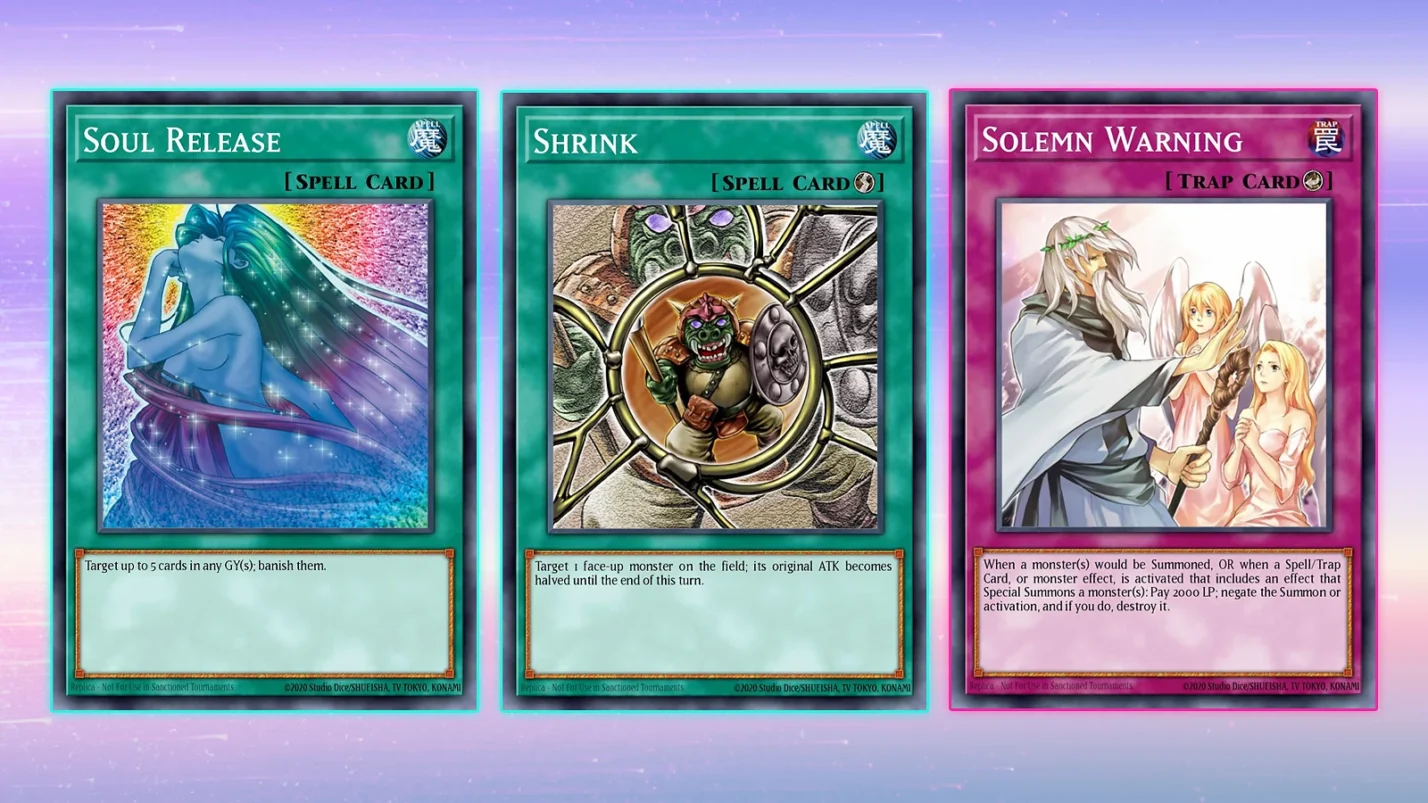
Spell Speeds dictate what cards or effects can be Chained. The general rule is that you can only Chain to an effect with one of the same Spell Speed or higher.
The Spell Speeds are as follows:
- Spell Speed 1 is the slowest. You cannot Chain with a Spell Speed 1 effect, unless they are mandatory effects that triggered at the same time.
- All Spell Cards except Quick-Play, as well as monster effects that don’t say “Quick Effect,” are Spell Speed 1.
- Spell Speed 2 is medium. You can Chain them to Spell Speed 1 and 2 effects.
- Quick-Play Spells, “Quick Effect” monster effects, and all Traps except Counter Traps are Spell Speed 2.
- Spell Speed 3 is the fastest. You can Chain them to Spell Speed 1, 2, and 3 effects.
- Counter Traps are the only Spell Speed 3 effects.
- This means the only play against a Counter Trap is another Counter Trap.
Missing The Timing
You’ll notice that some cards read “If (condition) you can” and “When (condition), you can”. These are optional effects, and the most pertinent about these is that “When…you can” cards can miss the timing.
In a nutshell, cards that say “When…you can” can only be played if the condition is the last thing that has happened.
The last thing is computed as follows:
- If there’s a chain, the last thing that happens is the effect of the previous Chain Link.
- If there isn’t a chain, the last thing that happens is the last action that didn’t start a Chain, such as summoning a monster.
“Missing the Timing” is a concept that confuses even experienced players – it’s one of those Yu-Gi-Oh! card game rules where reading the exact wording matters enormously. Once you understand it, though, it changes how to play Yu-Gi-Oh! entirely – you’ll start reading card text far more carefully.
The Damage Step
When you declare battle with an opponent’s monster, you enter the Damage Step, and the most important thing you need to know about the Damage Step is that you can only activate effects that modify ATK/DEF once it’s begun.
This means you can only activate destruction effects like Mirror Force when your opponent declares an attack. If you accept the attack and move to the Damage Step, your counterplays become much more restricted.
The Damage Step is one of the Yu-Gi-Oh! basic rules of combat that has a major impact on how and when you activate effects during battles. Understanding it also changes how to play Yu-Gi-Oh! cards defensively, since many powerful Trap effects must be used before the Damage Step begins.
FAQs
In Yu-Gi-Oh!, you’ll duke it out with another player to achieve victory either by depleting their Life Points, decking them out, or winning via a special condition. Aside from this, it’s also great fun just to play the game.
Yes, Yu-Gi-Oh! is definitely harder than the Pokémon TCG. Not only does it have more card types, but its rules are also much more intricate. Of course, this also means that Yu-Gi-Oh! offers a richer gameplay experience.
As someone who plays both, Yu-Gi-Oh! is definitely the more complex of the two (and perhaps is the most complex TCG right now). However, both Magic: The Gathering and Yu-Gi-Oh! offer vastly different experiences, so it’s worth learning to play both.
Chains in Yu-Gi-Oh! refer to the resolution of simultaneous effects. Players add effects to a chain, then the chain is resolved in reverse order (meaning Chain Link 1 happens last). This can get pretty complex, but you’ll master Chains with time.
In general, the best Yu-Gi-Oh! starter decks are the most recent ones, as they contain up-to-date support for classic archetypes and also introduce new players to these playstyles. These decks also tend to contain a small amount of staple cards, which are welcome in almost any deck.
Most Yu-Gi-Oh! players are around 20-30 years old, due to the complexity of the game.
No, not all Yu-Gi-Oh! cards are legal. Particularly powerful cards rotate in and out of the banlist, and are divided into Forbidden (no copies allowed), Limited (1 copy allowed), and Semi-Limited (2 copies allowed).