


Europa Universalis 5 Complete Guide: Tips and Tricks

Just started playing Europa Universalis 5, but feel lost? There’s nothing to worry about; Europa Universalis V is massive, and the world of Earth can feel overwhelming at first. I’ll guide you through the essentials so you can make smart decisions and enjoy every moment.
Paradox, known for deep and long-lasting strategy games, has created another complex experience, and with EU5 releasing on Steam on Nov 4, 2025, now is the perfect time to dive in.
In this guide, I’ll break down diplomacy, military tactics, economic planning, and provincial development, highlighting key differences from EU4. You’ll also find practical tips for new players, strategies to optimize your empire, and a short list of the best countries for different playstyles.
Whether your goal is conquest, trade, or managing wars, I’ll help make the game simple, fun, and approachable. It’s time to start building your empire and enjoying the depth EU5 has to offer.
Jump to:
Getting Started with Europa Universalis V
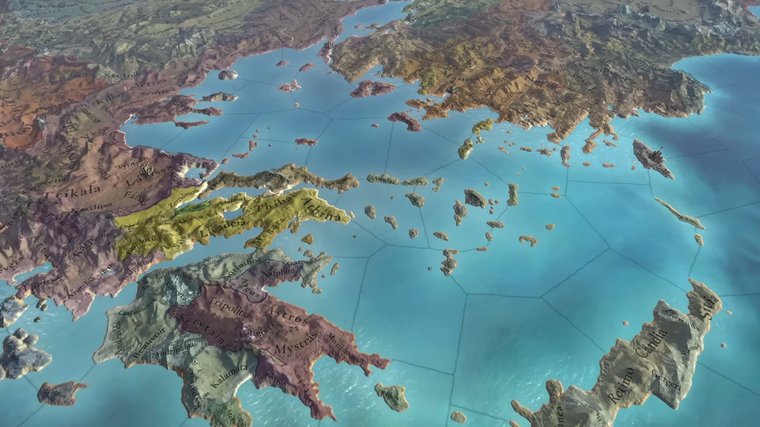
If you’re just starting out, Europa Universalis stands among the strategy games that reward patience and careful planning. For beginners, the key is simple: start small, learn the systems, then expand. Pick a nation that matches your pace. France or Portugal for stability, England for naval play.
Choose Japan if you prefer a contained start with an emphasis on internal development.
Your first 20-30 in-game years should follow one rule: secure, stabilize, scale. Stabilize your economy by building marketplaces and workshops, secure borders with 1-2 alliances. Scale only when positive income and unrest are under control. Always check autonomy and estate loyalty early, as neglected provinces snowball into revolts.
A practical beginning checklist:
- Select a beginner-friendly country, such as Castile or the Ottoman Empire.
- Set the army to a defensive stance until the economy grows.
- Improve relations with two nearby powers.
- Let automation handle low-stakes provinces while you learn.
- Build economy first, army second, expansion third.
One of the biggest mistakes early players make is rushing wars. In Europa Universalis V, slow success beats fast collapse. Watch your supply lines, keep reserves funded, and open the tutorial missions if it’s your first campaign. Take your time, learn one mechanic at a time, and soon the map will feel less like chaos and more like opportunity.
You can check your expectations for the game and find the best starting tactics and strategies in a YouTube playlist. Many streamers create beginner-friendly guides for Europa Universalis V.
Major Changes Between EU4 and EU5: What Returning Players Need to Know
EU5 takes its new richness and sophisticated delivery of diplomacy and secures a spot as one of the best grand strategy games published to date by Paradox. Assuming that you have played the Europa Universalis Series in the past, there are numerous changes. The developer concentrated on the mechanics, details, and the general gameplay.
According to actual history, the game is smarter and more living. Here are the main differences you need to focus on:
| Key Change | What it Means |
| Population system (pops) | Real groups with culture, characters, religion, and class. Your choices really matter. |
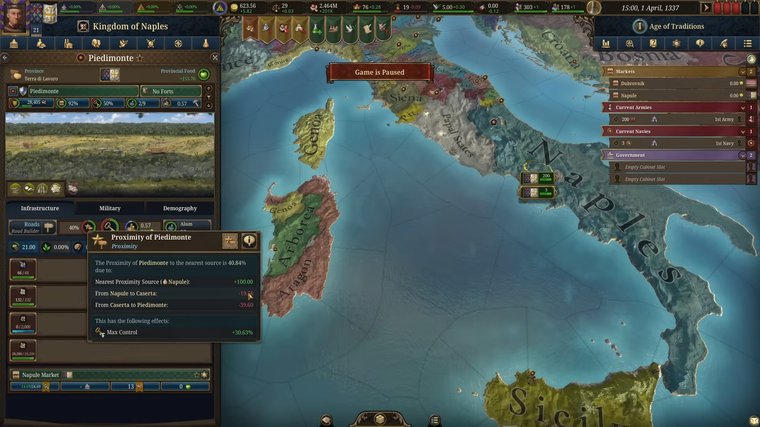
| Control & proximity | Territories far from your capital need more attention to keep loyal and productive. |
| Economy & trade | Local markets, luxury goods, and regional supply chains matter now. |
| Diplomacy & warfare | Positioning, logistics, and supply lines affect battles more than before. |
| Start date | The game begins in 1337 instead of 1444, adding early historical challenges. |
| UI & map | More layers, better visuals, easier to see details. |
| Automation | Many tasks can be handled by AI, helping with play and learning. |
| Refined mechanics | Old ways still work, but you must adapt to new systems. |
Adjusting is a lengthy process; however, once you get to know it, you will at last feel in control. Plan your strategies, find new variants, and have a pleasure in the developed world of the most engaging strategy game, EU5.
Diplomacy in Europa Universalis V: Building Alliances and Managing Relations
Diplomacy has always been at the heart of Paradox’s worlds. Europa Universalis V remains one of the most iconic Paradox games for players who enjoy complex alliances and subtle negotiations. Building alliances and managing your country is now more important than ever.
Wars drain your coffers and wreck your stability, so smart diplomacy saves time and manpower. You’ll deal with borders, shifting loyalties, and rival states. The new mechanics make diplomacy a living system; your words and promises really matter.
Influence and trust are tracked, so betrayals leave a mark. EU5 alliances aren’t static anymore: rivals can become allies, and trusted partners may flip. The AI now proposes deals, breaks pacts, and manipulates alliances, so you must focus on key relationships. Managing foreign relations ties into your economy and internal politics.
Play smart: start with one strong alliance, improve relations with nearby powers, and watch your nation’s power balance. One point of bad reputation can cascade. Let the AI handle low-priority countries, but take major diplomatic decisions into your own hands.
Don’t fully trust the AI. It’s great at micromanagement, but always check deals before they sign anything.
In Europa Universalis V, diplomacy isn’t a side feature; it’s core gameplay. Build carefully, keep your word, and use alliances as a tool, not a crutch. This approach helps you play the long game and thrive in a complex world, navigating empires with skill and strategy.
Military in Europa Universalis V: Warfare Strategies and Tactics
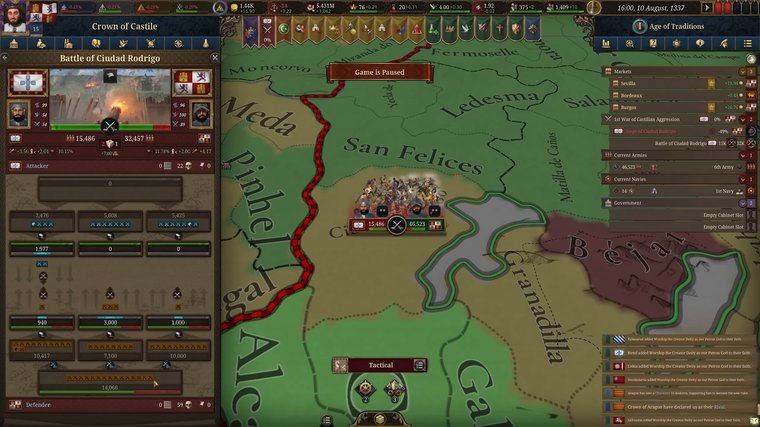
The warfare system feels more dynamic than ever, placing EU V among the most intense war games where every battle shapes your nation’s destiny. If you loved the older Europa Universalis titles, be ready: the developer rebuilt the mechanics and added fresh layers of strategy.
When you declare war, assembling strong armies is key. You must balance infantry, cavalry, and artillery; each has a role. Battles now hinge on supply lines, terrain, morale, and positioning more than before. In Europa Universalis IV, you could steamroll with sheer numbers. In this game, you’ll finally feel the weight of smart planning.
Here are the major changes you need to focus on:
- Supply & logistics matter. Deep marches, weak supply, and terrain can wreck a full stack.
- Morale & losses have a real impact. Lost troops reduce manpower and weaken your economy.
- Automation helps. If you don’t want to micromanage every unit, let the AI handle smaller fronts while you command the main push.
Build a core of high‑morale veteran units and backup reserves. Use them together – the veterans hold the line while reserves mop up the flank. Too many fresh troops at once can collapse fast.
In the world of Europa Universalis V, it’s not just about raising armies; it’s about mastering warfare as part of your strategy, managing every detail, and knowing when to strike and when to defend. Get that right, and you’ll dominate the battlefield.
Economy in Europa Universalis V: Managing Resources and Trade
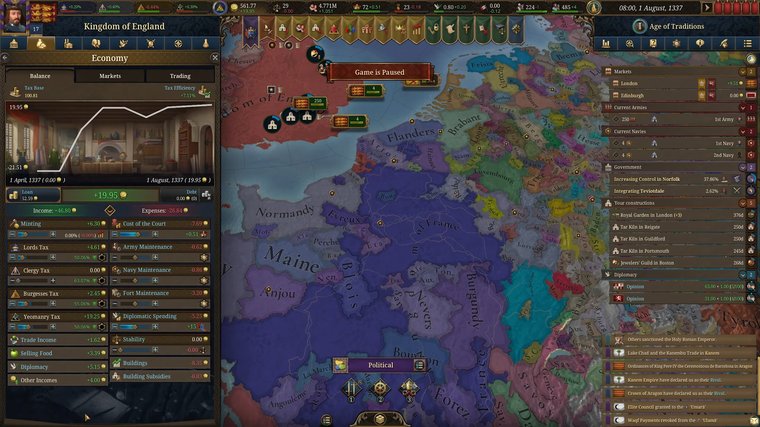
Balancing trade, taxation, and provincial growth feels as satisfying as in the most thoughtful city‑building games, but here every decision impacts your Nation’s survival. The developer at Paradox has reworked the world economy in Europa Universalis V so that resources, markets, and strategy matter more than ever.
In this game, you’ll see real goods, real jobs, and real markets. Your income comes from running production, managing trade routes, and keeping your population employed. You’ll develop your infrastructure in order to generate steady revenue. If you ignore it, your armies and diplomacy suffer.
Here are key changes to focus on:
- Real resource chains. If you lack workers or goods, production falls flat.
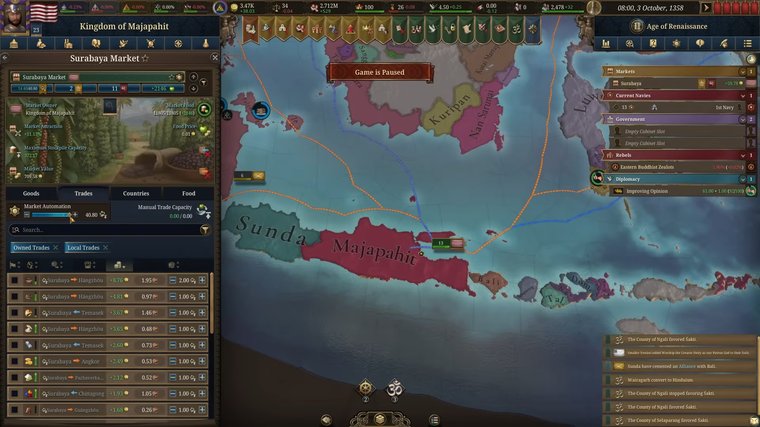
- Trade capacity matters. Every market has limits, and distance plus infrastructure affect profits.
- No mana system. Your economy runs on actual output and jobs, not abstract points.
Secure your trade hubs early. Build marketplaces at key nodes, then protect them and expand gently. Stuffing many routes too fast without capacity will crash your income.
Treat your economy like an engine. Keep the resources flowing, spend wisely on what truly boosts your power, and you’ll be well‑set to play and dominate in Europa Universalis V.
Nation-Building in Europa Universalis V: Developing Your Empire
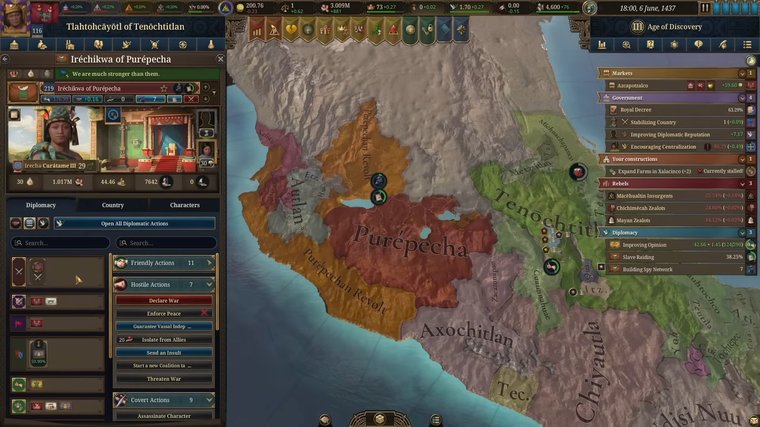
Expanding your borders and managing provinces in real time evokes the thrill of top‑tier RTS games, but with the grand strategy scope only Europa Universalis V can offer. To truly rule your nation, you must develop from within: handle your estates, build infrastructure, manage culture, and control the world around you.
First off, provinces are no longer just land on a map. They are living parts of your empire with their own levels of autonomy and control. Each estate (nobles, clergy, burghers) plays a role in taxes, levies, and loyalty. The mechanics of estate power now matter deeply.
Focus on infrastructure and stability early. Keep your provinces loyal, build roads and production hubs, and integrate new territories slowly. Based on recent feedback, players who rush expansion without addressing autonomy or estates often face rebellions. And beware: rapid expansion without support can weaken your control and tax efficiency.
Here are a few key details to keep in mind:
- Granting privileges to estates increases loyalty but reduces your direct control.
- Monitoring local culture and religion prevents unrest in far‑flung regions.
- Provinces close to your capital operate more efficiently; distant lands need roads and infrastructure for full effectiveness.
Pick a few high‑value provinces and fully develop them before taking more land. Upgrade infrastructure, secure local loyalty, and then move outward. This makes each new conquest stronger.
Managing your empire in Europa Universalis V means balancing growth with stability, conquering, and developing. With the right choice and steady planning, you’ll build a great empire that endures.
The Best Countries to Play in Europa Universalis V
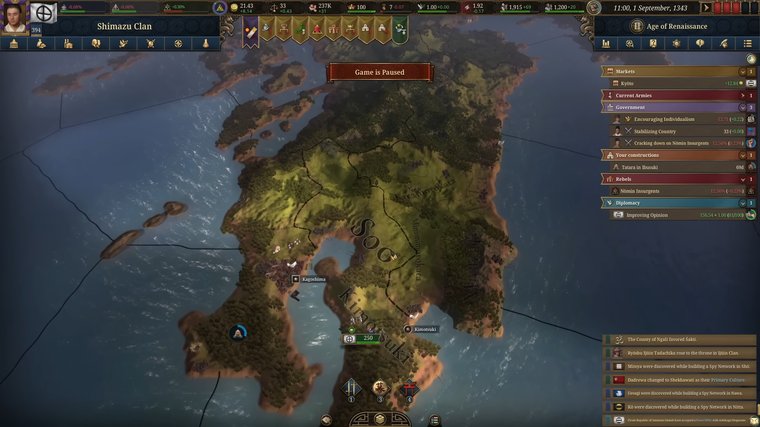
Here’s a curated list of strong playthrough options in Europa Universalis V. I’ve chosen the best countries to play Europa Universalis 5 across different regions, each with its own flavour. Pick based on your choice, your skill level (Beginners vs veterans), and the kind of strategy you enjoy.
| EU5 countries | Region | Strengths | Weaknesses depending | Recommended For |
| France | Europe | Big economy, strong army, clear borders | Surrounded by rivals, many wars early | Beginners & Veterans |
| England | Europe / Isles | Naval power, colonial path, safe borders | Island trade has complexity, colonial rush needed | Beginners |
| Spain | Europe | Trade / colonisation leader, strong starting power | Massive rivalry, heavy empire management needed | Veterans |
| Japan | Asia | Unique culture, internal focus then expansion | Early unification required, many mechanics to learn | Veterans |
| Portugal | Europe | Easy entry, trade/colonial focus, fewer land neighbours | Small land power, relies on overseas growth | Beginners |
- France: A powerhouse in both war and economy, it gives you a great taste of empire-building.
- England: Ideal for getting used to naval and colonial mechanics without immediate land threats.
- Spain: For those who want a big challenge with global stakes and rich world interactions.
- Japan: Offers a totally different experience: culture, isolation, then expansion.
- Portugal: A clean, chill start for players who want to ease into the game’s depth and playthrough possibilities.
No matter which nation you pick, each provides a distinct path to explore the game’s depth and strategy.
Tips for Optimizing Your Empire’s Growth and Internal Stability in EU5
If you enjoy managing growth and long-term planning, Europa Universalis V feels just as rewarding as the most captivating games like Civilization. Every decision counts when it comes to running your Nations smoothly.
Here’s a handy list of expert tips for staying on top of your empire:
| Action | Tip/Explanation |
| Develop key provinces | Strong cores prevent rebellions and boost income. |
| Balance estates | Spread loyalty across nobles, clergy, and merchants to avoid unrest. |
| Watch your borders | Poorly controlled regions can trigger instability quickly. |
| Manage economy wisely | Balance taxes, trade, and army spending to avoid early collapse. |
| Address rebels immediately | Ignoring unrest can snowball into major problems. |
| Use autonomy strategically | Reducing control in volatile provinces helps manage rebellion risk. |
| Automate routine tasks | Let the AI handle production and trade, but keep manual control of diplomacy and strategy. |
| Keep armies ready in key regions | Their presence alone reduces unrest and gives time to react. |
| Plan for the long term | Focus on gradual growth; overexpansion leads to chaos. |
| Learn from each playthrough | Mistakes teach valuable lessons for future campaigns. |
Following these steps ensures your Nations remain stable while you continue to Develop and expand your empire. Small points of attention add up to a great lasting empire.
Conclusion
Now that you’ve explored Europa Universalis V, from diplomacy and economy to warfare and empire development, you’re ready to lead your world to greatness. Every choice matters, and with careful planning, you’ll enjoy watching your Nations grow.
Remember to Focus on what matters most: stable provinces, strong alliances, and smart Strategy. Finally, each campaign teaches new lessons, so keep learning and adapting as you continue to expand.
With the knowledge from this Guide, you can now master how to colonize in EU5 and bring your vision of empire to life. Live the full Paradox experience and seize control of history.
FAQs
France, England, Spain, Portugal, and Japan are the most interesting countries to play in Europa Universalis V. These countries provide a combination of good initial standings, open economies, and simple-to-handle armies to both amateurs and professionals.
The key distinctions between the two games include Europa Universalis V being more diplomatic, more AI-driven and having a more active warfare than Europa Universalis IV. Management of nations and provinces becomes easier through the use of interface and automation tools as well.
To manage your economy, balance taxation, trade, and production across your provinces. Use automated trade and focus on strategic investments to grow wealth while keeping armies and infrastructure funded.
The beginners need to concentrate on automation, core provinces and diplomatic alliances. These are tools that make the management easier and prevent making typical mistakes in the first game.
Colonial powers face challenges in managing overseas territories and maintaining supply lines. Expansion also requires careful handling of local populations and trade routes to avoid rebellions.
Empire expansion requires strategic wars, alliances, and careful management of borders. Focus on controlled growth, development of provinces, and diplomatic relationships to avoid overextension.