

How to Make Idea in Little Alchemy 2

Wondering how to make idea in Little Alchemy 2? Well, this one is not just another recipe to tick off your list. It’s one of those combos that feels clever when you finally land it – a little flash of creativity that makes the whole game click.
You start with the basics: air, earth, fire, and water. From there, it’s all about smart experimenting until the concept of “idea” takes shape. I’ve tested every path that works, so this guide shows the fastest way to make it, plus a few extra tricks that’ll help you think like the game does.
Jump to:
How to Make Idea in Little Alchemy 2 – Essential Combinations
When players ask how to make idea in Little Alchemy 2, the simplest answer is to combine human with light bulb. That pairing produces the concept of an idea, and it’s often the first path new players discover. If you already have a light bulb and a human on your workbench, the recipe is as easy as dragging and dropping one onto the other.
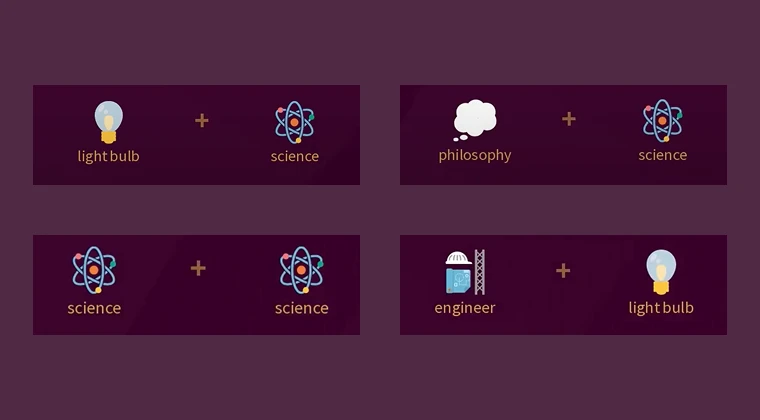
As with many elements in Little Alchemy 2, there are alternative recipes. Several of these involve combining a light bulb with various professions or mixing identical professions together. Here are the most common combinations:
- Light Bulb + Engineer: Engineers work with circuits and mechanics, so it makes sense that adding a light bulb triggers a spark of inspiration.
- Light Bulb + Science: Science is all about discovery. When you pair it with a light bulb, the game treats it as a breakthrough.
- Science + Science: Combining science with itself also creates an idea, highlighting how research builds on previous knowledge.
- Philosophy + Science: When the study of ideas meets the scientific method, the result is another idea. This path is slightly more advanced because you must already have the philosophy element.
- Profession + Profession: Many pairs of identical professions produce an idea. Two engineers, hackers, gardeners, or even bakers will spark a thought when combined. The logic behind these duplicates reflects teamwork leading to innovation.
Using professions to create ideas can be useful if you’ve been experimenting broadly. For example, if you happen to have two firefighters or two pilots, combining them yields an idea without needing a light bulb. Remember that professions themselves require creating humans and often other elements, so this method is usually a byproduct of exploration rather than a shortcut.
When you have both human and light bulb, though, always try that combination first. It’s the most direct route and the one I return to whenever I’m starting a new run.
Step‑by‑Step Recipe for Idea
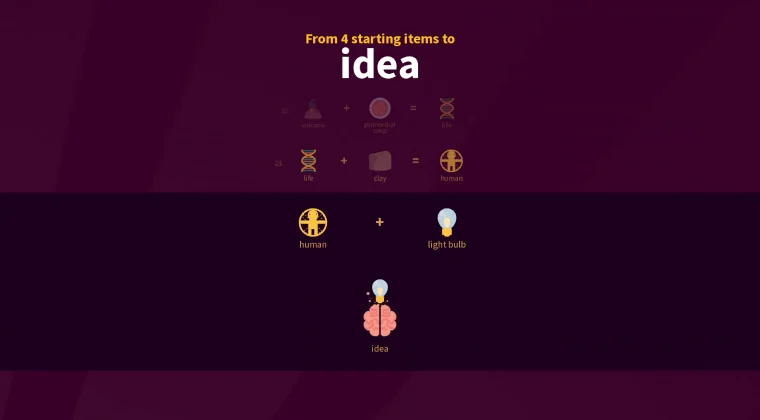
If you’re starting from the four basic elements and want to craft an idea without relying on chance, follow a logical chain. This step‑by‑step path focuses on building a light bulb and a human before bringing them together.
Because many players also work toward other elements like stone early on, feel free to cross‑reference our guide on how to make stone in Little Alchemy for additional context.
Let’s get going:
- Make Land, Continent, and Planet: Combine earth with earth to get land, land with land to create a continent, and continent with continent to form a planet. These larger bodies are needed later for crafting a sun.
- Create Energy and Sun: Mix fire with fire to produce energy. Then combine energy with a planet to generate the sun. Energy also mixes with the sun to yield a solar cell, which later helps produce electricity.
- Generate Electricity and Glass: With a solar cell and sun, you can make electricity. To build a light bulb you’ll also need glass. Create stone by combining earth and pressure (pressure comes from mixing two air elements) and then mix stone with air to make sand. Combine sand with fire to form glass.
- Craft a Light Bulb: Bring electricity and glass together to create a light bulb. This is half of the equation for an idea.
- Form Life and Human: While working on the light bulb, start building life. Combine water with water for a puddle, puddles into ponds, ponds into lakes, and lakes into seas. Mix earth and fire to get lava, and combine lava with a sea to create primordial soup. Add energy to the primordial soup to spark life. Form clay by mixing mud (earth + water) with stone, then combine clay and life to create a human.
- Combine Human and Light Bulb: Once you have a human and a light bulb, combine them to produce the idea element.
This method requires patience, but it uses only logical combinations. When I first followed these steps, I enjoyed watching unrelated elements like sand and electricity come together as part of a larger plan. If you get stuck, try working toward smaller goals, such as creating glass, before returning to the bigger chain. Because this process overlaps with other recipes, it doesn’t feel like a grind; you’re unlocking multiple elements along the way.
What You Can Create With Idea
Learning how to make idea in Little Alchemy 2 opens the door to new possibilities. Ideas act as modifiers and can transform other elements into abstract or refined forms. Here are some of the most interesting combinations:
- Idea + Paper > Book: Pairing an idea with paper results in a book, reflecting how thoughts become recorded knowledge. This is a handy way to unlock literature within your growing library of elements.
- Idea + Human > Philosophy: When you combine an idea with a human, you create philosophy. This mirrors the journey from raw thought to organized systems of belief. If you’re curious about crafting elements like Big and other conceptual items, our guide to making Big in Little Alchemy 2 explores further philosophical links.
- Idea + Mold > Penicillin: One of my favorite discoveries was that putting an idea together with mold produces penicillin. This nod to real‑world scientific history – Alexander Fleming observing mold and imagining its medical potential – is a clever touch.
- Idea + Fire > Heat: Mixing an idea with fire yields heat. It suggests that creativity can intensify energy into something more focused.
- Idea + Air > Gas / Idea + Water > Liquid / Idea + Earth > Solid: These three combinations show how ideas can classify matter. They’re useful for unlocking gas, liquid, and solid elements if you need them later.
- Idea + Wind > Motion: When paired with wind, an idea produces motion. This combination feels abstract, but it fits the game’s playful logic about moving air inspiring movement.
Exploring the ways an idea interacts with the world encourages experimentation. The more you play, the more you’ll notice that abstract concepts often connect to physical elements. After unlocking idea, I found myself revisiting earlier recipes with fresh curiosity and testing how thought interacts with things like metal or animals. This sense of discovery keeps the game engaging.
Crafting Tips and Hints for Idea
Making idea is all about understanding the game’s logic. Here are a few tips that have helped me craft ideas more efficiently and enjoyably:
- Think Like a Scientist: Many recipes in Little Alchemy 2 mirror real‑world processes. Combining two identical elements to create pressure or mixing earth and water to make mud reflects basic science. When trying to discover an idea, ask yourself what actions lead to inspiration in real life. This mindset makes the combinations feel intuitive.
- Use Duplicate Professions Wisely: Combining two identical professions produces an idea because collaboration sparks creativity. If you find yourself with two farmers or two bakers after experimenting with food chains, don’t discard them – merge them to get an idea without needing a light bulb.
- Build Toward Multiple Goals: As you work on the human and light bulb chains, keep an eye on other elements you might need later. Creating stone, clay, and electricity unlocks several paths. Our list of the best puzzle games highlights titles that reward planning and foresight, much like Little Alchemy 2 encourages you to think ahead.
- Experiment and Record: The game rewards curiosity. Try combining unexpected items, and if a combination doesn’t work, note it mentally and move on. Keeping track of your experiments prevents repetition and helps you remember useful recipes.
These tips aren’t exhaustive, but they reflect how I approach Little Alchemy 2. The game invites you to draw on your knowledge of the world and connect dots creatively. Whenever I hit a wall, I step back and think about how the elements might interact outside the game. That often leads me to the next breakthrough.
Why Creating Idea Feels So Rewarding
Unlocking idea in Little Alchemy 2 feels special because it represents more than a new element. It’s a symbol of creativity, both within the game and for the player. From a gameplay standpoint, crafting an idea requires you to weave together several chains: the physical materials needed for a light bulb, the biological processes leading to human life, and the abstract concept of thought itself. When you finally combine the human and light bulb, there’s a moment of satisfaction that goes beyond ticking off an item on your list.
Personally, I found this process reminiscent of other games that encourage creative problem‑solving. Titles like automation sims and crafting adventures challenge you to build complex systems from simple parts. If you enjoy that sense of progression, exploring games like those highlighted in our guide to games like Factorio can provide a similar rush.
Moreover, the idea element is a gateway to more philosophical concepts in Little Alchemy 2. It leads directly to philosophy, and from there you can create big, universe‑spanning elements. Crafting these advanced items feels like moving from small observations to grand theories, mirroring the way people build knowledge in real life.
Bringing It All Together
Learning how to make idea in Little Alchemy 2 teaches you to think systematically while keeping your sense of wonder. After unlocking idea, keep experimenting; you’ll discover that thoughts are powerful tools for transforming the world around them.
If you’re looking to channel that creative energy into another game, explore Potion Craft: Alchemist Simulator available on Eneba. This simulation lets you mix ingredients, experiment with recipes, and run your own alchemy shop. It’s a perfect complement to the creative spirit that Little Alchemy 2 inspires.
FAQs
How do I make idea in Little Alchemy 2 step by step?
To make idea in Little Alchemy 2 step by step, build the materials for a light bulb and a human, then combine them. Start with earth and water to make mud, work up to life and human, and separately craft glass and electricity for a light bulb. When you merge the human with the light bulb, you’ll unlock the idea element.
What are all the recipes for idea in Little Alchemy 2?
All the recipes for idea in Little Alchemy 2 include combining a human with a light bulb, pairing a light bulb with engineer or science, mixing science with science, or combining philosophy with science. You can also merge identical professions (like two doctors or two sailors) to produce an idea.
What can I create with idea in Little Alchemy 2?
With idea in Little Alchemy 2 you can create book, gas, heat, liquid, motion, penicillin, philosophy, and solid. For example, merging idea with paper yields a book, pairing it with mold makes penicillin, and combining it with fire produces heat.
Is there a faster way to get idea in Little Alchemy 2?
The fastest way to get idea in Little Alchemy 2 is to combine a human with a light bulb if you already have both elements. If not, focus on making a light bulb through electricity and glass while simultaneously working toward creating a human through life and clay. This parallel approach speeds up the process.
How do I get a light bulb in Little Alchemy 2?
To get a light bulb in Little Alchemy 2, create electricity and glass and then combine them. Electricity comes from mixing energy with the sun via a solar cell, while glass is produced by combining sand and fire. Once you have both components, merging them gives you a light bulb for the idea recipe.