



4 Best Marketing Strategies and 8 Tactics to Try in 2026

Eneba Hub contains affiliate links, which means we may earn a small commission if you make a purchase through them—at no extra cost to you. Learn more


CHOOSE YOUR STARTING POINT
Start with Canva for reusable visual content templates. Businesses with an existing subscriber list may get more value from email automation first.
The best marketing strategies for small businesses pair a manageable starting channel with a clear path to reaching more customers.
Our guide groups eight tactics into four marketing strategies.
- Content marketing
- SEO and audience research
- Email marketing automation
- Social media and lead generation.
Start with a channel you can maintain before paying to expand it.
Canva is an accessible starting tool for businesses that need visual content without a dedicated designer. An existing email list or steady business-to-business (B2B) website traffic can change that recommendation: those assets may give follow-up tactics a stronger starting position.
Content and search require sustained publishing, while email and lead generation require an audience that already exists.
Jump to:
What Is a Marketing Strategy, and How Is It Different From a Tactic?
Strategy sets your overall direction; tactics are the single repeatable actions that execute it.
A marketing strategy is the plan for reaching a defined audience and turning attention into customer action. Strategy is connected to measurable business objectives. Its illustrative goals include a 30% traffic increase and a 15% conversion-rate improvement; these are examples of targets, not performance benchmarks.
Useful marketing strategies begin with your constraints. A local repair business and an online gaming-accessory store need different routes to customers. Content marketing is a strategy; publishing a buying guide that answers a customer’s question is a tactic within it.
Content Marketing Strategies To Build Authority
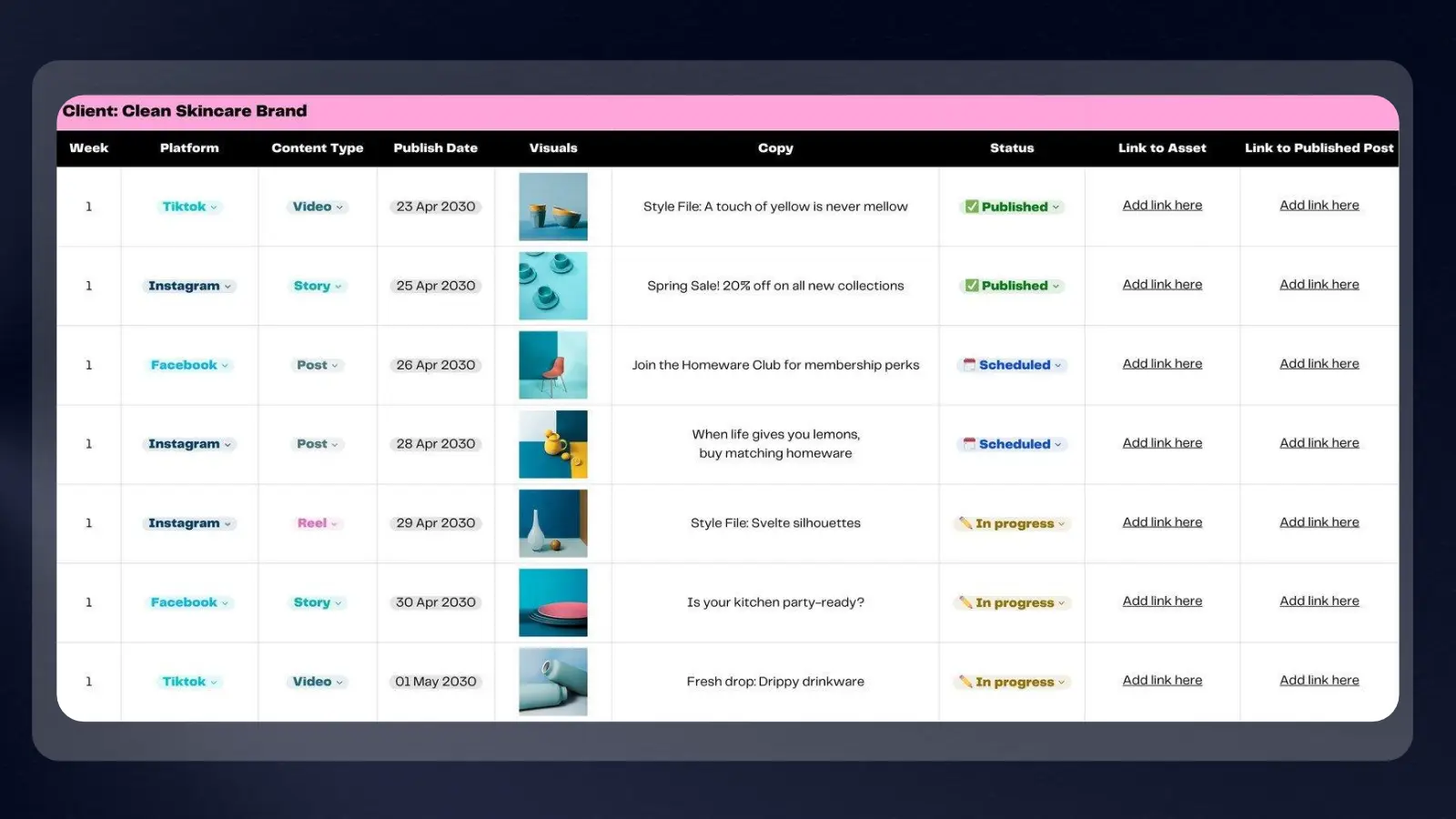
Content marketing strategies attract potential customers through useful material, like product explainers or visual guides. They suit businesses with knowledge to share and more available time than advertising budget.
For content marketing, you’ll need consistent production and useful subject knowledge. Free tools can reduce software costs, but editing and distribution still require attention. There are usually two tactics for running this strategy.
1. Canva [Visual Content Creation]
|
Best for |
Effort |
Price |
Time to results |
Main Key Performance Indicator (KPI) |
|---|---|---|---|---|
|
Businesses without a designer |
Low |
Free; Pro from $12.99/mo |
Days to weeks |
Engagement rate per post |
Visual content creation means building reusable layouts for social posts, advertisements, and product explainers. The advantage is repeatability: a consistent template removes the need to redesign every promotion.
What you need: A logo or brand colors, usable product photographs, and a clear purpose for each graphic. Choose a format suited to the channel where customers already follow you.
Create a small template library for recurring messages, replace the text and imagery for each promotion, and prepare posts together. A gaming-accessory retailer could use separate layouts for compatibility advice and product demonstrations. Keep the message readable before adding decorative elements.
You can compare audience engagement rates between posts you designed with versus without Canva to determine if the tool is worth using. Content marketing strategies need recognizable messages more than endless design changes. Preserve the layout when it works, then test the headline or product image separately. That makes the result easier to interpret.
Put it into practice: Create a reusable product-explainer template in Canva, then compare its performance with your previous posts.
2. Google Gemini [AI-Assisted Content Writing]
|
Best for |
Effort |
Price |
Time to results |
Main KPI |
|---|---|---|---|---|
|
Solo marketers preparing written content |
Low |
Free; Google AI Pro from $19.99/mo |
Days to weeks |
Content output volume |
AI-assisted content writing uses a language model to prepare outlines and draft material that a person reviews before publication. It can help a subject expert organize ideas, but it cannot replace responsibility for accuracy.
What you need: A Google account, a content calendar, and instructions that identify the audience and purpose. Supply approved product information rather than asking the tool to invent specifications or customer stories.
Ask Google Gemini for an outline based on a customer question, add your own evidence, and request a draft from that material. Edit the result for accuracy and brand voice. Remove unsupported comparisons before publication.
Gemini‘s free plan has a 32,000-token context window. A token is a unit of text processed by the model; context capacity describes how much material it can handle, not how accurate its answer will be.
Faster drafting alone does not establish a conversion benefit. Measure approved content published against your pre-tool baseline, and track editing effort alongside volume. Marketing strategies lose value if faster drafting produces more corrections than useful material.
Put it into practice: Give Google Gemini an approved product brief and edit its draft before using it in a campaign.
SEO and Audience Research Strategies To Find Your Customers
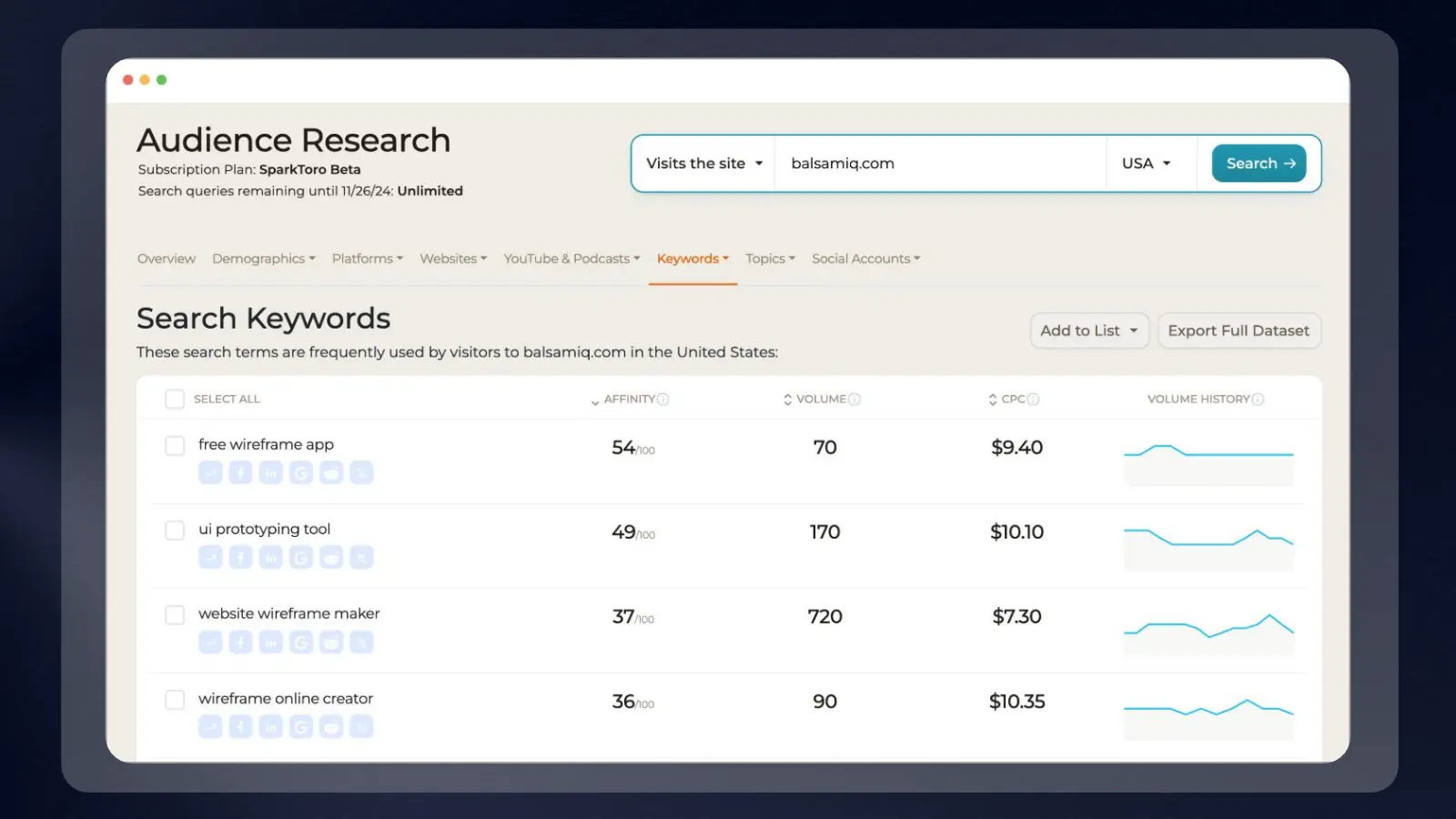
SEO and audience research identify what customers search for and where they spend attention. SEO, or search engine optimization, helps relevant pages become easier to find through unpaid search results.
These marketing strategies suit businesses with a website and patience for gradual improvement. Software can support discovery without advertising spend, although paid research subscriptions may become a meaningful expense.
Audience findings can guide a channel test within days to weeks. Search visibility generally needs a longer assessment across weeks to months, and research alone cannot improve a page. Here are two tactics that turn discovery into decisions.
3. Semrush [Keyword Research]
|
Best for |
Effort |
Price |
Time to results |
Main KPI |
|---|---|---|---|---|
|
Businesses targeting buyer-intent searches |
Medium |
Free: 10 queries/day; paid from $139.95/mo |
Weeks to months |
Organic keyword rankings |
Keyword research identifies the language people use when they search for a product, service, or solution. Buyer intent describes how closely a query relates to a purchase decision rather than general curiosity.
What you need: A product or service list, relevant competitor website addresses, and pages you can improve or create. Keep the initial research narrow enough to produce an actionable publishing decision.
Explore your main product terms in Semrush, inspect related searches, and group queries by the problem they express. Assign a primary topic to each planned page. A controller store might separate compatibility questions from comparisons between controller types.
Keyword research with Semrush does not establish how quickly a page will rank. Track organic rankings and relevant search traffic over time, alongside inquiries or purchases. A higher position for an irrelevant term is a weak business result.
Search-focused marketing strategies require execution after discovery. Review the pages that appear for a target query, identify the format searchers need, and make your page genuinely useful for that task.
Put it into practice: Use Semrush to select a buyer-relevant topic and map it to a page your business can improve.
4. Audience Research With SparkToro
|
Best for |
Effort |
Price |
Time to results |
Main KPI |
|---|---|---|---|---|
|
Businesses uncertain about audience channels |
Low |
Free: 5 searches/mo; paid from $38/mo for 50 searches |
Days to weeks |
Audience-channel match |
Audience research looks for patterns in the websites, accounts, and media a customer group uses. It gives you a starting hypothesis for distribution instead of asking you to publish everywhere.
What you need: A specific description of the customer, expressed through a role, interest, or recurring problem. A broad description like “people who enjoy games” gives you less direction than a clearly defined buyer group.
Search your description in SparkToro, note relevant websites and social accounts, and compare the findings with your existing customer conversations. Choose a promising channel for a focused content test rather than immediately moving the entire budget.
Test SparkToro‘s audience suggestions against actual channel performance. Measure engagement and qualified visits after a channel change, and compare them with your previous distribution approach. Treat an audience report as evidence to investigate, not proof that every listed channel will produce customers.
Marketing strategies become easier to maintain when distribution follows customer behavior.
Put it into practice: Use SparkToro to identify a channel hypothesis, then test it with content you already have.
Email Marketing Strategies To Automate Follow-Up
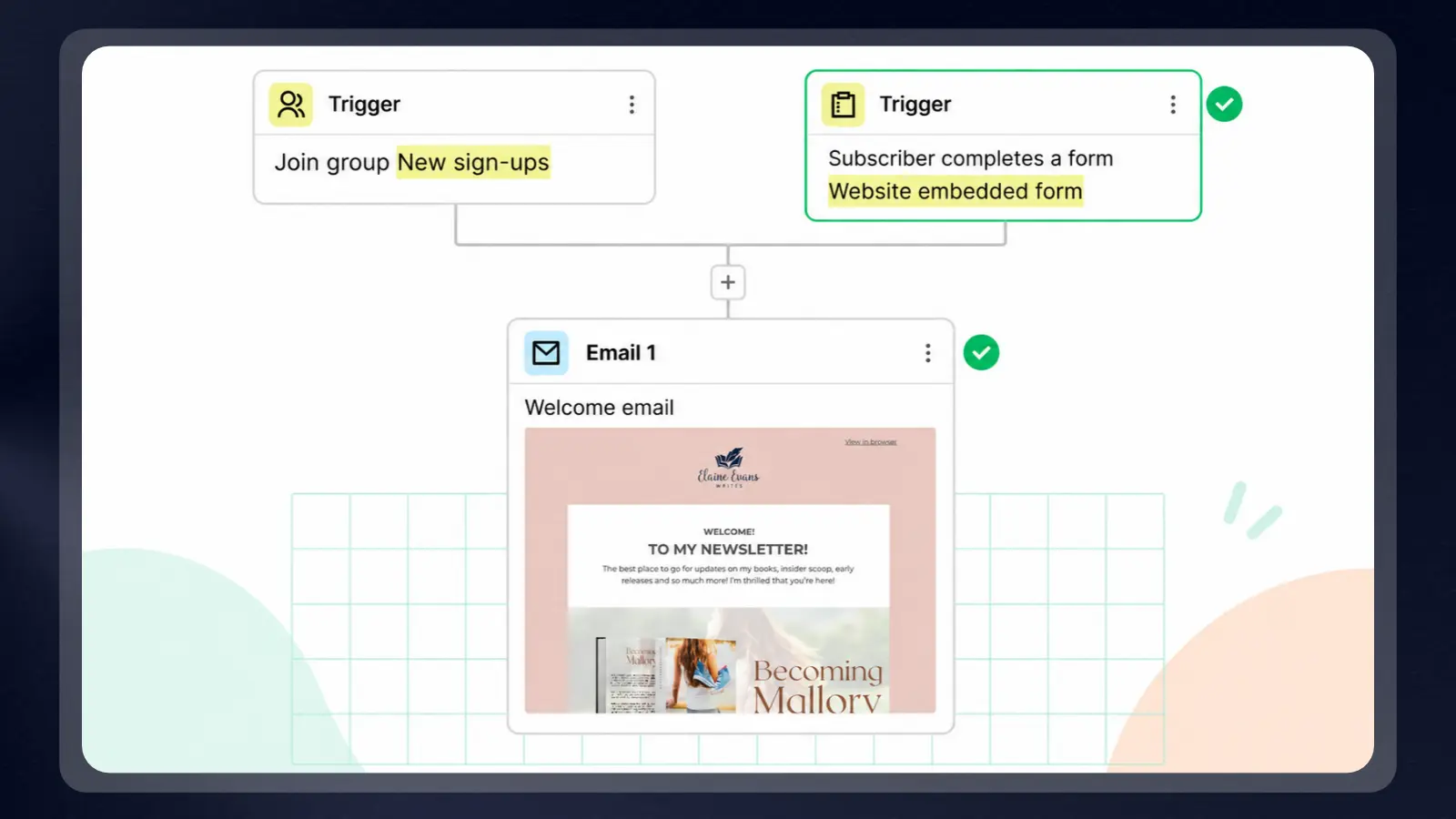
Email marketing strategies nurture people who already know your business. They suit companies with a permission-based contact list, useful updates to share, and a reason for subscribers to return.
An existing audience is the key prerequisite. Tools can automate follow-up, but they cannot create permission or customer interest. Costs generally rise with contact volume and required features; use weeks as an initial assessment horizon.
Here are two tactics for putting email to work.
5. Campaigner [Deliverability-First Email Campaigns]
|
Best for |
Effort |
Price |
Time to results |
Main KPI |
|---|---|---|---|---|
|
Businesses prioritizing inbox placement |
Medium |
$14/mo for 1,000 contacts |
Weeks |
Inbox placement rate |
Deliverability-first email campaigns prioritize reaching the inbox before optimizing message design. Inbox placement means reaching the recipient’s actual inbox rather than a spam folder; an accepted message alone does not establish that outcome.
What you need: A permission-based contact list, access to your sending domain settings, and a welcome sequence outline. Avoid importing contacts who have no clear relationship with your business.
Configure the sender according to the platform’s instructions, organize contacts by signup source, and write a welcome sequence that reflects what each subscriber requested. Review failed sends and unsubscribe patterns alongside engagement.
Measure inbox placement for your own account before increasing sending volume. Compare results across signup sources to identify list-quality or sending problems.
Assess clicks and useful customer actions alongside open rates, and make sure you have strong offers for your audience.
Put it into practice: Set up a permission-based welcome sequence in Campaigner and review sending health before increasing campaign volume.
6. Kit [Newsletter Monetization]
|
Best for |
Effort |
Price |
Time to results |
Main KPI |
|---|---|---|---|---|
|
Creators and course sellers building a list |
Low |
Free up to 10,000 subscribers; Creator from $39/mo |
Weeks |
Landing page conversion rate |
Newsletter monetization connects useful email content with an appropriate commercial offer. Before revenue becomes a meaningful measure, the newsletter needs subscribers who understand what they will receive and want to keep receiving it.
What you need: A useful signup resource, a focused landing page, and a credible publishing commitment. A lead magnet is a resource you’ll give the user in exchange for signup, like a checklist or short guide.
Create a landing page around a specific benefit, describe the emails subscribers will receive, and send relevant visitors from your existing content. Keep permission clear.
These marketing strategies need a distinction between signup success and commercial success. Track landing-page conversion and examine engagement and purchases separately. A highly attractive free resource can recruit subscribers who have little interest in the eventual paid offer.
Put it into practice: Build a focused signup page in Kit and compare the subscribers it attracts with the customers you want to serve.
Social Media and Lead Generation Strategies To Fill the Pipeline
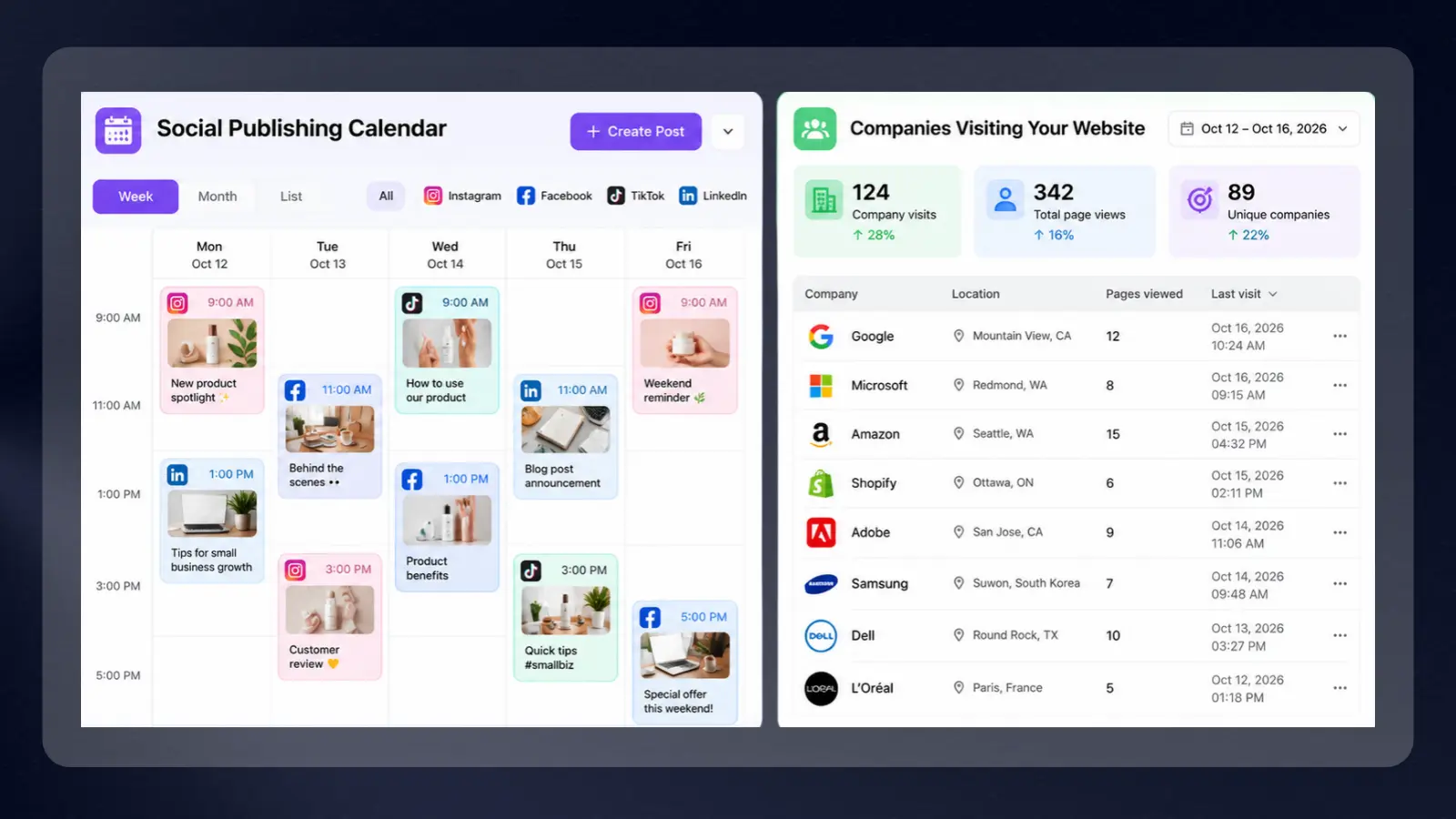
Social publishing maintains visibility, while lead generation identifies potential customers for follow-up. These marketing strategies work for businesses that already have an active social presence or enough relevant website traffic to support investigation.
Existing attention is the starting point for these strategies. A scheduler helps publish prepared content; visitor identification helps a business-to-business sales team investigate company interest. Neither replaces a useful offer.
Costs depend on channel requirements and access to visitor history. Use weeks to assess workflow and early signals, without treating a scheduled post or identified company as a sale. Here are two tactics for making existing attention more useful.
7. Buffer [Social Media Scheduling]
|
Best for |
Effort |
Price |
Time to results |
Main KPI |
|---|---|---|---|---|
|
Small teams maintaining social channels |
Low |
Free: 3 channels, 10 posts/channel; paid from $6/mo/channel |
Weeks |
Posting consistency |
Social media scheduling prepares posts ahead of publication so routine publishing does not depend on someone being available at the last moment. Its immediate value is a repeatable process rather than a promised engagement increase.
What you need: Active business accounts, approved content, and a person responsible for reviewing replies. A publishing calendar does not replace participation in the conversations your posts create.
Prepare content in batches, schedule it through Buffer, and check that each post suits its channel. Mix product information with useful demonstrations and customer evidence you have permission to publish. Leave room to pause scheduled messages if circumstances change.
Assess Buffer first as a publishing workflow tool, then evaluate audience response. Measure posts published against posts planned, then review engagement separately. A more consistent schedule is a workflow result; more relevant inquiries would be a business result.
Social marketing strategies benefit from a manageable posting pace. Filling a queue with weak material can make an account more active, but less useful. Keep the publishing commitment small enough that your team can also respond and learn.
Put it into practice: Schedule your prepared content in Buffer and assign responsibility for checking comments after publication.
8. Dealfront (Leadfeeder) [Lead Generation]
|
Best for |
Effort |
Price |
Time to results |
Main KPI |
|---|---|---|---|---|
|
B2B businesses with website traffic |
Medium |
Free: 7-day data, 100 leads; paid from $99/mo |
Weeks |
Identified leads per month |
Company-level visitor identification helps a business-to-business team investigate organizations that have visited its website. It does not establish who personally visited, what they intended, or permission to contact an individual.
A website with relevant traffic, access to install the tracking script, and a sales process. Review applicable privacy and consent requirements before activating tracking or using the results for outreach.
Install Dealfront (Leadfeeder), review identified companies, and prioritize organizations that fit your customer profile. Investigate repeated interest in commercially relevant pages before deciding on an appropriate follow-up.
Track identified leads per month, but also assess how many companies fit your market and become meaningful sales conversations. A company name on a report is an opportunity for investigation, but it may not automatically turn into a paying customer.
These marketing strategies need a functioning handoff to sales. If no one owns qualification and follow-up, a longer visitor list adds administration instead of progress.
Put it into practice: Review a company-visitor report in Dealfront (Leadfeeder) and define which findings deserve sales attention.
How These Marketing Strategies Compare on Cost and Speed
|
Strategy |
Typical Cost Basis |
Time to Results |
Best For |
|---|---|---|---|
|
Content marketing |
Low: free tools available |
Weeks to months |
Building useful content assets |
|
SEO and audience research |
Low to medium: research subscriptions |
Weeks to months |
Discovering search and channel demand |
|
Email marketing automation |
Low (at first): contact-based plans |
Weeks |
Following up with subscribers |
|
Social media and lead generation |
Low to medium: channel or visitor access |
Weeks |
Using existing attention |
Marketing strategies also contain tactics with different prerequisites, so compare the individual workload before committing.
|
Tactic |
Strategy |
Effort |
Skill Level |
Benchmark or Measure |
|---|---|---|---|---|
|
Canva visuals |
Content |
Low |
Beginner |
Own-account engagement baseline |
|
Gemini-assisted writing |
Content |
Low |
Beginner with subject knowledge |
Approved content output baseline |
|
Semrush keyword research |
SEO and research |
Medium |
Intermediate |
Rankings and organic traffic |
|
SparkToro audience research |
SEO and research |
Low |
Beginner |
Engagement after channel change |
|
Campaigner email campaigns |
|
Medium |
Intermediate |
Account-level inbox placement |
|
Kit newsletter signup |
|
Low |
Beginner |
Reported 30–50% landing-page conversion |
|
Buffer scheduling |
Social and leads |
Low |
Beginner |
Posts published versus planned |
|
Dealfront lead generation |
Social and leads |
Medium |
Intermediate |
Qualified company visits and lead count |
For a budget-limited business without an audience, content is the practical starting point; existing subscribers can make email the better first investment.
What To Weigh Before Choosing Your Marketing Strategies
Choose according to the asset you can use now, then check the time and money needed to maintain it. A free tool is a poor choice if its workflow consumes attention your business cannot spare.
Use these factors to decide how to choose marketing strategies that fit your operation:
- Budget: Account for subscriptions and the work needed to produce useful material.
- Time available: Protect time for execution and review, rather than publishing without measuring.
- Skill level: A writing assistant still needs someone who understands the product.
- Time horizon: Distinguish an early workflow improvement from customer acquisition.
- Audience channel fit: Prioritize places your customers already use.
- Existing list or following: Use permission-based subscriber relationships or active communities before starting another channel.
- Local versus online presence: Match the message to your service area, shipping coverage, and customers’ buying constraints.
If you’re struggling to choose between two strategies, use audience access as the deciding factor to break the tie. Reaching relevant people is more valuable than adding another tool.
How To Get Started With Your First Marketing Strategy
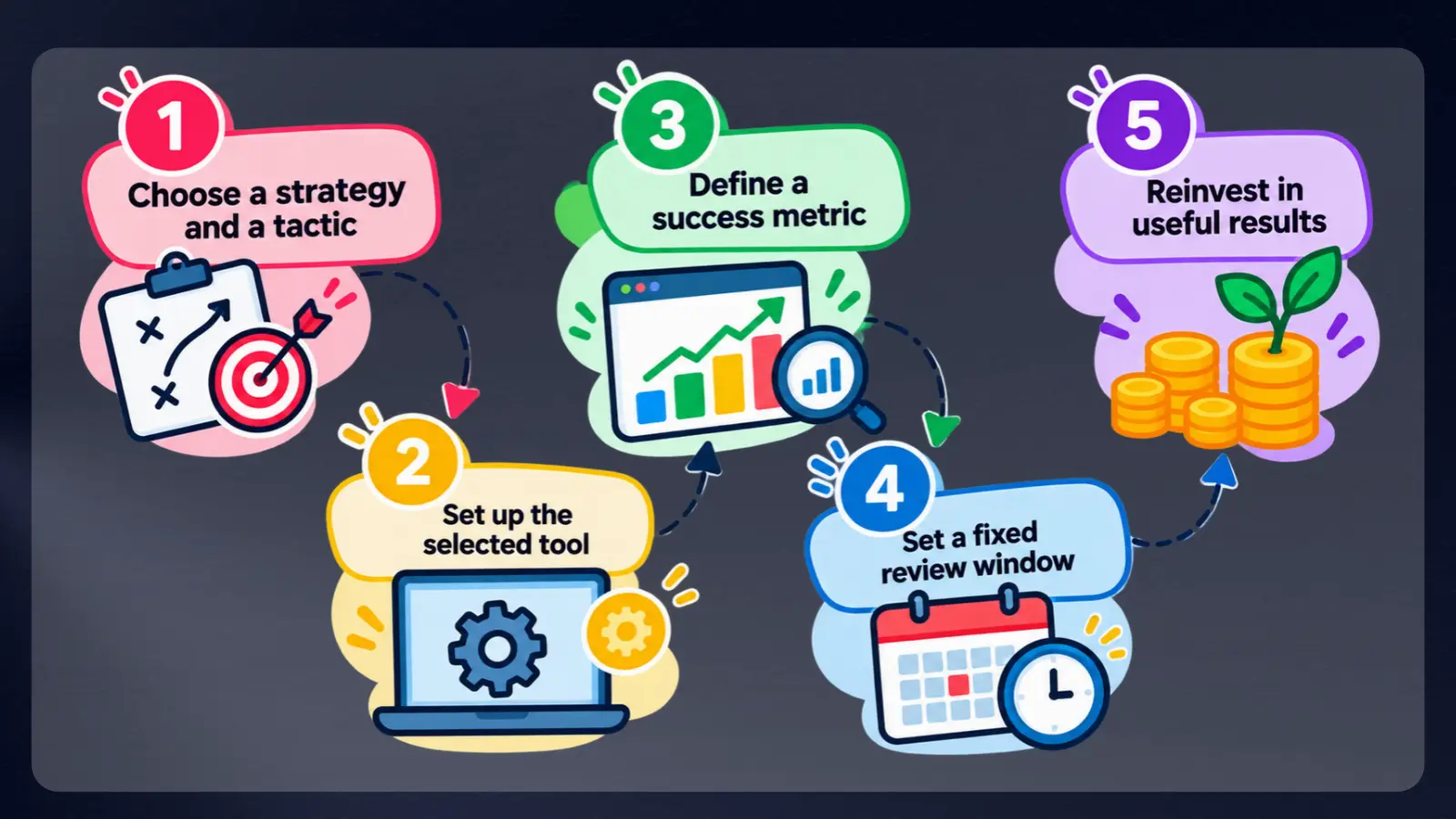
Start with a test you can finish and assess, rather than a complete marketing overhaul. These steps show how to start a marketing strategy without spreading your team across every channel.
- Choose a strategy and a tactic: Match the prerequisites above to your business.
- Set up the selected tool: Configure only what the tactic requires. Prepare the inputs, permissions, and approval process before adding optional features.
- Define a success metric: Use the tactic’s main KPI. Record the current baseline so improvement has a clear reference point.
- Set a fixed review window: Use the timing estimates as planning guidance. Review execution early, but allow search-focused work a longer horizon before judging customer acquisition.
- Reinvest in useful results: Continue the tactic if it improves the relevant measure at an effort you can maintain.
Running one tactic or strategy at a time gives you a basis for deciding what to add next. Starting all four marketing strategies together makes costs harder to attribute and weak results harder to diagnose.
Best Marketing Strategies: Final Verdict
For a business without a developed audience, content marketing with Canva is an accessible first move. Reusable visuals support product explanations and social publishing without requiring advanced design skills. The free option also allows a business to establish a workable process before committing to paid software.
A business with a permission-based email list should consider automation first. A business-to-business company with relevant website traffic and a sales process may gain more from investigating company visits.
Choose marketing strategies around the customers and assets already within reach. Start elsewhere when your constraint is follow-up rather than content production; a better graphic will not repair an unattended subscriber list.
Your next move: Test your marketing strategies with a reusable product explainer in Canva, publish it through an existing channel, and record the response before expanding your workflow.

FAQs
Content creation and consistent social publishing are accessible marketing strategies for beginners. Businesses with an existing permission-based email list can start with follow-up automation instead.
A paid subscription is not required for every tactic. Canva, Google Gemini, SparkToro, and Kit have free options, though their limits and paid features differ. Production time is still a cost.
Visual content with Canva‘s free plan and assisted drafting with Google Gemini‘s free plan avoid software subscription costs. Both still cost time for production, editing, and distribution.
Weeks are an initial planning estimate for email and social workflows; SEO needs weeks to months. These are editorial estimates, not guarantees of traffic, leads, or sales.
No, these tactics can be managed in-house. Specialist help may be useful for email setup, privacy requirements, or technical implementation when your team lacks the relevant skills.
Visual creation, assisted writing, keyword research, email follow-up, and social scheduling are five practical starting tactics. They sit within this guide’s four marketing strategies.