


How To Become a VFX Artist: Tools and Steps for 2026

Eneba Hub contains affiliate links, which means we may earn a small commission if you make a purchase through them—at no extra cost to you. Learn more


Recent update
Try Coursera for a low-barrier way to start learning VFX compositing before committing to a full certification.
To learn how to become a VFX artist, start with visual fundamentals, focused software practice, and a demo reel that shows your contribution to finished shots. The U.S. Bureau of Labor Statistics reports median annual pay of $102,030 for special effects artists and animators, the closest official occupation. Training length depends on your route: named certification programs include a six-month option, but completing training doesn’t establish job readiness.
Start by studying a simple composite, a shot that combines separate visual elements. Identify how its lighting and perspective make those elements belong together. This is a better starting point than buying every application associated with VFX.
This guide covers qualifications, software, VFX artist salary benchmarks, a practical roadmap, and recommended courses. It’s for beginners comparing VFX artist jobs across film, television, and games, with software licensing costs and portfolio demands in mind.
Jump to:
What Is a VFX Artist?
A VFX artist creates digital imagery and visual effects for film, television, games, and other media. The work can involve adding an impossible creature or removing an unwanted object so convincingly that viewers never notice.
Becoming a VFX artist can lead to studio employment, in-house game production, or freelance projects. The exact responsibilities depend on the team’s size and specialization.
What Does a VFX Artist Do?
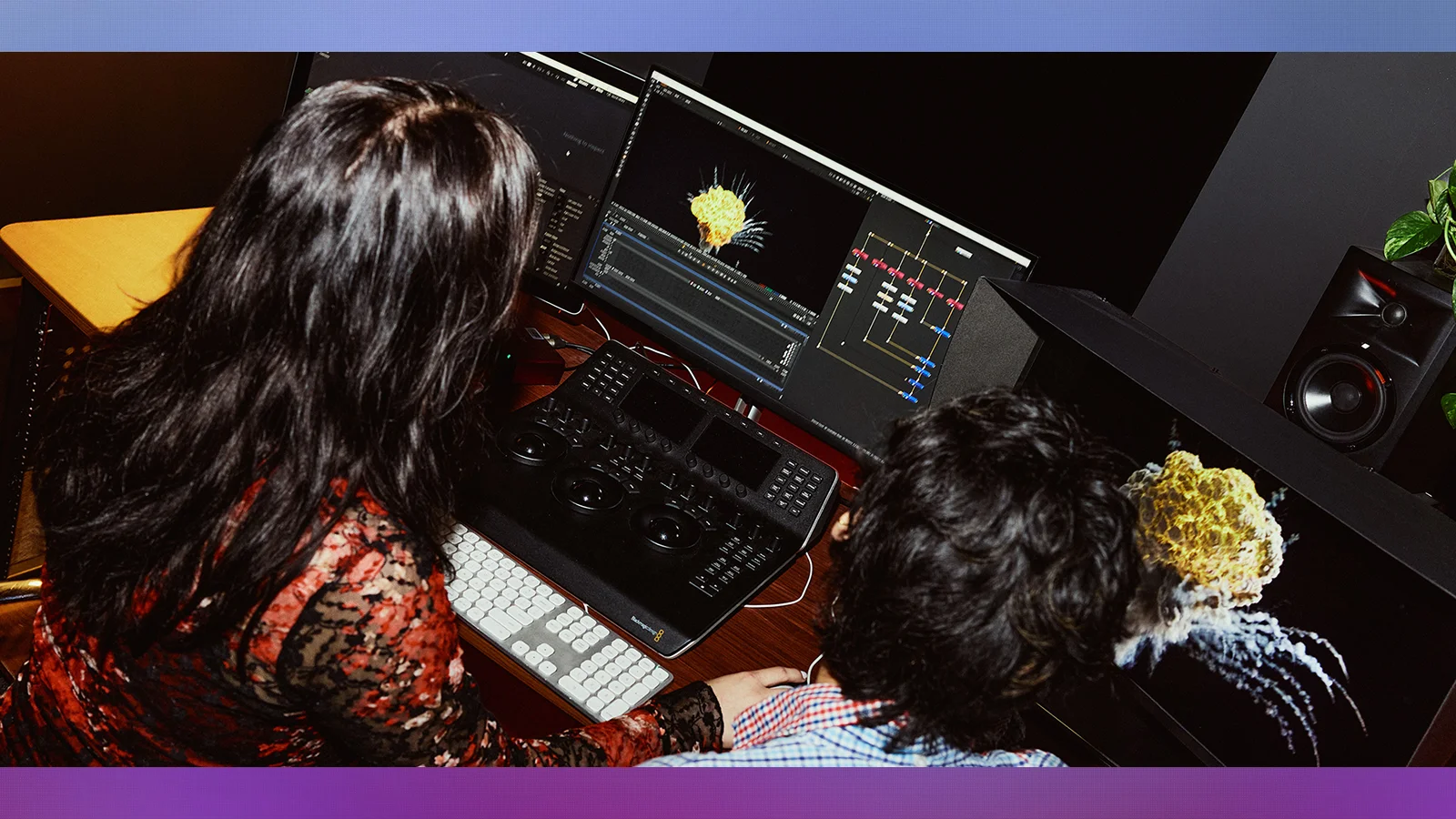
A VFX artist builds and revises effects shot by shot. Individual VFX artist jobs usually cover part of that process rather than every discipline.
These tasks show how the work divides:
- Simulate effects: Create fire, smoke, or destruction in Houdini. A game-related practice project could show a magical impact with a readable silhouette.
- Composite footage: Combine filmed footage with computer-generated imagery, or CG. Match shadows, color, and camera movement so the result looks coherent.
- Prepare moving assets: Model, rig, or animate objects in Maya. Rigging means creating controls that let an artist pose or animate a model.
- Texture surfaces: Use Substance 3D to define an object’s appearance, including worn paint or rough stone.
- Revise the look: Interpret feedback from supervisors and directors, then adjust the shot without losing consistency with surrounding scenes.
The balance shifts by role. Someone becoming a VFX artist should be comfortable with both visual decisions and technical troubleshooting: an attractive effect still needs to render correctly and fit the production’s requirements.
Where VFX Careers Branch: Generalist, FX, Compositing, or Technical Direction
VFX careers branch into generalist, FX artist, compositor, and technical director tracks. Choose by the work you enjoy solving, not by a headline VFX artist salary figure.
The tracks differ in technical depth and the evidence a portfolio should show.
|
Role |
What you’d do |
Technical depth |
First portfolio piece |
|---|---|---|---|
|
VFX generalist |
Take a shot across several production stages |
Broad across disciplines |
A finished shot with a breakdown |
|
FX artist |
Build procedural simulations in Houdini |
High, with connected processing nodes |
A simulation and its development stages |
|
Compositor |
Blend footage and CG in Nuke or Adobe After Effects |
Visual matching and technical image work |
A green-screen composite |
|
Technical director |
Create tools and solve production problems |
Very high, often with scripting |
A tool demonstration with documentation |
Generalist practice is a useful starting point because it exposes the full process. Later, target VFX artist jobs that match your strongest discipline.
Pros and Cons of Becoming a VFX Artist
Becoming a VFX artist offers a mix of creative and technical work, but limited employment growth makes portfolio quality important. The Bureau of Labor Statistics projects little or no employment change from 2025 to 2035.
Consider these trade-offs before committing to training.
| Pros | Cons |
|---|---|
| ✅ Visible creative output – finished shots make your contribution tangible. ✅ Multiple industries – effects skills apply to film, television, and games. ✅ Different working arrangements – studio and freelance paths exist. ✅ Technical variety – visual judgment and problem-solving share the workload. | ❌ Limited growth – openings do not imply a rapidly expanding occupation. ❌ Ongoing costs – software licensing and production requirements need a budget. |
A promising VFX artist salary benchmark doesn’t remove the difficulty of getting established. Budget for the tool your projects need first, then expand when a specific task requires it.
VFX Artist Qualifications
In the US, a bachelor’s degree is a typical preparation route, but requirements differ by employer. Learning how to become a vfx artist also means separating education, practical ability, and credentials rather than treating them as interchangeable.
Use these qualification areas to evaluate your preparation:
- Education: Computer graphics, art, and related programs can combine visual fundamentals with technical practice. Compare the work students produce and the feedback available, rather than choosing a school from its promotional reel alone.
- Alternative paths: Focused training can suit someone who already has art experience or needs a narrower curriculum. Rebelway offers Houdini Essentials Certification, Magical FX Artist Certification, Hollywood FX Artist Certification, and Technical Director Certification. Their schedules appear in Recommended Courses.
- Portfolio and demo reel: A demo reel is a selection of finished work. Include breakdowns that identify your contribution, the original material, and the main production stages. Separate your work from supplied assets or team contributions.
- Credentials: Assess a program with “Certification” in its title by its curriculum and assessment requirements. Check how instructors evaluate projects and what feedback students receive.
- Soft skills: Practice receiving specific feedback and explaining visual choices. Clear handoffs and organized project files help collaborators continue the work without unnecessary confusion.
A VFX artist course is most useful when it closes a visible skill gap. Before enrolling, compare its prerequisites with work you can already complete independently. Someone becoming a VFX artist through self-study needs a way to get useful critique, not only more tutorials.
Your finished work and explanation of your contribution are the practical evidence an application can present. Check each employer’s education and work-authorization requirements alongside its portfolio expectations.
Readers exploring how to become a VFX artist without a degree should inspect actual job requirements before committing to a training path. Choose a VFX artist course that strengthens the portfolio those employers request.
What Software and Tools To Use
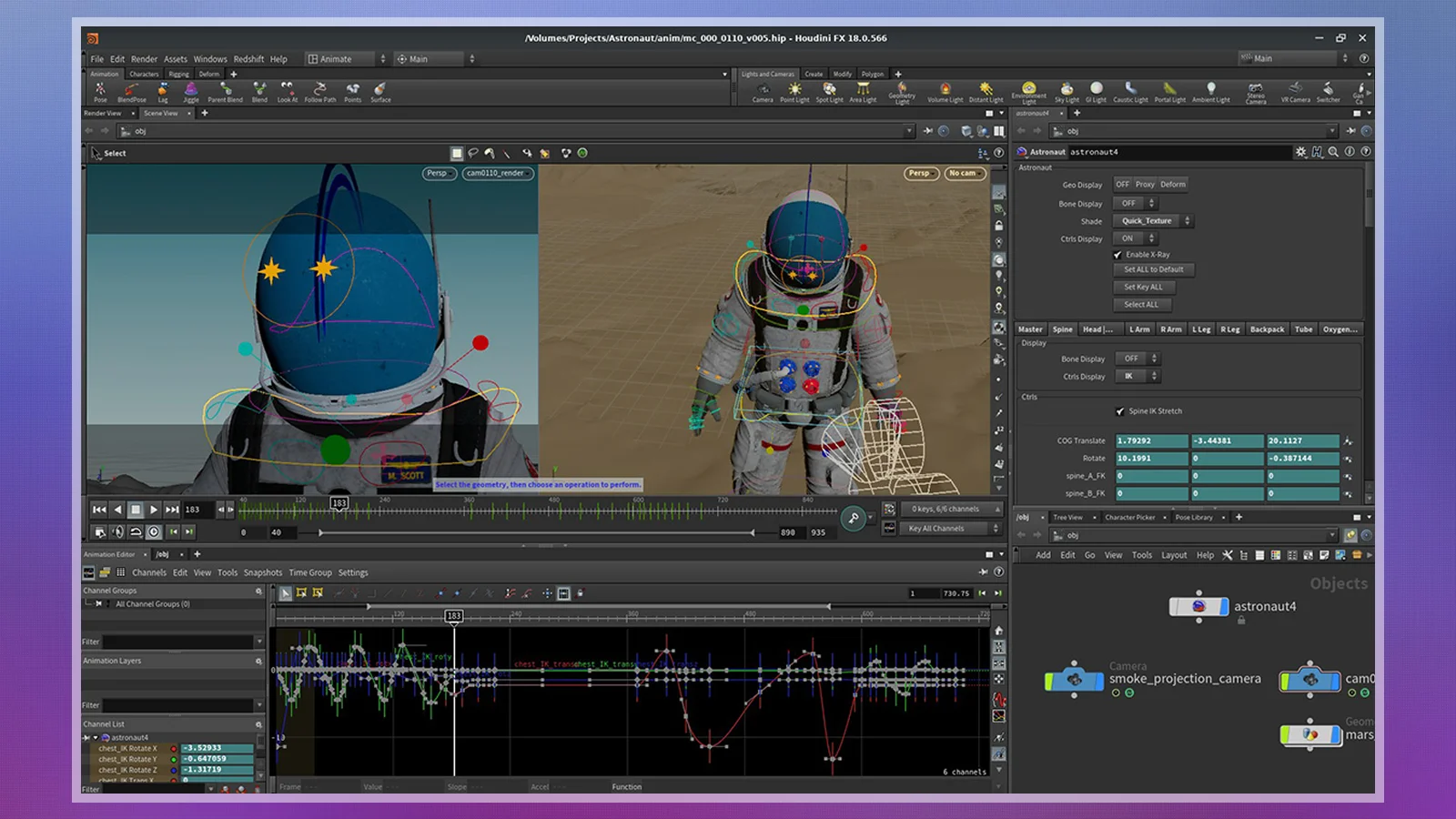
Start with one tool matched to a task. Adobe After Effects suits an introductory compositing project, while Autodesk Maya supports modeling, rigging, and animation.
These applications serve different parts of production, so buying them all is unnecessary for a first project.
|
Tool |
Best for |
Price |
|---|---|---|
|
Adobe After Effects |
Compositing and motion graphics |
Paid |
|
Autodesk Maya |
Modeling, rigging, and animation |
Paid |
|
SideFX Houdini |
Procedural effects and simulations |
Paid |
|
Substance 3D |
Surface texturing |
Paid |
|
Foundry Nuke |
Specialized compositing workflows |
Paid |
Learn After Effects first if you follow the beginner course below. To become a VFX artist focused on simulation, add Houdini when your projects require it.
A VFX artist course should teach the application and workflow your intended role uses.
VFX Artist Salary and Career Progression
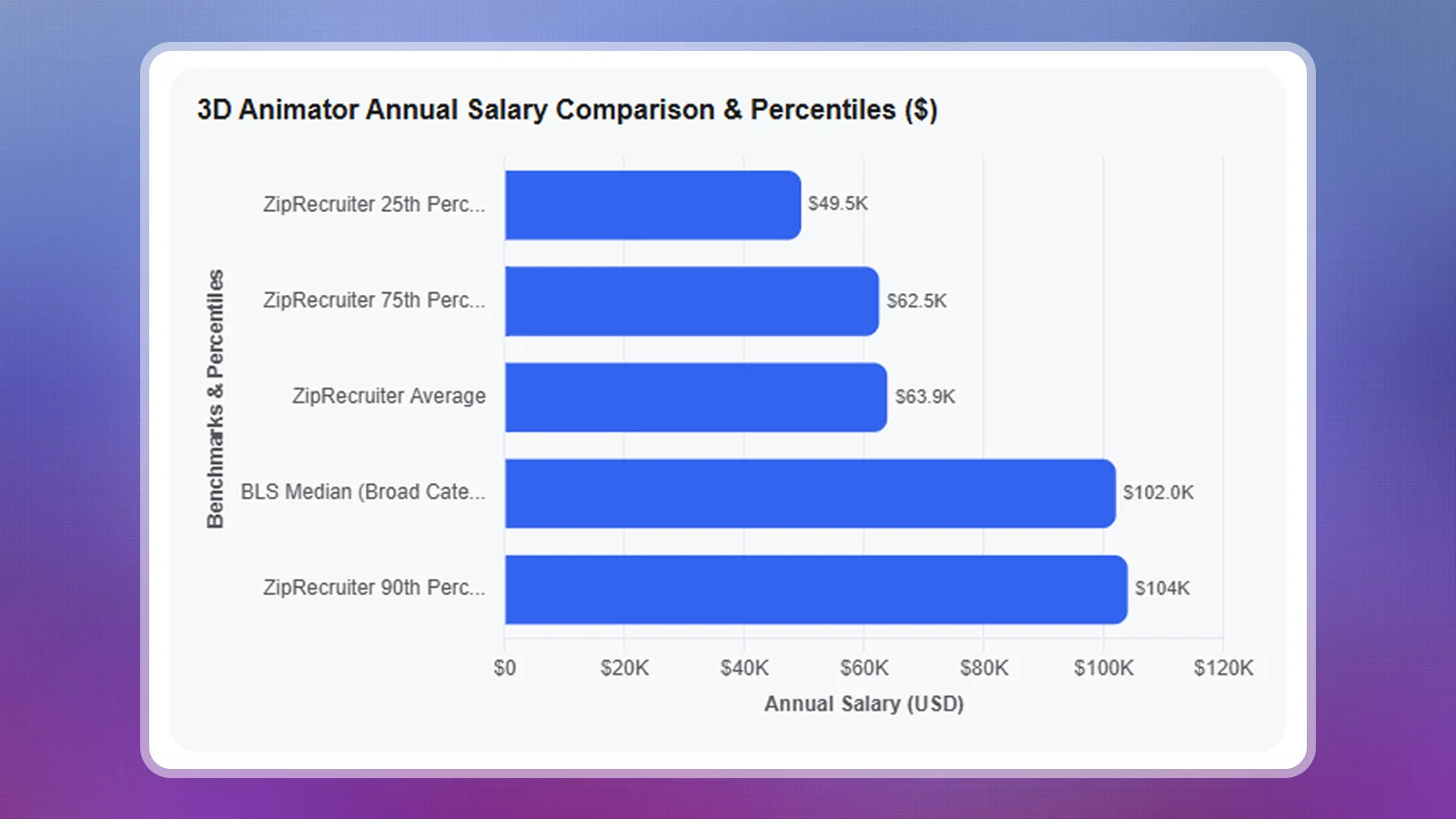
The US median annual wage was $102,030 in May 2025, according to the Bureau of Labor Statistics. This VFX artist salary baseline covers special effects artists and animators, not VFX specialists alone.
The same source reports these distribution points:
- Lower-paid end: The Bureau of Labor Statistics reports that 10% earned less than $58,600.
- Middle of the distribution: The median separates the higher-paid and lower-paid halves of workers.
- Higher-paid end: The Bureau of Labor Statistics reports that 10% earned more than $177,110.
These are wage percentiles, not entry, mid-career, and senior salary bands. Treating them as experience levels would misrepresent the data.
A VFX artist salary comparison should also account for location and employment arrangement. Becoming a VFX artist may lead toward specialist, lead, or supervisory responsibilities, but course completion times don’t establish promotion timelines.
Compare VFX artist jobs by responsibilities before comparing compensation. Similar titles can describe different production duties.
How To Become a VFX Artist: A Step-by-Step Guide
Build fundamentals, software fluency, and finished work before applying broadly. Learning how to become a VFX artist is a sequence of practical milestones, not a fixed countdown to employment.
Step 1: Build Foundational Art and Technical Skills
Study light, color, and perspective before attempting elaborate effects. Practice identifying why an inserted object looks wrong: its shadow may point in another direction, or its camera angle may conflict with the footage.
Learning chroma keying, which removes a background color, and motion tracking, which follows movement across footage, establishes the core skills needed when becoming a VFX artist, because it allows you to troubleshoot problems instead of just copying tutorial settings.
Step 2: Learn Core VFX Software
Choose After Effects for the compositing-first route used here. Practice importing footage and combining layers, then revise the result against a visual reference.
Save project versions and label source files clearly. Add Maya for asset work or Houdini for simulation only when those tasks become part of your plan. You don’t need every application in the tools table to become a VFX artist in a focused discipline.
Step 3: Build a Small Demo Reel
Create a finished composite or simulation breakdown with a clear visual goal. A game-inspired portal placed into filmed footage can demonstrate tracking and light matching without requiring a complete game.
Show the original footage alongside the finished shot, and identify supplied assets. Keep unfinished experiments separate from application work. To become a VFX artist, you need evidence that you can finish and explain a production task.
Step 4: Take a Structured Course or Certification
Select training that addresses weaknesses your project exposed. A VFX artist course focused on compositing makes sense if your layers don’t sit convincingly together. Simulation training serves a different need.
Compare the options in Recommended Courses next, with attention to prerequisites and workload. Judge progress by what you can reproduce independently afterward. A VFX artist course supports practice, but its completion badge isn’t a hiring promise.
Step 5: Apply for Entry-Level Roles
Target junior opportunities that match the work in your reel. Read VFX artist jobs for their actual duties, then place your most relevant project first.
Include gaming studios when your examples demonstrate suitable effects, but distinguish a rendered film shot from an effect that must run within a game’s technical limits. State your contribution plainly. Becoming a VFX artist involves showing fit for a particular team’s needs.
Step 6: Keep Learning Advanced Techniques
Deepen the discipline you already chose before expanding your toolkit again. Improve weak transitions or inconsistent lighting in existing work, then build a project that tests a more difficult problem.
Study scripting if technical direction interests you. For artistic specialization, seek critique tied to references and shot requirements. Keep a record of revisions so you can explain how feedback changed the result. Independent problem-solving is the goal.
Recommended Courses Needed for Becoming a VFX Artist
Choose a VFX artist course by discipline and starting level. Structured lessons can organize your practice, but a beginner compositing course and a technical-direction program serve different goals.
|
Course |
Provider |
Focus |
Duration |
|---|---|---|---|
|
VFX with Adobe After Effects from Novice to Expert |
 |
Introductory effects, compositing, and 3D integration |
2 weeks at 10 hours/week |
|
Houdini Essentials Certification |
 |
Foundational Houdini FX |
6 months |
|
Magical FX Artist Certification |
|
Specialized effects training |
9 months |
|
Hollywood FX Artist Certification |
|
Feature-production FX training |
9–18 months |
|
Technical Director Certification |
|
Technical direction and pipeline work |
12–21 months |
|
Visual Effects for Games in Unity – Beginner To Intermediate |
 |
Real-time visual effects creation, particle systems, and shader graph integration in Unity |
Self-paced (approx. 10–15 hours of video content) |
Someone learning how to become a VFX artist should start with the option that fits their existing skills. A course completion certificate records study, not university credit or an independent vendor certification.
Alternate Careers Close to VFX
Consider adjacent visual careers if effects production doesn’t fit your preferred workday. Compare their duties rather than assuming every digital-art role shares a VFX artist salary.
These alternatives use related skills in different ways:
- Previsualization artist: Plan shots before final production. The emphasis shifts toward staging and communicating camera choices.
- Cartoon animator: Focus on movement and performance. Character acting becomes more central than integrating effects into footage.
- Image retoucher: Refine still images. Motion-related problems give way to detailed image correction and client revisions.
The visual judgment you develop while becoming a VFX artist remains useful across these paths. Their portfolios should still reflect their own job requirements.
Final Verdict on How To Become a VFX Artist
This path fits readers who enjoy visual problem-solving and repeated revision, with room in their budget for training and software. Start with a contained compositing project, then specialize after you understand which tasks you enjoy.
It is less suitable for someone seeking a quick credential followed by predictable employment. The VFX artist salary baseline is attractive, but it doesn’t measure a beginner’s likely offer. Consider animation or retouching if your interests center on performance or still imagery rather than effects production.
The practical answer to how to become a vfx artist is to build work you can explain and improve under feedback. Choose a longer VFX artist course when its prerequisites and specialization fit that goal, rather than treating a certificate as the destination.
FAQs
Training length depends on the route and your starting skills. Completing lessons is different from producing independent, application-ready work. Use finished projects and useful feedback to judge your readiness.
Pay varies by location, specialization, and employment arrangement. Compare VFX artist salary offers against the duties and experience required, rather than treating an occupation-wide benchmark as a beginner’s likely pay.
No, a degree isn’t a universal requirement. It is a typical US preparation route, but employer requirements differ. Compare each listing with your education, practical skills, and portfolio.
Yes, for people who enjoy technical art and revision. It is a less suitable choice for someone seeking predictable employment or a quick credential-to-job route. Assess the work itself before committing to training.
Visual fundamentals, software fluency, and problem-solving form the foundation. You also need to interpret feedback, organize project files, and explain your contribution to a finished shot.
Junior generalist, compositing, and FX opportunities are possible targets when their requirements match your reel. Relevant VFX artist jobs help define the skills to prioritize as you learn how to become a VFX artist.