


How To Become a Game Designer: Tools and Steps for 2026

Eneba Hub contains affiliate links, which means we may earn a small commission if you make a purchase through them—at no extra cost to you. Learn more


START WITH A PROJECT
Start with Coursera for game design fundamentals and the Epic Games Game Design Professional Certificate. Build playable work alongside the lessons.
Learning how to become a game designer starts with choosing a design track, learning one engine, and building playable projects that show your decisions. The U.S. Bureau of Labor Statistics reports a $104,000 median for web and digital interface designers, an adjacent occupation rather than a dedicated game designer salary. The Epic Games certificate takes about 3 months at 10 hours a week, but course completion is not a hiring timeline.
Start by sketching a small game on paper and testing its rules with another player. A finished, revised project is a better starting point than an ambitious game you cannot complete.
This guide helps students and career changers assess becoming a game designer through qualifications, tools, salary context, courses, and a practical application roadmap.
Jump to:
What Is a Game Designer?
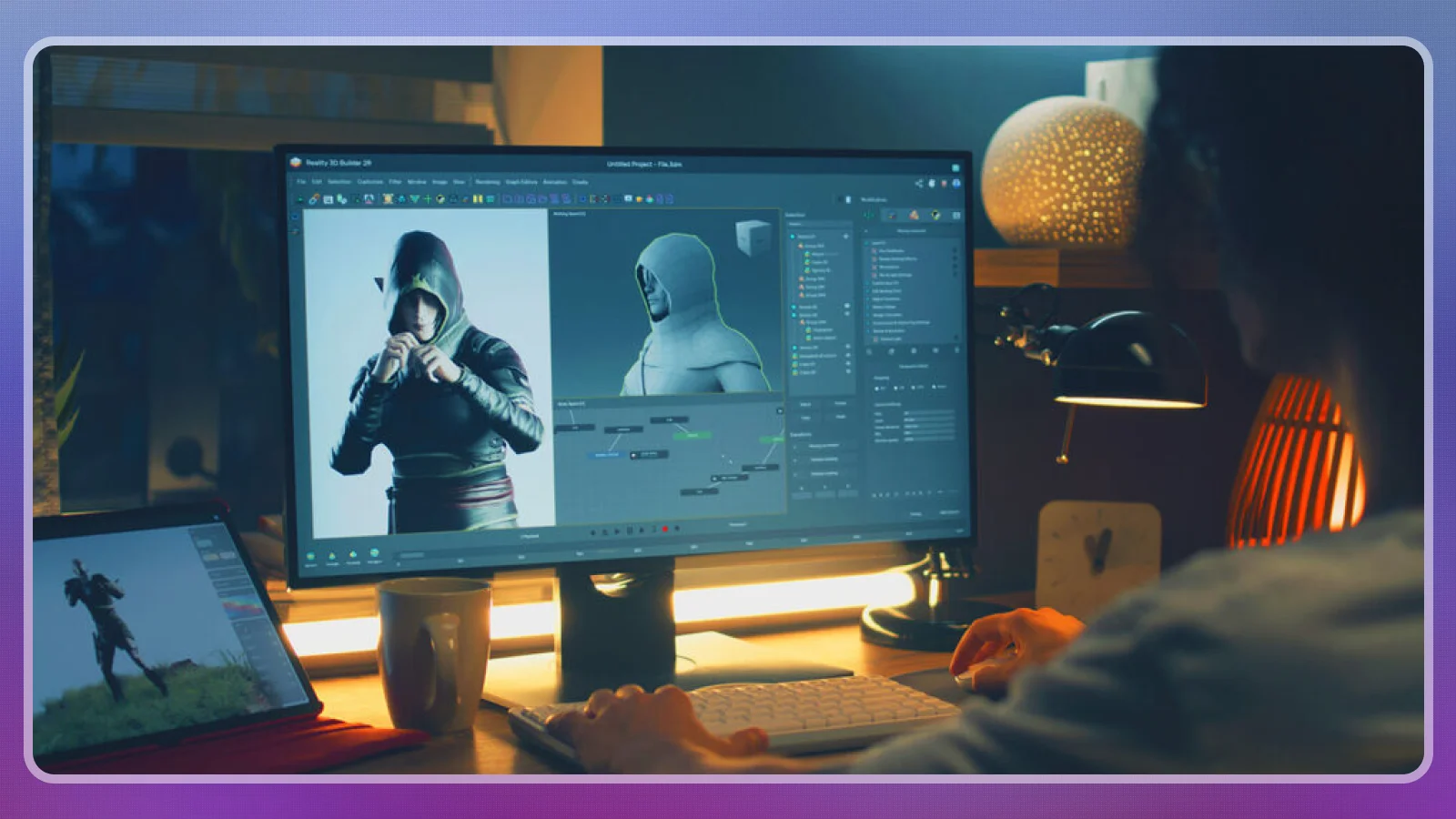
A game designer shapes the rules, challenges, and interactions players experience. Designers work within studios, independent teams, and contract arrangements, with responsibilities that change by project.
The game designer vs game developer distinction concerns emphasis: designers define the experience, while developers implement the software. Small teams often combine those responsibilities, so read each game designer job description rather than relying on its title.
What Does a Game Designer Do?
A game designer turns an idea into testable interactions, then revises them after observing players. A useful game designer job description connects creative decisions to hands-on production.
The daily work can include these tasks:
- Mechanics and balancing: Define player actions, rewards, and constraints. Adjust rules when a strategy overwhelms the alternatives or a challenge becomes confusing.
- Level design: Arrange spaces, encounters, and objectives. Use layout and pacing to guide players without explaining every action through text.
- Interface and usability: Plan menus, heads-up displays, and feedback. User interface, or UI, covers visible controls; user experience, or UX, covers how players understand and use them.
- Prototyping: Build a simplified version of an interaction. Visual scripting connects logic through graphical nodes instead of requiring every instruction as typed code.
- Documentation and playtesting: Record rules and implementation needs, observe players, and explain revisions to teammates. Separate a player’s reported frustration from the underlying design problem.
The balance between documents and building changes with the role. Becoming a game designer means being comfortable with both: a clear specification helps teammates implement an idea, while a playable prototype exposes weaknesses that a document can hide.
Roles in Game Design
Game designer jobs split across level design, systems design, UI, and UX, with different technical demands. Choose a track based on the work you want to demonstrate.
These portfolio examples make the differences concrete:
|
Role |
What you’d do |
How much code |
First portfolio piece |
|---|---|---|---|
|
Level designer |
Build and pace playable spaces |
Light scripting for triggers and events |
A playable level |
|
Systems designer |
Define rules, balance, and interactions |
Moderate visual scripting |
A focused mechanic prototype |
|
UI designer |
Create menus and interface components |
Minimal for mockups |
A functioning menu |
|
UX designer |
Improve learning and player flow |
Minimal for research and diagrams |
A player-flow diagram and playtest report |
Level layouts and interface mockups offer manageable starting projects before deeper scripting. The game designer vs game developer distinction becomes clearer when you identify which parts you designed and which you implemented.
A broad game designer course can help you sample these tracks before specializing.
Pros and Cons of Becoming a Game Designer
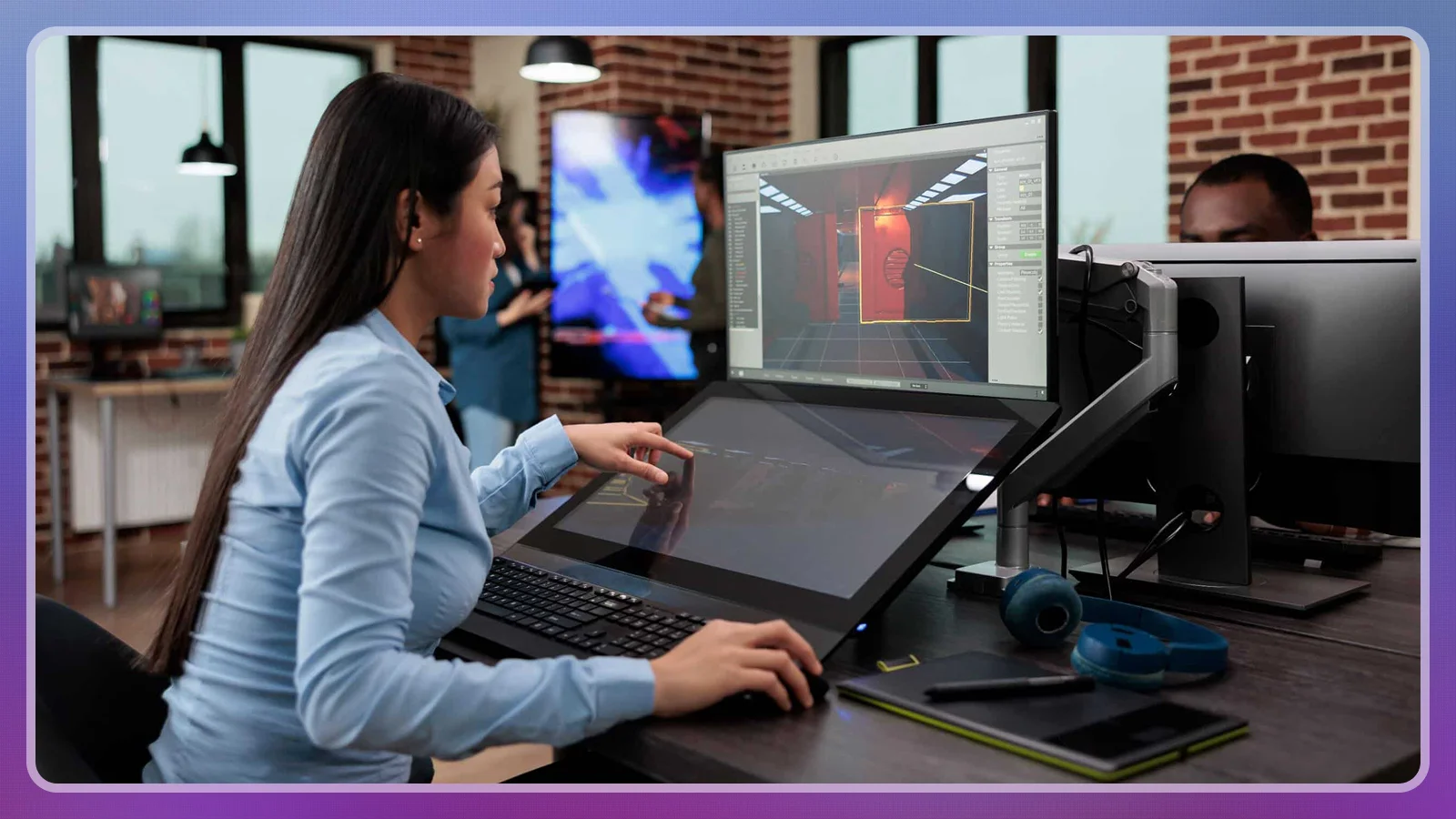
Becoming a game designer suits people who enjoy testing and revising creative decisions. It is a weaker fit for someone who wants unrestricted authorship or assumes a course guarantees employment.
Consider these practical trade-offs:
| Pros | Cons |
|---|---|
| ✅ Visible output – playable work lets you demonstrate design decisions. ✅ Several specialties – levels, systems, and interfaces offer different entry projects. ✅ Transferable skills – prototyping and usability work extend beyond games. ✅ Structured learning – project-based programs give beginners a defined curriculum. | ❌ Repeated revision – playtests can undermine a favorite idea. ❌ Uncertain outcomes – a certificate establishes neither a job offer nor a salary level. |
Treat game designer salary claims with the same care: a promising headline does not establish what an individual employer will pay.
Game Designer Qualifications
There is no single credential that fits every employer. Related education can support an application, but requirements differ, and an accessible training program does not establish a studio’s hiring rules.
Anyone considering becoming a game designer should compare their evidence against an actual game designer job description. Your portfolio needs to demonstrate the work requested in game designer jobs, not simply enthusiasm for games.
Build your preparation around these areas:
- Education: A related degree can provide foundations and team projects. Read individual game designer jobs for mandatory education requirements before deciding that a self-taught route fits your target employers.
- Alternative paths: A structured game designer course or self-directed study can organize your learning. The Epic Games Game Design Professional Certificate welcomes beginners without prior experience, but entry to the program and entry to employment are separate decisions.
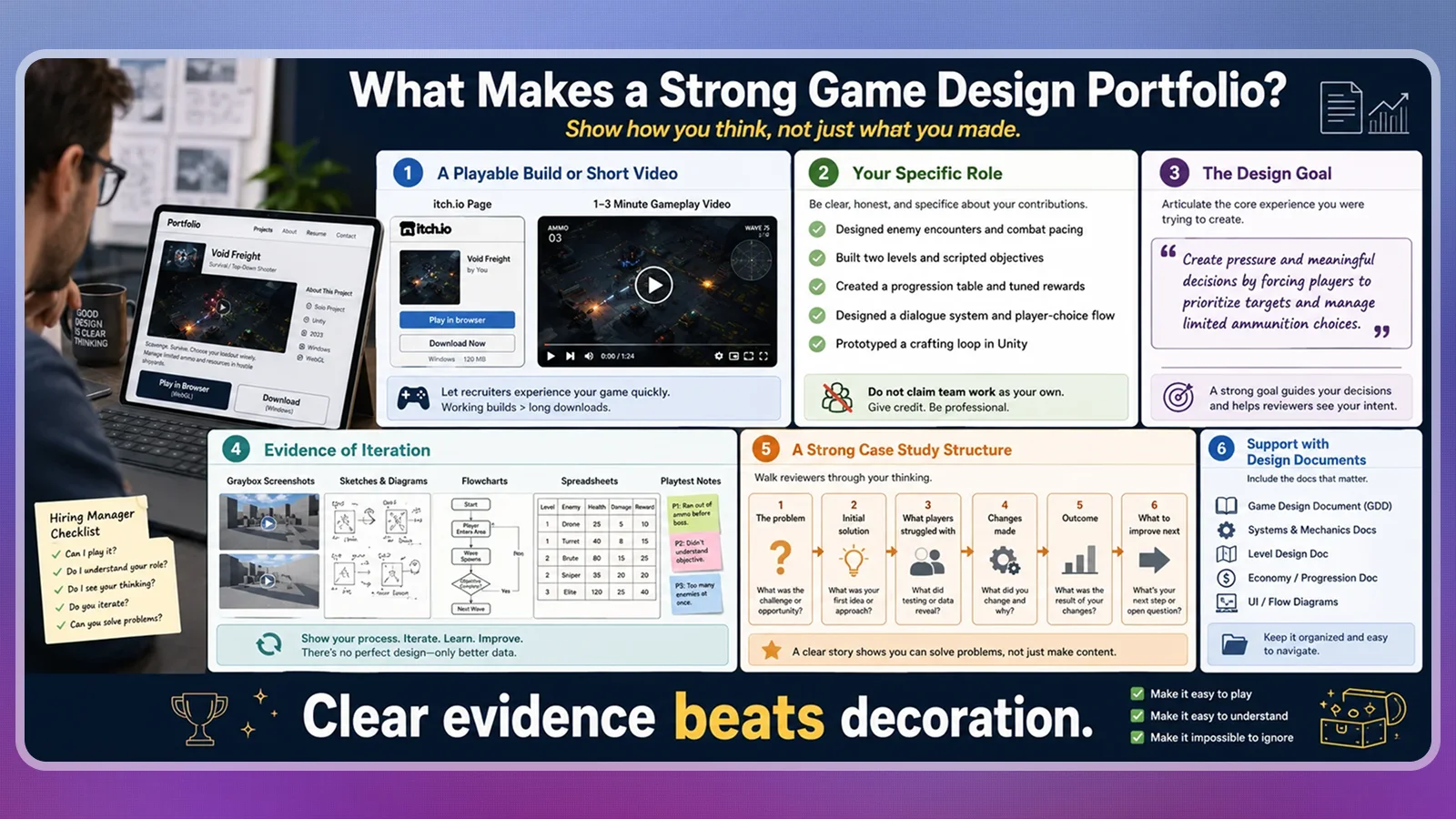
- Portfolio and experience: Show a playable project, your contribution, and the changes you made after testing. Include concise evidence that connects your work to the game designer job description.
- Certificates and certifications: A completion certificate records training. It is different from an exam-based vendor certification and should not be presented as a professional license.
- Technical understanding: The game designer vs game developer distinction does not remove the need to understand implementation. Designers benefit from knowing what their engine can support and how to communicate requirements.
- Collaboration: Practice explaining a rule, accepting feedback, and documenting a revision. Team projects also require clear ownership so an employer can identify your contribution.
Your strongest practical asset is evidence of a working design and thoughtful revision. A polished screenshot shows appearance; a playable build and a short explanation show what you changed and why.
Learning how to become a game designer without a degree therefore requires more than collecting certificates. Study employer requirements, close specific skill gaps, and show work that a reviewer can evaluate.
Tools and Software To Use for Game Design
You’ll need a primary game engine for prototyping and tools that are specialized for UI/UX wireframing, narrative mapping, and design documentation. Your choice here depends on your target track, e.g., whether you’re focused on 3D level design, system balancing, or narrative flows.
|
Tool |
Best for |
Free trial |
Price |
|---|---|---|---|
 |
Playable prototypes, levels, and cinematics |
No trial needed |
Free to use; 5% royalty on a game’s lifetime gross revenue above $1 million |
 |
2D and 3D prototypes, including mobile games |
Free Personal Plan |
Free under $200K in annual revenue or funding; Pro from $2,310/year |
 |
2D and 3D lightweight prototypes |
No trial needed |
Free; open source under the MIT license, no royalties |
 |
Mockups for menus, screens, and UI flows |
Free Starter plan |
Free for 3 Design and 3 FigJam files per team; paid plans for more |
 |
Branching dialogue and narrative maps without coding |
No trial needed |
Free, open source, runs on browser or as an app |
Focus on one engine and complete a small interaction before moving on to others. Unreal Engine is the easiest starting point since the courses below use it, though you can switch to Unity or Godot if your target projects require them. Add Twine to your workflow only if your design relies heavily on branching dialogue.
Game Designer Salary and Career Progression
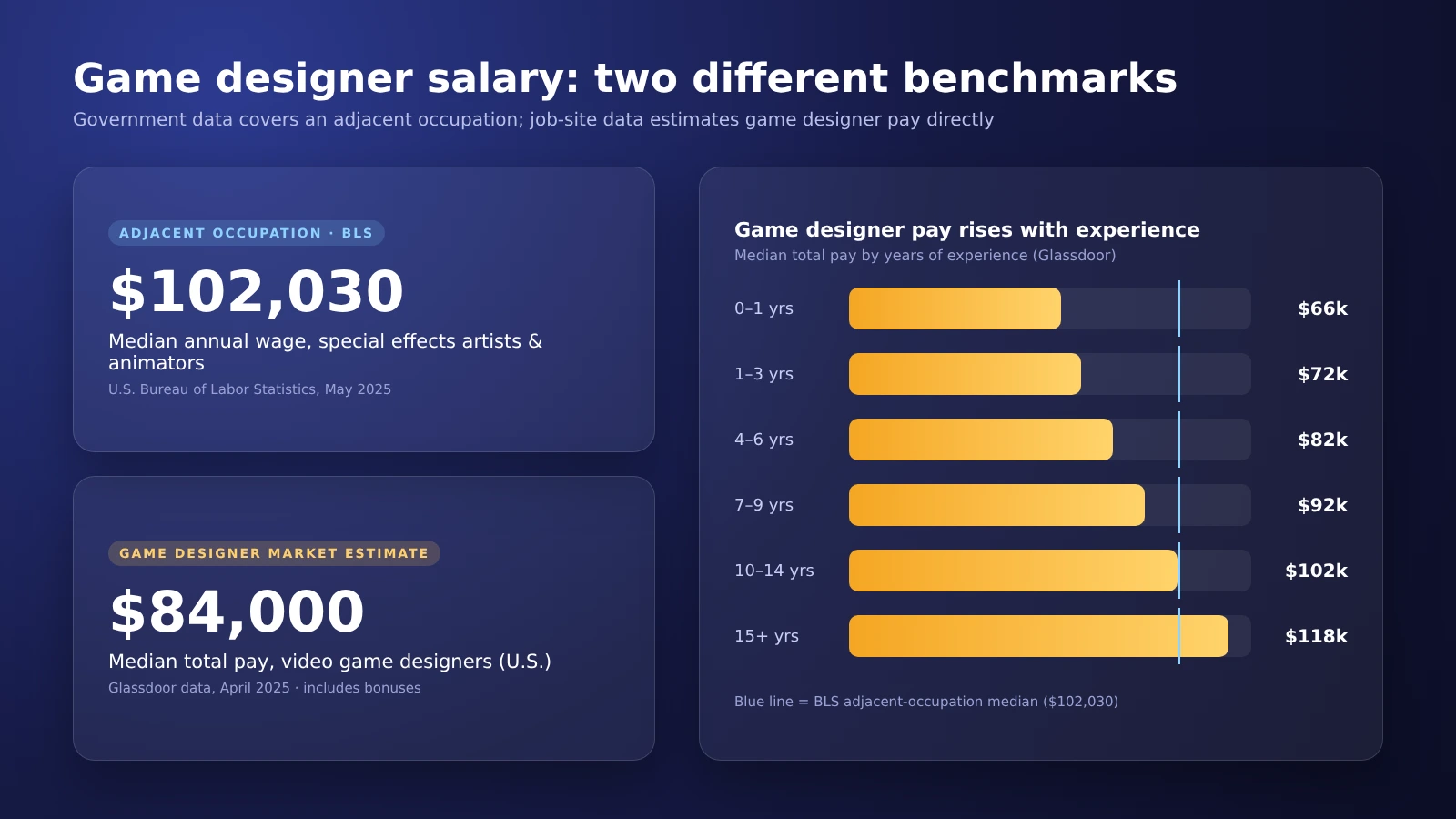
The official baseline is an adjacent occupation, not a dedicated game designer salary measure. The U.S. Bureau of Labor Statistics reports a median annual wage of $104,000 for web and digital interface designers in May 2025.
Other sources provide context, but they do not establish consistent experience bands:
- Entry-level claim: Coursera advertises a $109,440 median entry-level salary for video game designers on the Epic Games certificate page.
- Broader market estimate: ZipRecruiter reports an average annual pay of $149,118 and a reported range of $47K–$156K.
- Mid-level and senior scope: Assess ownership, mentoring, and project responsibility in individual listings rather than assigning those figures to experience levels.
These measures are not interchangeable. Compare game designer salary offers against the duties and location of specific game designer jobs.
Progression can move from supporting features to owning systems or levels, then reviewing other designers’ work. Becoming a game designer starts with demonstrating execution; advancement adds responsibility for broader decisions.
How To Become a Game Designer: A Step-by-Step Guide
A structured program offers a defined curriculum. Coursera lists 3 months at 10 hours a week for the Epic Games certificate; a self-taught route depends on your starting skills and project scope.
Step 1: Learn Game Design Fundamentals
Study rules, feedback, challenge, and balancing before planning a large production. Make a paper game with a clear objective and watch another person play it without coaching.
Record where the rules become unclear and revise the instructions. Read a game designer job description alongside this exercise to connect classroom concepts with practical responsibilities. To become a game designer, you need to explain why an interaction works, not merely describe the theme you imagined.
Step 2: Learn Your Chosen Engine
Practice in Unreal Engine with a small scene that includes movement, an objective, and feedback when the objective is completed. Use visual scripting to connect the interaction, then document how it works.
The game designer vs game developer distinction should guide your priorities, not become an excuse to avoid implementation. Concentrate on the engine features your track needs. Someone becoming a game designer in level design needs a different depth of technical study from someone focused on complex systems.
Step 3: Build a Playable Portfolio Project
Build a compact project around a mechanic or level you can finish. Replace an expansive game concept with a focused encounter, puzzle, or menu interaction that a reviewer can understand.
Ask players to try it, record their difficulties, and revise the design. Present the playable build alongside your goal and the changes you made. Becoming a game designer requires judgment about scope: a small project with clear decisions is more useful than an unfinished world.
Step 4: Use a Course To Close Specific Gaps
Choose a game designer course that addresses the work you cannot yet complete independently. The Recommended Courses section below separates a broad professional program from an introductory course and a cinematic specialty.
Use lessons to improve the project you already started. Learning how to become a game designer through tutorials still requires independent decisions, so change the assignment’s rules or layout and explain your reasoning. A copied exercise gives reviewers little evidence of your own judgment.
Step 5: Apply With Relevant Evidence
Target game designer jobs whose responsibilities match your portfolio. Put the playable project and your contribution near the beginning of the application, then connect your evidence to the game designer job description.
Prepare to explain a failed idea, the feedback you received, and your revision. To become a game designer, you must show that you can work through uncertainty as well as propose concepts. Track recurring gaps in employer feedback on applications for game designer jobs and use them to guide your next project.

Recommended Courses
Choose a game designer course with a relevant project, rather than collecting overlapping introductions. Broad training supports exploration; a specialist course makes more sense once your portfolio exposes a specific gap.
These options cover different learning needs:
|
Course |
Provider |
What it covers |
Price or Duration |
|---|---|---|---|
|
Epic Games Game Design Professional Certificate |
 |
Fundamentals, level design, visual scripting, UI, UX, and prototyping |
$49/month after a 7-day free trial |
|
Introduction to Game Design |
|
Rules, mechanics, storytelling, and paper prototypes |
6 hours |
|
Unreal Engine Cinematic Creator for Video Game Design |
 |
Cutscenes and gameplay-triggered sequences |
5.5 hours of video |
Coursera’s Introduction to Game Design has a duration of 6 hours, while Udemy’s cinematic course is listed at 5.5 hours.
Use your game designer course projects as starting points for independent portfolio work. Becoming a game designer requires evidence of your contribution that fits the game designer jobs you pursue.
Final Verdict on How To Become a Game Designer
Becoming a game designer is worth pursuing if you enjoy building, testing, and revising interactive experiences. A focused portfolio and working knowledge of one engine provide a sensible direction for your learning.
Choose an alternative if you mainly want to write code, create artwork, or avoid repeated feedback. A game designer course can structure practice, but neither course completion nor an advertised game designer salary establishes your employment outcome.
The practical answer to how to become a game designer is to make your decisions visible through finished work. Apply to game designer jobs that match that evidence, and let specific skill gaps guide further study.
FAQs
Start by making a paper game or a small interactive prototype to test your rules with another player. Learning how to become a game designer requires proving your design decisions through playable work rather than relying on written ideas alone.
Pay depends on location, responsibility, and employer. A game designer salary estimate may cover different roles, so compare actual offers. Learning how to become a game designer starts with relevant skills and portfolio evidence, not a headline salary.
There is no universal job-ready timeline. A game designer course provides a curriculum, but your starting skills, project quality, and target employers determine how much further preparation you need.
No, a degree is not a universal requirement. Individual employers set their own criteria, so compare your education and portfolio against the roles you want before choosing a training path.
Yes, for people who enjoy iterative design and collaboration. It is a weaker fit if you want unrestricted creative control or assume training guarantees employment. Judge the career by its daily work and your target employers.
Game mechanics, level design, UI, UX, prototyping, and clear communication are useful foundations. Read each game designer job description to identify the scripting and portfolio evidence that role requires.
The game designer vs game developer distinction is emphasis: designers shape rules and player experience; developers implement software. Small teams combine both. Understanding that overlap helps you decide how to become a game designer.