

Project: Mist Preview: A Promising Horror FPS That Takes Inspiration from the Classics



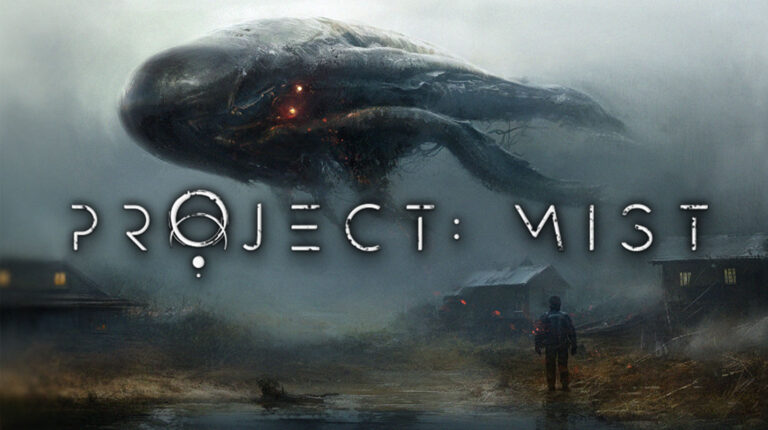
Project: Mist enters Early Access on May 19, after already amassing over 180,000 wishlists on Steam. It’s developed and published by Chicken Launcher, a small Polish studio with a few well-received titles already under its belt (Pan’orama, No Place Like Home). There’s a lot to like in Project: Mist right now, especially for fans of older horror FPS titles.

Jump to:
The Mist Finally Lifts
There isn’t a lot of information about Chicken Launcher available online, with an update posted to Project: Mist’s Steam page in October 2024 highlighting how it’s a small team of 10 people. This might explain why the game first surfaced in October 2023, received a demo a year later, and is only just about to enter Early Access.
The good news is that the main reason news about Project: Mist has been spread far apart is because the developers are dead set on making something worth playing before EA, rather than using that as a reason to make a playable game. As they posted on Steam back in December last year: “Each time we reach a milestone, we play the game, talk it through, and come to the same conclusion: we can do better. Instead of releasing it, we keep improving it.”
This could lead to a never-ending cycle of improvements without a game to play, so it’s a good thing Chicken Launcher is happy enough with what they currently have to release it. And I’m happy to report that my first few hours with Project: Mist have revealed a competent horror FPS that, while janky, is still crammed with features. It feels like a cross between Half-Life 2, the first Far Cry, The Forest and, if you squint a little, even Only Human, but different enough that I didn’t wish I was playing those instead.
Follow My Voice
The start has you wake up from a pod in a derelict room that houses a weird organic growth in the corner. A woman’s voice calls out via a radio, and soon enough you’re following instructions to find her and get answers. So far, so familiar.
Leaving the mini-bunker, I was immediately attacked by a plant-like mutant that got stuck on scenery. Not the most auspicious introduction to the game’s combat. Luckily, this was the only real issue I found in this regard during around five hours of play; other enemies were smart enough to pathfind me correctly.
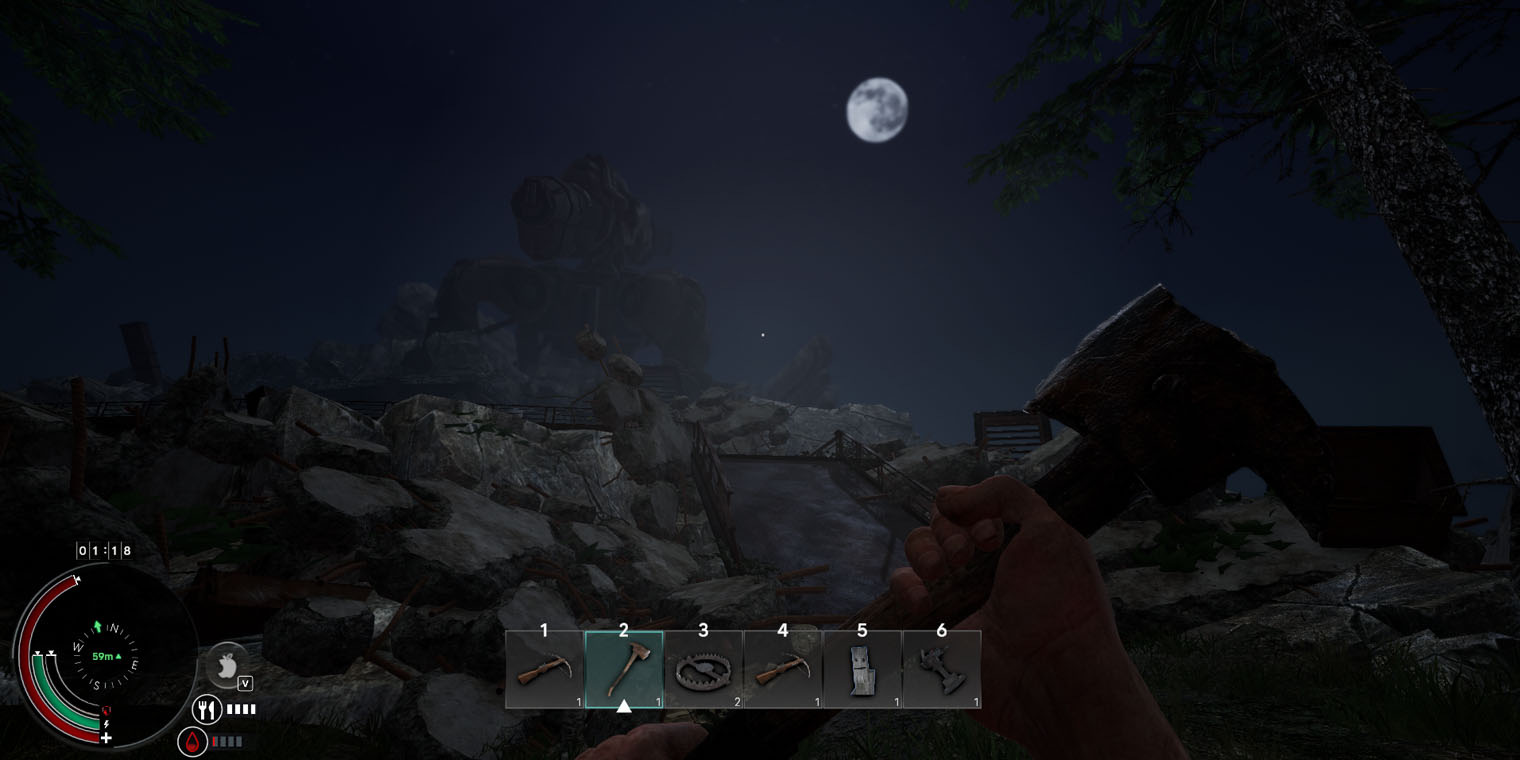
The environmental storytelling is excellent right out of the gate: the world is a jumbled mess of ruined bunkers, military camps, and roaming monsters. The Alpine-like landscape is hemmed-in by dense mist that renders distant objects as hazy, ominous shadows. Exploration is a lot of fun as it feels necessary to go steady and creep around – I don’t believe the game has an actual stealth system in place (most enemies seem to operate on having their area of attack being triggered rather than sight lines, for example) but that doesn’t mean you can just charge around being all gung-ho about things.
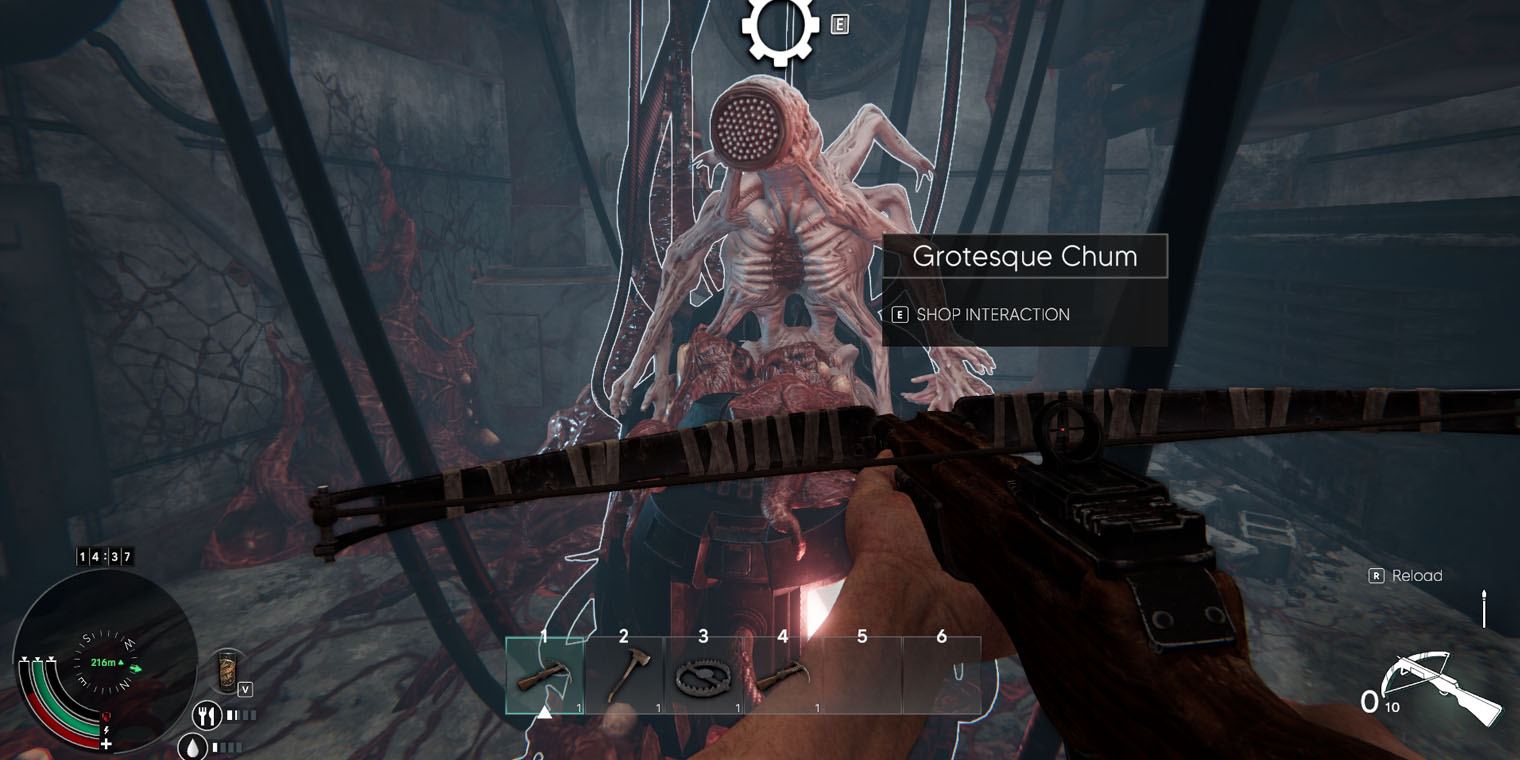
I chalk this up to the emphasis on crafting and built-in survival metrics: hunger and thirst. All are essential to survival, rather than bolted-on ideas. The former mechanic might seem like Project: Mist is following in the footsteps of any number of modern titles but thankfully I found the crafting to be straightforward. There are tons of resources scattered around, from rocks to sticks to spare parts, without a reliance on punching a tree to death first. These can then be combined in an equally straightforward crafting menu at appropriate benches to make things like weapons, ammunition, first aid kits, and so on.
Hunger and thirst can be instantly sated by eating/drinking things like mushrooms and blueberries which are not exactly abundant, but they are easy to find. Make sure these meters are full because it gives you stat bonuses; if they drop, your health starts to drop too. Thirst is almost more of a threat than monsters as it runs low very, very quickly so I strongly recommend consuming any food and drink when you find it.
We Ran Out of Letters
As you’d expect, notes scattered around offer a glimpse into what happened. I found one early on that talked about classifying things on a threat scale, but after just a few weeks these went past “Z9.” Meaning, whatever had “breached” into our world was far beyond our understanding and required a whole new categorisation system. That’s a cool idea!
The woman on the radio offers you a way out on a train, but you’ll need some other items first. This involves finding a giant mech, and then trekking to a scientific greenhouse facility. Neither are too far from where you start, but the layout of the land and variety of monsters, and environmental hazards like infected water and toxic spills, stops things from being an easy point-to-point journey.
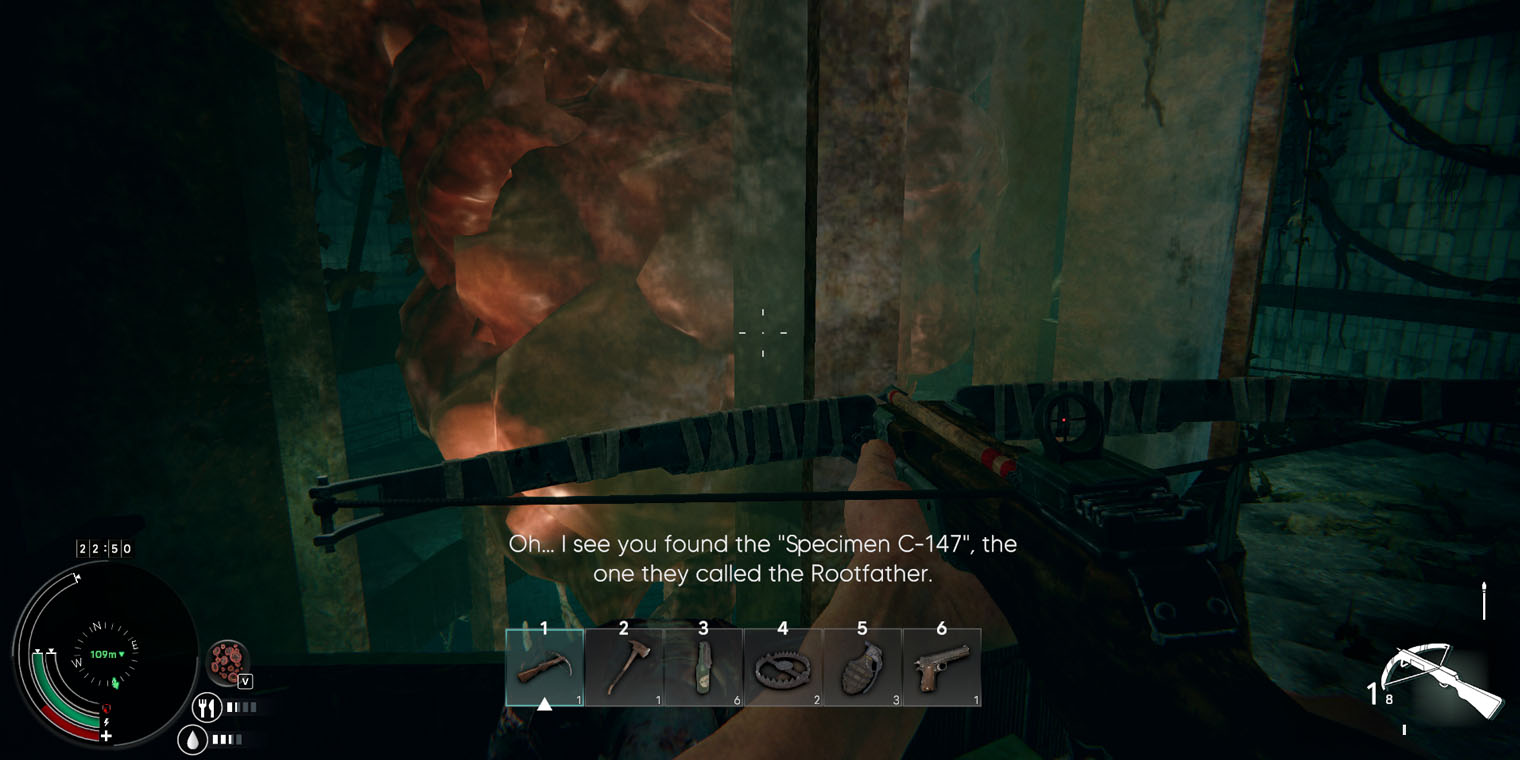
I don’t know if it was a glitch that meant I could walk up most steep surfaces, but if it is I sincerely hope it stays in the game because the freedom of movement it affords you as the player is really welcome. To be clear, I couldn’t scale vertical surfaces, but I could walk/jump up steep and craggy hills to reach areas I didn’t think were possible.
This meant I could scout the path ahead a few times, as well as get the drop on some enemies. I was especially proud of launching a grenade from a great height, having it explode above the heads of monsters, and wipe out a bunch. The rest went nuts and started running around looking for me; attack any enemy from a distance and they, plus nearby ones, will immediately go on alert and start roaming around.
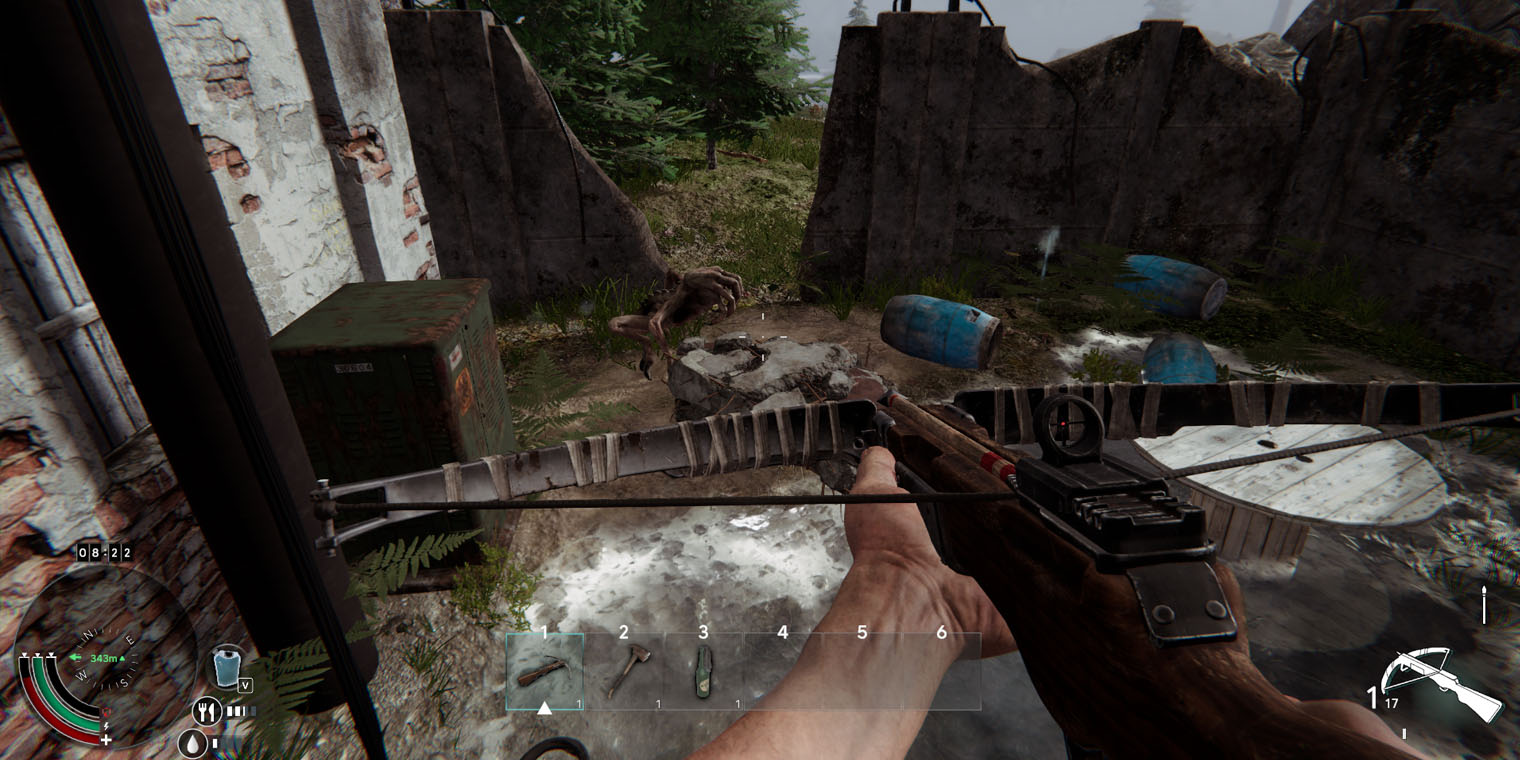
Watch out for corpses, too, as some can be searched but others will stand up and come after you. I came across a good variety of enemies within the first five hours, from standard zombie-types to armored freaks. A teleporting mutant scared the crap out of me while I was searching a campsite, as I couldn’t get a bead on the damn thing to attack it. Luckily, I managed to deploy a few bear traps and snagged it when it reappeared and charged me.
Unending Rot and Decay
The Rootfather Greenhouse is a highlight of the early going, as it’s a tightly-contained facility that manages to instill a pervasive sense of threat. This is thanks to copious squishy growths that look like they could detach from the wall and attack at any moment; I’ll let you find out whether they do or not.
This section highlights one of Project: Mist’s strengths: the writing. The lady helping you is wonderfully voiced, with just the right level of world weariness and deadpan to stop her sounding rote. She’s also the main delivery system for excellent lines like “They wanted abundance. All they got was unending rot and decay.”
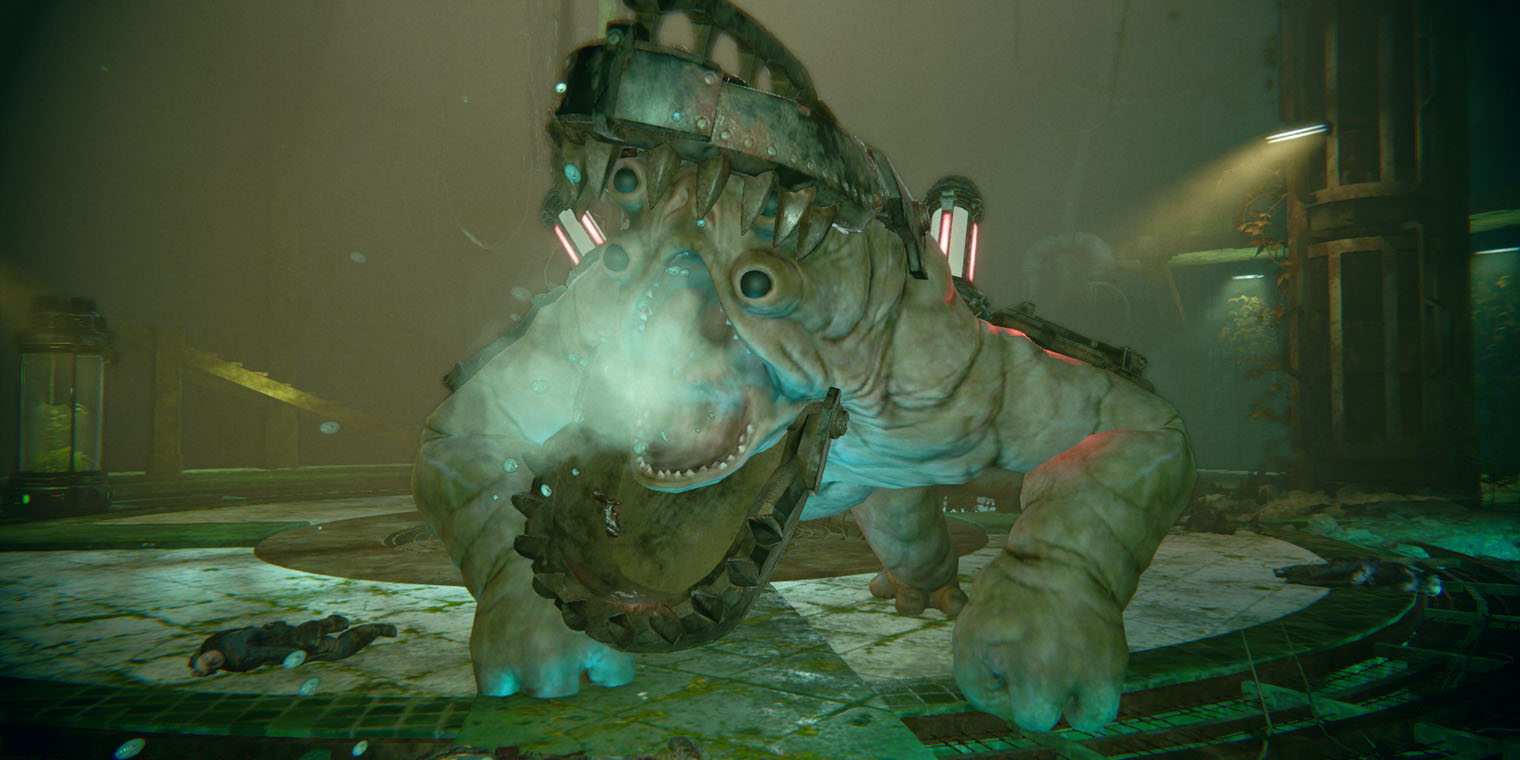
This initial quest does involve a boss fight, and it’s a big, lumbering beast called a Chomper. I was trapped in an arena with things like the remnants of stairs, so I thought I was being clever by climbing these to attack the Chomper. Unfortunately for me, the environment is also destructible so it threw massive rocks at the stairs, destroyed them, and forced me to run around in panic as it gave chase. Top stuff!
Growing Pains
There are a few caveats, of course, for anyone else looking to jump into Project: Mist. Some are obvious Early Access ones, like how players will encounter bugs and broken systems, and so on. Others are currently built-in, so I hope to see them tackled before new content gets added. The most egregious issue is that you start with a Gravity Gun, but this isn’t obvious unless you dig around in the perks system.
Perks are unlocked via Blood Orbs, which are taken from defeated enemies but also can be found out in the world. The level and amount of upgrades is deep and doesn’t look to have any particularly useless choices, to give you an idea of the level of polish Project: Mist does already have. However, while the Gravity Gun is cheap to unlock, I have no idea how you use it, as there was no point during gameplay with instructions. There aren’t any control settings in options for this either, which is a peculiar oversight.
Controls were also wonky out of the gate – aim (RMB) moved me forward for example – and it took a quick restart to iron out these quirks. I should note there isn’t currently controller support, which makes it look like Chicken Launcher has been more focused on adding cool stuff than useful things; hopefully this will change going forward.
And the crafting I mentioned? Turns out you can also make buildings, barricades, things like that, but again: no instructions or indication you can do this, unless like me you wonder why the tab key is mapped to “Framework.” I’m not really sure how or why these would be useful from my existing time in the game, unless the idea is similar to Fortnite in that you can try dropping obstacles down during or before a fight…? Or maybe the game pivots from set missions to a more open structure later on, so you can build a home base? I have no idea, but again, the feature does actually work so it’s not half-baked, just not explained.
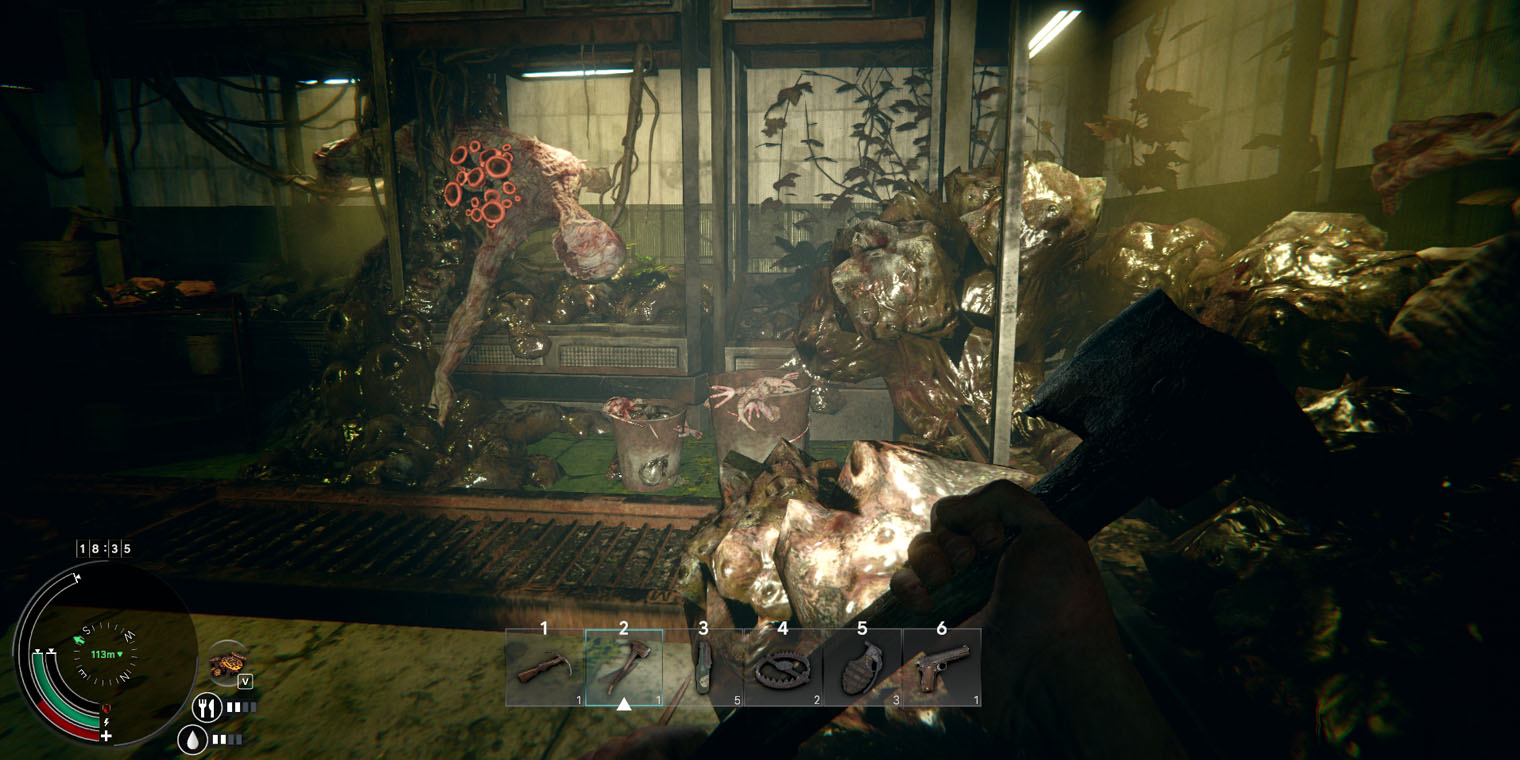
Melee combat is weirdly weightless; there are animations for hitting enemies but it rarely actually felt like I was physically connecting with them. Enemy animation is also occasionally jerky. Weapons are unbalanced, damage-wise; I don’t understand how a shotgun can do as much damage as a pistol for example, and why both of these are frankly shit compared to the starting crossbow (which is awesome).
Nighttime doesn’t really get dark, just dim. Saving using a bed doesn’t make you sleep and vice versa, and you can even be too hungry or thirsty to sleep; I kind of like these ideas though, so it’s not all negative. In short, it seems that there’s still some optimization needed across the board.
Early Access But Not Unfinished Access
Crucially, Chicken Launcher is releasing a finished product, at least in terms of “it has an end.” They estimate it’ll take around 16 hours to complete the main story, with various side quests and secrets bumping up the overall play time. I do think that $25 is a steep asking price for an Early Access release, though, and I can see this putting a lot of people off. A final release date is still up in the air, but don’t let that (or the price tag) stop you from giving Project: Mist a try.
There’s already a lot to like here – there’s even online co-op, that I couldn’t test but others in Discord have and said it works well so far. The default difficulty level is perfectly balanced overall, there’s a really good spread of useful items tucked around the map which in turn encourages exploration, and it genuinely feels like playing a lost horror shooter from 10-15 years ago. That’s a compliment, believe me.