



Best AI Writing Tools for Content Creators in 2026 | Eneba Hub

Eneba Hub contains affiliate links, which means we may earn a small commission if you make a purchase through them—at no extra cost to you. Learn more


The $140 I wasted on duplicate AI subscriptions is what pushed me to actually map the best AI writing tools for content creators. What came out of it was a cleaner, cheaper stack that covered every part of my workflow.
The AI content writing tools that held up fell into three categories: generators for blank-page drafting, writing assistants for polishing existing drafts, and content optimizers for search performance. Each handles a different stage of the writing workflows.
Eight tools made the final cut, each verified within 30 days for current pricing and tested against a specific creator workflow. Some are household names, while a couple are genuinely underrated. But all of them earned their spot.
Jump to:
Key Takeaways
- Three tool types, one full workflow. Generators draft from scratch, writing assistants polish what’s there, and content optimizers handle search. The best AI tools for bloggers who publish consistently run one of each.
- Start with ChatGPT + Claude – free. ChatGPT wins on format range and short-form speed. Claude wins on long-form voice consistency across 3,000+ words. Both free tiers do real work before you spend anything.
- Jasper only makes sense at volume. Its brand-voice system earns the $59/mo once you’re pushing 20+ pieces a month. Below that, Claude Pro at $20/mo covers most of the same ground – and doubles as the go-to AI writing assistant for content creators doing long-form.
- Fiction writers: Sudowrite, full stop. The Story Bible keeps characters and plot consistent across a full novel. Professional tier runs $29/mo, or $22/mo billed annually.
- Podcasters: Descript + Claude. Drop in a one-hour recording, get a polished 1,500-word article in under two hours. The fastest transcription-to-article pipeline on this list.
- The best AI tools for bloggers aren’t one tool, they’re a stack. Get the right pick per stage and you’ve covered the whole workflow without overspending.
Our Top Picks
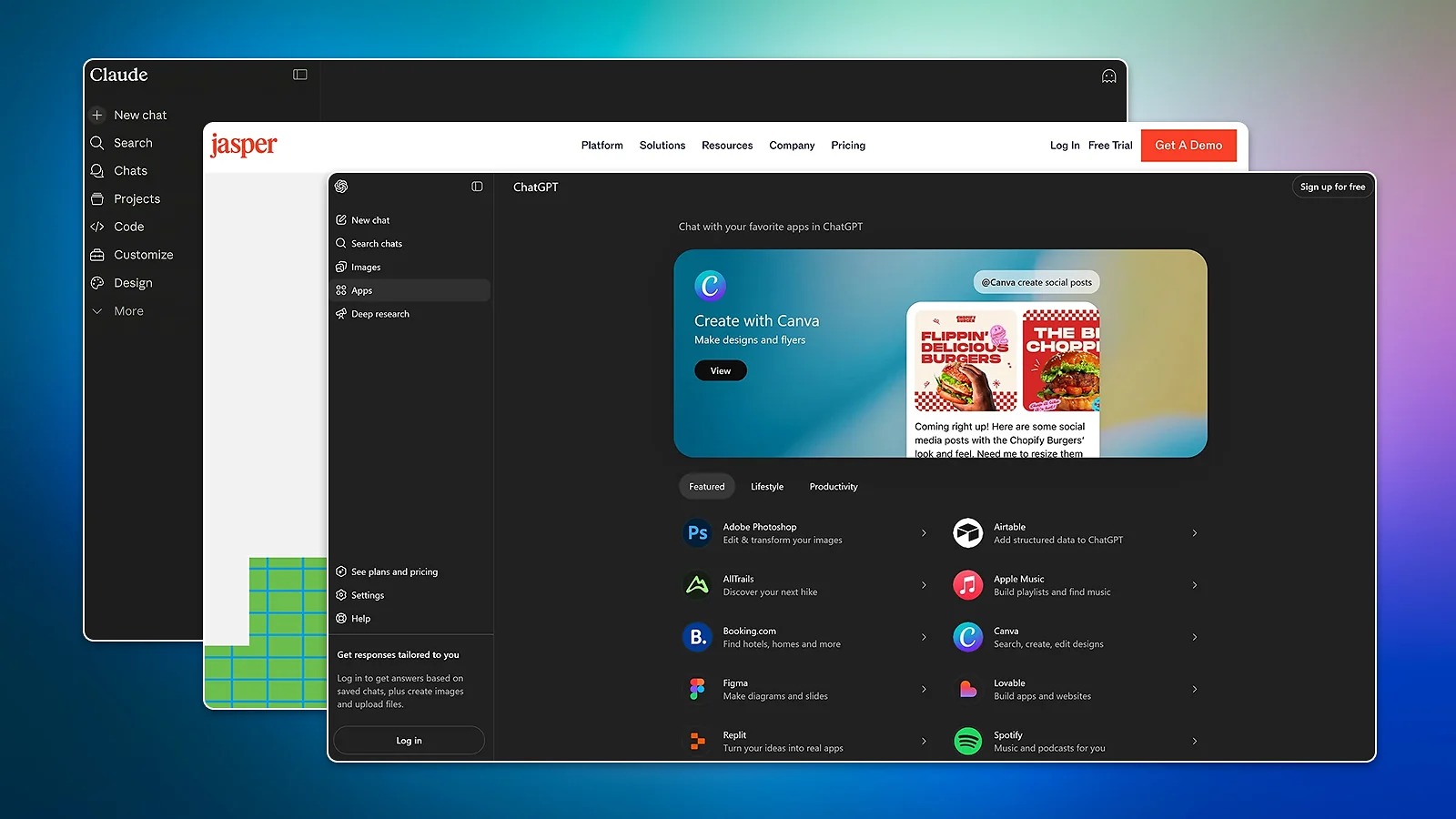
Three tools from this list came up in my workflow before any of the others. They cover the widest range of what the best AI writing tools for content creators actually need to solve day-to-day, and they’re where I’d tell anyone to start.
- ChatGPT – Best universal AI writing tool for content creators. ChatGPT handles many writing formats in one interface, and the free tier is genuinely useful before spending a dollar. Custom GPTs let you load brand voice once and apply it across every task from that point forward.
- Claude – Best AI writing tool for long-form articles and voice consistency. The Projects feature keeps brand context loaded across every session without re-prompting. For any serious AI writing assistant for content creators working in long-form, this is the clearest pick.
- Jasper – Best AI writing tool for marketing teams. Jasper IQ trains on your actual content rather than relying on prompts, so brand voice stays consistent across every writer on the team.
The remaining five picks cover short-form copy, SEO-focused content, fiction drafting, transcription-to-article pipelines, and written-to-audio distribution. Each solves something the top three don’t, and for the right workflow, any one of them could be the strongest single addition to a best AI writing tools for content creators stack.
Why Content Creators Need AI Writing Tools in 2026
Before I added AI to my writing workflow, I was spending more time producing content than actually improving it. That’s the core problem the best AI writing tools for content creators solve – they handle the production layer so the thinking can take center stage. Beyond that, there are four places where the difference is concrete:
- Volume without burnout. Manual drafting for two 3,000-word articles runs 10–12 hours of writing time. AI-assisted drafting with a human polish pass cuts that roughly in half. The creative judgment still belongs to the writer, but the blank-page friction mostly disappears.
- Brand voice across formats. Maintaining the same tone across blog, email, ads, and social posts manually is nearly impossible at volume. AI writing tools like Jasper IQ solve this at a system level rather than relying on each writer to re-prompt correctly every session.
- SEO without the extra tab. Without a tool like Writesonic, optimizing every article for search signals can add up to 60 minutes per piece. Built-in SEO tools reduce that to 5–10 minutes and keep the writing workflow in one place.
- Cross-format repurposing. A single long-form article can become a newsletter, five social posts, and podcast notes in under an hour. Manually, the same job takes most of a workday.
Volume, brand voice, SEO efficiency, and repurposing speed – that’s where best AI writing tools for content creators genuinely pull their weight. Strategy, original perspective, and audience trust are a different story. It remains entirely human work.
Best AI Writing Tools for Content Creators: Full Reviews
The eight best AI writing tools for content creators below were each evaluated against the same five criteria: output quality, voice consistency, workflow fit, free-tier value, and current pricing.
The order runs from universal generalists to specialists. If you already know what’s broken in your workflow, jump straight to the category that fits. If you’re still figuring that out, start from the top – the list is sequenced to make that decision easier as you go through it.
1. ChatGPT [Best Universal AI Writing Tool for Content Creators]
| Platforms | Web, iOS, Android, Mac and Windows. API access for developers. |
| Pricing | Free: available.Go: $8/mo.Plus: $20/mo.Pro: From $100/mo.Team/Enterprise: custom pricing. |
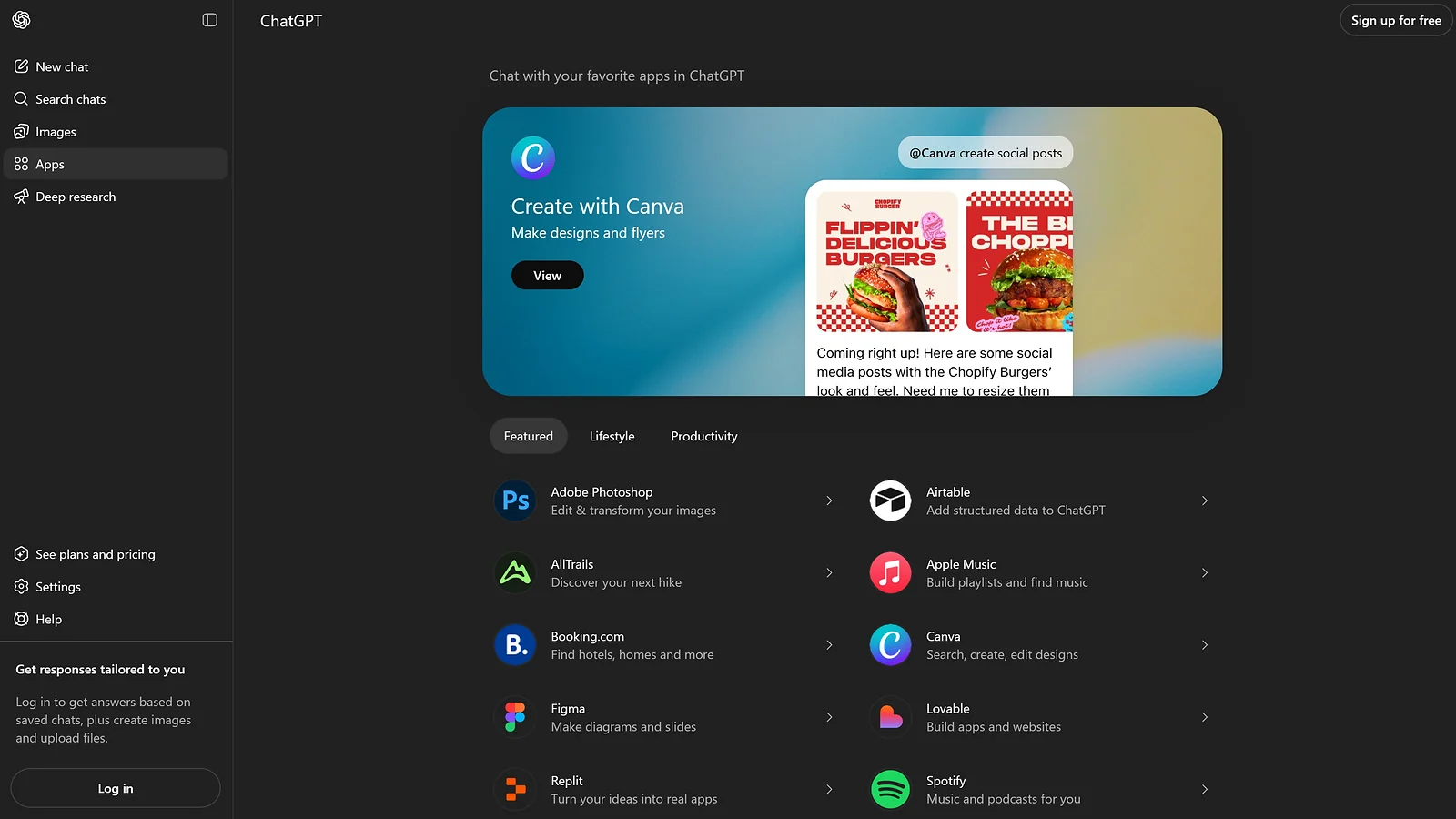
ChatGPT is what I open first every working day. Built by OpenAI, it handles blog drafts, email replies, social captions, video scripts, and outlines in one conversational interface. The format range is wider than any other tool I tested, which is why it sits at the top of this list.
The Custom GPTs feature is what makes it more than a generic writing tool. Build one with your brand voice and reference examples loaded in, and output quality on repeat tasks improves noticeably. That reusable workflow layer is a core part of why ChatGPT holds up across the full best AI writing tools for content creators category.
The conversational interface keeps iteration straightforward. I ask, get output, push back, and adjust without rebuilding a prompt from scratch. The community around ChatGPT is also part of the value – it ranks at the top of the best AI tools for bloggers category precisely because a tested workflow for almost any writing task already exists publicly.
The output needs a real editing pass before publishing. As an AI writing assistant for content creators, ChatGPT handles structure and first drafts well, but the human pass is what brings the voice. Most creators rewrite 30–50% of the output, which is worth factoring into the time math.
It’s the right pick for content creators starting out or for generalists producing across multiple formats. Creators scripting around gaming topics or managing Twitch gift cards promotions for their community use it the same way – the workflow adapts to the content type.
Even after adding more specialized tools later, this one stays in the stack. That’s the clearest sign of a genuinely strong pick on any best AI writing tools for content creators list.
| Pros | Cons |
|---|---|
| ✅ Zero learning curve – usable from minute one ✅ Custom GPTs save brand-voice workflows for reuse ✅ Free tier covers most casual creator needs ✅ Huge community prompt library for every workflow ✅ API access scales for high-volume content teams | ❌ Output needs polish to shed recognizable ChatGPT patterns ❌ Knowledge cutoff applies – verify facts before publishing ❌ Free tier rate-limits can interrupt longer sessions ❌ Plan to rewrite 30–50% of output before publishing |
2. Claude [Best AI Writing Tool for Long-Form Articles and Voice Consistency]
| Platforms | Web (claude.ai), iOS, Android, Mac and Windows. |
| Pricing | Free: available.Pro: $20/mo.Max: from $100/mo.Team: $25/user/mo.Enterprise: custom pricing. |
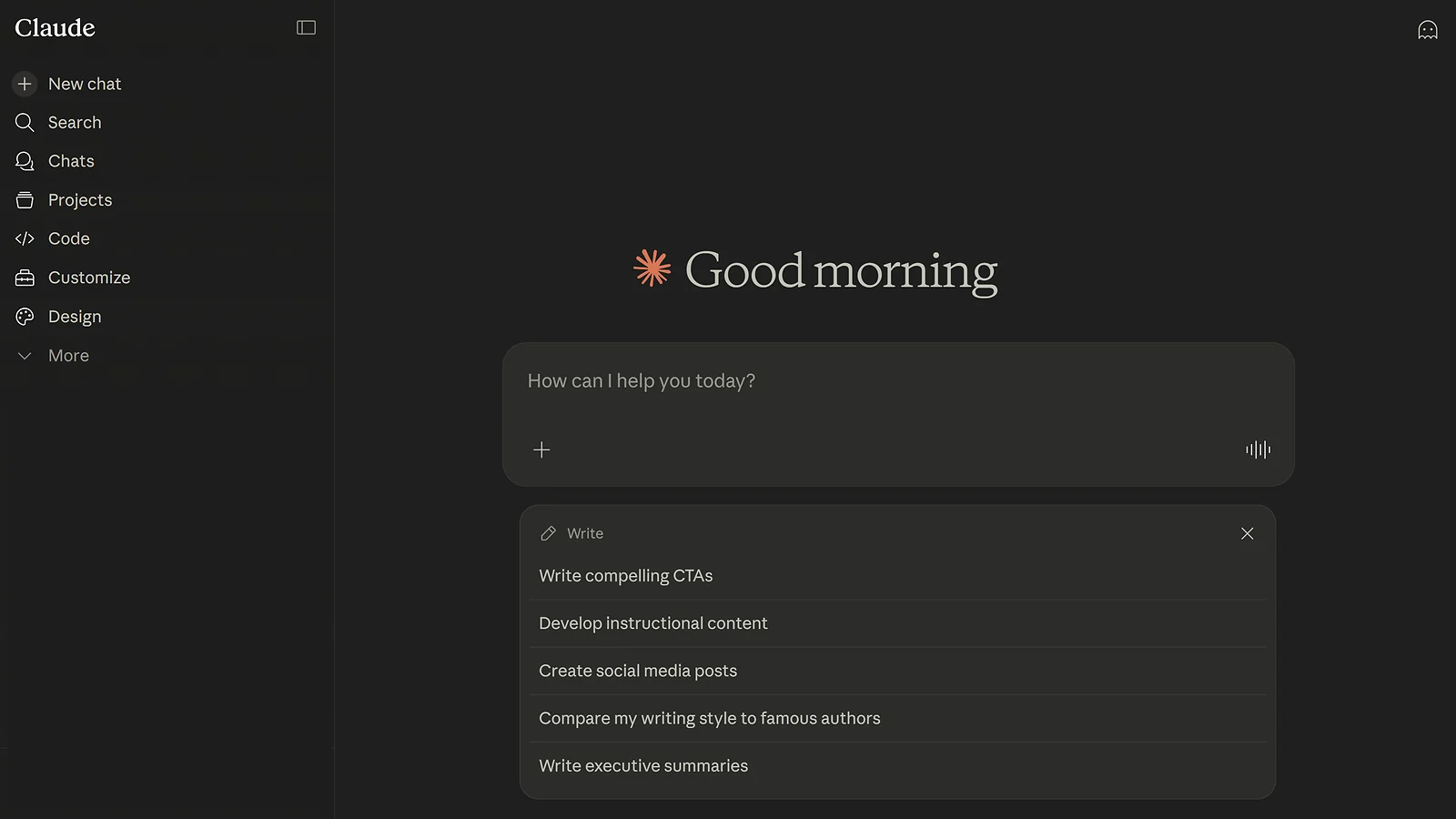
Long-form is where most AI tools quietly lose ground. The first section reads well, the second drifts, and by the third the voice flattens into something generic. Claude is the tool I switched to after hitting that wall repeatedly. Built by Anthropic, it holds both voice and argument across 3,000+ words in a way other tools I tested didn’t.
The thing that makes it one of the best AI tools for bloggers specifically is the Projects feature. Upload a few examples of your existing writing alongside a tone guide, and every conversation in that project starts with that context already loaded. There’s no need to re-explain voice or style from session to session.
The output quality difference shows in the editing pass. Among the best AI writing tools for content creators producing long-form consistently, Claude drafts come back with less structural rebuilding needed. The argument stays coherent and the tone stays calibrated.
I managed to set up two separate Projects in under an hour – one for long-form articles, one for a newsletter. The first drafts that came back already had the right directional voice. Not polished, but a genuine starting point rather than a structural skeleton.
The editing pass on Claude output tends toward voice refinement rather than structural rebuilding. For long-form writers, that’s where most of the actual work happens anyway.
It’s the right call for anyone whose audience notices when the voice shifts mid-article. The best AI writing tools 2026 conversation for long-form has a consistent answer, and among AI content writing tools built around that specific problem, Claude is the clearest pick on this list.
| Pros | Cons |
|---|---|
| ✅ Best long-form coherence of any tool in the category ✅ Projects load brand context without re-prompting ✅ Output reads naturally and needs less rewriting ✅ Free tier is genuinely generous for long-form work ✅ Handles factual nuance well – admits uncertainty honestly | ❌ Smaller plugin ecosystem than ChatGPT ❌ No native image generation in chat ❌ Free tier limits hit fast on long articles ❌ Fewer multi-modal features than ChatGPT |
3. Jasper [Best AI Writing Tool for Marketing Teams]

| Platforms | Web app only, no install. Browser extension for Google Docs and Chrome. Integrates with Surfer SEO and Zapier. |
| Pricing | Free trial: 7 days.Creator: $39/mo.Pro: $59/mo.Business: custom pricing. |
When a marketing team scales past two or three writers, brand voice becomes a coordination problem. One writer prompts differently than another and tone drifts across formats. A colleague running content for a SaaS brand described it as “editing for consistency more than quality.” Jasper is built specifically for that problem.
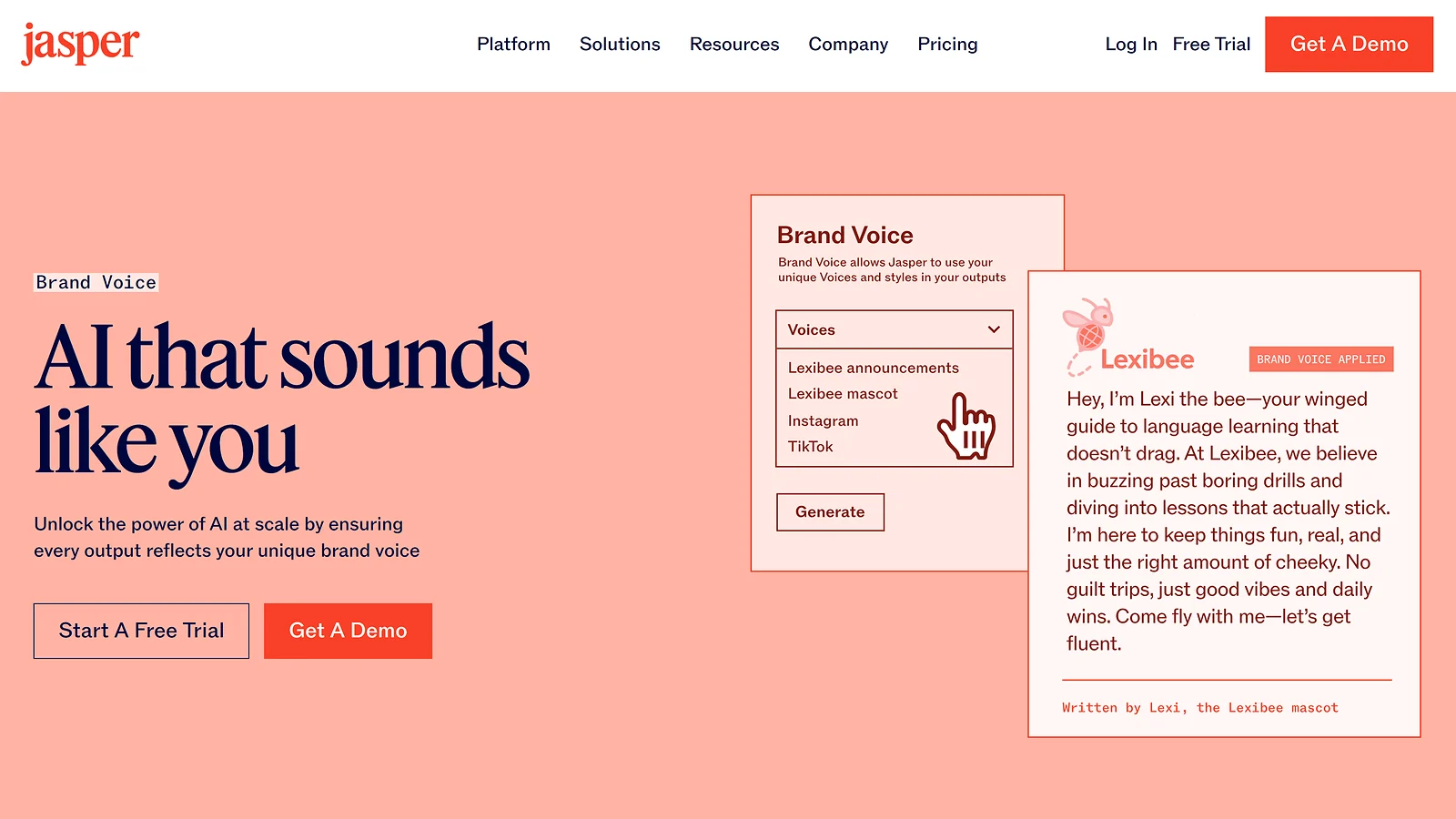
Jasper IQ sits at the core of it. Feed it your best-performing content, internal documentation, and style guidelines, and it trains the voice at a system level. Every output comes out calibrated to that standard without anyone re-prompting from scratch. That consistency is what separates it from ChatGPT or Claude at team scale.
Content Pipelines take the workflow further. One brief goes in, a full campaign comes out – from blog post and LinkedIn update to ad copy, all in a single run. At team scale, consistent on-brand output regardless of who generates it is the core value proposition of Jasper. That’s what justifies the $59/mo entry price for the best AI writing tools for content creators producing at volume.
Expect 4–8 hours of upfront setup before Jasper performs at its best. Brand voice training, pipeline configuration, Surfer SEO integration. It’s a real time investment. The math only works when you’re producing 20+ pieces of branded content per month.
For any best AI for SEO content writing workflow at team scale, Jasper’s output consistency across formats is difficult to replicate with prompt-based tools. That’s where it earns its spot on any best AI writing tools for content creators comparison.
| Pros | Cons |
|---|---|
| ✅ Jasper IQ beats prompt-based brand voice at volume ✅ Content Pipelines compress full campaigns into one workflow ✅ Surfer SEO integration built directly into the editor ✅ Multi-LLM routing adapts output per prompt type ✅ Strong team collaboration features for agencies | ❌ $59/mo is steep for solo creators ❌ 4–8 hours of setup before peak performance ❌ Output still needs a human polish pass ❌ ChatGPT + Claude combo costs less at low volume |
4. Descript [Best AI Tool for Transcription-to-Article Workflows]
| Platforms | Desktop app for Mac and Windows, plus browser version. |
| Pricing | Free: available.Hobbyist: $24/mo.Creator: $35/mo.Business: $65/mo.Enterprise: custom pricing. |
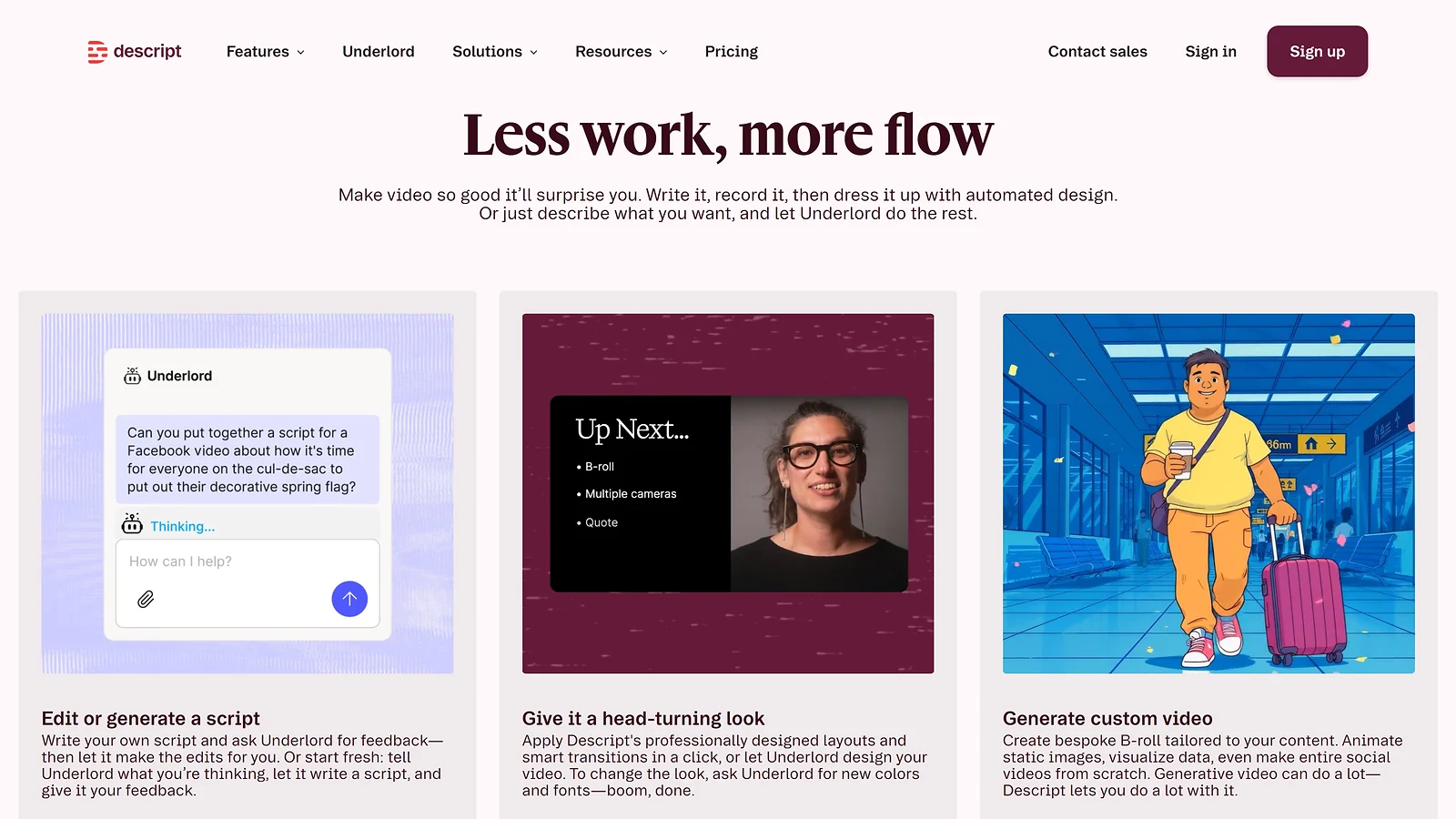
Most podcasters and interviewers are sitting on hours of recorded content with no practical path to publishing it as text. Typing out a transcript manually is a full-day job. Descript closes that gap – drop a recording in, get an accurate transcript back in minutes, and the article foundation is already there.
The transcription accuracy handles industry jargon, overlapping speakers, and varied accents better than any competing tool I ran the same files through. Filler words get stripped in one click and tangents get deleted by removing lines of text. The exported document is clean enough to hand directly to Claude or ChatGPT for the article conversion pass.
In the best AI writing tools for content creators conversation, audio-first creators tend to find Descript through this specific use case rather than its video editing reputation. The spoken cadence in the source material improves the output too, reading less mechanical than prompts built from scratch.
The text-based editing paradigm takes two or three sessions to fully internalize. Once it clicks, going back to timeline-based editing for talk content feels unnecessarily slow.
Streamers who record community events or sessions built around 50 USD Twitch Gift Card giveaways run the same workflow to turn that content into written posts. Record, transcribe, clean the transcript, then pass it to an AI writing assistant for content creators like Claude for the prose conversion.
For podcasters, interviewers, and video creators whose best content lives in recordings, Descript is the most underrated pick on any best AI writing tools for content creators list.
| Pros | Cons |
|---|---|
| ✅ Best transcription accuracy for jargon and multi-speaker audio ✅ Text-based editing is faster than any timeline editor ✅ Filler word removal cleans transcripts in one click ✅ Cross-platform sync between desktop and browser ✅ Free tier sufficient for testing the full workflow | ❌ Primarily audio/video – writing-only users underuse most features ❌ Transcription minute limits hit fast at volume ❌ Text-based paradigm takes a few sessions to internalize ❌ Overdub voice cloning requires careful rights consideration |
5. ElevenLabs [Best AI Tool for Turning Written Content Into Audio]
| Platforms | Web app, no install. Accepts text input, audio uploads for voice cloning, document uploads. |
| Pricing | Free: available.Starter: $6/mo.Creator: $22/mo.Pro: $99/mo. |
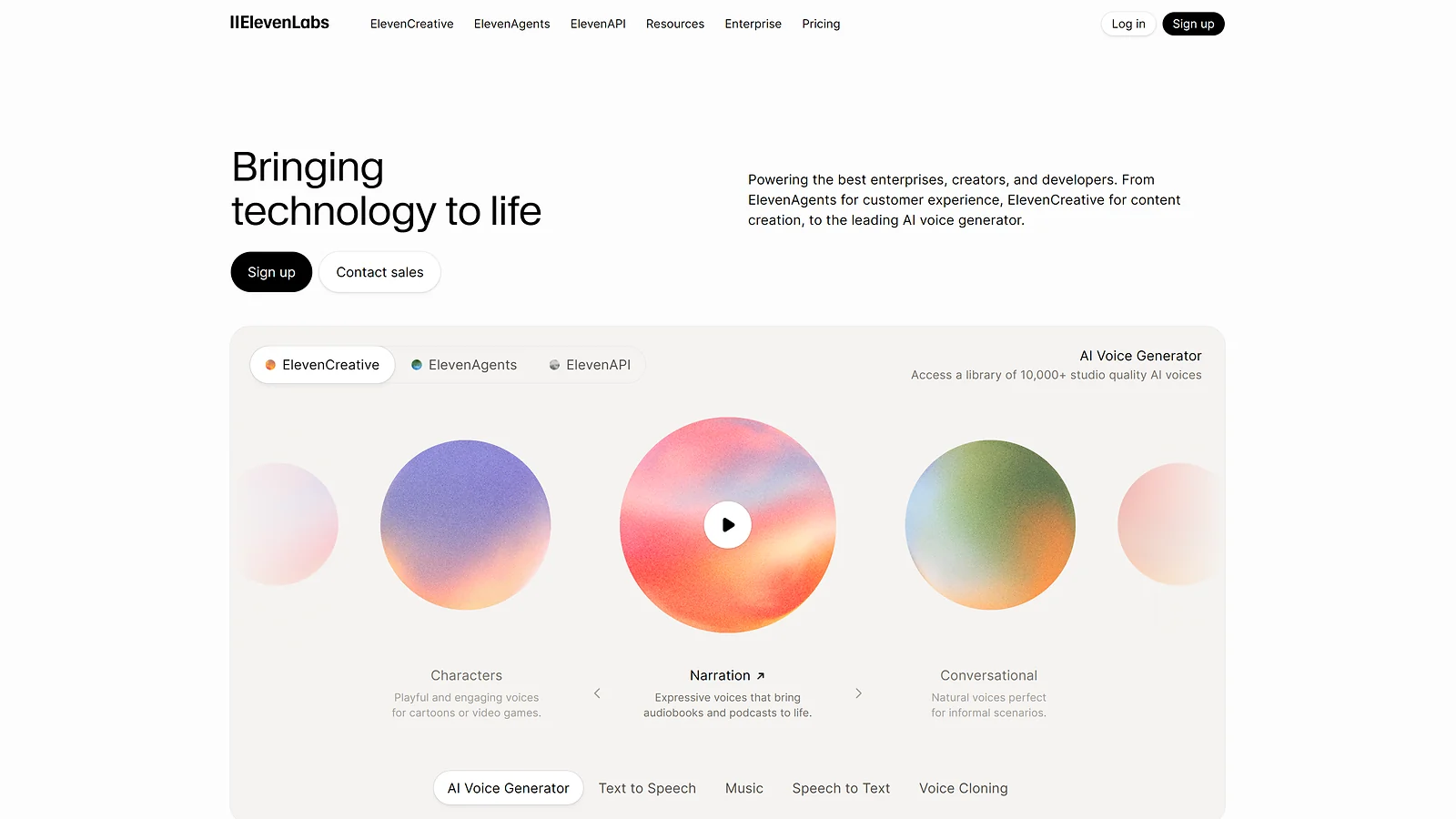
A finished article reaches the people who find it and read it. That audience is one format away from being significantly larger. ElevenLabs takes written content and renders it as natural-sounding narrated audio. This opens podcast listeners, accessibility audiences, and international markets from a single source article.
The reason it makes the cut on any list of the best AI tools for bloggers is the voice quality. Earlier text-to-speech tools produced output listenable for short clips but fatiguing across a full article. I ran a 1,500-word piece through ElevenLabs and the output held up as a standalone podcast episode without any editing. Among AI content writing tools stacks built around multi-format distribution, that quality threshold is what makes the tool worth adding.
The 29-language dubbing makes the reach multiplication concrete. The same source article goes out in Spanish, Portuguese, or German with a decent native pronunciation. Voice cloning takes the authenticity further, a one-minute recorded sample trains the tool to narrate future articles in the creator’s own voice across every language version.
High-volume creators can also automate the full pipeline through the API access. Write in Claude or any of the best AI writing tools for content creators in this guide, export to ElevenLabs via API, publish audio and text simultaneously. The manual version of that workflow runs under 10 minutes per article.
Among the best AI writing tools for content creators focused on reach, ElevenLabs quietly multiplies the audience a single article can serve, and the free tier’s 10K monthly characters is more than enough to test the full workflow before committing.
| Pros | Cons |
|---|---|
| ✅ Best voice synthesis quality for full-length article narration ✅ 29-language dubbing expands audience reach from one source ✅ Voice cloning keeps creator authenticity across all formats ✅ API access enables automated multi-format distribution workflows ✅ Free tier sufficient to test the complete workflow | ❌ Voice cloning requires careful rights and consent consideration ❌ Character-based pricing caps hit fast at high volume ❌ Quality varies by language – strongest on European languages ❌ No writing capability – pairs with other tools, doesn’t replace them |
6. Copy.ai [Best AI Writing Tool for Short-Form Marketing Copy]
| Platforms | Web app, no install. Chrome extension for Google Docs. Integrates with Zapier, HubSpot, and major CRM platforms. |
| Pricing | Free: available.Chat: $29/mo. Enterprise: custom pricing. |
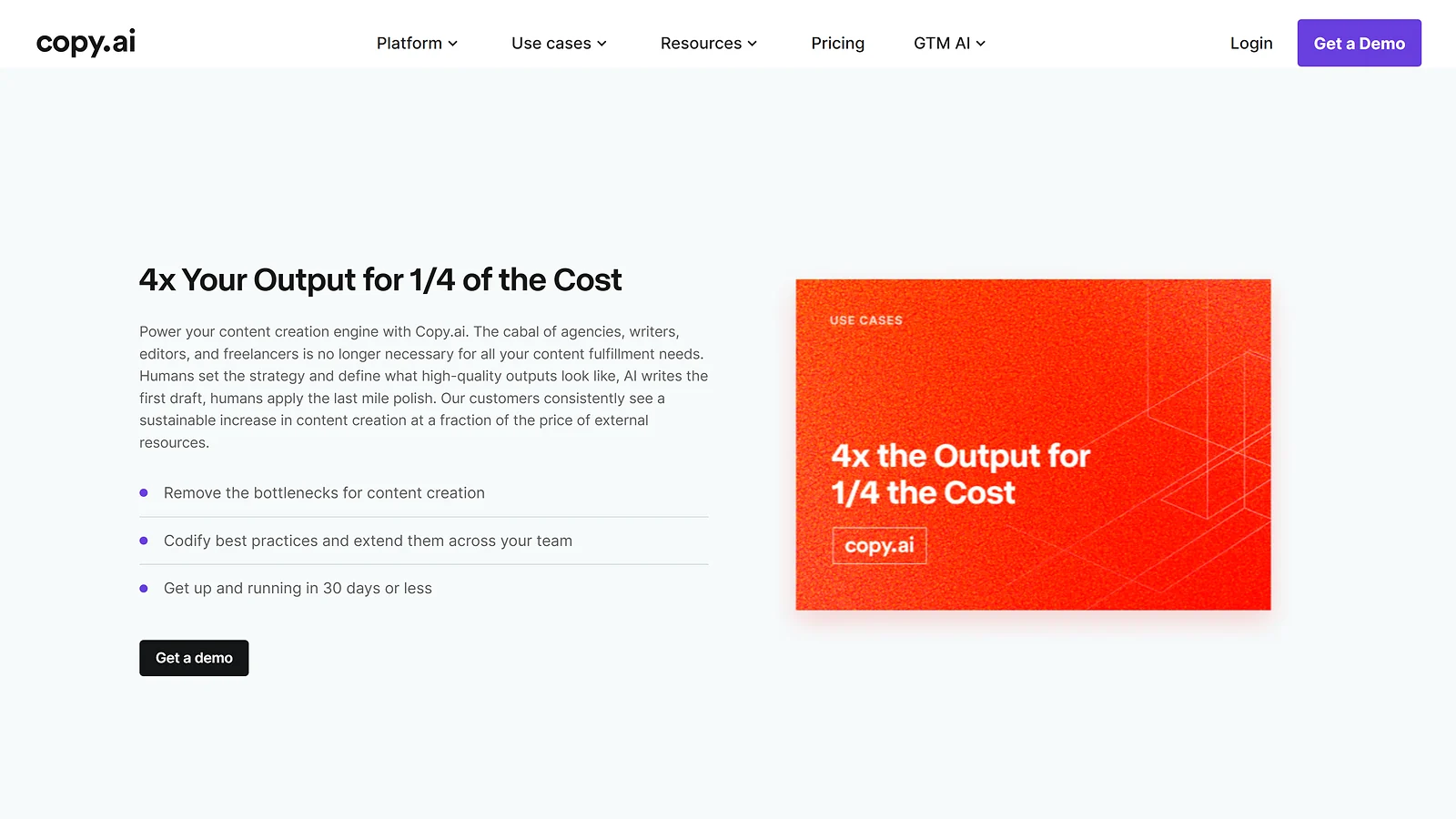
Ad headlines written in ChatGPT tend to read like ad headlines written in ChatGPT. The output is competent, but it doesn’t have the punchy, conversion-focused edge that short-form marketing copy actually needs. Copy.ai is built specifically for that gap – a GTM (Go-To-Market) platform rather than a general writing tool.
The platform’s strength is speed at the asset level. Set up brand voice once with a handful of sample posts, pick the relevant template (ad headline, email subject line, product description) and it generates 5–10 variants per brief. The whole process per asset runs 5–10 minutes versus 30–45 manually.
AI Workflows handle the repetitive volume layer. Email sequences, product description batches, and social caption sets run automatically once configured. I ran it against ChatGPT on the same ad brief and the output variation across multiple rounds was noticeably wider. Useful when a campaign needs multiple creative directions tested quickly.
Long-form is a different story. Past 1,000 words, the output loses structure in a way Claude or Jasper don’t. Copy.ai knows what it is – a specialist tool for short-form conversion copy – and the feature set reflects that focus throughout.
The setup investment is genuinely low compared to Jasper. Brand voice configuration takes under 30 minutes, and the template library covers most short-form marketing scenarios from day one. E-commerce teams writing product descriptions for gaming peripherals or PSN gift cards promotions get immediate value from the volume workflows.
On any best AI writing tools for content creators list covering conversion copy, Copy.ai sits in its own lane. The starter tier at $29/mo makes sense the moment short-form output becomes a consistent part of your weekly workflow.
| Pros | Cons |
|---|---|
| ✅ Best short-form conversion copy in the category ✅ Multi-LLM routing produces varied output styles ✅ AI Workflows automate repetitive copy at scale ✅ Strong CRM integrations for marketing teams ✅ Massive template library tuned for conversion | ❌ Long-form output is noticeably weaker than Claude ❌ Generic prompts produce generic output ❌ Technical or niche content needs careful fact-checking ❌ Doesn’t justify cost if short-form isn’t your primary output |
7. Writesonic [Best AI Writing Tool for SEO-Focused Content]

| Platforms | Web app, no install. Browser extension for Google Docs. Integrates with Surfer SEO, WordPress, and Semrush. Mobile app for on-the-go editing. |
| Pricing | Free trial: available.Starter: $99/mo.Basic: $249/mo.Growth: $499/mo.Enterprise: custom pricing. |
Writing an SEO article without a dedicated optimization tool is a two-step job. Finish the draft, open a second tab, run an audit, go back and rewrite. Writesonic folds that second tab into the writing environment itself – keyword analysis, competitor research, and on-page scoring – all sit inside the same interface where the draft gets written.
Chatsonic is the feature that separates it from other tools on any best AI writing tools for content creators list targeting search traffic. It pulls live data from Google Search, which solves the knowledge cutoff problem that makes most AI tools unreliable for time-sensitive content. I ran it on a piece covering a fast-moving topic and the accuracy gap versus a standard AI generator was immediate.
Most SEO workflows front-load the research into a separate phase that happens before any writing starts. With Writesonic’s 10-step Article Writer, I ran keyword analysis, competitor research, and outline generation without leaving the tab the draft was being written in.
The Sonic Editor runs the same live feedback loop I was used to from Surfer SEO. Keyword density, heading structure, and word count targets update as the draft develops. The optimization pass happens inside the writing session rather than after it.
The full Article Writer process on an SEO piece took me around 90 minutes from start to finish. The same job with a separate writing tool and a Surfer SEO audit ran closer to five hours. Gaming content writers covering topics like Valorant Points will find the competitor analysis particularly useful on high-competition keywords.
It’s the right pick for niche bloggers and content teams that want search optimization built into the writing process. Pair it with a human rewrite pass at the polish stage, and it holds up well on any best AI writing tools for content creators list.
| Pros | Cons |
|---|---|
| ✅ Best SEO integration of any writing tool in the category ✅ Chatsonic with live Google Search solves knowledge cutoff ✅ Sonic Editor matches Google Docs quality with SEO scoring ✅ Supports dozens of languages at consistent output quality ✅ Includes image and voice generation alongside text | ❌ Pure writing quality still trails Claude and ChatGPT ❌ High-volume creators hit word count caps faster than expected ❌ Free plan too limited for real workflow testing ❌ Advanced SEO users still prefer dedicated Surfer SEO |
8. Sudowrite [Best AI Writing Tool for Fiction Authors]
| Platforms | Web app, no install. Browser-first experience optimized for long-form narrative. |
| Pricing | Hobby and Student: $19/mo.Professional: $29/mo.Max: $59/mo. |
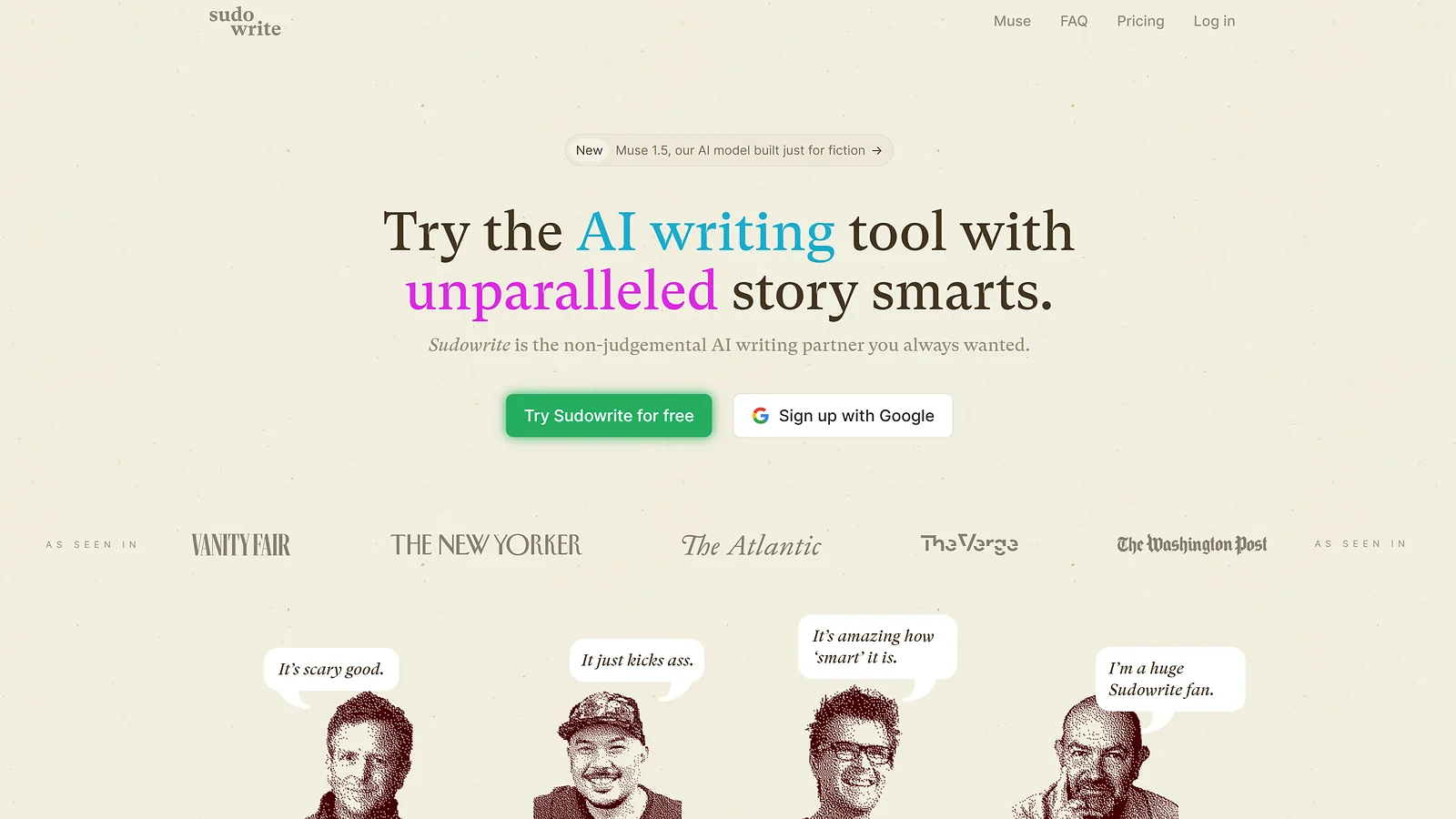
Three chapters into a novel, general-purpose AI tools stop knowing who your characters are. The narrative thread, character voice, plot continuity, world consistency, all of it drifts without a system holding it together across sessions. Sudowrite is built around that specific problem, and nothing else in this category handles it the same way.
The Story Bible is what keeps a full novel project coherent from chapter one through to the final draft. Characters, plot threads, and world-building details stored once carry automatically into every subsequent session.
I found Sudowrite quite exceptional when it comes to producing prose with atmosphere. Sensory detail, texture, and tone come through in a way that reads literary rather than assembled. Stuck scenes that would stall a writing session for an hour get unstuck in under ten minutes with the Brainstorm and Expand features.
A realistic session produces 1,500–3,000 words, mostly the writer’s own voice with AI filling the gaps where momentum breaks. The fiction community has consolidated around Sudowrite precisely because that collaborative dynamic holds up across a full project.
It’s the right call for novelists, short story writers, and serialized fiction creators whose audiences live inside a world the writer built. The Professional tier at $29/mo is where the full feature set opens up. On any best AI writing tools for content creators list that covers fiction seriously, Sudowrite is the only recommendation worth making.
| Pros | Cons |
|---|---|
| ✅ Only tool with long-form narrative consistency built in ✅ Story Bible tracks characters and plot across the full project ✅ Describe feature produces genuinely literary prose ✅ Designed as a co-writer, not a replacement ✅ Professional tier covers most serious novel projects at $22/mo (billed annually) | ❌ Useless for marketing copy, blogs, or SEO content ❌ Credit-based pricing caps heavy users quickly ❌ Smaller community than ChatGPT or Claude ❌ Output still needs significant human editing for voice |
Also Worth Trying
Building a stack around the best AI writing tools for content creators doesn’t stop at eight picks. These five didn’t crack the main list, but that’s not a knock on them – they each solve a specific problem really well.
- Grammarly – Honestly, the best AI writing assistant for content creators who want clean, polished copy without thinking too hard about it. It lives inside every text field you already use and catches tone issues, clarity problems, and grammar slip-ups before they go live.
- Surfer SEO – If ranking is the goal, this is the best AI for SEO content writing full stop. The SERP analysis goes deeper than anything baked into a writing tool, and it’s the one creators reach for when a piece that should be ranking just… isn’t.
- Rytr – A solid lightweight pick for solo bloggers who don’t need Copy.ai‘s full GTM setup. At $9/mo it’s one of the more practical AI content writing tools for anyone producing short-form copy on a budget.
- Notion AI – If your whole workflow already lives in Notion, this is a no-brainer. It brings AI writing assistance into the exact place you’re already working, which cuts out a lot of unnecessary tab-switching.
- Wordtune – Great for non-native English creators who want phrasing that actually sounds natural. It’s quick, low-friction, and genuinely useful as a finishing layer.
Here’s the thing about the best AI tools for bloggers and creators who stick with their stack long-term: the setups that hold up tend to combine one generator, one optimizer, and one polish layer. Most of the polish options worth considering are sitting right here on this list.
Quick Comparison Table
Eight tools, different categories, different price points, and different workflows – all mapped to the best AI writing tools for content creators’ decisions that actually come up in practice. The table below puts the decision-relevant details in one place so the right pick for your specific situation is easier to identify at a glance.
| Tool | Category | Best For | Free Plan? | Price From | Rating |
|---|---|---|---|---|---|
| ChatGPT | Generator | Universal – all creator workflows | ✓ | $8/mo | ★★★★★ |
| Claude | Generator | Long-form articles, voice consistency | ✓ | $20/mo | ★★★★★ |
| Jasper | Generator | Marketing teams, brand voice at volume | ✗ (7-day trial only) | $59/mo | ★★★★½ |
| Descript | Assistant | Podcasters repurposing audio to text | ✓ | $24/mo | ★★★★½ |
| ElevenLabs | Assistant | Audio distribution, multilingual narration | ✓ | $6/mo | ★★★★ |
| Copy.ai | Generator | Short-form marketing copy, ads and email | ✓ | $29/mo | ★★★★ |
| Writesonic | Generator | SEO-focused content, search rankings | ✗(~10,000-word one-time trial) | $99/mo | ★★★½ |
| Sudowrite | Generator | Fiction authors, novels, narrative work | ✗(~10,000-credit one-time trial) | $19/mo | ★★★½ |
All pricing reflects monthly billing. Annual plans are available at a lower rate across most tools.
The Gold tier picks (ChatGPT, Claude, Jasper) lead their sub-categories on output quality and workflow fit. The two assistant tools round out the best AI writing tools for content creators stack built around multi-format distribution.
How To Choose the Right AI Writing Tool
Most people pick the wrong AI content writing tools for one simple reason: they choose before they diagnose. More tools won’t fix a broken workflow, but the right tool for the right stage will. The five criteria below make that decision a lot faster.
Generator vs. Assistant vs. Optimizer
- Generators, such as ChatGPT, Claude, Jasper, Copy.ai, Writesonic, and Sudowrite, write text from a prompt. They fix the blank page problem.
- Assistants, like Grammarly, Wordtune, Descript, and ElevenLabs, work on content that already exists – polishing drafts, cleaning transcripts, or converting written work into audio. They fix the production and distribution problem.
- Content optimizers, such as Surfer SEO, analyze top-ranking pages and identify what your published content is missing. They fix the ranking problem.
A stack with one strong pick from each category covers the full writing lifecycle – and separates a useful best AI writing tools for content creators setup from an expensive one. Three generators running simultaneously solve the same problem three times. Match the tool to the stage first.
Long-Form vs. Short-Form Content Output
Long-form output above 3,000 words rewards tools that maintain coherence across distance. Claude and Jasper lead here. Short-form output under 500 words rewards punchy, conversion-focused results. This is where Copy.ai and Rytr lead. ChatGPT sits comfortably in both.
Using a short-form tool for long articles produces drifting output after roughly 1,000 words. Using a long-form tool for ad headlines produces copy that’s wordy and flat. Pick by output length first.
Brand Voice and Style Consistency
Solo creators handle brand voice well through ChatGPT Custom GPTs or Claude Projects. Load examples once, apply across every session.
Marketing teams producing 20+ pieces per month need more than prompt-based consistency. Jasper IQ trains at a system level and applies the same tone across every writer automatically. That upgrade pays back around 20 pieces of branded content per month.
Free Tier Validation Before Paid Commitment
Every tool in this article has a free tier or trial except Surfer SEO. The pattern worth avoiding among the best AI writing tools for content creators is subscribing on reputation, never using the features that justify the price, and paying $59 to $99 per month for output a $20 plan elsewhere already covers. Always utilize the free trial and validate fit on real tasks before upgrading.
Solo Creator vs. Team Workflow
Budget and team size determine the stack more than any individual feature.
Solo creators running ChatGPT Plus at $20/mo or Claude Pro at $20/mo cover the full writing lifecycle for one person publishing consistently. Teams of 2 to 5 add Jasper at $59/mo or Copy.ai at $29/mo for brand voice consistency across writers. Agencies and content teams of 10 or more move to enterprise tiers with API access and team workspaces.
The biggest overspending usually happens at the solo stage. Team-level tools often get added before the volume justifies them – the most common budget mistake in any best AI writing tools for content creators’ decision at the solo level.
Recommended AI Writing Stacks by Creator Type
The best AI content writing tools for your workflow depend almost entirely on what you’re actually making. So, instead of a one-size-fits-all recommendation, here are five real stacks built around real creator types, each with an honest monthly cost attached.
- The Solo Blogger Stack – $20/mo. Claude Pro for long-form drafting plus Grammarly free for grammar polish. As far as the best AI tools for bloggers working solo go, this covers 95% of the job for anyone publishing 2–3 articles a week. Nothing more required until volume scales.
- The Marketing Team Stack – $128–168/mo. Jasper Creator or Pro for brand-voice consistency at volume plus Surfer SEO for SERP optimization – the go-to best AI for SEO content writing at team scale. The math justifies itself once content output crosses 20 pieces per month.
- The Fiction Author Stack – $22/mo. Sudowrite Professional for narrative drafting plus Grammarly free for polish plus ChatGPT free for brainstorming. The only stack on this list built specifically for storytellers.
- The Podcaster-to-Article Stack – $44/mo. Descript Hobbyist for transcription plus Claude Pro for article rewriting. Turns a one-hour podcast episode into a polished 1,500-word article in under two hours.
- The International Creator Stack – $52/mo. Claude Pro for English drafting plus ElevenLabs Creator for multilingual narrated audio and Wordtune Premium for non-native English polish. Single-language input, multi-language output.
The best stack is the one that fits your content type. Forcing a marketing stack onto a fiction author wastes $50/mo, and so does forcing a fiction stack onto a content agency. For the best AI writing tools for content creators at every budget, the stacks above are the starting points worth testing first.
Are AI Writing Tools Actually Worth It for Content Creators?
Short answer? Yes, but only if you’re actually publishing. The best AI writing tools for content creators pay for themselves fast. At $20–50/mo, most people recoup the cost within the first week when you factor in the time saved. Putting out fewer than eight articles a month? The free tiers from ChatGPT and Claude will cover you without spending a cent.
The mistake that trips most people up is hitting publish without touching the output. AI content writing tools are first-draft machines, not finished-article machines. Plan to rewrite 20–50% before anything goes live. Still a great deal, just go in with realistic expectations.
AI handles volume and removes friction. It does not replace your voice. Creators who run a fully automated pipeline with zero human input plateau quickly, and readers notice the flat tone faster than you’d think.
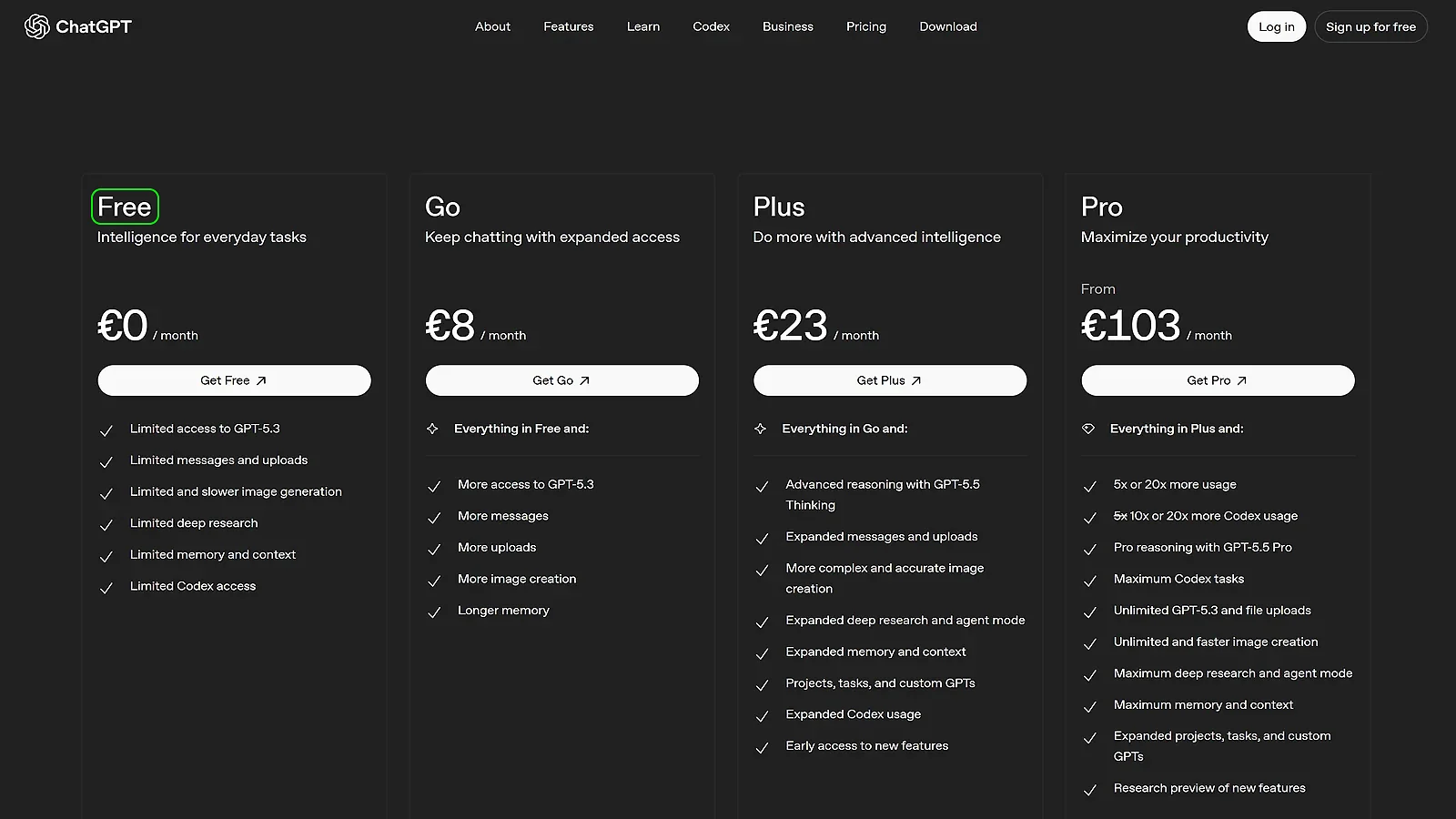
The smartest way to start is free: ChatGPT, Claude, and Grammarly on real tasks for a month. If output speed is still the bottleneck, the best AI tools for bloggers on this list pay back fast. Figuring out which AI writing assistant for content creators fits your workflow is what that trial month is really for. From there, any of the best AI writing tools for content creators on this list will earn back the upgrade cost quickly.
Community Verdict: What Creators Actually Say
The praise from creator communities tends to be feature-specific. ChatGPT Custom GPTs, Claude’s long-form coherence, Jasper IQ’s brand voice training, Sudowrite’s Story Bible, and ElevenLabs‘ voice cloning quality all draw consistent, unprompted mentions across forums and review threads.
The complaints follow a consistent pattern too. Recognizable ChatGPT output patterns, Jasper’s steep setup investment to its entry price, Copy.ai’s long-form weakness, and Descript’s learning curve all appear repeatedly in honest creator reviews.
Four red flags come up often enough to name directly: publishing unedited AI output, subscribing to multiple tools when two cover the actual workflow, skipping the polish layer entirely, and letting pricing creep from $20/mo to $200/mo without proportional output gains.
For anyone building a serious best AI writing tools for content creators stack, avoiding those four mistakes matters as much as picking the right tools.
Final Thoughts
Every creator workflow has a different bottleneck. When it comes to best AI writing tools for content creators, the stacks below match the most common ones to a specific tool combination and a realistic monthly cost – a cleaner starting point than building from scratch.
- Solo blogger – Claude Pro plus Grammarly free. $20/mo.
- Marketing team – Jasper Creator plus Surfer SEO. $128/mo.
- Fiction author – Sudowrite Professional. $29/mo, or $22/mo billed annually.
- Podcaster repurposing video to text – Descript plus Claude Pro. $44/mo.
- International or audio-first creator – Claude Pro plus ElevenLabs Creator for multilingual narrated audio. $42/mo.
Where to start depends on what you actually make: Claude free is the move if long-form articles are your main thing – it’s the AI writing assistant for content creators that holds up best across longer pieces. ChatGPT free is the better starting point if you’re jumping between formats.
Both free tiers are enough to validate fit before spending anything. Creators who also stream or cover gaming content alongside their writing work will also find this 25 USD Twitch Gift Card pairs well with the AI content writing tools in this guide.
FAQs
The best AI writing tool for content creators reviewed in this guide is ChatGPT. It covers the widest range of writing tasks in one interface, has the lowest learning curve, and the free tier is genuinely useful before paying anything. Pair it with Claude for long-form work and Grammarly for polish. That three-tool stack covers most workflows without overspending.
For short blog posts under 1,500 words, ChatGPT handles it well. For anything longer, Claude produces more coherent output with better voice consistency across the full piece. Most serious bloggers end up running both: Claude for long-form drafts, ChatGPT for shorter formats, social content, and brainstorming sessions.
Yes, if you’re publishing consistently. For creators producing eight or more articles per month, the time savings at $20–50/mo pay back within the first week. Below that output level, free tiers from ChatGPT and Claude cover everything without a subscription. Volume is the deciding factor here, not the tool.
No. They remove friction from the production layer, like first drafts, outlines, and reformatting, but the editorial judgment, original perspective, and voice that audiences actually follow remain the writer’s job. Creators who publish unedited AI output consistently produce content that readers and search engines both recognize as hollow. The human pass is non-negotiable.
Not automatically. Google’s helpful-content guidelines target low-quality, unhelpful content regardless of how it was produced. AI-generated articles that are well-edited, accurate, and genuinely useful for the reader perform fine in search. The risk is publishing unedited bulk output. That’s what triggers ranking penalties, not AI assistance itself.