

7 Ways to Build Smart Passive Income: How It Works & How Much You Can Earn

Eneba Hub contains affiliate links, which means we may earn a small commission if you make a purchase through them—at no extra cost to you. Learn more


Smart passive income is achievable, but it’s almost never effort-free. The fastest way in right now is moving idle cash into a high-yield savings account, which pays meaningfully more than a typical bank account for zero extra work. The right smart passive income method for you comes down to matching it to what you actually have: idle cash, a spare car, or a few hours a week, rather than chasing the same “earn while you sleep” promise for everything.
This list mixes three kinds of methods: truly passive cash and investment plays like savings accounts, dividend funds, real estate crowdfunding, and peer-to-peer lending; an asset-based option that turns a car you already own into income; and two build-once, skill-based routes, an online course and a niche blog, that only become passive after real upfront work. Between the seven, this covers most of the realistic passive income ideas worth considering today.
| QUICK VERDICT |
| The fastest, lowest-risk route into smart passive income is a high-yield savings account: Axos Bank‘s Summit Savings account pays 3.75% APY as of August 28, 2026, with no minimum balance requirement, against a national average of 0.38%. Open an Axos Bank Summit Savings account to start earning the difference today. |
Jump to:
Is Smart Passive Income Actually Realistic?
Yes, smart passive income is realistic, but the range is wide: a few hundred dollars a year in extra interest on one end, up to several thousand a year from a fully built asset like a dividend portfolio or a rented-out car on the other. The best passive income for beginners usually starts on the lower end of that range, since it needs little capital and zero experience to get going.
What it takes depends on the method: capital for a savings account, dividend ETFs, Fundrise, or Prosper, versus time and an existing asset for Turo, Udemy, or a blog, so the honest answer to how passive income works changes depending on which of those you’re starting with.
Most people land closer to the modest end at first, a single high-yield account or a small dividend position, and that’s still real smart passive income, just at an early stage. Not every one of these passive income ideas needs to pay big right away to be worth starting.
The bigger numbers usually take a real asset, a real audience, or years of compounding to reach; Udemy income in particular is top-heavy, with most instructors earning far less than a handful of top sellers, so treat any average course income as aspirational rather than a beginner baseline.
If you have some savings, a spare hour or two a week, or an asset like a car sitting idle, there’s a method on this list that fits. Start with whichever one matches what you actually have, not the biggest number on the page. And if you’re still working a full-time job, our guide on how to earn extra income while working full time covers methods built to run alongside it.
7 Real Ways to Build Smart Passive Income
These seven methods span truly hands-off cash plays, an asset you already own, and two build-once routes that take real upfront work before they pay off. Each one is broken down by startup cost, time to first payout, and realistic earnings, so you can match a method to what you actually have to start with.
1. High-Yield Savings Accounts and CDs
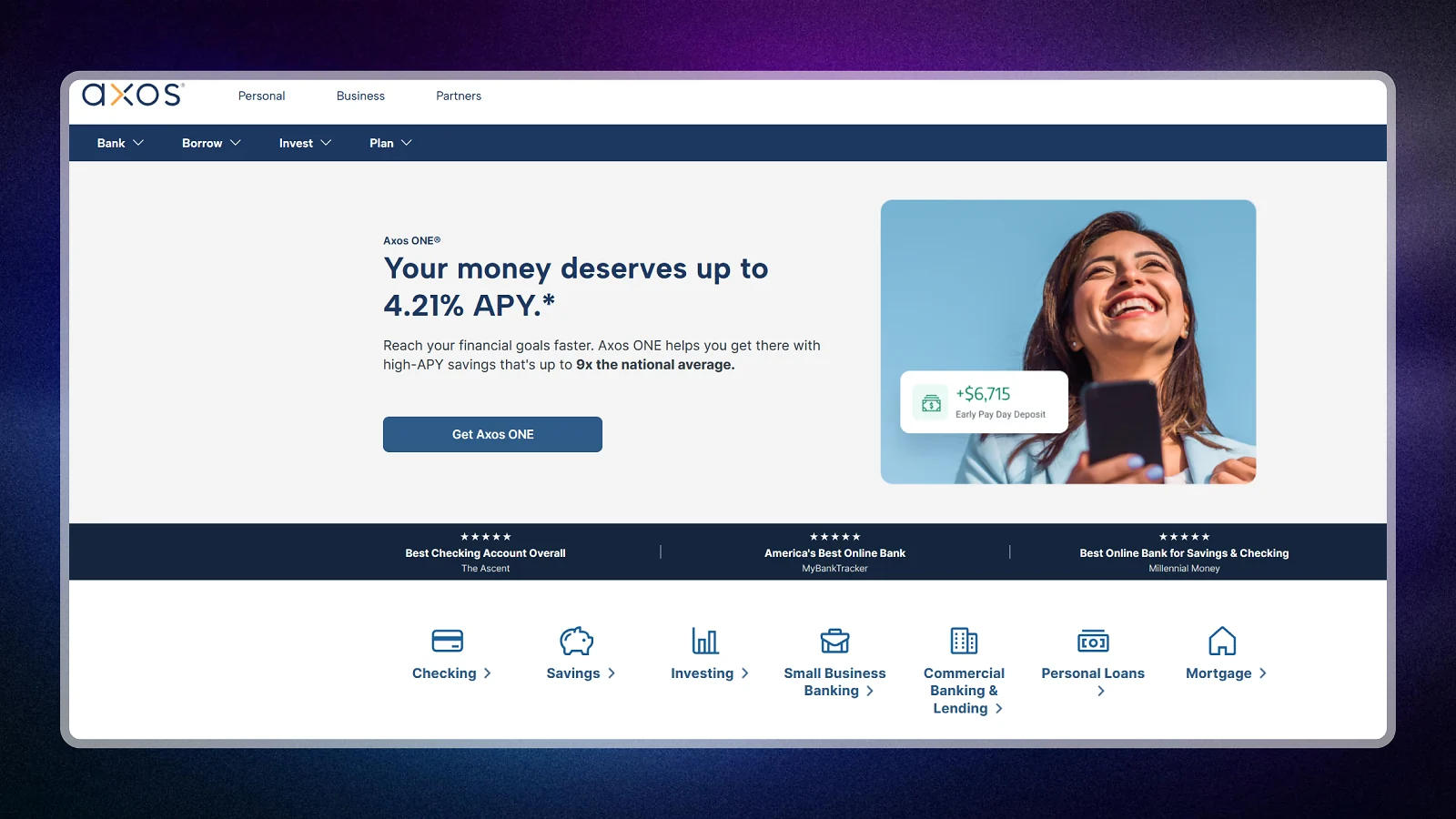
A high-yield savings account is the closest thing to free money on this list, and one of the simplest starting points for smart passive income. Top accounts currently pay up to 3.75% APY, nearly ten times the national average of 0.38%, and unlike every other method here, it’s passive from your very first deposit. There’s no learning curve, no upkeep, and no waiting for something to build, just capital sitting in a smarter account than it was before.
Opening one takes minutes: sign up online with a government ID and basic personal details, then move cash over from wherever it’s currently earning next to nothing. A quick tip: some top-rate accounts require a minimum balance or active direct deposit to unlock the full advertised rate, so it’s worth checking the fine print, though accounts like Axos Bank’s Summit Savings skip that requirement entirely. A CD works on the same principle, just with your rate locked in for a set term instead of floating.
Startup cost is $0, and most accounts charge no monthly fee, and it’s one of the easiest ways to answer how much can you make from passive income without touching any risk. Interest compounds daily and lands in your account roughly every 30 days, which makes this the fastest first payout on the list and arguably the purest form of smart passive income here.
The real mistake most people are already making is leaving money sitting in an old account earning almost nothing. Moving just $10,000 into a 3.75% APY account is an extra $337 a year, for literally no added effort.

2. Dividend Investing via ETFs
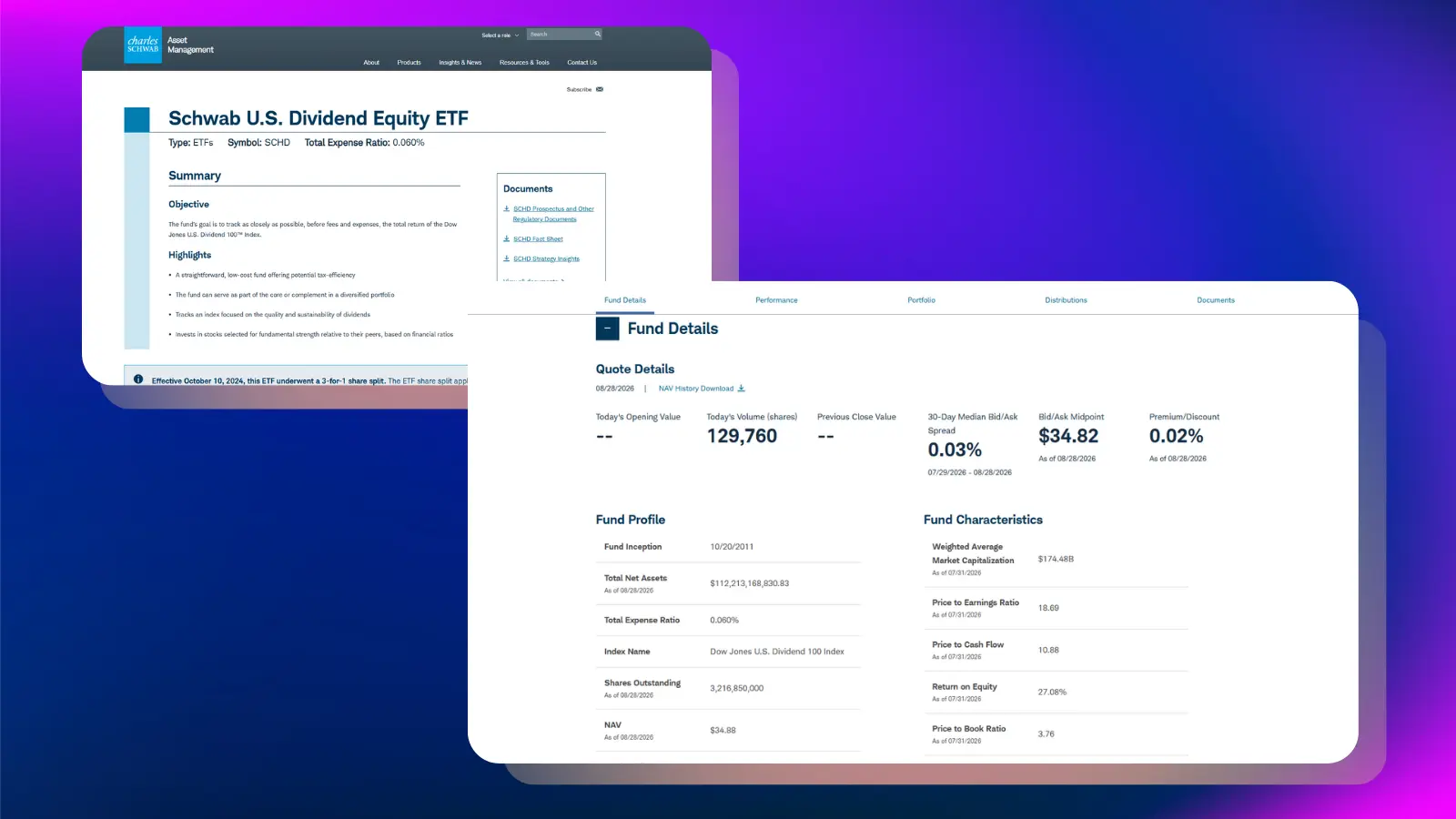
Dividend investing is one of the more satisfying forms of smart passive income, since it pays you real, scheduled cash without ever requiring you to sell a share. Own the fund, and it pays you a slice of profits on autopilot, quarterly for a fund like SCHD, monthly for a higher-yield option like JEPI, while you go about your life.
Getting started is refreshingly simple: open a brokerage account and buy shares, or fractional shares, often starting around $1 at most major brokerages, of a dividend ETF. No license or special qualification needed, and no minimum experience required either. If you’re weighing this against more active options, our breakdown of the best way to make money on the internet is a useful comparison.
The catch is that this builds slowly. One investor on Reddit’s r/dividends community grew their dividend income from $470 a year to $3,300 a year over five years, simply by steadily adding to their portfolio and reinvesting payouts, a realistic look at how this compounds without a huge starting balance.
The common mistake is chasing the single highest headline yield without checking what’s actually inside the fund. High-yield covered-call funds like JEPI have, over some recent three-year stretches, trailed the S&P 500’s own total return, so a bigger yield isn’t automatically the smarter long-term pick for building real smart passive income.
3. Real Estate Crowdfunding via Fundrise
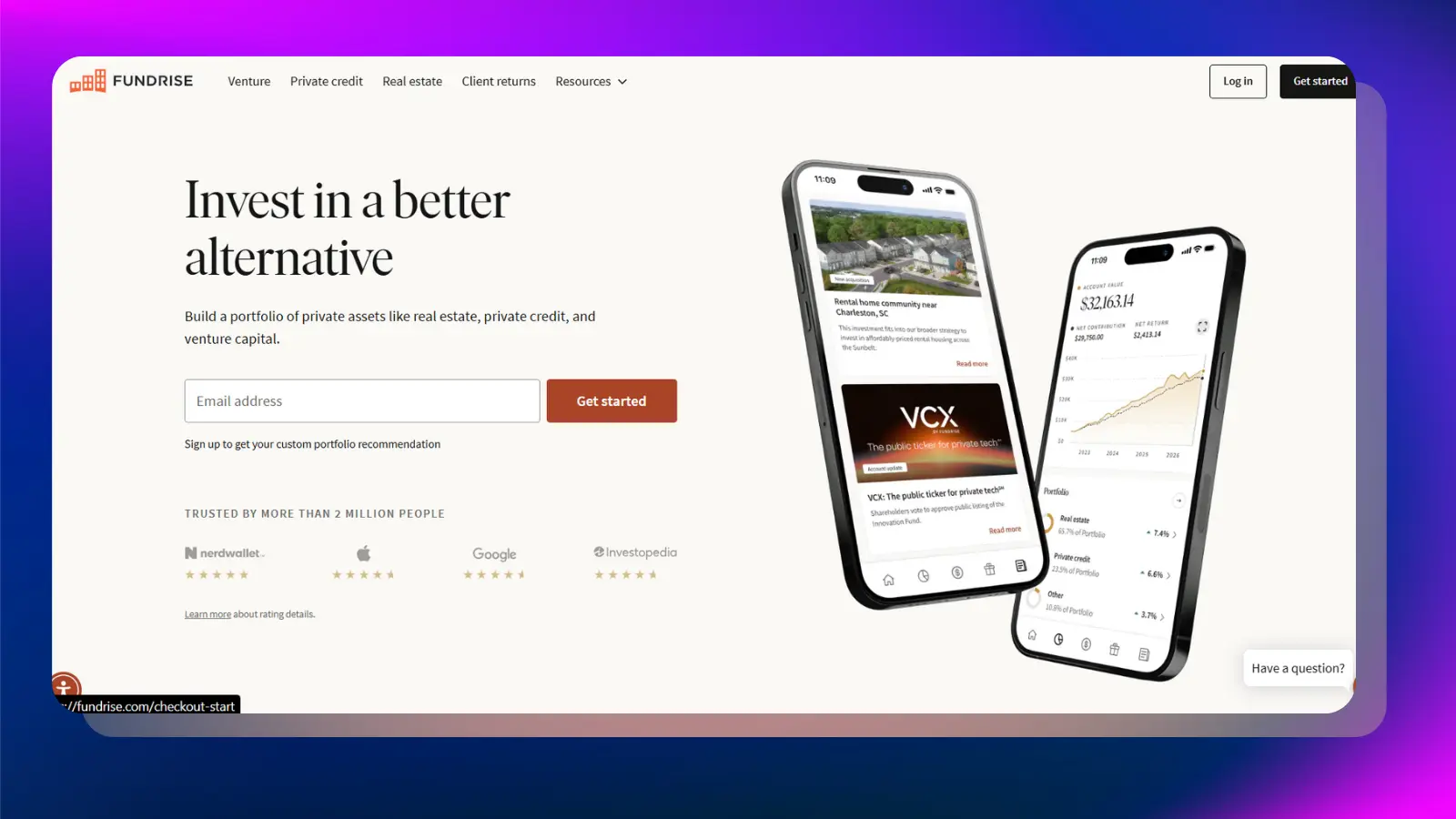
Real estate has always sounded like a great source of passive income, minus the part where you actually buy, manage, or finance a property. Fundrise solves that: you buy into a portfolio of commercial and residential real estate for as little as $10, and someone else handles everything else, a genuinely hands-off route into smart passive income for anyone who’s never had the capital or time for a property of their own.
Getting started is simple: open an account with a $10 minimum, pick a portfolio strategy, and your money gets pooled with other investors’ into real properties. No accreditation required, so this is open to pretty much anyone, which makes it a solid entry on any list of passive income for beginners.
Fundrise‘s own client accounts returned 6.24% overall in 2025, with standard portfolios carrying about 1% in combined annual fees and distributions typically paid out quarterly, a solid data point for anyone asking how much can you make from passive income in real estate without owning property.
The common mistake is treating Fundrise like a stock you can sell on a whim. Redemptions run through a quarterly window and aren’t guaranteed if too many investors want out at once, so this is best treated as smart passive income for money you’re comfortable leaving in for several years, not cash you might need next quarter.

4. Renting Out Your Car on Turo

If you already own a car sitting idle some of the time, Turo can turn it into real monthly income: hosts average $10,489 a year per car, about $874 a month, though most single-car hosts land closer to $300 to $700 a month depending on vehicle type and city, one of the clearer answers on this list to how much can you make from passive income using an asset you already own. This turns a car you already own into income between the times you’d be driving it yourself, an asset-based route to smart passive income that’s more hands-on than the cash methods above.
List an eligible vehicle, choose a protection plan, and set your own availability and pricing. Turo handles the booking, guest screening, and payment. That simplicity is exactly why this method tends to top most lists of passive income for beginners.
There’s no cost to list. Turo keeps a host fee that varies by the protection plan chosen, roughly 15% to 40% of each trip’s price, with the rest paid out to the host within a few business days after a trip ends.
The common mistake is treating the $874-a-month average as pure profit instead of gross revenue before Turo‘s host fee, cleaning time, and normal vehicle wear and depreciation are subtracted.
5. Peer-to-Peer Lending via Prosper
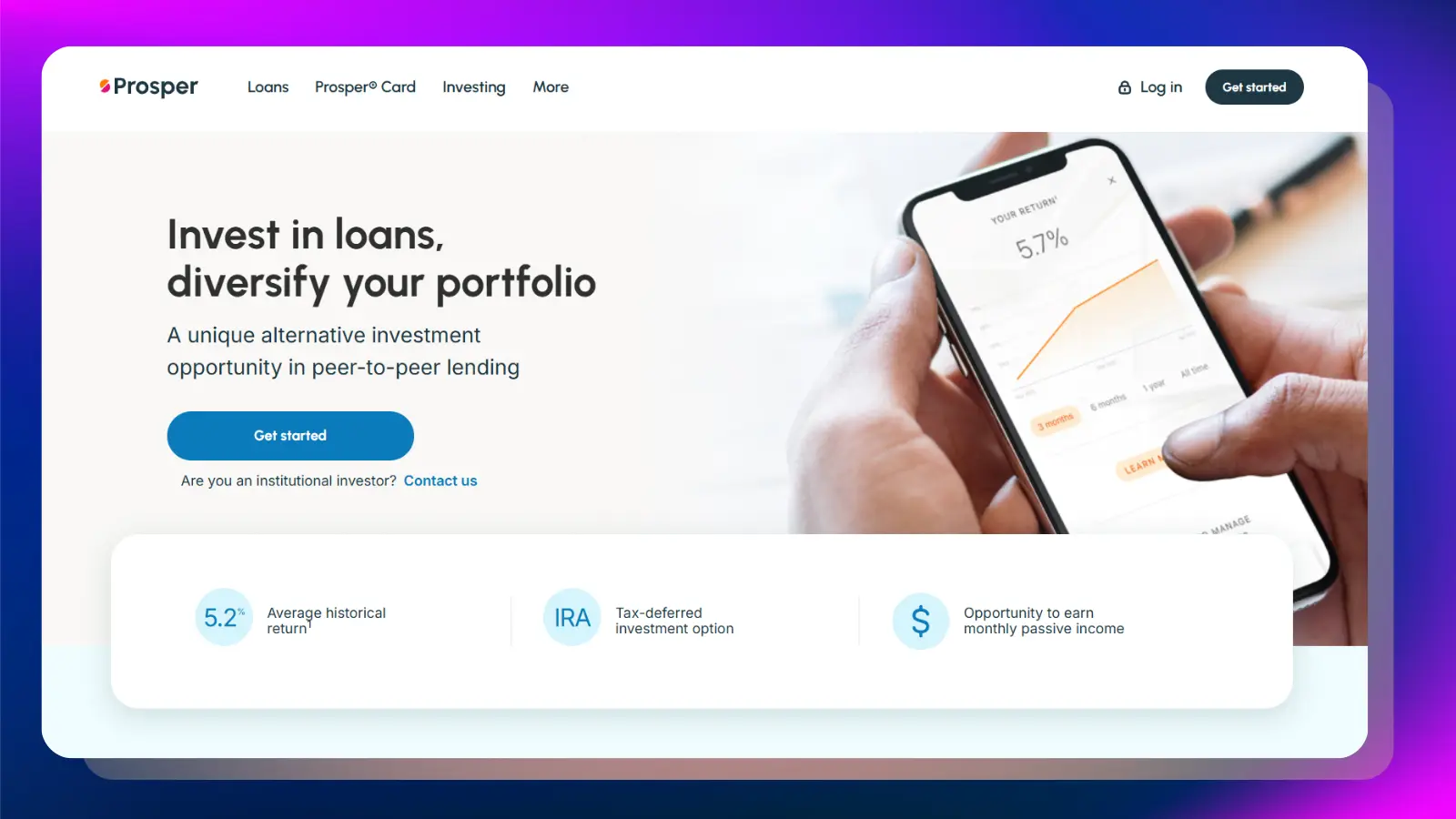
Peer-to-peer lending lets you become the bank, funding pieces of other people’s personal loans and earning a share of the interest as they pay it back, monthly, not in one lump sum. Diversified Prosper portfolios have historically returned roughly 4% to 6% a year for retail investors after fees and typical defaults, a solid, steady form of smart passive income for anyone comfortable lending instead of investing in stocks or property.
Getting started is straightforward: open an investor account, though it isn’t available to residents of every state, then fund individual loan notes starting at just $25 each, filtering by risk grade, loan purpose, and yield. Spreading $2,500 across 100 notes at the minimum is a common way to avoid getting burned by any single borrower defaulting.
Worth knowing: Prosper is now the only major US platform still letting retail investors fund personal loans directly, since LendingClub exited retail P2P lending in 2020, a good sign it’s an active, operating platform rather than a fading one.
The common mistake is dropping a lump sum into just a handful of notes instead of spreading it wide. The historical average already factors in typical defaults, but any single loan can still default in full, so diversification is what actually makes this work as smart passive income.

6. Creating an Online Course on Udemy

Building a course once and having it keep selling for years is about as close to genuinely passive as content gets. Record your lessons, and there’s no extra work per sale after that, someone can buy your course while you’re asleep, on vacation, or doing something else entirely, which is the part that makes this a genuine form of smart passive income once the upfront effort is done.
Getting started costs nothing: create a free instructor account at Udemy’s Teaching Center, record and upload video lessons in your area of expertise, and set your own price. No application fee or credential required. Worth knowing that Udemy merged with Coursera in May 2026, so it now runs as part of the same company rather than as a standalone platform.
Instructors keep 37% of an organic marketplace sale and 97% of a sale made through their own coupon or referral link, with payouts processing monthly once your balance clears a $25 minimum.
The honest expectation to set: most instructors earn modestly rather than hitting the big “guru” numbers you’ll see promised online, so treat this as a genuine long-term smart passive income builder, not a fast path to a full-time replacement income, and price and market your course accordingly.

7. Starting a Niche Blog With Display Ad Revenue

A niche blog is the slowest method on this list to start earning anything, since it needs a real audience of readers first, but it’s also one of the most durable: articles keep earning ad revenue for years after they’re published, with no extra work per pageview. Write it once, and it can keep paying you long after you’ve moved on to something else.
Getting started means publishing consistent, search-optimized content on your own domain; hosting typically runs $100 to $200 a year, and applying for ad management once your site hits Journey‘s entry threshold of 1,000 monthly sessions. Mediavine updated its eligibility rules in August 2026 to a single, unified application that auto-routes qualifying sites to Journey or its main network, so there’s one clear bar to build toward rather than several.
Once approved, bloggers on the main Mediavine network commonly report RPMs (revenue per 1,000 pageviews) of $15 to $40, while the entry-level Journey program averages closer to $11.15. Payouts arrive via PayPal on a net-65 basis, so earnings from a given month land about 65 days later, once a $100 minimum balance is reached. Some bloggers reach $1,000 to $3,000 a month once traffic and RPM stabilize, a real ceiling worth building toward even if it takes time.
The common mistake is publishing without keyword research or a growth plan, so the site never reaches that 1,000-session threshold at all. Getting there takes patience, but it’s one of the more genuine long-term paths to smart passive income on this list.

Comparing All 7 Smart Passive Income Methods
These seven methods differ enough in cost, timeline, and risk that a side-by-side view is worth a look before you decide where your smart passive income starts.
| Method | Startup Cost | Time to First Payout | Earning Potential |
|---|---|---|---|
| High-yield savings (Axos Bank) | $0 | ~30 days (monthly interest) | Up to 3.75% APY |
| Dividend ETFs (SCHD/JEPI) | $1+ (fractional shares) | Quarterly (SCHD) or monthly (JEPI) | ~3.00% to 8.1% yield |
| Real estate crowdfunding (Fundrise) | $10 | Quarterly distributions | 6.24% overall (2025) |
| Car rental (Turo) | $0 (need a car) | Days after each trip | ~$300 to $874/mo average |
| Peer-to-peer lending (Prosper) | $25/note | Monthly, as loans repay | ~4% to 6% annually |
| Online course (Udemy) | $0 | Monthly, within 45 days | Top-heavy: most under $1,000/yr |
| Niche blog (Mediavine) | ~$100 to $200/yr hosting | Net-65, $100 minimum | $11 to $40 RPM |
For the fuller list of passive income ideas beyond these seven, see Eneba’s how to create a passive income.
Add Quick Cash on Top With Reward Apps

Reward and cashback apps won’t build meaningful smart passive income on their own, but they can add $10 to $50 a month for a few minutes of downtime while a longer-term method above builds up. They work best stacked on top of one of the seven methods above, not as a standalone strategy.
Each app in the table below pays out at a genuinely low minimum, and none require any upfront cost to join.
Of the two, Snakzy is Eneba‘s own reward app and the easiest starting point: Try Snakzy today and stack its payouts on top of whichever smart passive income method you choose above.
Play to earn cash today

What Doesn’t Work
The riskiest patterns around smart passive income are the ones that hide a tradeoff you haven’t agreed to, not the platforms covered above. Each one below is a real, checkable pattern tied to a specific method in this article, not a hypothetical warning.
- Chasing the highest advertised dividend yield: an unusually high yield often signals a covered-call strategy or higher risk rather than a better deal; JEPI-style funds have, over some recent three-year stretches, trailed the S&P 500’s total return even with a bigger headline yield.
- Treating Fundrise like a liquid stock account: redemptions run through a quarterly window and aren’t guaranteed if too many investors cash out at once, so only invest money you can leave in for years, not cash you might need next quarter.
- Online-course “guru” programs promising $10,000-a-month Udemy income: Class Central’s February 2025 reporting on Udemy instructor payouts describes most instructors earning well under $1,000 a year, so any course selling that outcome is selling the course, not the result.
- Listing a car on Turo without budgeting for the host fee and wear: the advertised $874-a-month average is gross revenue before Turo’s host fee and normal vehicle depreciation, not take-home profit.
Final Verdict on Smart Passive Income
The most realistic starting point for smart passive income is a high-yield savings account like Axos Bank‘s for immediate, risk-free interest, layered with one method that matches what you actually have: capital for dividend ETFs, Fundrise, or Prosper, or time and an asset for Turo, Udemy, or a niche blog. Which second method makes sense depends on whether you have idle cash to deploy or hours and a skill or asset to build with instead.
Across the methods covered here, the honest range runs from roughly 3.75% APY on parked cash up through several thousand dollars a year from a fully built Turo listing or dividend portfolio, and most of these take months or years to compound into real money, not days. A reward app like Snakzy can add small, real cash on the side while a bigger method builds up. Building real smart passive income is less about finding a secret and more about being honest with yourself about what you have to start with.
Play to earn cash today
FAQs
Real smart passive income runs from roughly 3.75% APY on parked cash up to several thousand dollars a year once a method like Turo or a dividend portfolio is fully built, so your number depends on how much capital or time you put in.
No, some methods need real capital, like Fundrise from $10, dividend ETFs from $1 in fractional shares, and Prosper notes from $25, while others, like a Udemy course or a niche blog, need time and skill instead of cash.
Most methods here need real upfront work, like recording a course, building a blog, or listing a car, before any income becomes hands-off, so plan for effort early rather than expecting nothing at all.
High-yield savings pays out fastest, in about 30 days, while a niche blog reaching Mediavine’s ad-network threshold can take many months of consistent publishing before its first real payout arrives.
Not necessarily; dividend ETFs carry market and share-price risk while Fundrise carries liquidity risk from redemption pauses, so which one is safer depends on which specific risk you’re more willing to accept.
Opening a high-yield savings account like Axos Bank‘s Summit Savings is the fastest start: it pays real interest with zero ongoing effort, and that makes it the easiest first step into smart passive income.