



Razer Joining Forces With Amazon to Release AI Game Dev Tools



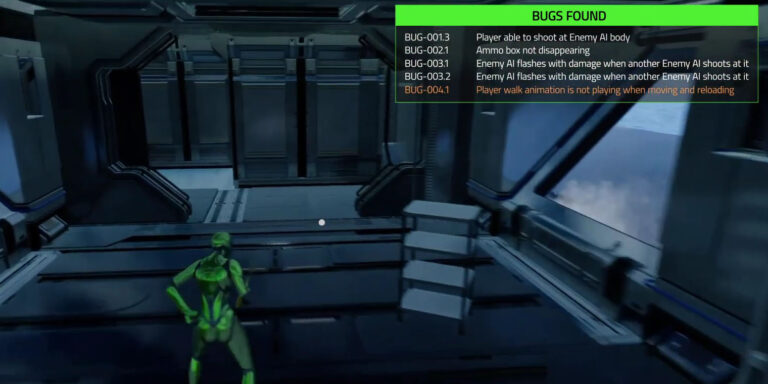
The use of AI in game development continues apace with news shared by gaming tech company, Razer, that its bringing its suite of game dev tools to Amazon Web Services (AWS). These tools include QA testing and a Game Assistant.
Following reports that there are 3.32 billion gamers globally and a market projected to reach $424 billion within the next decade, companies such as Razer are looking to be at the forefront of any technological advancements related to the industry. AI is fast becoming the hot topic for any game company to cover, and Razer isn’t just jumping on the bandwagon, but attempting to take the reins.
“With the launch of Razer AI Game Developer Tools, we are excited to deepen our collaboration with AWS,” said Quyen Quach, VP of Software at Razer. “For two decades, Razer has led gaming innovation – and now, we are pioneering the future with AI.”
“By combining our rapid prototyping capabilities with AWS’s cloud scalability, we are enabling the next generation of gaming creation and development. These tools will offer developers a powerful, cost-effective way to scale, reduce time-to-market, and elevate player experiences.”
Jump to:
Cost-Effective, But at a Cost
Razer has promised similar things before when it revealed WYVRN, its suite of AI game dev tools that allow developers to incorporate things such as haptic feedback and RGB lighting synchronisation, which in turn are linked to, of course, Razer’s devices. These latest tools have been folded into WYVRN to offer an all-in-one package, although the cost isn’t readily available.
Razer isn’t just adding its tools to the AWS service, either, but using Amazon’s own AI infrastructure as part of the package. The new QA tester and Game Companion tools are built on Amazon’s Generative AI service, Bedrock.
This acts as a base for FMs (Foundation Models) from AI companies like Anthorpic and DeepSeek, so users can test out a range of AI tools to see which best suits their needs. Razer hasn’t said whether the cost of using this factors into the overall cost of its WYVRN toolset, but it’s worth noting that Bedrock’s pricing structure can easily reach thousands of dollars.
What They Can Do For You
Seeing as Razer counts top studios such as Rebellion, Konami and Square Enix as WYVRN users, it stands to reason it won’t be the sort of toolset an average indie studio could get their hands on. If this proves to be the case it could be a shame because, as easy as it is to give a bit of side-eye to AI, at least one of the new tools could seriously improve game development workflow.
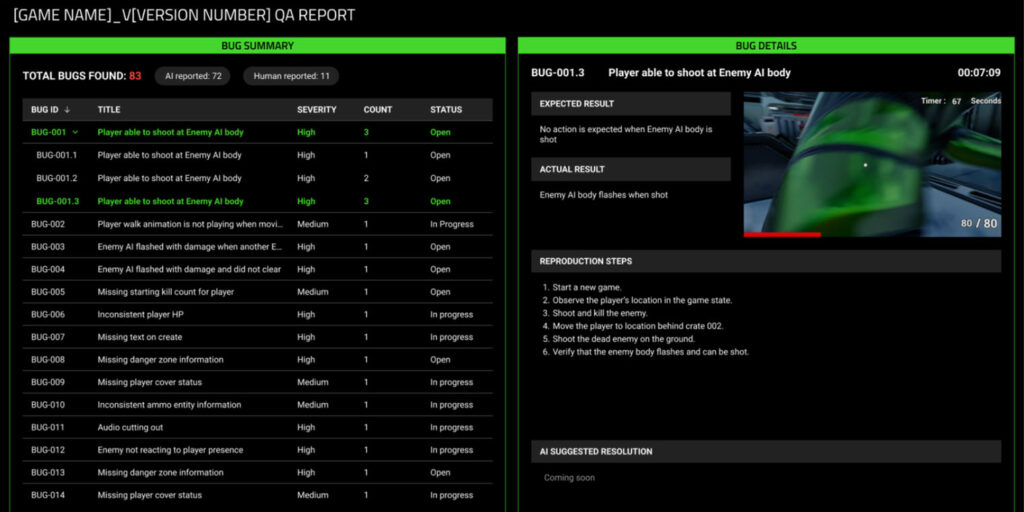
The QA Companion comes with claims by Razer that it reduces quality assurance testing time by up to 50%, as well as identifies 20-25% more errors, and has a cost-reduction of up to 40%. None of those stats are bad at all, but they’re also not actually for the QA Companion.

To its credit, Razer has linked to a business site detailing the use of AI quality assurance tools in game development, but cheekily acted as if the presented numbers are directly related to its tool. If it could back up these stats through its own case studies, then it would be impressive and worth making a note of, but it hasn’t, at least not yet.
The other new tool, the Game Assistant, feels a little more insidious. On the surface, it takes its cues from other contemporary AI assistants, like Copilot, but the difference here is that Razer presents as something developers can work into a game itself.
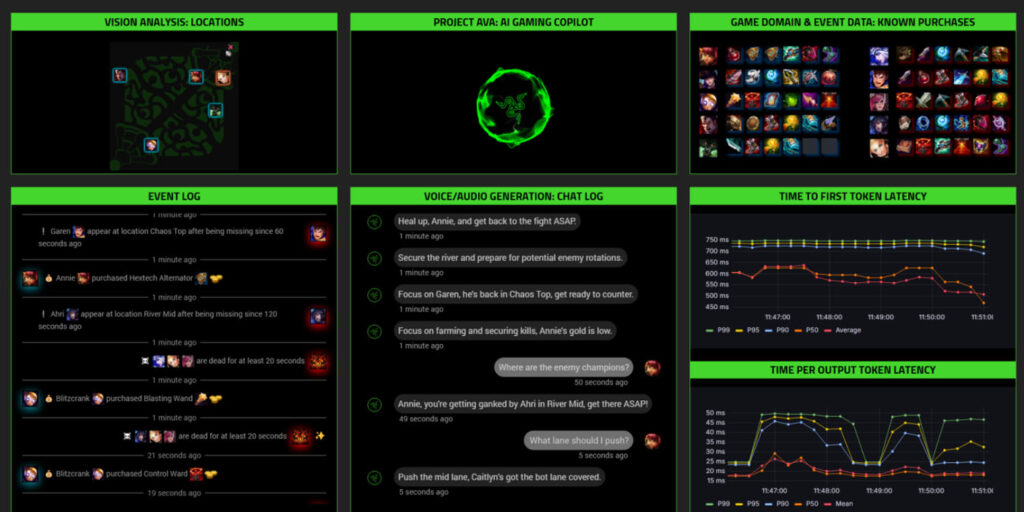
Doing so would enable a studio to incorporate an ever-listening and ever-watching AI that can provide a variety of functions, from tweaking game systems to literally telling the player how to play, with step-by-step instructions on moves to perform in any given situation.

There’s definitely a place in game development for AI tools that can help speed up and refine workflow, as well as create exciting and intriguing assets and behaviour, such as NPCs who react to the player realistically, or take over control of a character based on multiple possible variables.
However, whether Razer’s tools and its new partnership with Amazon will lead to better games remains to be seen. At least the people behind the scenes are optimistic, including Gunish Chawla, Managing Director, Commercial Sector, ASEAN, Amazon Web Services.
“The gaming industry has pushed the boundaries of emerging technologies, reshaping how games are built and played,” he said. “Our collaboration with Razer showcases how building AI tools for gameplay coaching and QA testing on the cloud can help studios innovate faster, while maintaining quality, ultimately benefiting developers and players globally.”