

Tombwater Review: The Good, The Bugs, and The Fugly

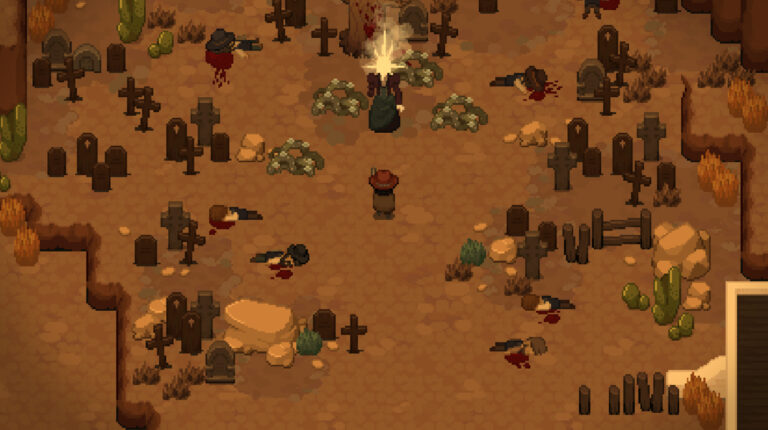
Chances are Tombwater already caught your eye, especially if you paid attention to the most recent Steam Next Fest, where the demo gave people a taste of its horrorcentric Wild West Zelda vibe. Now, the full version is available on PC via Steam. It’s published by Midwest Games and developed by indie studio Moth Atlas. It has a lot of cool things about it, but it also often feels like a rough draft rather than a finished game.
Jump to:
Wild Weird West
It’s not all bad news. For starters, Tombwater ticks a lot of boxes for me: it’s a top-down Zelda-like in a Weird West setting, with Soulslike mechanics (like resting at campfires to level up/save the game, and leaving your ‘wraith’ behind at the site of your last death) and atmosphere up the wazoo.
Proper monsters take a while to appear but when they do their appearances are suitably varied but coherent, in terms of looking like things that are somehow related. Think: skull-heads, tendril-limbs and tentacle-guts. There’s a folk horror element to them that I really, really like (it’s worth mentioning that Tombwater started as a Bloodbourne demake called Yarntown, which is still available via Itch).
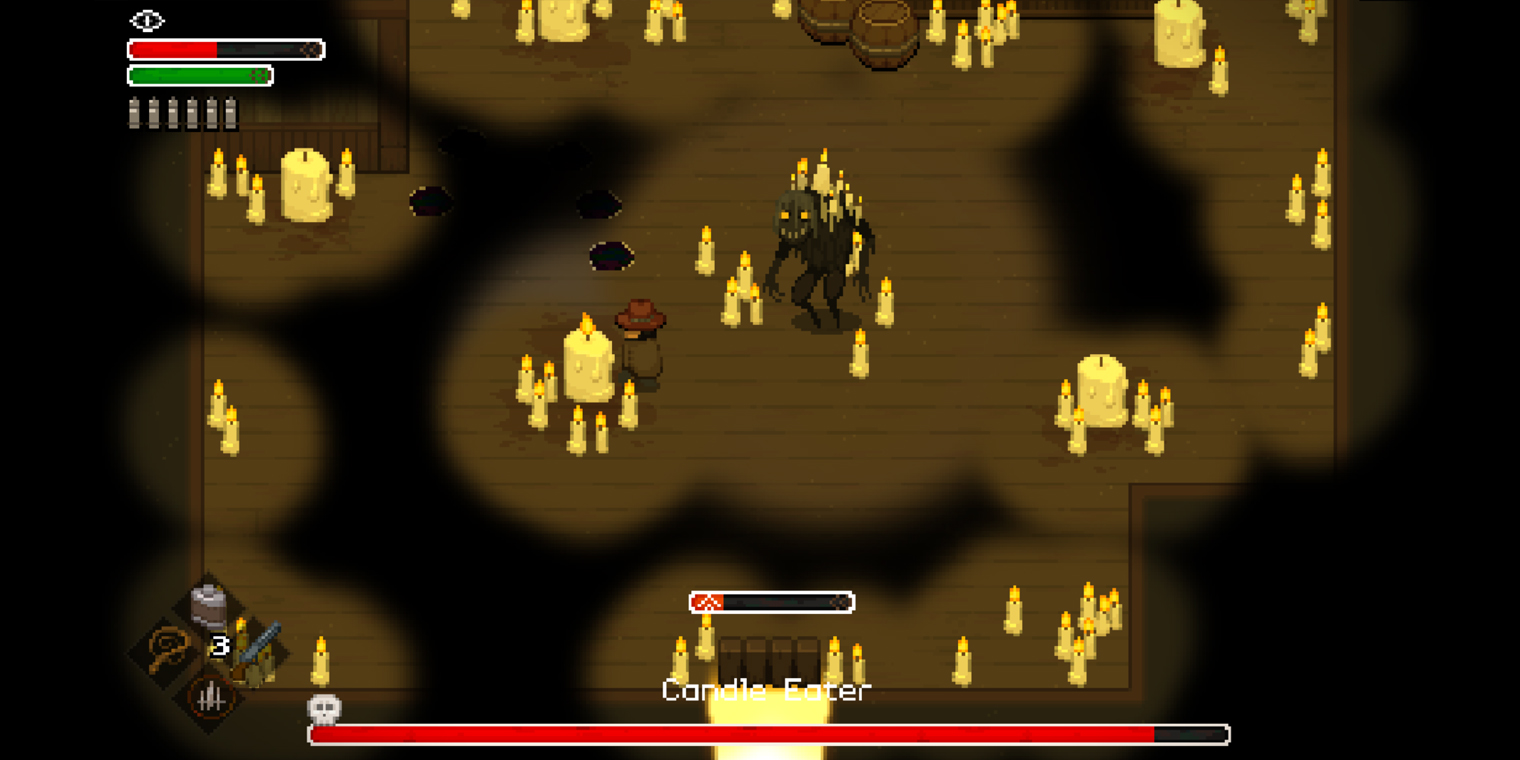
Bosses also boast cool designs and have distinct powers and attack patterns, with a few having a “looks normal until their health reaches halfway, then they mutate” theme. However, many come with spam attacks that deal insane damage, like summoning minions or rapid-fire targeted attacks that require quick-draw reflexes I doubt even Clint Eastwood has.
This latter point may be down to Tombwater’s damage grace period (aka i-frames) – that brief window of invulnerability games give the player after taking damage so they don’t get trapped and die easily. It’s so short in Tombwater it’s basically non-existent and is, unfortunately, just one of many things that mark this as an unpolished title, despite its admirable scope.
I can forgive a bit of jank, especially in something created by a small team (just two people made Tombwater: Max Mraz and Jake Wagner), but it’s tough to do so when it’s wide-ranging and starts to affect the overall gameplay. Some players have reported regular crashes, which I haven’t experienced, but I have encountered controls getting stuck (usually when aiming a firearm) which in turn stops any other ability from working. It’s annoying when it happens after respawning at a campfire, but maddeningly game-ending when it keeps happening during a boss fight.
There are many, many more bugs that, to Moth Atlas’ credit, are being handled when they get the chance (I started playing a pre-release version and it’s now on 1.0.2) but a lot still remain; I don’t want to get bogged down in these right at at the beginning because it’s important you understand that there’s a decent game hiding behind them.
There’s Something in the Mine
As for the beginning: a short intro reveals that your nameless gunslinger was part of a gang of train robbers, which disbands when the leader decides he’s had enough of the outlaw life. But then, inexplicably, your character has a supernatural experience in a graveyard that doesn’t get remarked upon, immediately followed by a nine year time jump.
It’s a clumsy start, itself followed by a less-than-stellar opening section. See, your old mentor has summoned you to Tombwater, a Wild West town where he now works as the sheriff. But the main trouble with Tombwater isn’t the dumb-as-rocks enemies or creeping madness, it’s the dull layout that feels like a constructed level rather than an organic town map. There’s an in-game map, but it’s almost entirely useless as it gives an overview of areas rather than actual layouts, and doesn’t highlight points of interest like campfires or passages (you can set your own markers but this is indicative of the not-quite-polished aspect to Tombwater).
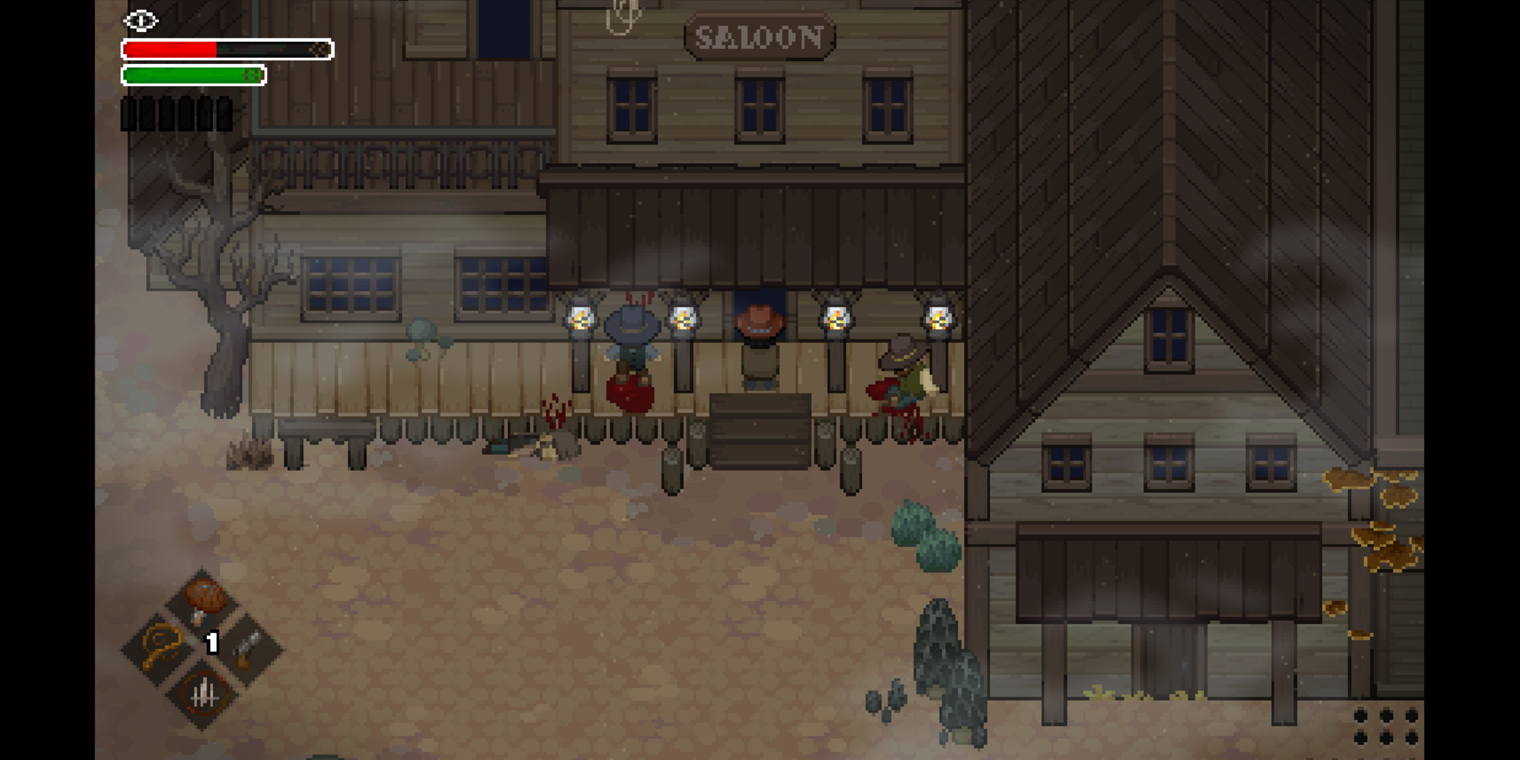
There’s a common belief in game design that the first level should be as interesting as possible, and give the player a good idea of what to expect from the rest of the game (think of all the games that let you start powered-up then take these away, or that drop you off in a location full of eye-catching architecture like City 17).
Tombwater fumbles by not giving the titular town any personality at all, and then compounds its clunky start by telling you “Something terrible happened at the mine” and “The sheriff is missing”. Common sense dictates that, as the protector of the town, he’d go check out the mine (which is right next to the town). But no, instead you have to go in a completely different direction to find someone else who might know where the sheriff went.
The Wild Frontier
Luckily, the very next area is Canyon Settlement and it’s a hundred times better than Tombwater. Where the town is generic and weirdly empty of notable atmosphere, the Settlement has rickety walkways over chasms of mist, fungal growths sprouting from the ground and buildings and, importantly, feels more like a genuine place (there are even outdoor bathtubs and hanging laundry).
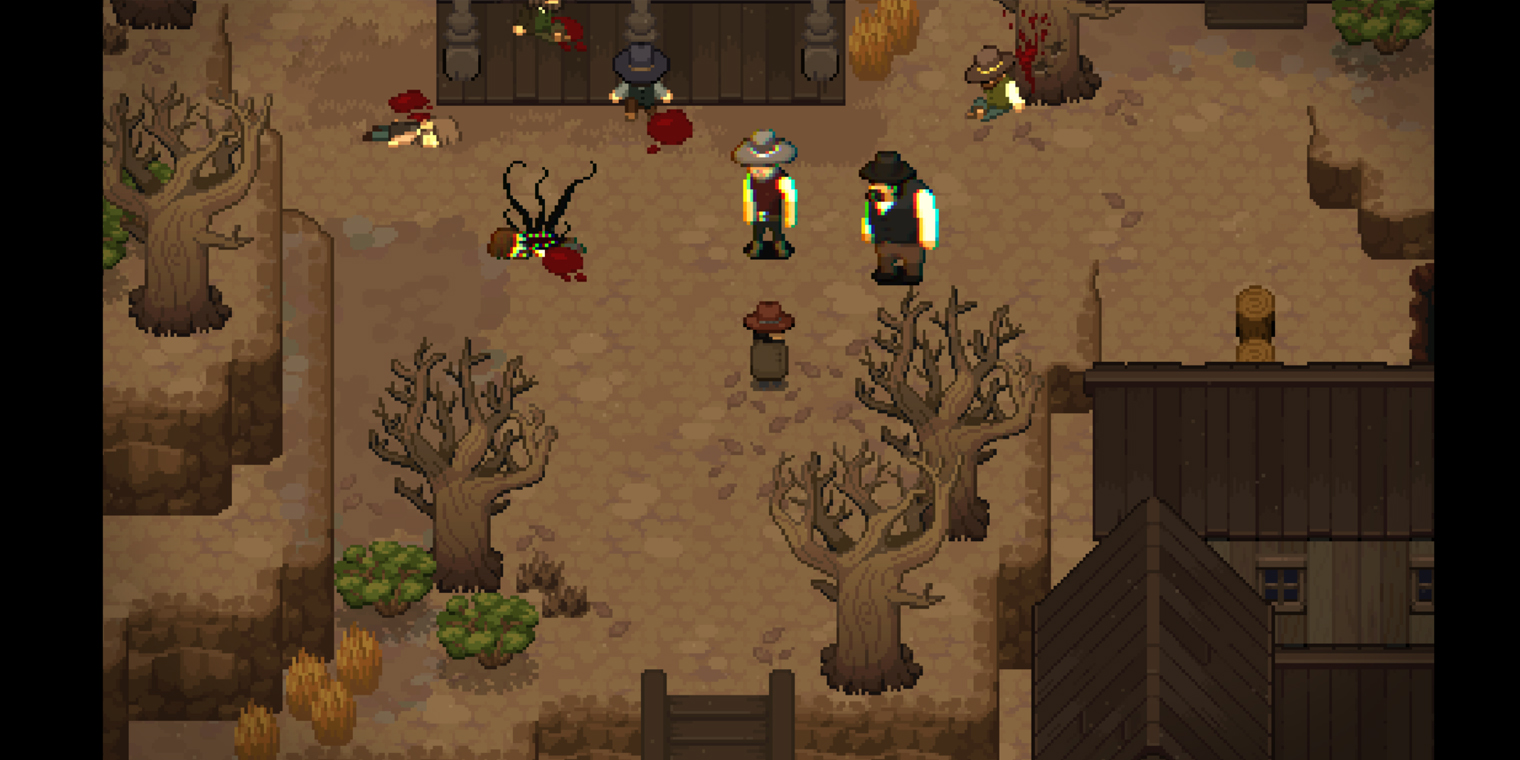
Later areas largely manage to offer some kind of standout atmosphere, but even so all are still plagued by a weird emptiness (and plague doctors, who didn’t exist in the Wild West). I don’t mean that they have a dearth of enemies, but rather that it’s hard to shake the feeling that they’re all artificially bigger than they need to be to pad-out the game’s size.
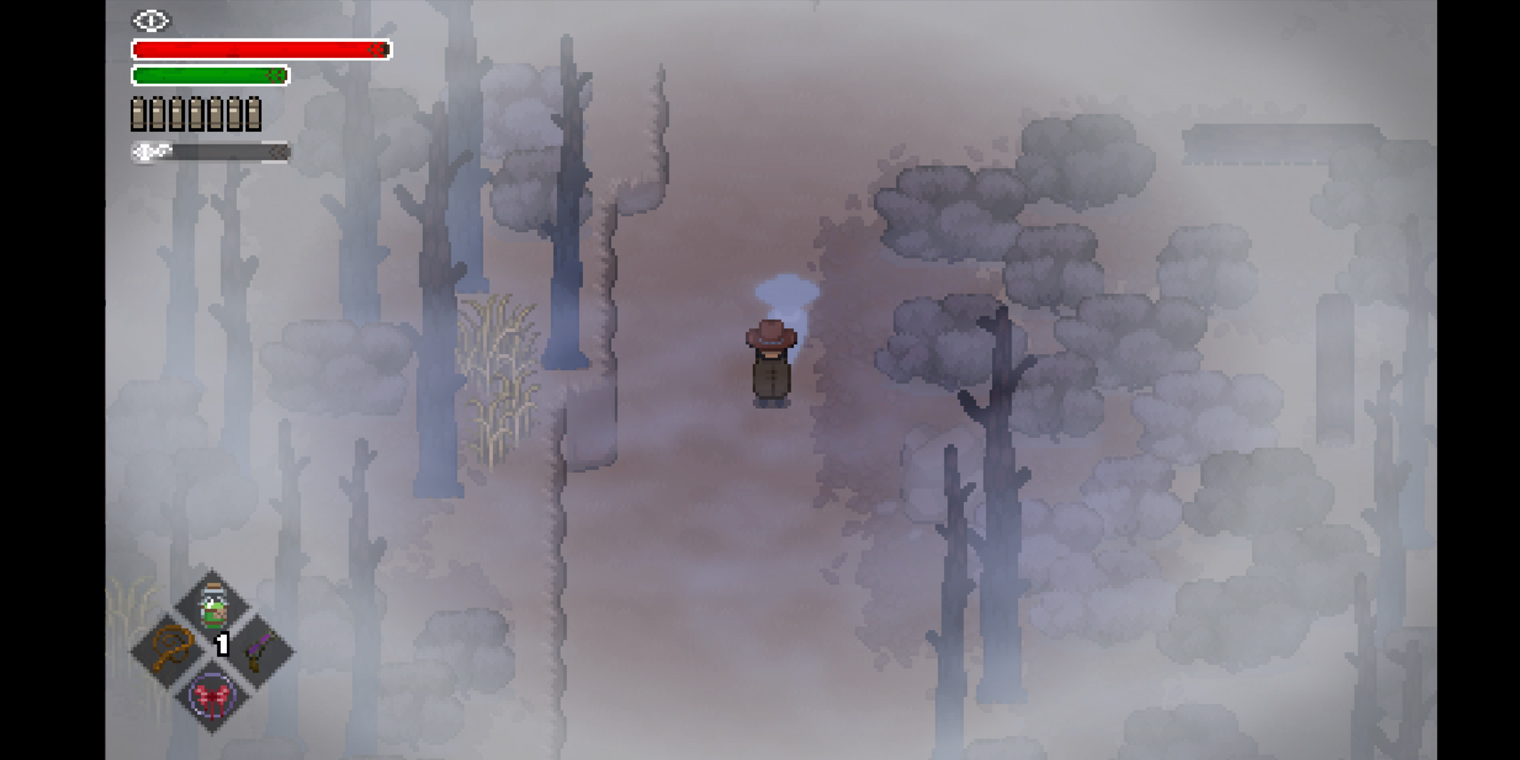
Exploration is fun overall, though, with areas looping back on themselves and underground areas branching out in ways I didn’t expect. I really want to highlight Moth Atlas trusting players to experiment, too, as the game never explicitly told me, for example, that the Cinder Fist spell could burn certain plants to clear paths or that the Wraithshot can activate skeletons (which are then used to access blocked-off areas).
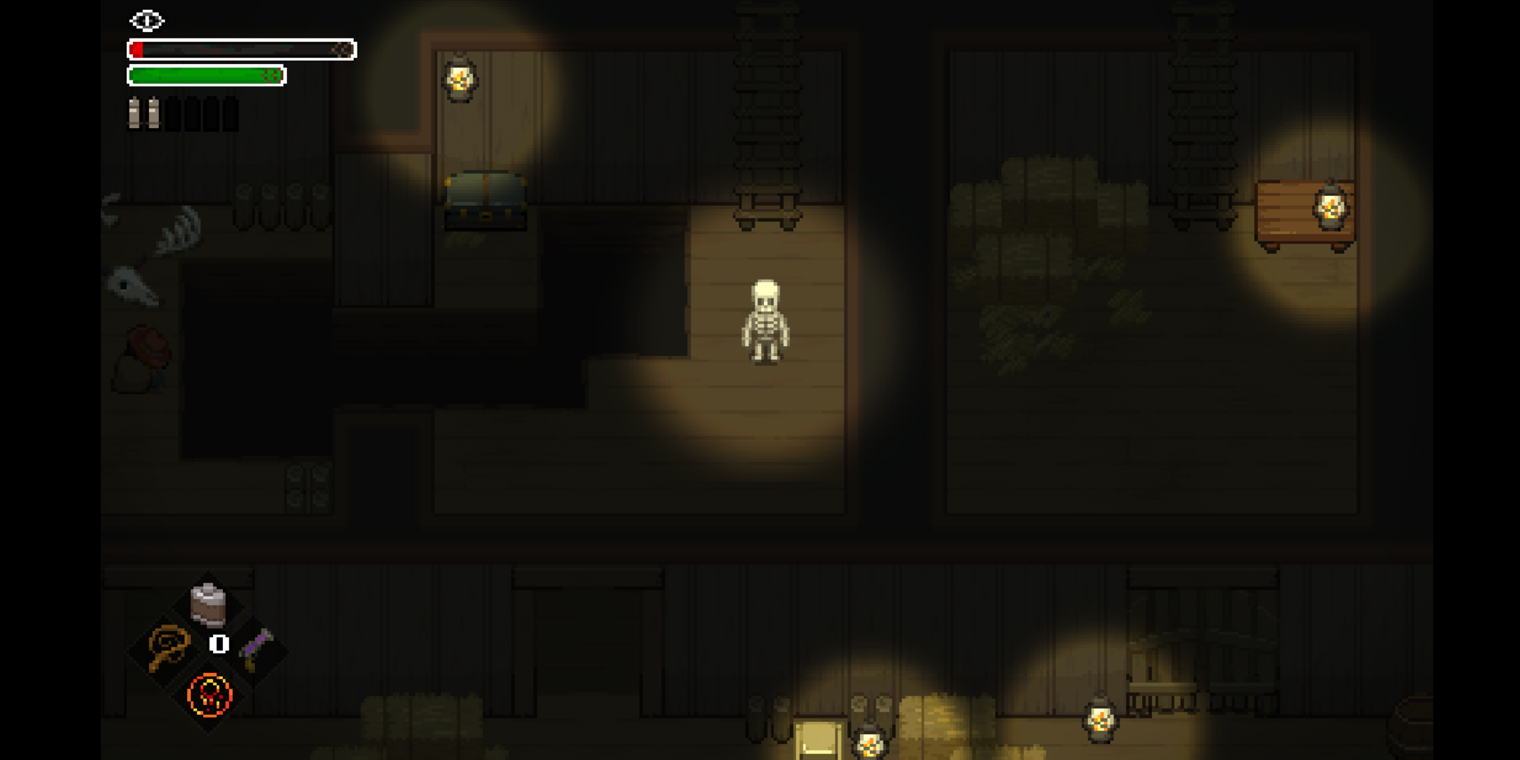
I also need to highlight the game’s soundtrack, because it’s exceptional. Spaghetti Western guitars twang and drone, helping to do a lot of the heavy lifting where atmosphere is concerned. There’s a deluxe edition of Tombwater available, which is the sort of thing I’m largely ambivalent about, but this does include the soundtrack (and an art book). I’d love to see the music get a standalone release on something like Bandcamp; hint hint, devs.
Guns, Magic and Madness
I respect Moth Atlas’ ambition, not just because making a game and publishing it is itself a hard thing to do, but because they could have easily done a pared-down or minimum effort version of Tombwater. Instead, they went nuts and gave players a choice of seven classes to choose from, alongside over 50 weapons, 40 spells, and 40 charms to collect.
Let’s talk about those classes. They include obvious ones like Gunslinger, Soldier, and Drifter, alongside more esoteric choices like Occultist, Nameless, and Tinkerer. I went with the Spellblade class, which has a good balance of firearm, melee, and magic skills. Although, when I acquired spells by using eyeballs(!) found throughout the game, I couldn’t actually cast them. Not until a bit later on when I suddenly unlocked the ability to do so, and I have no idea how or why.
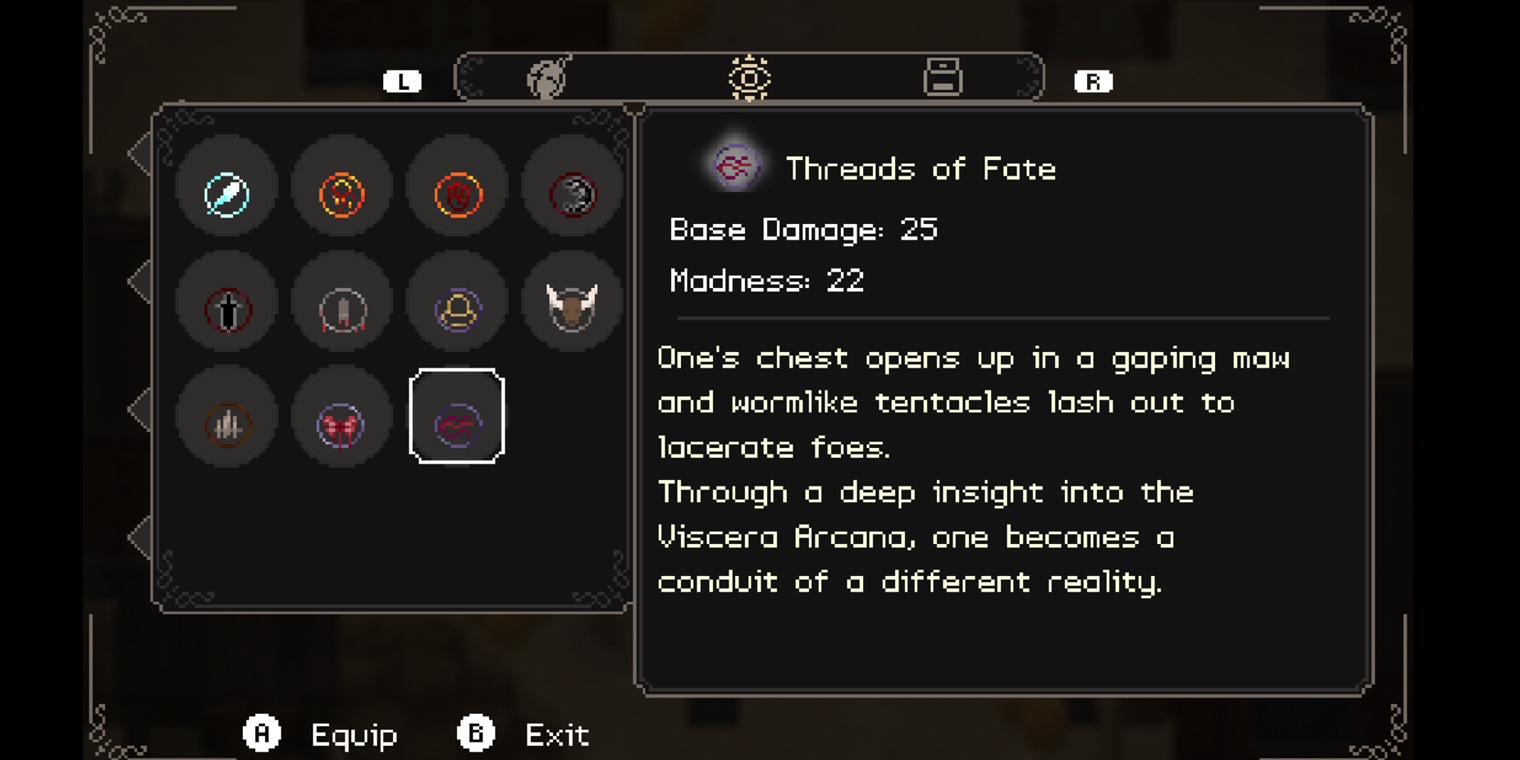
Starting spells were a bit vanilla, but after a few hours I’d manage to get some really snazzy ones like the aforementioned Cinder Fist; a church bell that could be rung to create AOE damage; and even a spectral ox that pushes enemies away. You can equip up to three spells, three ranged weapons, and three melee weapons (I preferred using a pistol with poison bullets, and a whip).
The chance to really experiment with builds is helped by charms which cost a certain number of sockets to equip (you have five empty ones to fill) and include quirks like giving your final bullet a chance to do extra damage and stopping you from casting spells if doing so would incur madness.
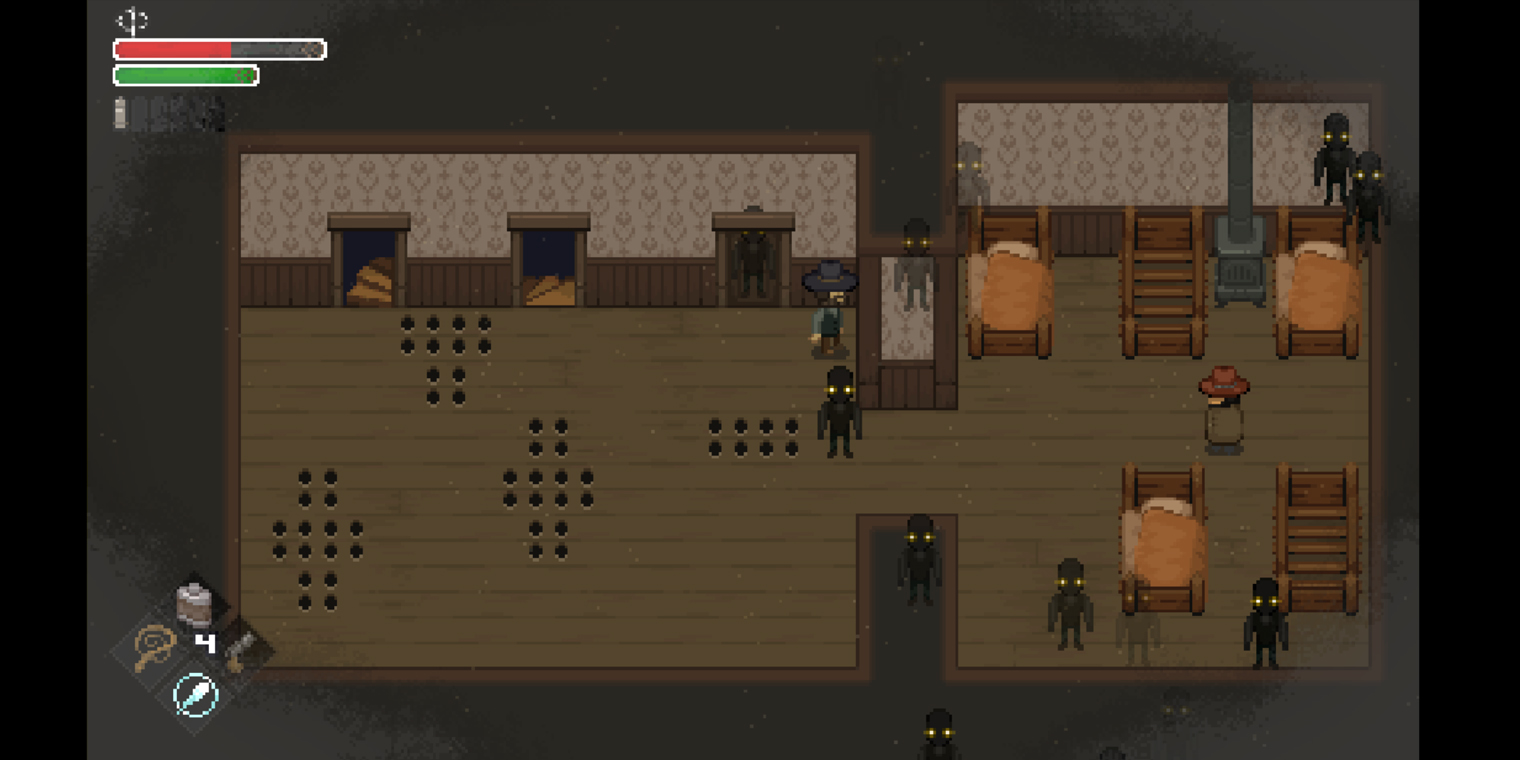
In a peculiar twist, ammo for every firearm is generated by melee attacks. There’s a stamina gauge to manage, and the starting dash move can be upgraded to a run that doesn’t cost stamina. This ensures that there’s a fine balance between smacking enemies around with a melee weapon before being able to retreat to a safer distance to fill ‘em full of lead. It’s also, unfortunately, one of the only instances where the game does have balance.
Always Outnumbered, Never Outgunned
One of the updates Moth Atlas made is honestly something I like the idea of but can’t shake the feeling it’s playing into the whole “we know it’s broken so what the hell” vibe Tombwater gives me – Mraz has been vocal in the game’s Discord about encouraging players to find overpowered builds, for example – and it’s the ability to set player and enemy damage (instead of typical difficulty settings).
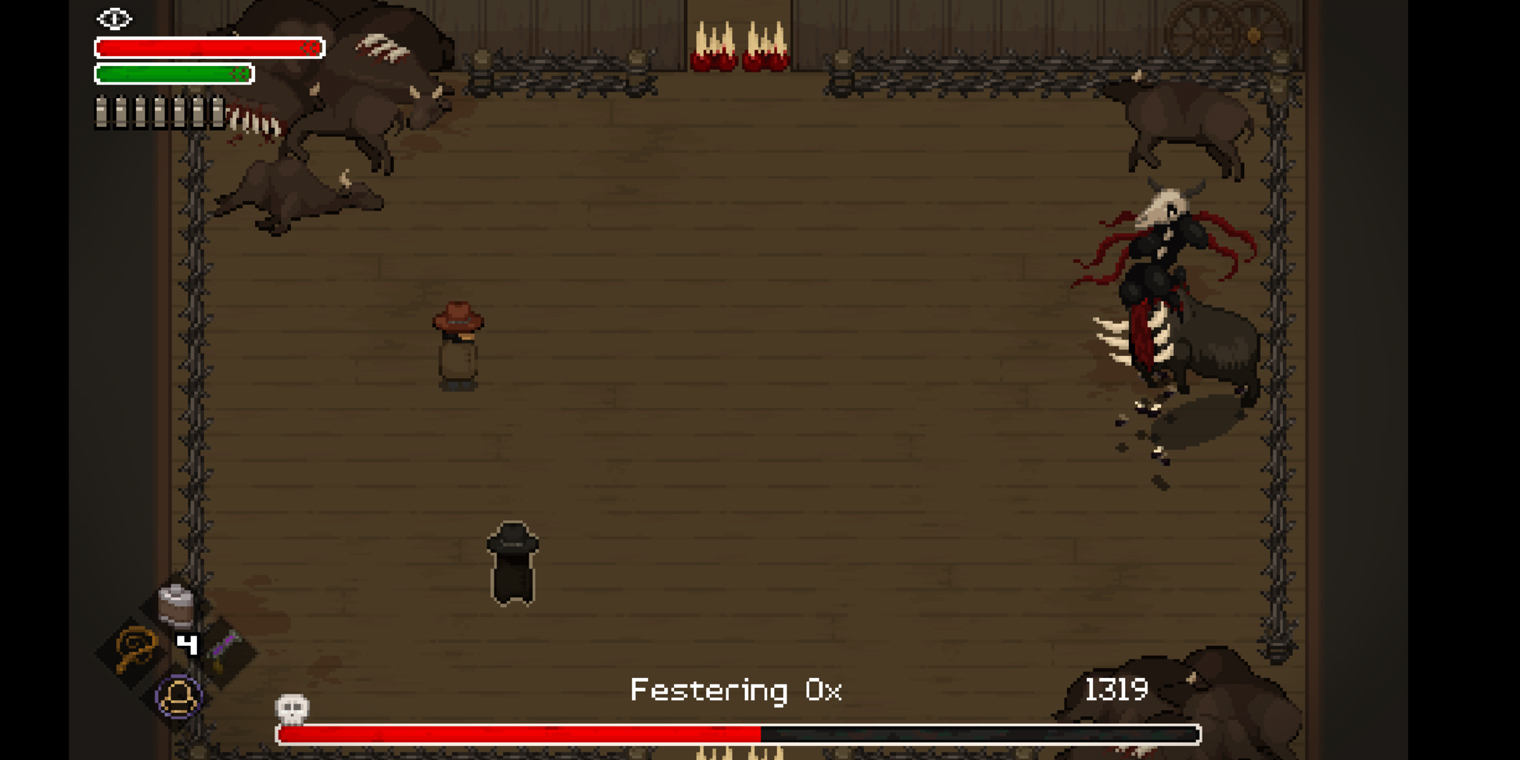
By default, enemy attacks ramp up in damage exponentially by the halfway mark (roughly 10 hours) with (for me at least) the final straw being the Festering Ox boss. This was impossible to defeat without dropping the damage settings down, and from reading the Discord it’s clear others are playing Tombwater on “God Mode” more than default settings.
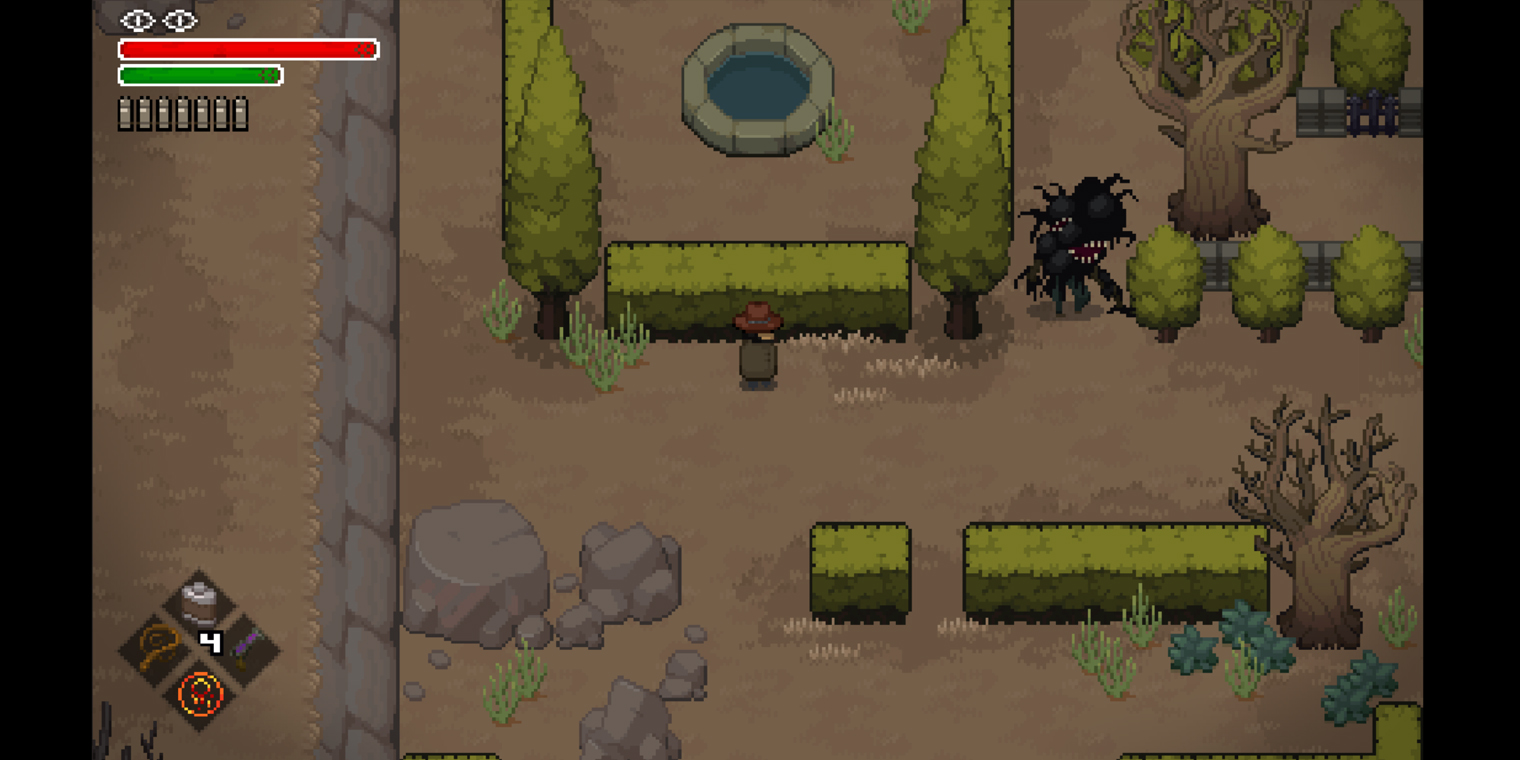
I like how Tombwater gives players the power to finetune damage taken/dealt, but it did mean I literally blasted my way through the next few biomes (which are visually distinct and include a mist-shrouded lake and sprawling estate). This in turn actually stopped me playing because it didn’t really feel fun after a while; I was aware I wasn’t playing the game the way it should be played and it felt like cheating.
High Noon and High Expectations
At the time of writing I’m currently at the Mining Camp (there are five more areas after this) and almost 14 hours of play time. Now, before you raise your pitchfolks and form an angry Game Reviewers Should Finish a Game mob (you sweet summer child), bear in mind that Tombwater’s Steam page (and this is true for other games, to be clear) have a surplus of glowing reviews based on tiny playtimes, like two hours, 0.8 hours, and so on. Make of that what you will.
Maybe you’ll say “Oh, you just need to get better at it.” Yeah, maybe, but my character build by itself doesn’t change enemies behavior, nor does it negate weird glitches like falling into a pit and respawning in a place that means I almost immediately keep falling back into the same pit (this happened multiple times across different areas).
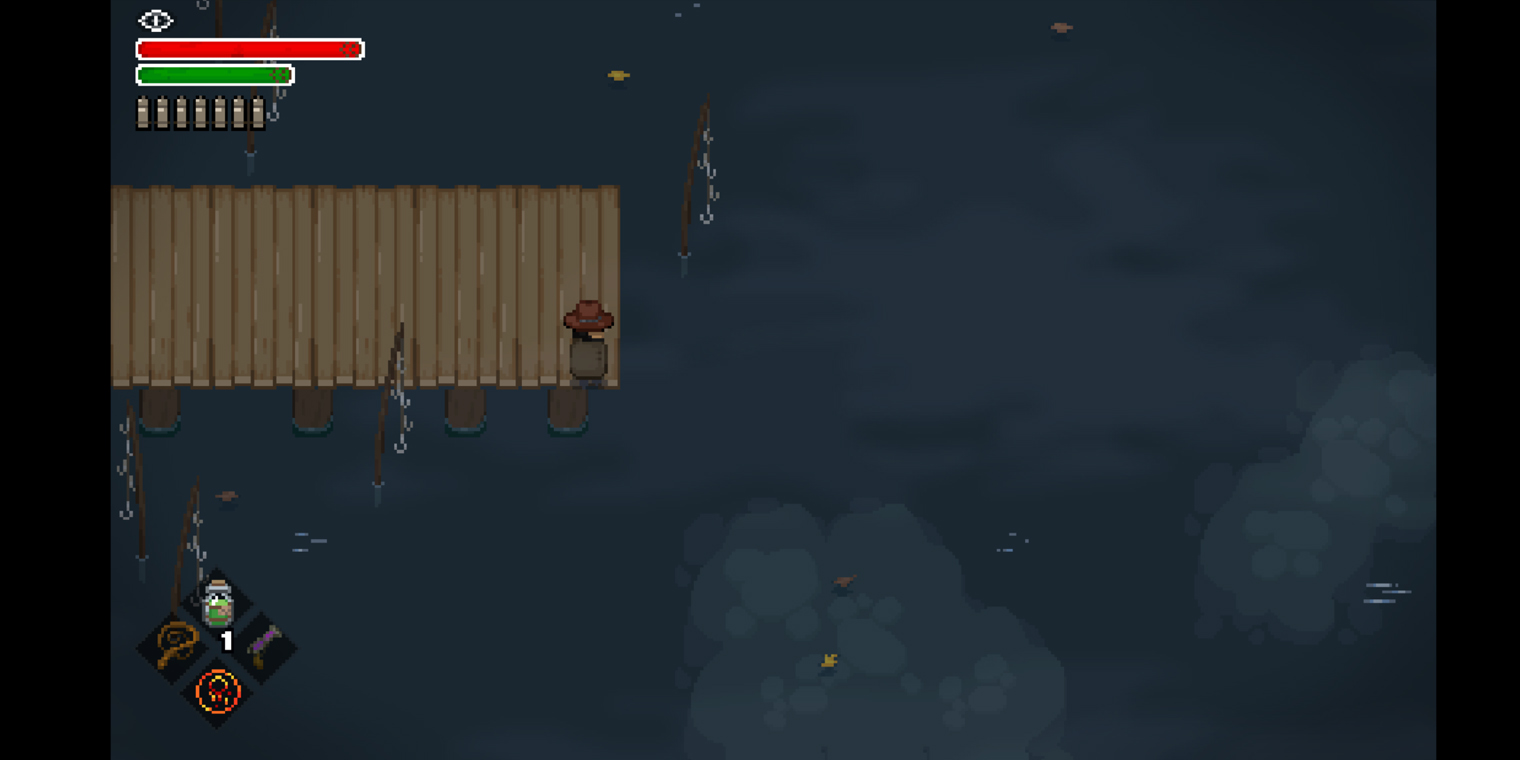
Enemy pathfinding AI is often terrible; they tend to get defeated by stairs or corners, so that it’s very easy to get an enemy snagged on scenery until you finish them off from a safe distance. This was funny to start with as it felt like an unexpected exploit, but soon became mundane and robbed monsters of any real threat (I should note that bosses largely avoid this bug).
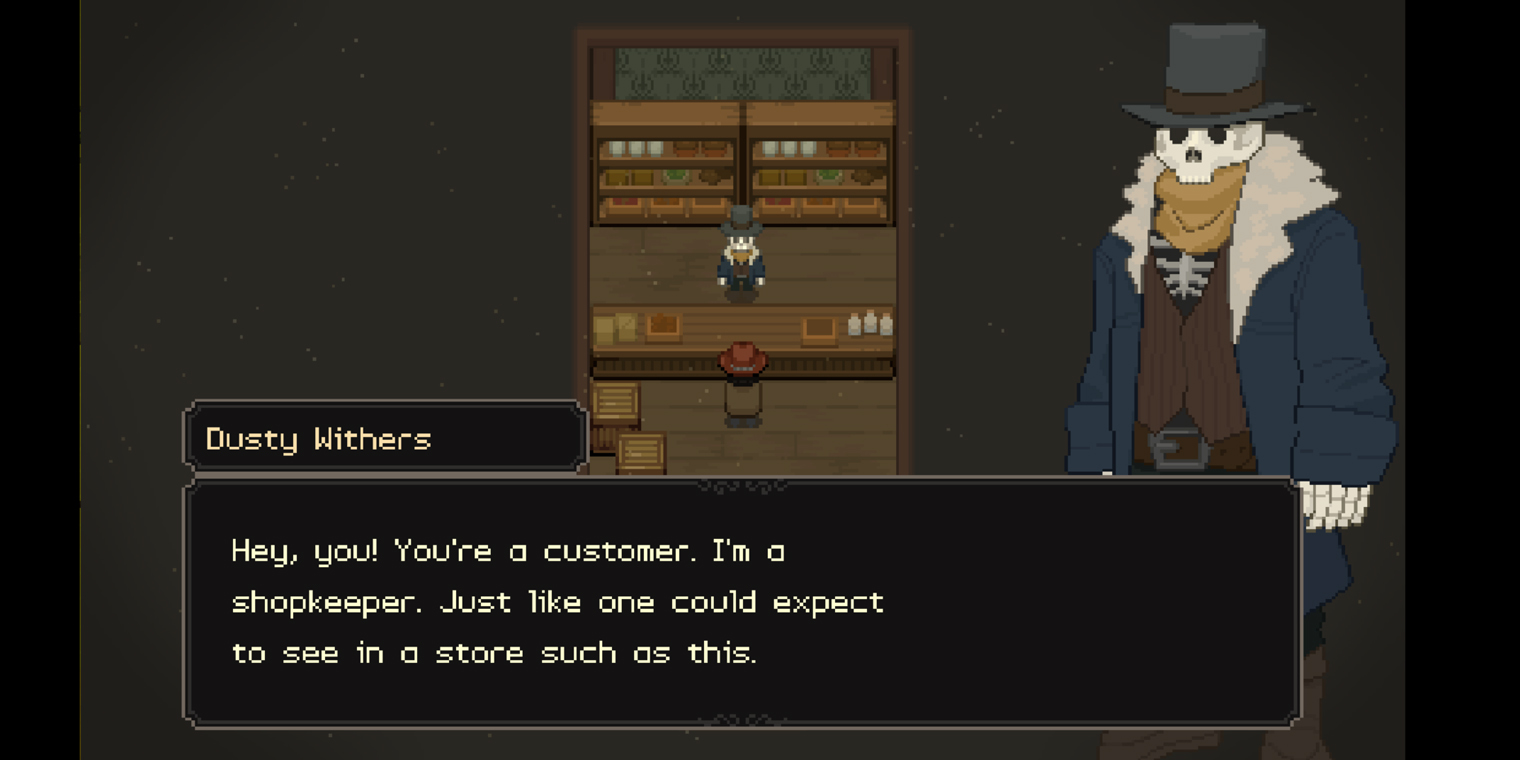
The pixel art is nice but has a blurry edge, especially with onscreen text, and character portraits that accompany text pop-ups have an unfinished air about them. Environments all have the same flat lighting, even when things like onscreen shafts of light suggest shadows should be acting in a completely different way.
Mraz has been transparent about the time he and Wagner can spend on the game, stating in the Discord that “four months for Tombwater is pretty different than four months for a bigger studio – the game is made by two people, and we both work full time jobs as well.” So, on one level it might be fair to expect a bunch of bugs, glitches, and general lack of polish. I also don’t know how much blame can be laid on the game engine, Solarus, as I’ll admit I’m unfamiliar with what this is truly capable of, and likewise its technical limitations.
Saddle Up
I really like Tombwater, but it definitely feels like it needs more work before I can 100% recommend it. If anything, this feels like a case where Early Access would have been the way to go as the core of Tombwater is solid and overall excellent, it’s just in the execution where it stumbles.
The game is available for only around $20, which I do think is good value for something that the developers say has around 20-25 hours of content (plus, the replayability of trying out different character builds). Plus, I wanted to end with what I feel is the most important point: Moth Atlas and Midwest Games are both very hands-on with Tombwater’s already-growing community, including offering gameplay tips, collecting bug reports, and so on. That counts for a lot in my book.
As for me, I’d like to wander Tombwater’s dusty and desolate streets once again, but I want to give Moth Atlas the chance to release a few more updates first. If they can iron out more of the kinks, I don’t doubt that this game can turn into something special.