



NVIDIA Adds Logic System to Classic Game Modding Tool After Community Builds 50 Mods in a Year



- RTX Remix update introduces dynamic graphics system driven by in game events
- New modding platform allows visual changes through 900 settings without source code access
- Community contributed over 20 plugins and tools through open source development
NVIDIA released an RTX Remix update on Jan. 27 introducing a logic system for dynamic graphics modification in classic PC games. The update allows modders to trigger visual effects based on real time game events across over 165 supported titles without requiring access to source code or game engines.
The platform targets older PC games whose visuals have aged poorly despite retaining compelling gameplay and narrative elements. RTX Remix applies modern path tracing technology and AI powered rendering to reimagine classic titles while maintaining their original mechanical foundations.
NVIDIA’s Andrew Burnes explained the development philosophy behind the new system. “Historically, modifying a game’s graphics to respond to real time game events required source code or engine access,” Burnes stated in the announcement post. The Logic system removes this technical barrier while providing access to 900 different Remix graphics settings modders can manipulate dynamically.

Jump to:
RTX Remix Logic Enables Conditional Visual Effects
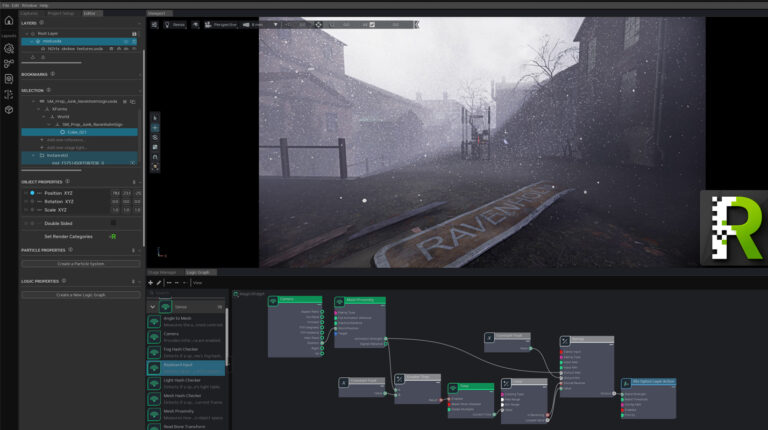
The Logic system operates through a node based interface requiring no coding knowledge. Modders connect game event triggers to graphics modifications through the visual interface, creating conditional effects that respond to player actions, camera positions, world boundaries, object states, time flow, and keyboard inputs.
Weather effects demonstrate the system’s practical applications. Previous RTX Remix versions forced uniform conditions across entire mods, causing snow to fall indoors when applied globally. The Logic system allows weather to trigger only when player position registers as outdoors, enabling location specific environmental effects.
NVIDIA showcased advanced implementations including night vision activation tied to weapon zoom, environmental hazard warnings when enemies approach outside camera view, and elaborate set pieces combining traditional Source engine modding with Remix Logic. One demonstration features a malfunctioning machine spawning path traced particles with escalating chaos, pulsing lights indicating unstable energy, and a nuclear transformation sequence ending with zombie disintegration.

The system supports over 30 game events currently, with extensibility allowing community developers to add additional triggers through open source contributions. NVIDIA positions Logic as transforming each rendering feature into an interactive experimentation platform rather than a static modification toolkit.
2025 saw RTX Remix community growth with over 50 new mods released and more than 20 community developed tools added through open source contributions. Completed projects include Unreal RTX by mstewart401 and Left 4 Dead 2 RTX from Nostalgia Drive Team, while Call of Duty: Black Ops RTX and Clive Barker’s Undying remain in active development.
NVIDIA Maintains Extensive Game Development AI Portfolio
NVIDIA operates multiple AI powered development tools beyond RTX Remix targeting various aspects of game creation. The ACE suite provides digital human technologies for conversational NPCs and autonomous characters using generative AI, while NeMo offers an open source framework for building speech recognition, text to speech, and language processing models.
Riva delivers GPU accelerated speech AI for real time pipelines in game applications. The Omniverse platform functions as a modular development environment for 3D applications powered by Universal Scene Description and RTX technology.
RTX Kit bundles technologies for AI assisted asset rendering, geometry optimization for path tracing, and photorealistic character creation tools. These systems aim to streamline technical workflows while maintaining creative control over final outputs.
AI Use in Development Remains Contested Topic
Industry debate around AI implementation in game development intensified following Epic Games CEO Tim Sweeney’s November comments on Steam’s AI disclosure requirements. Sweeney argued the disclosure tags become meaningless as AI adoption spreads across production pipelines, particularly in major budget titles.
Valve implemented AI disclosure policies in January 2024 requiring developers to specify pre generated content created with AI tools during development and live generated content produced by AI during gameplay. The platform refined these guidelines in January 2026 to clarify distinctions between workflow efficiency tools and assets appearing in games or marketing materials.