


Radeon RX 9070 XT Review 2026

Eneba Hub contains affiliate links, which means we may earn a small commission if you make a purchase through them—at no extra cost to you. Learn more


The Radeon RX 9070 XT review opens with a $699 GPU that forces a real conversation about what you actually need from a graphics card in 2026. AMD argues that RDNA 4 closes the gap with Nvidia‘s mid-range stack – and the XFX Swift RX 9070 XT review numbers back that claim.
The XFX Swift AMD Radeon RX 9070 XT packs 16GB GDDR6 VRAM and RDNA 4 architecture into a $699 card that consistently outpaces comparable Nvidia hardware by $300-400 in real-world workloads. This AMD RX 9070 XT review covers what matters: performance per dollar, VRAM headroom, and the practical reality of AMD‘s software ecosystem.
This Radeon RX 9070 XT review is written for PC builders upgrading from a 2000 or 3000-series card, or anyone stepping into serious 1440p gaming for the first time. The key trade-offs are performance per dollar, VRAM headroom, and AMD‘s software ecosystem – and this review covers all three.
Jump to:
Swift RX 9070 XT at a Glance
Here is what you are getting at the $699 price point before we get into the details.
| Specs | Details |
|---|---|
| GPU | AMD Radeon RX 9070 XT (RDNA 4) |
| VRAM | 16 GB GDDR6 |
| Boost Clock | 2970 MHz |
| Memory Speed | 20 Gbps effective |
| Memory Interface | 256-bit |
| Display Outputs | HDMI 2.1 + 3x DisplayPort |
| Max Resolution | 7680 x 4320 (8K) |
| Interface | PCI-Express x16 |
| TDP (approx.) | 210-220W |
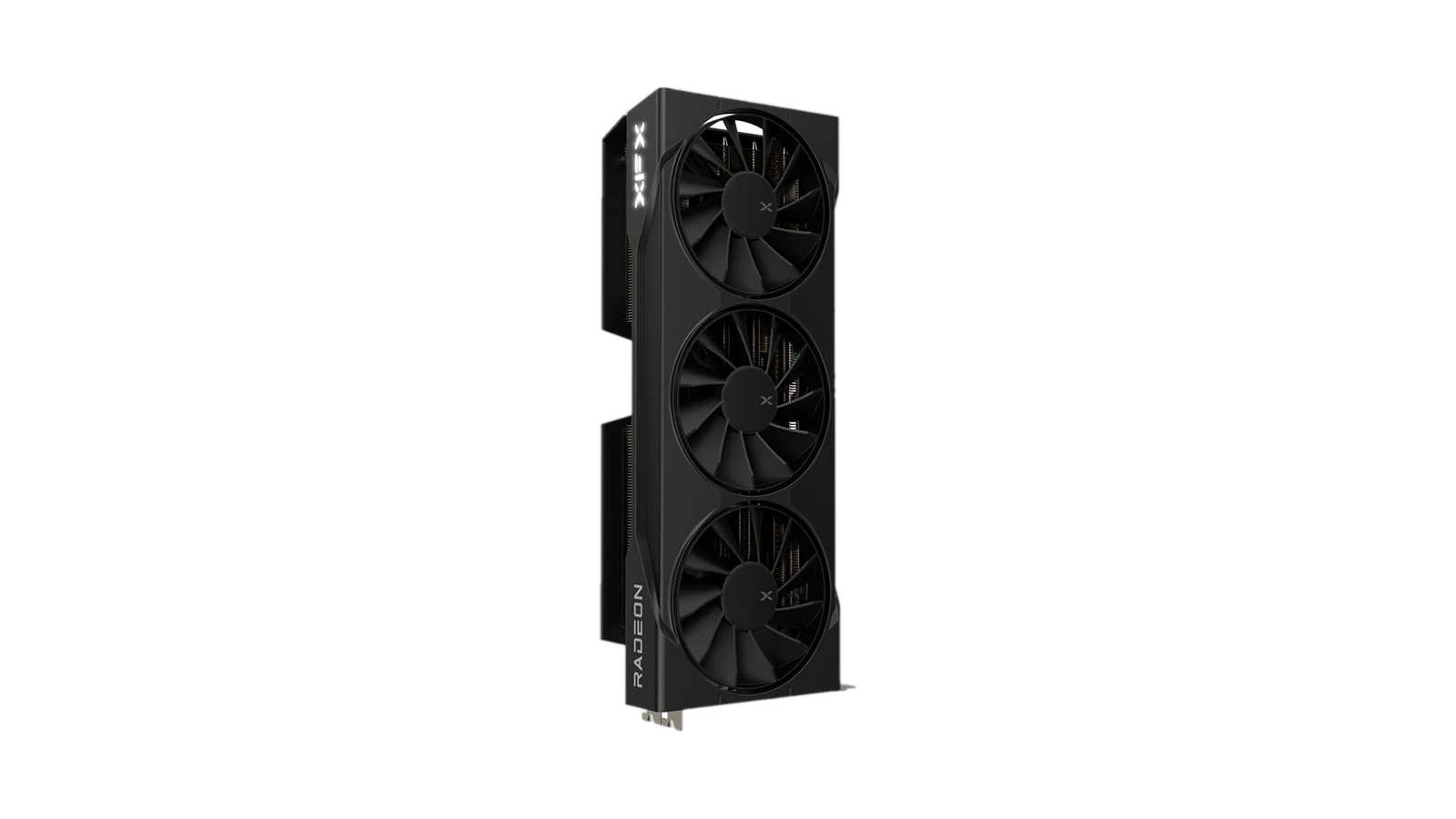
| Cooler | XFX SWFT Triple Fan |
| Price | $699.99 |
| Warranty | 3-Year Manufacturer |
Key Features and Benefits
The specs table tells you what the card has. Here is what those numbers mean for how you actually play.
RDNA 4 Architecture – AMD‘s latest GPU architecture delivers a meaningful generational leap in performance-per-watt. The Radeon RX 9070 XT handles demanding workloads without the 350W+ draw of competing high-end cards.
16 GB GDDR6 VRAM – Double the VRAM of most competing cards in this price range. At 1440p and 4K, texture packs and high-asset scenes no longer hit a wall, and the 16GB buffer provides real headroom for the next two to three years as game VRAM requirements climb.
2970 MHz Boost Clock – Keeps frame rates stable during demanding scenes, maintaining the higher sustained clock rather than throttling when thermals build.
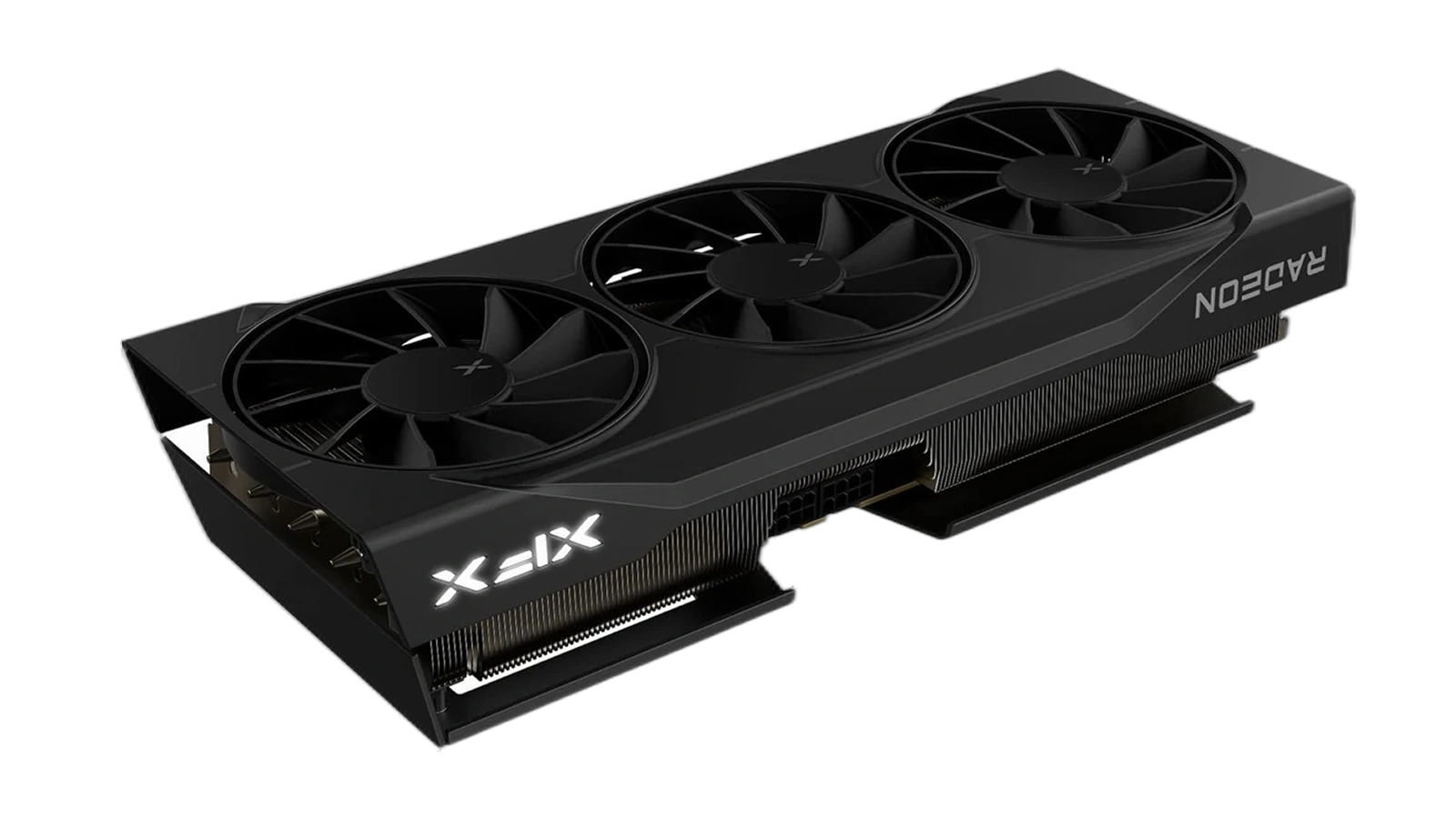
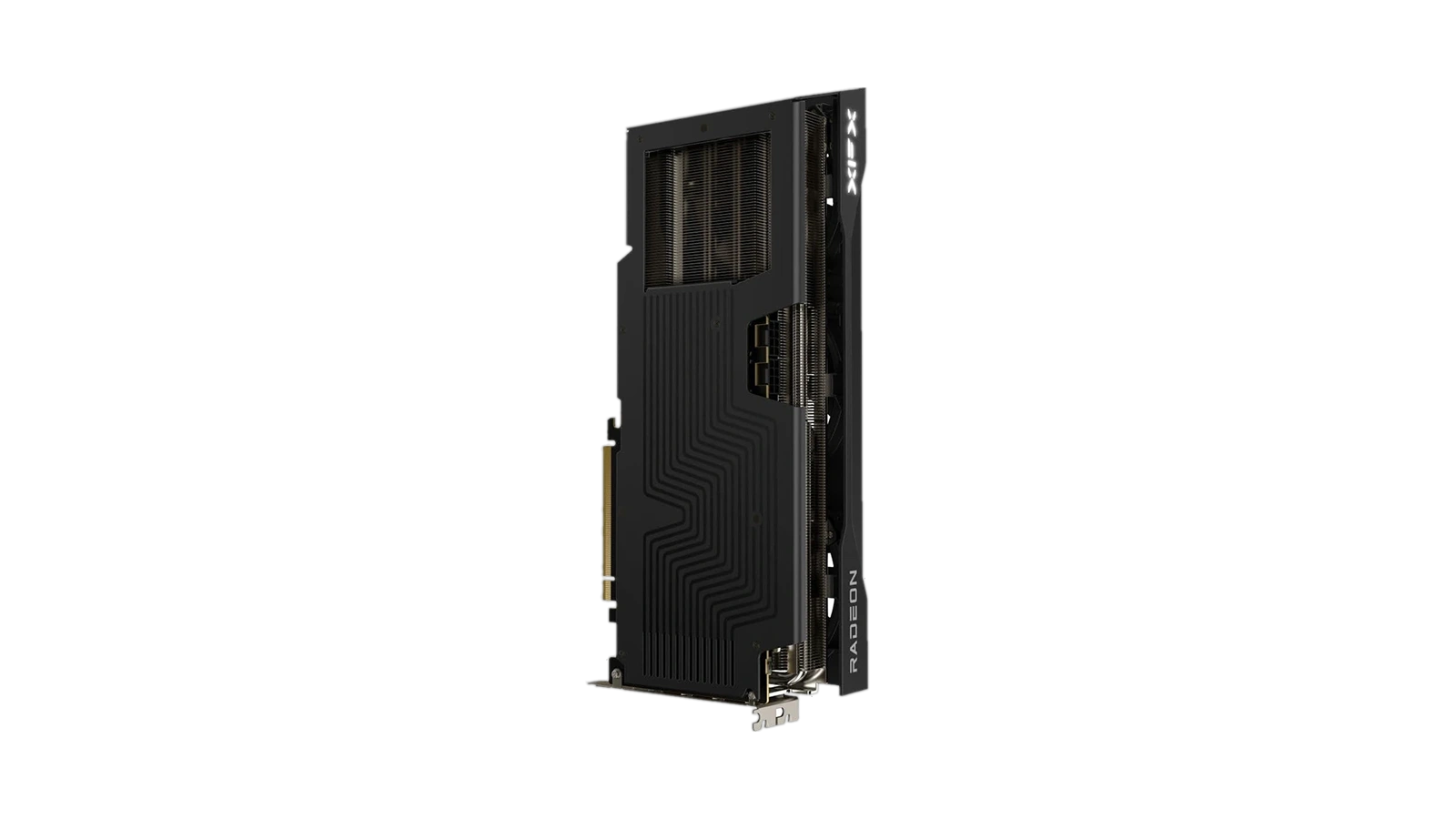
XFX SWFT Triple Fan Cooling – Three fans over a large heatsink run cool and quiet at typical gaming loads. The XFX Swift earns attention specifically for its low-noise operation at stock settings.
Performance and Real-World Experience
The RX 9070 XT targets the sweet spot between mid-range and enthusiast-tier gaming, and the XFX Swift handles that load with composure.
At 1440p with high settings, the RDNA 4 GPU review numbers are strong. Paired with a Ryzen 9000-series CPU, the card pushes 180+ FPS in titles like Helldivers 2 – and that is frame delivery consistency, not just a peak average.
At 4K, cinematic-quality settings in demanding open-world titles are achievable at 60-85+ FPS with FSR Quality enabled. The RDNA 4 FSR implementation is noticeably improved over previous generations – upscaling quality holds up well in both static and moving scenes, making 4K gaming genuinely practical at this price point.
The stock 3DMark Steel Nomad score sits around 98.7 – a strong data point for a card under $700 and a useful benchmark reference for builds.
The XFX Swift triple-fan cooler keeps thermals in the 65-70C range under sustained load. Silent mode in Adrenalin takes it further, and the card runs near-silent during desktop use.
AMD Adrenalin has a learning curve coming from Nvidia GeForce Experience, but day-to-day stability is good. One thing worth flagging about the physical card: the XFX Swift is genuinely long. Check GPU clearance before ordering – this is a three-slot, long-PCB design. That is the one practical hurdle in an otherwise straightforward RX 9070 XT performance review verdict.
| Pros | Cons |
|---|---|
| ✅ Outstanding 1440p and 4K performance for the $699 price point ✅ 16 GB GDDR6 VRAM gives meaningful headroom over 8 GB competing cards ✅ XFX SWFT triple-fan cooling runs quiet at typical gaming loads ✅ RDNA 4 architecture delivers strong performance-per-watt for the GPU class ✅ 3-year manufacturer warranty covers the full investment ✅ Undervolting headroom lets owners tune for efficiency without significant performance loss ✅ 4 display outputs (HDMI 2.1 + 3x DP) cover multi-monitor and TV gaming setups | ❌ The card’s physical length requires a case clearance check before buying |
At $699, the XFX Swift Radeon RX 9070 XT matches or surpasses the RTX 5070 Ti in several workloads while undercutting Nvidia’s comparable card by $300-400. RDNA 4’s 16 GB VRAM and improved FSR make this the strongest price-per-frame option in the sub-$750 GPU market right now, and the Enebameter score of 8.9/10 reflects that directly.
At this price, 16 GB GDDR6 is a genuine differentiator. Most competing Nvidia cards in the same bracket ship with 8 GB – already showing limitations in high-texture 4K settings. The Radeon RX 9070 XT sidesteps that entirely.
“Switching to AMD from Nvidia felt like a real gamble, but this card changed my mind fast. The 16 GB handles everything I throw at it, and the stock 3DMark Steel Nomad score hit 98.7 – solid for anything under $700. I’d recommend it without hesitation.” – NeoJin
The benchmark figures back up what owners consistently find: the XFX Swift runs predictably strong at stock, and that 3DMark result reflects real-game performance. That is RDNA 4 doing what it was designed to do.
“Running 4K on a Ryzen 5700X with this card gives me a fantastic visual experience. It performs right alongside the RTX 5070 Ti, and the $400 price difference makes the choice obvious. I have zero complaints after months of daily use.” – Daniel H.
That $400 gap is worth sitting with. At $699 versus $1099+ for Nvidia‘s closest competitor, the money saved covers a high-refresh monitor, a new CPU, or simply stays in your pocket. The value math is hard to argue with.
Benchmark Performance
Raw numbers matter when you’re spending $699 on a graphics card – here is how the RX 9070 XT benchmark data holds up across workloads.
At 1440p – the primary target resolution for this card – the RX 9070 XT 1440p gaming performance is genuinely impressive. In head-to-head rasterization workloads, the Radeon RX 9070 XT runs 20-29% ahead of the RTX 5070, making it the stronger 1440p card at a lower or comparable price. Frame rates in the 100-180+ FPS range are achievable in demanding titles at high settings.
At 4K with FSR Quality enabled, cinematic open-world titles run at 80-90 FPS average and competitive titles push well above 100 FPS. The 16 GB VRAM buffer means 4K texture packs load without hitching – a real advantage over 8 GB competing cards.
Ray tracing performance is improved over RDNA 3 but still trails Nvidia‘s RT implementation. For rasterization-heavy titles – which covers most competitive gaming – this is irrelevant. For path-tracing enthusiasts, Nvidia still has an edge.
Power Draw and Cooling
Thermal management is where the XFX Swift earns its reputation as one of the quieter RX 9070 XT variants.
The Radeon RX 9070 XT‘s reference TDP sits around 210-220W – meaningfully lower than competing high-performance Nvidia cards at similar price points. A single 650W PSU covers this build without concern.
The XFX Swift triple-fan cooler keeps junction temps in the 65-70C range under sustained gaming loads. Fan noise under typical gaming is low, and silent mode in Adrenalin takes it further at a 3-5C thermal cost.
Undervolting (-60mV core, ~165W power limit) delivers similar performance with lower temps and less fan activity. The thermals are good at stock – undervolting is optimization, not a fix.
Physical note: the XFX Swift is a three-slot card with a long PCB. Check case clearance before ordering – some owners needed to reroute cables to fit.
RX 9070 XT vs RTX 5070: How Do They Compare?
The most common question before buying the Radeon RX 9070 XT is how it stacks up against Nvidia‘s current mid-range – here is the practical breakdown.
RX 9070 XT vs RTX 5070 ($599-649): The RX 9070 XT outperforms the RTX 5070 by 20-29% in rasterization-heavy workloads while costing a comparable or slightly higher amount. At the same price, the 9070 XT wins on raw frames and VRAM – 16 GB versus 12 GB on the 5070. For pure rasterization gaming, the AMD card is the stronger pick.
RX 9070 XT vs RTX 5070 Ti ($999+): The 9070 XT trades blows with the 5070 Ti in many workloads, running within 3-5% in several titles, while costing $300-400 less. The RTX 5070 Ti holds an advantage in ray tracing and DLSS 4 frame generation. For anyone who does not prioritize ray tracing, the 9070 XT at $699 makes the 5070 Ti a hard sell.
DLSS vs FSR: Nvidia‘s DLSS 4 is technically ahead, particularly in frame generation quality. FSR 4 is a genuine improvement and works across both hardware ecosystems, but Nvidia‘s implementation is tighter – relevant mainly for heavy 4K upscaling users.
My Overall Verdict on XFX Swift Radeon RX 9070 XT
The Radeon RX 9070 XT review lands in a clear place: this is the most compelling GPU purchase in the sub-$750 bracket right now.
For 1440p gaming, the performance margin over comparable Nvidia hardware at this price is hard to ignore. For 4K, the 16 GB GDDR6 buffer and FSR 4 support make high-resolution gaming viable without the premium Nvidia charges for equivalent results.
The Enebameter score of 8.9/10 reflects strong real-world performance, with a minor deduction for the AMD Adrenalin learning curve and the card’s physical size – neither a dealbreaker, just factors worth knowing.
The card is best suited for PC builders upgrading from a 20-series or 30-series GPU, or first-time 1440p builders who want headroom to grow into 4K. If you play at 1080p, it is overkill. If you prioritize ray tracing above all else, Nvidia‘s ecosystem has a technical edge. For everyone else, the XFX Swift Radeon RX 9070 XT review conclusion is simple: buy it.
Complete Your Setup
The RX 9070 XT delivers the GPU performance – pair it with hardware that can actually display what it is capable of.
Z-EDGE AG27QS 27″ QHD 275Hz Gaming Monitor
A 275Hz refresh rate at 1440p is exactly what the RX 9070 XT is built to feed. The Z-EDGE AG27QS runs a Fast IPS panel – color-accurate and fast enough for competitive play – so the GPU’s output doesn’t outrun the display.
monTEK Monitor Arm MA1010
The RX 9070 XT supports four displays simultaneously, making a second monitor a natural next step. The MA1010 arm handles 17-40 inch panels and keeps the desk clean once you make that switch.
FAQs
Yes, at $699 the RX 9070 XT delivers performance that trades blows with Nvidia cards costing $300-400 more, backed by 16 GB GDDR6 VRAM that gives it genuine longevity. For 1440p and 4K gaming in 2026, the price-to-performance ratio here is difficult to match.
The RX 9070 XT performs comparably to the RTX 5070 Ti in most rasterization workloads, running within 3-5% in several titles while costing significantly less. For anyone who does not prioritize ray tracing, it punches clearly above its price class in the current Nvidia lineup.
AMD priced the RX 9070 XT aggressively because RDNA 4 delivers strong efficiency gains, letting the company reach high performance numbers without the power draw that forces AIB partners to charge a premium. The result is a genuinely competitive card at a price AMD could commit to from launch day.
The 16 GB GDDR6 VRAM is the most significant longevity factor – most cards at this price ship with 8 GB, which is already showing strain in high-resolution titles. With 16 GB, the RX 9070 XT has real headroom for the next two to three game release cycles before VRAM becomes a bottleneck.
Yes, the XFX Swift Radeon RX 9070 XT review consistently points to the triple-fan cooling and quiet operation as standout traits of this AIB design. The card runs cool and quiet at stock settings, the three-year warranty is solid for the price, and the XFX build quality holds up well for a card in daily use.