

Tomodachi Life Review in 2026: The Absurd Island Life Was Worth the Wait



12 years. That’s how long Nintendo made us wait for a sequel, and for me to write a Tomodachi Life review.
For those of you who are new to the franchise, Tomodachi Life is essentially a game where you don’t play as one or two characters, but as something closer to a god, taking care of residents on your tiny island. With all the unhinged things that happen on your island, you’ll have a front-row seat to watch the chaos unfold.
That’s a very brief summary of the game, but I’ll detail my experience more in my Tomodachi Life review below.
The game landed on Nintendo Switch and Nintendo Switch 2 on April 16, 2026, for $59.99 – and if you’re already asking whether Tomodachi Life is worth it, give me a few more paragraphs.
According to Metacritic, Tomodachi Life reviews sit at a 78 metascore and 86 userscore. Of course, the latter – the voice of the people – is the one you should pay more attention to. But as for my Tomodachi Life review score, it sits right in the middle of what you see in Metacritic, and here’s why!
Jump to:
TL;DR – Tomodachi Life: Living the Dream Review Overview
Before I get into the nitty-gritty details of my Tomodachi Life review, here’s a quick snapshot of what you’re walking into:
| Genre | Social sandbox / Life sim |
| Core Loop | Create Miis, watch them cause chaos, check in daily |
| Biggest Strength | Creative freedom and emergent absurd comedy |
| Biggest Weakness | No online Mii sharing, missing 3DS features |
| Clear Verdict | A charming, imperfect comeback worth your time |
| Best For | Creative players and returning 3DS fans |
Tomodachi Life: Living the Dream – This Isn’t Animal Crossing and That’s the Point
If you came into this Tomodachi Life review expecting something calm, structured, and familiar like Animal Crossing or other great cozy games, you might want to reset those expectations. Tomodachi Life plays by its own rules. You’re not here to min-max your island or carefully design every detail. You’re here to watch it all unfold, often in ways you didn’t see coming.
As your island’s breaking news reports will tell you, Tomodachi Life is less about control and more about observation. You guide your residents, sure, but a lot of the magic comes from the randomness. The weird conversations, unexpected relationships, and completely off-the-wall moments are what define the experience. And that’s exactly why this game stands apart from others in the genre.
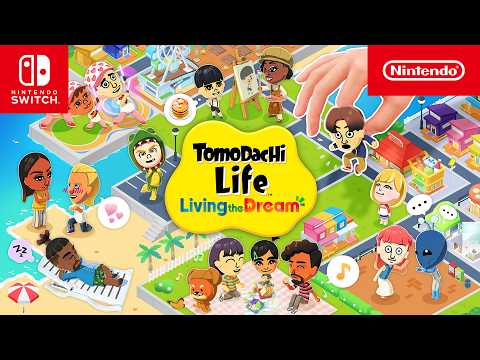
You’re not a resident on the island you build, but something closer to a god who’s mildly distracted. Living the Dream puts you in charge of a customizable island populated entirely by Mii characters you design (you can also use Miis that are already tied to your Nintendo account).
There’s something I want to make clear in my Tomodachi Life review – there’s no central plot or final boss; this game is more of a sandbox-style social simulation. Your Miis will develop needs, food preferences, and crushes. They’ll pick fights, fall in love, and have children you absolutely did not plan for.
Think of it less like Animal Crossing and more like a digital ant farm with better dialogue – but your ant farm also contains your high school friends, your uncle, your college professor, and a Mii of Shrek you made at 1 AM.
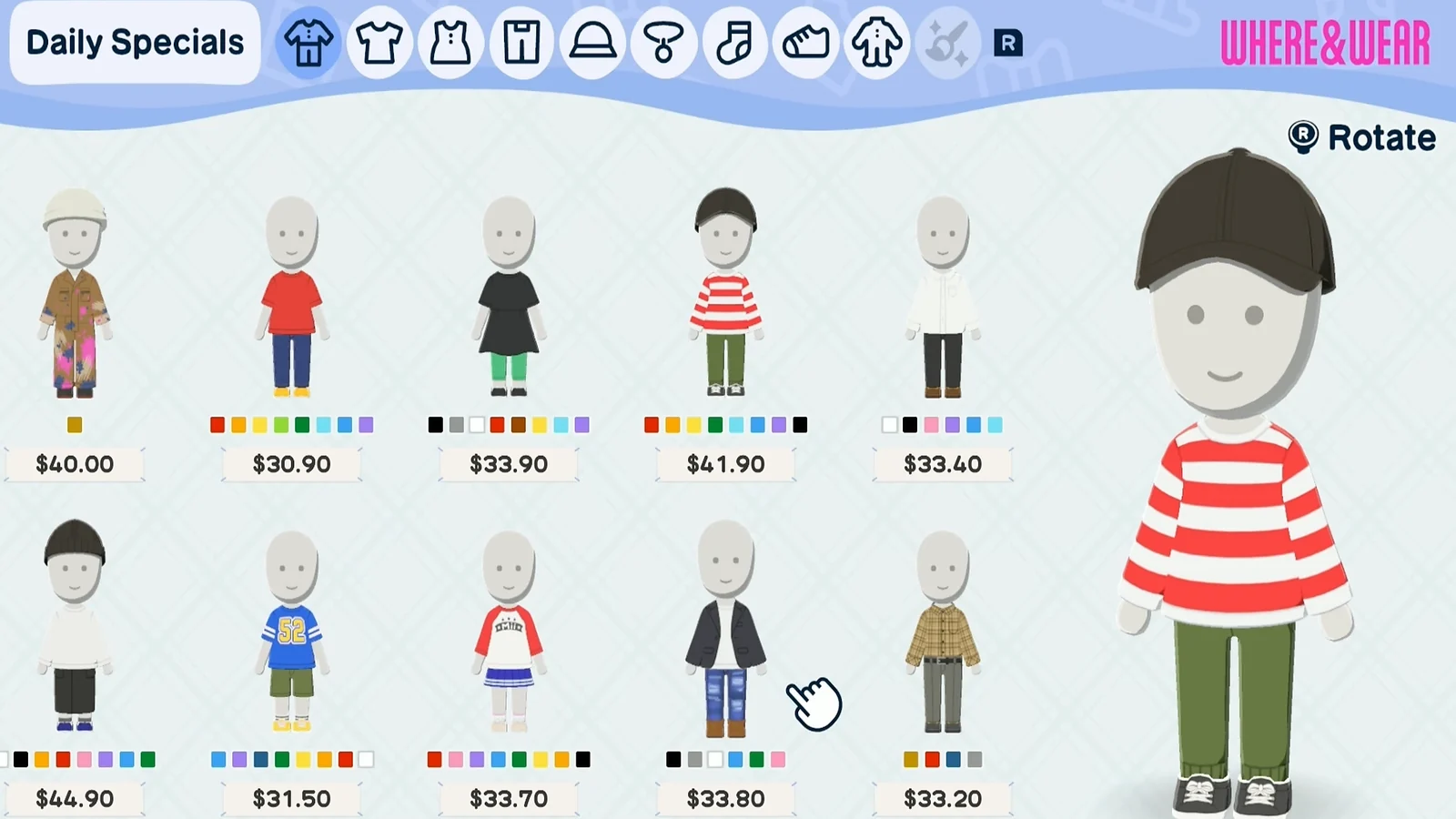
To be clear on platforms: Living the Dream runs on both Nintendo Switch and Nintendo Switch 2. You don’t need a Nintendo Switch Online subscription to play, though, GameChat on Switch 2 does require one.
Take note that there’s also a free demo on the Nintendo eShop, and your save data carries over when you buy the full game. Complete the demo, and you unlock an exclusive Hamster Costume. And honestly? Try the demo first. It’ll tell you within 20 minutes if this game is for you.
If you’re still figuring out where Living the Dream sits in the broader gaming world, our video game genres guide breaks it down well.
In my Tomodachi Life review, I’m not assuming you’ve played the original, but I will let you know if there are any major differences.
The Loop That Keeps Pulling Me Back
One thing that kept catching me off guard during my Tomodachi Life review is how simple the daily loop actually is. You check in daily, watch something absurd happen, checkmark a few requests, customize the island a little, then repeat.
On paper, that sounds repetitive, and plenty of players will say exactly that. But the sheer level of absurdity you encounter consistently undercuts those concerns and makes the repetition feel far less like a flaw.
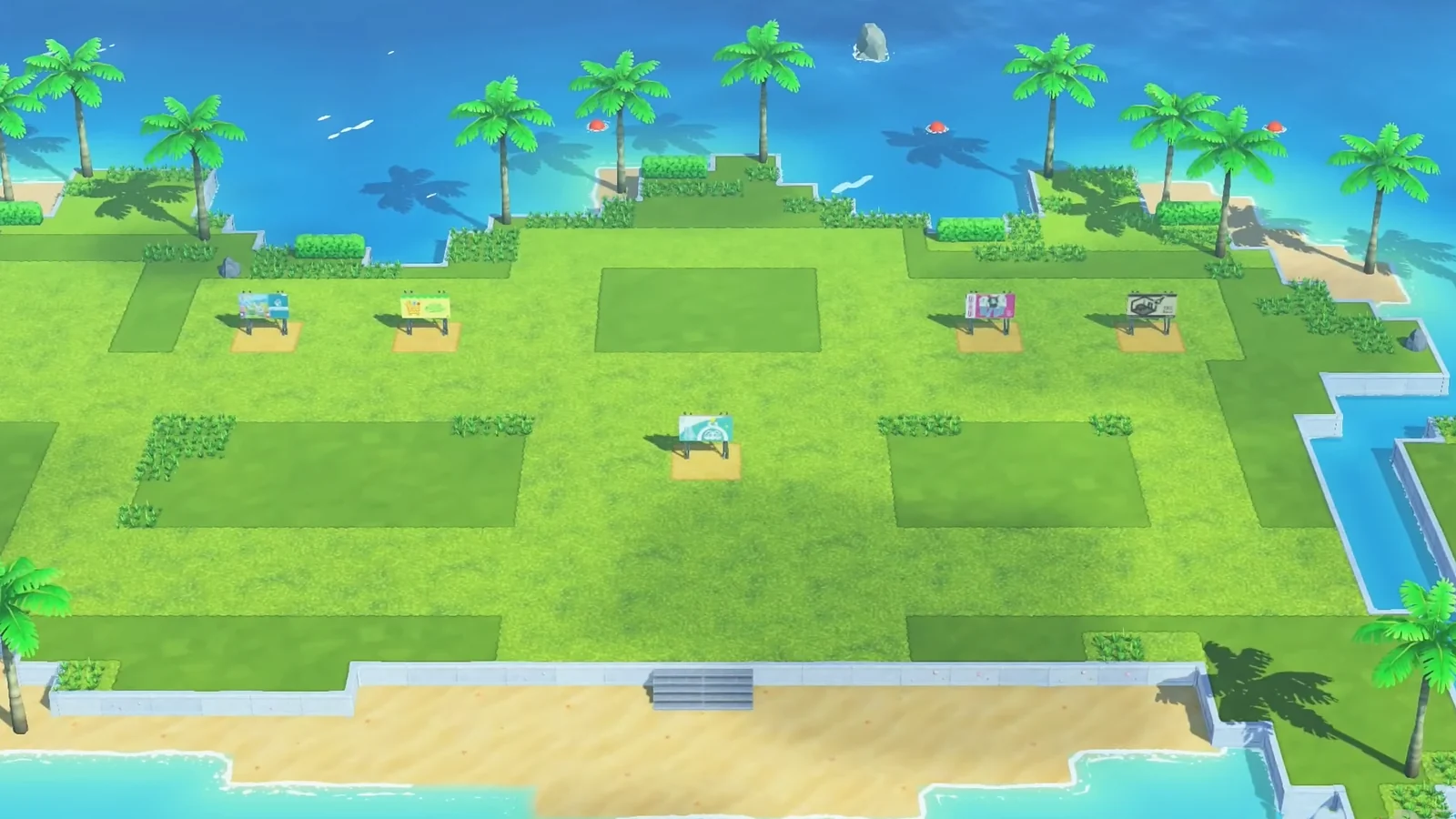
Compared to its predecessor on the Nintendo 3DS, the changes are quite massive, for better and for worse. The first is open island exploration. In Living the Dream, Miis no longer live in an apartment block – they roam freely across a fully customizable island. You can pick them up (or lift them up), move them, and drop them somewhere else. Sounds minor, yes, but it changes how alive the island feels.
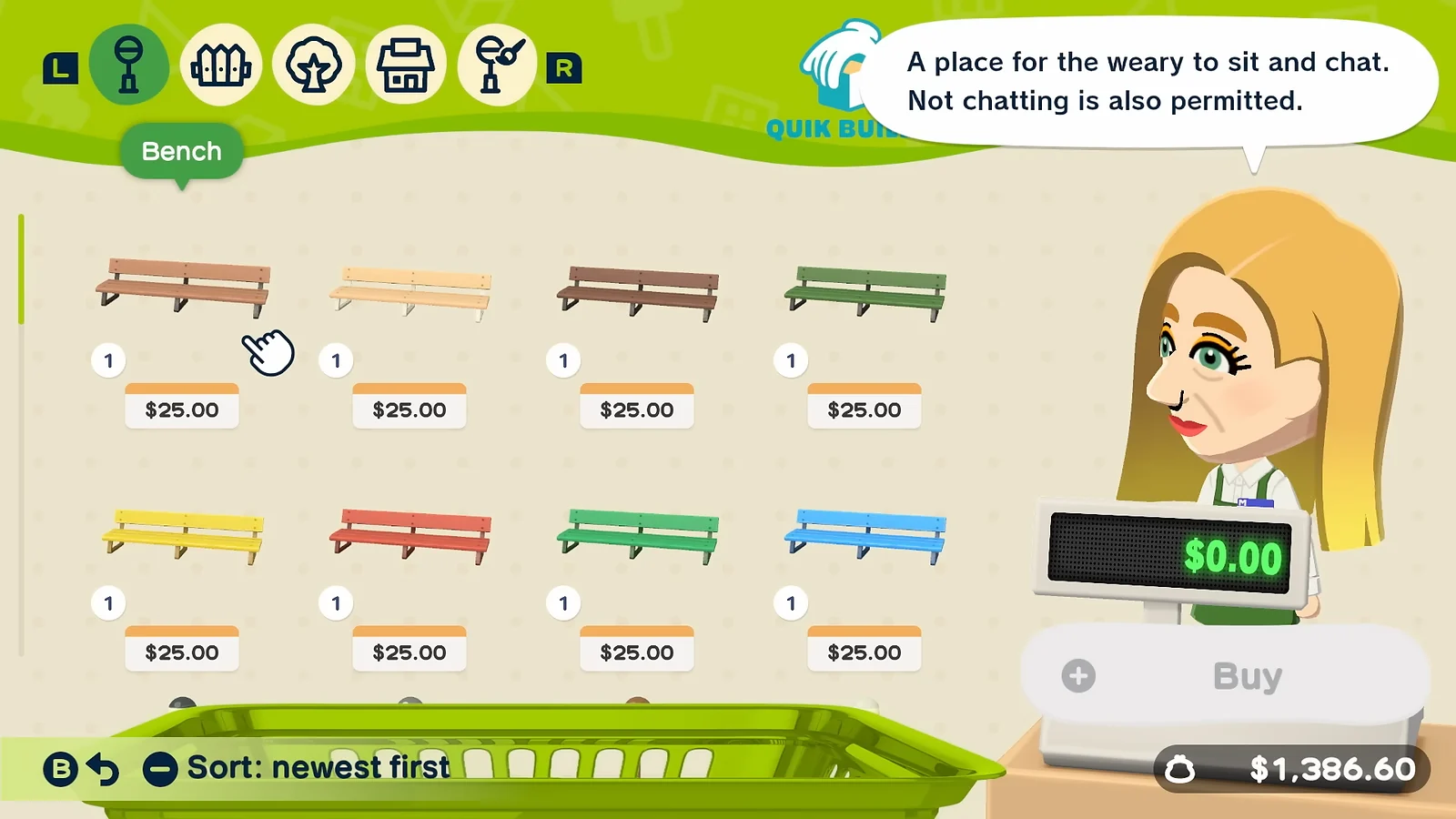
Then there’s Island Builder, a system that lets you terraform the landscape, place homes and shops, and decorate with benches, trees, vending machines – whatever suits the kind of chaos you’re trying to create.
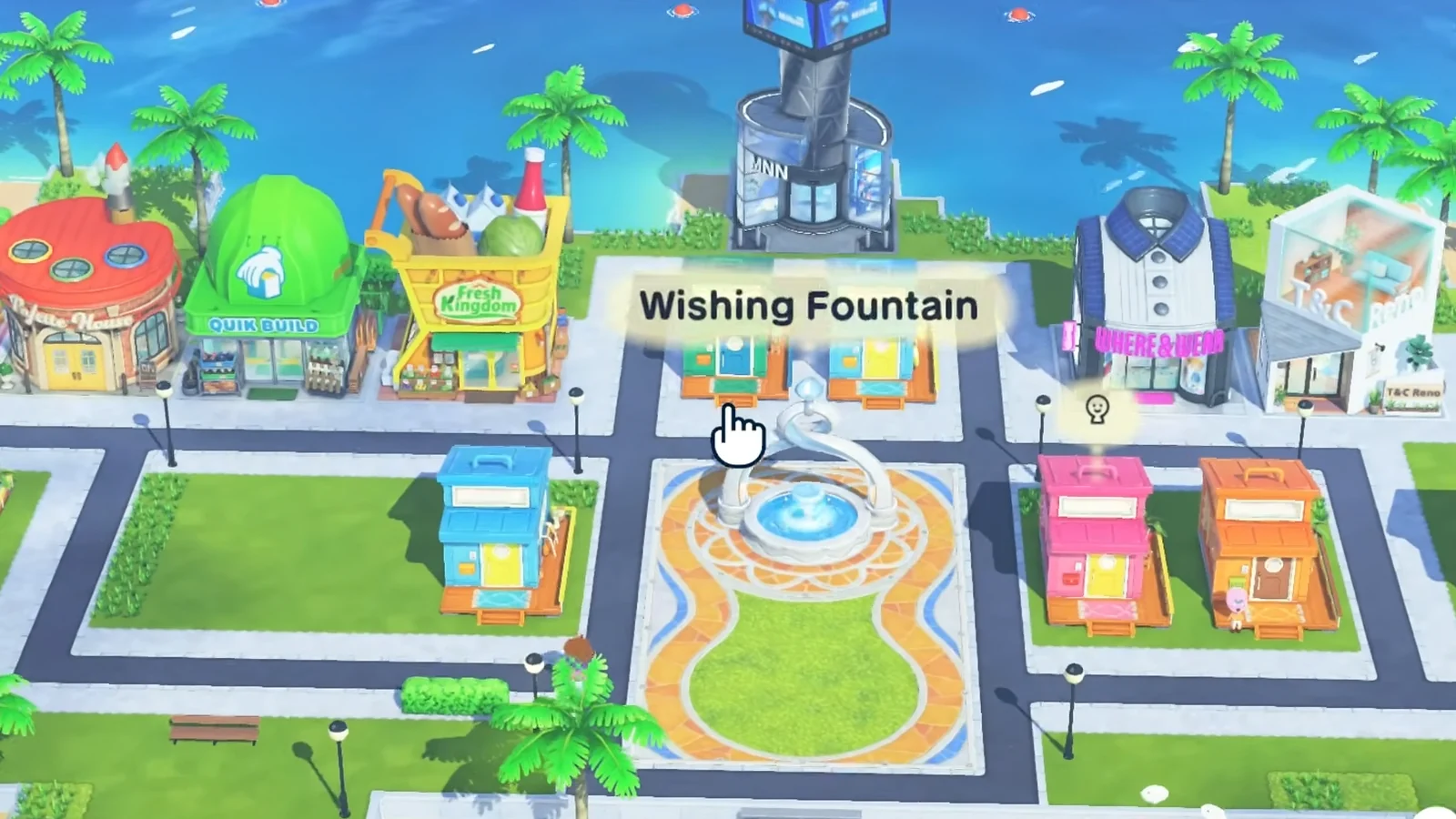
Speaking of homes, you can add up to 8 roommates per house (Mii cohabitation is a thing now). For good and hilarious reasons, I found the relationship dynamics this creates very surprising for a Nintendo title.
The game is perfect for 15-30 minute daily sessions. Something I need to highlight in my Tomodachi Life review is that there’s no failure state and no punishment for doing nothing. Time travel, however, is explicitly penalized. Shops freeze for 24 hours if you skip ahead in your system clock, so don’t do it.
One limitation worth flagging is that touchscreen controls only work in Mii creation and the Palette House workshop. Core island interactions require Joy-Con. Joy-Con 2 mouse mode on Switch 2 is also not currently supported, which is a missed opportunity.
My Miis Have More Personality Than Some Real People
The creative tools are the real engine of Living the Dream, and the main reason player scores sit significantly higher than critic scores in nearly every Tomodachi Life review I’ve read.
You build every personality on the island. You bring the characters, and the game brings the chaos. It can be anyone. Someone you met at Walmart yesterday, your PE teacher in high school, that one streamer you saw the other day. Heck, just like me, you can even add Gustave from Clair Obscure if you want (he won’t really sound French though, if you ask – just saying).
This is all made possible via the expanded Mii Maker. It also lets you draw directly onto Mii faces using the Face Paint tool. With hundreds of customization options, you won’t have to worry about two Miis that look alike. My favorite creation was a Mii based on a colleague, complete with a hand-drawn mustache she’d probably file a complaint about.
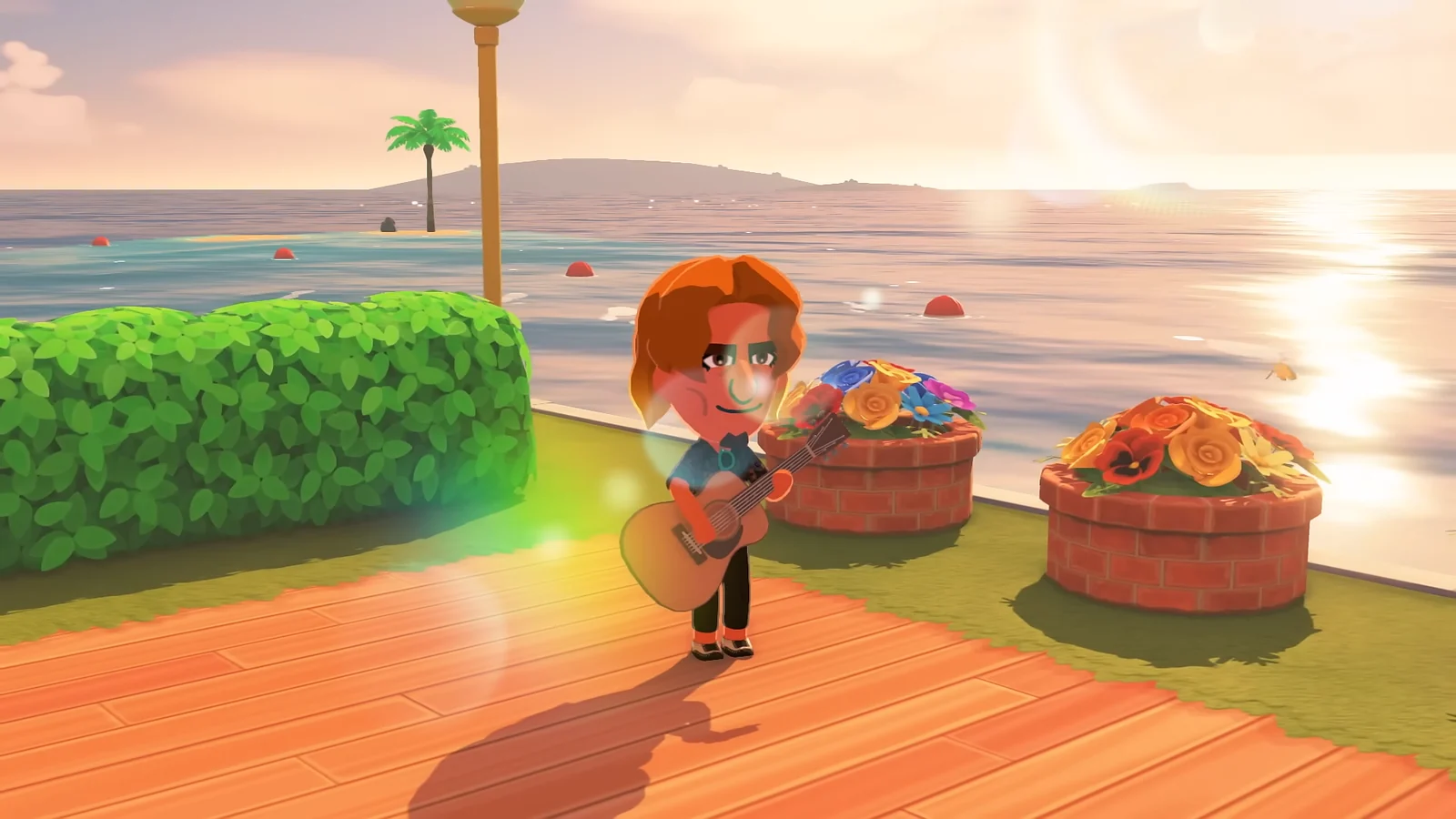
Each Mii also carries a personality quirks system that shapes how they speak, who they befriend, and how they react to events. Sort of like what you’d find in Shadow of War, but in this game, you’re the one who chooses their personality. And this is where the emergent storytelling lives – the exact reason why your island playthrough will look nothing like mine.
If you have a super creative mind, the Palette House Workshop takes that creativity even further. Create custom pets, clothing, food, house exteriors, ground tiles, and full items from scratch using blending modes, outlines, and a drawing toolset that, in my opinion, is surprisingly sophisticated for a game this approachable.
The LGBTQ+ inclusivity update is a meaningful change. You can now set each Mii’s gender identity (male, female, non-binary), dating preferences (any combination), and pronouns independently. Same-gender married couples can have babies. It’s handled naturally – and don’t ask me how.
The Game You’ll Tab Back Into at 11 PM
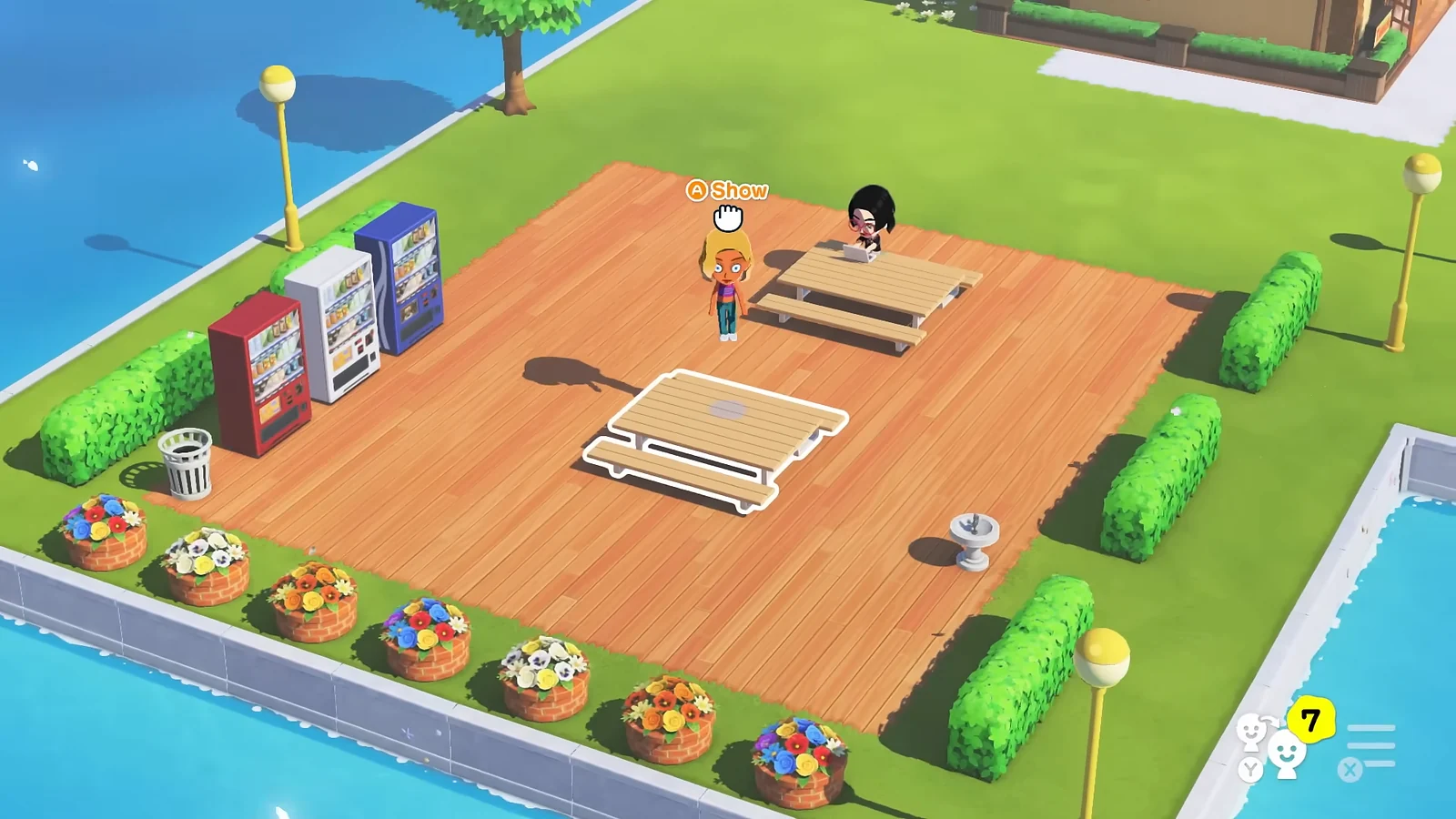
The funniest thing I realized midway through my Tomodachi Life review is that Living the Dream sets itself apart from other life sims by one simple truth. You get out exactly what you put in.
Put it this way. Players who invest creatively will find the game engaging well past the novelty window. And I’m not just talking about drawing different faces for each Mii. I’m talking about the Palette House Workshop, island layout redesign, and so much more.
Players who don’t put in the time won’t get the same out of it. I myself sit in the middle of that spectrum. And truly, I don’t mean that as a criticism – it’s just how the game works.
The emergent storytelling is the real hook of this game. My Miis developed crushes I didn’t script, fell into feuds I didn’t expect, and one proposed marriage after two in-game days. Another declared a Mii, which I based on my brother, a “nemesis” without any prompting. It’s funny, chaotic, borderline unhinged, and those moments stack up quickly.
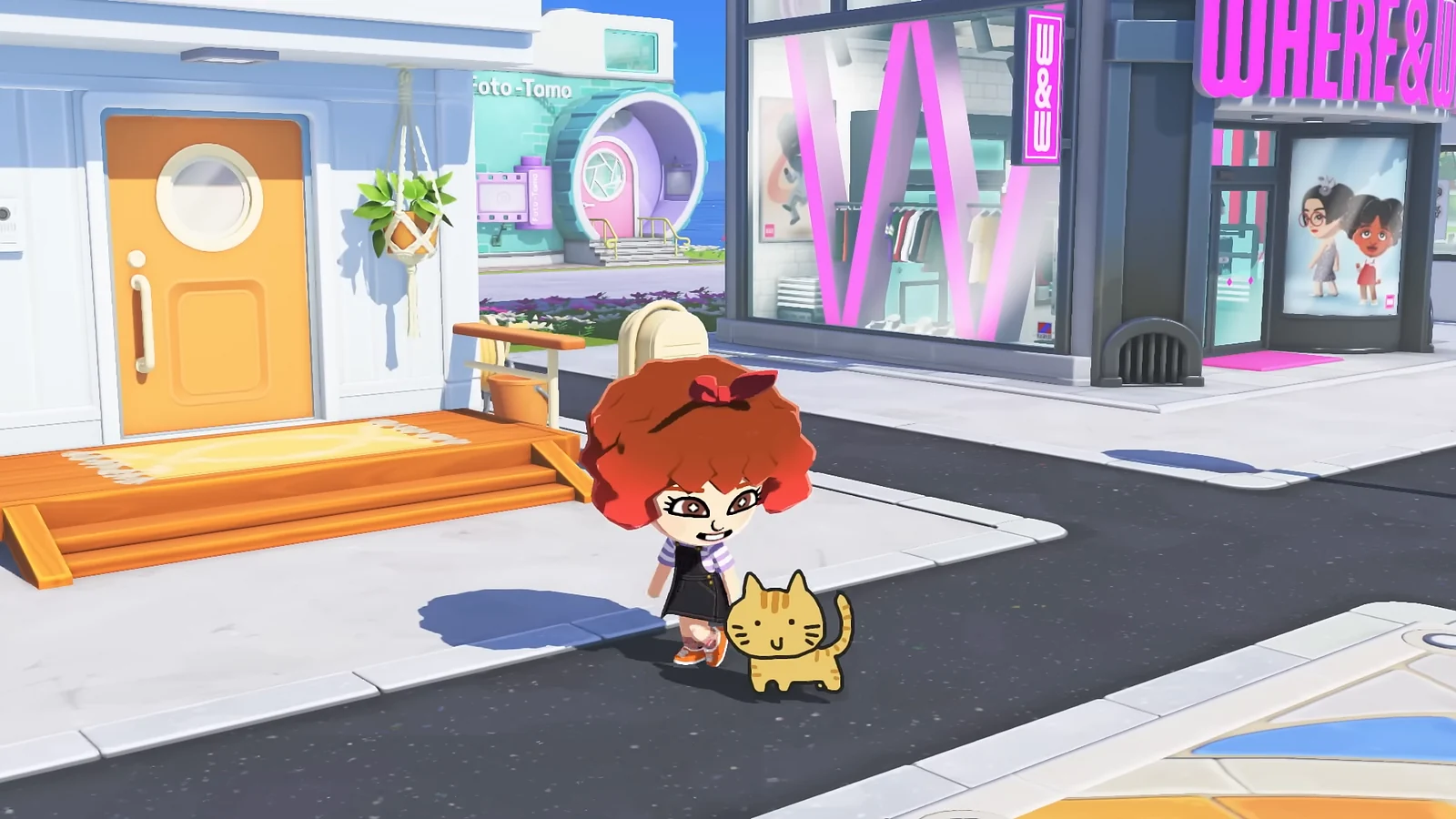
When it comes to relationships, the pacing is noticeably faster than in the 3DS version – marriages, babies, friendships. Some players love the energy. But I can also vouch that some might miss the slow-burn drama of watching relationships develop over weeks. Based on my observations and other Tomodachi Life reviews, both reactions are completely valid.
Daily shop refreshes and event pacing keep the loop feeling fresh early on. After 10-15 hours, dialogue does start to repeat noticeably – a legitimate complaint that shows up in nearly every Tomodachi Life review I’ve seen, and I won’t gloss over it.
Colorful, Loud, and Oddly Satisfying to Experience
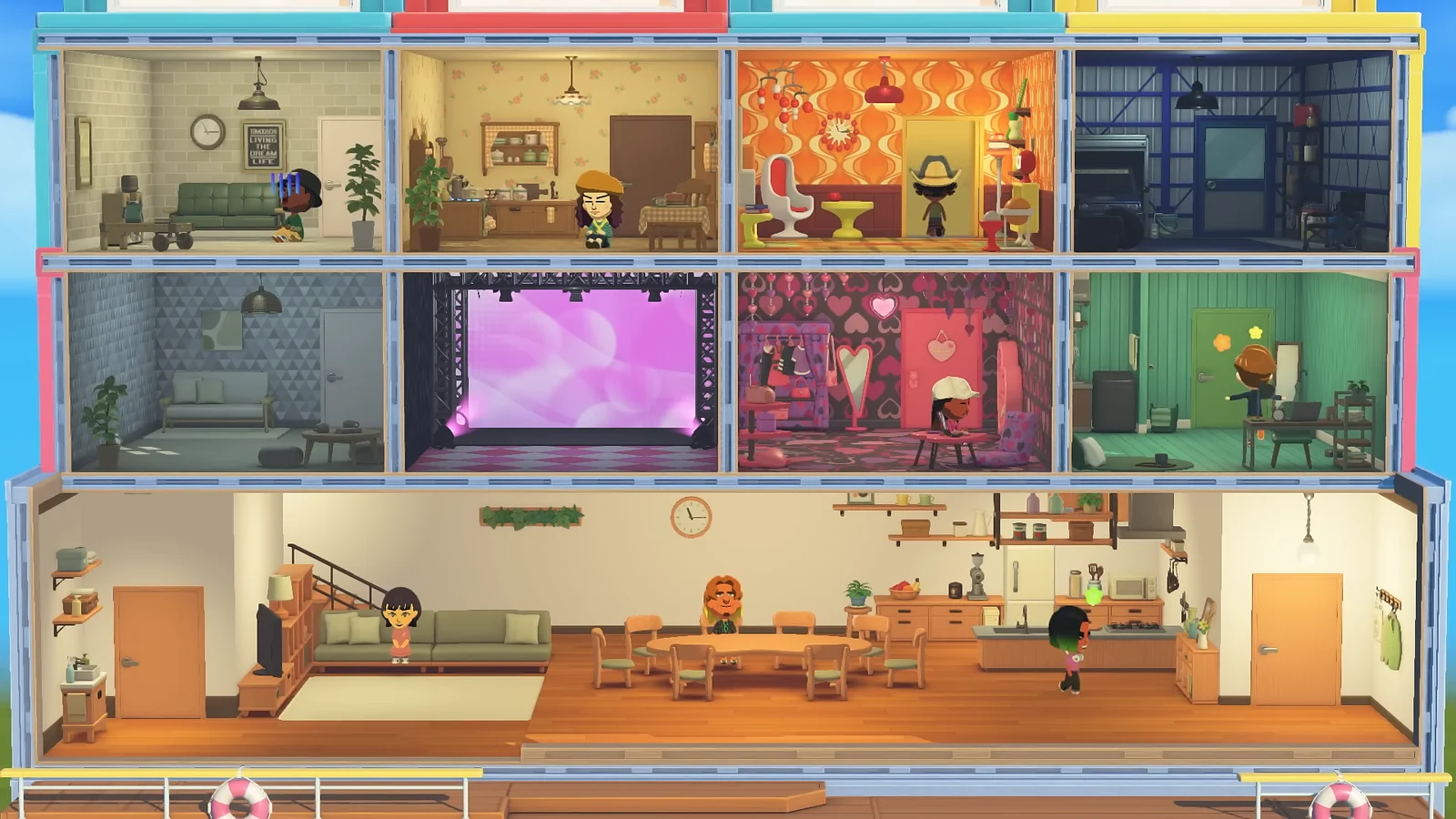
Living the Dream commits fully to a warm, cartoon art style, much like Animal Crossing: New Horizons. The visuals are family-friendly and inviting, exactly what you would expect from a Nintendo game built around Mii characters.
This game won’t impress you on a technical level, but it suits the tone perfectly and reads clearly in both TV and handheld mode, in a similar way to how Animal Crossing prioritizes charm and readability over realism.
The music is excellent, but the standout element on the audio side is the speech technology. The original on the Nintendo 3DS also had it, but it is noticeably more refined here. During my Tomodachi Life review, it was one of the key ingredients that amplified the game’s humour, and I genuinely appreciate what Nintendo has achieved with it.
Surprisingly, jumping into the game after so many years feels easy. I can say that for newcomers, it will be the same for you, too. It’s well-guided in the first few hours, and the transition from the tutorial to the real experience is super seamless. Shout out to the writers for that!
Performance-wise, Switch 2 owners get meaningful upgrades. The game runs at 1080p in handheld mode natively. Load times are faster than on the base Switch. GameChat support also lets you chat with friends while playing, though that requires a Nintendo Switch Online membership.
None of those are reasons to upgrade consoles on their own. But if you’re already on Switch 2, the Tomodachi Life experience there is noticeably smoother and worth noting in any Tomodachi Life Living the Dream review.
The Stuff That Didn’t Make the Cut
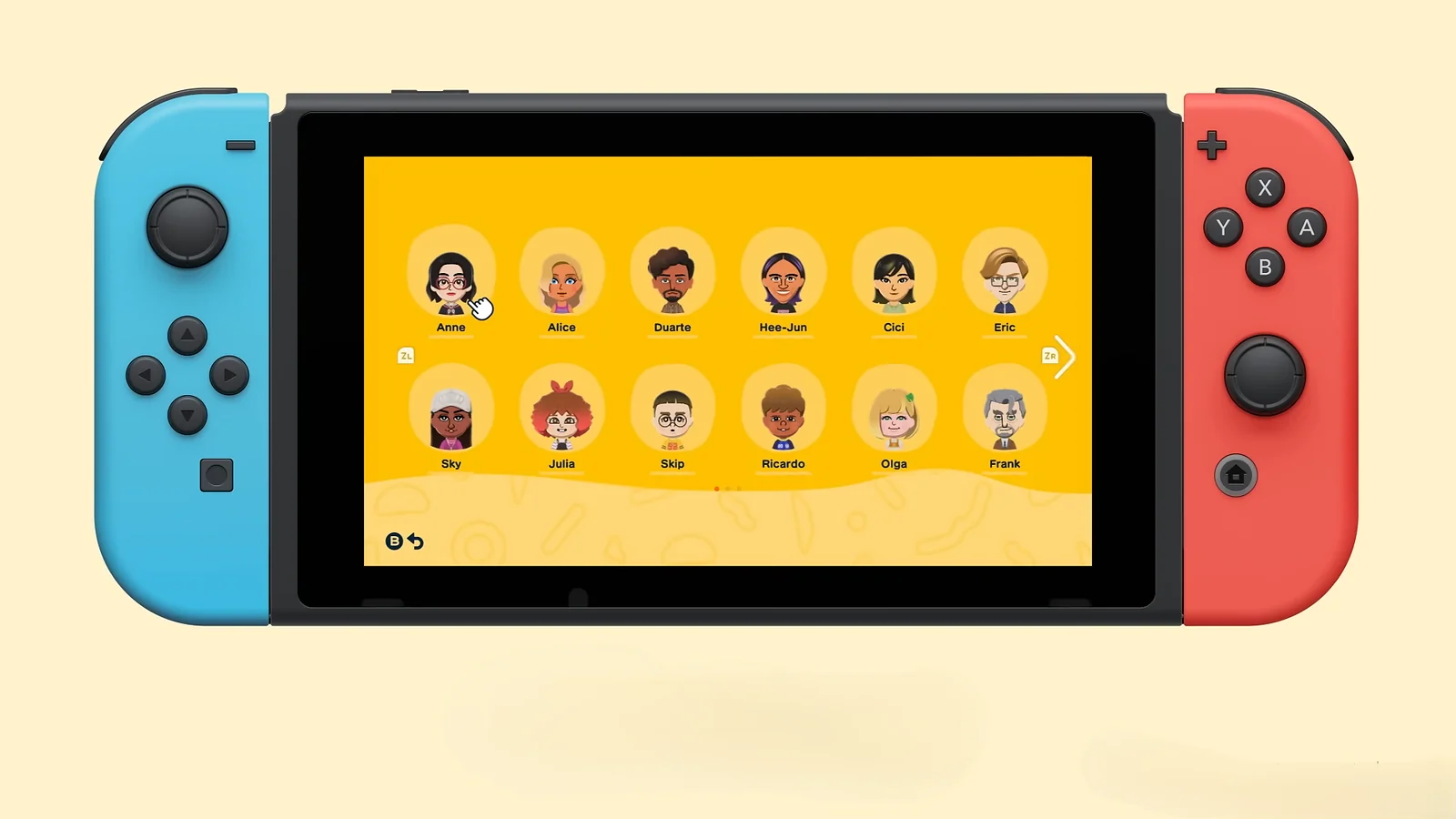
I’ll be direct in this Tomodachi Life review. Several of my personal favorites from the Nintendo 3DS version are absent from Living the Dream – and if you’re approaching this title expecting a proper Tomodachi Life 2, this is the section that’ll matter most to you.
The Concert Hall, Judgment Bay, Quirky Questions, Compatibility Tester, and rap battles, all gone. Some OGs might feel the game launched incomplete, and there is hope that elements like these could return through future updates or paid DLCs.
The biggest omission – period – is online Mii sharing. The 3DS version used QR codes for global sharing. Miitopia had an online sharing system. Living the Dream restricts sharing to local wireless only, which is frustrating because it feels like we’re going backwards.
The workaround for adding custom Miis to your Tomodachi Life island is downloading the Miitopia demo and saving Miis to your Nintendo account.
For sharing Miis with other players, you are limited to local wireless communication or nearby play. There is no built-in online sharing system, and no USB transfer option. That makes sharing feel more restricted than you might expect, especially in a game built around user creativity.
Local Play unlocks only after you reach early progression milestones, specifically once your first two Miis become friends, and you have built the Palette House workshop, which is required for sending and receiving creations. You also need to be on the same software version as the other player, and you can only share content you created on your own island.
You can share Miis or other creations by connecting locally, selecting what you want to send, and confirming the transfer. Anything received still needs to be accepted manually, and new Miis will require housing once they arrive on your island.
For the right player, though, these missing pieces don’t outweigh the game’s considerable charm. But returning 3DS fans should go in knowing what’s been left behind. This Tomodachi Life review exists partly to set those expectations clearly.
My Overall Verdict – A Charming, Imperfect Return That Rewards Creativity
The critic score of 78 and the player score of 86 on Metacritic tell different stories about the same game. Critics and reviewers penalized the missing features, the online sharing restrictions, and the dialogue repetition, all of which are legitimate complaints. Players who love the franchise, on the other hand, looked past those and rated the creative freedom and the open island as some of the best additions the series has seen so far.
My Tomodachi Life review score lands between those two, maybe leaning a bit closer to the player side (as I am a gamer). The absurd, unhinged humor holds up, and the creative tools are the best they’ve ever been. Individual outlets landed around Pocket Tactics 10/10, Dexerto 8/10, TheGamer 8/10, Nintendo Life 7/10, IGN 7/10, and Game Informer 7/10 – and from my time with it, the higher end of that range reflects the game’s actual charm more accurately.
If this is also your Tomodachi Life Switch 2 review, here’s the short version – 1080p in handheld, faster loads, GameChat. Even on the base Switch, Living the Dream is a distinct, funny, and creatively deep game that earns its place in your 2026 Switch library – and that’s my final Tomodachi Life review call.
| PROS | CONS |
|---|---|
| ✅ Deep Mii creation with Face Paint and hundreds of options ✅ Palette House Workshop is genuinely creative and surprisingly deep ✅ Free demo with carry-over save data and an exclusive reward ✅ Nintendo Switch Online not required to play | ❌ No online Mii sharing – local wireless only, though community workarounds exist ❌ Dialogue repeats noticeably after 10-15 hours of play |
Great for: Returning 3DS fans, creative sandbox players, families sharing a Switch, and anyone with a taste for emergent absurdist comedy.
Less ideal for: Players expecting a feature-complete 3DS sequel, those who relied on downloading Miis online, players easily frustrated by repetitive dialogue, or anyone expecting the game to generate content without creative investment.