

“We Took Early Feedback Seriously” – An Interview With DREADMOOR Devs, Dream Dock



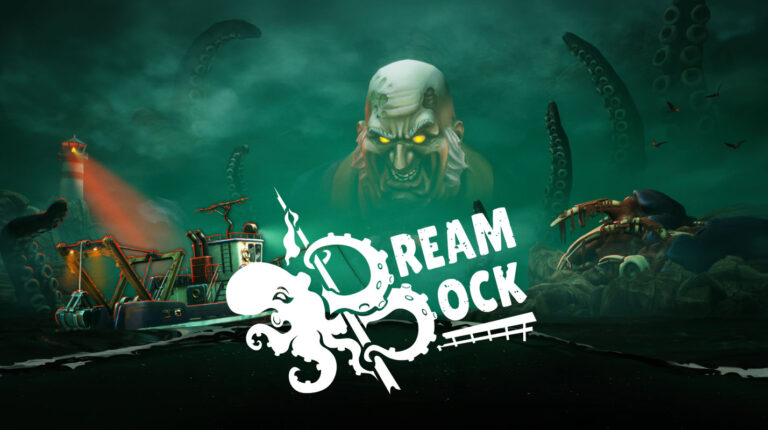
DREADMOOR is an upcoming post-apocalyptic fishing horror game that was first announced in April. It’s being developed by Dream Dock, a new and unknown studio that went radio silent soon after DREADMOOR’s reveal.
It turns out the devs were busy behind the scenes seeking publishing, and this is now happening thanks to a partnership with Digital Vortex (RailGods of Hysterra). Eneba spoke to Dream Dock to get an idea of where things stand now with DREADMOOR, and also to get to know the studio a little better.

When you announced DREADMOOR back in April, there was quite a bit of confusion from gamers and other gaming press as to where Dream Dock is from. Can you please give us an introduction to the team and where you’re based?
Dream Dock is based in Kyrgyzstan, and our team works remotely from different countries. We don’t tie ourselves to a specific location because game development lets us bring together the right people no matter where they live, and that’s what matters to us.
What’s the game dev scene like where you’re from? Does Dream Dock have experience working for other studios/on other projects?
From what I see, not much has changed in the PC indie space. We just keep making games. Challenges happen, and the important part is reacting to them quickly. Our team has worked on everything from small indie projects to AA and AAA titles.
Once we moved into full production, we also brought in more experienced people to strengthen the team. There are too many studios to list them all, but here are a few: Saber Interactive, Sperasoft, My.Games, Owlcat Games, Playrix, and others.
Your press kit for DREADMOOR is very upfront in terms of inspiration, but I think it’s fair to say this wasn’t apparent during the original game announcement, as many gamers came out with comments accusing the game of being a rip-off, or at least a little too closely indebted to Dredge.
How did these types of comments go down with the studio? And related to this: what would you have done differently about your initial reveal after seeing how it was received by the public? Or if you prefer: what lessons did you learn from public feedback after the initial announcement?
First of all, I want to say a genuine thank you to the team behind Dredge. It’s a wonderful game, and it really did inspire us, along with several other titles. But DREADMOOR is heading in its own direction, and you’ll see those differences very soon. Anyone is welcome to drop by our Discord and ask questions as well.
As for the critical comments, there actually weren’t that many. Most players were excited to see a game in this vibe, and we really appreciated that support.
Plus, a lot of the mechanics people pointed to existed long before Dredge. The game became so popular that it basically kicked off its own subgenre – a “Dredge-like” if you will. And now we’re seeing more and more titles in that space. Maybe we even helped push that trend a bit.
The closest comparison is probably the Soulslike situation: one strong idea grows into a whole genre, while everyone keeps their own take on the formula.
We took the early feedback seriously. The reveal trailer showed a very early version of the project, and since then, a lot has changed. In our opinion, for the better. The game became more atmospheric, more immersive, and deeper overall. Pretty much every part of the experience has evolved, from the interface to the gameplay itself. And as the project evolved, it really developed its own identity.
Aside from the games listed in your press kit (Dredge, Pacific Drive, Metro Exodus, Fallout, and Resident Evil), what other sources of inspiration from other media do you have for DREADMOOR?
Our whole team has been playing games for years, so we naturally pick up little things from all over the place. Different genres, different eras…if something feels clever or memorable, it sticks with us. But the main focus has always been to come up with our own ideas and build mechanics that feel right for DREADMOOR. You’ll hear more about those soon.
How did you end up signing with Digital Vortex? What kind of support do they offer, and do you still have a lot of creative leeway in how you’re approaching DREADMOOR?
After the announcement, we received a large number of partnership offers. Negotiations with all interested companies took considerable time. Our criteria were clear:
- A strong, experienced publishing team that actually understands development and can share real expertise.
- Conditions that let us keep creative freedom and make the game the way we believe players will enjoy it.
- A team that simply fits with us – shared mindset, shared values.
- And most importantly, DREADMOOR shouldn’t become “one of hundreds.” We wanted a publisher who would truly focus on the project, ideally treating it as a flagship.
Digital Vortex matched all of that right away. From our very first conversation, it just clicked. Their approach was professional, but also very down-to-earth. And, fun fact, a lot of people on their team love fishing – just like many of us – so we instantly found common ground beyond work. So far, the partnership has been very productive, and we’re genuinely happy with how we’re moving forward together and believe the feeling is mutual.
Dream Dock staff went on Reddit shortly after the first reveal and were pretty transparent in terms of what was going on, as well as making a few promises. However, some of these haven’t come to pass, such as an updated website, and – I think most crucially for gamers – a demo.
Now you have the backing of a publisher, how close are we to seeing if not a playable demo, then at least actual gameplay footage?
We’ll go back and double-check the details, because our social media team at the time was the one answering on Reddit, and it’s possible some things were misunderstood or lost along the way. Both demo and gameplay are currently in the works. We’re getting ready for playtests, and they’re coming up soon. Once they begin, you’ll start seeing a lot more of the actual game.
Have any of your initial development ideas had to be shelved, or have you now got the chance to implement some things you always wanted to?
Yes, certain ideas didn’t make it past testing, and that’s completely normal. What looks great on paper sometimes falls apart once you actually try it. But we never stepped away from the core vision of the game. That’s been our anchor from day one. Everything we promised players is still what we’re aiming to deliver, and in some cases, we’re taking those ideas even further.
How do you see Dream Dock as a studio, in terms of AAA to indie? What’s your opinion on the state of the industry from your place within it?
Dream Dock currently sees itself as an indie game studio, and that’s the direction we’re committed to. Sometimes we get carried away with polishing things a bit too much (it can get expensive), so we try to keep a balance and stay true to the scale of the project.
Indie games are definitely on the rise. Players want fresh gameplay and unique emotions. In AAA, the stakes are so high that studios often avoid risk because one bold idea going wrong can lead to a very costly failure. Indie teams are flexible, and that’s their real strength. Players are more forgiving as long as the experience is fun and engaging.
One question I typically ask developers is about success, so how do you, personally and as a team, measure success, and what does success mean to you?
For us, the success is simple: a game people genuinely enjoy, backed by a wave of positive feedback.
Lastly, do you have any other projects lined up, and can you talk a little about them?
Our full focus and creative energy are currently on DREADMOOR, it’s the project closest to our hearts. If and when we’re ready to share news on other titles, we’ll be sure to let everyone know.