


Lenovo Legion Go Gen 2 Officially Revealed – Called “Dead on Arrival”



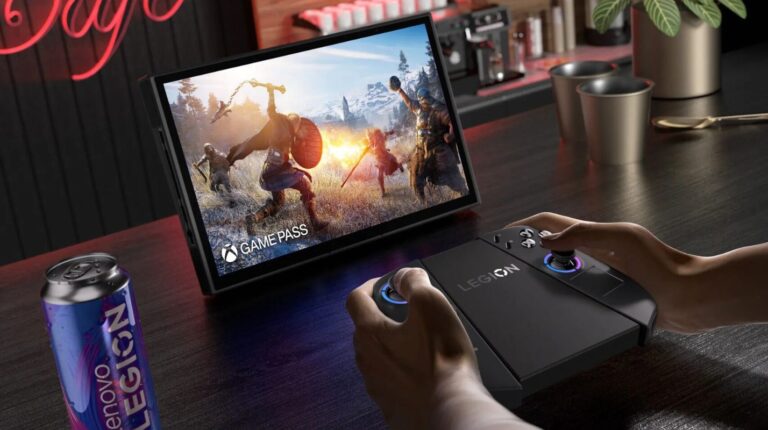
- AMD Ryzen Z2 Extreme with Zen 5 CPU and RDNA 3.5 GPU confirmed
- 8.8-inch 144Hz OLED display with VRR and VESA True Black 1000
- 74Whr battery provides over 50 percent more capacity than Gen 1
- Redesigned controllers and improved thermal system address past criticism
Jump to:
Lenovo Officially Reveals Its Next Flagship Handheld
Lenovo officially announced a host of AMD-powered Legion and LOQ devices at Lenovo Innovation World 2025 on Sept. 5, including the Legion Go Gen 2 specs, which are also available on the company’s website.
This follows months of leaks and speculation surrounding the handheld’s potential upgrades. The new device takes direct aim at handheld rivals like the Steam Deck OLED, ASUS ROG Ally, MSI Claw, and the Switch 2 while also addressing the shortcomings of its predecessor.
“With the launch of our new gaming devices and software, Lenovo is once again demonstrating its commitment to bringing premium technology in collaboration with the best partners in the industry to market,” said Jun Ouyang, Lenovo’s Senior Vice President and General Manager of the Consumer Segment, Intelligent Devices Group.
At the heart of the Legion Go Gen 2 is AMD’s Ryzen Z2 Extreme processor. Built on Zen 5 with up to 8 cores and 16 threads, paired with RDNA 3.5 graphics, it marks a major step up from the first generation’s custom Ryzen Z1 series. AMD’s HYPER-RX technologies, including FSR upscaling and AFMF frame generation, are also integrated for higher frame rates without sacrificing portability.

Lenovo is pairing this CPU with 16GB of 7500MHz LPDDR5X memory and a 1TB PCIe SSD. For players with massive libraries, the system also supports up to 2TB of additional storage via microSD.
A Display Built To Outshine The Competition
The Legion Go Gen 2 comes with an 8.8-inch PureSight OLED panel. Offering 1920 x 1200 resolution, 144Hz refresh rate, VRR, 500 nits brightness, DCI-P3 color, and VESA True Black 1000 certification, it provides a significant leap over the LCD display in the original model.
Compared to ASUS’s ROG Ally, which uses a smaller 7-inch 120Hz screen, Lenovo’s panel provides both size and refresh rate advantages. Valve’s Steam Deck OLED remains a strong alternative thanks to its tuned software and efficient power draw, but Lenovo’s higher refresh ceiling gives it the edge in raw responsiveness.
The larger display also positions the Legion Go Gen 2 as one of the most premium handheld screens available, a feature that may appeal to players who value visuals as much as performance.
Battery Life And Cooling System Improvements
Battery life was a weak point for the first Legion Go. Lenovo has tackled this with a 74Whr battery, delivering 50.4% more capacity than the original. Super Rapid Charge technology promises to keep downtime minimal, offering a substantial boost for players who want longer sessions without plugging in.
Cooling has also been overhauled. The updated ColdFront thermal system introduces larger radiators and fan blades for 45% more airflow. Dual heat pipes distribute heat more efficiently, aiming to keep performance consistent even during extended play. This gives Lenovo an edge over MSI’s Claw, which launched earlier this year with complaints of thermal throttling.
Controllers, Audio, And Connectivity Refined
Lenovo’s detachable Truestrike controllers return but with redesigned rear button layouts to reduce accidental presses. This addresses one of the most common criticisms of the original Legion Go, where ergonomics were strong but certain button placements caused frustration.
Audio has also been upgraded with dual 2W speakers enhanced by Nahimic and Spatial Audio. Combined with WiFi 6E and Bluetooth 5.3 support, the handheld is well positioned for both portable and docked play. Accessories like the Legion Go Dock and Legion Glasses 2 further expand its ecosystem, giving it flexibility beyond handheld mode.
The power button has a fingerprint reader built in to make logging in faster. Any device which incorporates biometrics features will eventually raise privacy concerns.
Legion Go Gen 2 Too Heavy To Go Anywhere
Earlier reporting in September correctly predicted the AMD Ryzen Z2 Extreme, OLED display upgrade, and larger battery. However, some rumors overstated the possibility of a 4K display option and significantly lighter chassis, neither of which materialized.
Lenovo kept the weight close to the original, with the device starting at 2.03lbs (0.92kg), and the resolution remains 1200p. Still, the next gen handheld weighs in at more than 0.5lbs heavier than its closest rival, ASUS ROG Ally X at 1.49lbs.
“What did I get from the trailer? I have to be a muscle man to hold it up and it’s so raw I have to design stuff for it,” rdzviper commented on YouTube.
The official reveal also confirms that Lenovo did not abandon its detachable controller approach, despite speculation that it might adopt a more traditional design to reduce costs. Instead, the company doubled down by refining comfort and precision.
Not Affordable For Most Gamers
Without all the extra bells and whistles, Lenovo expects the starting price to land around $1,165 for the cheapest model. Adding a bit of extra storage, the docking station, keyboard, and other accessories, the total price could easily surpass that of a high-performance gaming laptop.
“The price makes it DOA. Complete own goal by Lenovo,” EdenVI commented on YouTube.
This user is just one of many who shares the sentiment that paying more than four figures for a handheld gaming device is too much: “$1K+ is making handhelds so out of reach for like 90% of people,” skziecraft commented.”
Positioning In The Handheld Market
With these upgrades, the Legion Go Gen 2 firmly enters the handheld arms race of 2025. Its OLED screen outpaces the ROG Ally, its battery dwarfs the Steam Deck OLED, and its detachable controllers set it apart from the MSI Claw.
Lenovo’s second attempt is a confident leap forward, but whether it can translate high-end specifications into mainstream adoption will depend on pricing and community support. For now, the Legion Go Gen 2 looks like Lenovo’s strongest bid yet to secure a place in the handheld market.
 or
or