

Darwin’s Paradox! Review: (Almost) Too Smart for Its Own Good



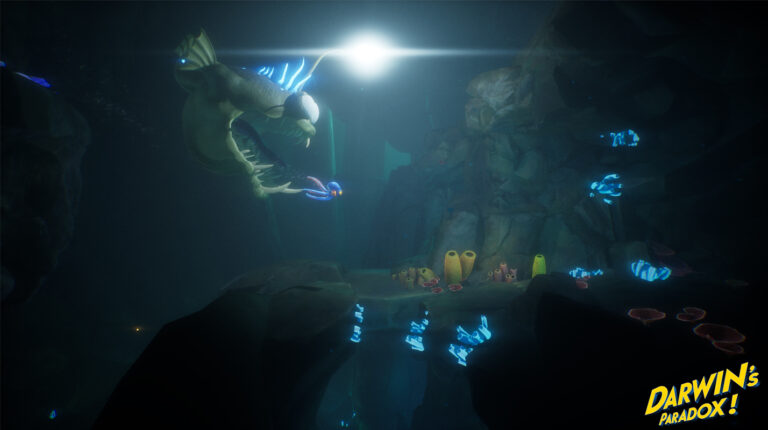
Darwin’s Paradox! is the debut title from ZDT Studio, it’s published by Konami, and it’s out now on all major platforms (I played the PS5 version). It’s absolutely stunning to look at but it’s hard as nails. Luckily, it’s also got enough charm to keep you invested in its goofy sci-fi story, as Darwin gets embroiled in an alien conspiracy to control the planet.

Jump to:
Awarding-Winning Devs, and Instant Death
First things first: there’s no denying Darwin’s Paradox! is a gorgeous game, and for good reason. Paris-based ZDT Studio might technically be a new company, but it counts an award-winning visual effects director (Mikael Tanguy) among its staff. Tanguy has worked with the likes of Brian de Palma and Roman Polanski, and won the Cannes Jury Prize 2019 for Best Visual Effects for Bacurau, a sci-fi Weird Western which I somehow missed but it sounds amazing.
Tanguy works alongside two other heavy-hitters, both from the game industry: Cédric Lagarrigue and Romuald Capron. You might not be familiar with their names, but you definitely know the companies they both fronted: Lagarrigue is the former President of publisher Focus Home Interactive and was involved in the likes of of A Plague Tale and Vampyr, whereas Capron is the former Director of Arkane (Dishonored, Deathloop).
All of this is to say that ZDT Studio clearly knows what they’re doing, and in many ways that’s apparent in not just how Darwin’s Paradox! (yes, I’ll continue to use the exclamation point) looks but also its relative leanness; this is certainly a quality over quantity game, as I completed it in around 6 hours. However, it may well take you a lot longer to reach the end depending on your tolerance for gameplay that favors insta-fails.
Cephalopod Shenanigans
A tongue-in-cheek 1950s infomercial introduces UFOOD, a seafood company, and the “delicious” intelligent octopus that’s the basis for its latest dish. We’re then introduced to Darwin and his best friend (partner?) in a short tutorial section that abruptly ends with them both being abducted by a UFO.
But, instead of zooming off to space it drops them at a UFOOD factory because, wouldn’t you know it, the company is a front for aliens who want to conquer Earth via questionable food. It’s then up to Darwin to escape and, quite possibly, stop the aliens via slapstick karma (Darwin just wants to escape; it’s largely a coincidence that the actions he takes have dramatic, unfortunate effects on the aliens).
Anyone seeing the cartoon aesthetic and PEGI age rating (7 years and up) for Darwin’s Paradox! might be mistaken for thinking it’s a cutesy 2.5D platformer perhaps geared towards younger gamers, but once you understand that Lagarrigue and Konami are behind it then the game’s actual style might make more sense.
The game alternates, sometimes quite wildly, between stealth sections and frantic chase sequences. This all adds up to a game that’s never boring, but also one that can’t generate a consistent flow as the aforementioned insta-fails reset progress far too often. Usually, it’s just to the start of a screen (puzzles/traps tend to be fairly self-contained) but every so often you’ll find yourself sent back to the beginning of a lengthy series of, for example, moving vertical platforms or gigantic rotating gears.
Darwin’s Paradox! is a succession of trial-and-error gauntlets owing more to the likes of precision platformers than run-and-jump titles. It’s more Super Meat Boy than Super Mario, basically, but with the harsh instant deathtraps of Limbo thrown in for good measure.
Hello, Fellow Humans
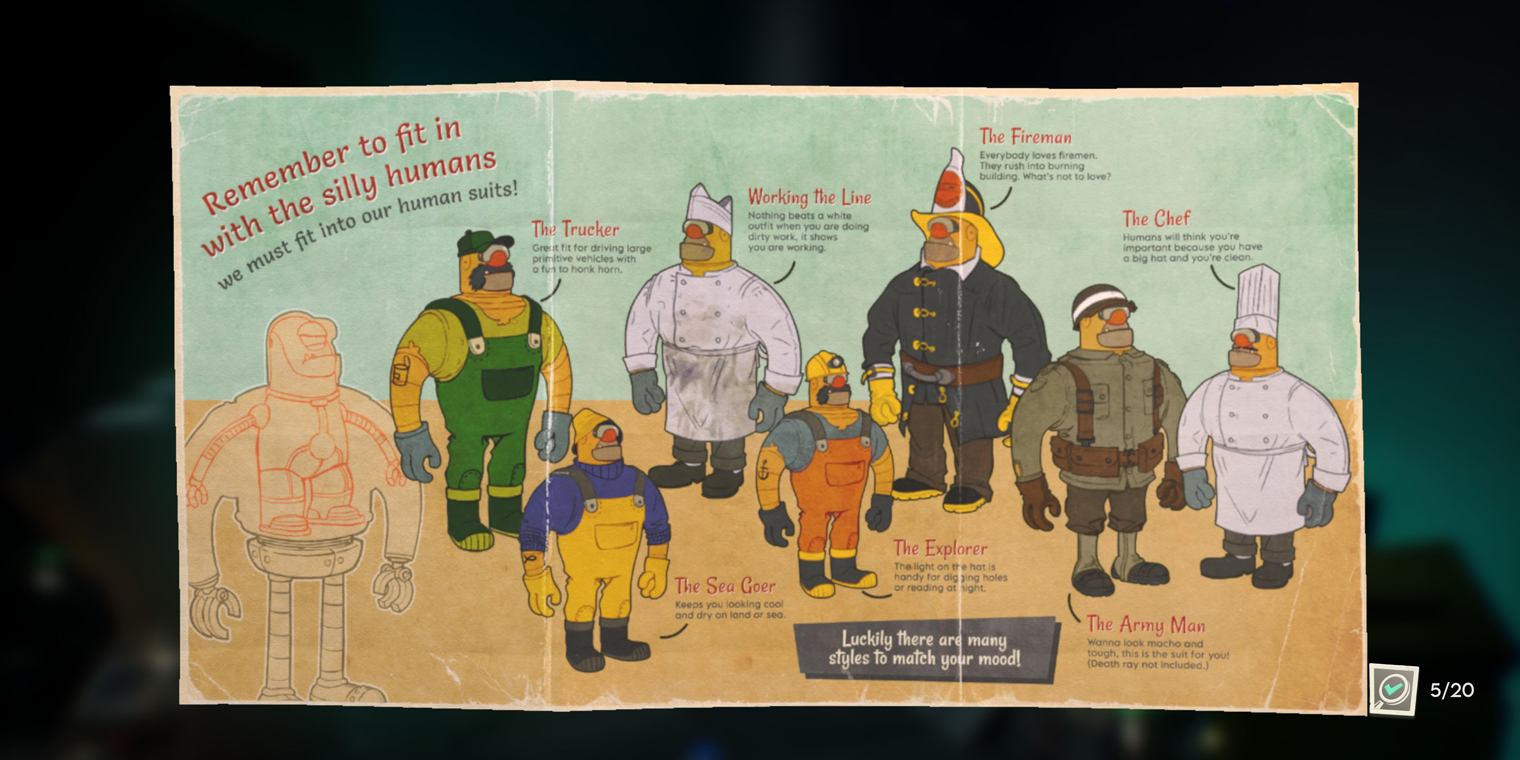
Throughout it all, as frustrating as the game can be, it is charming and hard to stay mad at. The aliens first appear in chunky robot suits disguised as a variety of people, from dock workers to chefs. Well, I say “disguised” but one of the game’s best jokes is that the aliens’ suits don’t look remotely like real people – they’re all floppy arms and glowing visors for eyes.
The blatant fact that aliens are using a thinly-disguised food company as cover is also hammered home through things like newspaper reports, where top military personnel wave away ‘weird lights in the sky’ as nothing to worry about, as they’re too busy being wowed by UFOOD’s tasty treats.
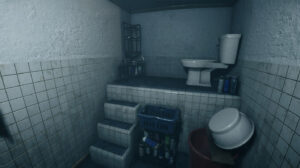
One of my favorite visual gags comes about halfway through, as Darwin is making his way through the UFOOD office building. I found myself slinking through a bathroom as robot-suit aliens clomped into the stalls, only to reveal that the toilets are fixed to revolving walls. Why? It doesn’t make any logical sense because this happens in a building used entirely by aliens, so there’s no need for secret entrances. But, it looked funny, so why not throw it in?
Survival of the Slipperiest
Unfortunately, the gameplay and narrative are also beholden to frequent gaps in logic, where preestablished rules suddenly don’t matter. Take security cameras, for example: the instant Darwin gets caught in the light from one of these, he gets zapped by a (sometimes off-screen) laser. That is, until he gets caught in a bunch of spotlights and suddenly remembers he can shoot ink, despite the tutorial using this skill quite a few levels before.
You see, Darwin isn’t entirely defenseless, but his movesets favor avoidance (refreshingly, there’s no combat at all). Aside from being able to walk up walls and across ceilings with a pleasingly tactile wet-plop noise, he can camouflage himself on any surface. When he’s in water, he can use ink clouds to avoid cameras and hungry predators, and when he’s on land he can fire ink to disrupt electronics and hit out-of-reach buttons. In some of the goofiest, but perfectly-deployed sections, Darwin can also use his tentacles to slingshot himself across huge gaps.
The trouble is, you can’t use the camouflage and ink abilities until quite a while after the intro, for…reasons. The infomercial tells us that octopi are very smart, and yet the game wants to treat Darwin as a bit of a dummy since otherwise early sections, like an escape from ravenous rats, would be easier if you could just ink them or hide.
There’s also a frustrating tendency for the designers to inhibit Darwin’s most enjoyable skill (walking on any surface) by dunking him in goo, or mud. This was fine later on when I expected the challenge to ramp up, but throwing this stuff at me right at the start was really annoying.
I also hope you like pipes, because I swear about 50% of the game happens in these. Darwin routinely finds himself sucked into and through pipes as a cartoon bulge before popping out anywhere from toxic sewers to hellish furnaces.
Scenery You Can Smell
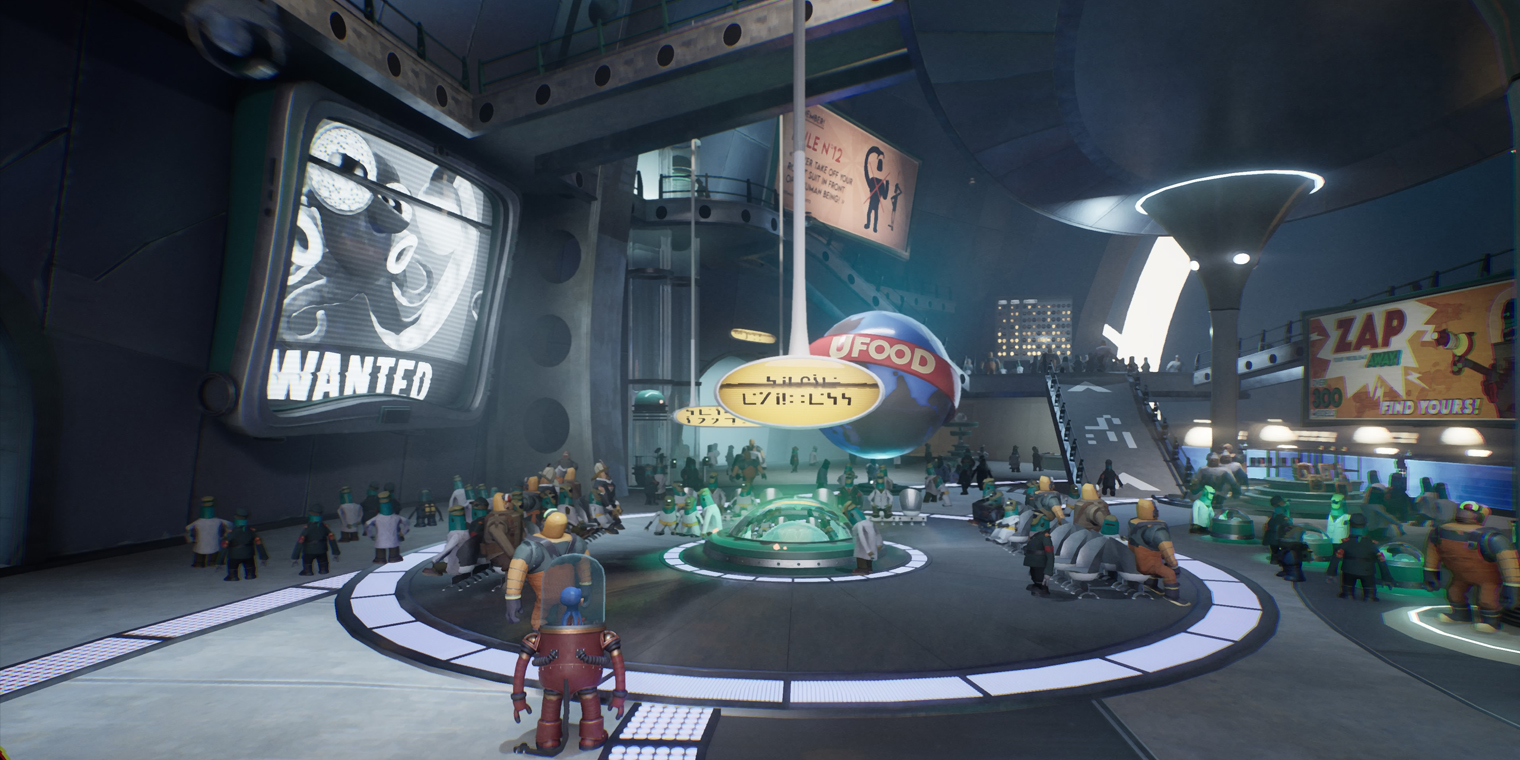
The world-building and environmental storytelling is exemplary, though. I really can’t tell you how often I stopped playing just so I could marvel at the amount of detail the developers throw in, from a garbage dump that stretches out for miles through to a sort-of galactic airport. Often, the backgrounds of locations are home to as much detail as the foreground, from the death-ray silhouettes of people in underground tunnels to signs at the ‘airport’ prohibiting the transport of human brains.
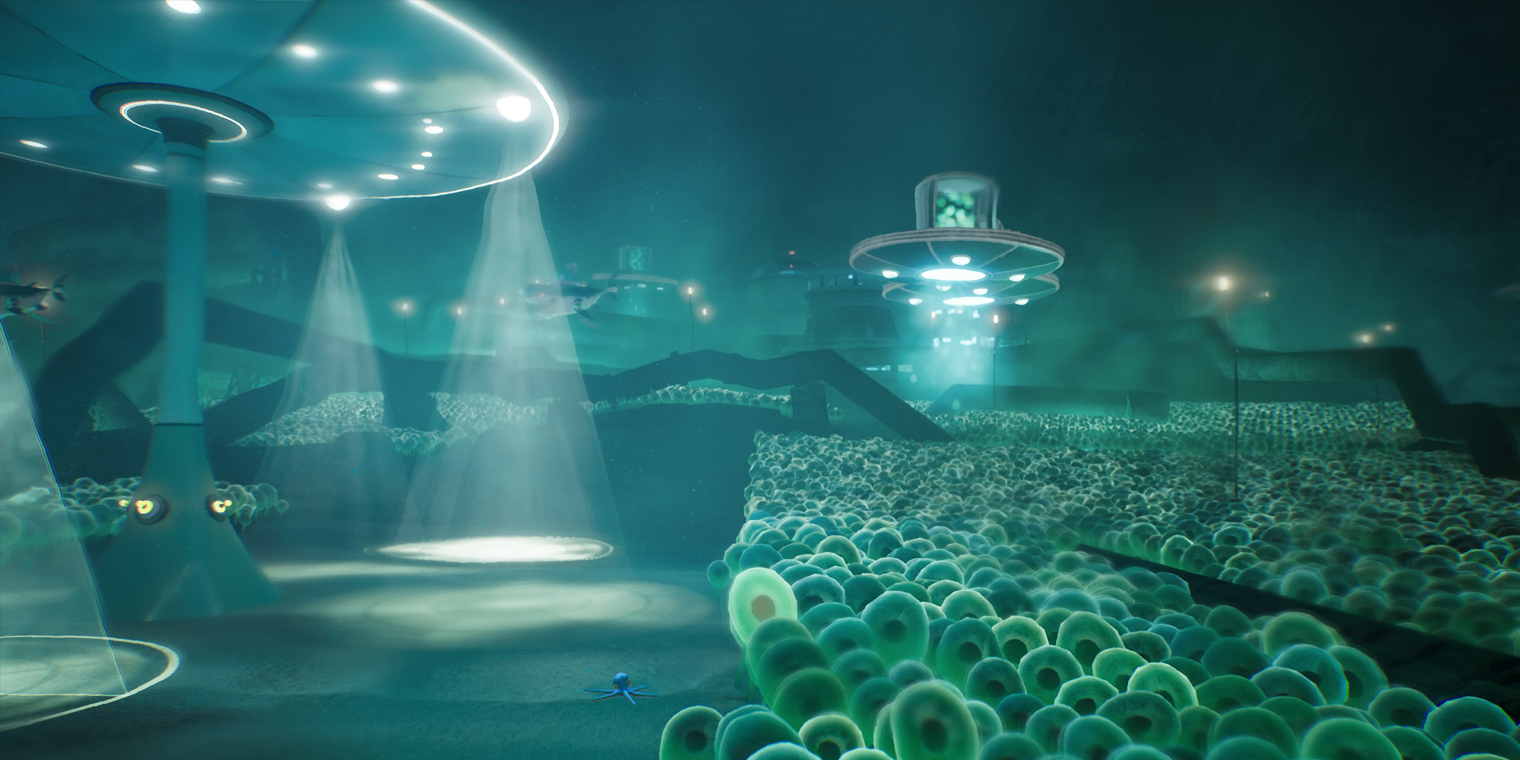
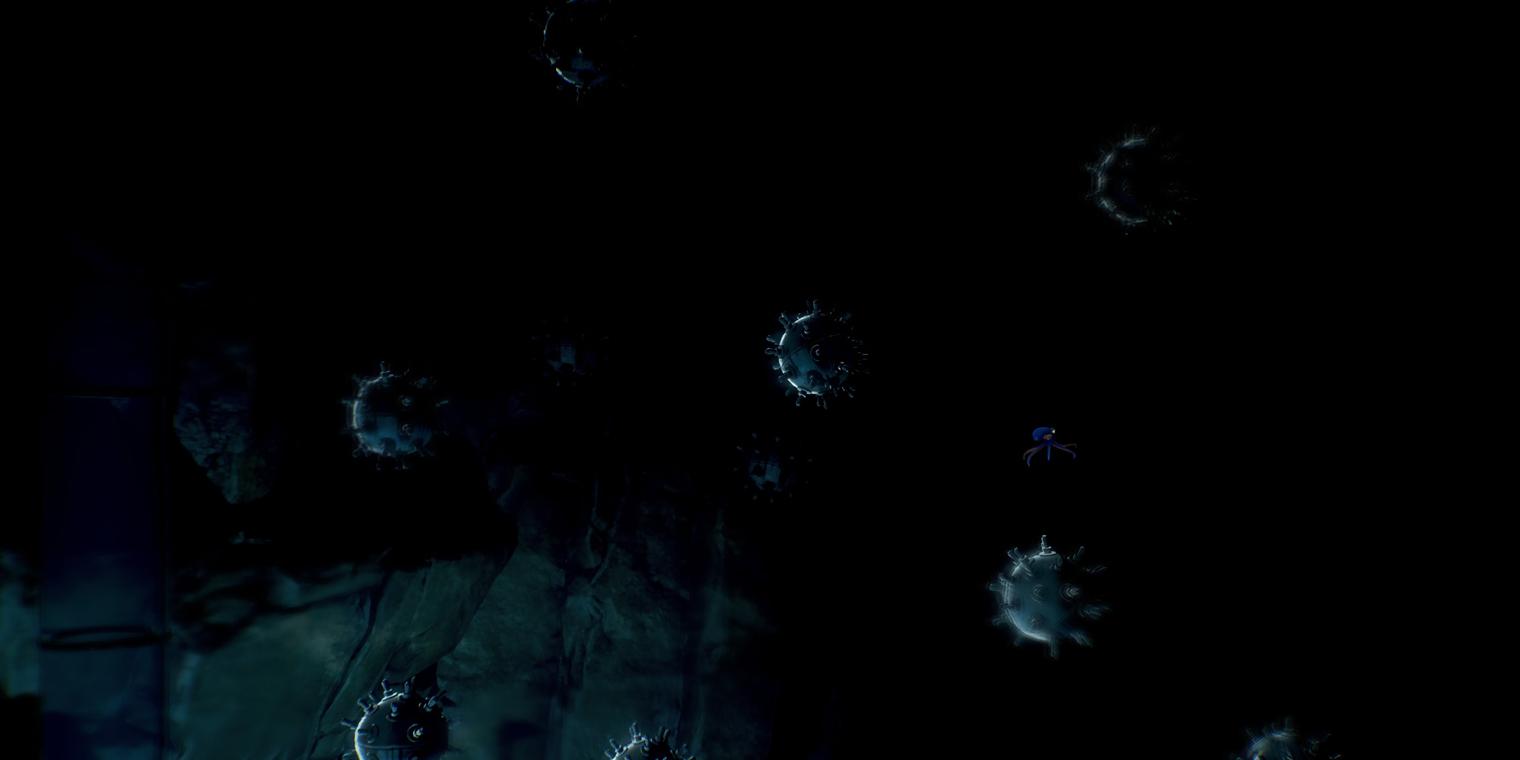
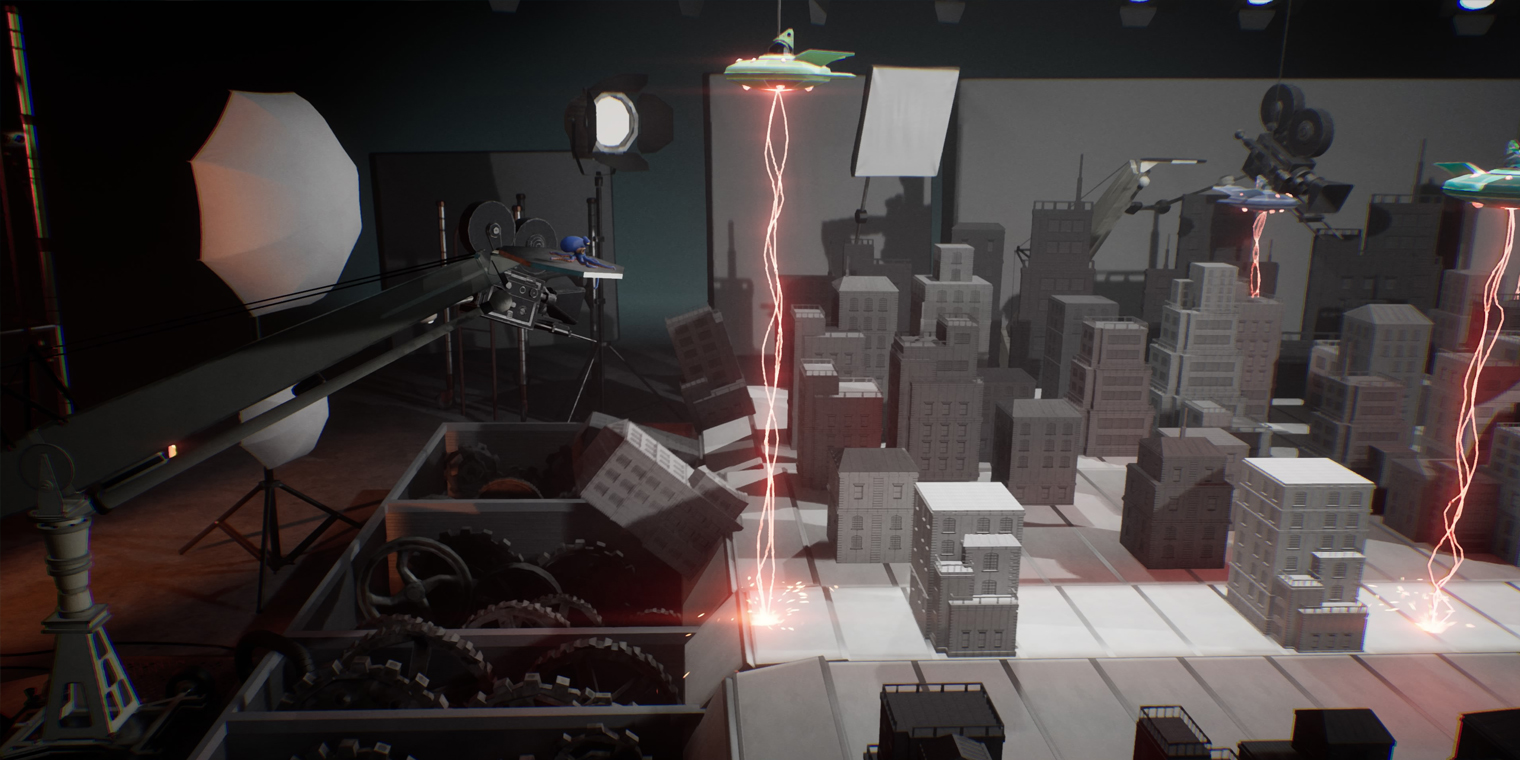
One of my favourite sections – and I have quite a few – saw Darwin escape yet another factory he’s managed to blow up, as buildings topple like dominoes. This ends in a dunk in the ocean as fires rage on the surface, turning the water below a deep, wavy red. It looked glorious, and was counteracted shortly after by a descent into abyssal depths.
This also led to a genuinely thrilling chase with a huge angler fish as I had to squeeze through small gaps, then dash back on myself to confuse it, before it got so mad it started smashing through rock. This hungry bastard made such an impact on me that, when he pops up again later as part of the alien’s menagerie, I got a little scared even though he’s in a tank. Until he’s not.
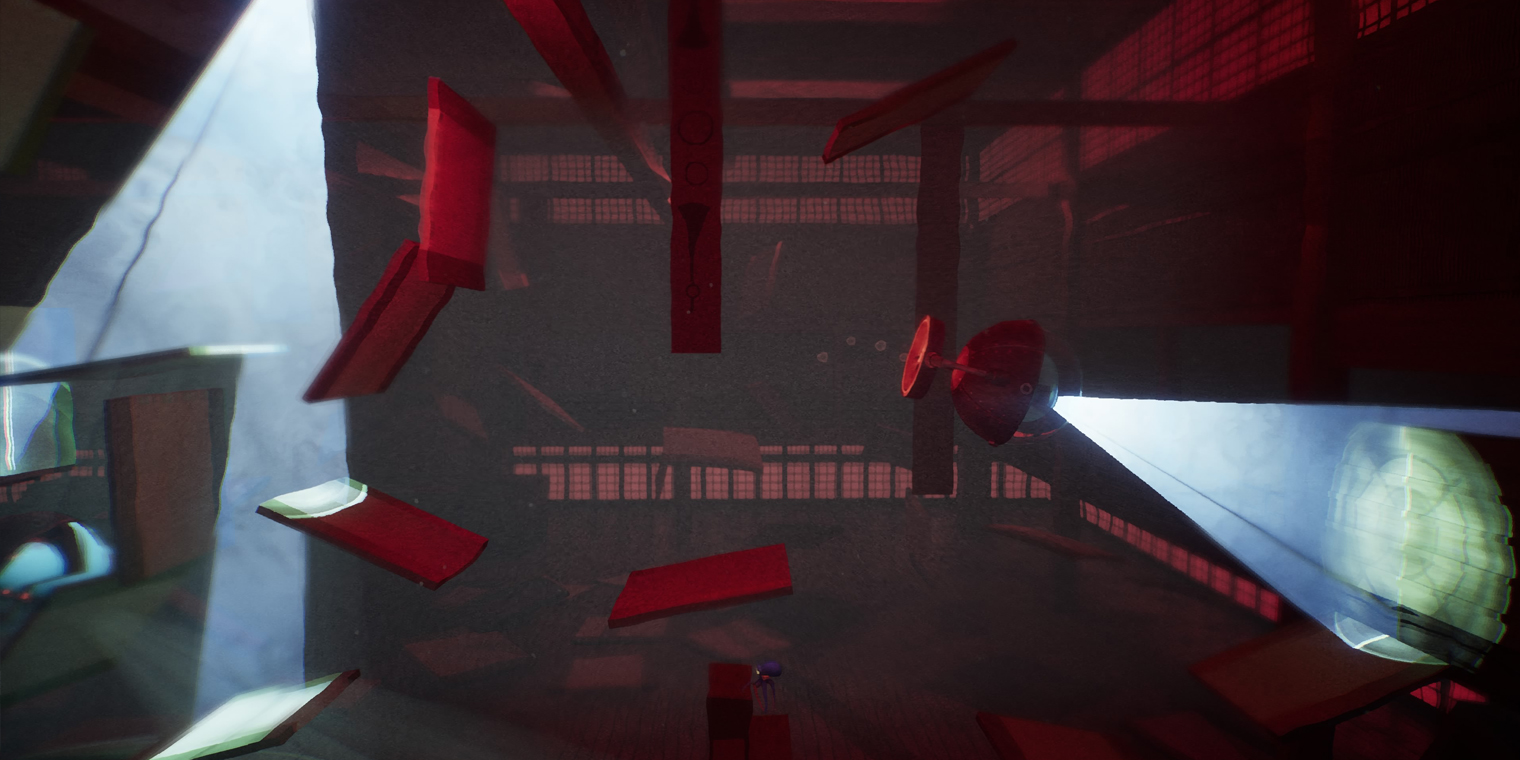
The game even finds a thematic reason to have you propel Darwin across a literal obstacle course, which you then revisit (as well as a really cool giant alien…thing) once Darwin manages to flood certain sections. Replaying levels you just passed, but now underwater and with floating debris as makeshift hiding places, is an inspired design choice.
Rated Eight Arms Out of Nine Brains
Octopi are known for being remarkably clever, as each of their arms also houses a mini-brain, which can then be controlled by the overall brain. This is what lets them do things like navigate mazes effectively when they can see food but not an apparent way to reach it. ZDT Studio might expect human players to have the multi-brained wherewithal of Darwin’s species given the sheer amount of diabolical deathtraps, and the zero margin for error, it crams into the game.
But, stick with it and Darwin’s Paradox! reveals itself to be a charming little gem. The gameplay might frustrate, but the world itself looks incredible, the soundtrack is a AAA orchestral masterpiece when it matters, and the little gaming in-jokes and hidden secrets make it worth exploring.