

GRIDbeat! Review: Rage-Quit to the Beat



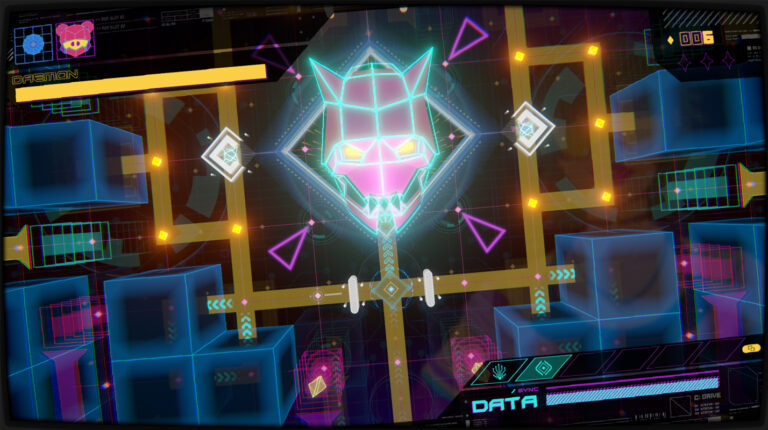
GRIDbeat! is the second original title from Ridiculous Games and part of the starting roster from resurrected publisher Acclaim. It’s a rhythm action game with a neon 90s aesthetic and pounding synthwave score, plus a decent variety of enemies and tricks up its digital sleeve. It’s also punishingly hard. It’s available now on Nintendo Switch (1 and 2) and on PC, which is what I played it on.
Let’s talk about GRIDbeat!’s style first, as it’s the first thing that’s likely to hook in players. Marathon might be grabbing eyeballs with its nineties-inspired “maximalist minimalist” look, but Ridiculous Games favors a more refined version of this. Everything’s doused in a distinctive purple and yellow color scheme, alongside the sort of stylised text and icons that don’t mean anything but look cool (not a knock; GRIDbeat! seems to share similar inspirations as Marathon, like The Designers Republic and PSX-era artwork).

Jump to:
In Sync
That’s where the similarities start and end, though. GRIDbeat! uses its style to represent a very 90s-style story, where you play a hacker tasked with breaking into a server to steal a data core. Turns out, that’s the easy part – your presence has triggered multiple security threats and now you’re trapped in the Mainframe, trying to find a way out.
Another thing that’s impossible to ignore: Ridiculous Games has made the weird design choice to present everything at a wonky angle that’s tipping slightly to the left, as you’ll notice in my screenshots. I’m the kind of person who can’t eat in a restaurant if the table’s not level, so it took me a little while to stop feeling a little queasy every time I booted GRIDbeat! up.
The good news is that the game’s grid-based rhythm action is solid, attention-grabbing, and occasionally impressive. Although press material suggests every single move must be timed to the music, it’s more a case of “move when you want, as long as it’s on the beat”. Failing to do so knocks a Sync meter down, partially muting the music at the same time. Get back in Sync and the sound rises triumphantly back into focus.
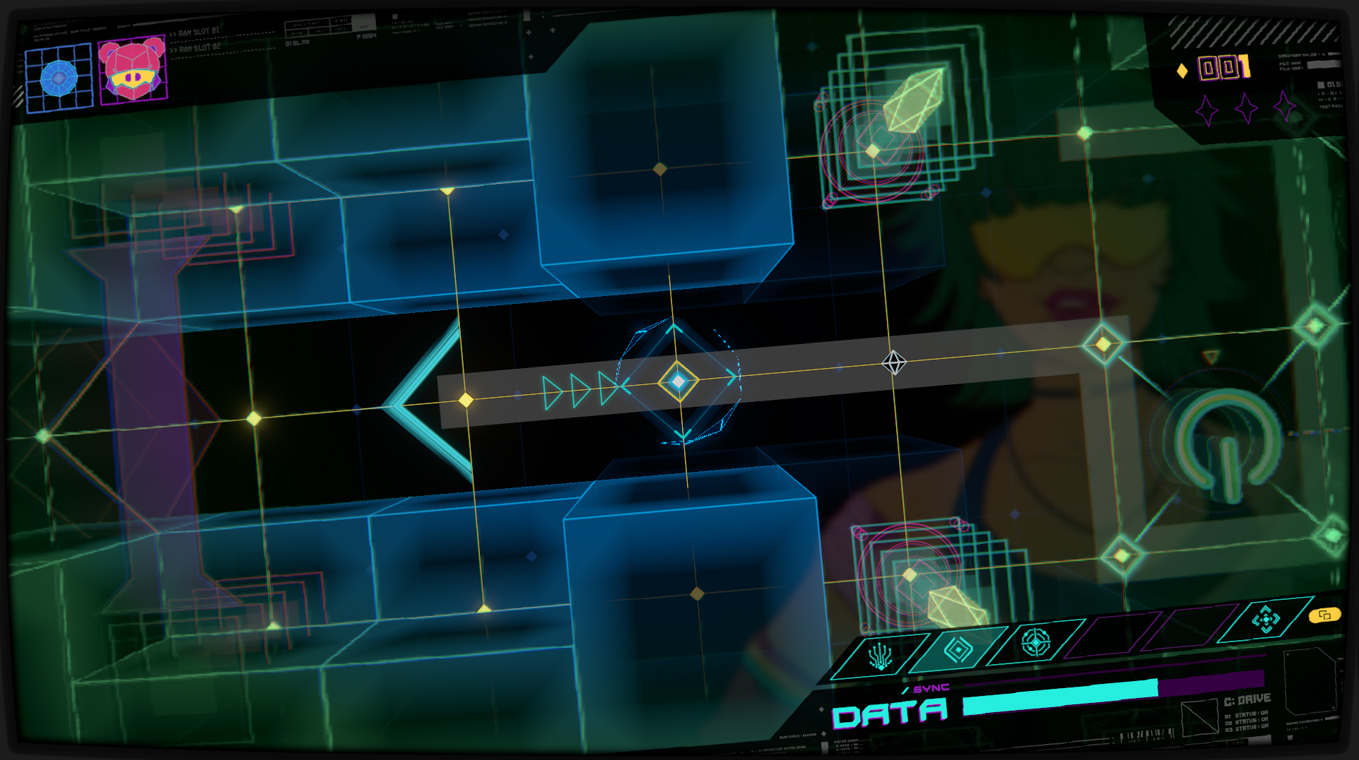
There are other nice little audio touches too, like collecting ‘bits’ scattered throughout a level being accompanied by synth chimes in time to the rhythm, and digital locks reward correct button presses with drum hits. Keep in mind that some puzzles and sections can only be interacted with when you’re in Sync so expect to do little back-and-forth dances until you are.
Failure is Inevitable
Also expect to see the game over screen a lot, as GRIDbeat! ramps up difficulty incredibly quickly. Levels can last anything from a few minutes to 10 or more, depending on your personal speed and willingness to go out of Sync, with failure sending you right back to the start. In terms of this, there’s a Data meter which acts as your digital health – knock into too many barriers, go the wrong way along a route, or get blasted by enemies, and it’s a reset for you.
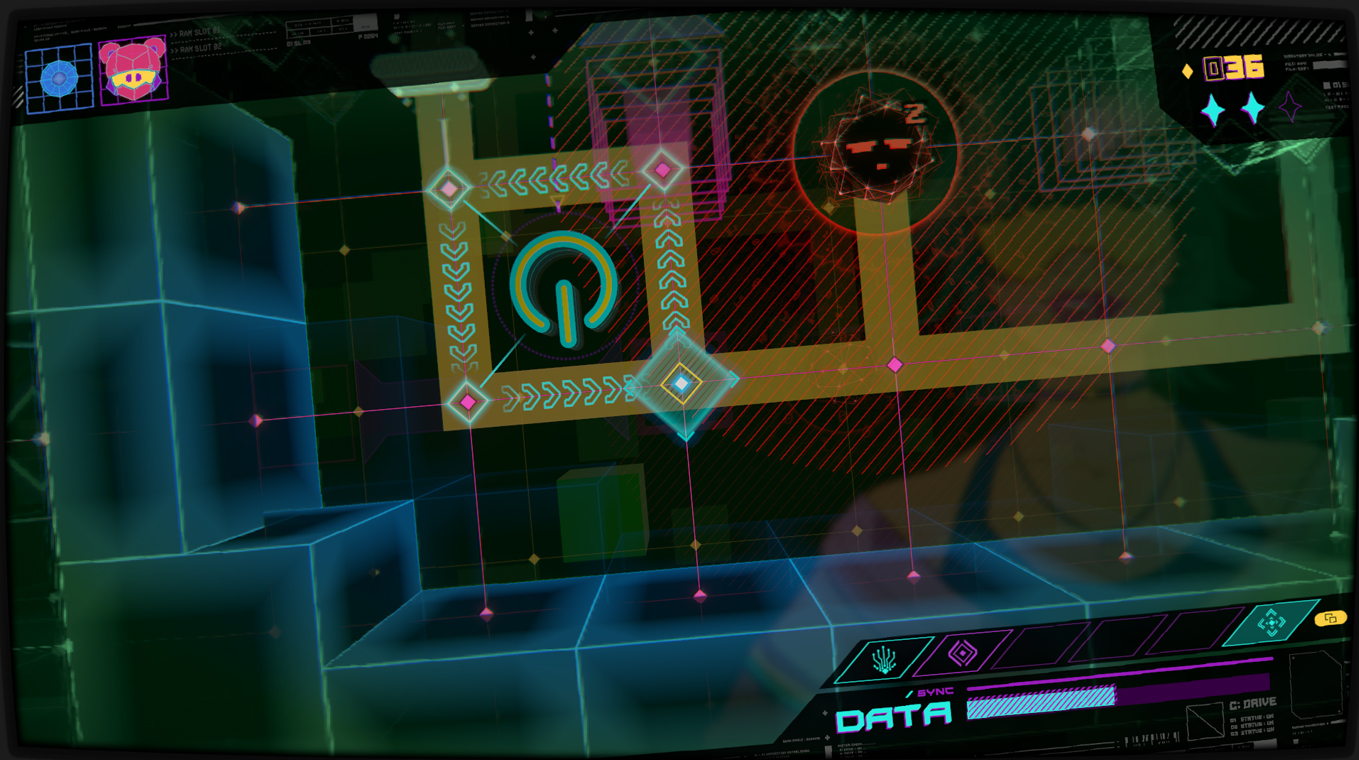
An autosave in at least the middle of a level would be really welcome, as there’s nothing worse than getting within sight of the exit only to be obliterated by a turret, cannon, or mine, and have to repeat a ton of puzzles, dodge the same traps, and try to act in time at the same point you died before. This makes GRIDbeat! closer to a precision platformer than I expected, but with the added wrinkle of perfect timing also needing to match up with the beat.
There are some levels with checkpoints, via a Backup you can discover along the way. This lets you restart from the literal spot you died, including if an enemy’s there. Thankfully, there is a short grace period so you can move on quickly, but even so it’s another thing that’s a little crueler than it needs to be.
A Stacked Deck
To be clear: GRIDbeat! is not unfair. Enemies like turrets and cannons give you a few seconds notice before they hit the grid, so there’s usually time to get out of the way. I say “usually” because while GRIDbeat!’s gameplay is generally very tough but reasonable, it does occasionally pull a few frankly dickhead moves like have you jump into a space that is immediately targeted by enemies.
I almost threw my controller out the window after repeatedly hitting sections where, for example, I’d jump into a small area filled with rotating barriers and multiple turrets, and practically no time to plan moves or avoid explosions. It also doesn’t help that the game’s style occasionally works against it; I found that, quite often, multiple enemies and explosions created a very busy visual language onscreen.
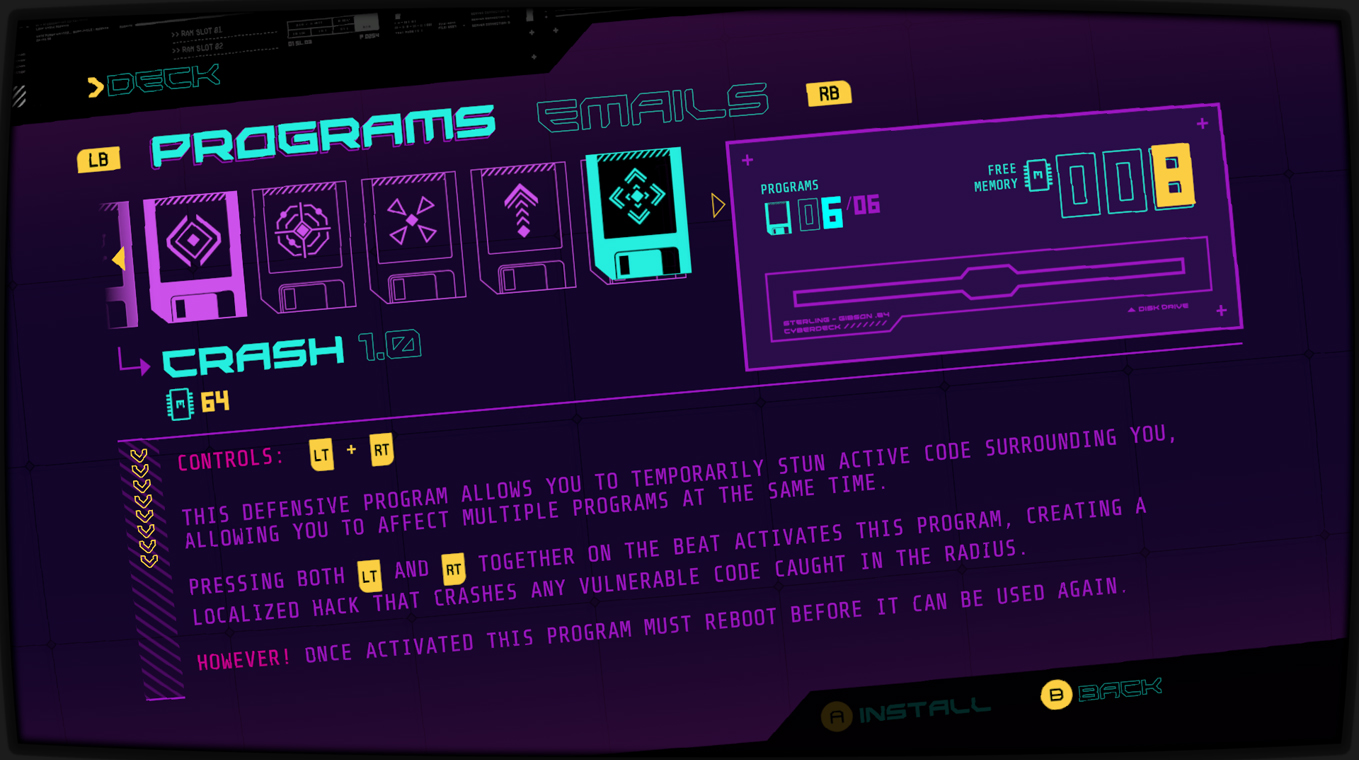
There is help for some of these issues: a Deck. As levels progress you can obtain Free Memory. This is used to unlock programs like Trace (shows you where to go), Shell (a shield) and Crash (shuts down nearby enemies). Multiple programs can be installed at once as long as you have the Memory for it, although the most useful ones tend to be one-shots or have lengthy reload times.
A technical note: in lieu of a difficulty setting, you can set how forgiving the game’s reaction time is through the main menu, including mid-run (for the record, I had it on the default setting, although I also tried it on “Chilled” and can’t say I noticed too much of a difference in gameplay). It’s possible to turn on Beat Vibration if you have a controller and I 100% recommend this as it’s a brilliant idea. Mind you, Ridiculous Games has a warning at the start that Bluetooth devices may lag, and that certainly happened to me with my wireless controller quite a few times.
Plot Beats
The start of the game has you choose an avatar from a limited selection of illustrated personas. Then, you choose from preset hack aliases that include the likes of “Catch 20 Too” and “Zero Divide.” I settled on the admittedly cool-sounding “Nick Reverse.” This then pops up in emails throughout the game, but unfortunately never gets used elsewhere – the main story messages are fully-voiced as is Dot, your helpful AI companion, but it would have been good for immersion to hear my alias spoken aloud.
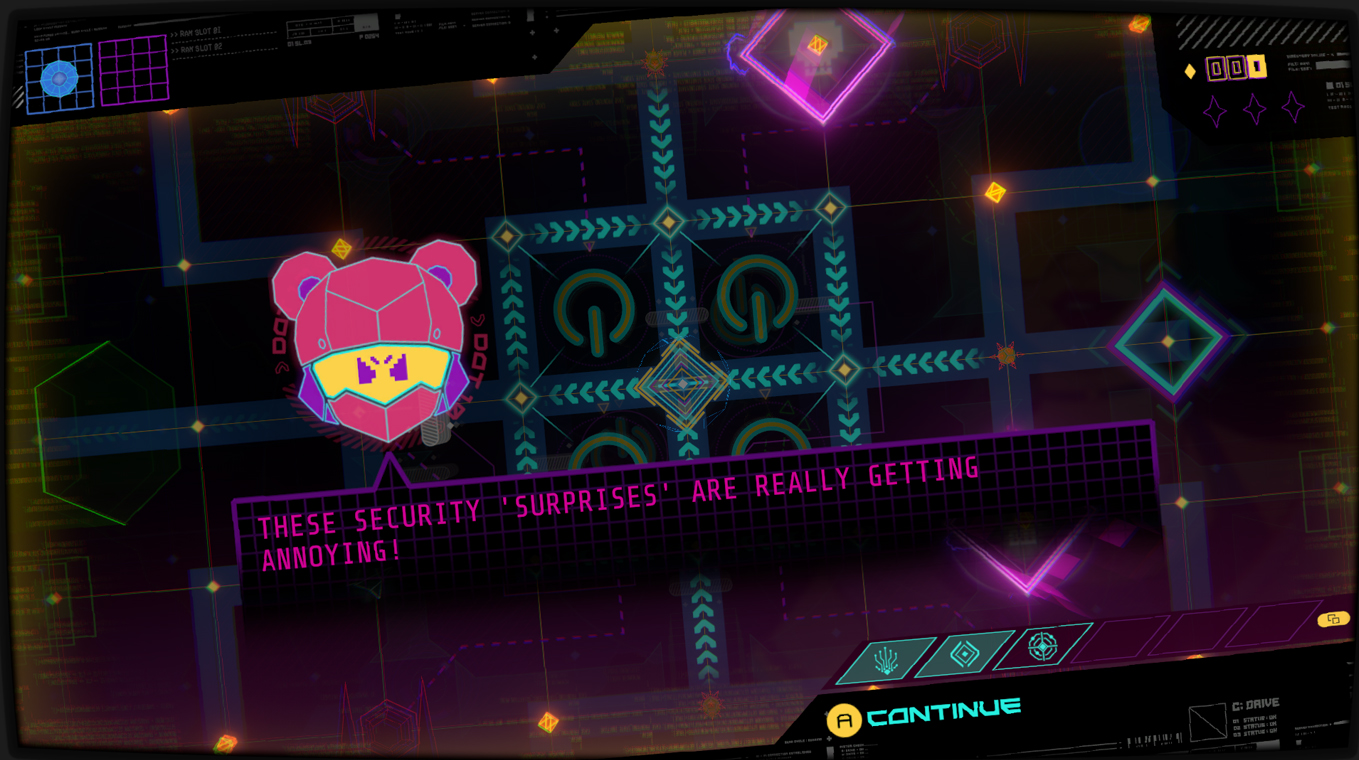
As for the plot, it’s probably what you expect from the set-up. An anonymous client hires you to hack into Knoss.OS and steal a data core, but it turns out the server belongs to a major corporation. Emails unlocked during levels throw light on how the company’s “What if” military operations gradually gave way to a tighter focus on the digital world, alongside more control handed to the “Kernal,” a cyber entity that may or may not have humanity’s best interests in mind.
I’m not saying there aren’t any surprises to the story. There are: least of all, people in the company rightfully showed concern at what was going on behind their backs. Everything makes sense in terms of the overall aesthetic but the narrative is not the main draw here.
Sounds Like…
That would be the music. Once the game boots up, a synthwave tune starts…and that’s pretty much the gist of it. Aside from the occasional foray into more poppy tracks, the music is fairly one-note; each level tells you the name of the song and the artist but a lot of it sounds alike.
Now, I’m a musician of 30+ years so my view here is colored by that, and obviously personal taste. I like synthwave, but as with any genre there are different types of it, so it’s a bit disappointing that the majority of what’s on offer here is mid-tempo 4/4 stuff. Good music is dynamic, whether it follows a typical ABAB structure or something more experimental, and by keeping the soundtrack similar it causes everything to plateau early and stay there.
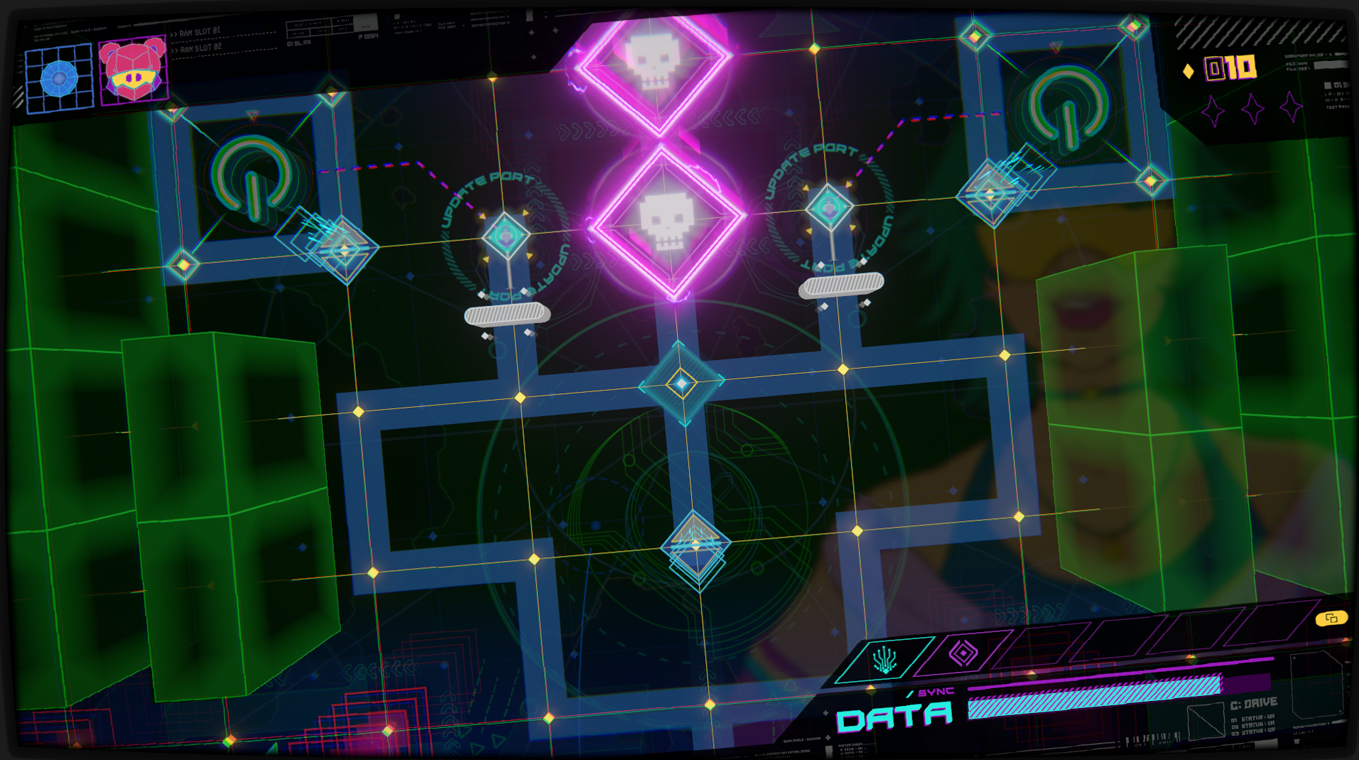
This makes it feel like the music is in service to the game rather than the other way around; since the BPM tends to be repetitive between levels it gives the impression that, rather than designing levels around the music itself (for example, a song’s riff), the levels were made to a set beat and then whatever track was put underneath that matched the BPM. Granted, this helps with the overall flow, but it quickly merges levels and songs together.
There’s no word from Ridiculous Games as to whether or not they intend to allow players to use their own music, but I hope they do (or even open the game up to modding via Steam). Other rhythm action games, such as Tap Tiles by Neo Horizon Labs, and Robobeat by Inzanity, let you add custom tracks; even though these don’t overlap with the “dungeon crawler” genre, as GRIDbeat! does, the option is still a valid one. Mind you, Crypt of the NecroDancer is perhaps the closest game to GRIDbeat! and that does let players use their own music, so there is a precedent.
Enemies Everywhere
The Mainframe does not want you in it, so it chucks a ton of enemies at you from the off. The main types are stationary guns (turrets and cannons) with later levels throwing more mobile terrors your way, like a wave that gradually erases a level through to corruption that blinks into existence without warning.
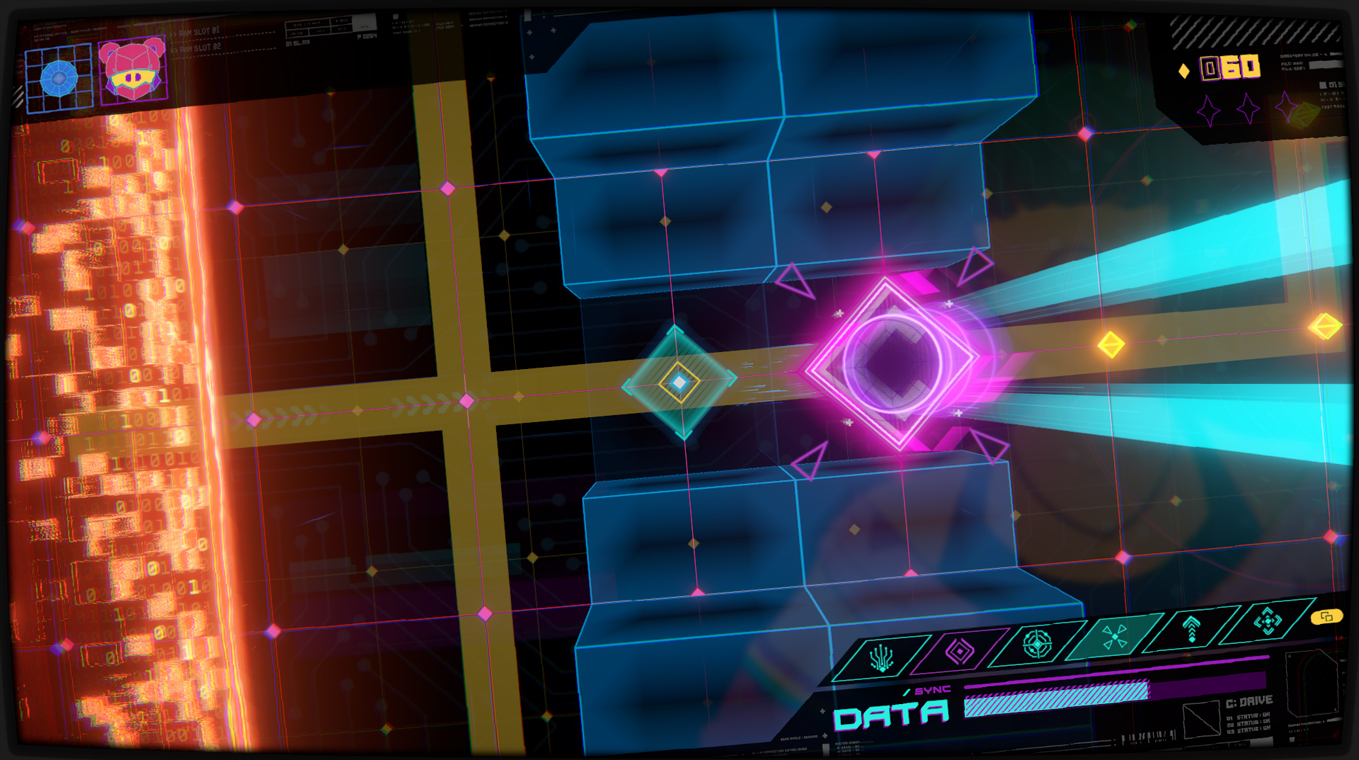
Without spoiling too much, the Mino.Tor is one of the worst. Once you wake it up, it appears every now and again and proceeds to hunt you across a level. It moves to the beat, on the beat, so you really need to get a wiggle on and leg it as fast as possible – while staying in Sync, of course. To be honest, this on its own is pretty stressful, so picture this horned bastard chasing you as you also have to contend with rotating barriers, firewalls, and other enemies, and you can see how difficult it is to avoid.
About those firewalls: these and other obstacles are hacked by pressing either trigger on a controller, and then moving the thumbstick (or pressing a face button/d-pad) in the direction of the obstacle, in time to the beat. Once a yellow shape lines up with the outside of the firewall/lock/what-have-you, release the thumbstick/button/d-pad. Depending on the obstacle, you may then also have to line up a lock or hit specific buttons, also to the beat.
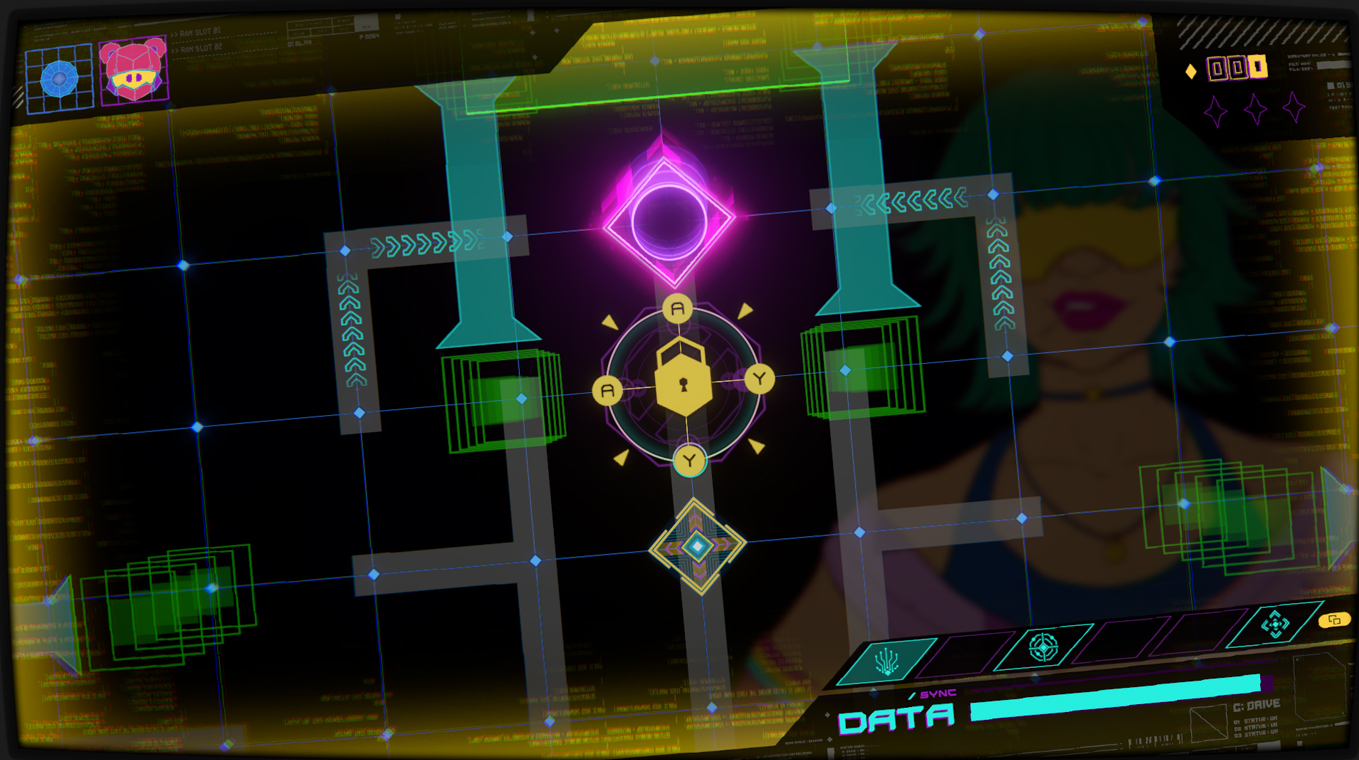
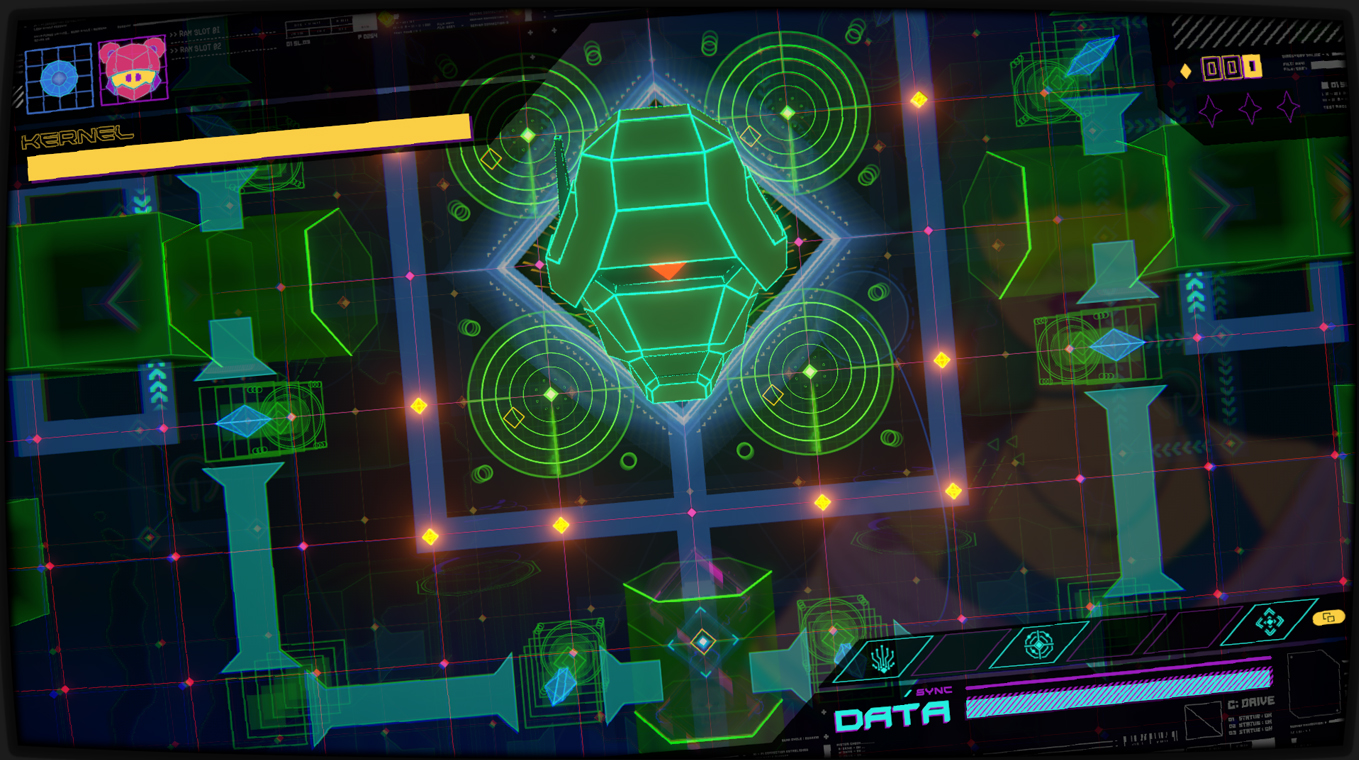
It took me a while to get the hang of doing this, and it’s one area that controller lag really grates. The other option is to switch to keyboard (on PC) for these bits but that’s not ideal (although it plays just fine, in general, using the spacebar and arrow keys for everything). I should note that there are bosses to contend with, too. I won’t spoil much of this either as they were fun to “battle,” but I will tell you an early confrontation with the Daemon (the evil head you’ll see in a lot of promotional material) makes fine use of the grid-based space, beat timing, and turning turrets against it.
Press Play or Eject?
And that’s kind of the kicker with GRIDbeat! – it’s tough but it is fun! The dungeon-crawler tag isn’t for nothing; the best parts of the game allow you to explore multiple paths, zipping up and down levels and zapping across large gaps as explosions ring out behind you.
I can’t fault Ridiculous Games’ enthusiasm for wanting to show off what it can do, which is why I still recommend giving GRIDbeat! a spin. Plus, the amount of polish shows Ridiculous Games’ talent (the studio previously helped develop the likes of Sonic Colors Ultimate and the now-defunct New World: Aeternum). As an example, GRIDbeat! encourages replayability through level-specific goals as well as a ton of additional content like Challenges and Debug levels, which is really nice to see in an apparent indie game at launch.
The problem is GRIDbeat! can’t get out of its own way. It’s so in love with what it can do that it keeps throwing it at you. Overall, I enjoyed my time with GRIDbeat! but it needs to be a little kinder to players. It’s ironic that, as a rhythm action game, it rarely lets you get into a groove.